Explore the memory organization and access mechanisms of the Nios II processor, including instruction and data master ports, cache memory, Harvard architecture, pipeline support, and more for efficient processing. Understand how the processor interacts with memory and peripherals to enhance overall system performance.
Please find below an Image/Link to download the presentation.
The content on the website is provided AS IS for your information and personal use only. It may not be sold, licensed, or shared on other websites without obtaining consent from the author. If you encounter any issues during the download, it is possible that the publisher has removed the file from their server.
You are allowed to download the files provided on this website for personal or commercial use, subject to the condition that they are used lawfully. All files are the property of their respective owners.
The content on the website is provided AS IS for your information and personal use only. It may not be sold, licensed, or shared on other websites without obtaining consent from the author.
E N D
Presentation Transcript
SISTEMI EMBEDDED Nios II Processor: Memory Organization and Access Last version: 20170509 Federico Baronti
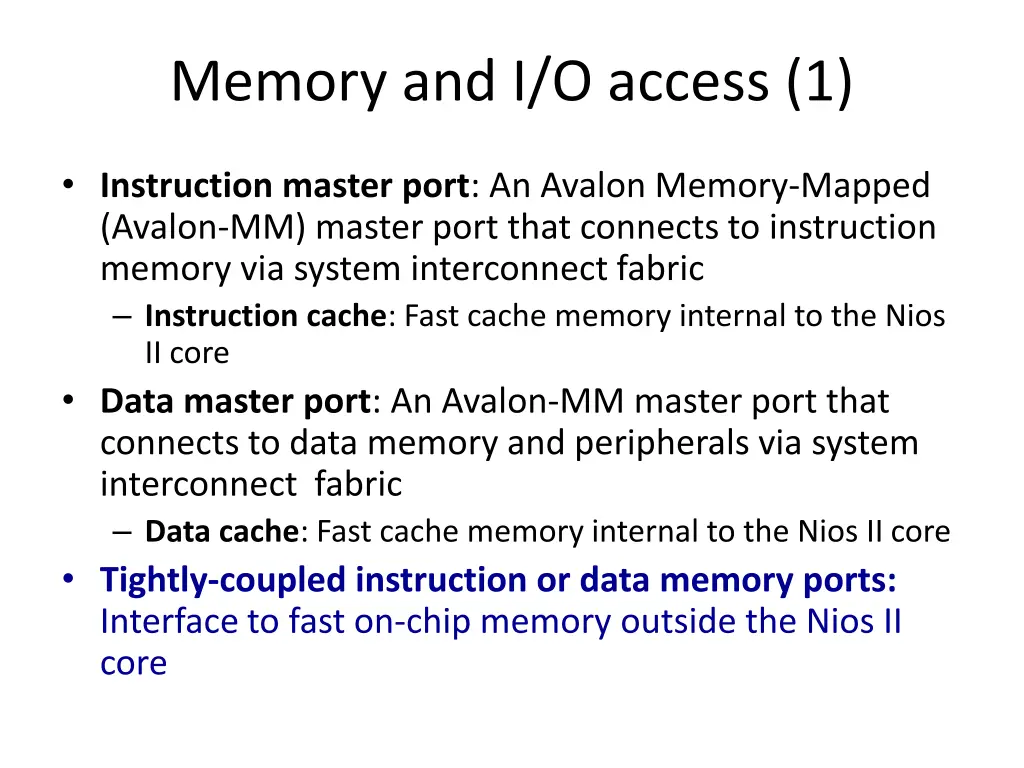
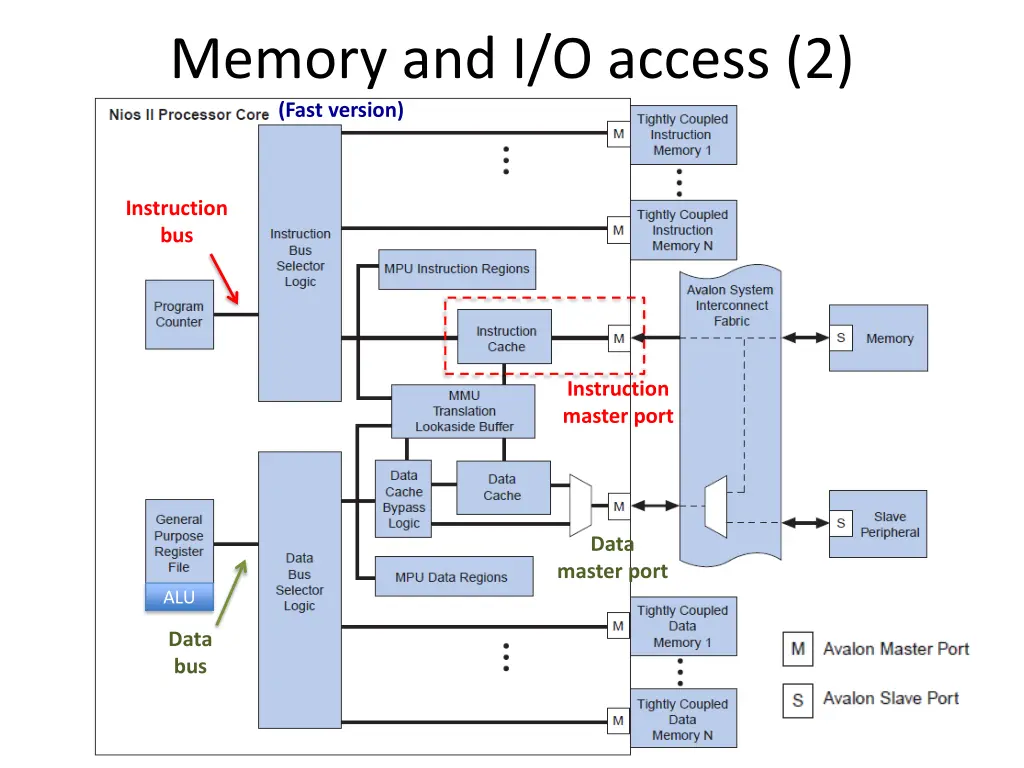
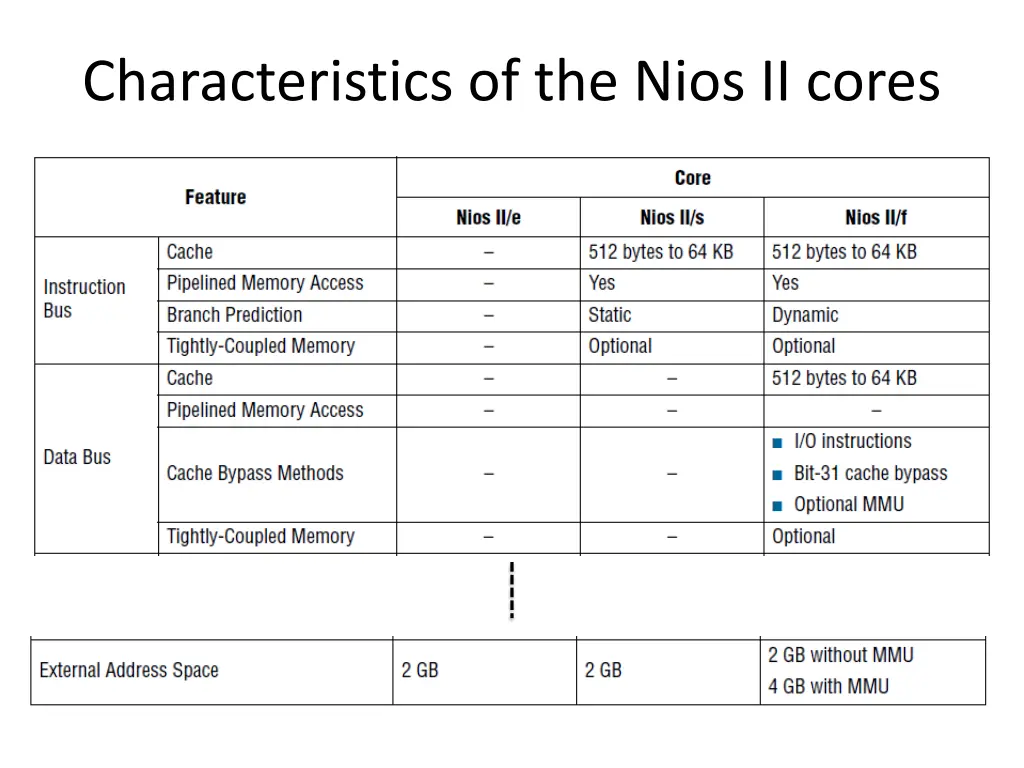
Memory and I/O access (1) Instruction master port: An Avalon Memory-Mapped (Avalon-MM) master port that connects to instruction memory via system interconnect fabric Instruction cache: Fast cache memory internal to the Nios II core Data master port: An Avalon-MM master port that connects to data memory and peripherals via system interconnect fabric Data cache: Fast cache memory internal to the Nios II core Tightly-coupled instruction or data memory ports: Interface to fast on-chip memory outside the Nios II core
Memory and I/O access (2) (Fast version) Instruction bus Instruction master port Data master port ALU Data bus
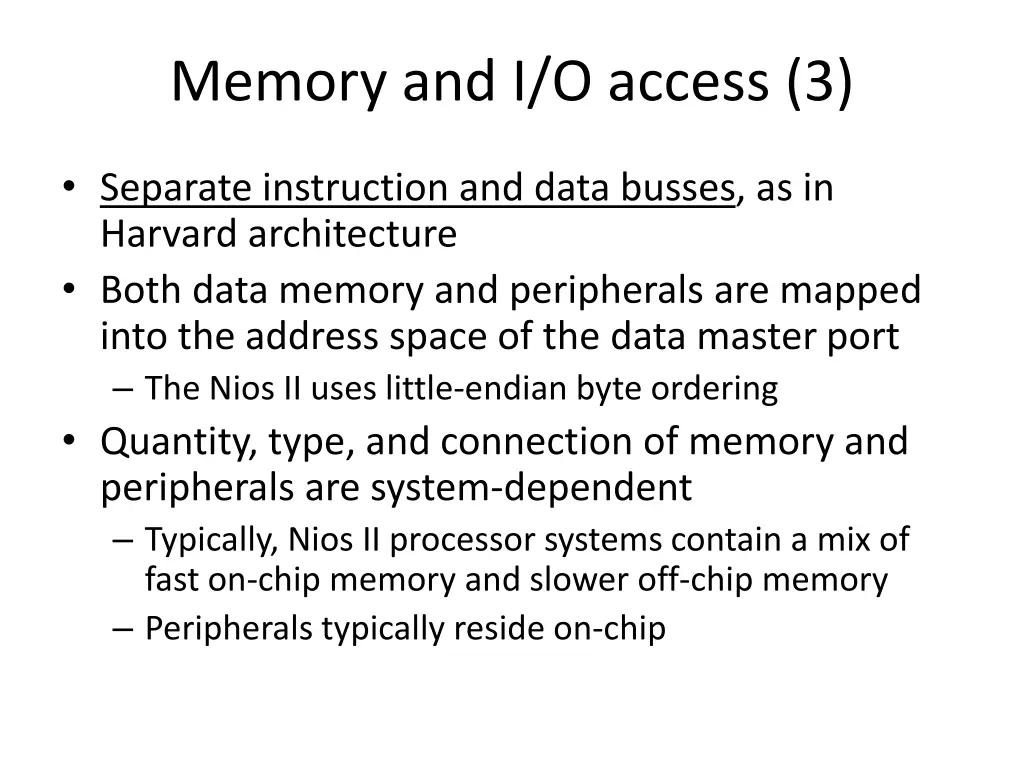
Memory and I/O access (3) Separate instruction and data busses, as in Harvard architecture Both data memory and peripherals are mapped into the address space of the data master port The Nios II uses little-endian byte ordering Quantity, type, and connection of memory and peripherals are system-dependent Typically, Nios II processor systems contain a mix of fast on-chip memory and slower off-chip memory Peripherals typically reside on-chip
Instruction master port 32-bit pipelined Avalon-MM master port Used to fetch instructions to be exectued by the processor The pipeline support increases the throughput of synchrounous memory w/ pipeline latency The Nios II can prefetch sequential instructions and perform branch prediction to keep the instruction pipeline as active as possible Always retrieves 32-bit data thanks to dynamic bus sizing logic embedded in the system interconnect fabric
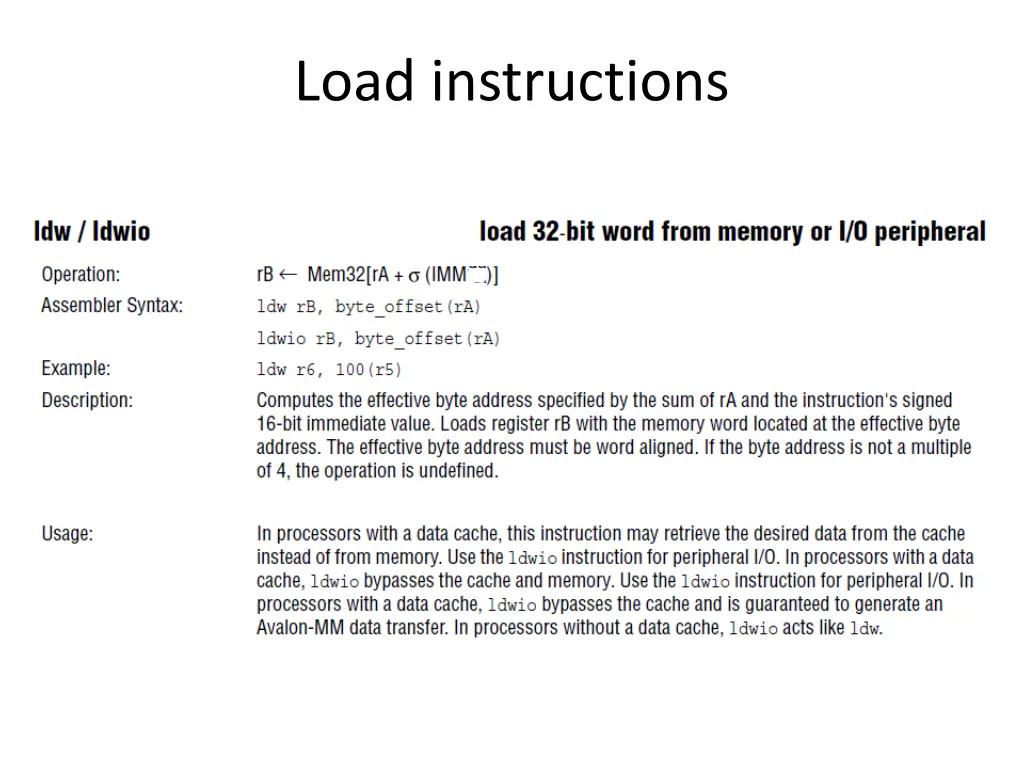
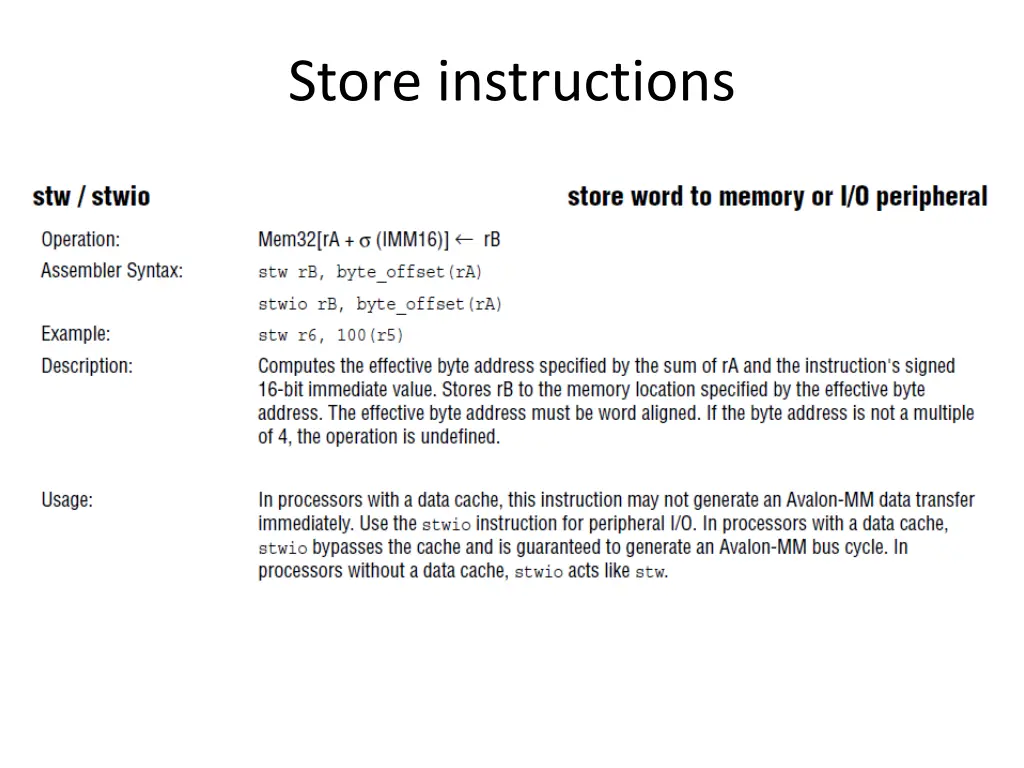
Data master port The Nios II data bus is implemented as a 32-bit Avalon-MM master port. The data master port performs two functions: Read data from memory or a peripheral when the processor executes a load instruction Write data to memory or a peripheral when the processor executes a store instruction
Cache (1) The Nios II architecture supports cache memories on both the instruction master port (instruction cache) and the data master port (data cache) Cache memory resides on-chip as an integral part of the Nios II processor core The cache memories can improve the average memory access time for Nios II processor systems that use slow off-chip memory such as SDRAM for program and data storage The instruction and data caches are enabled perpetually at run-time, but methods are provided for software to bypass the data cache so that peripheral accesses do not return cached data
Cache (2) The cache memories are optional. The need for higher memory performance (and by association, the need for cache memory) is application dependent Cache use improves performance if: Regular memory is located off-chip, and access time is long compared to on-chip memory The largest, performance-critical instruction loop is smaller than the instruction cache The largest block of performance-critical data is smaller than the data cache
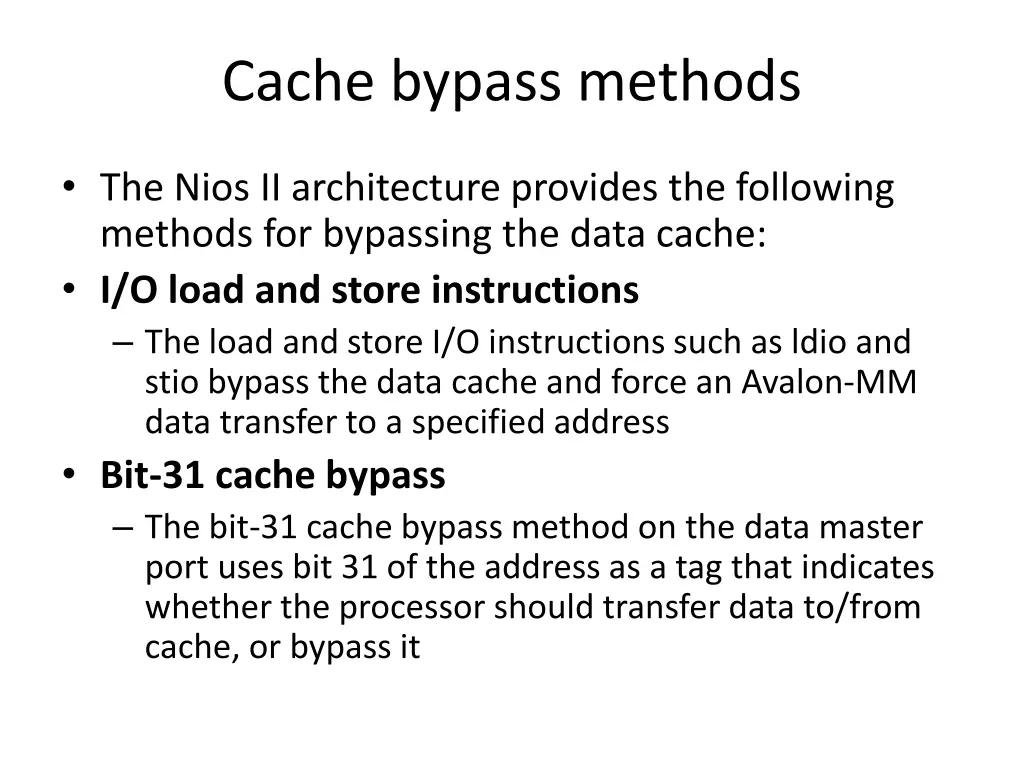
Cache bypass methods The Nios II architecture provides the following methods for bypassing the data cache: I/O load and store instructions The load and store I/O instructions such as ldio and stio bypass the data cache and force an Avalon-MM data transfer to a specified address Bit-31 cache bypass The bit-31 cache bypass method on the data master port uses bit 31 of the address as a tag that indicates whether the processor should transfer data to/from cache, or bypass it
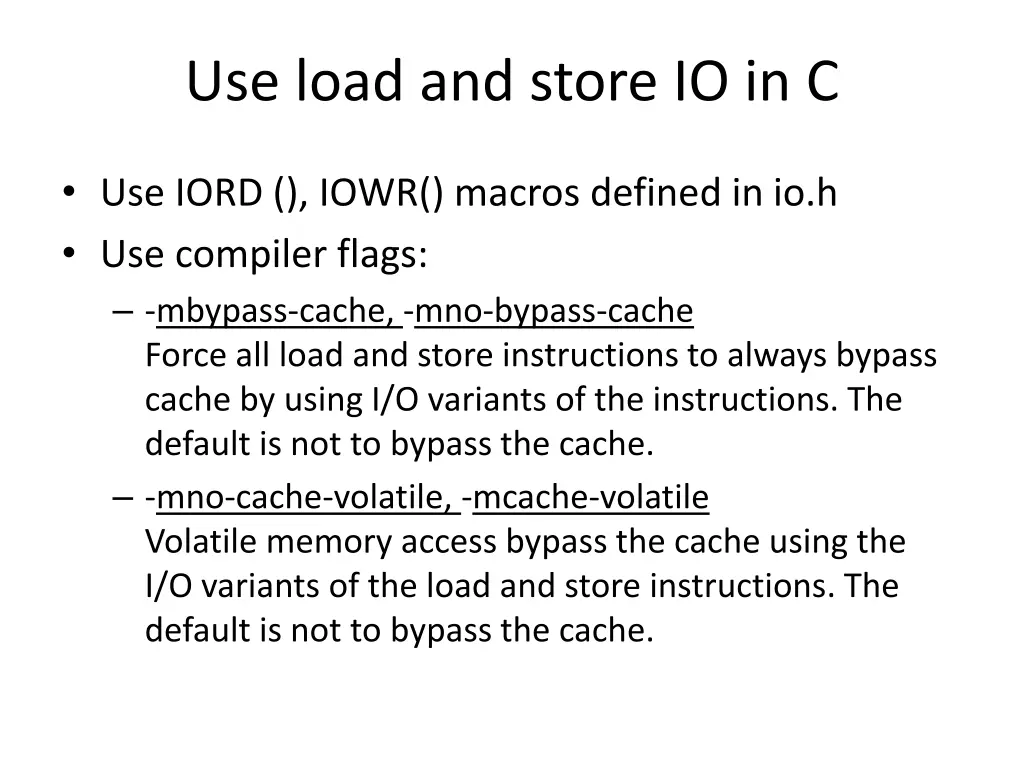
Use load and store IO in C Use IORD (), IOWR() macros defined in io.h Use compiler flags: -mbypass-cache, -mno-bypass-cache Force all load and store instructions to always bypass cache by using I/O variants of the instructions. The default is not to bypass the cache. -mno-cache-volatile, -mcache-volatile Volatile memory access bypass the cache using the I/O variants of the load and store instructions. The default is not to bypass the cache.
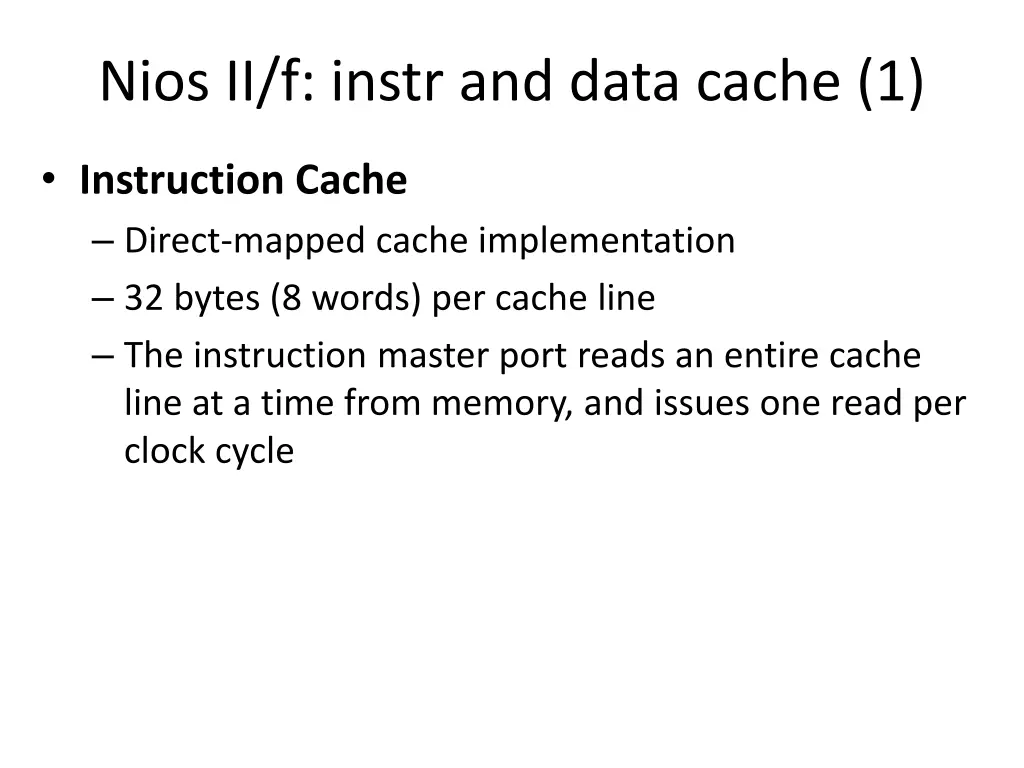
Nios II/f: instr and data cache (1) Instruction Cache Direct-mapped cache implementation 32 bytes (8 words) per cache line The instruction master port reads an entire cache line at a time from memory, and issues one read per clock cycle
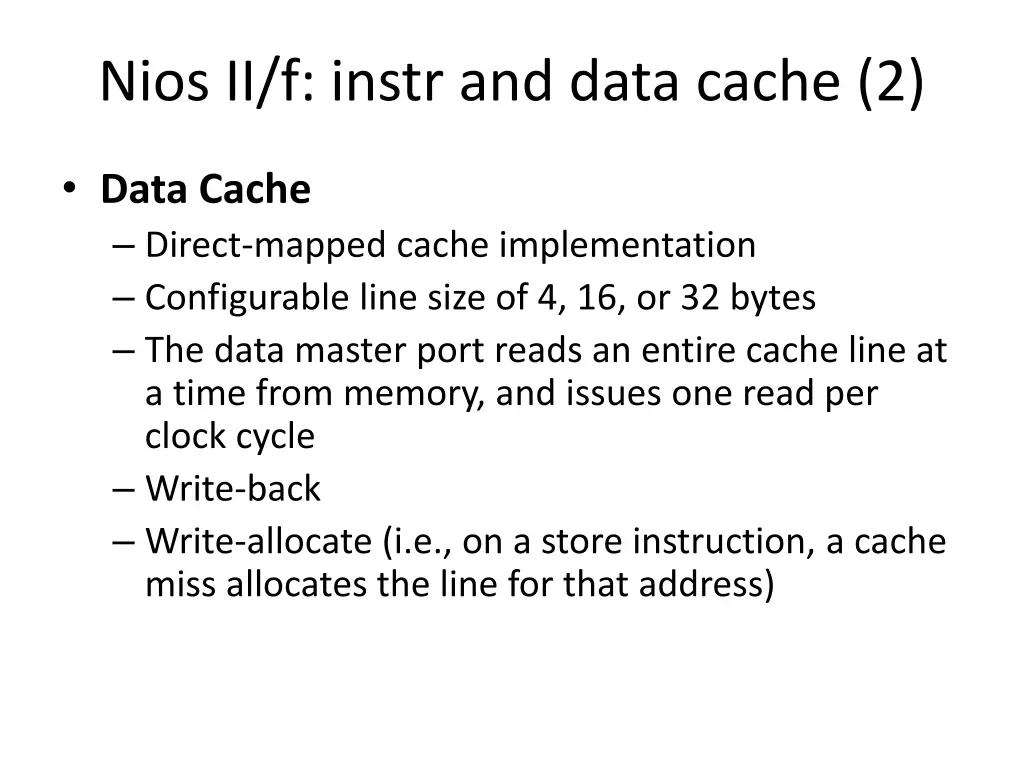
Nios II/f: instr and data cache (2) Data Cache Direct-mapped cache implementation Configurable line size of 4, 16, or 32 bytes The data master port reads an entire cache line at a time from memory, and issues one read per clock cycle Write-back Write-allocate (i.e., on a store instruction, a cache miss allocates the line for that address)
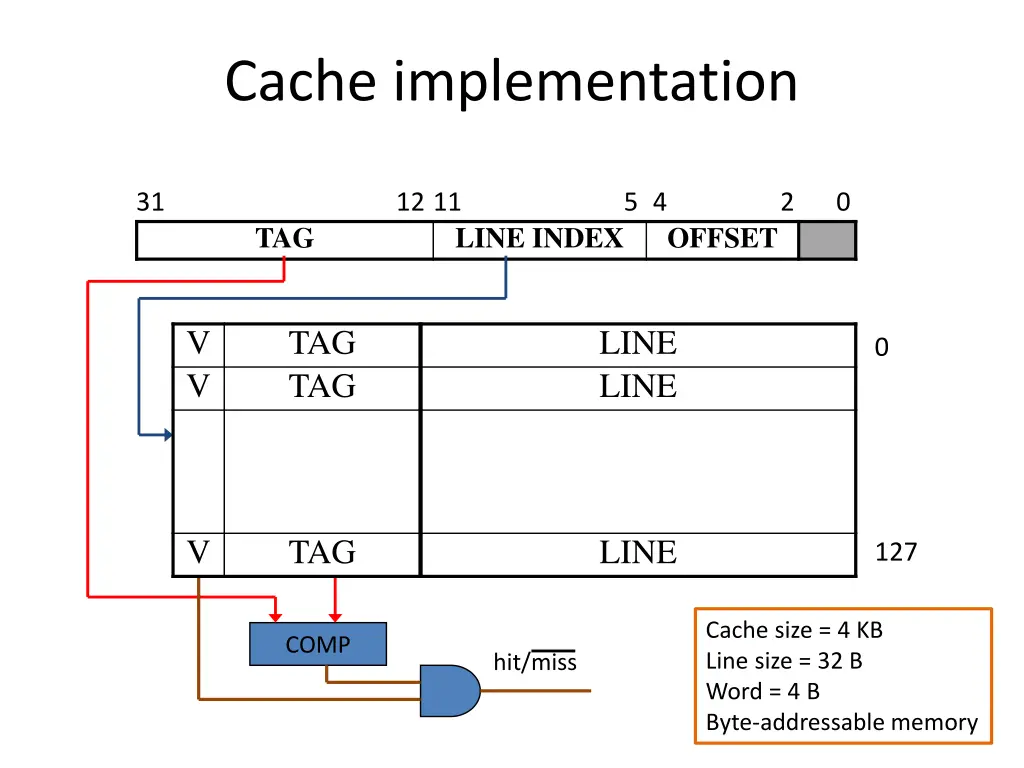
Cache implementation 31 12 11 5 4 2 0 TAG LINE INDEX OFFSET V V TAG TAG LINE LINE 0 V TAG LINE 127 Cache size = 4 KB Line size = 32 B Word = 4 B Byte-addressable memory COMP hit/miss
Tightly-coupled memories (1) Tightly-coupled memory provides guaranteed low-latency memory access for performance- critical applications. Compared to cache memory, tightly-coupled memory provides the following benefits: Performance similar to cache memory Programmer can guarantee that performance-critical code or data is located in tightly-coupled memory No real-time caching overhead, such as loading, invalidating, or flushing memory
Tightly-coupled memories (2) Physically, a tightly-coupled memory port is a separate master port on the Nios II processor core, similar to the instruction or data master port A Nios II core can have zero, one, or multiple tightly-coupled memories The Nios II architecture supports tightly-coupled memory for both instruction and data access Each tightly-coupled memory port connects directly to exactly one memory with guaranteed low, fixed latency The memory is external to the Nios II core but is located on chip
Tightly-coupled memories (3) Tightly-coupled memories occupy normal address space, the same as other memory devices connected via system interconnect fabric The address ranges for tightly-coupled memories (if any) are determined at system generation time Software accesses tightly-coupled memory using regular load and store instructions From the software s perspective, there is no difference accessing tightly-coupled memories compared to other memories
References Altera, Nios II Processor Reference Handbook, n2cpu_niiv1.pdf 2. Processor architecture/Memory and I/O organization