Empowering Indigenous Students in Higher Education
Discover insights into serving Indigenous students in higher education, including population statistics, student needs, barriers faced, and strategies for overcoming challenges. Learn about the experiences at Mohawk College and the efforts to support Indigenous education and success.

Download Presentation

Please find below an Image/Link to download the presentation.
The content on the website is provided AS IS for your information and personal use only. It may not be sold, licensed, or shared on other websites without obtaining consent from the author. If you encounter any issues during the download, it is possible that the publisher has removed the file from their server.
You are allowed to download the files provided on this website for personal or commercial use, subject to the condition that they are used lawfully. All files are the property of their respective owners.
The content on the website is provided AS IS for your information and personal use only. It may not be sold, licensed, or shared on other websites without obtaining consent from the author.
E N D
Presentation Transcript
Leah Hogan Manager-Indigenous Education
What I will be discussing: My experience Mohawk College Indigenous student data (2017/2018) Indigenous population overview Our experience servicing Indigenous students Barriers & accommodations to consider
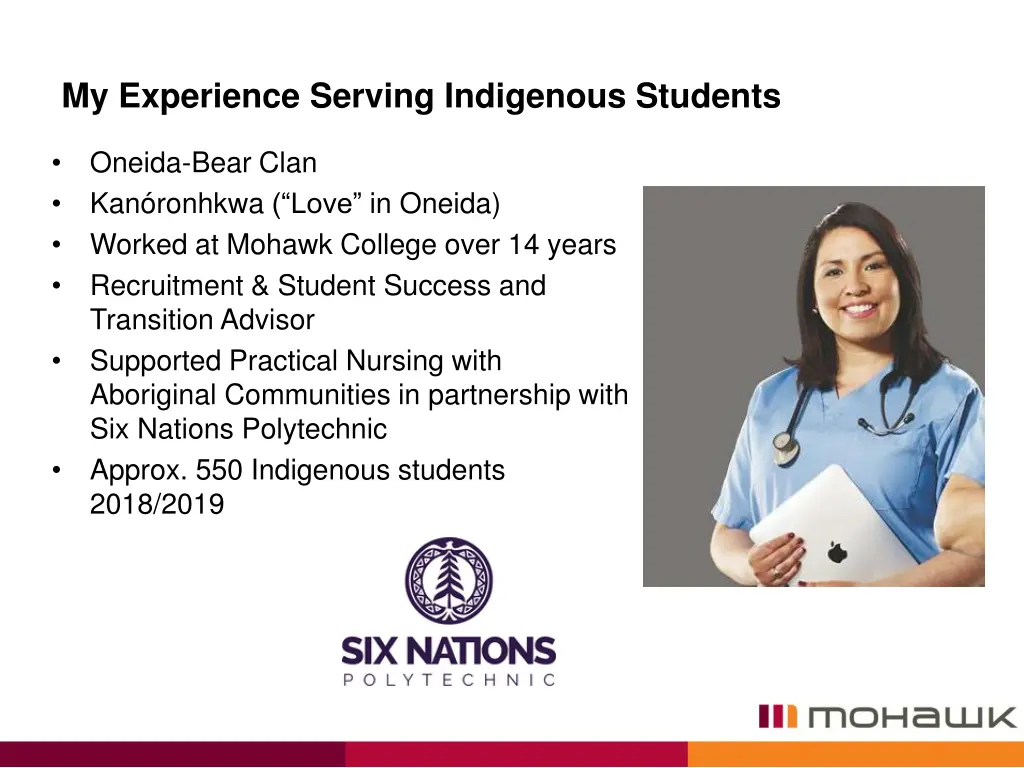
My Experience Serving Indigenous Students Oneida-Bear Clan Kan ronhkwa ( Love in Oneida) Worked at Mohawk College over 14 years Recruitment & Student Success and Transition Advisor Supported Practical Nursing with Aboriginal Communities in partnership with Six Nations Polytechnic Approx. 550 Indigenous students 2018/2019
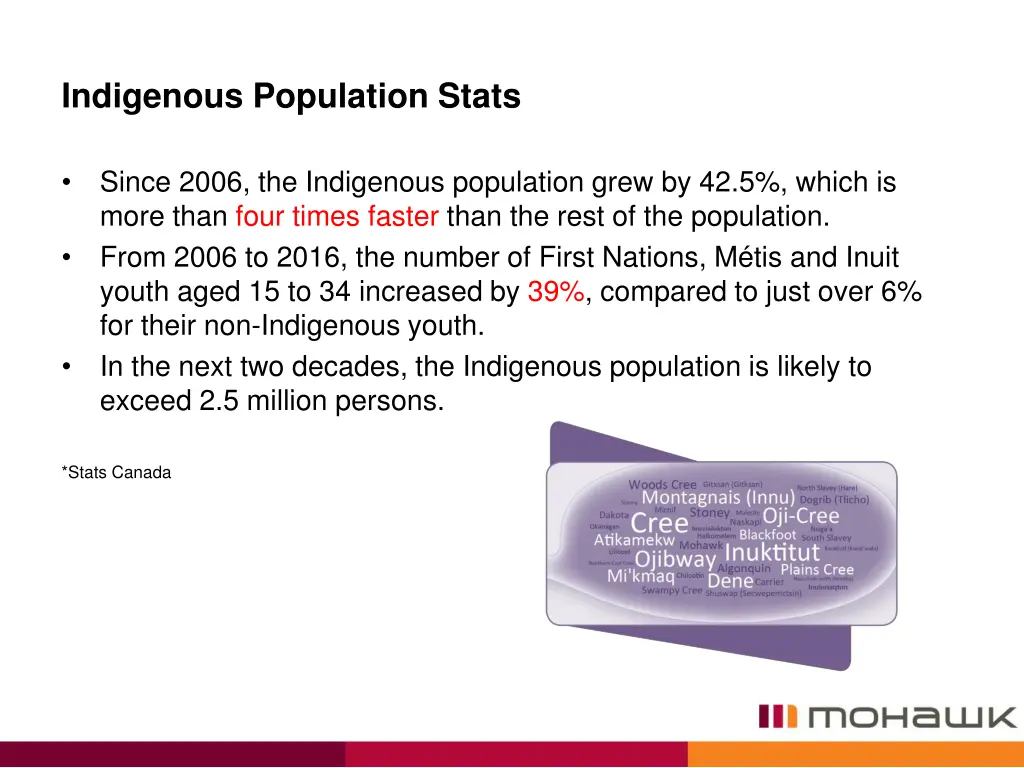
Indigenous Population Stats Since 2006, the Indigenous population grew by 42.5%, which is more than four times faster than the rest of the population. From 2006 to 2016, the number of First Nations, M tis and Inuit youth aged 15 to 34 increased by 39%, compared to just over 6% for their non-Indigenous youth. In the next two decades, the Indigenous population is likely to exceed 2.5 million persons. *Stats Canada
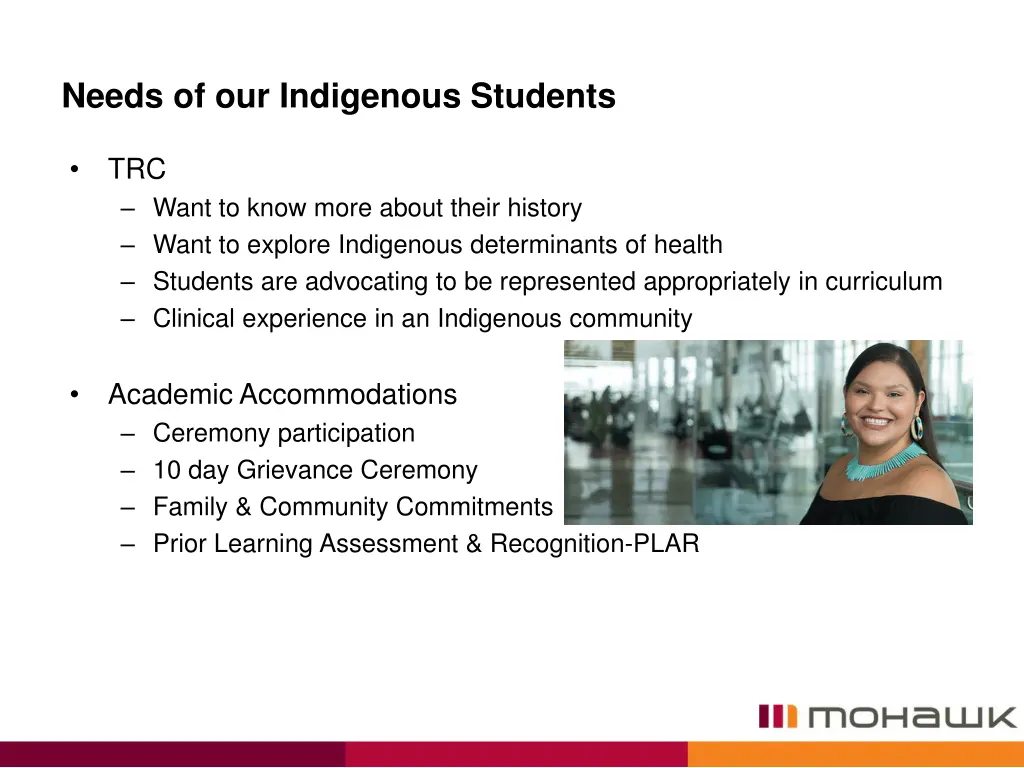
Needs of our Indigenous Students TRC Want to know more about their history Want to explore Indigenous determinants of health Students are advocating to be represented appropriately in curriculum Clinical experience in an Indigenous community Academic Accommodations Ceremony participation 10 day Grievance Ceremony Family & Community Commitments Prior Learning Assessment & Recognition-PLAR
Barriers Funding Issues No FN Band funding due to status Low in priority Falling out results in payback Admission testing Health Occupation Aptitude Examination-HOAE CASPer Transportation Childcare (early clinical placements) Lack of appropriate representation on campus Singled out in classroom discussions regarding Indigenous issues
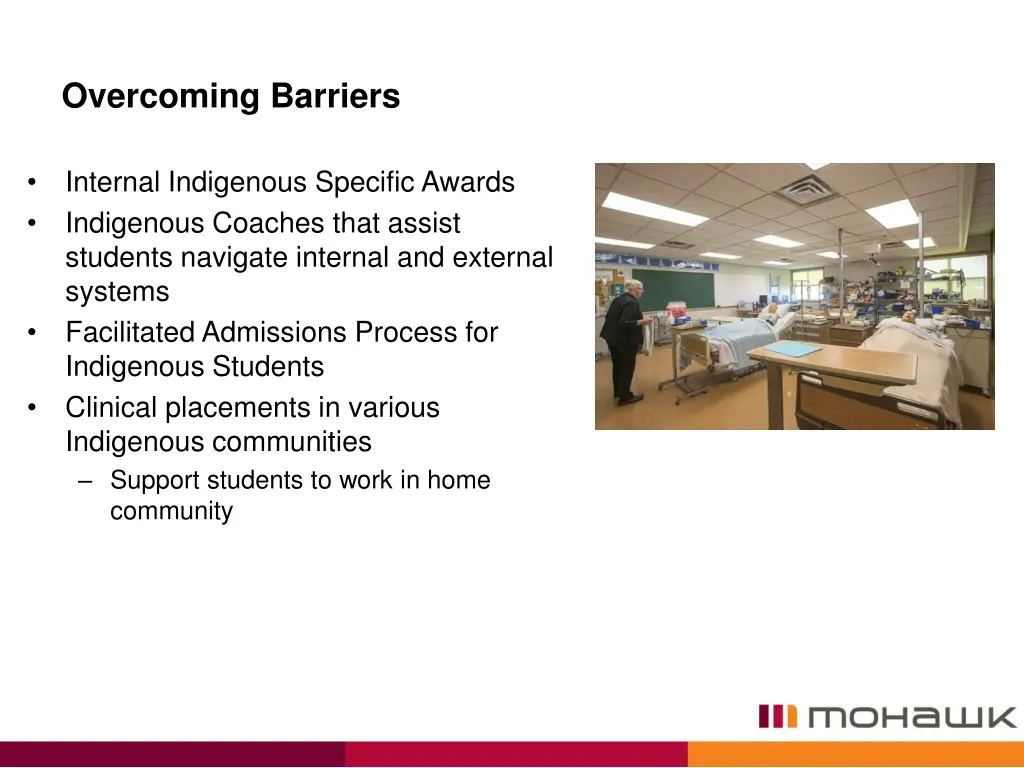
Overcoming Barriers Internal Indigenous Specific Awards Indigenous Coaches that assist students navigate internal and external systems Facilitated Admissions Process for Indigenous Students Clinical placements in various Indigenous communities Support students to work in home community
![READ⚡[PDF]✔ Emerging Space Powers: The New Space Programs of Asia, the Middle Ea](/thumb/21554/read-pdf-emerging-space-powers-the-new-space-programs-of-asia-the-middle-ea.jpg)