Empowering Students with Media Literacy for Informed Decision-Making
Explore the significance of media literacy in cultivating informed decision-makers among students. Understand the impact of fake news, sources of news consumption, and strategies to promote critical thinking skills. Enhance students' abilities to discern fact from falsehood in today's information landscape.

Download Presentation

Please find below an Image/Link to download the presentation.
The content on the website is provided AS IS for your information and personal use only. It may not be sold, licensed, or shared on other websites without obtaining consent from the author. If you encounter any issues during the download, it is possible that the publisher has removed the file from their server.
You are allowed to download the files provided on this website for personal or commercial use, subject to the condition that they are used lawfully. All files are the property of their respective owners.
The content on the website is provided AS IS for your information and personal use only. It may not be sold, licensed, or shared on other websites without obtaining consent from the author.
E N D
Presentation Transcript
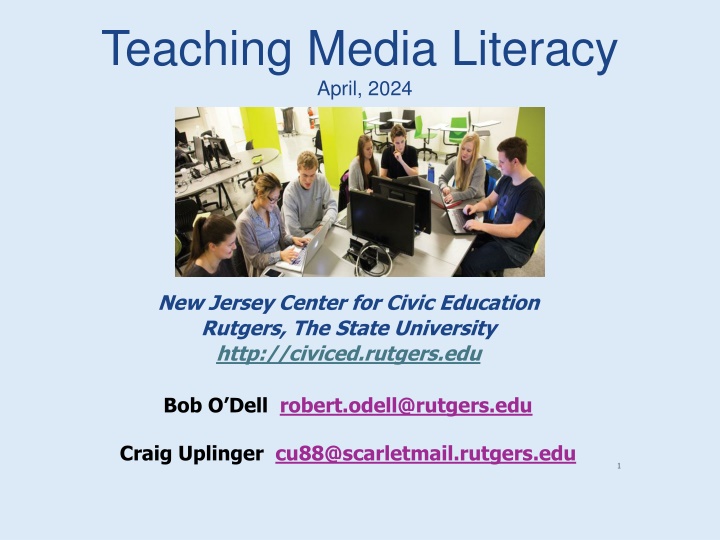
Teaching Media Literacy April, 2024 New Jersey Center for Civic Education Rutgers, The State University http://civiced.rutgers.edu Bob O Dell robert.odell@rutgers.edu Craig Uplinger cu88@scarletmail.rutgers.edu 1
The vision for NJ Student Learning Standards for Social Studies (2020) An education in social studies fosters a population that: Is civic-minded, globally aware, and socially responsible; Exemplifies fundamental values of democracy and human rights through active participation in local, state, national, and global communities; Makes informed decisions about local, state, national, and global events based on inquiry and analysis; Considers multiple perspectives, values diversity, and promotes cultural understanding; Recognizes the relationships between people, places, and resources as well as the implications of an interconnected global economy; Applies an understanding of critical media literacy skills when utilizing technology to learn, communicate, and collaborate with diverse people around the world; and Discerns fact from falsehood and critically analyzes information for validity and relevance. 2
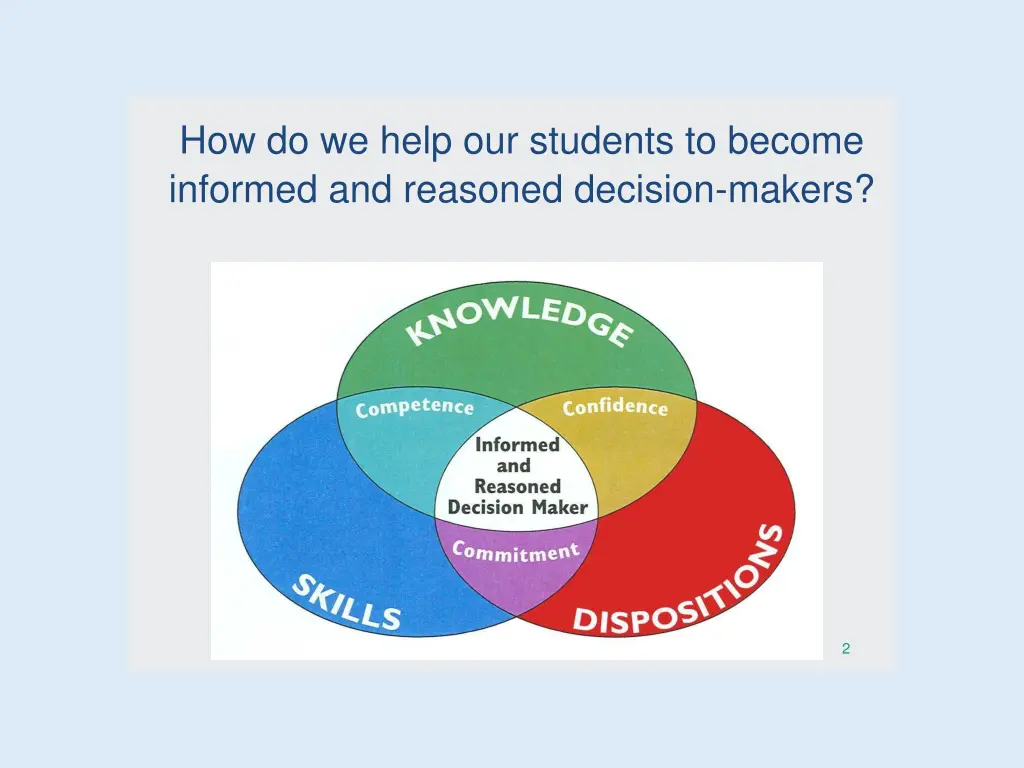
How do we help our students to become informed and reasoned decision-makers? 2
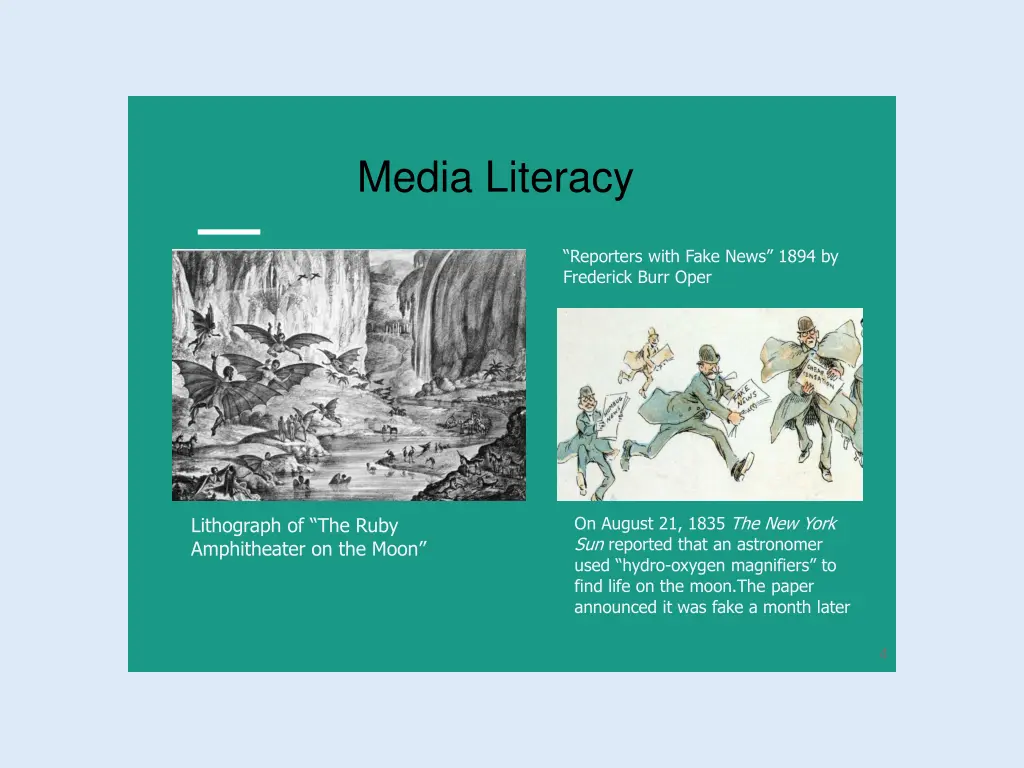
Media Literacy Reporters with Fake News 1894 by Frederick Burr Oper On August 21, 1835 The New York Sun reported that an astronomer used hydro-oxygen magnifiers to find life on the moon.The paper announced it was fake a month later Lithograph of The Ruby Amphitheater on the Moon 4
Where do you get your news/ information? Newspapers Radio Television News Television talk shows Television comedy shows Cable television Friends and relatives Online Social Media 5
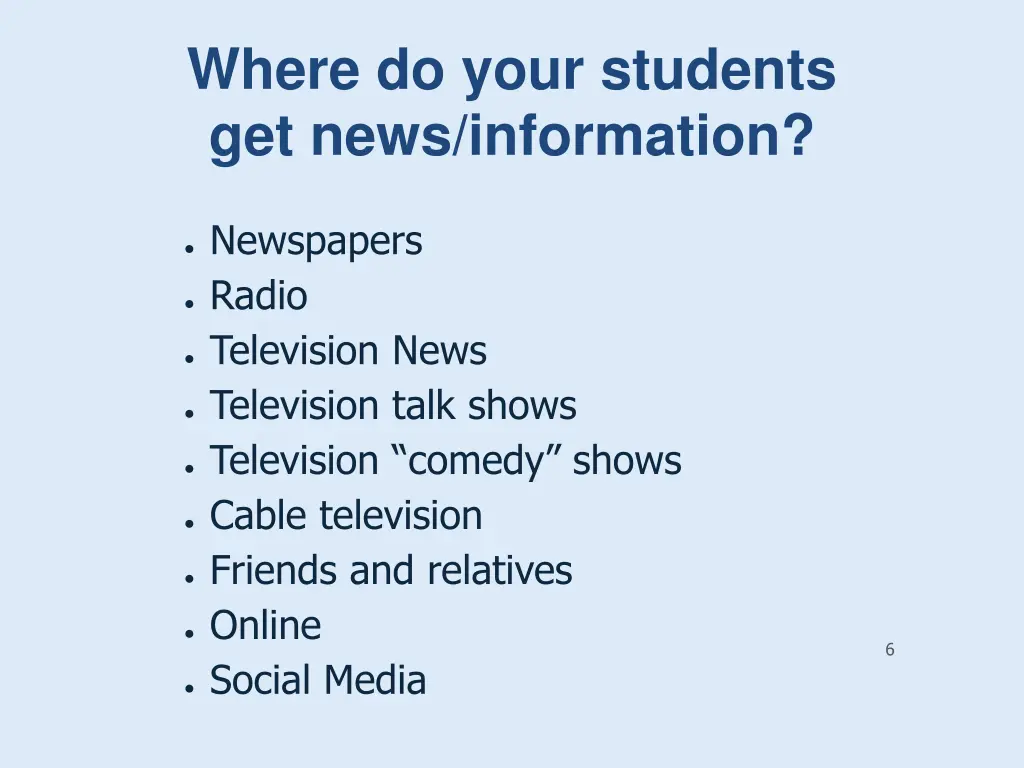
Where do your students get news/information? Newspapers Radio Television News Television talk shows Television comedy shows Cable television Friends and relatives Online Social Media 6
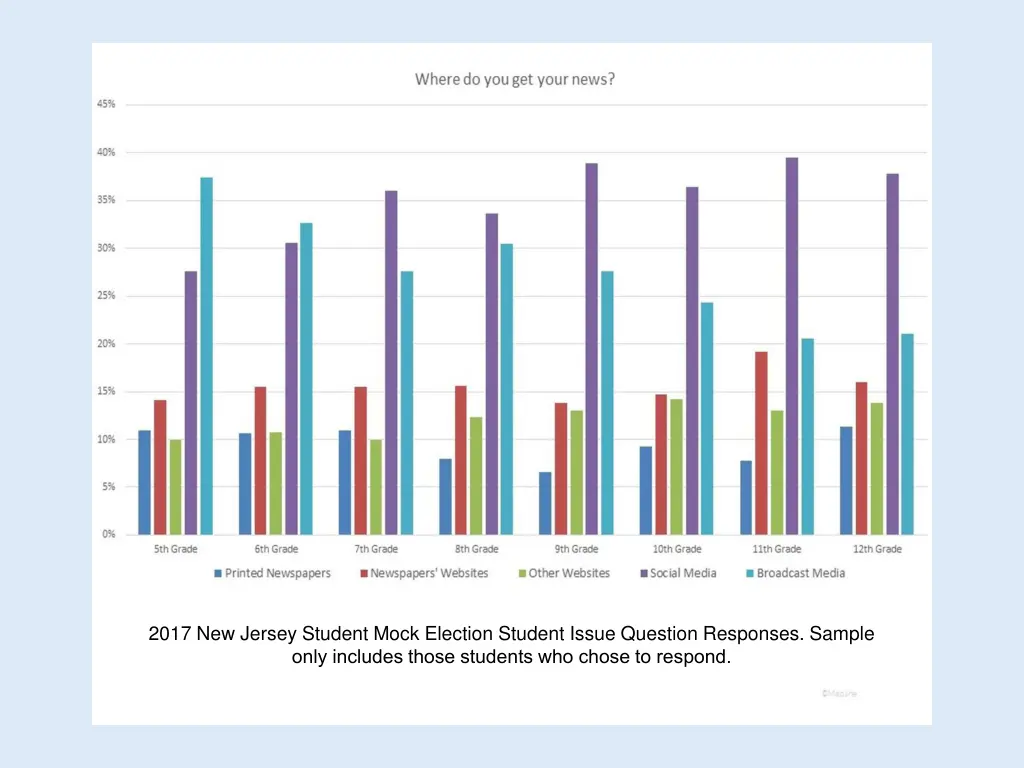
2017 New Jersey Student Mock Election Student Issue Question Responses. Sample only includes those students who chose to respond.
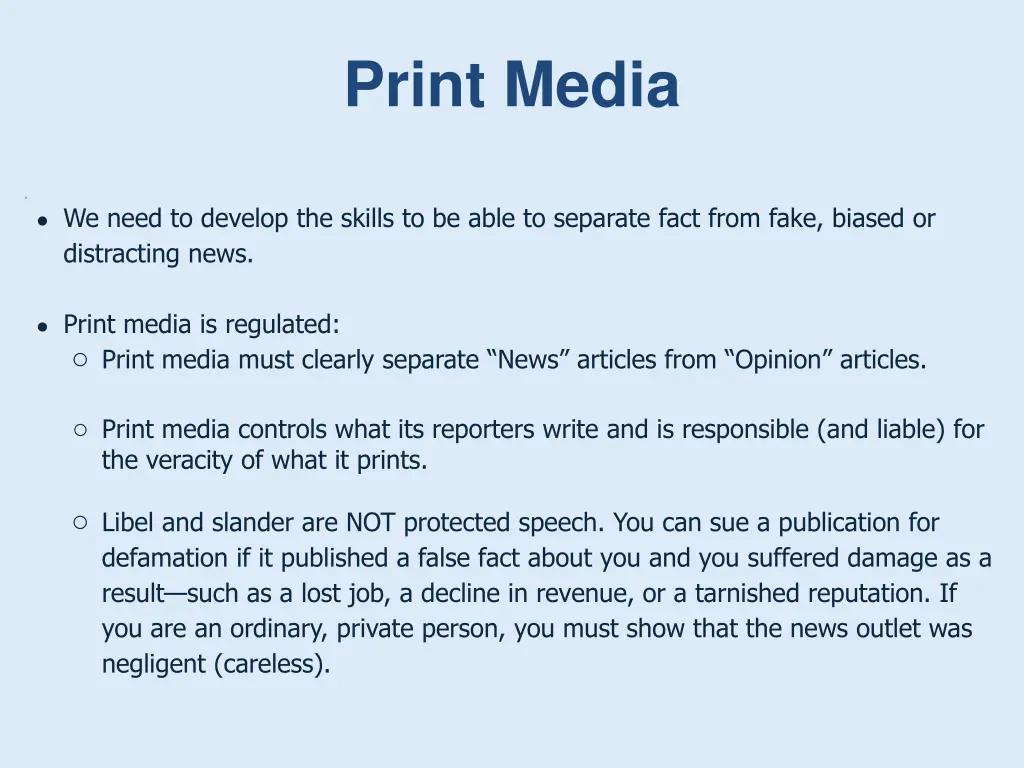
Print Media n We need to develop the skills to be able to separate fact from fake, biased or distracting news. Print media is regulated: Print media must clearly separate News articles from Opinion articles. Print media controls what its reporters write and is responsible (and liable) for the veracity of what it prints. Libel and slander are NOT protected speech. You can sue a publication for defamation if it published a false fact about you and you suffered damage as a result such as a lost job, a decline in revenue, or a tarnished reputation. If you are an ordinary, private person, you must show that the news outlet was negligent (careless).
Television and Radio Broadcast media (not cable) are subject to significant federal regulation because, according to U.S. law, the public owns the airwaves and television and radio broadcasters must get a license. For many years a federal fairness doctrine required broadcast media to provide fair coverage of political candidates and political opinions. The requirement has been removed but the practice continues, which is why you have so many talking heads with differing opinions Broadcast media, including cable TV, are subject to liability for falsehoods the same as print media. E.g., Dominion Voting System sued Fox News for defamation for its claims that its voting machines were rigged and that s why Trump lost in 2020. Fox settled for almost $800 million after discovery that made it clear that Fox knew what it was saying was false. Today s problem is that news has become entertainment and entertainment (e.g., Saturday Night Live, The Daily Show, etc.) has become a source of news.
Digital Media Most of our young people get their news, as well as their information for their class assignment, from digital media. NOT subject to Federal Communication Commission requirements Easy to access and has so much information (and misinformation, thus the problem) How can we help our students to identify and use reliable sources of online information?
Stanford History: Civic Online Reasoning Offers a series of free, online lessons for you and your students to help assess the reliability of online resources at Home | Civic Online Reasoning (stanford.edu) 1 2
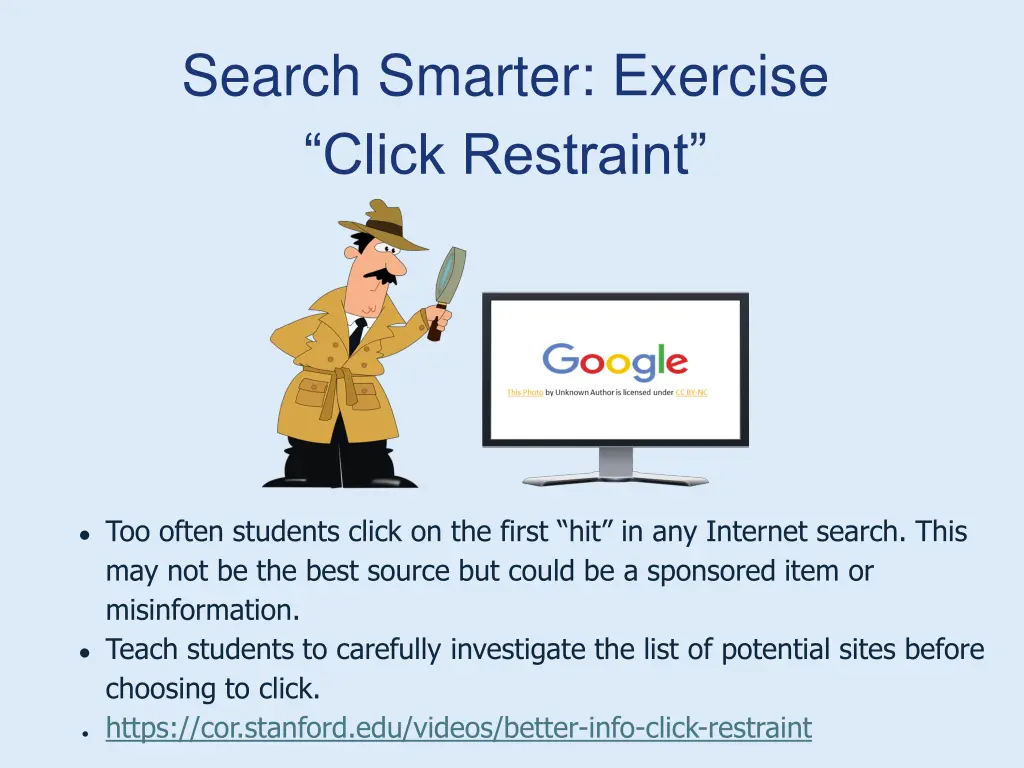
Search Smarter: Exercise Click Restraint Too often students click on the first hit in any Internet search. This may not be the best source but could be a sponsored item or misinformation. Teach students to carefully investigate the list of potential sites before choosing to click. https://cor.stanford.edu/videos/better-info-click-restraint
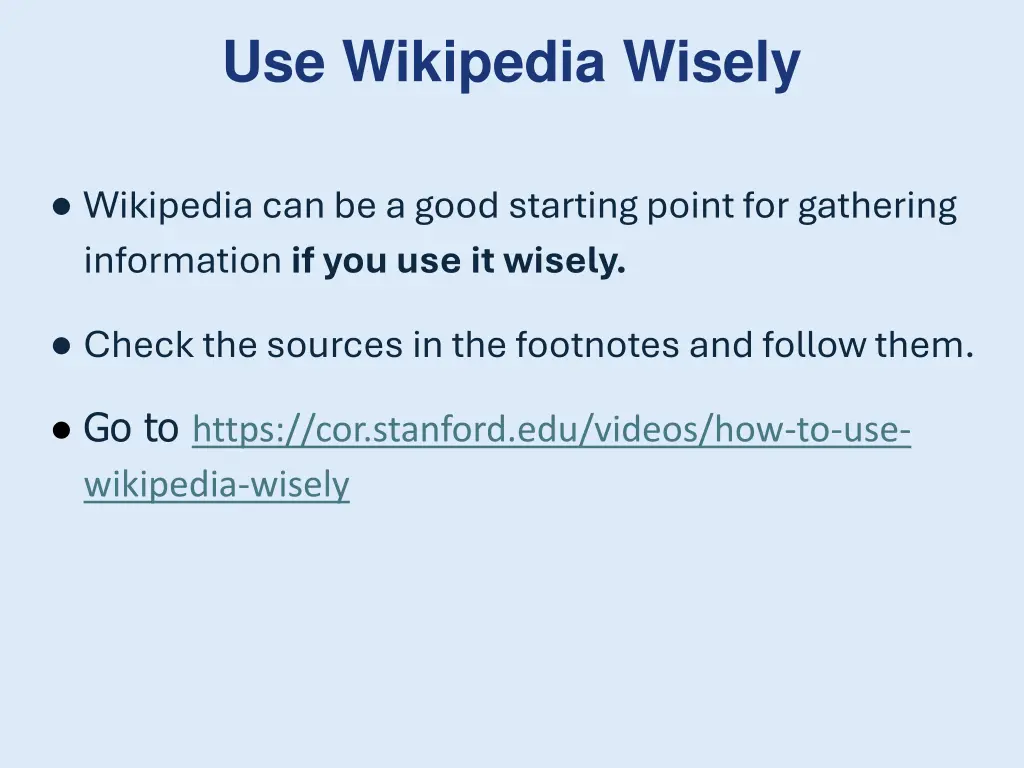
Use Wikipedia Wisely Wikipedia can be a good starting point for gathering information if you use it wisely. Check the sources in the footnotes and follow them. Go to https://cor.stanford.edu/videos/how-to-use- wikipedia-wisely
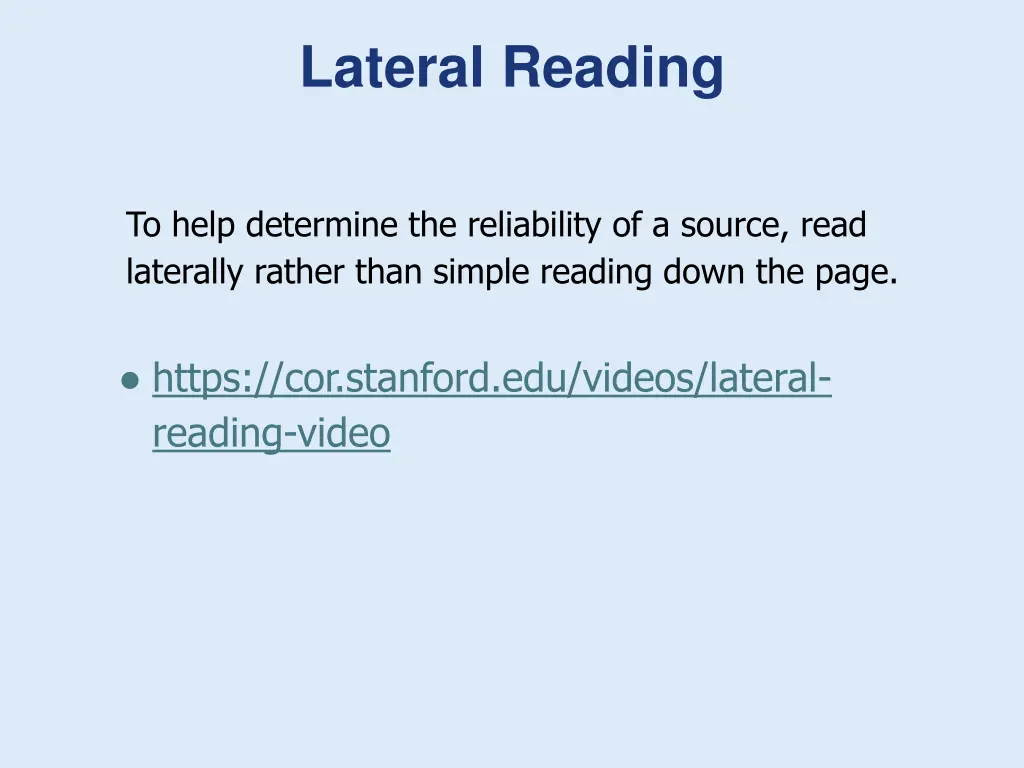
Lateral Reading To help determine the reliability of a source, read laterally rather than simple reading down the page. https://cor.stanford.edu/videos/lateral- reading-video
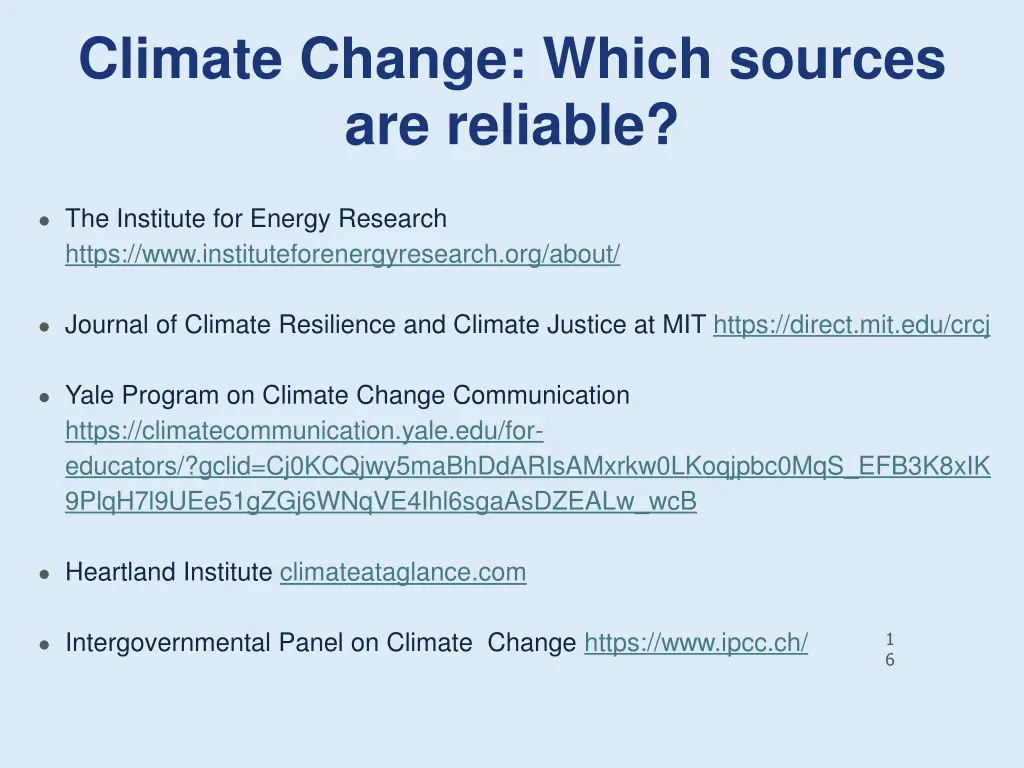
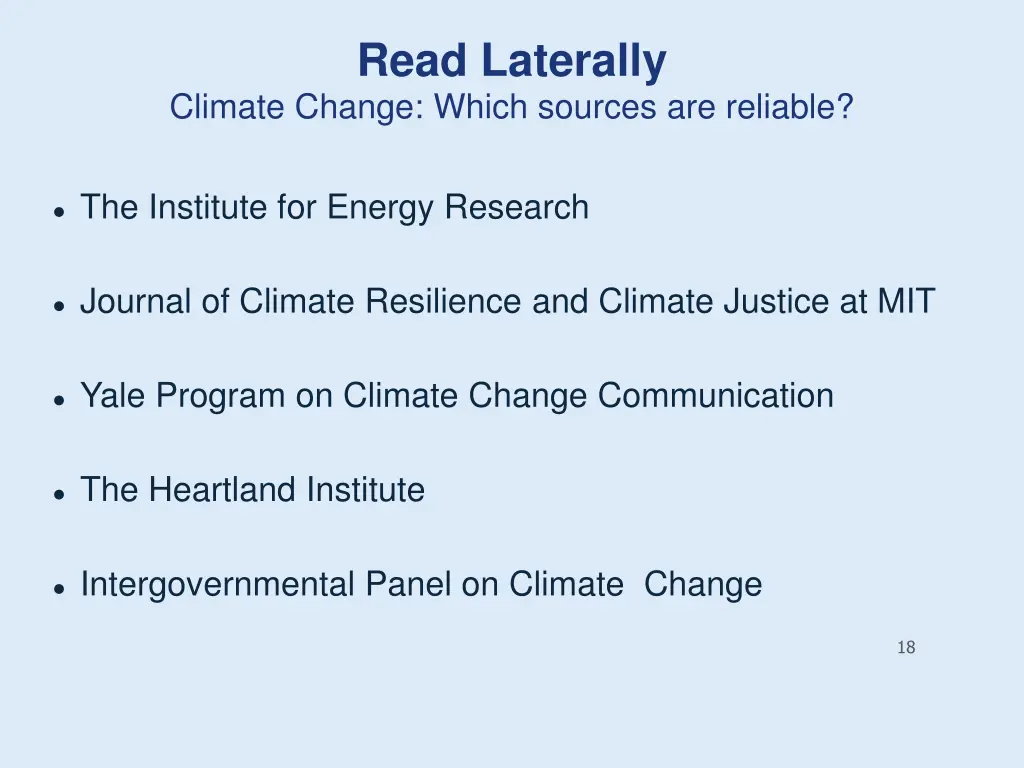
Climate Change: Which sources are reliable? The Institute for Energy Research https://www.instituteforenergyresearch.org/about/ Journal of Climate Resilience and Climate Justice at MIT https://direct.mit.edu/crcj Yale Program on Climate Change Communication https://climatecommunication.yale.edu/for- educators/?gclid=Cj0KCQjwy5maBhDdARIsAMxrkw0LKoqjpbc0MqS_EFB3K8xIK 9PlqH7l9UEe51gZGj6WNqVE4Ihl6sgaAsDZEALw_wcB Heartland Institute climateataglance.com Intergovernmental Panel on Climate Change https://www.ipcc.ch/ 1 6
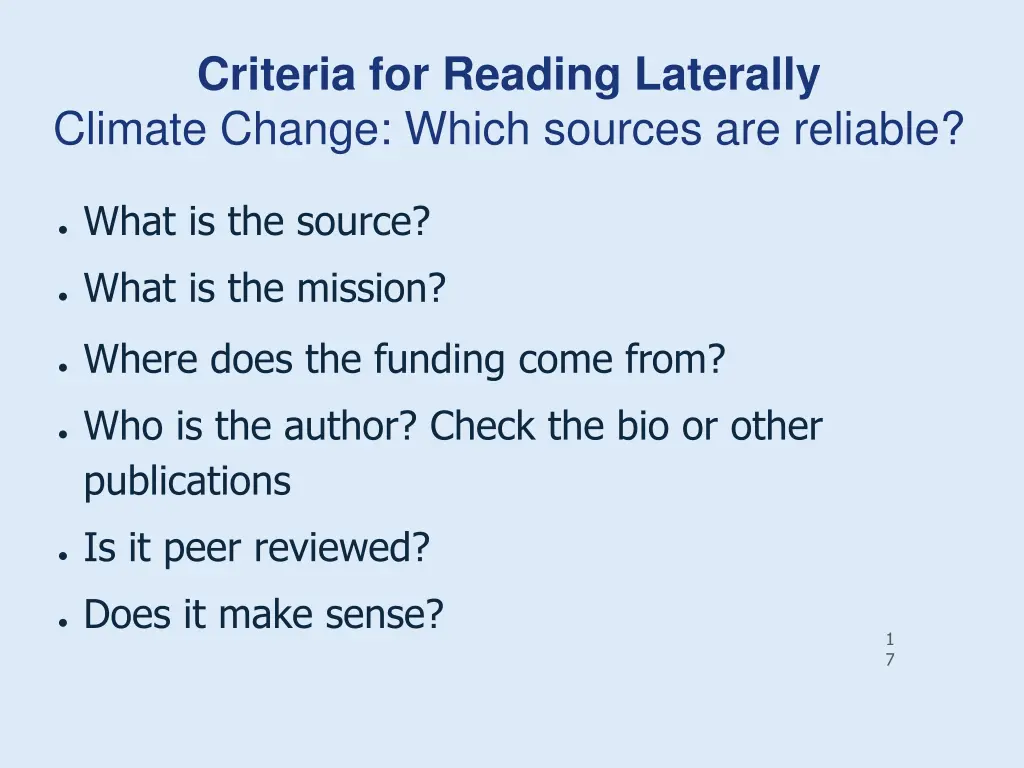
Criteria for Reading Laterally Climate Change: Which sources are reliable? What is the source? What is the mission? Where does the funding come from? Who is the author? Check the bio or other publications Is it peer reviewed? Does it make sense? 1 7
Read Laterally Climate Change: Which sources are reliable? The Institute for Energy Research Journal of Climate Resilience and Climate Justice at MIT Yale Program on Climate Change Communication The Heartland Institute Intergovernmental Panel on Climate Change 18
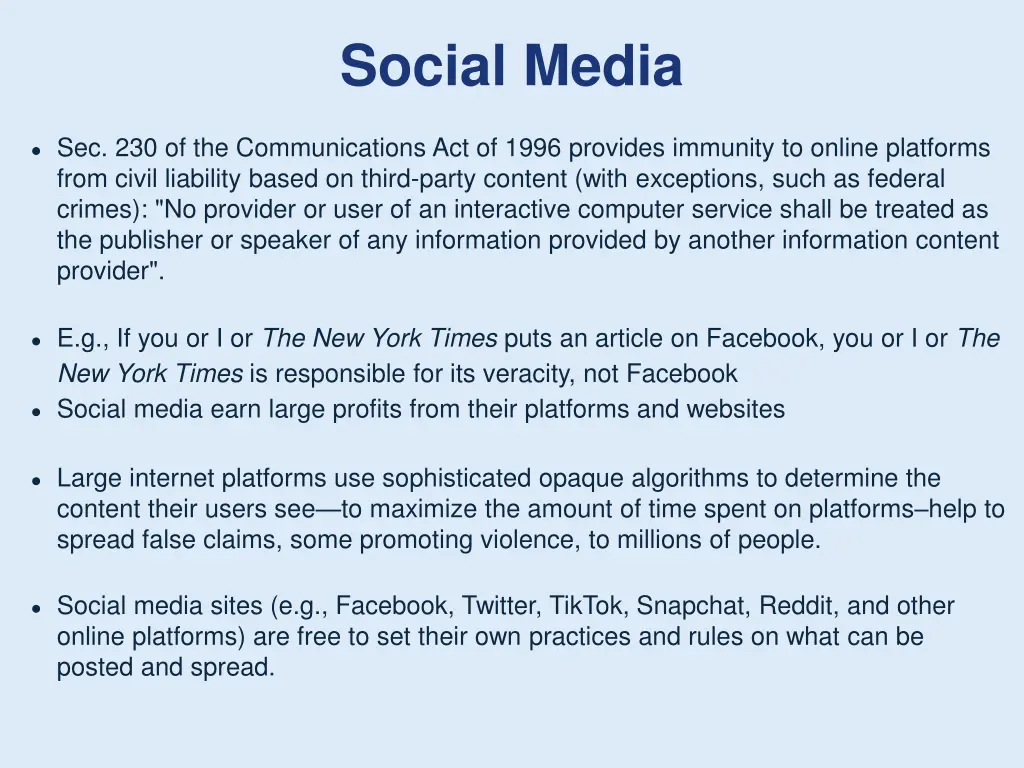
Social Media Sec. 230 of the Communications Act of 1996 provides immunity to online platforms from civil liability based on third-party content (with exceptions, such as federal crimes): "No provider or user of an interactive computer service shall be treated as the publisher or speaker of any information provided by another information content provider". E.g., If you or I or The New York Times puts an article on Facebook, you or I or The New York Times is responsible for its veracity, not Facebook Social media earn large profits from their platforms and websites Large internet platforms use sophisticated opaque algorithms to determine the content their users see to maximize the amount of time spent on platforms help to spread false claims, some promoting violence, to millions of people. Social media sites (e.g., Facebook, Twitter, TikTok, Snapchat, Reddit, and other online platforms) are free to set their own practices and rules on what can be posted and spread.
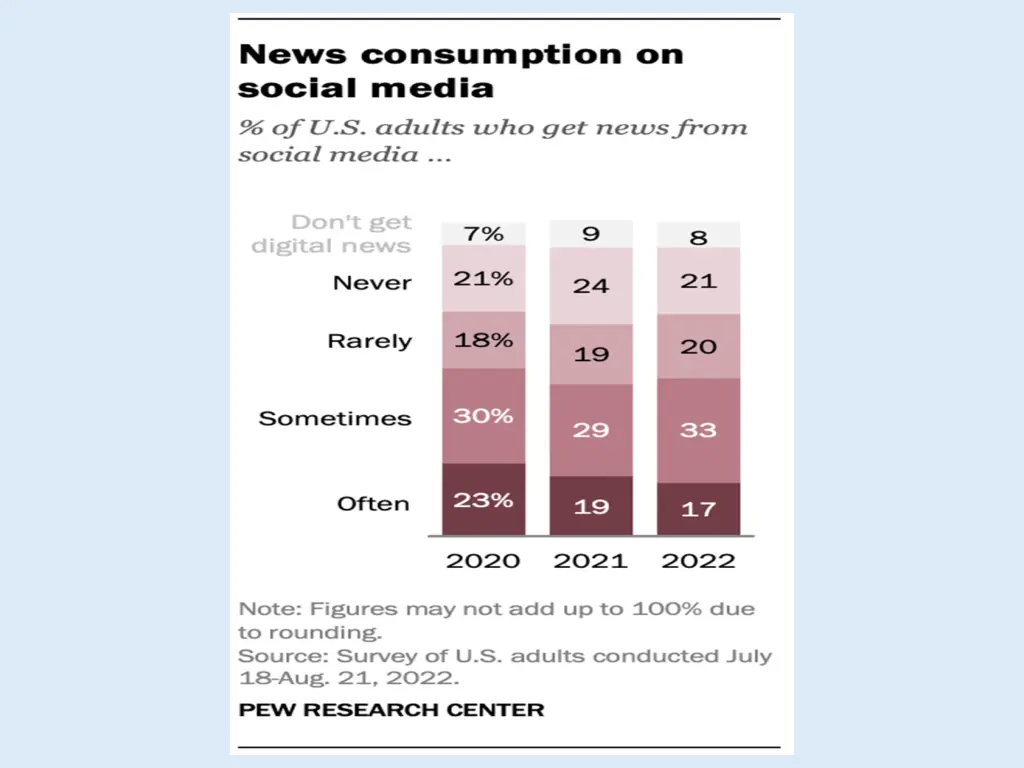
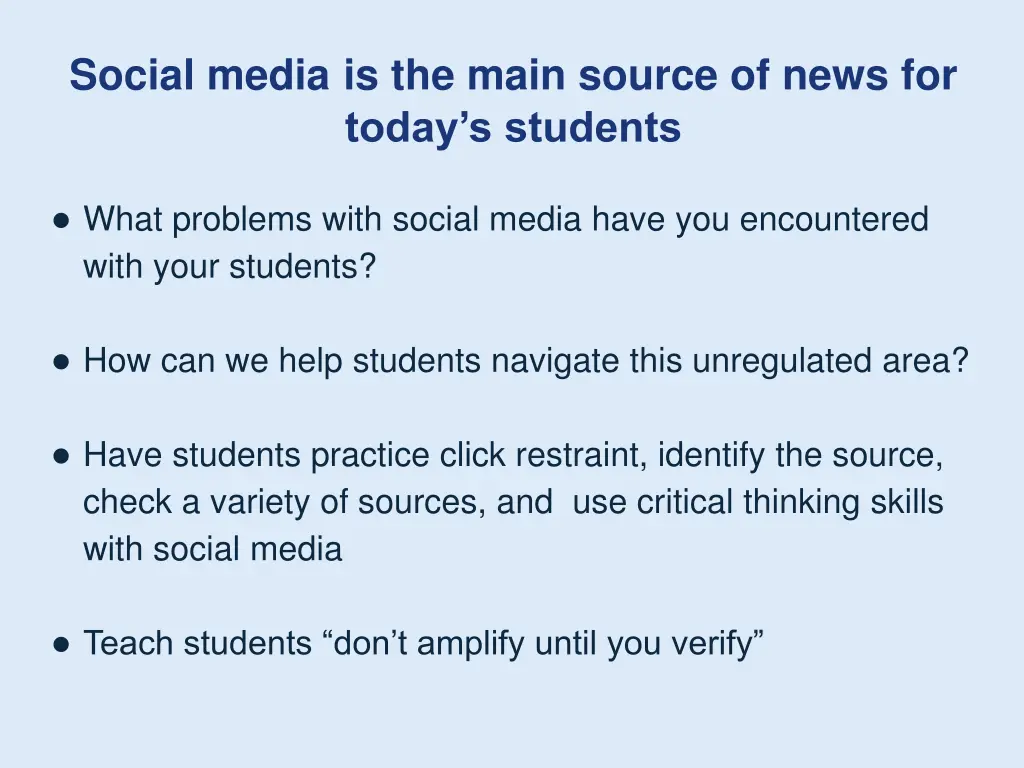
Social mediais the main source of news for today s students What problems with social media have you encountered with your students? How can we help students navigate this unregulated area? Have students practice click restraint, identify the source, check a variety of sources, and use critical thinking skills with social media Teach students don t amplify until you verify
Media Literacy: A Little Logic In a republican nation, whose citizens are to be led by reason and persuasion and not by force, the art of reasoning becomes of first importance. Thomas Jefferson 22
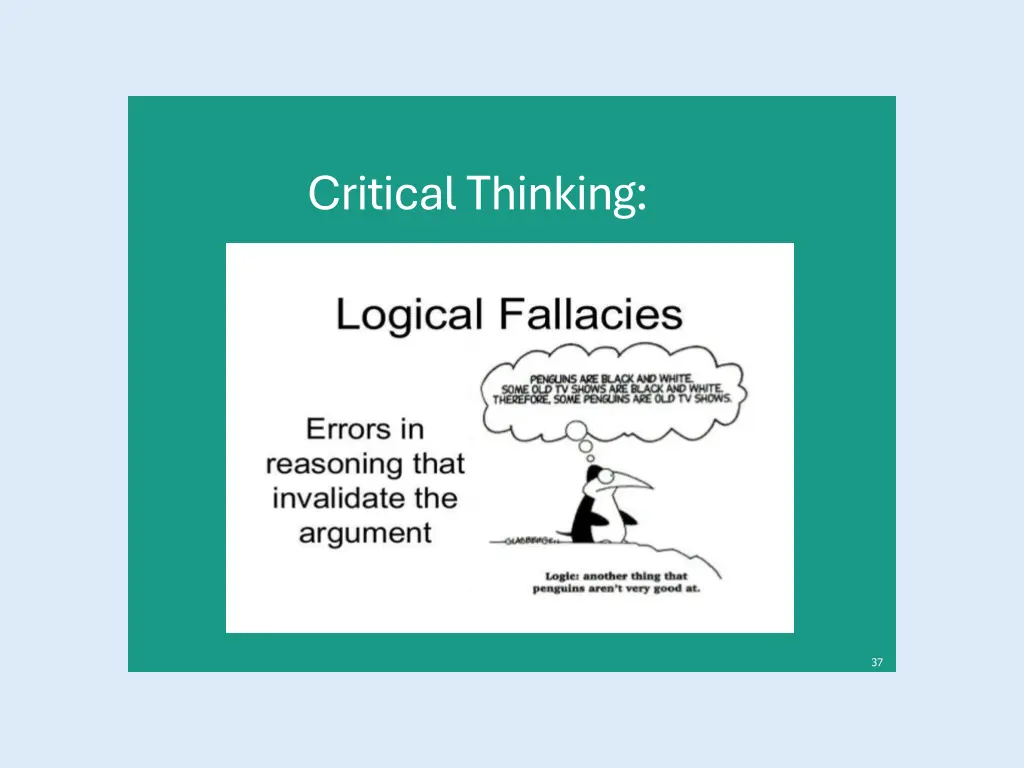
Why Teach Logical Fallacies? A little logic probably doesn t seem like a social studies or media literacy topic, but there is a good reason for doing this. Critical thinking about statements provides a means for addressing some problematic statements that may be stated in classroom discussions. It allows critiques according to structure, rather than content. It also helps avoid the problem of vulgar relativity . Logic is a key part of media literacy and critical thinking, which are essential for addressing controversial issues. Logical fallacies are committed by politicians and partisan pundits, either with the intent to deceive or as a result of sloppy thinking, leading to false conclusions and untrue positions. Students need the tools to recognize this. Similar to other media literacy skills, this can also help students become better consumers and protect their financial security.
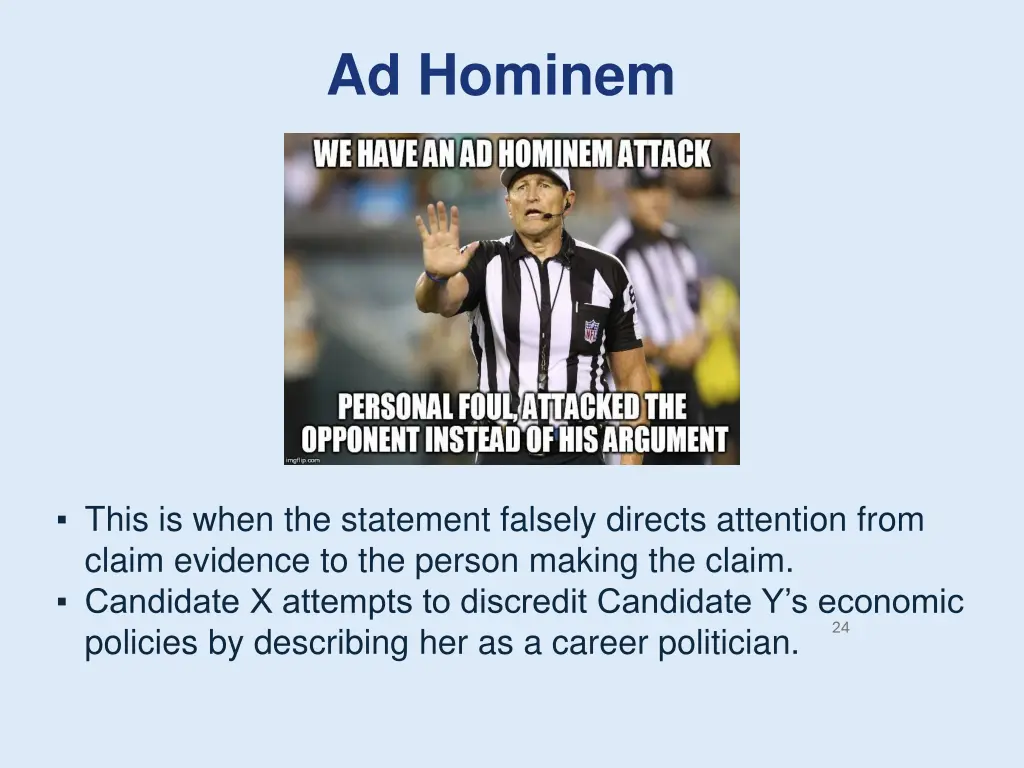
Ad Hominem This is when the statement falsely directs attention from claim evidence to the person making the claim. Candidate X attempts to discredit Candidate Y s economic policies by describing her as a career politician. 24
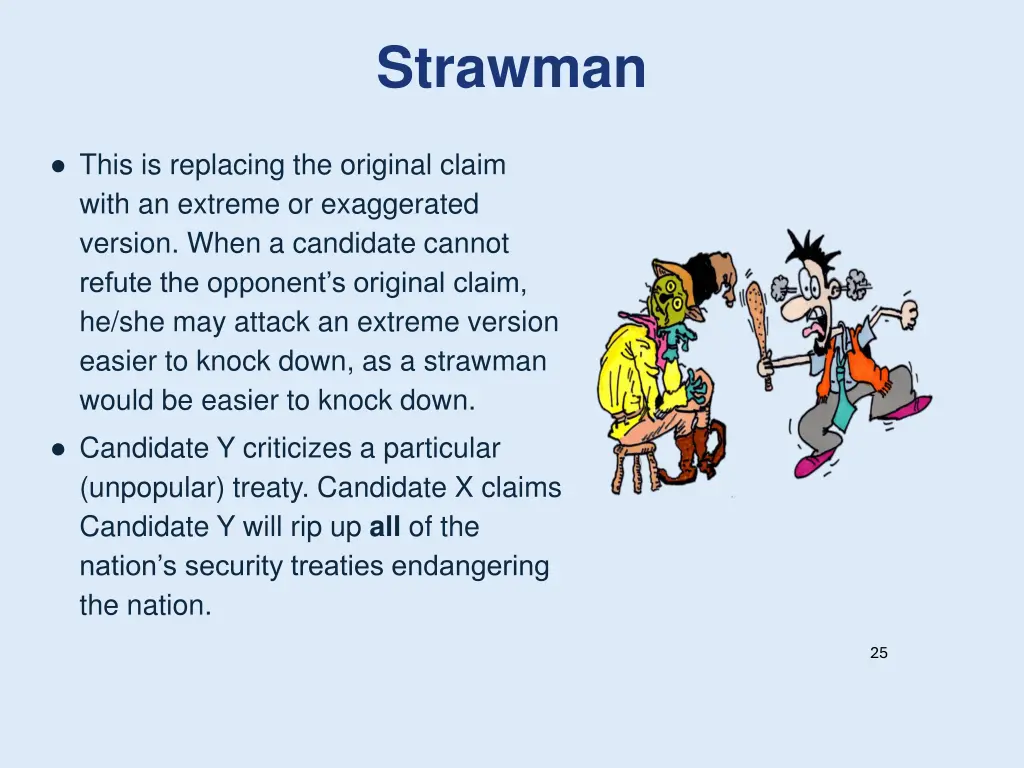
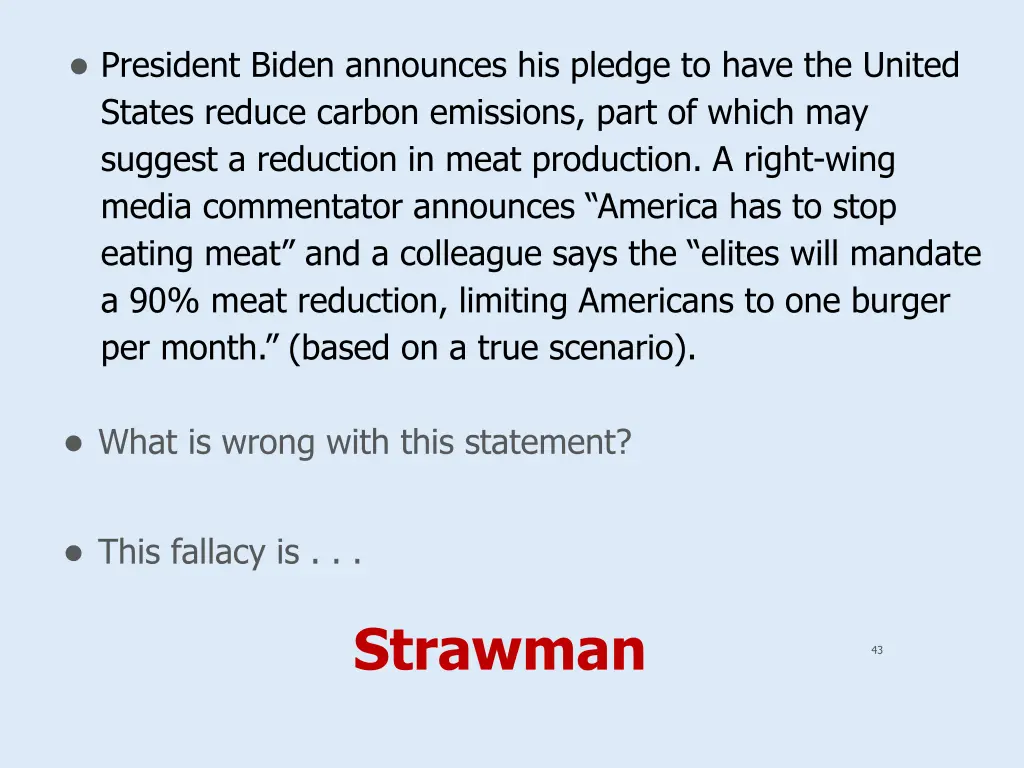
Strawman This is replacing the original claim with an extreme or exaggerated version. When a candidate cannot refute the opponent s original claim, he/she may attack an extreme version easier to knock down, as a strawman would be easier to knock down. Candidate Y criticizes a particular (unpopular) treaty. Candidate X claims Candidate Y will rip up all of the nation s security treaties endangering the nation. 25
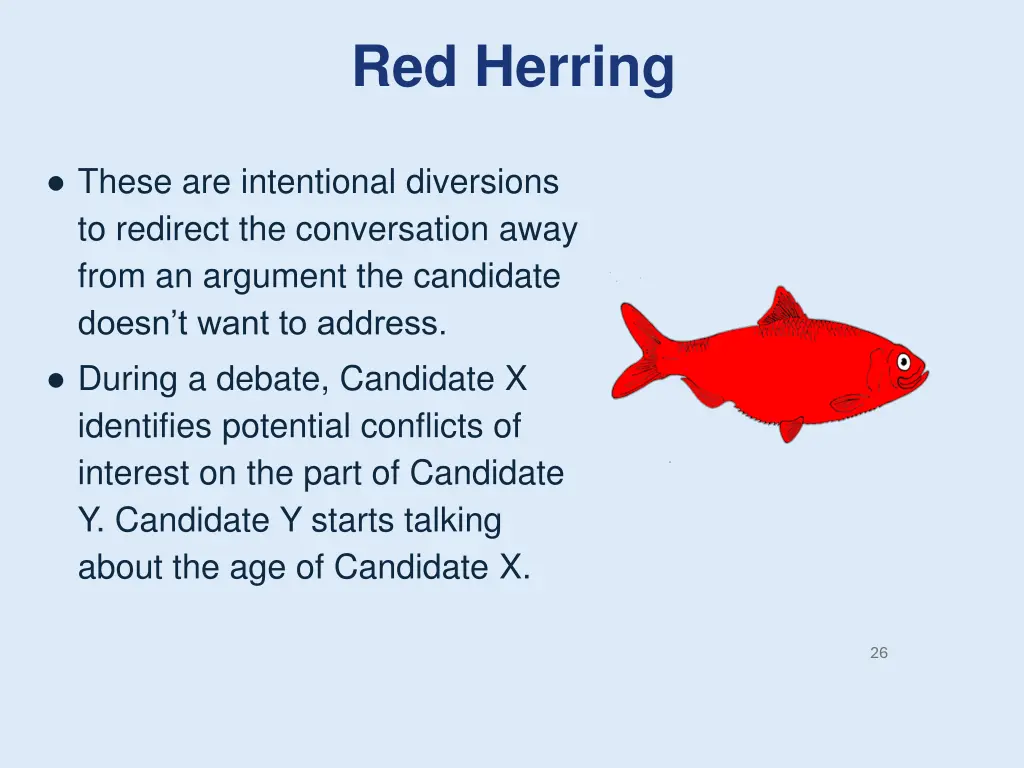
Red Herring These are intentional diversions to redirect the conversation away from an argument the candidate doesn t want to address. During a debate, Candidate X identifies potential conflicts of interest on the part of Candidate Y. Candidate Y starts talking about the age of Candidate X. 26
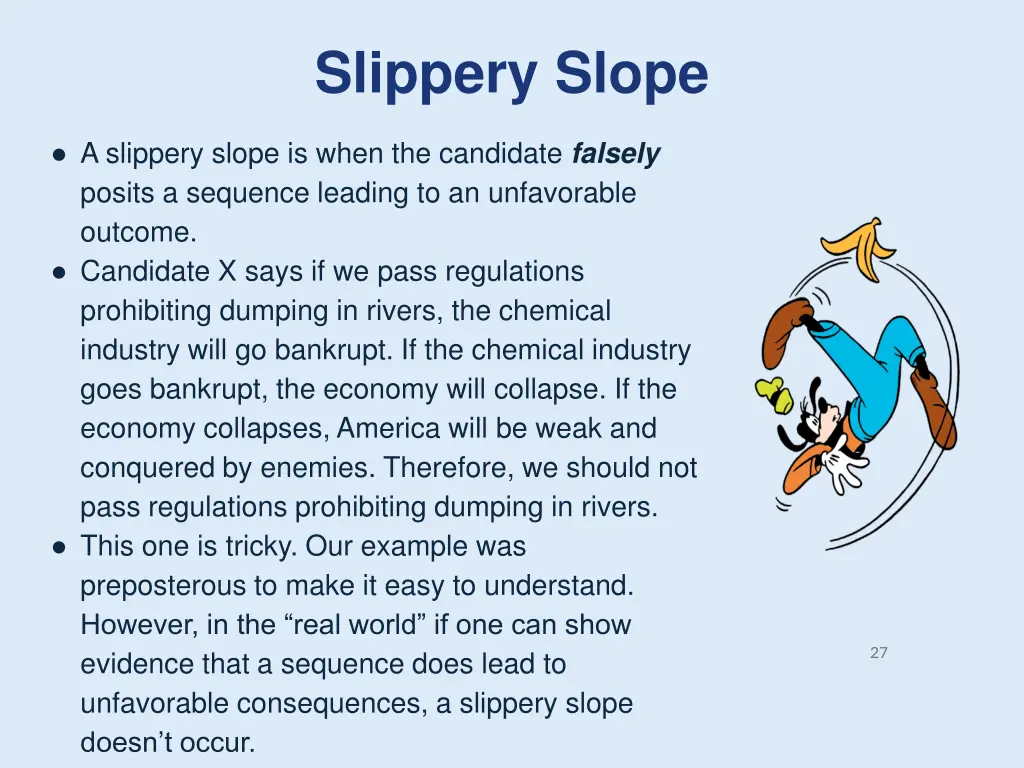
Slippery Slope A slippery slope is when the candidate falsely posits a sequence leading to an unfavorable outcome. Candidate X says if we pass regulations prohibiting dumping in rivers, the chemical industry will go bankrupt. If the chemical industry goes bankrupt, the economy will collapse. If the economy collapses, America will be weak and conquered by enemies. Therefore, we should not pass regulations prohibiting dumping in rivers. This one is tricky. Our example was preposterous to make it easy to understand. However, in the real world if one can show evidence that a sequence does lead to unfavorable consequences, a slippery slope doesn t occur. 27
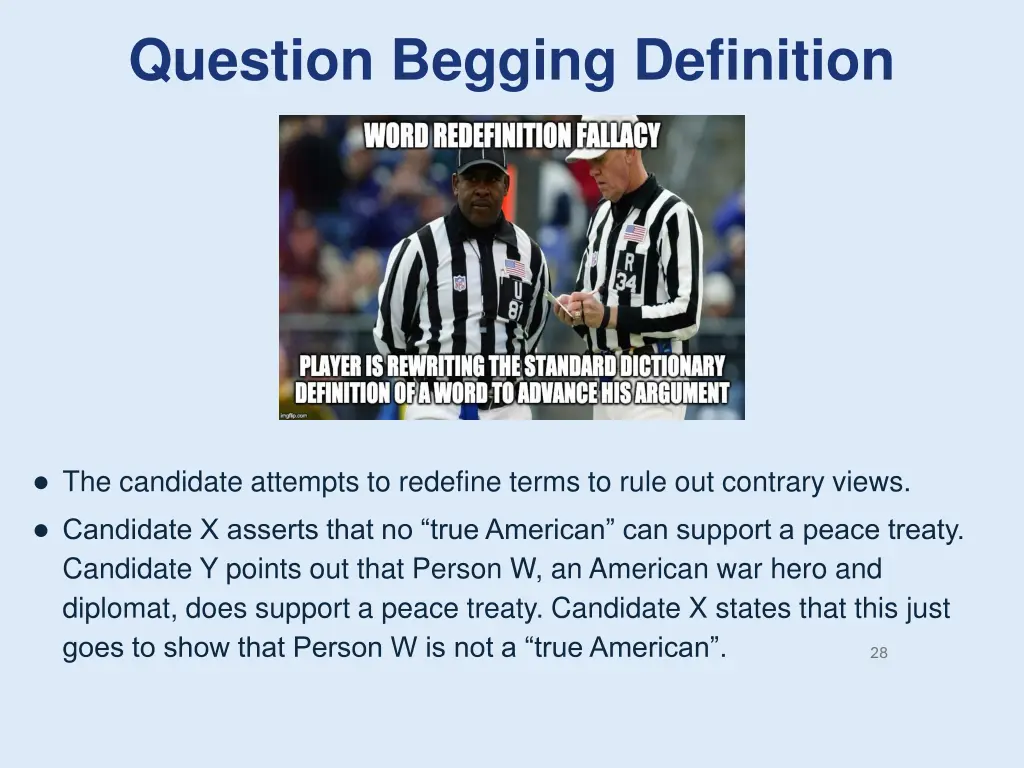
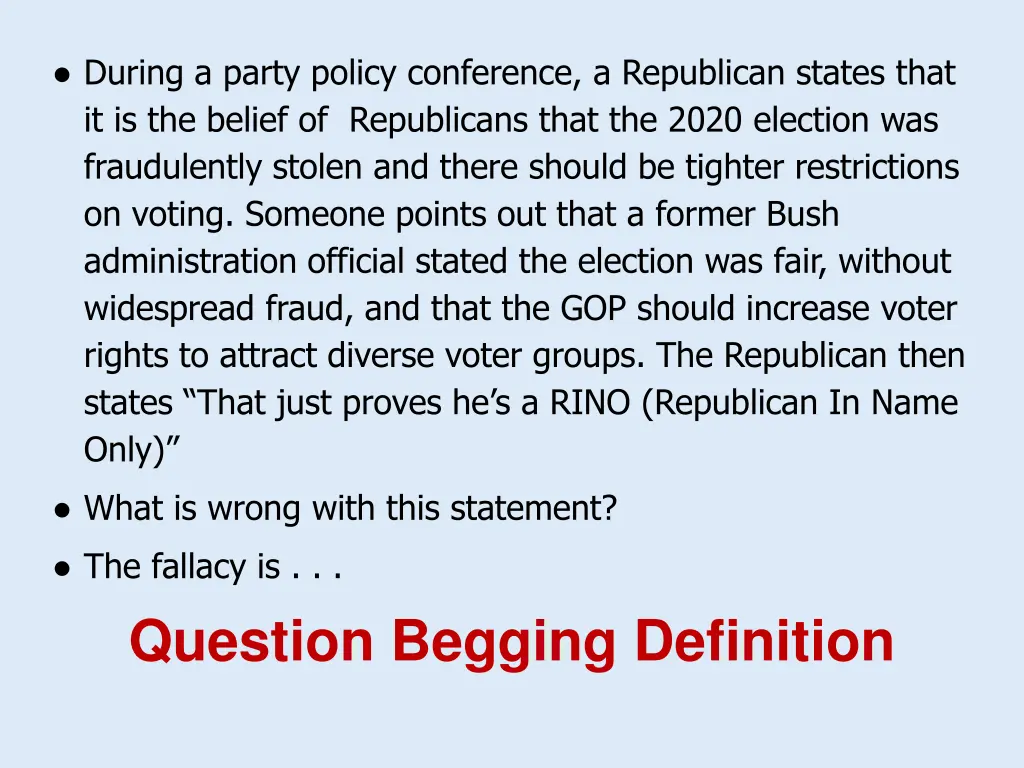
Question Begging Definition The candidate attempts to redefine terms to rule out contrary views. Candidate X asserts that no true American can support a peace treaty. Candidate Y points out that Person W, an American war hero and diplomat, does support a peace treaty. Candidate X states that this just goes to show that Person W is not a true American . 28
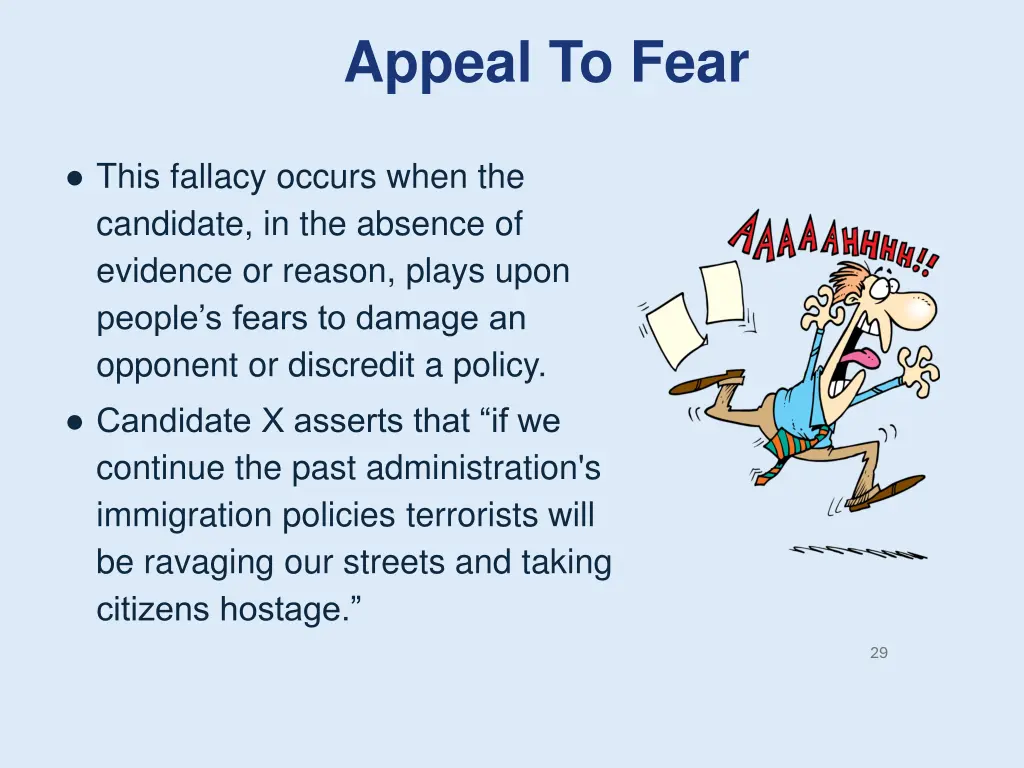
Appeal To Fear This fallacy occurs when the candidate, in the absence of evidence or reason, plays upon people s fears to damage an opponent or discredit a policy. Candidate X asserts that if we continue the past administration's immigration policies terrorists will be ravaging our streets and taking citizens hostage. 29
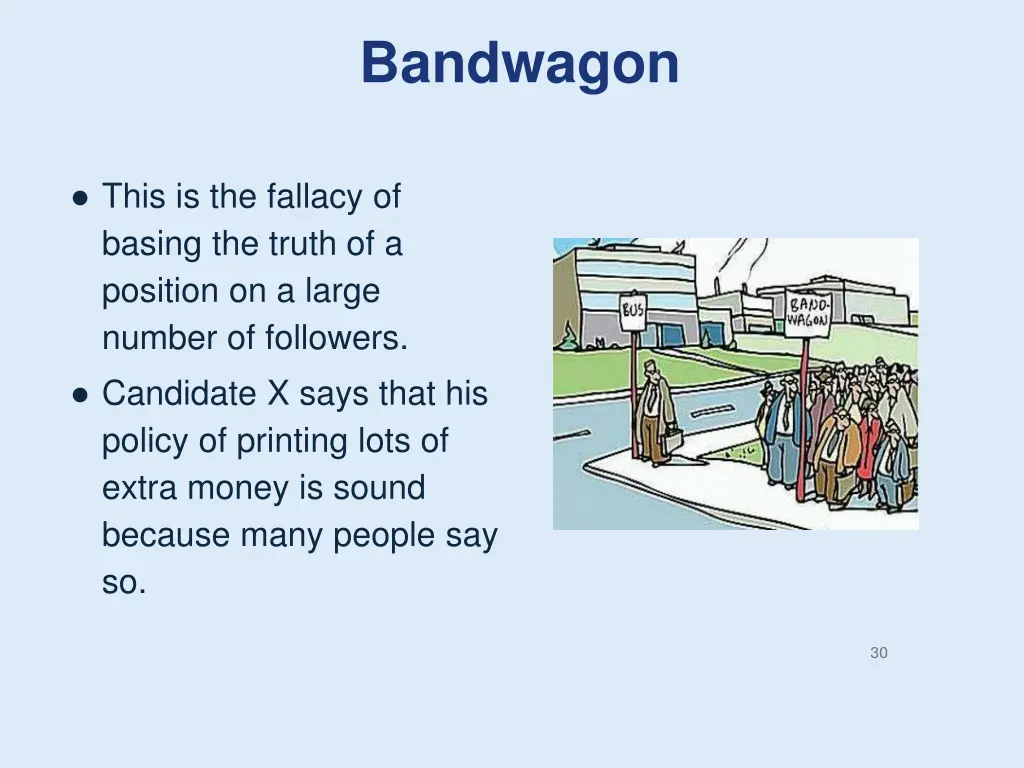
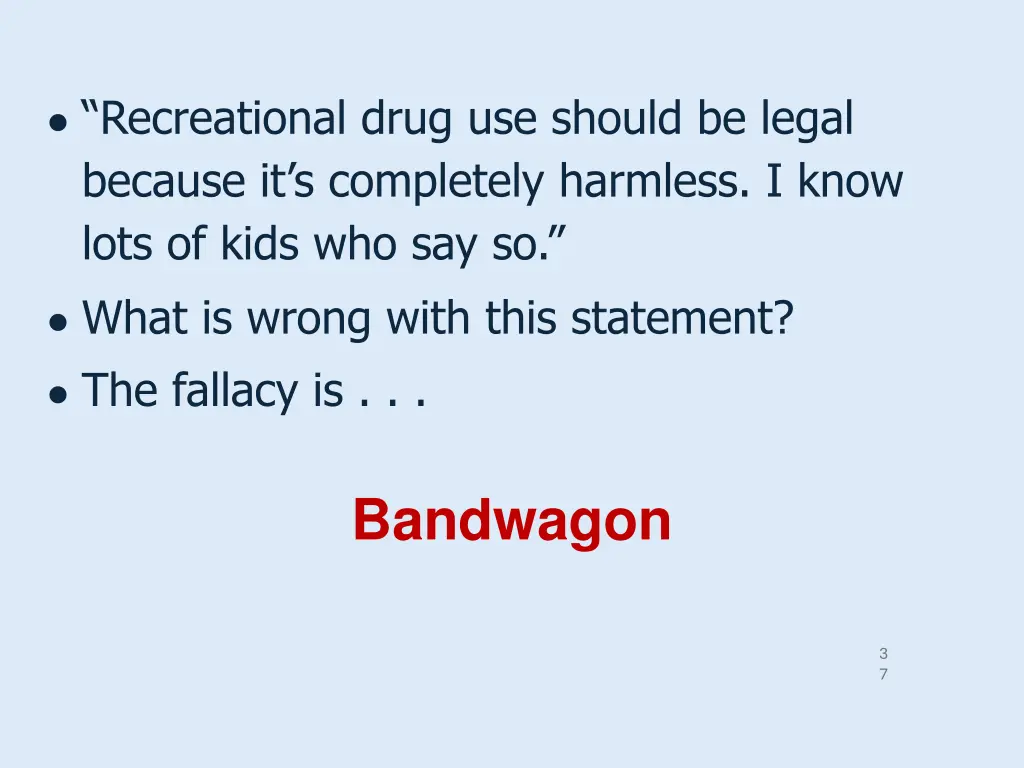
Bandwagon This is the fallacy of basing the truth of a position on a large number of followers. Candidate X says that his policy of printing lots of extra money is sound because many people say so. 30
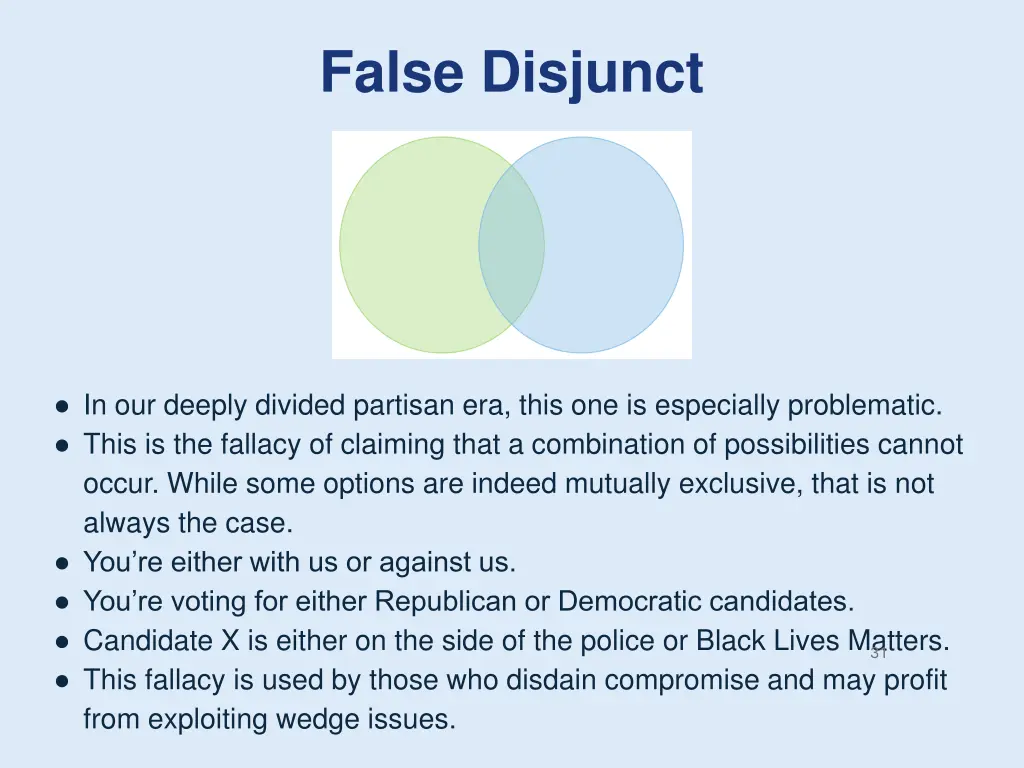
False Disjunct In our deeply divided partisan era, this one is especially problematic. This is the fallacy of claiming that a combination of possibilities cannot occur. While some options are indeed mutually exclusive, that is not always the case. You re either with us or against us. You re voting for either Republican or Democratic candidates. Candidate X is either on the side of the police or Black Lives Matters. This fallacy is used by those who disdain compromise and may profit from exploiting wedge issues. 31
NOW LETS TRY A FEW Go to the Google folder and locate the logical fallacies document Take a few minutes to discuss them with your table. Identify the fallacy. Be prepared to explain your reasoning. We will reconvene to briefly discuss them and compare notes.
During a discussion of anti-Semitic chants by neo-Nazi marchers in Charlottesville, a student says what about the yelling and looting during the Newark riots in the 60s? What is wrong with this statement? This fallacy is . . . Red Herring 3 3
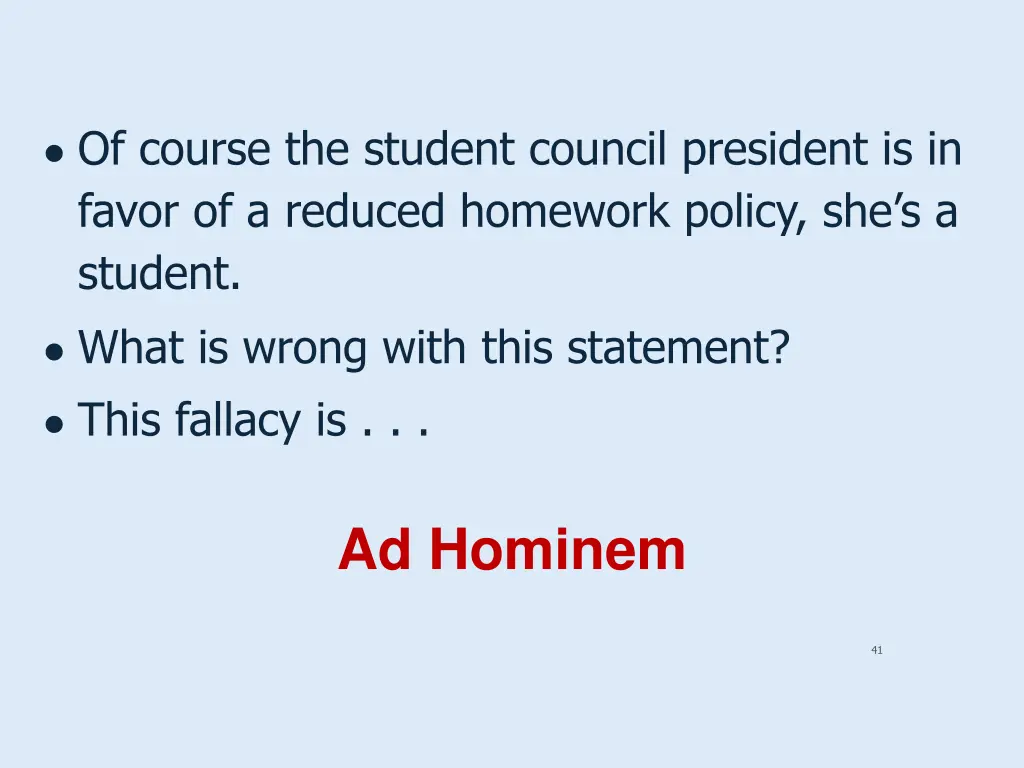
Of course the student council president is in favor of a reduced homework policy, she s a student. What is wrong with this statement? This fallacy is . . . Ad Hominem 41
During a party policy conference, a Republican states that it is the belief of Republicans that the 2020 election was fraudulently stolen and there should be tighter restrictions on voting. Someone points out that a former Bush administration official stated the election was fair, without widespread fraud, and that the GOP should increase voter rights to attract diverse voter groups. The Republican then states That just proves he s a RINO (Republican In Name Only) What is wrong with this statement? The fallacy is . . . Question Begging Definition
President Biden announces his pledge to have the United States reduce carbon emissions, part of which may suggest a reduction in meat production. A right-wing media commentator announces America has to stop eating meat and a colleague says the elites will mandate a 90% meat reduction, limiting Americans to one burger per month. (based on a true scenario). What is wrong with this statement? This fallacy is . . . Strawman 43
Recreational drug use should be legal because it s completely harmless. I know lots of kids who say so. What is wrong with this statement? The fallacy is . . . Bandwagon 3 7
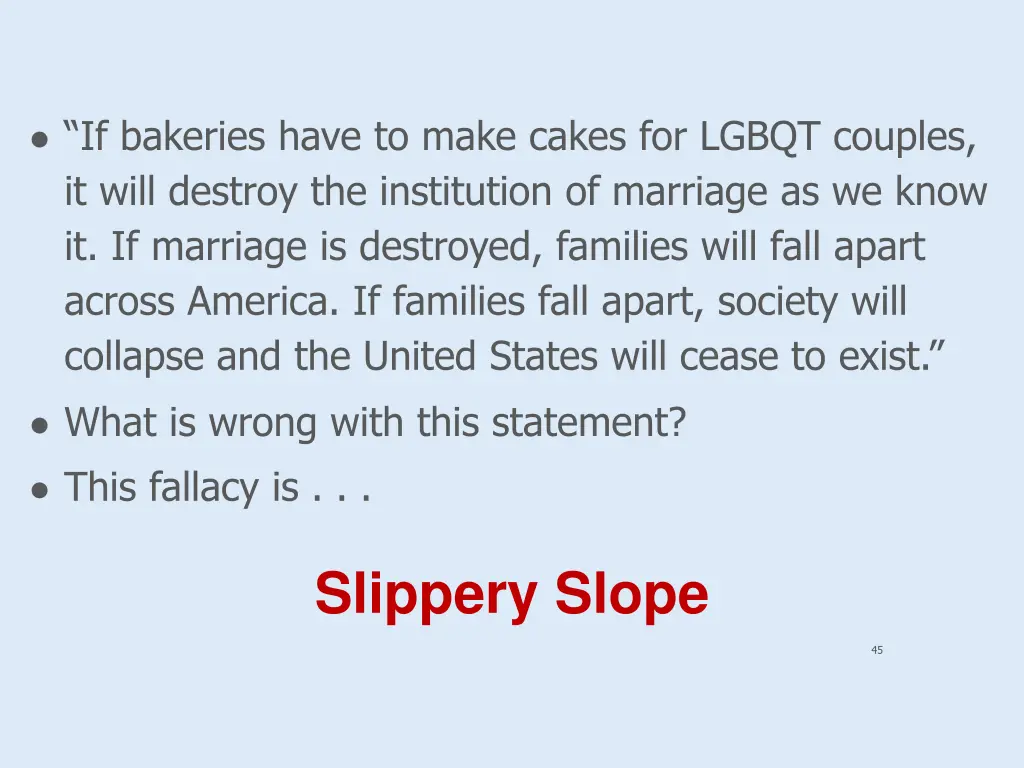
If bakeries have to make cakes for LGBQT couples, it will destroy the institution of marriage as we know it. If marriage is destroyed, families will fall apart across America. If families fall apart, society will collapse and the United States will cease to exist. What is wrong with this statement? This fallacy is . . . Slippery Slope 45
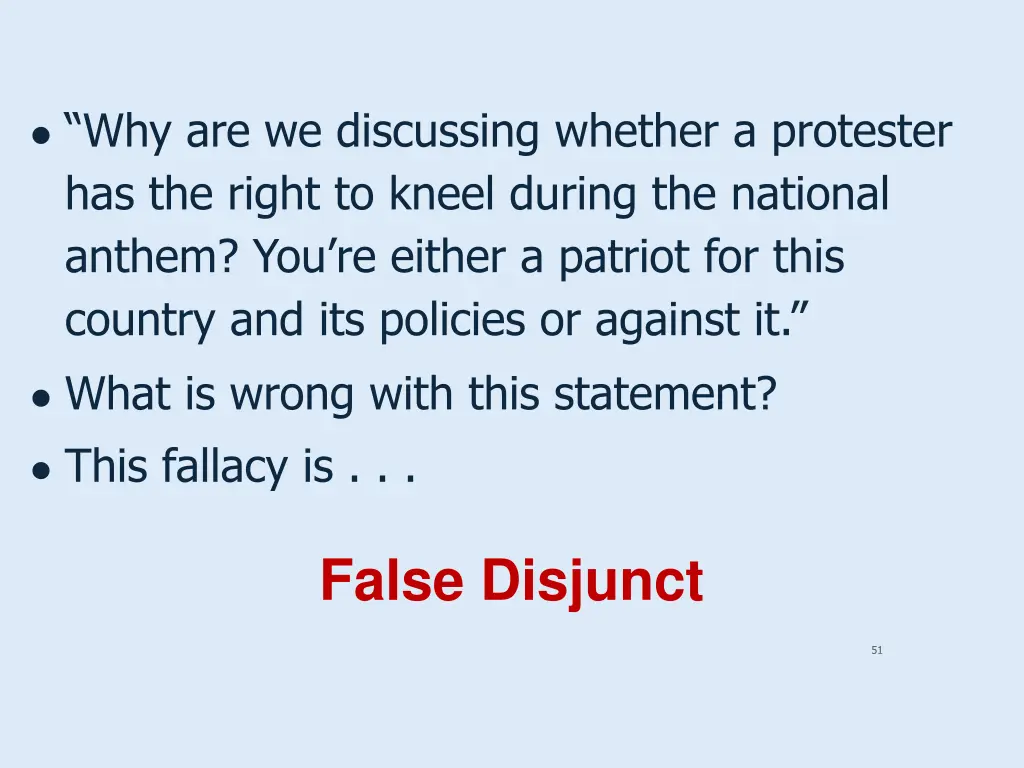
Why are we discussing whether a protester has the right to kneel during the national anthem? You re either a patriot for this country and its policies or against it. What is wrong with this statement? This fallacy is . . . False Disjunct 51
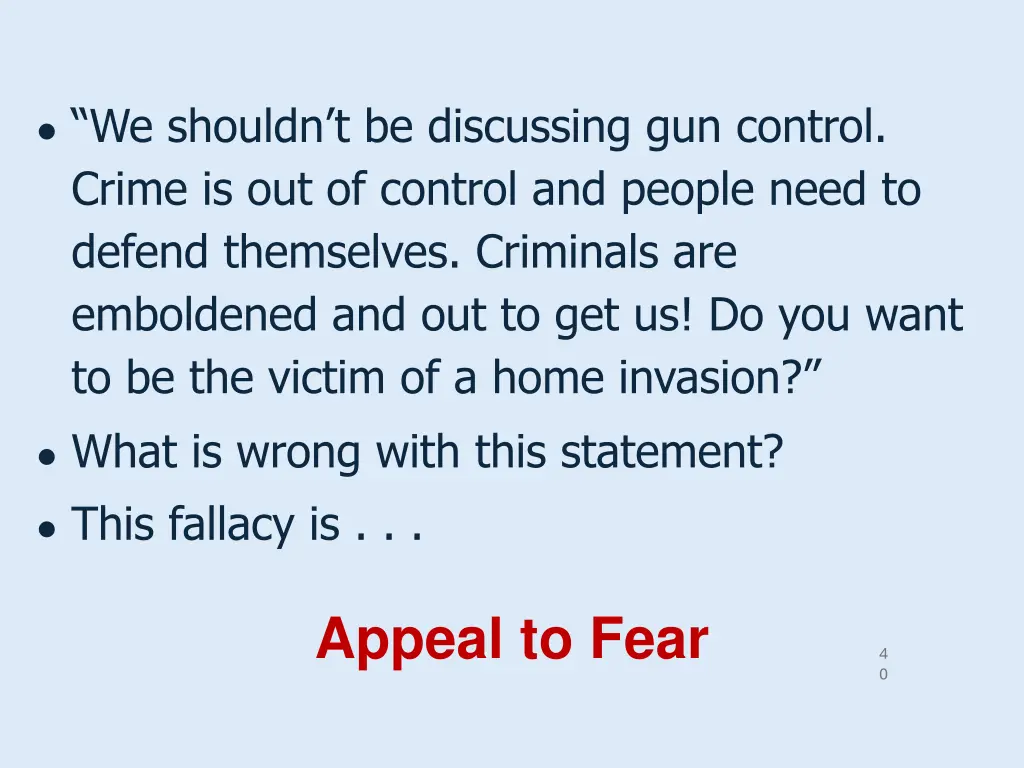
We shouldnt be discussing gun control. Crime is out of control and people need to defend themselves. Criminals are emboldened and out to get us! Do you want to be the victim of a home invasion? What is wrong with this statement? This fallacy is . . . Appeal to Fear 4 0
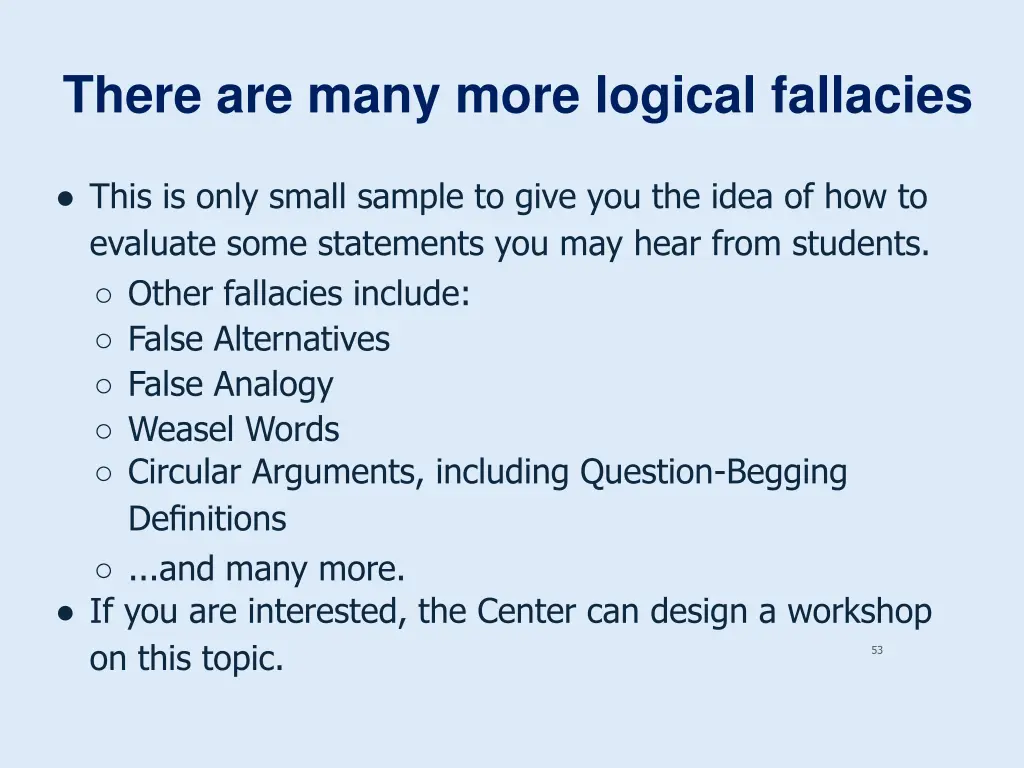
There are many more logical fallacies This is only small sample to give you the idea of how to evaluate some statements you may hear from students. Other fallacies include: False Alternatives False Analogy Weasel Words Circular Arguments, including Question-Begging Definitions ...and many more. If you are interested, the Center can design a workshop on this topic. 53
The bottom line: Help your students develop and use their critical thinking skills! These are life skills they will need as consumers of media and other products and as citizens who need to make reasoned decision-makers in elections.
Break Next Up Zoom with News Literacy Project - Checkology! 43