Enhancing Assessment Validity for English Learners with Disabilities
Learn about the project IVARED aimed at Improving State Assessment Validity for English Language Learners with Disabilities by enhancing test design, data reporting, and inclusion on state tests. Explore data on special education students receiving ELL services and the principles guiding decisions on accommodations, standards, and reporting formats.

Download Presentation

Please find below an Image/Link to download the presentation.
The content on the website is provided AS IS for your information and personal use only. It may not be sold, licensed, or shared on other websites without obtaining consent from the author. If you encounter any issues during the download, it is possible that the publisher has removed the file from their server.
You are allowed to download the files provided on this website for personal or commercial use, subject to the condition that they are used lawfully. All files are the property of their respective owners.
The content on the website is provided AS IS for your information and personal use only. It may not be sold, licensed, or shared on other websites without obtaining consent from the author.
E N D
Presentation Transcript
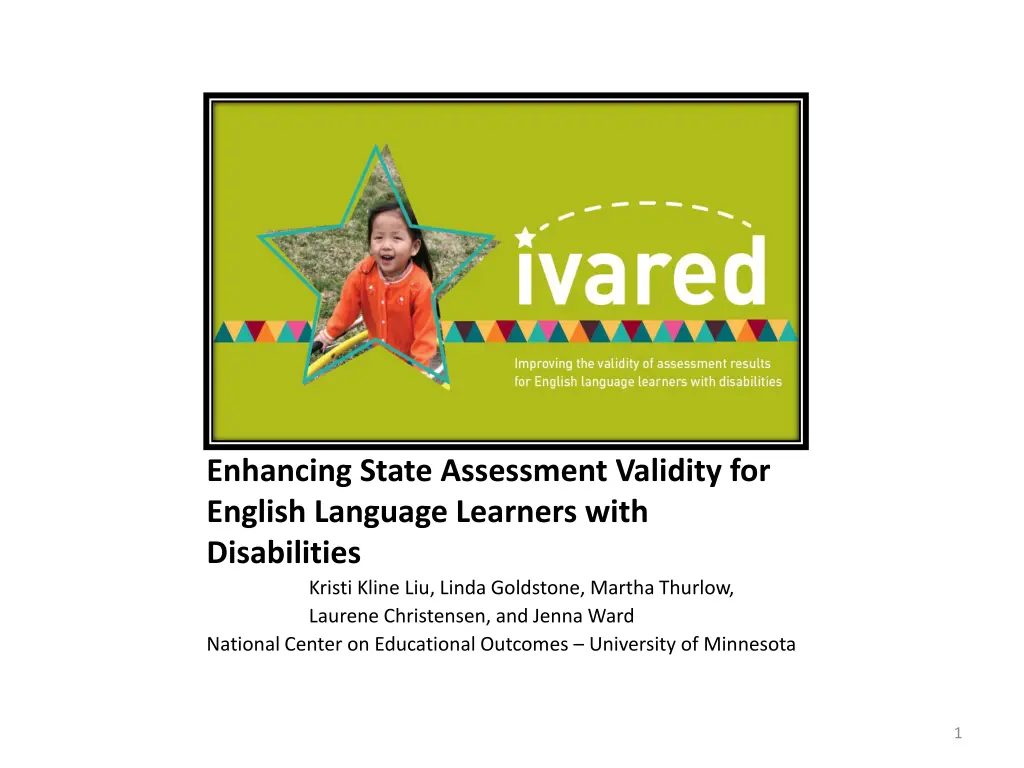
Enhancing State Assessment Validity for English Language Learners with Disabilities Kristi Kline Liu, Linda Goldstone, Martha Thurlow, Laurene Christensen, and Jenna Ward National Center on Educational Outcomes University of Minnesota 1
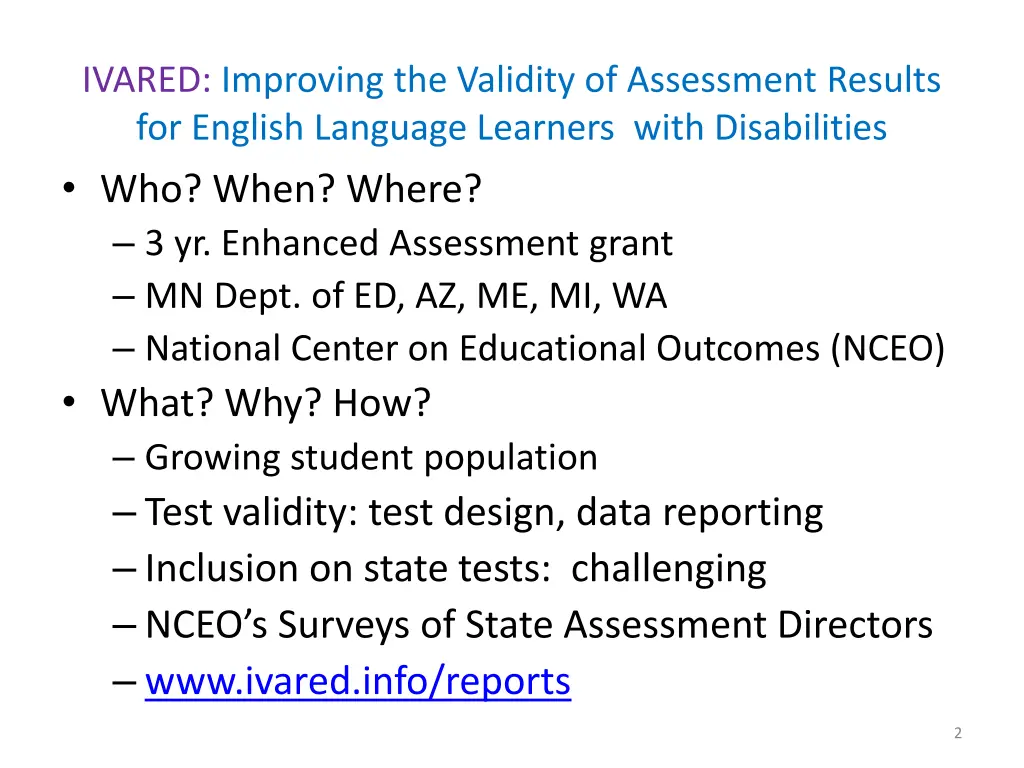
IVARED: Improving the Validity of Assessment Results for English Language Learners with Disabilities Who? When? Where? 3 yr. Enhanced Assessment grant MN Dept. of ED, AZ, ME, MI, WA National Center on Educational Outcomes (NCEO) What? Why? How? Growing student population Test validity: test design, data reporting Inclusion on state tests: challenging NCEO s Surveys of State Assessment Directors www.ivared.info/reports 2
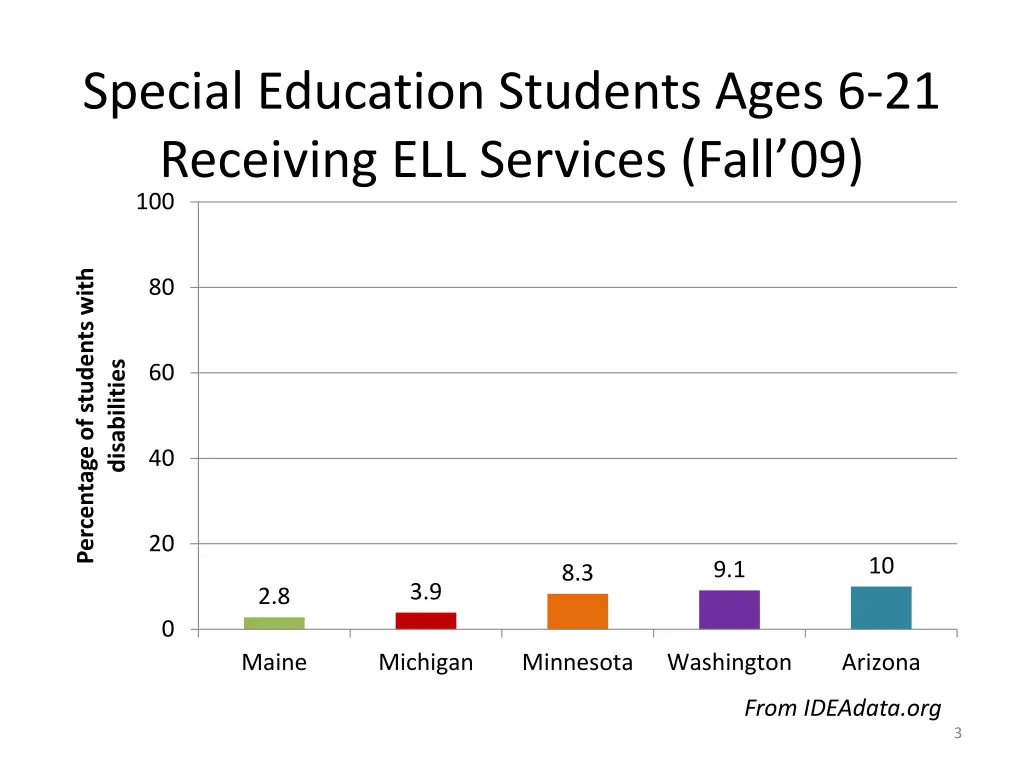
Special Education Students Ages 6-21 Receiving ELL Services (Fall 09) 100 Percentage of students with 80 disabilities 60 40 20 10 9.1 8.3 3.9 2.8 0 Maine Michigan Minnesota Washington Arizona From IDEAdata.org 3
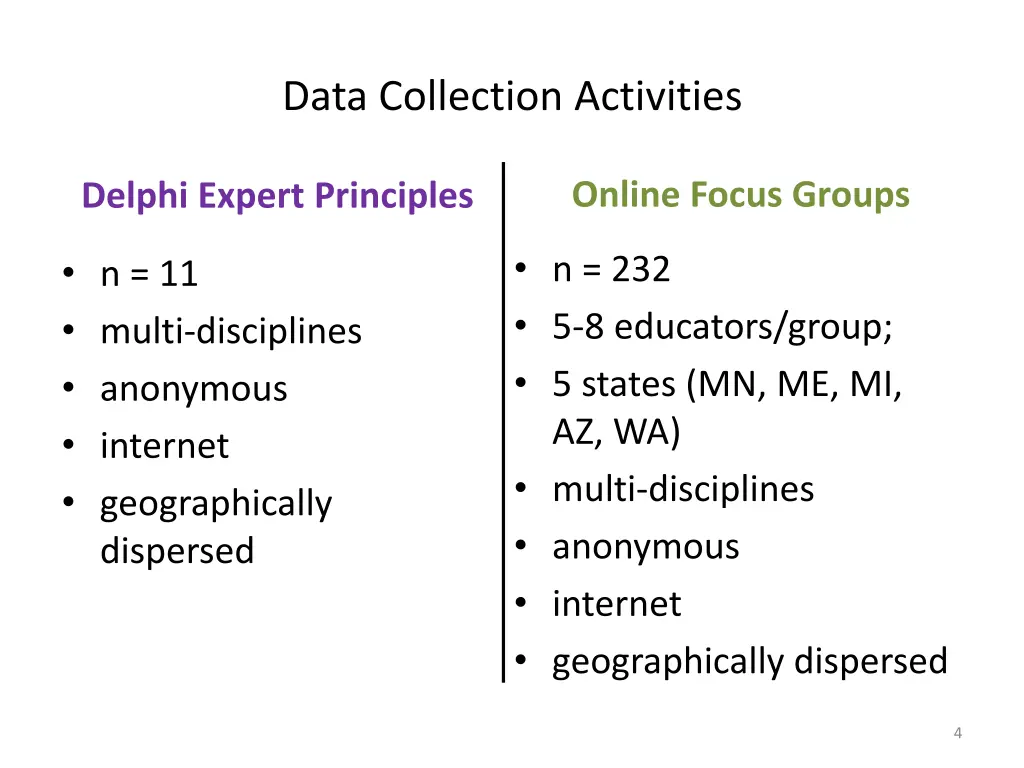
Data Collection Activities Online Focus Groups Delphi Expert Principles n = 232 5-8 educators/group; 5 states (MN, ME, MI, AZ, WA) multi-disciplines anonymous internet geographically dispersed n = 11 multi-disciplines anonymous internet geographically dispersed 4
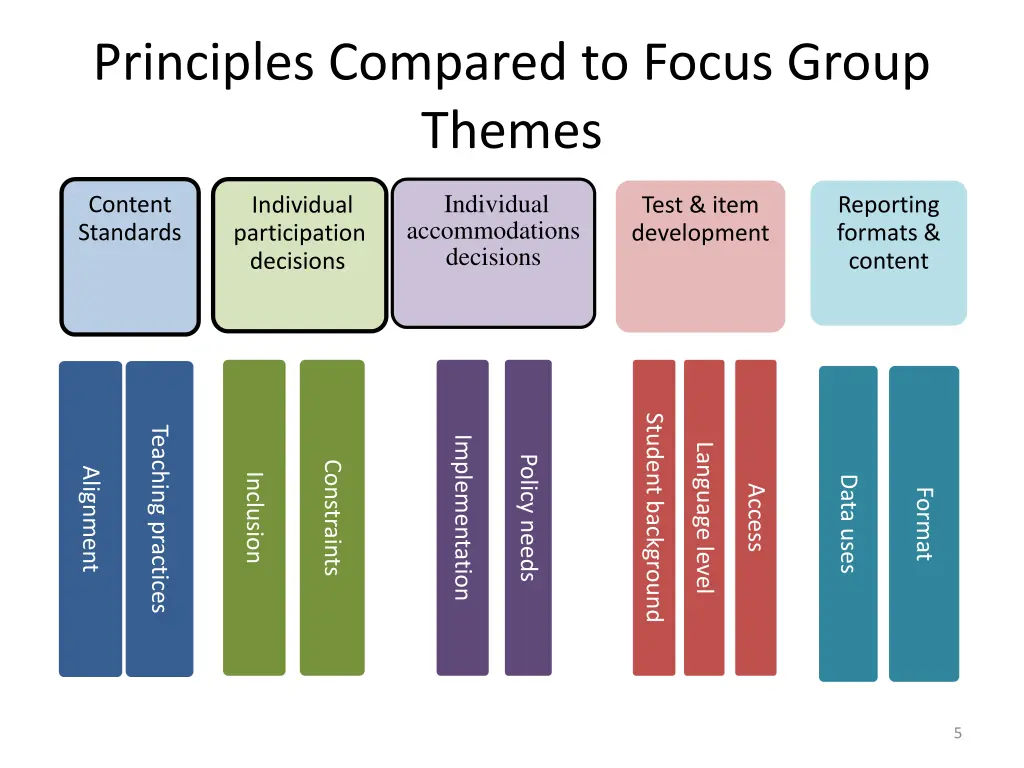
Principles Compared to Focus Group Themes Individual accommodations decisions Content Standards Reporting formats & content Individual participation decisions. Test & item development Student background Teaching practices Implementation Language level Policy needs Constraints Alignment Inclusion Data uses Access Format 5
Principle: Content standards are the same for all students Implementation Alignment team approach specific intervention programs with regular classroom assessment frequent classroom assessments in small groups Misalignment instruction below grade level standards 6
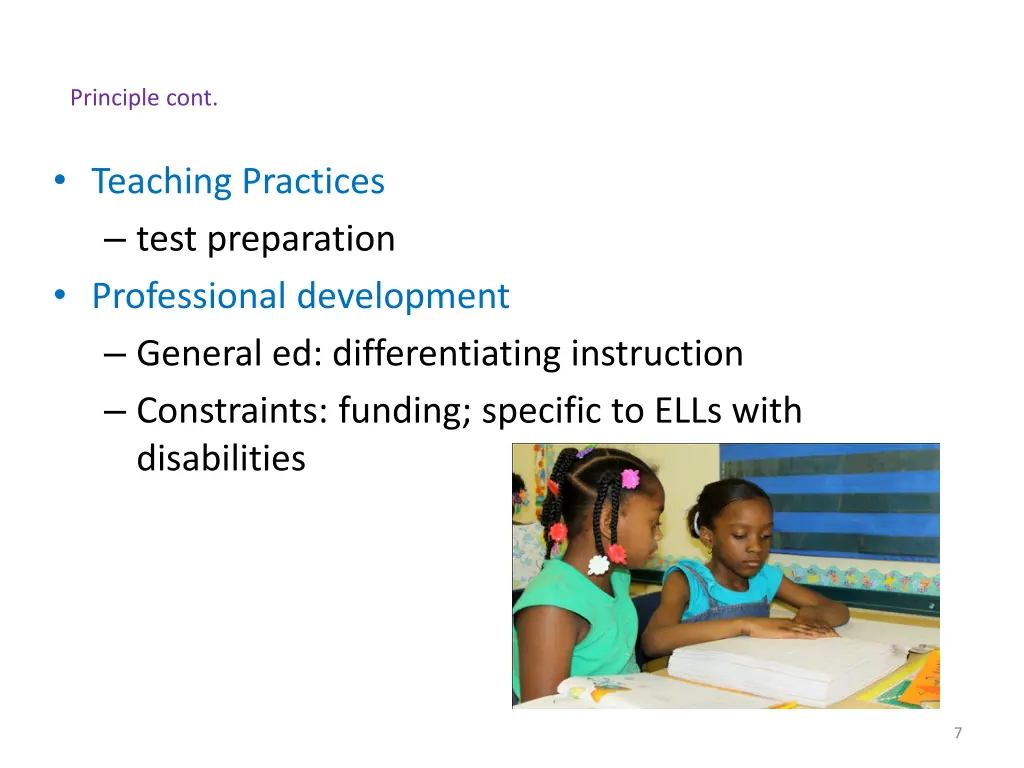
Principle cont. Teaching Practices test preparation Professional development General ed: differentiating instruction Constraints: funding; specific to ELLs with disabilities 7
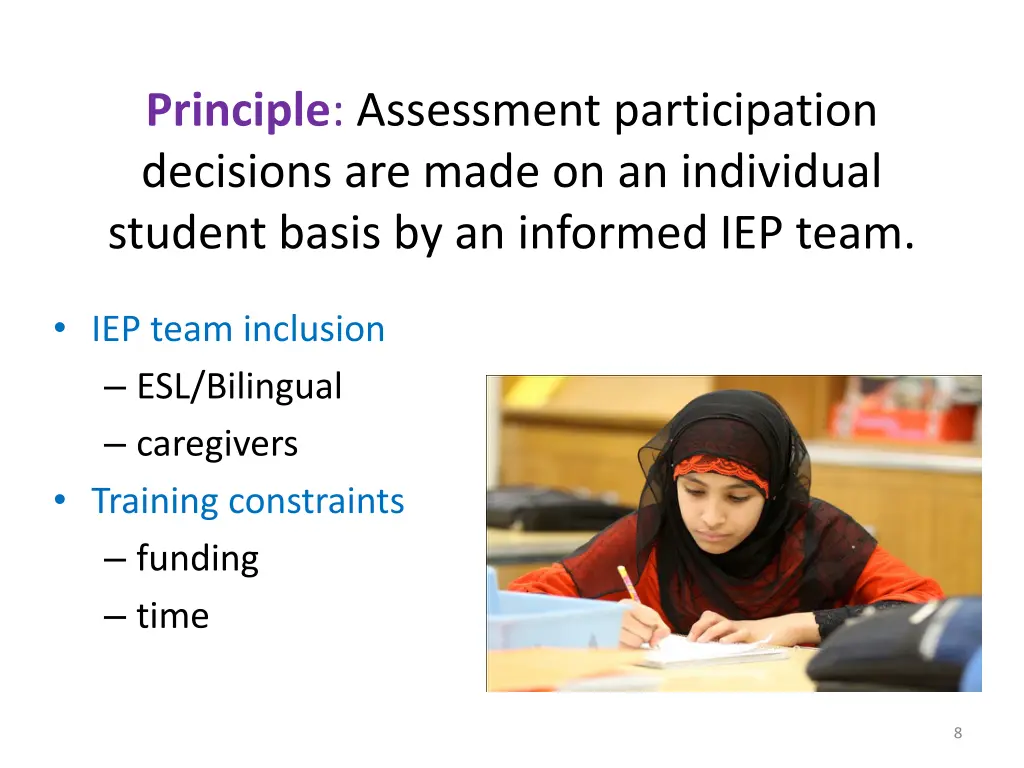
Principle: Assessment participation decisions are made on an individual student basis by an informed IEP team. IEP team inclusion ESL/Bilingual caregivers Training constraints funding time 8
Principle: Accommodations for both English language proficiency and content assessments are assigned by an IEP team knowledgeable about the individual student s needs. Policy needs clear ELLs with disabilities Implementation difficulties consistency time constraints collaboration 9
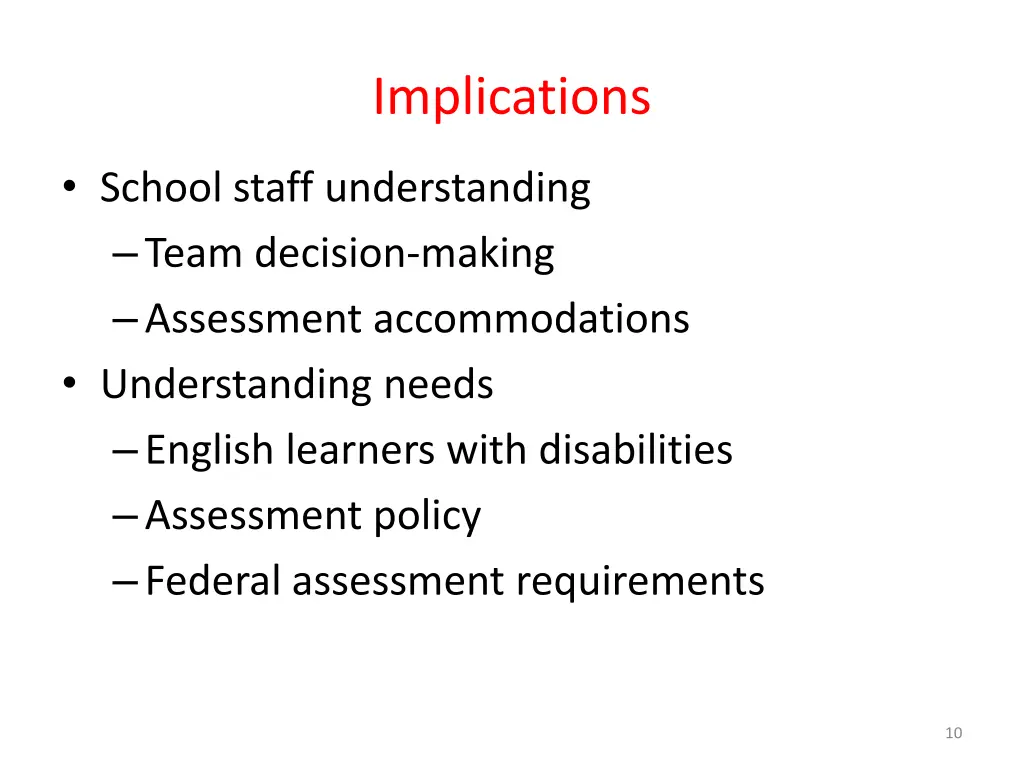
Implications School staff understanding Team decision-making Assessment accommodations Understanding needs English learners with disabilities Assessment policy Federal assessment requirements 10
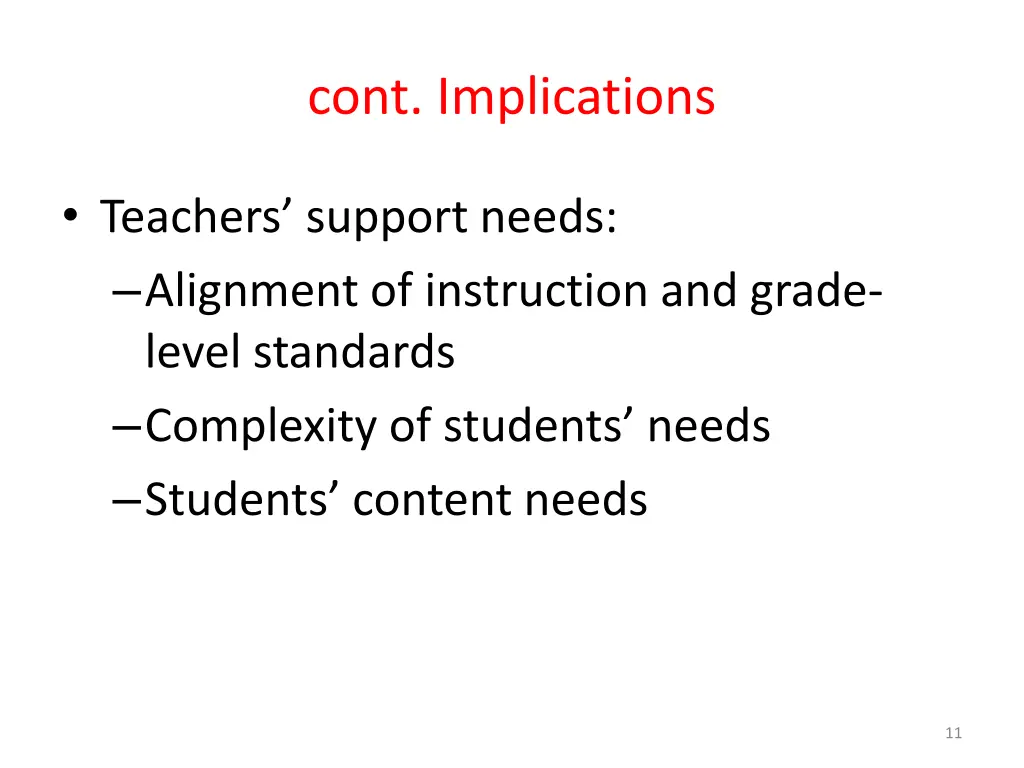
cont. Implications Teachers support needs: Alignment of instruction and grade- level standards Complexity of students needs Students content needs 11
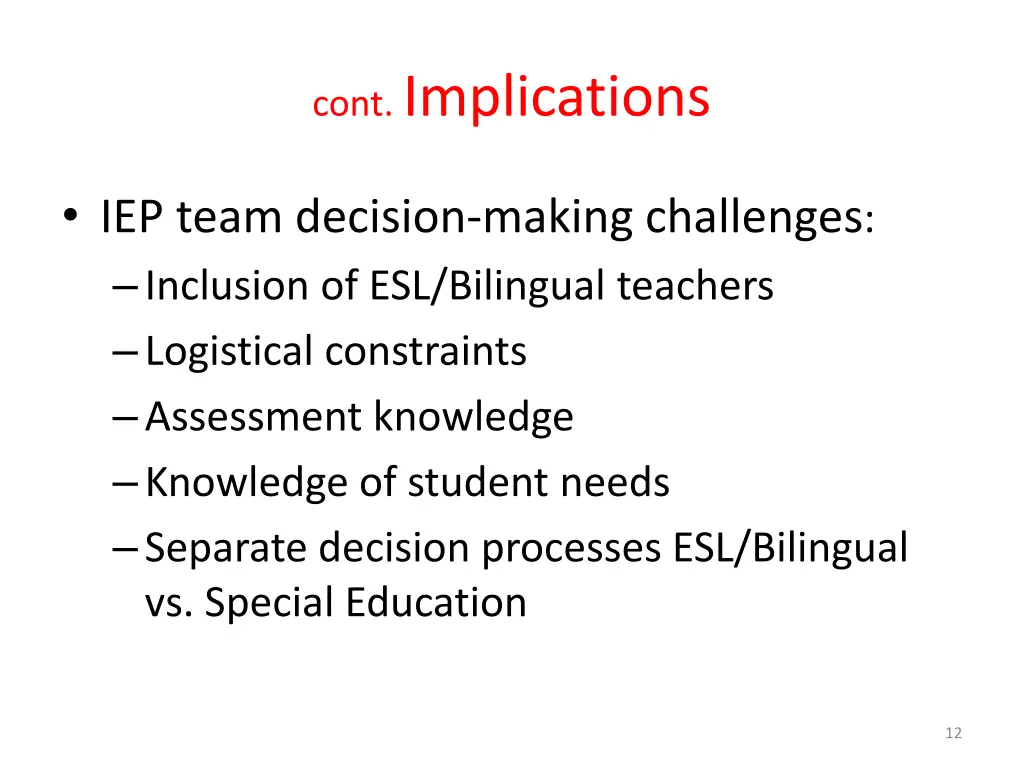
cont. Implications IEP team decision-making challenges: Inclusion of ESL/Bilingual teachers Logistical constraints Assessment knowledge Knowledge of student needs Separate decision processes ESL/Bilingual vs. Special Education 12
In conclusion Administrators could support good decision-making by looking at practical ways to increase involvement of all key staff and caregivers in the IEP team. 13
Thank you! www.ivared.info/reports 14