Enhancing Indoor Air Quality in Massachusetts Schools

The MA State Legislature allocated $100 million from ARPA funds for the IVAQ program to improve ventilation and air quality in public schools, targeting districts with economically disadvantaged students and English language learners. Eligibility is based on specific criteria, and the initiative aims to address inequities in school facilities. The program involves consultation with the Racial Imbalance Advisory Council to ensure inclusivity and effectiveness in the implementation.

Download Presentation

Please find below an Image/Link to download the presentation.
The content on the website is provided AS IS for your information and personal use only. It may not be sold, licensed, or shared on other websites without obtaining consent from the author.If you encounter any issues during the download, it is possible that the publisher has removed the file from their server.
You are allowed to download the files provided on this website for personal or commercial use, subject to the condition that they are used lawfully. All files are the property of their respective owners.
The content on the website is provided AS IS for your information and personal use only. It may not be sold, licensed, or shared on other websites without obtaining consent from the author.
E N D
Presentation Transcript
Improving Ventilation and Air Quality in Public Schools (IVAQ) Fund Code 0209 Matt Deninger, Chief Strategy and Research Officer October 2022 (updated September 2023)
Context The MA State Legislature received ~$4 billion in ARPA funds in 2021. oFederal Treasury SLFR funds (CFDA 21.027) To begin distributing these funds, in late 2021 the MA Legislature passed An Act Relative to Immediate COVID-19 Recovery Needs (Acts of 2021, Chapter 102) In that law, they reserved $100 million for the IVAQ program 2 Massachusetts Department of Elementary and Secondary Education
What the law calls for Resources to public school districts Purpose: to address inequities in school facilities needs and repairs for improved ventilation and indoor air-quality Targeted to districts/schools with high concentrations of : oeconomically disadvantaged students oEnglish language learners ocommunities disproportionately impacted by COVID-19 Massachusetts Department ofElementaryandSecondaryEducation 3
What the law calls for DESE to engage in consultation with the Racial Imbalance Advisory Council Massachusetts Department ofElementaryandSecondaryEducation 4
Eligibility Districts above 46.1% EL/Low Income (unduplicated 2021 count) Virtual schools are ineligible Charters are eligible Result is 141 eligible districts oAllocation grant (non-competitive) oAll eligible districts can apply for a maximum amount Massachusetts Department ofElementaryandSecondaryEducation 5
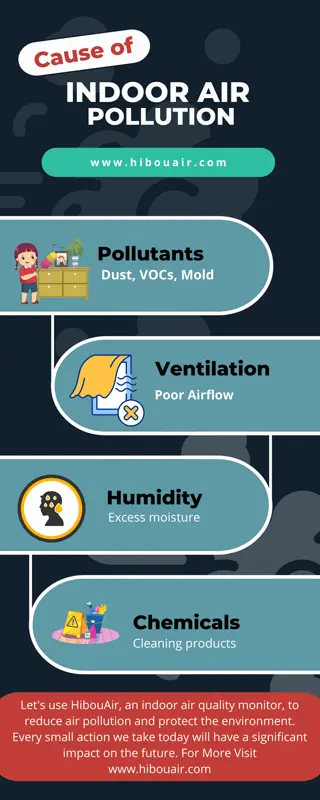
Air Pollutants Gases-emitted from supplies, adhesives, cleaners Viral Particles, Microbes & Pathogens Furniture additives stain repellants, flame retardants Air Pollut ants School Occupants Respiration, Carbon Dioxide, Allergens Traffic-related air pollution & other point sources Dust containing metals, pollutants, other particles Allergens & Pollen Credit to Perkins & Will
Exposure to indoor school environments by the time they graduate =15,210 Hours X 180 13 ~6.5 X DAYS IN A SCHOOL YEAR YEARS OF EDUCATION (K- 12) HOURS PER SCHOOL DAY Credit to Perkins & Will
Impact of Under-Ventilation Impact of Under-Ventilation Viral Infections Asthma cases & symptoms Prevalence of SBS symptoms Wheeze IAQ Satisfaction Attention Comprehension Decision Making Concentration Math, ELA scores
What can we do to improve the air? How to improve air quality? Ventilation and filtration. Components of Indoor Air Quality oControlling/removal of airborne pollutants oDiluting indoor air with fresh or clean air oManaging temperature & humidity Massachusetts Department ofElementaryandSecondaryEducation 10
Components of the Program Wide Range of Uses Allowable uses: o Needs assessments or studies of existing school environments, HVAC systems, and indoor air quality, by building and by room, in order to establish a baseline of the school s existing conditions. o Feasibility study to develop long-term indoor air quality improvement plans that improve fresh air exchange rates and reduce or eliminate reliance on fossil fuels o Design, bidding assistance and construction phase services for projects to upgrade or replace existing HVAC systems. Note that upgrades to or replacement of windows and/or doors is allowable, but only to the extent that inoperable windows and doors become operable so that fresh air can flow into the building. o Implementing indoor air quality improvement plans, securing outsourced services, establishing in-house HVAC maintenance positions, and/or securing materials/equipment to maintain, repair or install new HVAC systems o Implementing indoor air quality improvement plans, securing services and materials to ensure operability of windows and/or doors o Professional development for facilities directors to service and maintain air handling systems to ensure sustained, healthy indoor air quality conditions; o Other services and materials aligned with the priorities of this grant Massachusetts Department ofElementaryandSecondaryEducation 11
Components of the Program Environmental Impact Environmentally friendly solutions are encouraged oGovernor Baker s Net Zero by 2050 goal oUse this $ to take steps forward to reduce environmental impacts of outdated and/or inefficient air handling systems Massachusetts Department ofElementaryandSecondaryEducation 12
Example of a Decision Tree School building(s) 20+ years old? If YES, you likely will need to: increase indoor air exchange rates Improve filtration Improve efficiency of mechanized air handling systems To improve occupant health & productivity To reduce wasteful heating & cooling ($) To improve thermal comfort Massachusetts Department ofElementaryandSecondaryEducation 13 Credit to Perkins & Will
Example of a Decision Tree Do you know your indoor air quality improvement priorities? Massachusetts Department ofElementaryandSecondaryEducation 14 Credit to Perkins & Will
Example of a Decision Tree Now that you know your indoor air quality improvement priorities Massachusetts Department ofElementaryandSecondaryEducation 15 Credit to Perkins & Will
Example of a Decision Tree Piecemeal Approach vs. Systems Approach Typical Approach: Replace individual HVAC units as they fail. Install individual mini-splits per room to provide cooling as demand arises. Typical Approach: Replace all uni-vents and window A/C units with comprehensive ducted system including energy recovery ventilation and variable refrigerant flow (VRF) cooling. Less likely to meet current code requirements. Able to meet current ventilation requirements. Less likely to provide effective cooling and ventilation comprehensively. Provides for comprehensive ventilation and cooling. Harder to manage as whole system. Allows for room and zone control and management. Appropriate in emergency situations or in buildings with shorter life span. More costly initially but more effective from the standpoint of occupant well-being. 16 Massachusetts Department ofElementaryandSecondaryEducation Credit to Perkins & Will
Components of the Program Supplier diversity should be a component oIf procuring contractors, districts must set goals for women/minority contractor participation as required by state and federal procurement law oDistricts should reach out to the Massachusetts Supplier Diversity Office if you need guidance Massachusetts Department ofElementaryandSecondaryEducation 17
Components of the Program We re requiring that these funds are supplemental to, and do not supplant, existing project funds oWe don t want this to be a simple accounting exercise where ESSER money is swapped out for this IVAQ money oHowever, funds could be used to make up for cost overruns on existing projects (this use would not be considered supplanting) Massachusetts Department ofElementaryandSecondaryEducation 18
Timing Districts must apply for the full amount in GEM$ beginning in FY24 (by January 12, 2024). FY24 is the last year to apply for these funds. FY23 awardees who applied but did not expend all awarded funds in FY23 must complete an FR-1 and return any unexpended funds to DESE (by 8/31/23) before they can reapply in GEM$ for their remaining allocated funding. Unexpended funds each fiscal year will roll into the next year until the award is fully expended Funds must be obligated by 12/31/2024 (midway through FY25) and liquidated by 12/31/2026 (midway through FY27) Massachusetts Department ofElementaryandSecondaryEducation 19
Application DESE s federal grant programs office is administering this grant, so your federal grants liaison will be there to help you The FY24 application will be administered in the new Grants for Education Management System (GEM$) Massachusetts Department ofElementaryandSecondaryEducation 20
Components of the Program Capital Expenditures and Federal Procurement Rules CapEx forms specifically designed for IVAQ grants will be required for any capital expenditures over $30,000 or any facilities improvement Any facilities project must adhere to federal grant regulations, including procurement requirements, as well as all other applicable state and federal law regarding construction/facilities improvements. Please see DESE s guidance on construction using ESSER funds and an overview on procurement using federal grant funds o The construction guidance applies in full to all IVAQ projects that include ESSER or other federal grant funds. o If the project is funded using only IVAQ funds, the EDGAR regulations (beginning with 34 CFR ) do not apply to your project. DESE s facilities/construction consultant (Jacobs Engineering) will be available through your federal grant liaison to consult regarding the allowability and how your project fits into federal regulations Massachusetts Department ofElementaryandSecondaryEducation 21
Questions? Massachusetts Department ofElementaryandSecondaryEducation 22