Explore the process of coaching individual learners to apply their skills and knowledge effectively, with a focus on providing positive feedback, identifying opportunities for growth, and managing group dynamics. Discover how technology can support structured learning experiences and enable achievement of learning objectives.
Please find below an Image/Link to download the presentation.
The content on the website is provided AS IS for your information and personal use only. It may not be sold, licensed, or shared on other websites without obtaining consent from the author. If you encounter any issues during the download, it is possible that the publisher has removed the file from their server.
You are allowed to download the files provided on this website for personal or commercial use, subject to the condition that they are used lawfully. All files are the property of their respective owners.
The content on the website is provided AS IS for your information and personal use only. It may not be sold, licensed, or shared on other websites without obtaining consent from the author.
E N D
Presentation Transcript
Coaching Definition The process of giving a student extra teaching in a particular subject Extra coaching is available for students who might need a little more help. https://www.oxfordlearnersdictionaries.com/ definition/english/coaching
Enable individual learning through coaching Coach individual learners Assist individual learners to apply their learning Enable group learning Manage group dynamics. Manage group dynamics Enable the group to work together Enable group learning
Enable Individual Learning through Coaching How do we identify individual needs? How do we coach in a manner and speed which is appropriate to learners? How do we analyse the skills needed, and the order they need to be learned in?
Assist Individual Learners to Apply their Learning Why do we give learners the opportunities to practice skills, apply their knowledge and get experience in a structured way? How could we use technology based support?
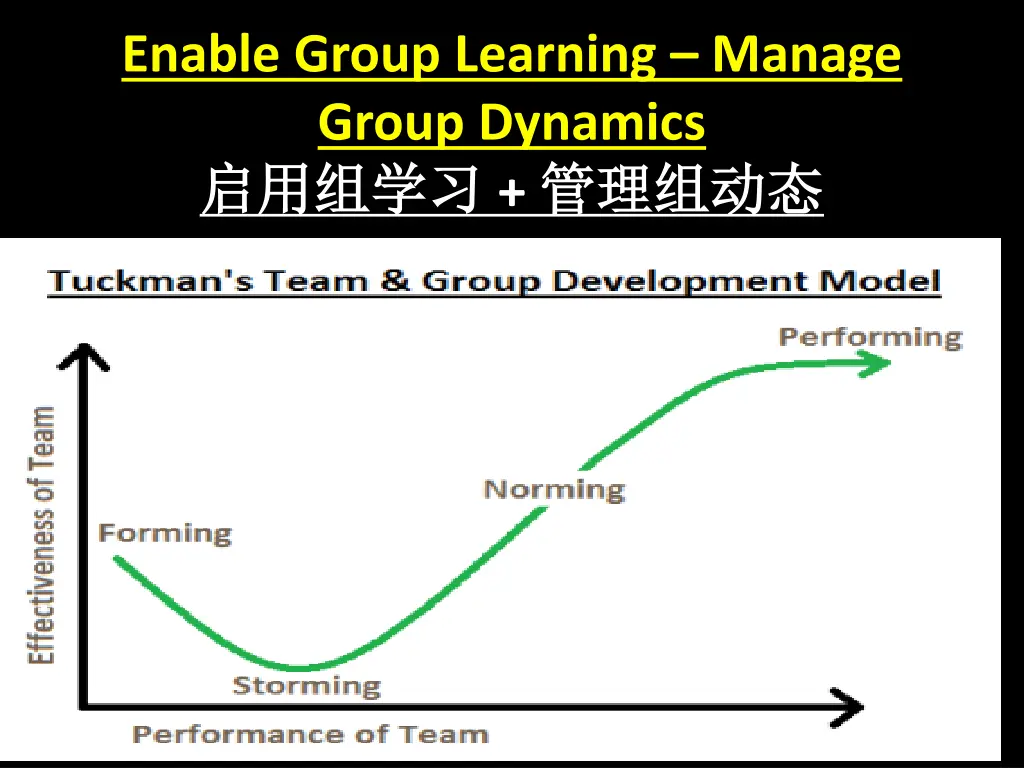
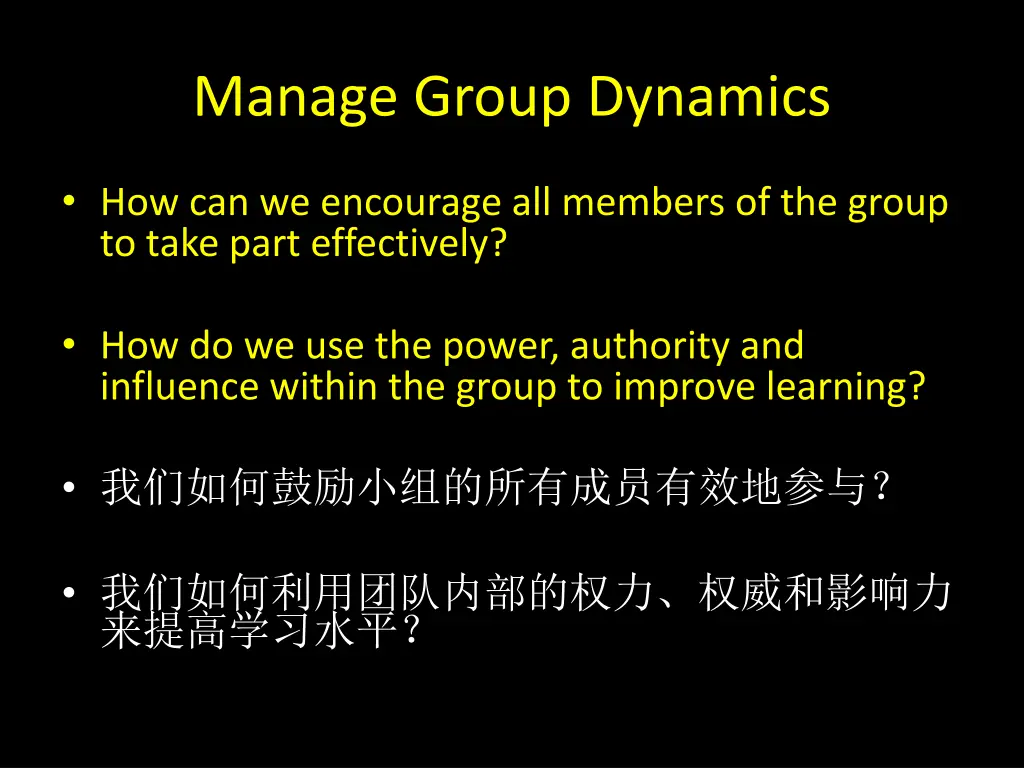
Manage Group Dynamics How can we encourage all members of the group to take part effectively? How do we use the power, authority and influence within the group to improve learning?
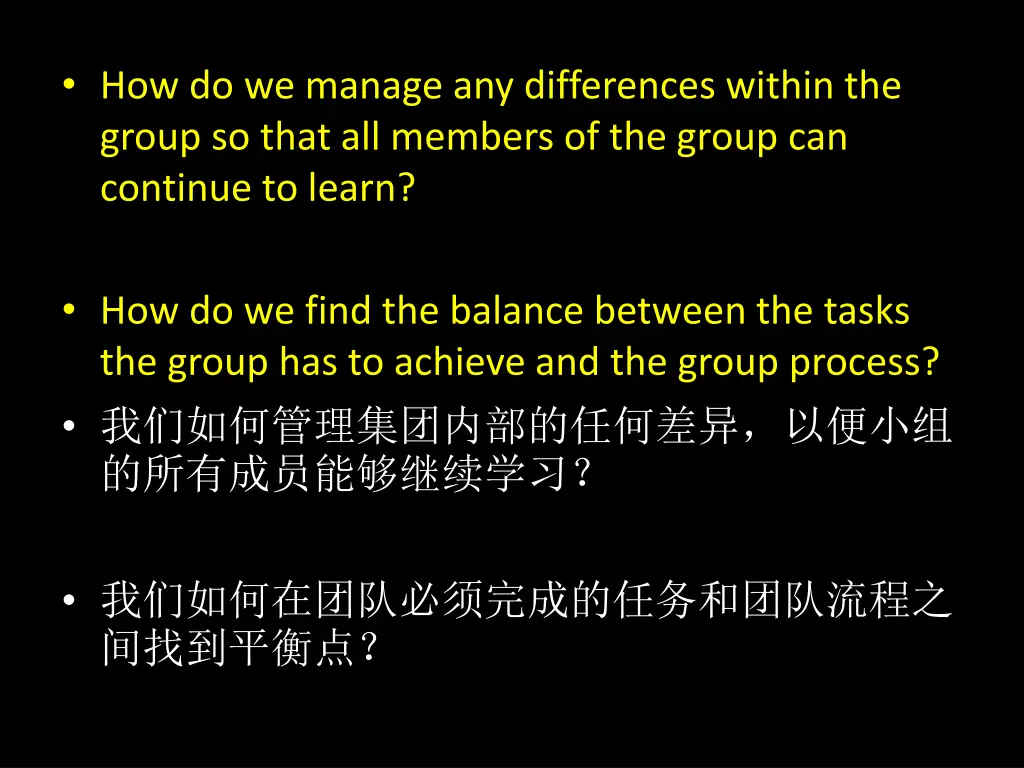
How do we manage any differences within the group so that all members of the group can continue to learn? How do we find the balance between the tasks the group has to achieve and the group process?
Enable the group to work together Resource: Teaching Adults By Rogers, Alan, Horrocks, Naomi McGraw-Hill International 2010
Robert Freed Bales, group observation and interaction processes http://infed.org/mobi/robert-freed-bales-group-observation-and-interaction-processes/ Group observation and interaction processes Bales pioneered the development of systematic methods of group observation and measurement of interaction processes. His first coding system was Interactive Process Analysis (IPA) (which was used to classify group behaviour into that which was task-oriented and that which was relationship-oriented) (Bales 1950). The system was revised in 1970 in the SYMLOG system (Systematic Multiple Level Observation of Groups). It was based on the assumption that three fundamental dimensions structure interactions in groups: Dominance/submission. Is this member active, outgoing, and talkative or passive, quiet and introverted? Friendliness/unfriendliness. Is this member warm, open and positive or negative and irritable? Acceptance of authority/non-acceptance of authority. Is this member analytical, and task-oriented or emotional, untraditional and (possibly) resentful. (Forsyth 2006: 41) Conclusion Bales work exerted considerable influence on the study of group psychology in the second half of the twentieth century References Bales, Robert Freed (1950) Interaction Process Analysis: A Method for the Study of Small Groups. Cambridge, Mass. : Addison-Wesley. Bales, Robert Freed (1970) Personality and interpersonal behavior. New York, Holt, Rinehart, and Winston. Bales, Robert Freed (1999) Social Interaction Systems: Theory and Measurement. New Brunswick, N.J. ; London : Transaction.
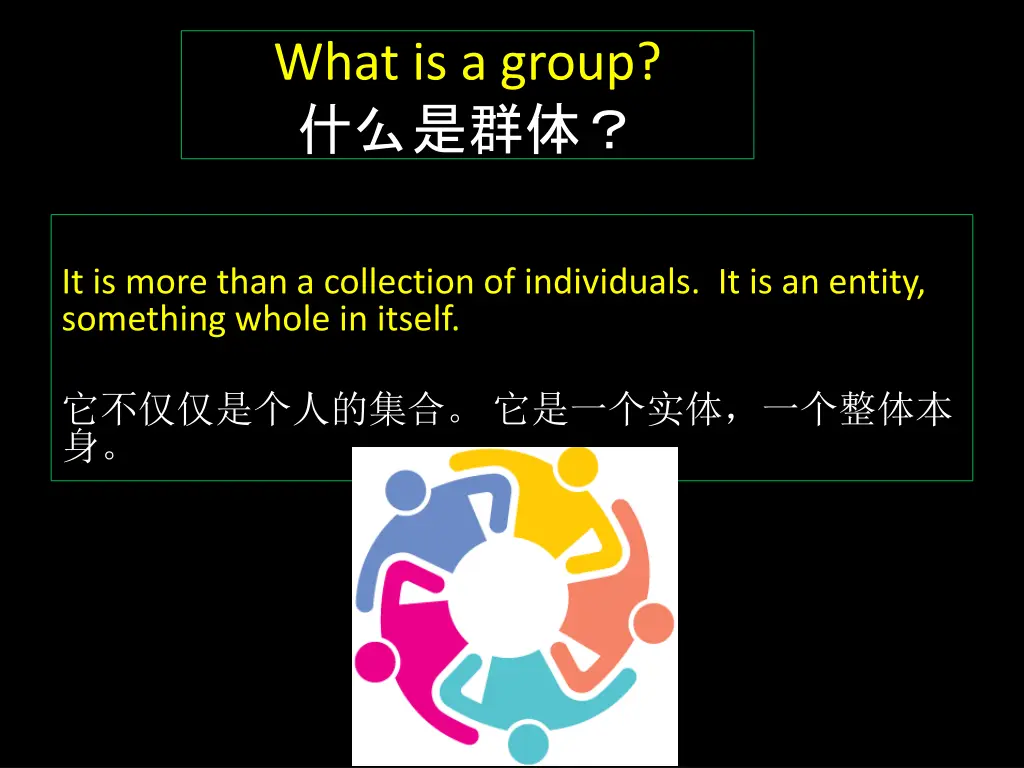
What is a group? It is more than a collection of individuals. It is an entity, something whole in itself.
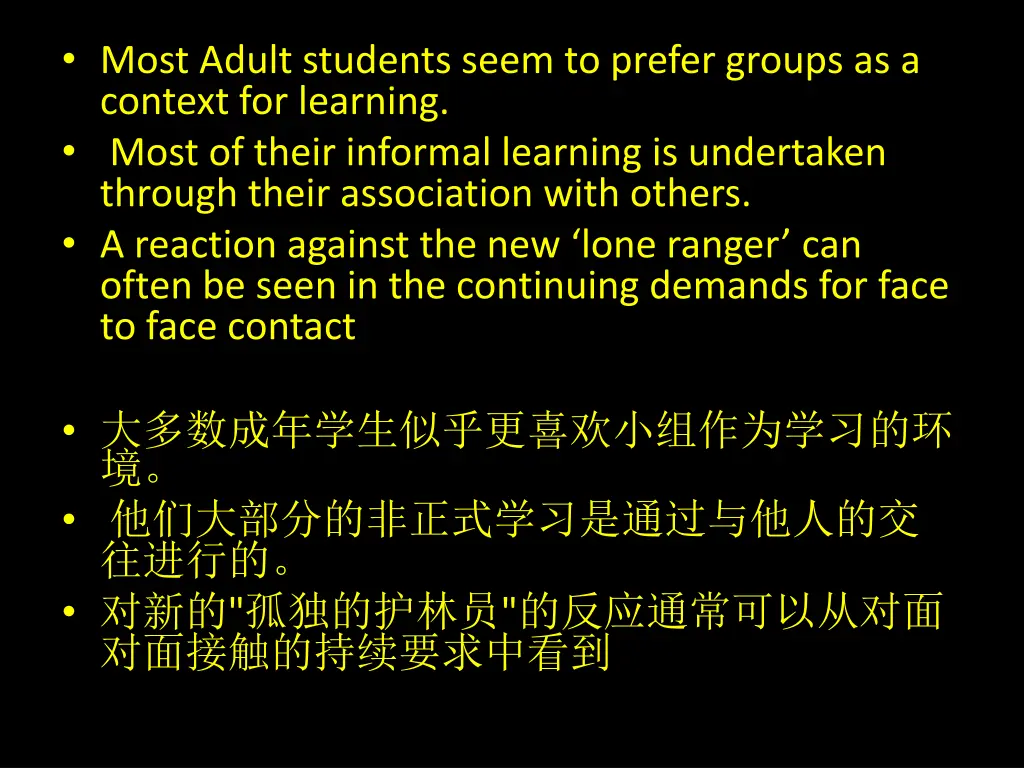
Most Adult students seem to prefer groups as a context for learning. Most of their informal learning is undertaken through their association with others. A reaction against the new lone ranger can often be seen in the continuing demands for face to face contact " "
Whether the existence of learning / teaching groups is more a question of habit or economics or gregariousness or educational effectiveness, the fact remains that learning remains individual even when the teaching is a group matter. Herein lies tension. The group may be a great help toward achieving learning but equally on occasion may inhibit the sort if individually determined learning changes we hope will be achieved.
from your own experience. A . Some of the practical values of a group for your student participants. B . Some of the hindrances that a learner might find in a group.
Write down in your own words and from your own experience. C. Some of the practical values of group teaching. D. Some of the hindrances a teacher may find in group teaching.