Enhancing Proactive Police Practices for Ethical Law Enforcement
Supporting law enforcement agencies in developing ethical cultures, promoting citizen involvement, and fostering respectful interactions. Michael Sanborn brings diverse credentials including military service, all aimed at improving public perception, morale, and organizational development. The focus is on proactive measures to avoid and address misconduct, improve supervision, discipline, and increase positivity within police forces. The discussion also covers reactive practices post-incident, indicators of poor morale, and strategies to address them effectively.

Download Presentation

Please find below an Image/Link to download the presentation.
The content on the website is provided AS IS for your information and personal use only. It may not be sold, licensed, or shared on other websites without obtaining consent from the author. If you encounter any issues during the download, it is possible that the publisher has removed the file from their server.
You are allowed to download the files provided on this website for personal or commercial use, subject to the condition that they are used lawfully. All files are the property of their respective owners.
The content on the website is provided AS IS for your information and personal use only. It may not be sold, licensed, or shared on other websites without obtaining consent from the author.
E N D
Presentation Transcript
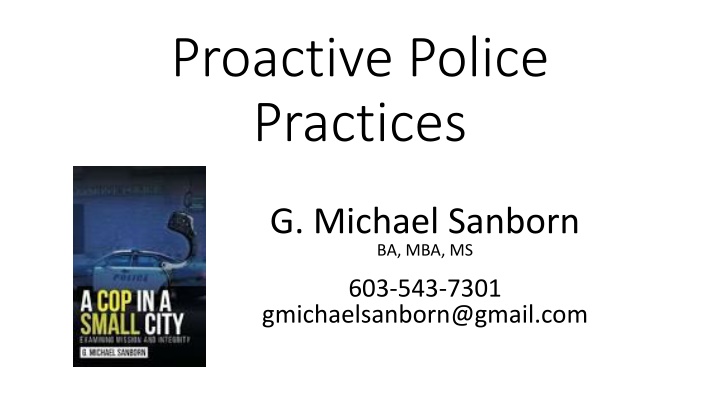
Proactive Police Practices G. Michael Sanborn BA, MBA, MS 603-543-7301 gmichaelsanborn@gmail.com
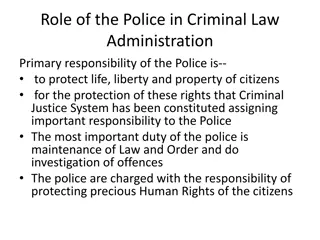
Purpose Support law enforcement agencies in the continued development of ethical and moral cultures Encourage citizen involvement Generally encourage respectful interactions for everyone
Credentials Grandparents influence Religious principles High School Science College Saint Michael s College Pepperdine University Antioch University Commissioned Military Service Police Officer Corrections Officer Government Administration Science Teacher Published Author http://www.newmansprings.com/release/?book=a-cop-in-a-small-city-examining-mission-and-integrity
Objectives Improve public perception Improve morale Pride with high technical and ethical standards Organizational development Adapt to changing mission in complex society Identify, avoid, and address police misconduct Supervision based on improvement Discipline for development Increase positivity and mindfulness Reduce turnover Encourage broader education at all levels
Reactive Practices After an incident Debrief to improve operations or avoid a similar incident Public perceptions, distrust, and outcry Incidents escalate with additional responding officers Internal investigation Conducted with professionalism Public distrust Other law enforcement agency investigation Improves only when transparent Officer(s) reassigned, fired, arrested, prosecuted, jailed Harmful to organization and profession Letters of Memoranda, Directives Mostly counterproductive Random, uncategorized Policy changes Mostly ineffective Return to status quo
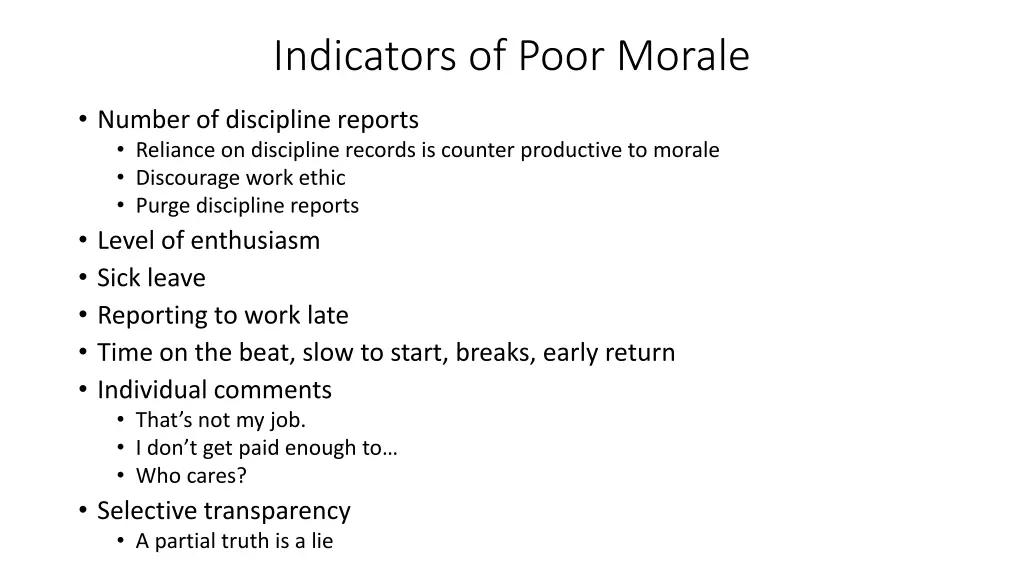
Indicators of Poor Morale Number of discipline reports Reliance on discipline records is counter productive to morale Discourage work ethic Purge discipline reports Level of enthusiasm Sick leave Reporting to work late Time on the beat, slow to start, breaks, early return Individual comments That s not my job. I don t get paid enough to Who cares? Selective transparency A partial truth is a lie
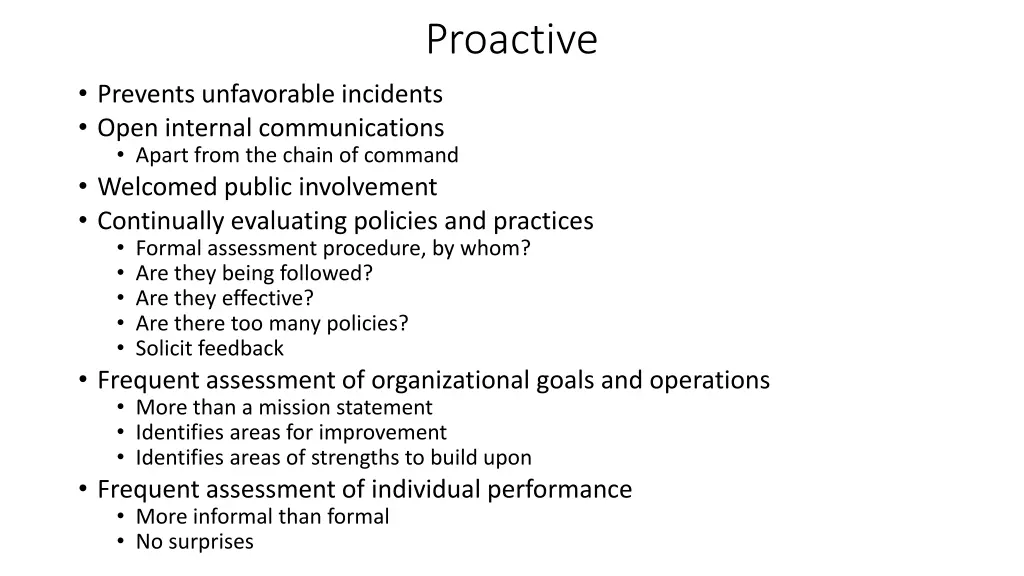
Proactive Prevents unfavorable incidents Open internal communications Apart from the chain of command Welcomed public involvement Continually evaluating policies and practices Formal assessment procedure, by whom? Are they being followed? Are they effective? Are there too many policies? Solicit feedback Frequent assessment of organizational goals and operations More than a mission statement Identifies areas for improvement Identifies areas of strengths to build upon Frequent assessment of individual performance More informal than formal No surprises
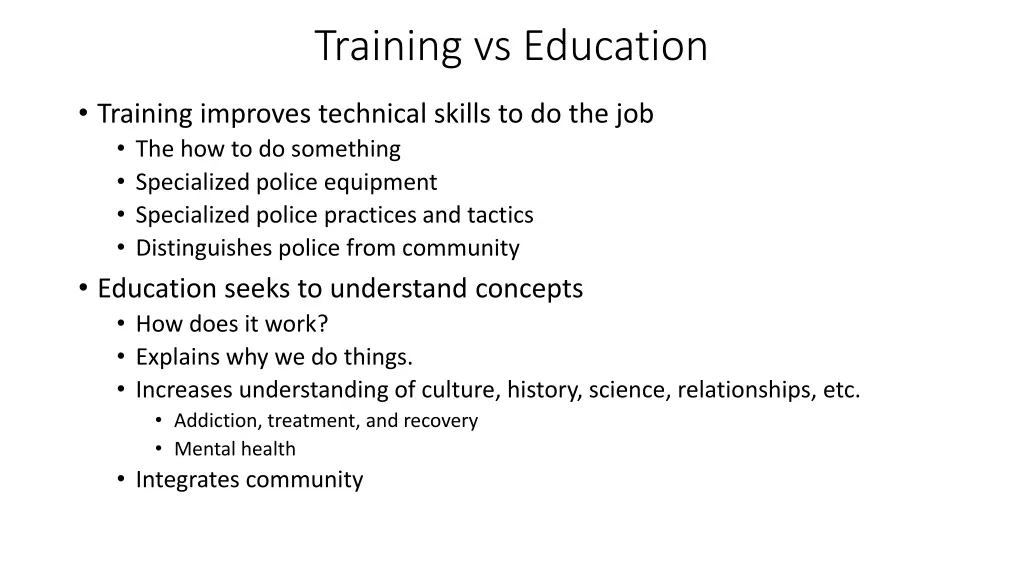
Training vs Education Training improves technical skills to do the job The how to do something Specialized police equipment Specialized police practices and tactics Distinguishes police from community Education seeks to understand concepts How does it work? Explains why we do things. Increases understanding of culture, history, science, relationships, etc. Addiction, treatment, and recovery Mental health Integrates community
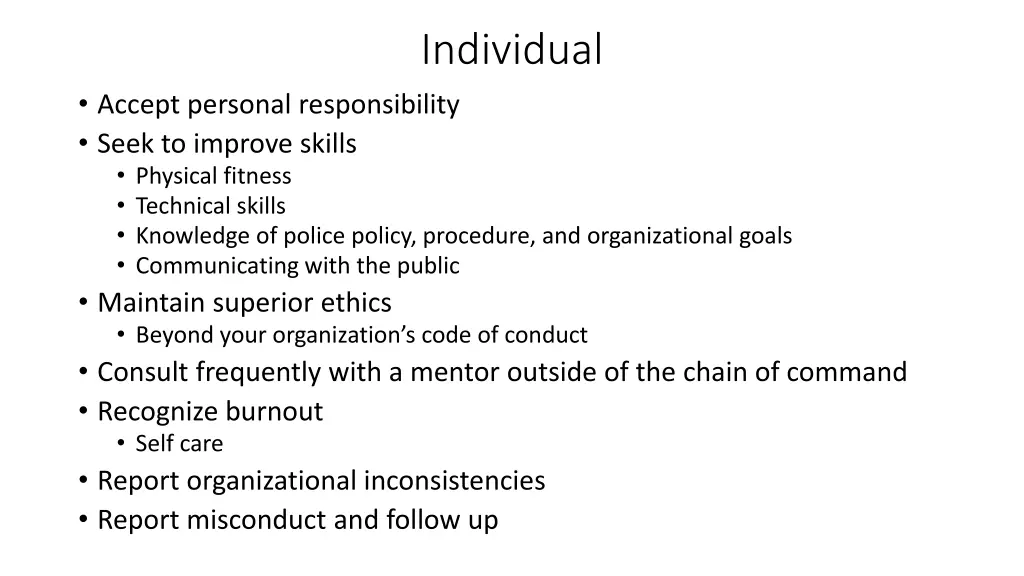
Individual Accept personal responsibility Seek to improve skills Physical fitness Technical skills Knowledge of police policy, procedure, and organizational goals Communicating with the public Maintain superior ethics Beyond your organization s code of conduct Consult frequently with a mentor outside of the chain of command Recognize burnout Self care Report organizational inconsistencies Report misconduct and follow up
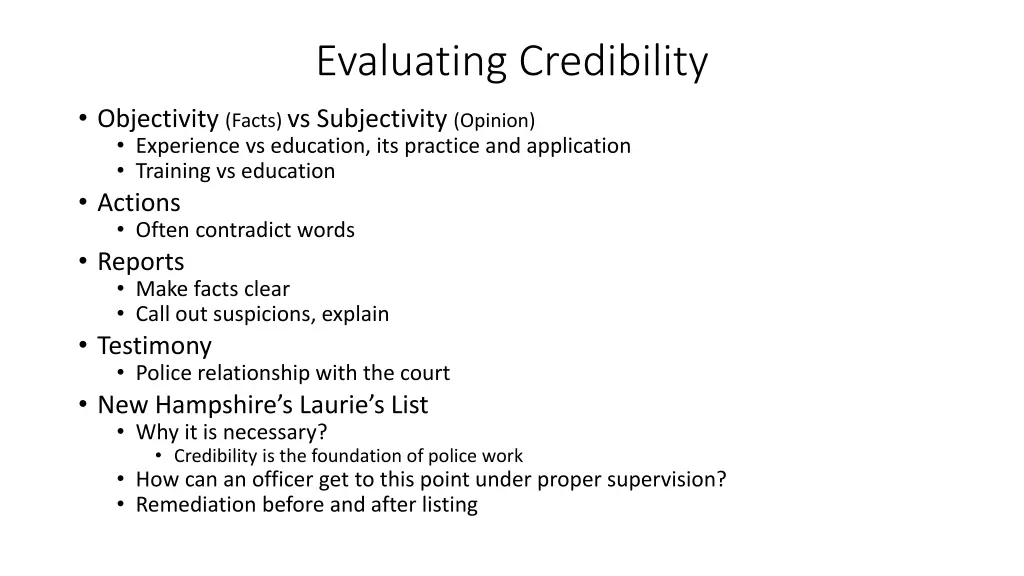
Evaluating Credibility Objectivity (Facts) vs Subjectivity (Opinion) Experience vs education, its practice and application Training vs education Actions Often contradict words Reports Make facts clear Call out suspicions, explain Testimony Police relationship with the court New Hampshire s Laurie s List Why it is necessary? Credibility is the foundation of police work How can an officer get to this point under proper supervision? Remediation before and after listing
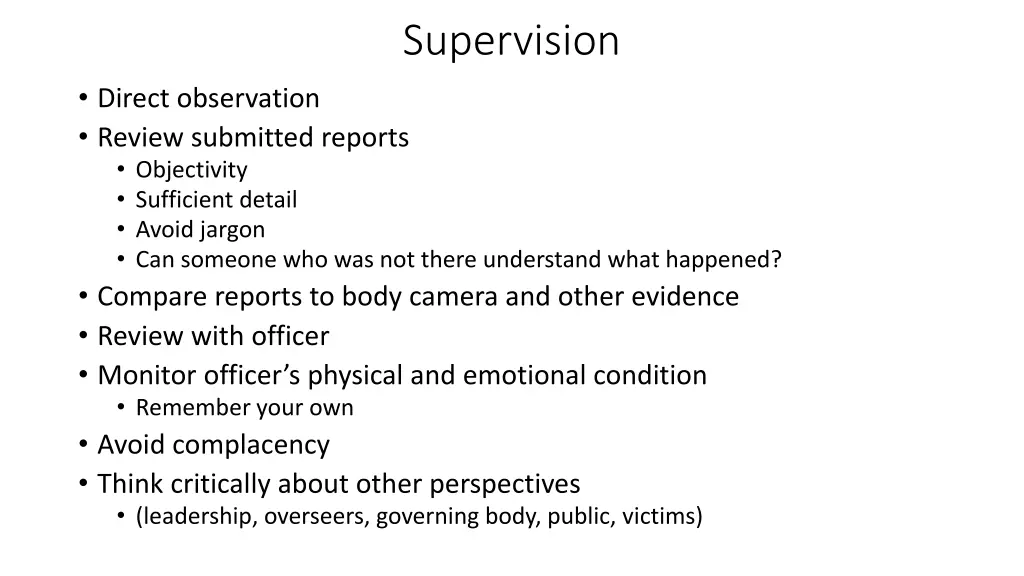
Supervision Direct observation Review submitted reports Objectivity Sufficient detail Avoid jargon Can someone who was not there understand what happened? Compare reports to body camera and other evidence Review with officer Monitor officer s physical and emotional condition Remember your own Avoid complacency Think critically about other perspectives (leadership, overseers, governing body, public, victims)
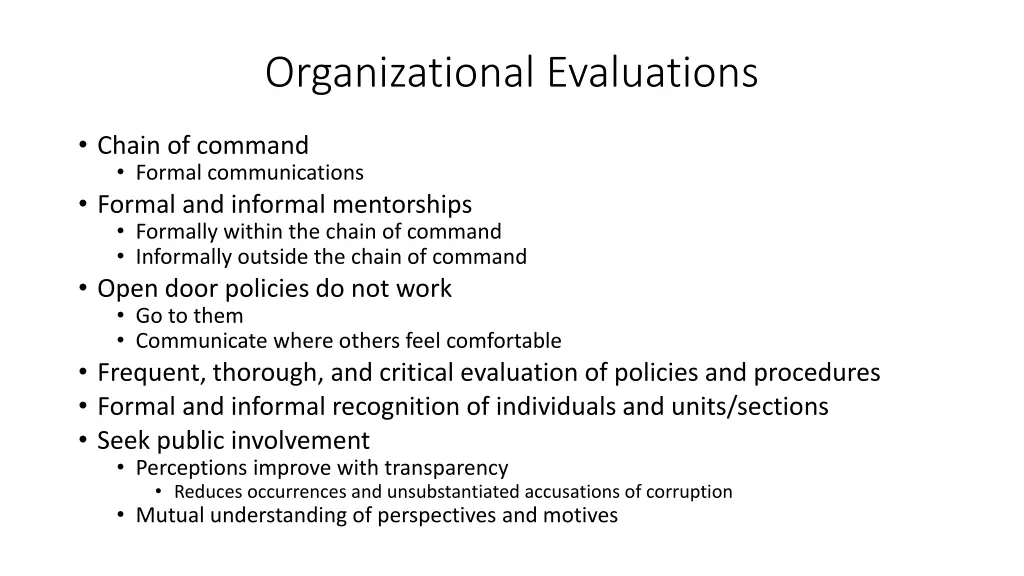
Organizational Evaluations Chain of command Formal communications Formal and informal mentorships Formally within the chain of command Informally outside the chain of command Open door policies do not work Go to them Communicate where others feel comfortable Frequent, thorough, and critical evaluation of policies and procedures Formal and informal recognition of individuals and units/sections Seek public involvement Perceptions improve with transparency Reduces occurrences and unsubstantiated accusations of corruption Mutual understanding of perspectives and motives
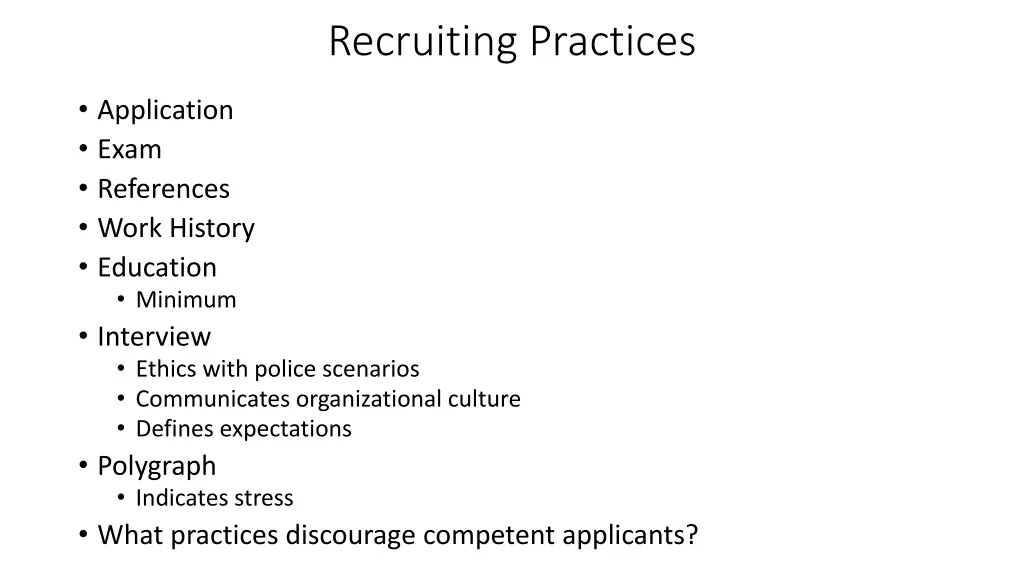
Recruiting Practices Application Exam References Work History Education Minimum Interview Ethics with police scenarios Communicates organizational culture Defines expectations Polygraph Indicates stress What practices discourage competent applicants?
Preparation for Interview People cannot be reduced to a numerical value! Have a clear concept of your organizational objectives Interviewer, come out of your box Instead of placing interviewee in your box What type of candidate will meet organizational objectives? Structure questions for diverse answers Respect for different cultures Empathy Value of human life Value of nonhuman life
Initiating Interview Selecting interviewers Relationship within or to the organization Credentials Is your greatest credential the number of years on the job? What do you bring to the organization besides years of service? Set a welcoming and relaxed tone This is not a good time to assess how someone handles stress Confuses interviewee Discourages open communication Consider how this relates to your organization s public relations Hiring practices impact public opinions The furniture arrangement sets a tone Agree on roles during the interview. Each interviewer could be assessing a desired quality What will be the next stage in the hiring process? What additional assessments follow this interview?
Interview Format Avoid police scenarios Rookie applicants have no police experience Open ended questions Tell me about a time when Describe a challenging situation and how you handled it Tell us about your ethical standards. What have you done for the community? What do you bring to our organization? What do you expect from our organization? How do you handle stress? How do you have fun? How competitive are you? Do you feel that you must always win? How do your family and friends feel about your decision to join our organization?
Mentor Program For rookies For probationary employees For disciplined employees For all employees Agent for change, improvement assumed To validate and assure individuals and the organization Objective feedback to leadership, overseeing officials, and the public
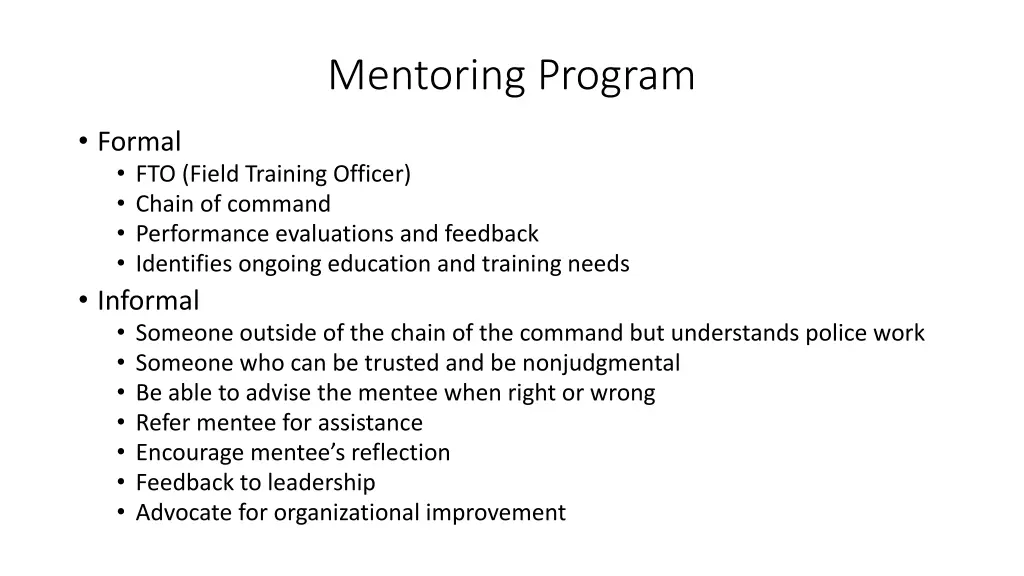
Mentoring Program Formal FTO (Field Training Officer) Chain of command Performance evaluations and feedback Identifies ongoing education and training needs Informal Someone outside of the chain of the command but understands police work Someone who can be trusted and be nonjudgmental Be able to advise the mentee when right or wrong Refer mentee for assistance Encourage mentee s reflection Feedback to leadership Advocate for organizational improvement
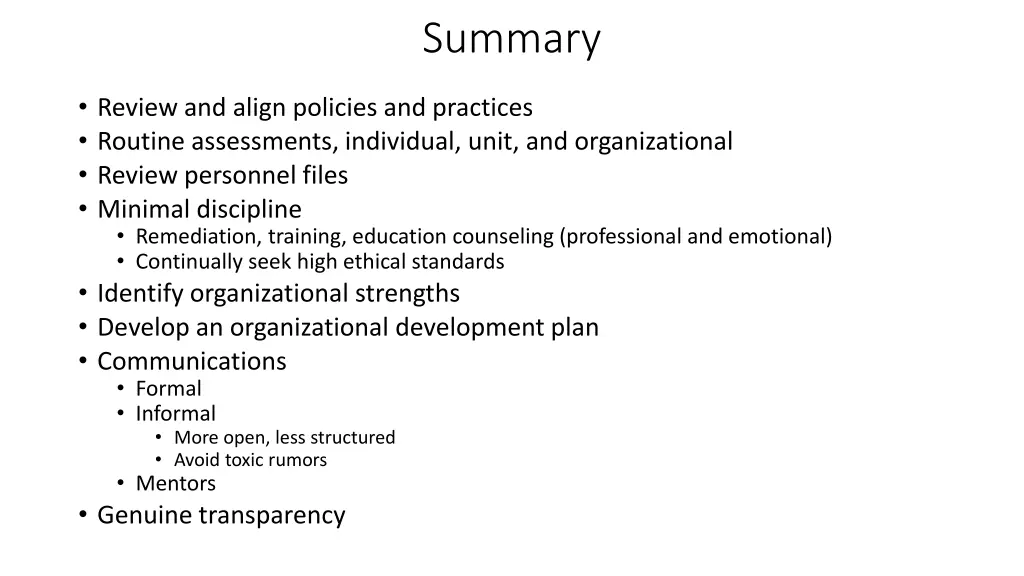
Summary Review and align policies and practices Routine assessments, individual, unit, and organizational Review personnel files Minimal discipline Remediation, training, education counseling (professional and emotional) Continually seek high ethical standards Identify organizational strengths Develop an organizational development plan Communications Formal Informal More open, less structured Avoid toxic rumors Mentors Genuine transparency
If You Always Do What You've Always Done, You'll Always Get What You've Always Got. Attributed to Henry Ford
You cant put a square peg in a round hole. Unless you get a bigger hammer Damage to peg and hole