Enhancing Science Teaching Through Lesson Analysis and Student Learning Evaluation
Explore a detailed session agenda focusing on science teaching strategies, student learning analysis, and lesson planning. Dive deep into analyzing classroom videos, student tests, and implementing STeLLA strategies for improved science education outcomes.

Download Presentation

Please find below an Image/Link to download the presentation.
The content on the website is provided AS IS for your information and personal use only. It may not be sold, licensed, or shared on other websites without obtaining consent from the author. If you encounter any issues during the download, it is possible that the publisher has removed the file from their server.
You are allowed to download the files provided on this website for personal or commercial use, subject to the condition that they are used lawfully. All files are the property of their respective owners.
The content on the website is provided AS IS for your information and personal use only. It may not be sold, licensed, or shared on other websites without obtaining consent from the author.
E N D
Presentation Transcript
RESPeCT STUDY-GROUP SESSION 6 Date:
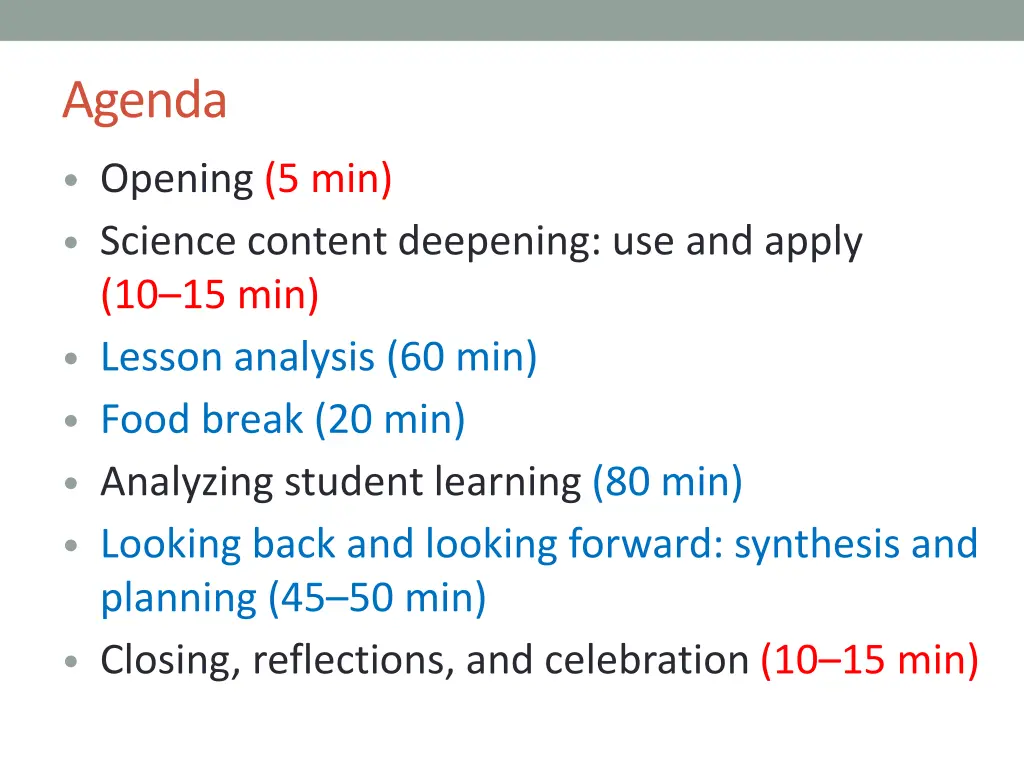
Agenda Opening (5 min) Science content deepening: use and apply (10 15 min) Lesson analysis (60 min) Food break (20 min) Analyzing student learning (80 min) Looking back and looking forward: synthesis and planning (45 50 min) Closing, reflections, and celebration (10 15 min)
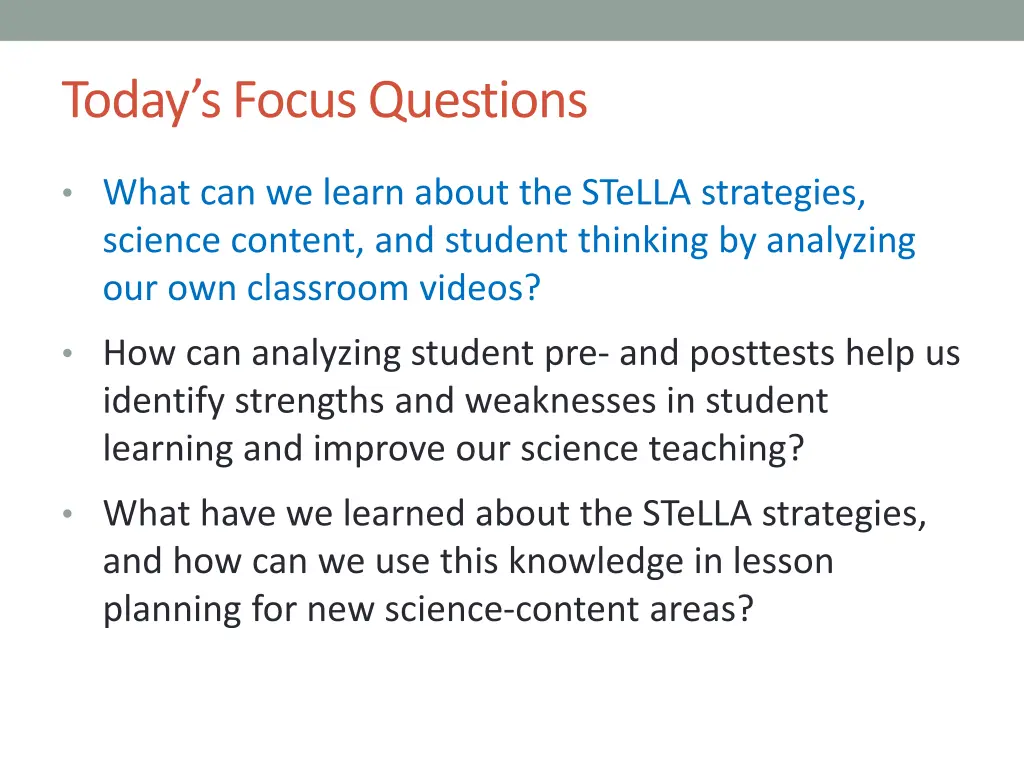
Todays Focus Questions What can we learn about the STeLLA strategies, science content, and student thinking by analyzing our own classroom videos? How can analyzing student pre- and posttests help us identify strengths and weaknesses in student learning and improve our science teaching? What have we learned about the STeLLA strategies, and how can we use this knowledge in lesson planning for new science-content areas?
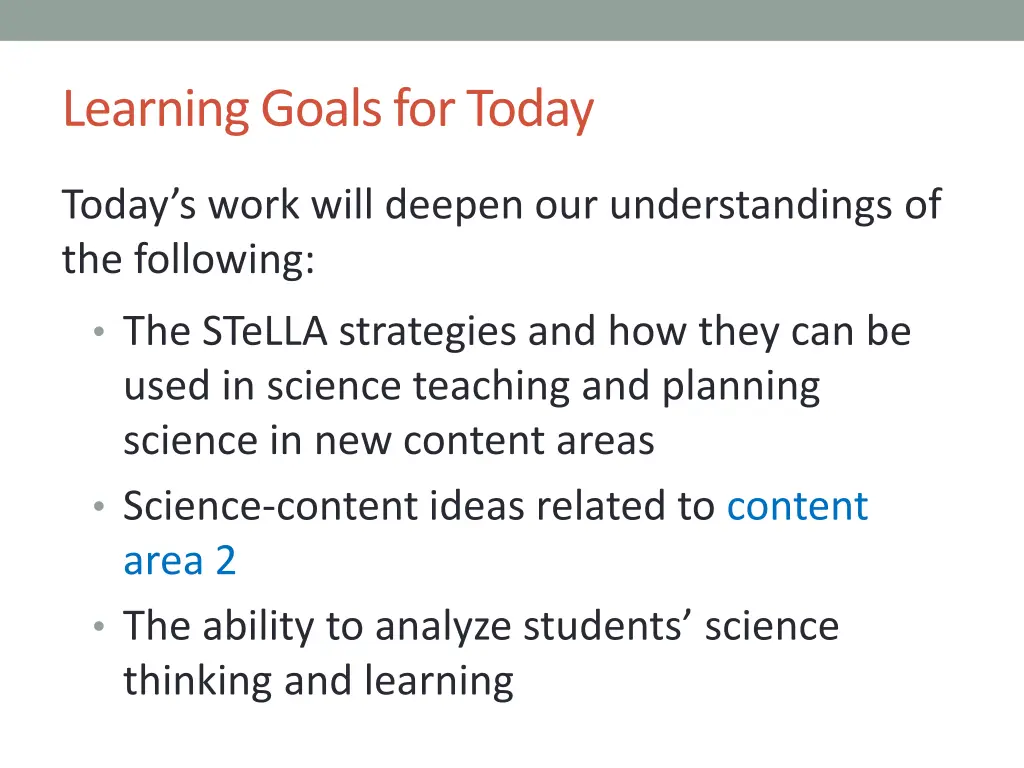
Learning Goals for Today Today s work will deepen our understandings of the following: The STeLLA strategies and how they can be used in science teaching and planning science in new content areas Science-content ideas related to content area 2 The ability to analyze students science thinking and learning
Science Content Deepening: Use and Apply Insert here a use-and-apply question for participants to answer, or a scenario, data set, or phenomenon for them to explain. Use your content background document as needed (resources section of your lesson plans binder).
Video-based Lesson Analysis Now we ll begin the lesson analysis process!
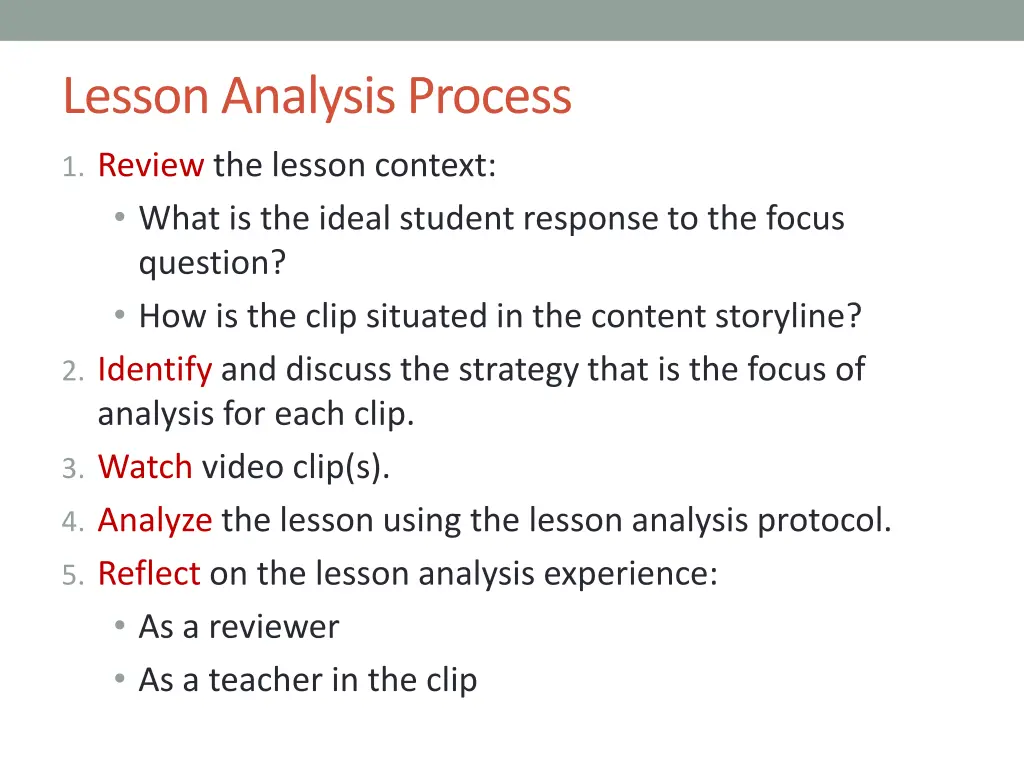
Lesson Analysis Process 1. Review the lesson context: What is the ideal student response to the focus question? How is the clip situated in the content storyline? 2. Identify and discuss the strategy that is the focus of analysis for each clip. 3. Watch video clip(s). 4. Analyze the lesson using the lesson analysis protocol. 5. Reflect on the lesson analysis experience: As a reviewer As a teacher in the clip
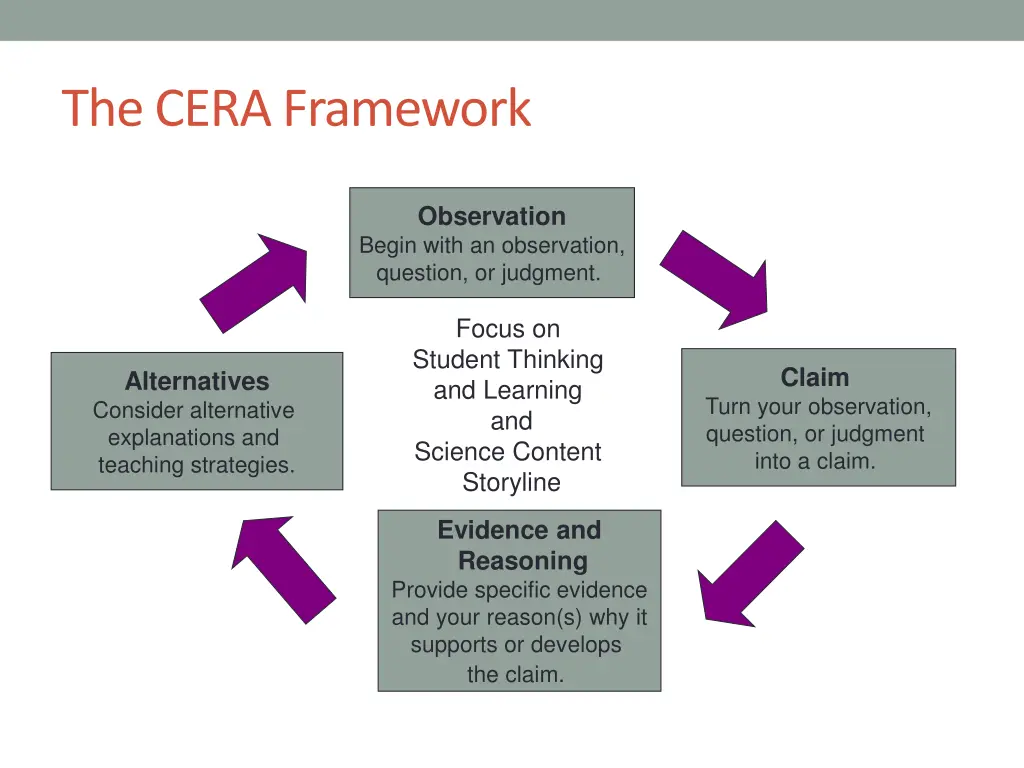
The CERA Framework Observation Begin with an observation, question, or judgment. Focus on Student Thinking and Learning and Science Content Storyline Claim Alternatives Consider alternative explanations and teaching strategies. Turn your observation, question, or judgment into a claim. Evidence and Reasoning Provide specific evidence and your reason(s) why it supports or develops the claim.
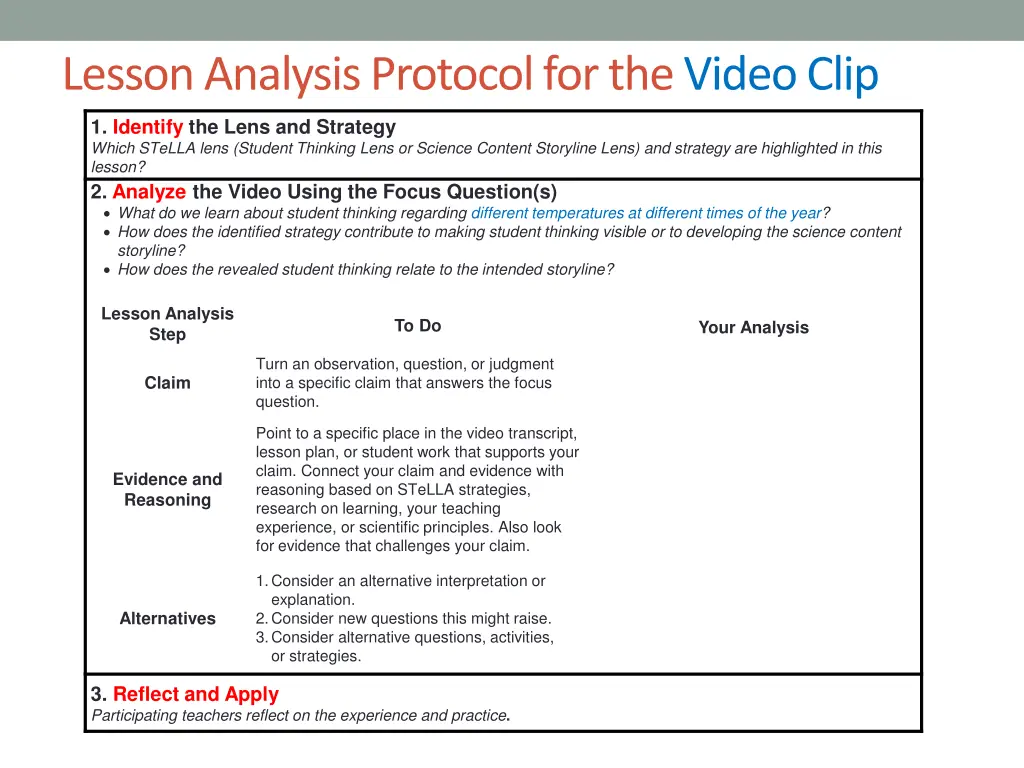
Lesson Analysis Protocol for the Video Clip 1. Identify the Lens and Strategy Which STeLLA lens (Student Thinking Lens or Science Content Storyline Lens) and strategy are highlighted in this lesson? 2. Analyze the Video Using the Focus Question(s) What do we learn about student thinking regarding different temperatures at different times of the year? How does the identified strategy contribute to making student thinking visible or to developing the science content storyline? How does the revealed student thinking relate to the intended storyline? Lesson Analysis Step To Do Your Analysis Turn an observation, question, or judgment into a specific claim that answers the focus question. Claim Point to a specific place in the video transcript, lesson plan, or student work that supports your claim. Connect your claim and evidence with reasoning based on STeLLA strategies, research on learning, your teaching experience, or scientific principles. Also look for evidence that challenges your claim. Evidence and Reasoning 1.Consider an alternative interpretation or explanation. 2.Consider new questions this might raise. 3.Consider alternative questions, activities, or strategies. Alternatives 3. Reflect and Apply Participating teachers reflect on the experience and practice.
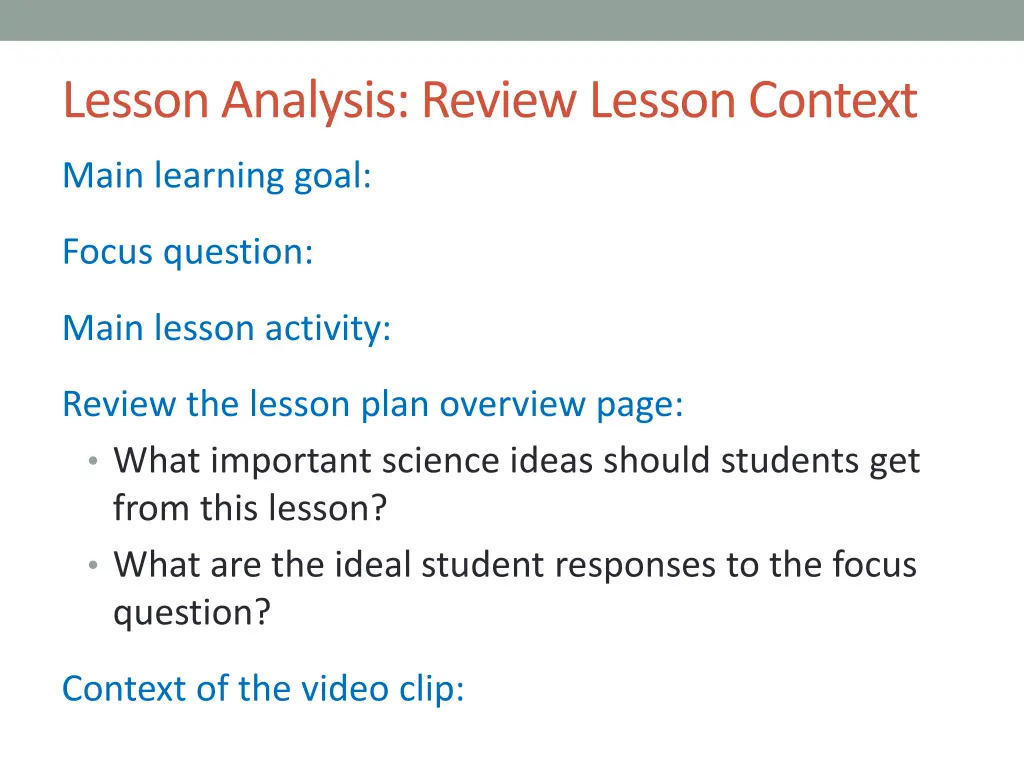
Lesson Analysis: Review Lesson Context Main learning goal: Focus question: Main lesson activity: Review the lesson plan overview page: What important science ideas should students get from this lesson? What are the ideal student responses to the focus question? Context of the video clip:
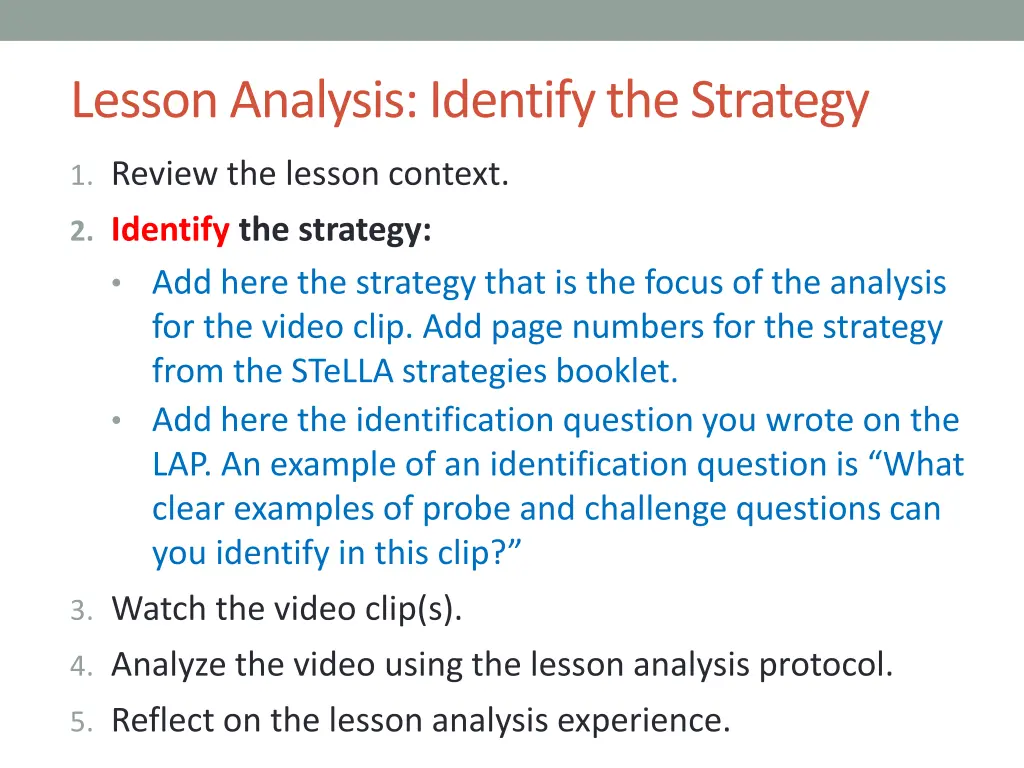
Lesson Analysis: Identify the Strategy 1. Review the lesson context. 2. Identify the strategy: Add here the strategy that is the focus of the analysis for the video clip. Add page numbers for the strategy from the STeLLA strategies booklet. Add here the identification question you wrote on the LAP. An example of an identification question is What clear examples of probe and challenge questions can you identify in this clip? 3. Watch the video clip(s). 4. Analyze the video using the lesson analysis protocol. 5. Reflect on the lesson analysis experience.
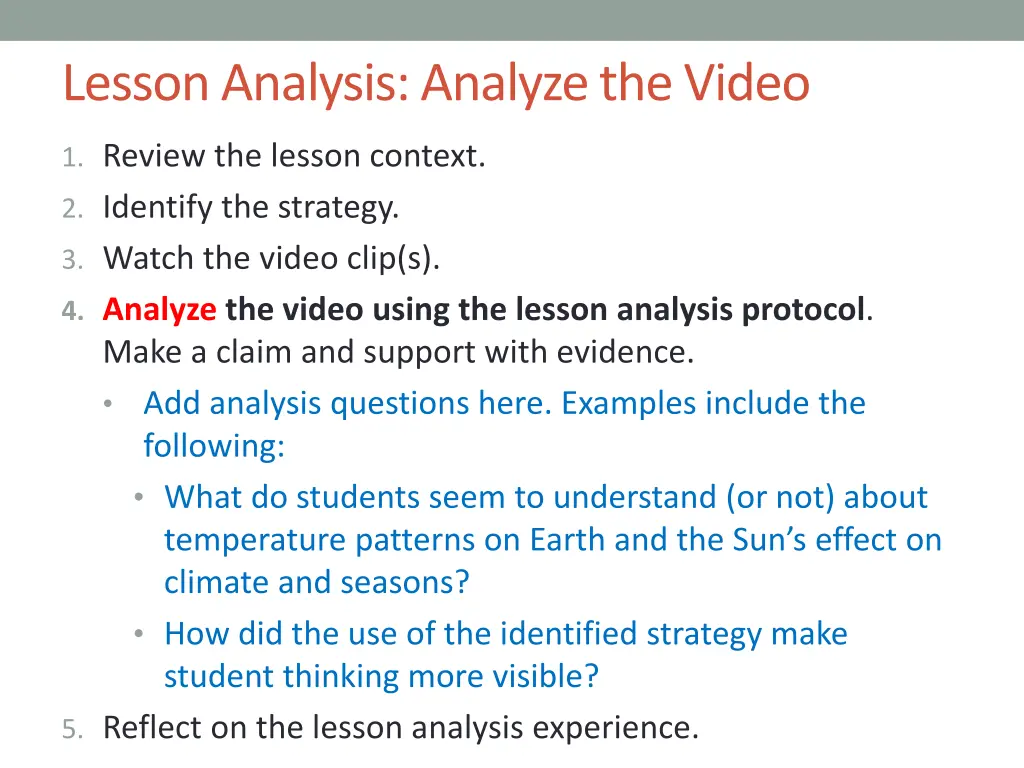
Lesson Analysis: Analyze the Video 1. Review the lesson context. 2. Identify the strategy. 3. Watch the video clip(s). 4. Analyze the video using the lesson analysis protocol. Make a claim and support with evidence. Add analysis questions here. Examples include the following: What do students seem to understand (or not) about temperature patterns on Earth and the Sun s effect on climate and seasons? How did the use of the identified strategy make student thinking more visible? 5. Reflect on the lesson analysis experience.
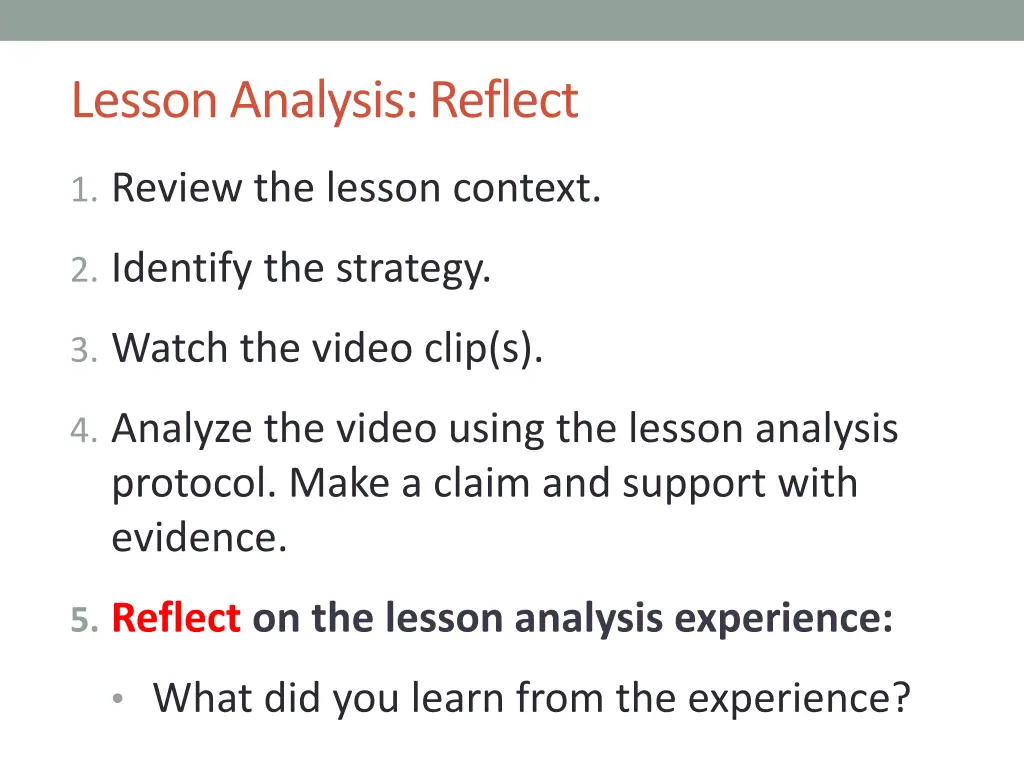
Lesson Analysis: Reflect 1. Review the lesson context. 2. Identify the strategy. 3. Watch the video clip(s). 4. Analyze the video using the lesson analysis protocol. Make a claim and support with evidence. 5. Reflect on the lesson analysis experience: What did you learn from the experience?
Food Break Now we ll take a 20-minute food break.
Focus Question 2 How can analyzing student pre- and posttests help us identify strengths and weaknesses in student learning and improve our science teaching?
Analysis of Student Learning: Features Analysis Charts 1. Break up into groups of three and distribute FACs to each group member. 2. Individuals: Study each teacher s pre- and posttest FACs, looking for patterns in the student-learning data. Note the following: What ideas did students seem to get (pre and post)? What ideas did students not seem to get (pre and post)? How did student learning change from pre- to posttest? 3. Small group: Identify a note taker for the group. Discuss and take notes about things that were similar and different across classes. Be sure to cite evidence for your claims!
Analysis of Student Learning: Sample Pre- and Posttests 1. Distribute copies of sample student pre- and posttests in your small group. 2. Individuals: Study each student s pre- and posttests. Note the following: What ideas did students seem to get (pre and post)? What ideas did students not seem to get (pre and post)? How did student learning change from pre- to posttest? 3. Small group: Identify a note taker for the group. Discuss and take notes about interesting student thinking found in the individual tests, looking for anything that reinforces or differs from the patterns identified in the FAC. Remember to cite evidence for your claims!
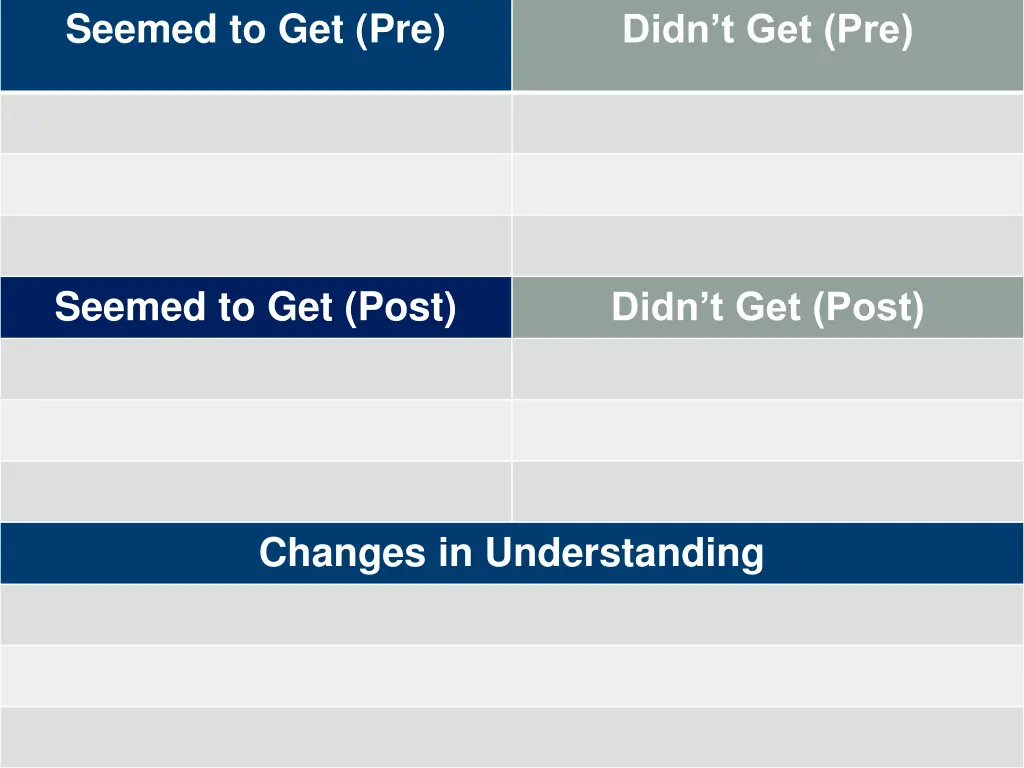
Analysis of Student Learning: Charts Make a chart that shows the following: Ideas most students seemed to understand Ideas most students did not seem to understand General changes in student understanding you observed
Seemed to Get (Pre) Didn t Get (Pre) med to Get (Pre) Seemed to Get (Post) Didn t Get (Post) Changes in Understanding
Gallery Walk 1. Walk around the room and look at all the charts. 2. Note the following: Similar things students seemed to understand Similar things students seemed to be struggling with
Discussion 1. What did our gallery walk tell you about what students learned and understood? 2. What does our analysis suggest about next steps? What additional experiences/lessons do students need? How could the lessons be improved to better support student learning? What STeLLA strategies do teachers/students need more work with? What will you do differently next time you teach these lessons?
Reflect on Focus Questions 1 and 2 1. What can we learn about the STeLLA strategies, science content, and student thinking by analyzing our own classroom videos? 2. How can analyzing student pre- and posttests help us identify strengths and weaknesses in student learning and improve our science teaching?
Focus Question 3: Looking Back and Looking Forward What have we learned about the STeLLA strategies, and how can we use this knowledge in lesson planning for new science-content areas? Looking back: A synthesis activity Looking forward: A planning activity for new content areas
Looking Back: A Synthesis Activity Review all of the STeLLA strategies using your Z-fold summary-chart notes and the strategies booklet (especially the STL and SCSL summary charts). Based on your experiences so far: Which STeLLA strategies do you think should be used in every science lesson? Which STeLLA strategies do you think are appropriately used in some science lessons, but not in all lessons?
Looking Forward: A Planning Activity Imagine you re going to teach science lessons in a new content area. As you plan these science lessons using what you ve learned about the STeLLA strategies, keep the following questions in mind: Which STeLLA strategies must be clearly and specifically identified ahead of time? Which STeLLA strategies can be anticipated ahead of time (e.g., anticipating possible ways to use the strategy)? Which STeLLA strategies may spontaneously develop in response to what is going on during the lesson?
Using STeLLA Strategies in Lesson Planning Image you re planning to teach a sequence of lessons in a new science-content area. Work with a partner to examine the strategies in the STeLLA strategies booklet and answer this question: Where do you think would be a good place to start the planning process? Why?
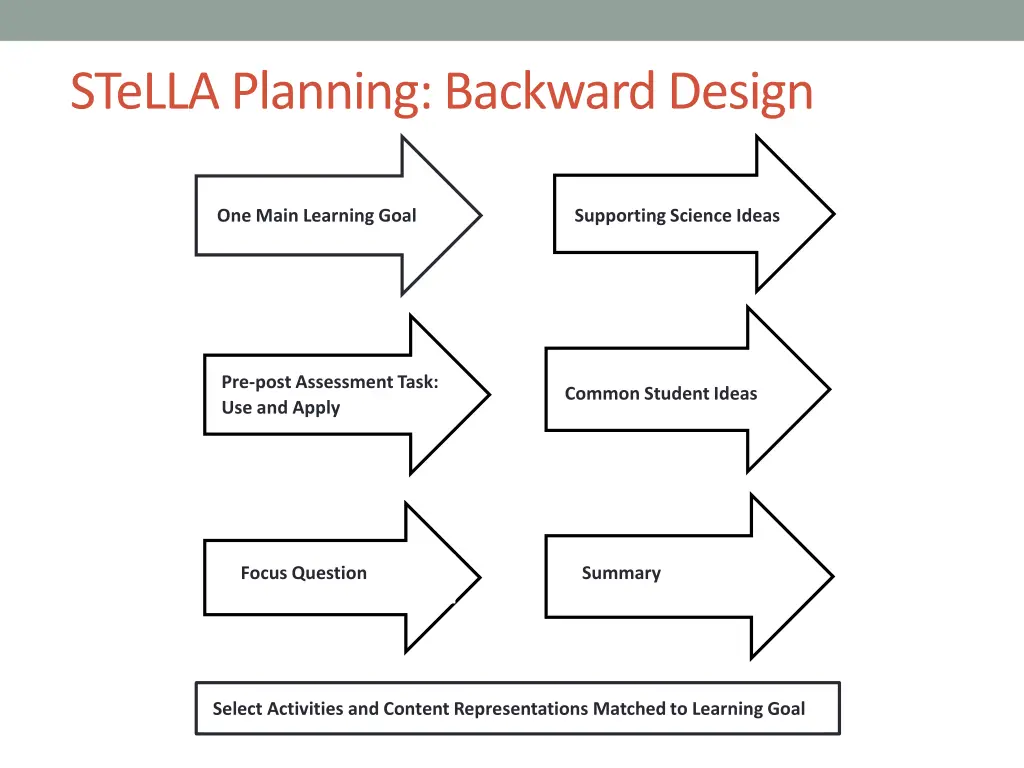
STeLLA Planning: Backward Design One Main Learning Goal SupportingScience Ideas Pre-post Assessment Task: Use and Apply Common Student Ideas Focus Question Summary Select Activities and Content Representations Matched to Learning Goal
Lessons Learned from Looking Back and Looking Forward 1. Looking-back checklist: What key ideas about the STeLLA strategies emerge from this analysis? 2. Looking-forward checklist: What key ideas about STeLLA strategies emerge from this analysis?
Reflections on the RESPeCT PD Program How has your participation in the RESPeCT PD program influenced how you think about and teach science? What are two important ideas or goals you want to keep in mind as you teach science next year?
Lets Celebrate! Design your own end-of-program celebration and insert any comments or instructions here.
Thank You! Thank you for participating in the RESPeCT PD program!