Explore the roles of estrogens and androgens in human physiology, including their production, functions, and therapeutic uses. Learn about the different types of estrogens, their synthesis, and the importance of sex hormones in conception and embryonic development. Discover how synthetic estrogens are used in medical treatments and the various pathways through which these hormones act in the body.
Please find below an Image/Link to download the presentation.
The content on the website is provided AS IS for your information and personal use only. It may not be sold, licensed, or shared on other websites without obtaining consent from the author. If you encounter any issues during the download, it is possible that the publisher has removed the file from their server.
You are allowed to download the files provided on this website for personal or commercial use, subject to the condition that they are used lawfully. All files are the property of their respective owners.
The content on the website is provided AS IS for your information and personal use only. It may not be sold, licensed, or shared on other websites without obtaining consent from the author.
Sex hormones produced by the gonads are necessary for conception embryonic maturation, and Several antagonists are effective in cancer chemotherapy All gonadal hormones are synthesized from the precursor, cholesterol, in a series of steps that includes shortening of the hydrocarbon side chain and hydroxylation of the steroid nucleus.
Estrogens Estrogens Estradiol Estradiol is the most potent estrogen produced and secreted by the ovary. It is the principal estrogen in the premenopausal woman. Estriol Estriol is another metabolite of estradiol, is significantly less potent than estradiol. It is present in significant amounts during pregnancy, because it is the principal estrogen produced by the placenta.
Estrogens Estrogens Synthetic estrogens, such as ethinyl estradiol undergo less first-pass metabolism than naturally occurring steroids and, thus, are effective when administered orally at lower doses In the absence of ligand, the receptor is sequestered within the cell nucleus and maintained in an inactive state. Similarly to the other nuclear receptors, the protein is prevented from binding to DNA by heat shock proteins.
Estrogens Estrogens Other pathways that require these hormones have been identified that lead to more rapid actions. For example I. activation of an estrogen receptor in the membranes of hypothalamic cells has been shown to couple to a G protein
Therapeutic uses Therapeutic uses 1 1- -Postmenopausal HT: Postmenopausal HT: For women who have an intact uterus, a progestogen is always included with the estrogen therapy, because the combination reduces the risk of endometrial carcinoma associated with unopposed estrogen. Lower dose required Estradiol transdermal patch is also effective in treating postmenopausal symptoms.
2 2- -Contraception: Contraception: The combination of an estrogen and progestogen provides effective contraception via the oral or transdermal route.
3-Estrogen therapy usually in combination with a progestogen, is instituted to stimulate development of secondary sex characteristics in young women (11 to 13 years of age) with primary hypogonadism. 4-Estrogen and progestogen replacement therapy is used for women who have premature menopause or premature ovarian failure. 5-Estrogen may be used for prevention of osteoporosis if other therapies are inappropriate or not tolerated.
Pharmacokinetics Pharmacokinetics Naturally occurring estrogens: These agents and their Naturally occurring estrogens: These agents and their esterified esterified or conjugated derivatives are readily absorbed through the gastrointestinal tract, skin, and mucous membranes. Taken orally, estradiol is rapidly metabolized
Pharmacokinetics Pharmacokinetics transdermal route (patch, topical gel, topical emulsion, or spray), intravaginally (tablet, cream, or ring), Or by injection. The parent estrogen drugs and their metabolites undergo excretion into the bile and are then reabsorbed through the enterohepatic circulation.
Adverse effects Adverse effects I. Nausea and breast tenderness are the most common II. Postmenopausal uterine bleeding can occur. III. diethylstilbestrol has been implicated as the possible cause of a rare, clear-cell cervical or vaginal adenocarcinoma observed among the daughters of women who took the drug during pregnancy.
Selective Estrogen Selective Estrogen- -Receptor Modulators Receptor Modulators class of estrogen-related compounds that display selective agonism or antagonism for estrogen receptors depending on the tissue type. This category includes tamoxifen tamoxifen, , Bazedoxifene Bazedoxifene raloxifene raloxifene, , clomiphene clomiphene, and ospemifene ospemifene. . , and
Selective Estrogen Selective Estrogen- -Receptor Modulators Receptor Modulators Tamoxifen Tamoxifen Considered to be the first SERM it competes with estrogen for binding to the estrogen receptor in breast tissue and uterus. : antagonism of estrogen receptors in the breast tissue. Therefore, some breast tumors regress following treatment with these agents
Selective Estrogen Selective Estrogen- -Receptor Modulators Receptor Modulators Acts as an estrogen agonist in bone leading to decreased bone resorption, increased bone density, and decreased vertebral fractures has little to no effect on the endometrium and, therefore, may not predispose to uterine cancer. The drug reduces the risk of endometrial hyperplasia with estrogen use.
has antioestrogenic effects on breast and uterus but oestrogenic effects on bone, lipid metabolism and blood coagulation. It is used for prevention and treatment of postmenopausal osteoporosis Clomiphene Clomiphene acts as a partial estrogen agonist and interferes with the negative feedback of estrogens on the hypothalamus. So increases the secretion of gonadotropin-releasing hormone and stimulating ovulation.
Therapeutic uses Therapeutic uses Tamoxifen Tamoxifen used in the palliative treatment of metastatic breast cancer adjuvant therapy following mastectomy or radiation in breast cancer Raloxifene Raloxifene prophylaxis of breast cancer in high-risk women for the prevention and treatment of osteoporosis in postmen- opausal women
Therapeutic uses Therapeutic uses Clomiphene Clomiphene to treat infertility associated with anovulatory cycles, is not effective in women with ovulatory dysfunction due to pituitary or ovarian failure. Uses of clomiphene in male mechanism behind?
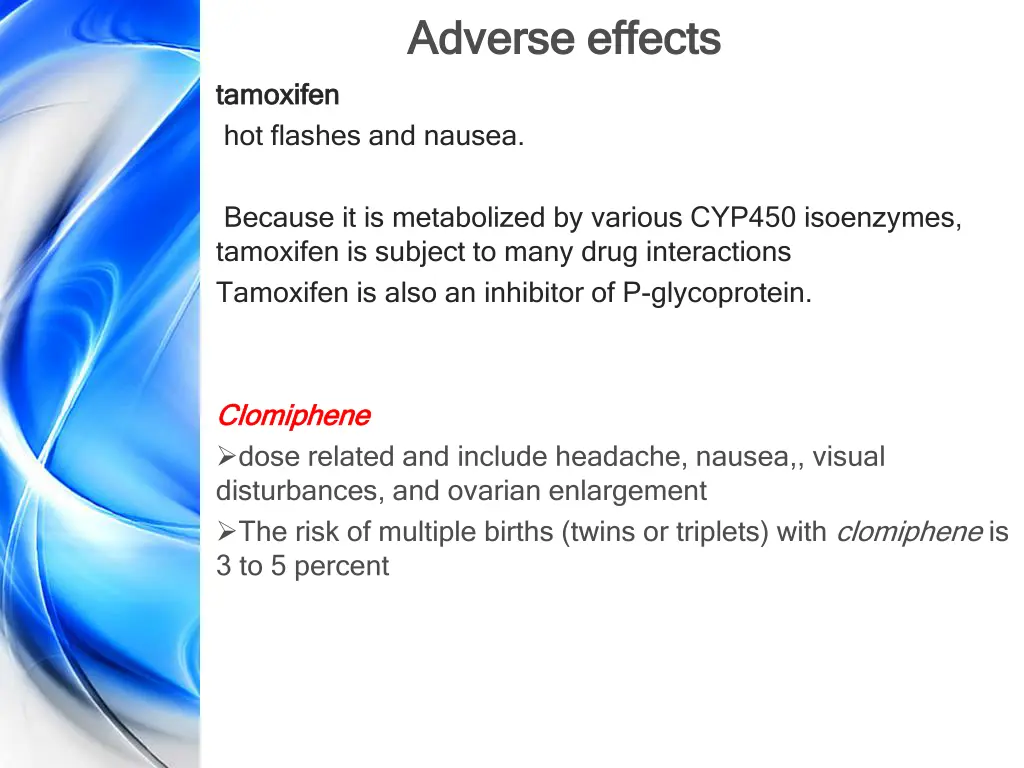
Adverse effects Adverse effects tamoxifen tamoxifen hot flashes and nausea. Because it is metabolized by various CYP450 isoenzymes, tamoxifen is subject to many drug interactions Tamoxifen is also an inhibitor of P-glycoprotein. Clomiphene Clomiphene dose related and include headache, nausea,, visual disturbances, and ovarian enlargement The risk of multiple births (twins or triplets) with clomiphene is 3 to 5 percent
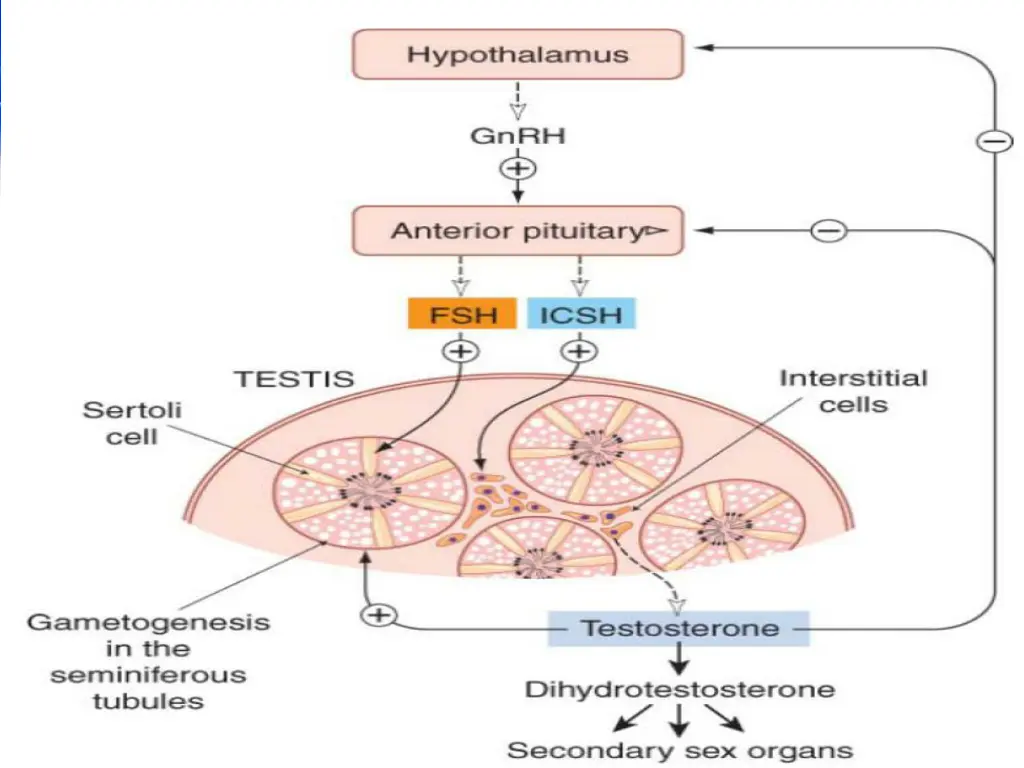
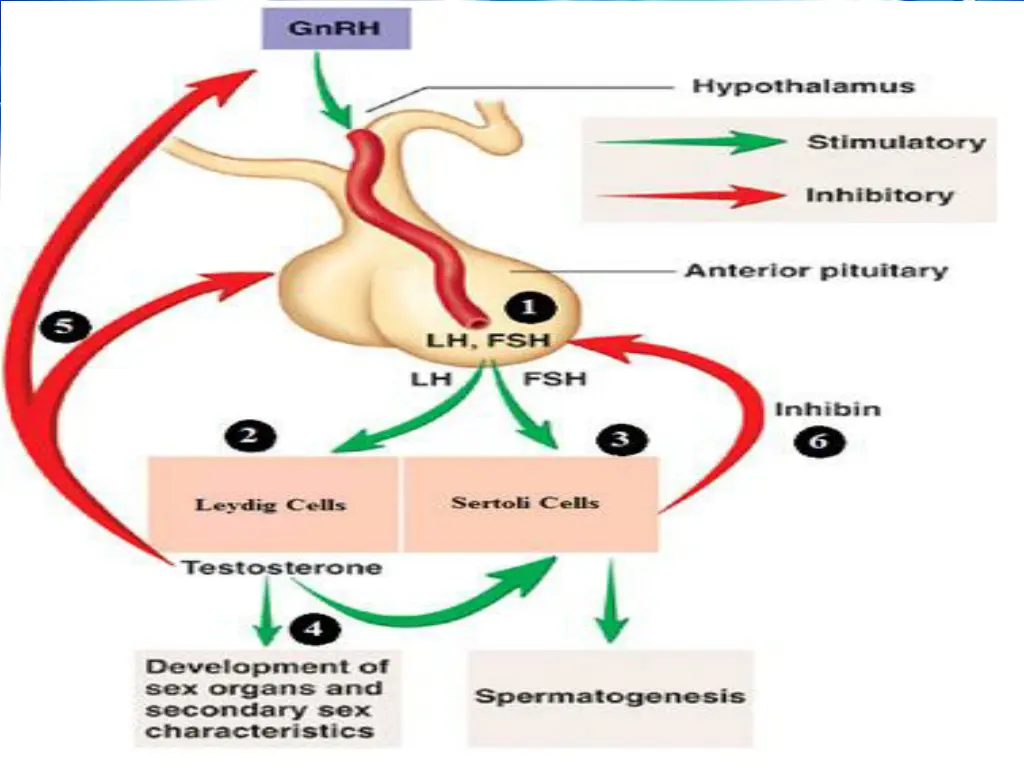
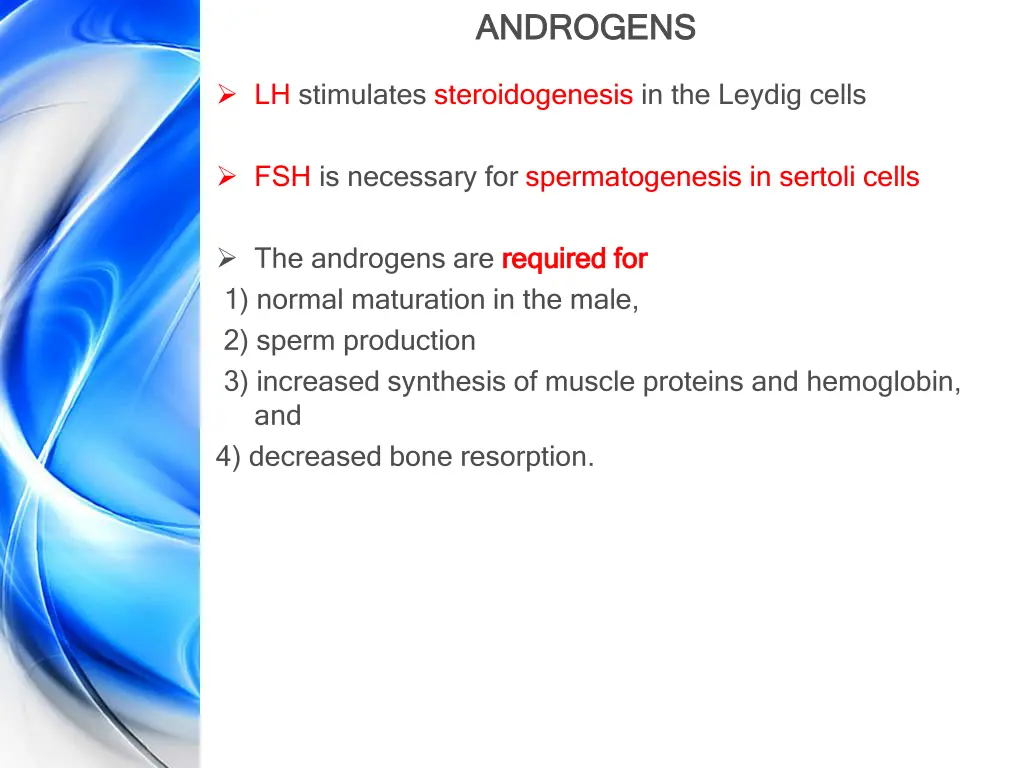
ANDROGENS ANDROGENS LH stimulates steroidogenesis in the Leydig cells FSH is necessary for spermatogenesis in sertoli cells The androgens are required for 1) normal maturation in the male, 2) sperm production 3) increased synthesis of muscle proteins and hemoglobin, and 4) decreased bone resorption. required for
Mechanism of action Mechanism of action bind to a specific nuclear receptor in a target cell testosterone itself is the active ligand in muscle and liver The hormone-receptor complex binds to DNA and stimulates the synthesis of specific RNAs and proteins. Testosterone analogs that cannot less effect on the reproductive system than they do on the skeletal musculature. cannot be converted to DHT have
4-Unapproved use: Anabolic steroids are used to increase lean body mass, muscle strength, and endurance in athletes and body builders . use has been banned from the Olympics and in major professional and sports Testosterone is ineffective orally Testosterone and its C17-esters (for example, testosterone cypionate or enanthate) are administered intramuscularly
Transdermal patches, topical gels, and buccal tablets of testosterone are also available. Alkylation of the 17 position of testosterone allows oral administration of the hormone. Oxandrolone is another orally active testosterone derivative with anabolic activity 3 to 13 times that of testosterone Hepatic adverse effects have been associated with the alkylated androgens
Adverse effects Adverse effects in females: Masculinization Acne growth of facial hair In males: Priapism(painful, erection that lasts for more than four hours and occurs without sexual stimulation. ) impotence,
Adverse effects Adverse effects In children: Androgens can cause abnormal sexual maturation and growth disturbances resulting from premature closing of the epiphyseal plates. In athletes: premature closing of the epiphysis of the long bones(young ) stunts growth and interrupts development(young) hepatic abnormalities, increased aggression & mood disorders. .
Antiandrogens Antiandrogens Finasteride Finasteride and of benign prostatic hypertrophy, inhibit 5 -reductase leads to a reduction in prostate size and dutasteride dutasteride agents used for the treatment Flutamide, bicalutamide and nilutamide act as competitive inhibitors of androgens at the target cell effective orally for the treatment of prostate cancer. .
Antiandrogens Antiandrogens Cyproterone Cyproterone a derivative of progesterone and has weak progestational activity It is a partial agonist at androgen receptors, competing with dihydrotestosterone for receptors in androgen-sensitive target tissues. It is used as an adjunct in the treatment of prostatic cancer .