Ethics in Management: Handling Value-Based Conflicts and Corporate Governance
Ethics in management covers ethical issues in accounting and finance, workplace ethics, resolution of value-based conflicts, and corporate governance. It delves into values, conflicts, and practices that ensure accountability, transparency, and fairness in business operations. By understanding and addressing conflicts arising from differing value systems, organizations can strengthen their ethical foundation and fulfill stakeholder expectations.

Download Presentation

Please find below an Image/Link to download the presentation.
The content on the website is provided AS IS for your information and personal use only. It may not be sold, licensed, or shared on other websites without obtaining consent from the author.If you encounter any issues during the download, it is possible that the publisher has removed the file from their server.
You are allowed to download the files provided on this website for personal or commercial use, subject to the condition that they are used lawfully. All files are the property of their respective owners.
The content on the website is provided AS IS for your information and personal use only. It may not be sold, licensed, or shared on other websites without obtaining consent from the author.
E N D
Presentation Transcript
Business Ethics Unit 3: Ethics in Management
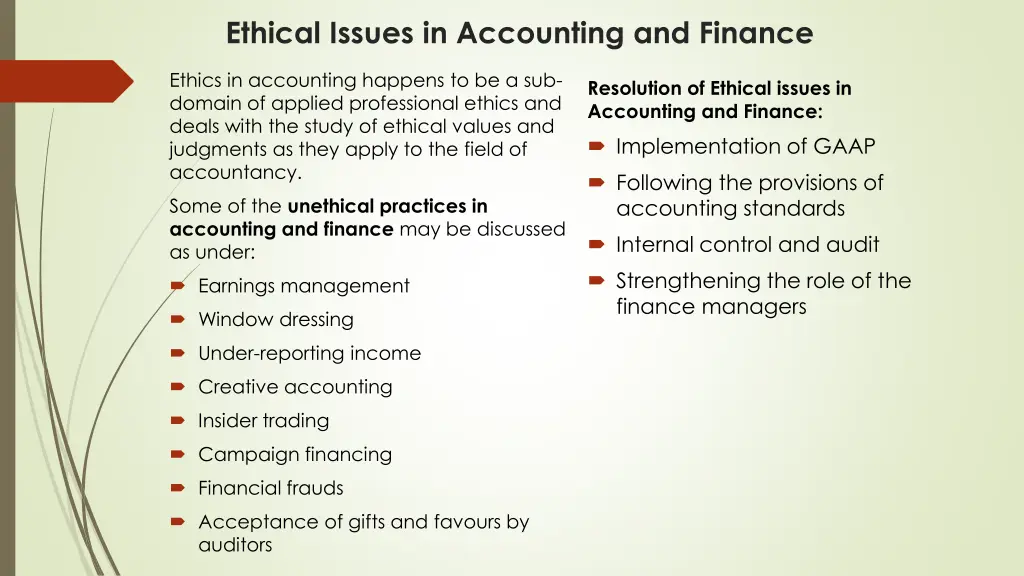
Ethical Issues in Accounting and Finance Ethics in accounting happens to be a sub- domain of applied professional ethics and deals with the study of ethical values and judgments as they apply to the field of accountancy. Resolution of Ethical issues in Accounting and Finance: Implementation of GAAP Following the provisions of accounting standards Internal control and audit Strengthening the role of the finance managers Some of the unethical practices in accounting and finance may be discussed as under: Earnings management Window dressing Under-reporting income Creative accounting Insider trading Campaign financing Financial frauds Acceptance of gifts and favours by auditors
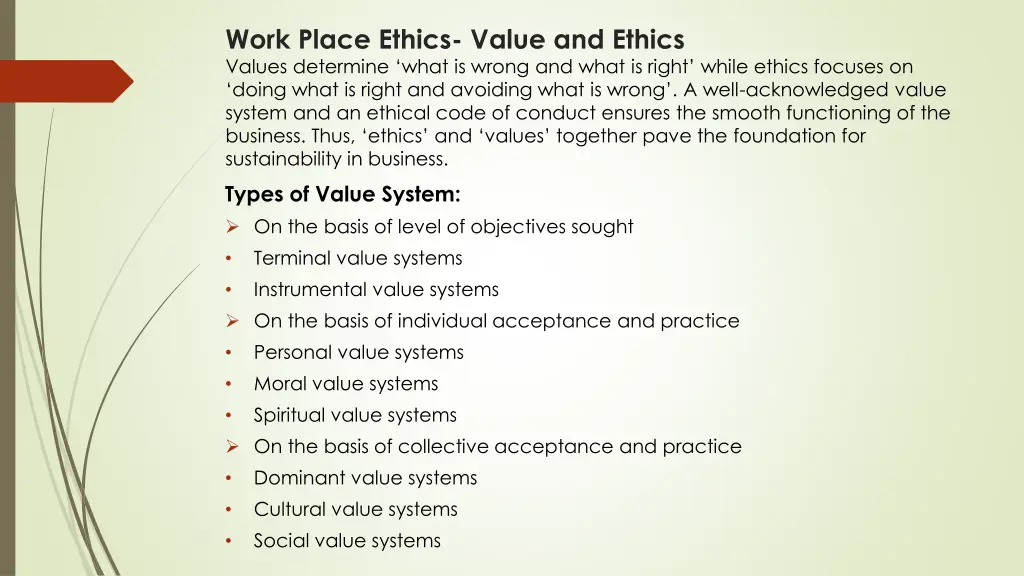
Work Place Ethics- Value and Ethics Values determine what is wrong and what is right while ethics focuses on doing what is right and avoiding what is wrong . A well-acknowledged value system and an ethical code of conduct ensures the smooth functioning of the business. Thus, ethics and values together pave the foundation for sustainability in business. Types of Value System: On the basis of level of objectives sought Terminal value systems Instrumental value systems On the basis of individual acceptance and practice Personal value systems Moral value systems Spiritual value systems On the basis of collective acceptance and practice Dominant value systems Cultural value systems Social value systems
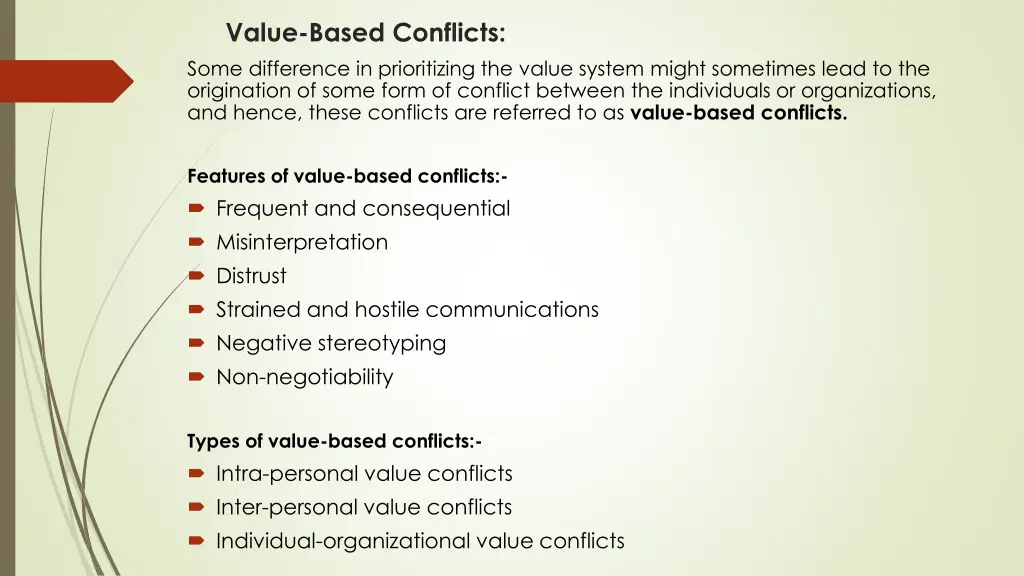
Value-Based Conflicts: Some difference in prioritizing the value system might sometimes lead to the origination of some form of conflict between the individuals or organizations, and hence, these conflicts are referred to as value-based conflicts. Features of value-based conflicts:- Frequent and consequential Misinterpretation Distrust Strained and hostile communications Negative stereotyping Non-negotiability Types of value-based conflicts:- Intra-personal value conflicts Inter-personal value conflicts Individual-organizational value conflicts
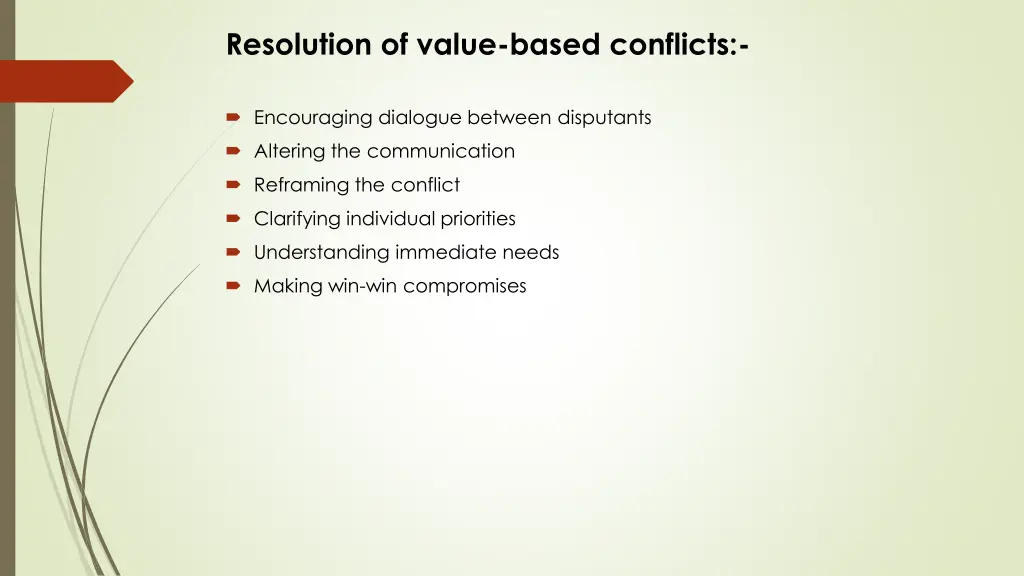
Resolution of value-based conflicts:- Encouraging dialogue between disputants Altering the communication Reframing the conflict Clarifying individual priorities Understanding immediate needs Making win-win compromises
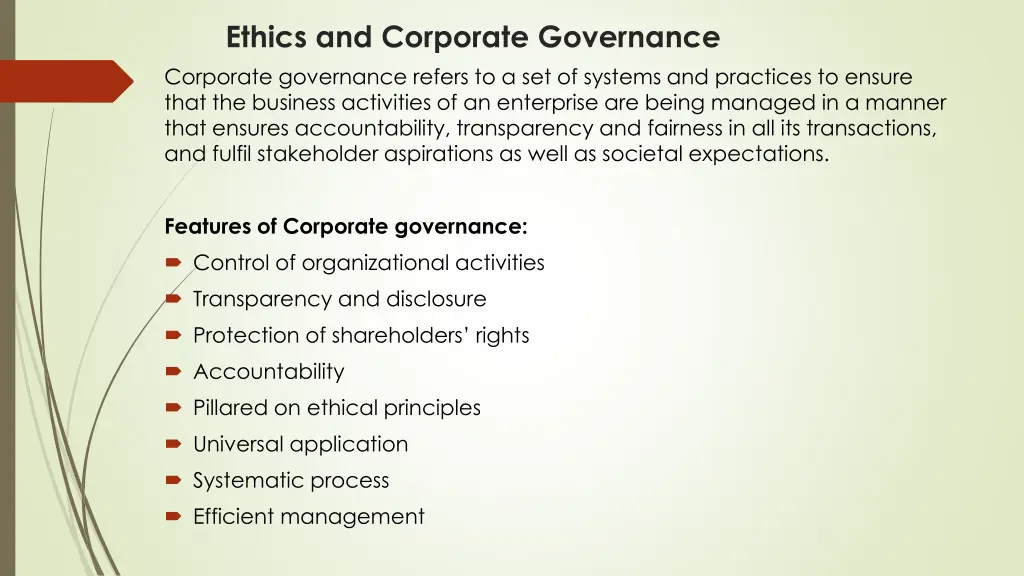
Ethics and Corporate Governance Corporate governance refers to a set of systems and practices to ensure that the business activities of an enterprise are being managed in a manner that ensures accountability, transparency and fairness in all its transactions, and fulfil stakeholder aspirations as well as societal expectations. Features of Corporate governance: Control of organizational activities Transparency and disclosure Protection of shareholders rights Accountability Pillared on ethical principles Universal application Systematic process Efficient management
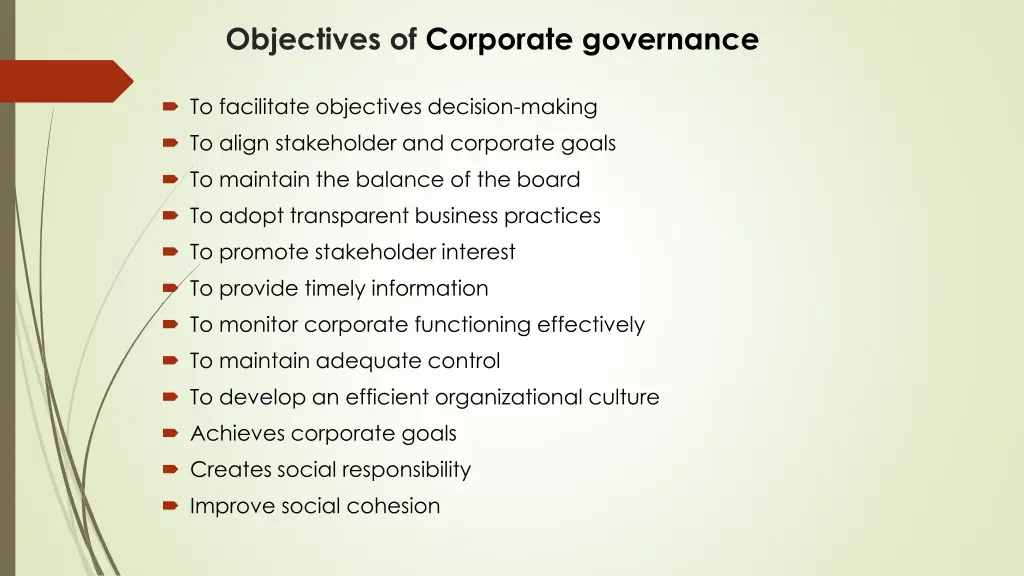
Objectives of Corporate governance To facilitate objectives decision-making To align stakeholder and corporate goals To maintain the balance of the board To adopt transparent business practices To promote stakeholder interest To provide timely information To monitor corporate functioning effectively To maintain adequate control To develop an efficient organizational culture Achieves corporate goals Creates social responsibility Improve social cohesion
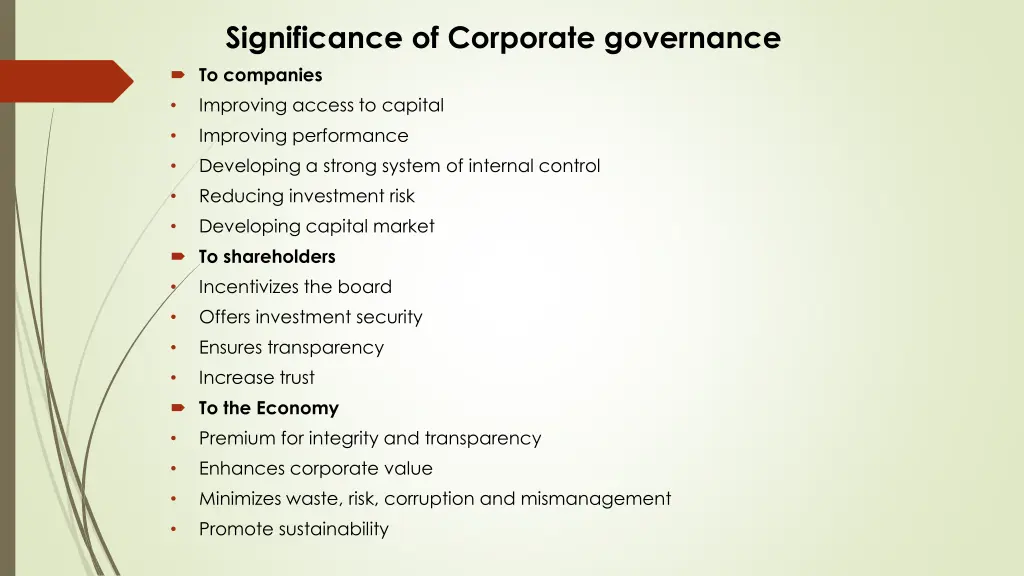
Significance of Corporate governance To companies Improving access to capital Improving performance Developing a strong system of internal control Reducing investment risk Developing capital market To shareholders Incentivizes the board Offers investment security Ensures transparency Increase trust To the Economy Premium for integrity and transparency Enhances corporate value Minimizes waste, risk, corruption and mismanagement Promote sustainability
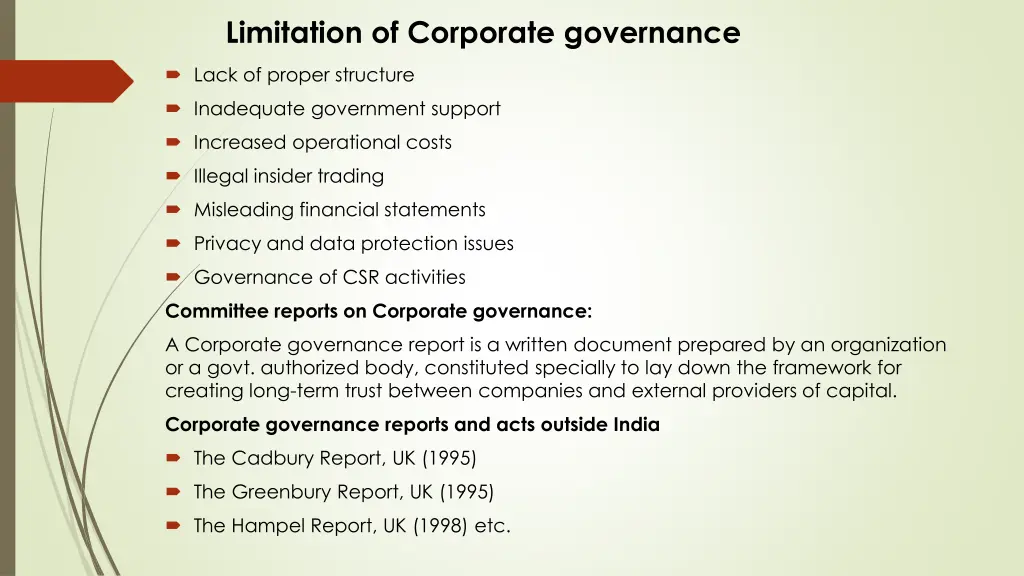
Limitation of Corporate governance Lack of proper structure Inadequate government support Increased operational costs Illegal insider trading Misleading financial statements Privacy and data protection issues Governance of CSR activities Committee reports on Corporate governance: A Corporate governance report is a written document prepared by an organization or a govt. authorized body, constituted specially to lay down the framework for creating long-term trust between companies and external providers of capital. Corporate governance reports and acts outside India The Cadbury Report, UK (1995) The Greenbury Report, UK (1995) The Hampel Report, UK (1998) etc.
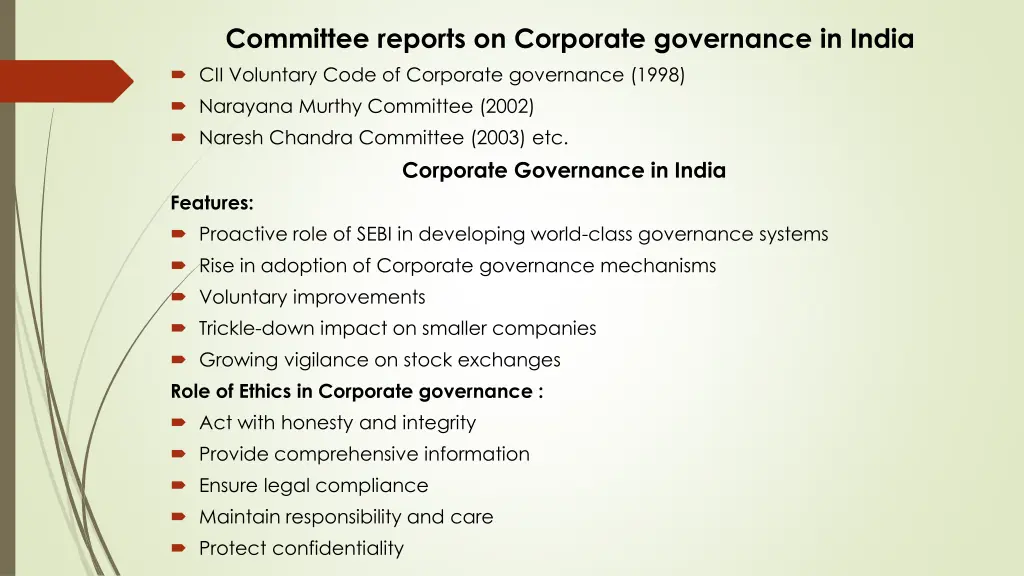
Committee reports on Corporate governance in India CII Voluntary Code of Corporate governance (1998) Narayana Murthy Committee (2002) Naresh Chandra Committee (2003) etc. Corporate Governance in India Features: Proactive role of SEBI in developing world-class governance systems Rise in adoption of Corporate governance mechanisms Voluntary improvements Trickle-down impact on smaller companies Growing vigilance on stock exchanges Role of Ethics in Corporate governance : Act with honesty and integrity Provide comprehensive information Ensure legal compliance Maintain responsibility and care Protect confidentiality
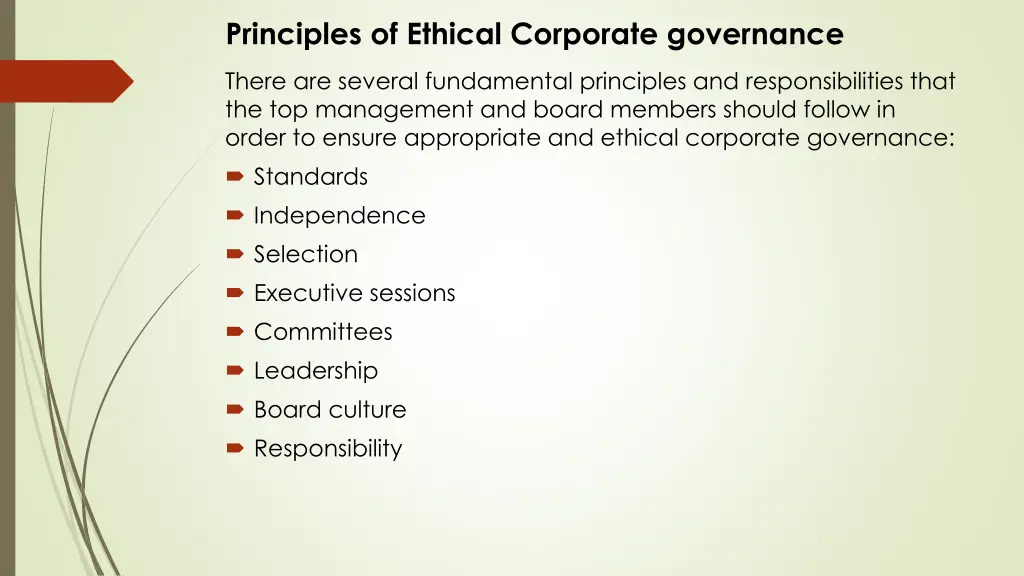
Principles of Ethical Corporate governance There are several fundamental principles and responsibilities that the top management and board members should follow in order to ensure appropriate and ethical corporate governance: Standards Independence Selection Executive sessions Committees Leadership Board culture Responsibility