Evolving Risk Governance: Implications for Internal Audit
The evolving risk governance landscape beyond the traditional Three Lines of Defense model, focusing on implications for internal audit functions. This includes discussions on emerging requirements, challenges, guiding principles, and aligning risk governance with business models. Regulators' emphasis on areas like inherent riskiness, tail risk, risk governance, and operating culture is also highlighted.

Download Presentation

Please find below an Image/Link to download the presentation.
The content on the website is provided AS IS for your information and personal use only. It may not be sold, licensed, or shared on other websites without obtaining consent from the author.If you encounter any issues during the download, it is possible that the publisher has removed the file from their server.
You are allowed to download the files provided on this website for personal or commercial use, subject to the condition that they are used lawfully. All files are the property of their respective owners.
The content on the website is provided AS IS for your information and personal use only. It may not be sold, licensed, or shared on other websites without obtaining consent from the author.
E N D
Presentation Transcript
PRINCIPAL INVESTIGATOR RESEARCH TRAINING SESSION 7: Responsible Conduct of Responsible Conduct of Research Research Sandra Arnold, MD, MSc
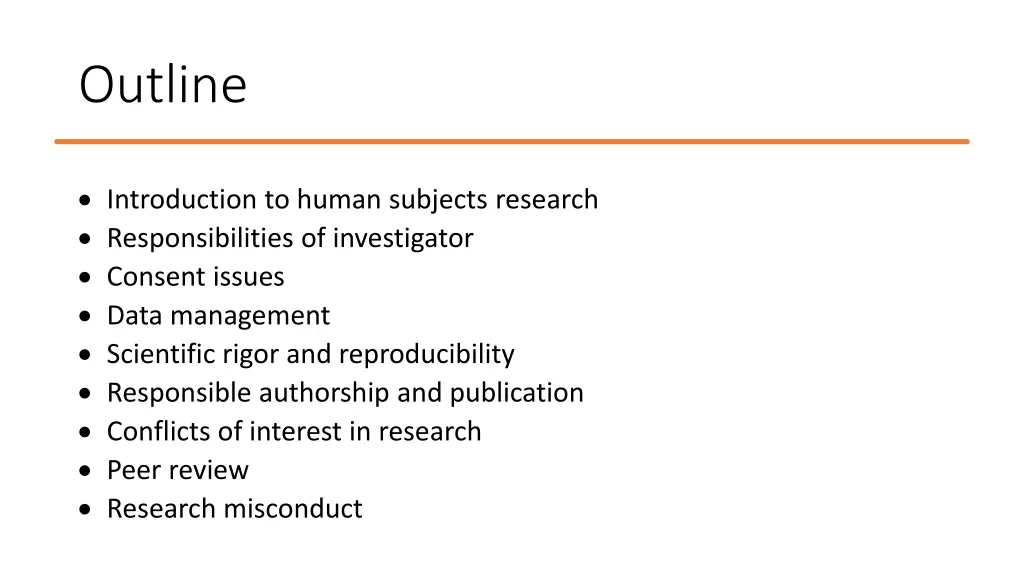
Outline Introduction to human subjects research Responsibilities of investigator Consent issues Data management Scientific rigor and reproducibility Responsible authorship and publication Conflicts of interest in research Peer review Research misconduct
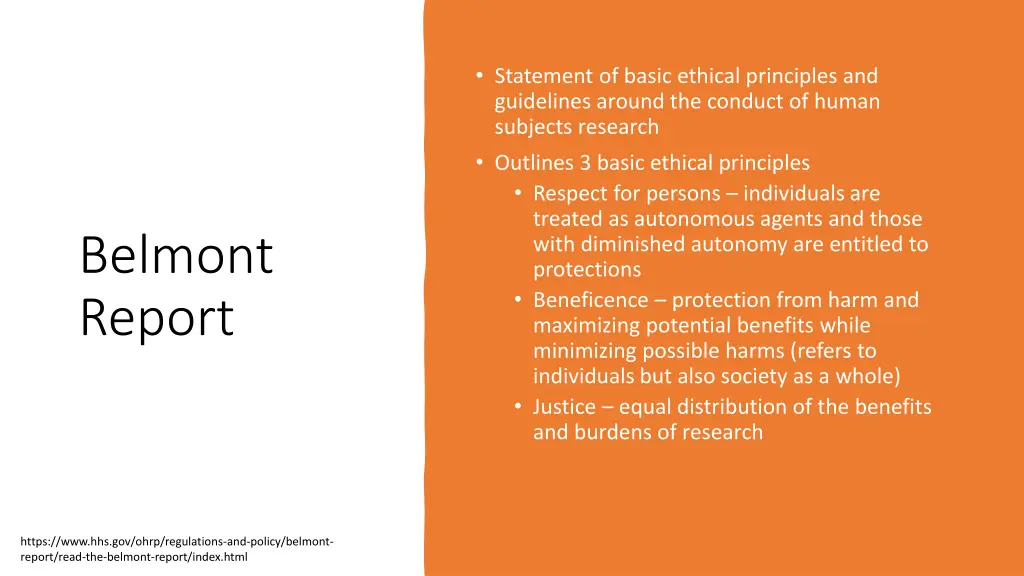
Statement of basic ethical principles and guidelines around the conduct of human subjects research Outlines 3 basic ethical principles Respect for persons individuals are treated as autonomous agents and those with diminished autonomy are entitled to protections Beneficence protection from harm and maximizing potential benefits while minimizing possible harms (refers to individuals but also society as a whole) Justice equal distribution of the benefits and burdens of research Belmont Report https://www.hhs.gov/ohrp/regulations-and-policy/belmont- report/read-the-belmont-report/index.html
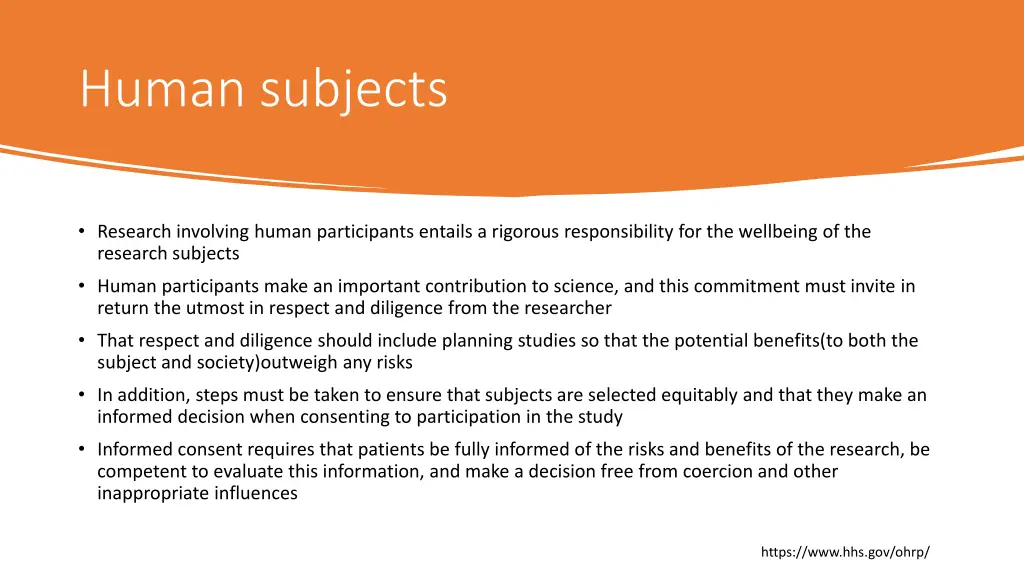
Human subjects Research involving human participants entails a rigorous responsibility for the wellbeing of the research subjects Human participants make an important contribution to science, and this commitment must invite in return the utmost in respect and diligence from the researcher That respect and diligence should include planning studies so that the potential benefits(to both the subject and society)outweigh any risks In addition, steps must be taken to ensure that subjects are selected equitably and that they make an informed decision when consenting to participation in the study Informed consent requires that patients be fully informed of the risks and benefits of the research, be competent to evaluate this information, and make a decision free from coercion and other inappropriate influences https://www.hhs.gov/ohrp/
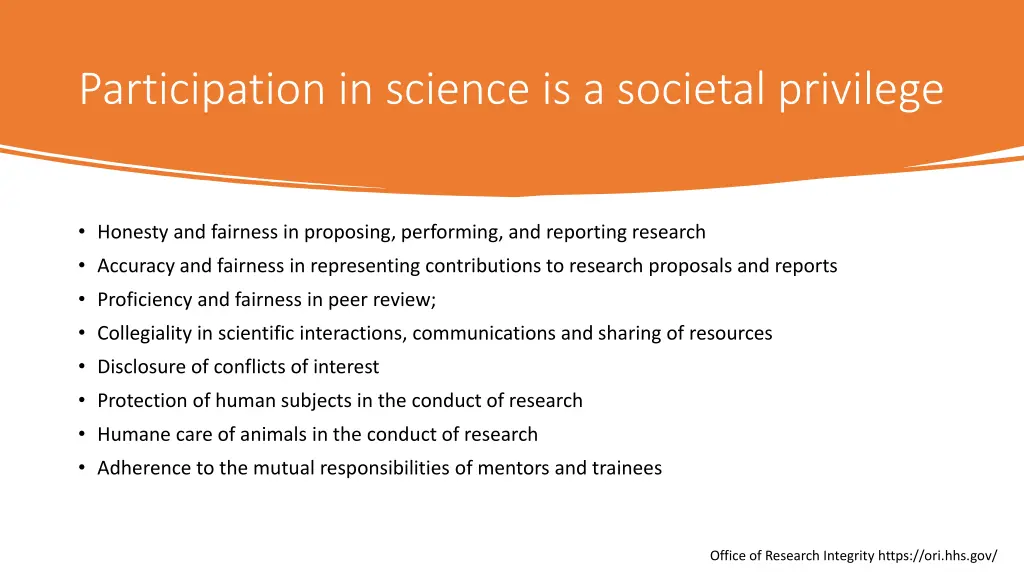
Participation in science is a societal privilege Honesty and fairness in proposing, performing, and reporting research Accuracy and fairness in representing contributions to research proposals and reports Proficiency and fairness in peer review; Collegiality in scientific interactions, communications and sharing of resources Disclosure of conflicts of interest Protection of human subjects in the conduct of research Humane care of animals in the conduct of research Adherence to the mutual responsibilities of mentors and trainees Office of Research Integrity https://ori.hhs.gov/
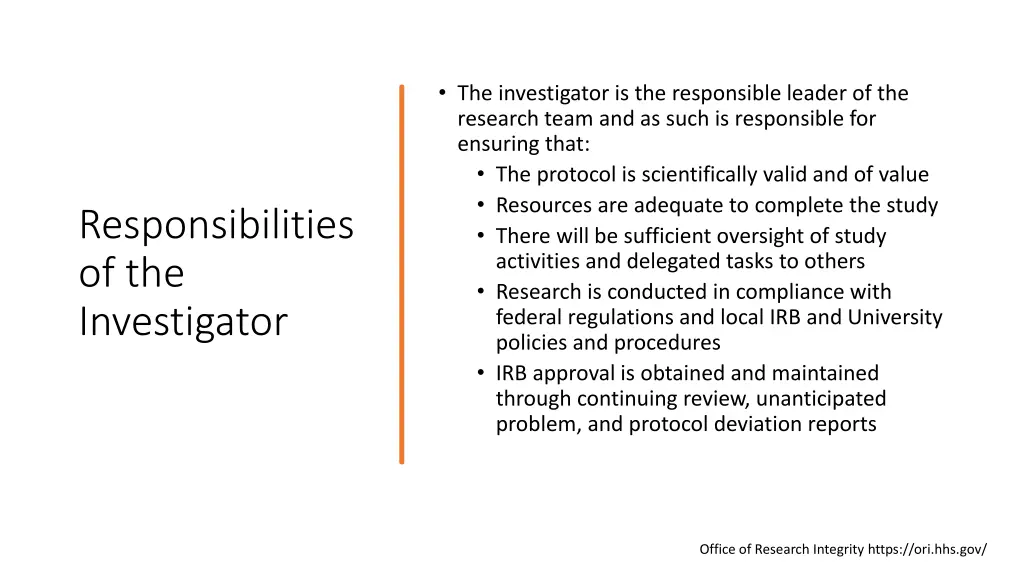
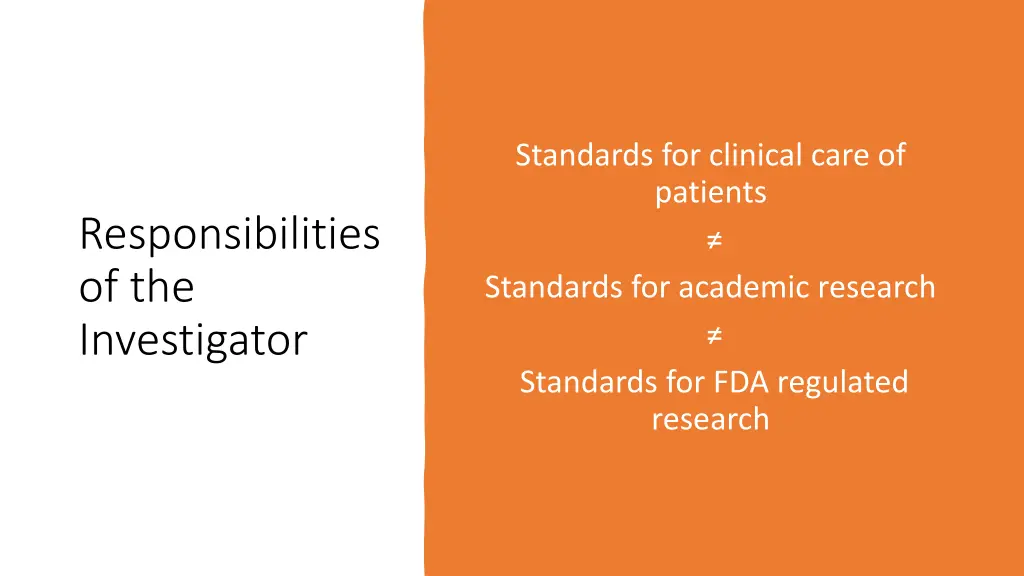
The investigator is the responsible leader of the research team and as such is responsible for ensuring that: The protocol is scientifically valid and of value Resources are adequate to complete the study There will be sufficient oversight of study activities and delegated tasks to others Research is conducted in compliance with federal regulations and local IRB and University policies and procedures IRB approval is obtained and maintained through continuing review, unanticipated problem, and protocol deviation reports Responsibilities of the Investigator Office of Research Integrity https://ori.hhs.gov/
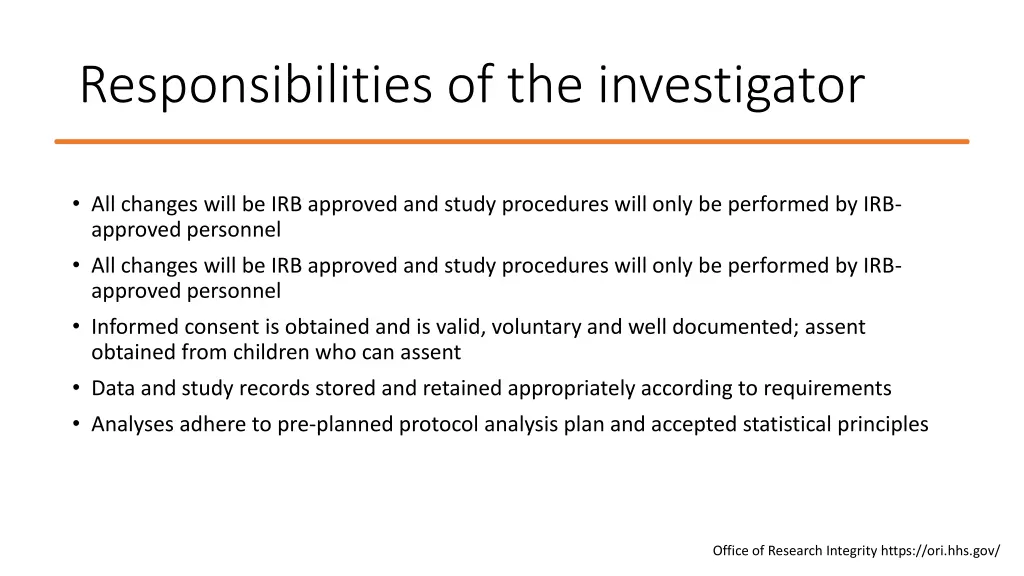
Responsibilities of the investigator All changes will be IRB approved and study procedures will only be performed by IRB- approved personnel All changes will be IRB approved and study procedures will only be performed by IRB- approved personnel Informed consent is obtained and is valid, voluntary and well documented; assent obtained from children who can assent Data and study records stored and retained appropriately according to requirements Analyses adhere to pre-planned protocol analysis plan and accepted statistical principles Office of Research Integrity https://ori.hhs.gov/
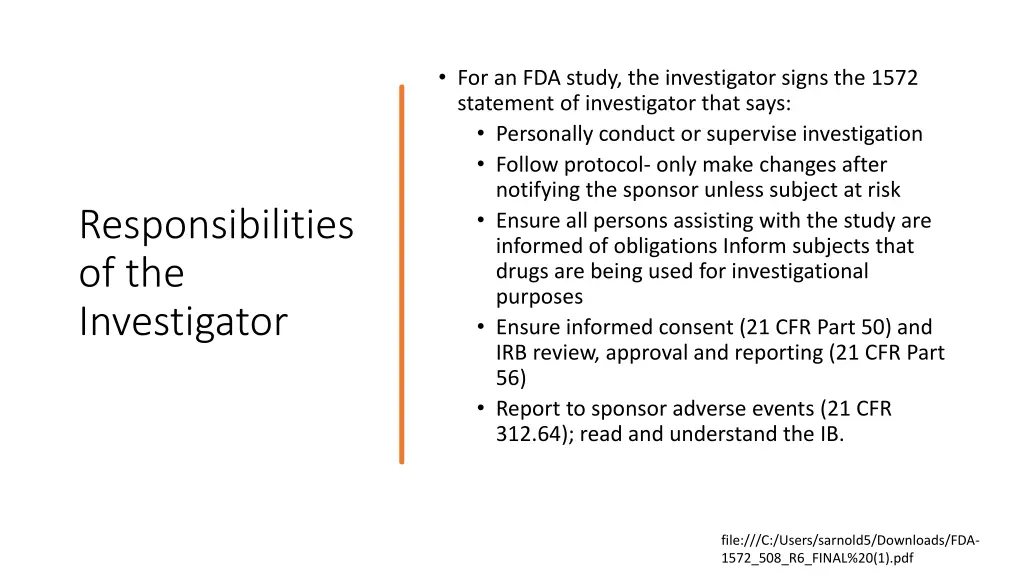
For an FDA study, the investigator signs the 1572 statement of investigator that says: Personally conduct or supervise investigation Follow protocol- only make changes after notifying the sponsor unless subject at risk Ensure all persons assisting with the study are informed of obligations Inform subjects that drugs are being used for investigational purposes Ensure informed consent (21 CFR Part 50) and IRB review, approval and reporting (21 CFR Part 56) Report to sponsor adverse events (21 CFR 312.64); read and understand the IB. Responsibilities of the Investigator file:///C:/Users/sarnold5/Downloads/FDA- 1572_508_R6_FINAL%20(1).pdf
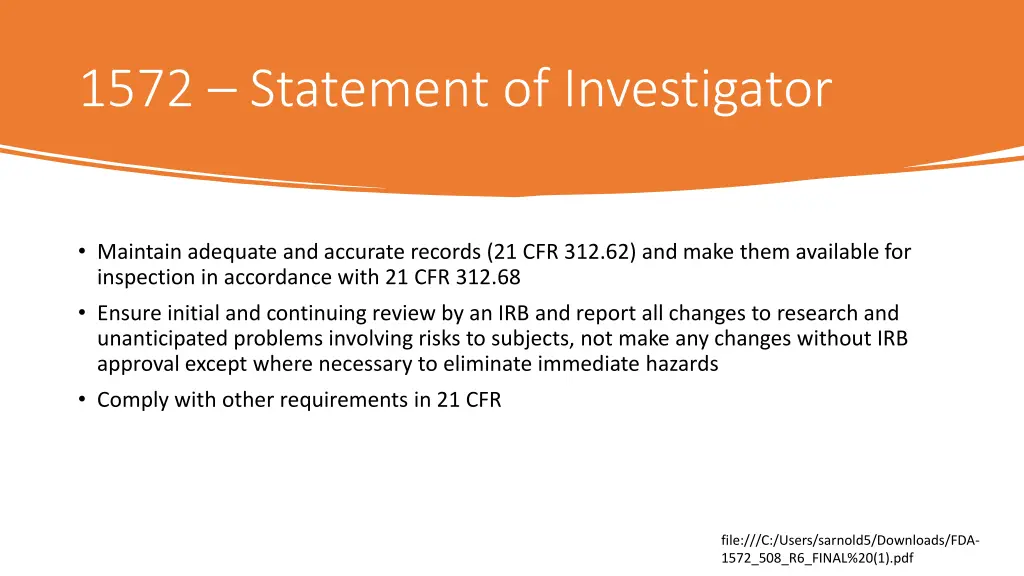
1572 Statement of Investigator Maintain adequate and accurate records (21 CFR 312.62) and make them available for inspection in accordance with 21 CFR 312.68 Ensure initial and continuing review by an IRB and report all changes to research and unanticipated problems involving risks to subjects, not make any changes without IRB approval except where necessary to eliminate immediate hazards Comply with other requirements in 21 CFR file:///C:/Users/sarnold5/Downloads/FDA- 1572_508_R6_FINAL%20(1).pdf
Standards for clinical care of patients Standards for academic research Standards for FDA regulated research Responsibilities of the Investigator
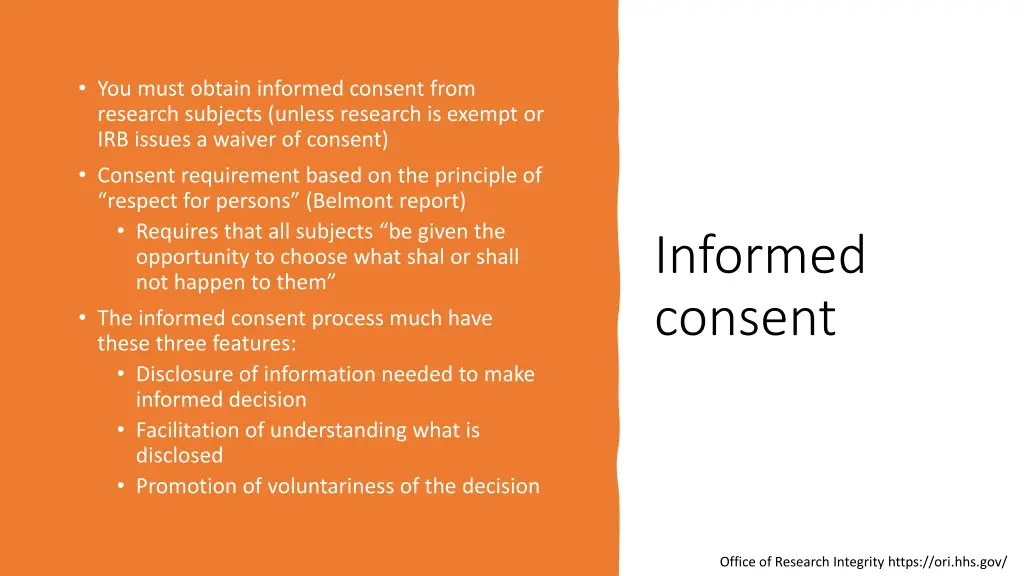
You must obtain informed consent from research subjects (unless research is exempt or IRB issues a waiver of consent) Consent requirement based on the principle of respect for persons (Belmont report) Requires that all subjects be given the opportunity to choose what shal or shall not happen to them The informed consent process much have these three features: Disclosure of information needed to make informed decision Facilitation of understanding what is disclosed Promotion of voluntariness of the decision Informed consent Office of Research Integrity https://ori.hhs.gov/
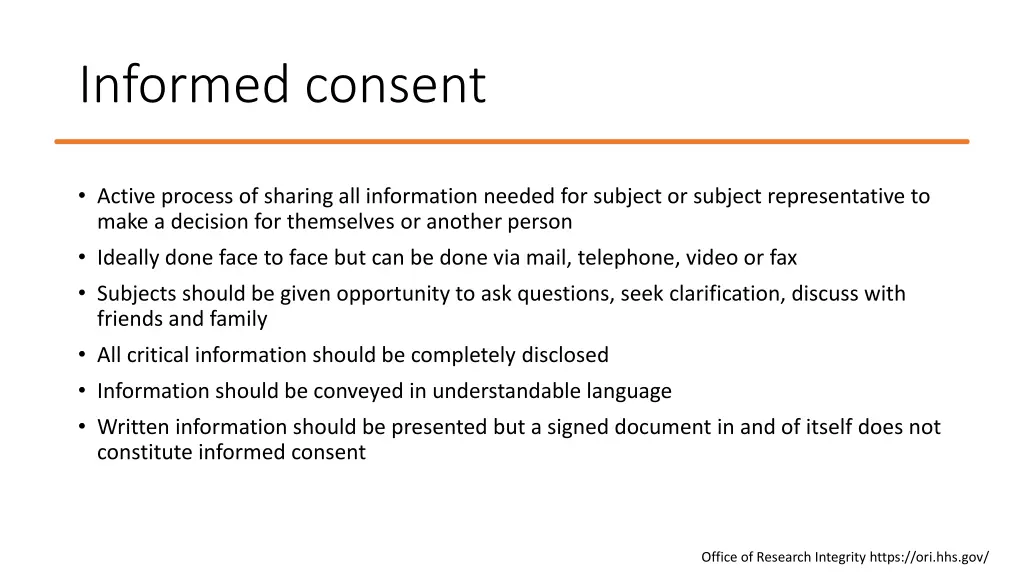
Informed consent Active process of sharing all information needed for subject or subject representative to make a decision for themselves or another person Ideally done face to face but can be done via mail, telephone, video or fax Subjects should be given opportunity to ask questions, seek clarification, discuss with friends and family All critical information should be completely disclosed Information should be conveyed in understandable language Written information should be presented but a signed document in and of itself does not constitute informed consent Office of Research Integrity https://ori.hhs.gov/
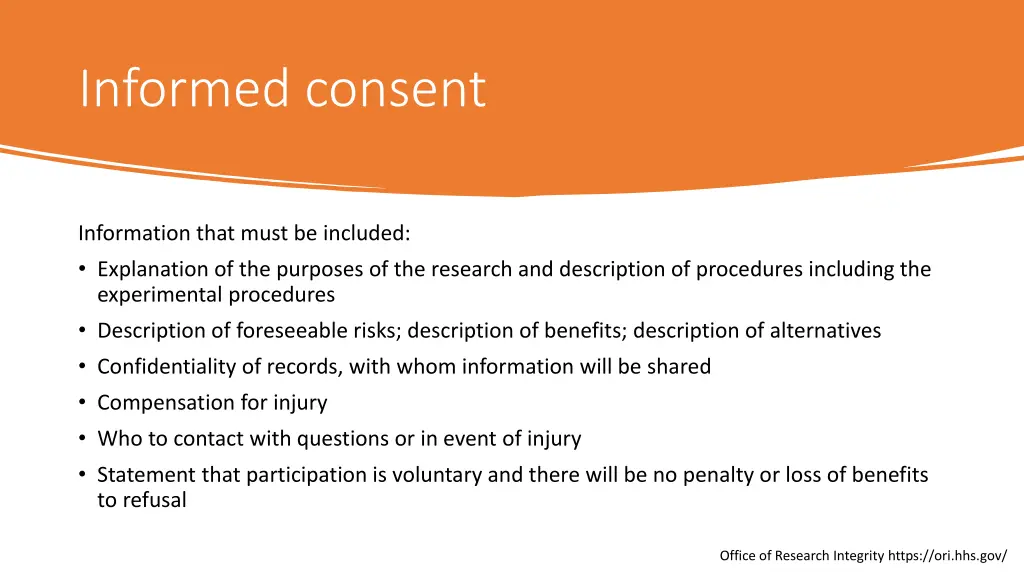
Informed consent Information that must be included: Explanation of the purposes of the research and description of procedures including the experimental procedures Description of foreseeable risks; description of benefits; description of alternatives Confidentiality of records, with whom information will be shared Compensation for injury Who to contact with questions or in event of injury Statement that participation is voluntary and there will be no penalty or loss of benefits to refusal Office of Research Integrity https://ori.hhs.gov/
Research data is information collected, stored and processed in a systematic manner to meet the objectives of the research Important considerations include: data selection the process of determining data type, source and appropriate collection instruments Data collection process of gathering and measuring information on variables of interest in a systematic fashion to answer research questions (test hypotheses and evaluated outcomes) Data analysis apply statistical techniques to evaluate, illustrate and present data Data management Office of Research Integrity https://ori.hhs.gov/
Data management Data handling process of ensuring proper storage, archiving, and/or disposal of data in a safe and secure manner during project and at its conclusion Data reporting and publishing preparing and disseminating research findings to scientific community Data ownership possession of and responsibility for data Additional issues to consider Making sure all study personnel understand and implement these concepts appropriately Future uses of data Importance of appropriate data handling and storage with regards to human subjects confidentiality Office of Research Integrity https://ori.hhs.gov/
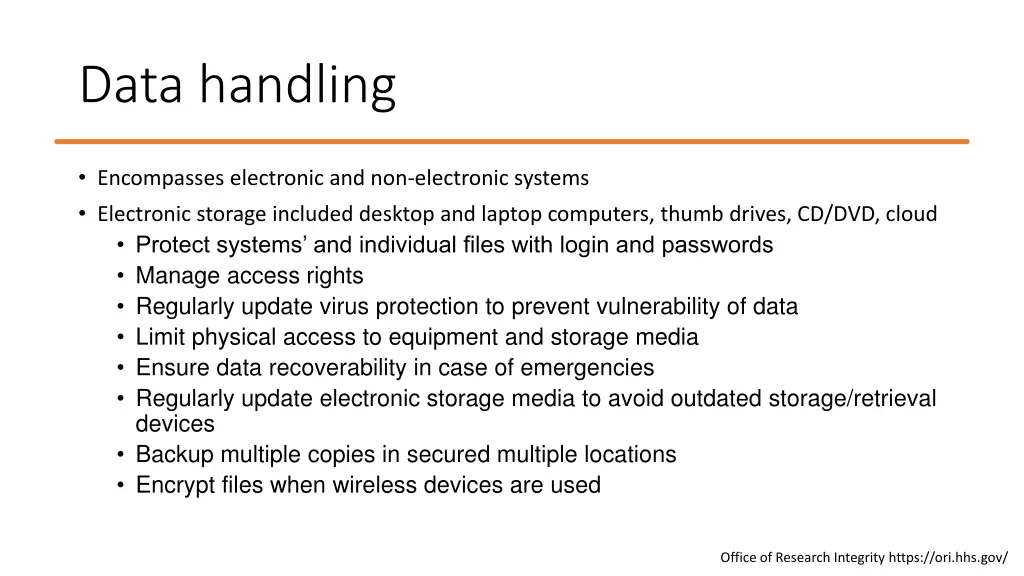
Data handling Encompasses electronic and non-electronic systems Electronic storage included desktop and laptop computers, thumb drives, CD/DVD, cloud Protect systems and individual files with login and passwords Manage access rights Regularly update virus protection to prevent vulnerability of data Limit physical access to equipment and storage media Ensure data recoverability in case of emergencies Regularly update electronic storage media to avoid outdated storage/retrieval devices Backup multiple copies in secured multiple locations Encrypt files when wireless devices are used Office of Research Integrity https://ori.hhs.gov/
Important part of human subjects research protections Individuals volunteer for research, in part, out of altruism and the understanding that they are making a contribution to science and helping others in the future Studies that are not well designed or analysed appropriately, are not scientifically rigorous violate the obligations of beneficence since they do not maximize the benefits to the individual (including societal benefits) IRBs should consider the scientific rigor of human subjects research when considering approval Scientific Rigor and Reproducibility https://www.nih.gov/research-training/rigor- reproducibility#:~:text=The%20application%20of%20rigor %20ensures,the%20next%20phase%20of%20research
Scientific Rigor and Reproducibility Clinical trials registration also play an important role in helping to maintain scientific rigor in clinical research Helps fulfill ethical obligations to participants and research community at large Provide a public record of basic study results Reduces publication bias (promotes reporting of negative results, prevents changing of outcome measures) Helps editors understand context of results from registered studies Required by law and required by journals for publication https://www.nih.gov/research-training/rigor- reproducibility#:~:text=The%20application%20of%20rigor %20ensures,the%20next%20phase%20of%20research
Authorship Act of authorship with dissemination of research findings carries societal and ethical responsibilities like all other parts of scientific investigation Authorship is publicly putting your name to your research achievements Accepting accolades, counting publications Accepting responsibility for errors, controversies etc. Authorship discussions should start at the outset of research not directly before submission http://www.icmje.org/
Authorship and collaboration Before any work is undertaken, collaborators should reach a common understanding of: the goals of the project and anticipated outcomes; the role each partner in the collaboration will play; how data will be collected, stored, and shared; how changes in the research design will be made; who will be responsible for drafting publications; the criteria that will be used to identify and rank contributing authors; who will be responsible for submitting reports and meeting other requirements; who will be responsible for or have the authority to speak publicly for the collaboration; how intellectual property rights and ownership issues will be resolved; and how the collaboration can be changed and when it will come to an end. http://www.icmje.org/
Authorship Authorship entails the ability to publicly take responsibility for the contents of a project. Generally, only those who make substantive intellectual contributions to a project should be listed as authors The order of authorship should be based on the degree of importance of each author s contribution to the project. Examples of substantive contributions include aiding in the conceptualization of the hypotheses, designing the methodology of the investigation significantly contributing to the writing the manuscript Ghost authorship and guest authorships not acceptable http://www.icmje.org/
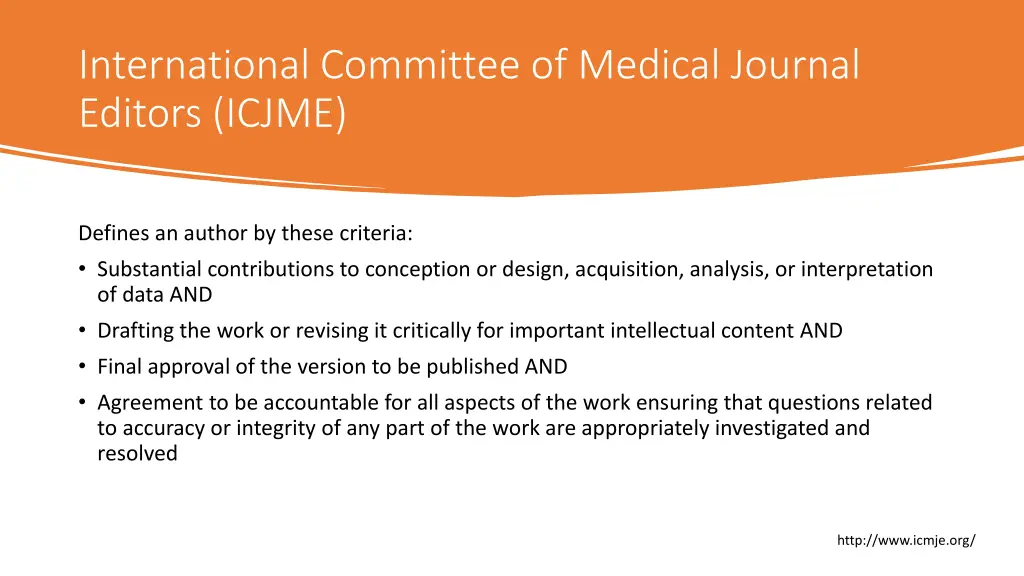
International Committee of Medical Journal Editors (ICJME) Defines an author by these criteria: Substantial contributions to conception or design, acquisition, analysis, or interpretation of data AND Drafting the work or revising it critically for important intellectual content AND Final approval of the version to be published AND Agreement to be accountable for all aspects of the work ensuring that questions related to accuracy or integrity of any part of the work are appropriately investigated and resolved http://www.icmje.org/
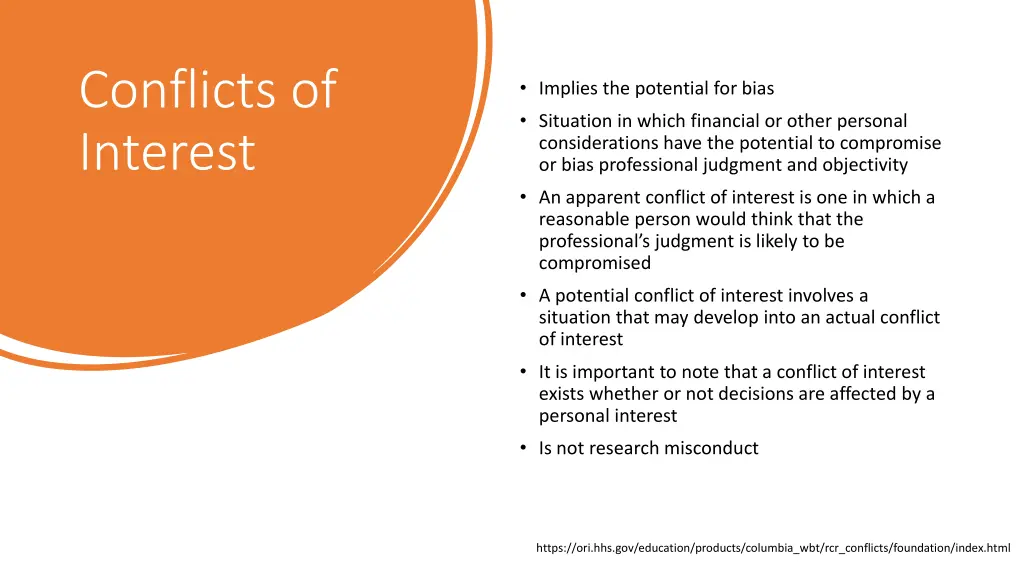
Conflicts of Interest Implies the potential for bias Situation in which financial or other personal considerations have the potential to compromise or bias professional judgment and objectivity An apparent conflict of interest is one in which a reasonable person would think that the professional s judgment is likely to be compromised A potential conflict of interest involves a situation that may develop into an actual conflict of interest It is important to note that a conflict of interest exists whether or not decisions are affected by a personal interest Is not research misconduct https://ori.hhs.gov/education/products/columbia_wbt/rcr_conflicts/foundation/index.html
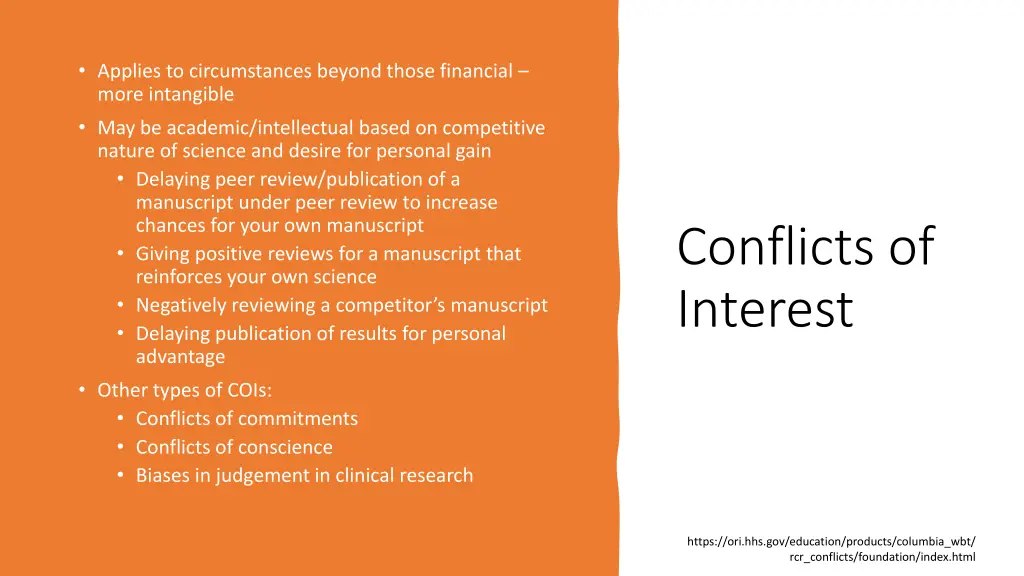
Applies to circumstances beyond those financial more intangible May be academic/intellectual based on competitive nature of science and desire for personal gain Delaying peer review/publication of a manuscript under peer review to increase chances for your own manuscript Giving positive reviews for a manuscript that reinforces your own science Negatively reviewing a competitor s manuscript Delaying publication of results for personal advantage Other types of COIs: Conflicts of commitments Conflicts of conscience Biases in judgement in clinical research Conflicts of Interest https://ori.hhs.gov/education/products/columbia_wbt/ rcr_conflicts/foundation/index.html
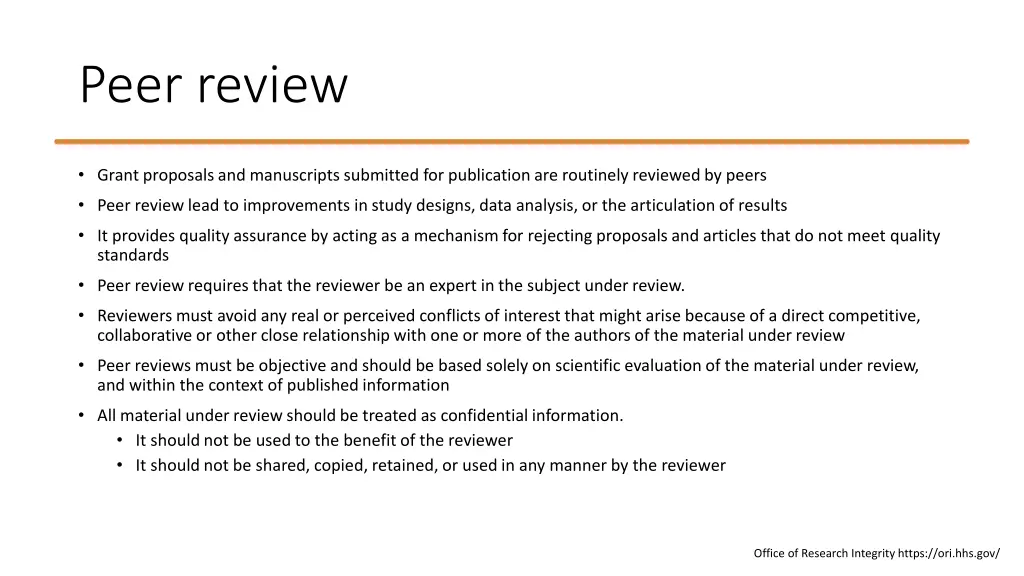
Peer review Grant proposals and manuscripts submitted for publication are routinely reviewed by peers Peer review lead to improvements in study designs, data analysis, or the articulation of results It provides quality assurance by acting as a mechanism for rejecting proposals and articles that do not meet quality standards Peer review requires that the reviewer be an expert in the subject under review. Reviewers must avoid any real or perceived conflicts of interest that might arise because of a direct competitive, collaborative or other close relationship with one or more of the authors of the material under review Peer reviews must be objective and should be based solely on scientific evaluation of the material under review, and within the context of published information All material under review should be treated as confidential information. It should not be used to the benefit of the reviewer It should not be shared, copied, retained, or used in any manner by the reviewer Office of Research Integrity https://ori.hhs.gov/
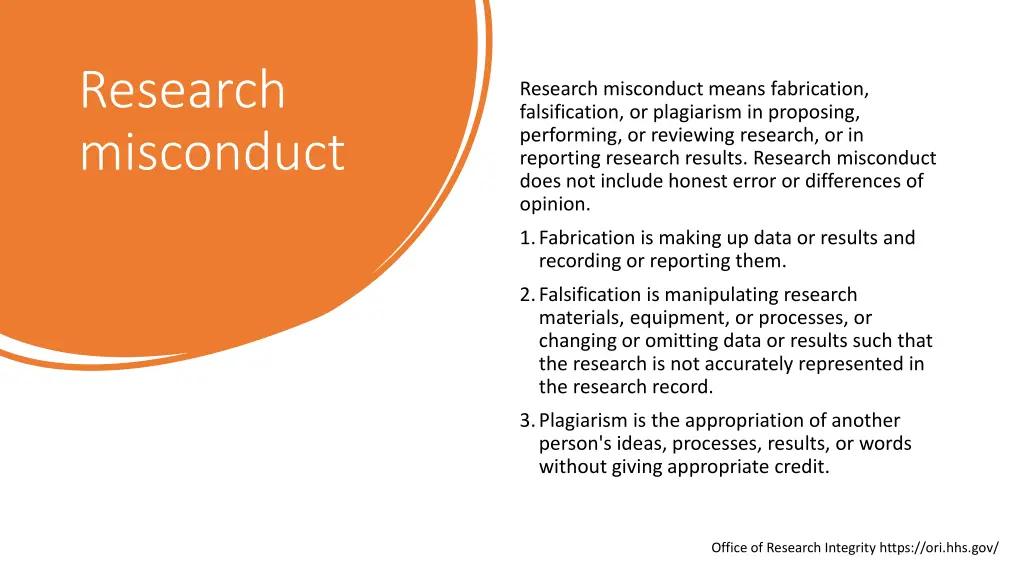
Research misconduct Research misconduct means fabrication, falsification, or plagiarism in proposing, performing, or reviewing research, or in reporting research results. Research misconduct does not include honest error or differences of opinion. 1.Fabrication is making up data or results and recording or reporting them. 2.Falsification is manipulating research materials, equipment, or processes, or changing or omitting data or results such that the research is not accurately represented in the research record. 3.Plagiarism is the appropriation of another person's ideas, processes, results, or words without giving appropriate credit. Office of Research Integrity https://ori.hhs.gov/
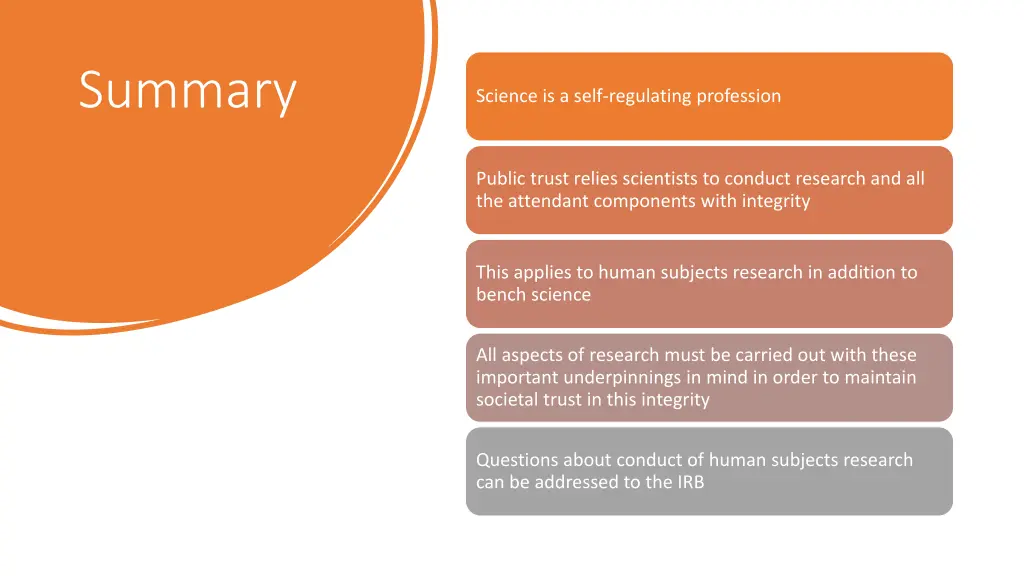
Summary Science is a self-regulating profession Public trust relies scientists to conduct research and all the attendant components with integrity This applies to human subjects research in addition to bench science All aspects of research must be carried out with these important underpinnings in mind in order to maintain societal trust in this integrity Questions about conduct of human subjects research can be addressed to the IRB