Exploring Genomic Symmetries for Cognitive Development in Humans, Neanderthals, and Chimpanzees
The discovery of the NBPF 3mer HOR genomic symmetries by the Croatian Academy of Sciences and Arts sheds light on the development of cognitive abilities in humans, Neanderthals, and chimpanzees. This interdisciplinary study integrates molecular biology, physics, biochemistry, and bioinformatics, tracing the role of symmetries in genetics. Notable figures like Albert Einstein, Gregor Mendel, and James Watson have contributed to our understanding of DNA structure and genetic codes. The Global Repeat Map (GRM) method, a Croatian bioinformatics innovation, has revolutionized genomic sequencing, leading to groundbreaking discoveries like the complete human genome mapping. The research emphasizes the importance of symmetries in natural laws and genetic evolution.

Download Presentation

Please find below an Image/Link to download the presentation.
The content on the website is provided AS IS for your information and personal use only. It may not be sold, licensed, or shared on other websites without obtaining consent from the author. If you encounter any issues during the download, it is possible that the publisher has removed the file from their server.
You are allowed to download the files provided on this website for personal or commercial use, subject to the condition that they are used lawfully. All files are the property of their respective owners.
The content on the website is provided AS IS for your information and personal use only. It may not be sold, licensed, or shared on other websites without obtaining consent from the author.
E N D
Presentation Transcript
Otkrie NBPF 3mer HOR genomske simetrije za razvoj kognitivnih sposobnosti ovjeka, neandertalca i impanze Hrvatska akademija znanosti i umjetnosti Odbor za biolos ku fiziku i bioinformatiku Razreda za matemati ke, fizi ke i kemijske znanosti Zagreb 18. svibnja 2023.
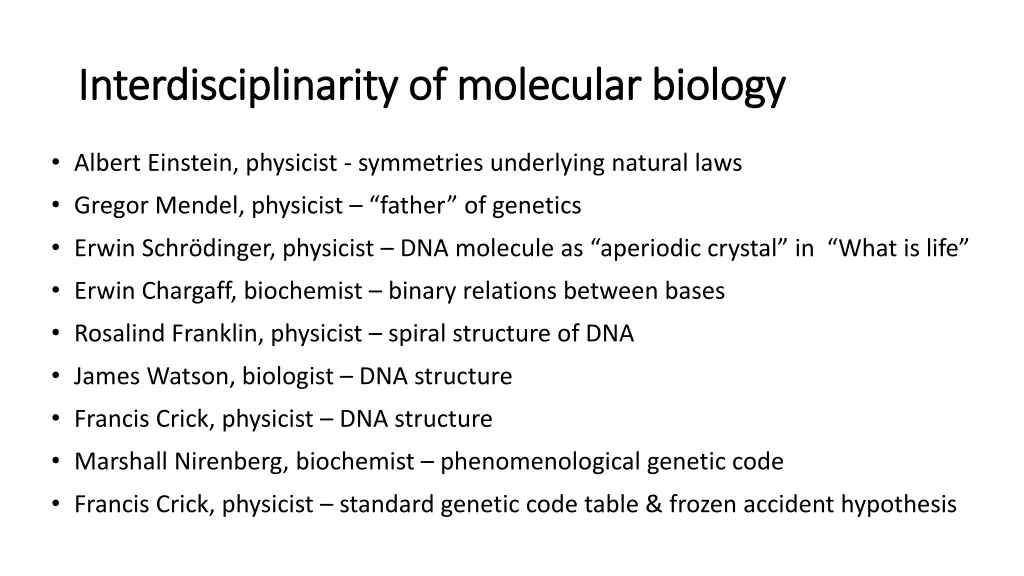
Interdisciplinarity of molecular biology Interdisciplinarity of molecular biology Albert Einstein, physicist - symmetries underlying natural laws Gregor Mendel, physicist father of genetics Erwin Schr dinger, physicist DNA molecule as aperiodic crystal in What is life Erwin Chargaff, biochemist binary relations between bases Rosalind Franklin, physicist spiral structure of DNA James Watson, biologist DNA structure Francis Crick, physicist DNA structure Marshall Nirenberg, biochemist phenomenological genetic code Francis Crick, physicist standard genetic code table & frozen accident hypothesis
D.J. Gross, Proceedings of the National Academy of D.J. Gross, Proceedings of the National Academy of Sciences U.S.A.93, 14256 Sciences U.S.A.93, 14256- -14259, 1996: 14259, 1996: Einstein s great advance was to put symmetries as a dominant concept in the fundamental laws of physics, to regard the symmetry principle as the primary feature of nature. The symmetry principles dictate the form of the laws of nature.
Otkrie Otkri e GRM GRM metode metode GRM - Global Repeat Map Originalna hrvatska bioinformati ka metoda GRM najprije je u svjetskoj znanosti razvijena jos 2007. za jedinstvenu preciznu identifikaciju i istra ivanje simetrijskih korelacija u genomskoj sekvenci. Ta metoda je nas la punu primjenu 2022. s otkri em vrhunske T2T metode za kompletno sekvencioniranje ljudskog genoma (T2T Konzorcij) koja je po prvi put omogu ila da se u potpunosti odredi kompletni humani genom, koji je do tada bio samo djelomi no poznat. Razvoj te bioinformati ke metode u Hrvatskoj prethodio je 15 godina razvoju T2T preciznog sekvencionranja genoma u SAD.
GRM - Global Repeat Map M. Rosandi , V. Paar, I. Basar, Key copies) in human alpha satellite DNA in chromosome copies) in human alpha satellite DNA in chromosome 7, J. Theor. Biology (Cambridge) 221 (2003) 29- 37. M. Rosandi , V. Paar, I. Basar, M. Glun i , N. Pavin, I. Pilas , CENP in human alpha satellite higher in human alpha satellite higher- -order repeats (HOR) order repeats (HOR), Chromosome Res. 14 (2006) 735-753. V. Paar, I. Basar, M. Rosandi , M. Glun i , Consensus Higher Order Repeats and Frequency of String Consensus Higher Order Repeats and Frequency of String Distributions in Human Genome Distributions in Human Genome, Curr. Genomics 8 (2007) 93-111. M. Rosandi , M. Glun i , V. Paar, I. Basar, The role of The role of alphoid centromere folding centromere folding, J. Theor. Biol. 254 (2008) 555-560. V. Paar, N. Pavin, I. Basar, M. Rosandi , M. Glun i , N. Paar, Hierarchical structure of cascade of primary and secondary periodicities in Fourier power spectrum of and secondary periodicities in Fourier power spectrum of alphoid Bioinformatics Bioinformatics 9 9 (2008) 466. Key- -string segmentation algorithm and higher string segmentation algorithm and higher- -order repeat order repeat 16 16mer ( mer (54 54 CENP- -B box and B box and pJ pJ sequence distribution sequence distribution alphoidhigher order repeats (HORs) in the higher order repeats (HORs) in the Hierarchical structure of cascade of primary alphoid higher order repeats, BMC higher order repeats, BMC
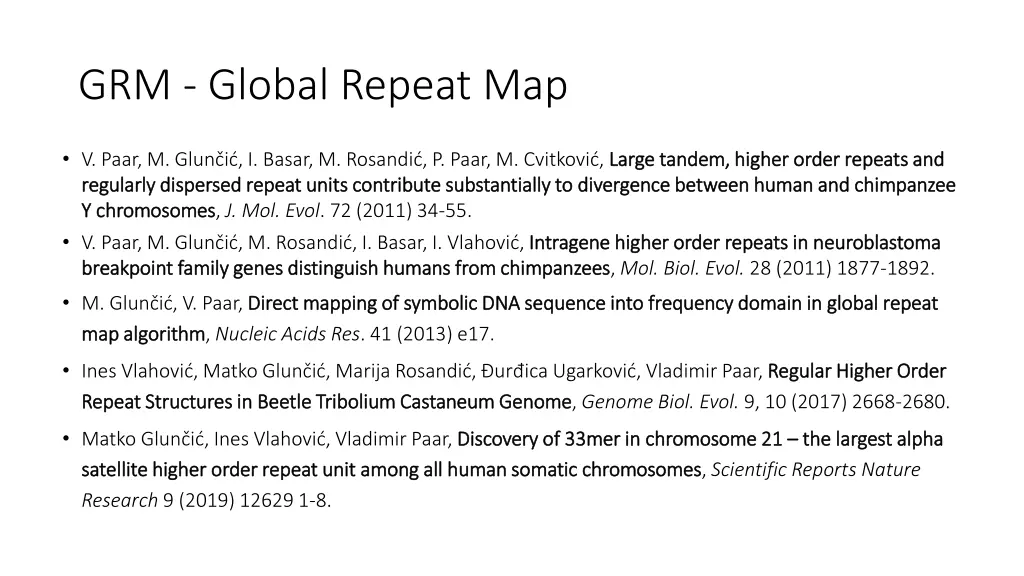
GRM - Global Repeat Map V. Paar, M. Glun i , I. Basar, M. Rosandi , P. Paar, M. Cvitkovi , Large tandem, higher order repeats and regularly dispersed repeat units contribute substantially to divergence between human and chimpanzee regularly dispersed repeat units contribute substantially to divergence between human and chimpanzee Y chromosomes Y chromosomes, J. Mol. Evol. 72 (2011) 34-55. V. Paar, M. Glun i , M. Rosandi , I. Basar, I. Vlahovi , Intragene breakpoint family genes distinguish humans from chimpanzees breakpoint family genes distinguish humans from chimpanzees, Mol. Biol. Evol. 28 (2011) 1877-1892. M. Glun i , V. Paar, Direct mapping of symbolic DNA sequence into frequency domain in global repeat Direct mapping of symbolic DNA sequence into frequency domain in global repeat map algorithm map algorithm, Nucleic Acids Res. 41 (2013) e17. Large tandem, higher order repeats and Intragene higher order repeats in neuroblastoma higher order repeats in neuroblastoma Ines Vlahovi , Matko Glun i , Marija Rosandi , ur ica Ugarkovi , Vladimir Paar, Regular Higher Order Repeat Structures in Beetle Repeat Structures in Beetle Tribolium TriboliumCastaneum CastaneumGenome Genome, Genome Biol. Evol. 9, 10 (2017) 2668-2680. Regular Higher Order Matko Glun i , Ines Vlahovi , Vladimir Paar, Discovery of 33mer in chromosome 21 satellite higher order repeat unit among all human somatic chromosomes satellite higher order repeat unit among all human somatic chromosomes, Scientific Reports Nature Research 9 (2019) 12629 1-8. Discovery of 33mer in chromosome 21 the largest alpha the largest alpha
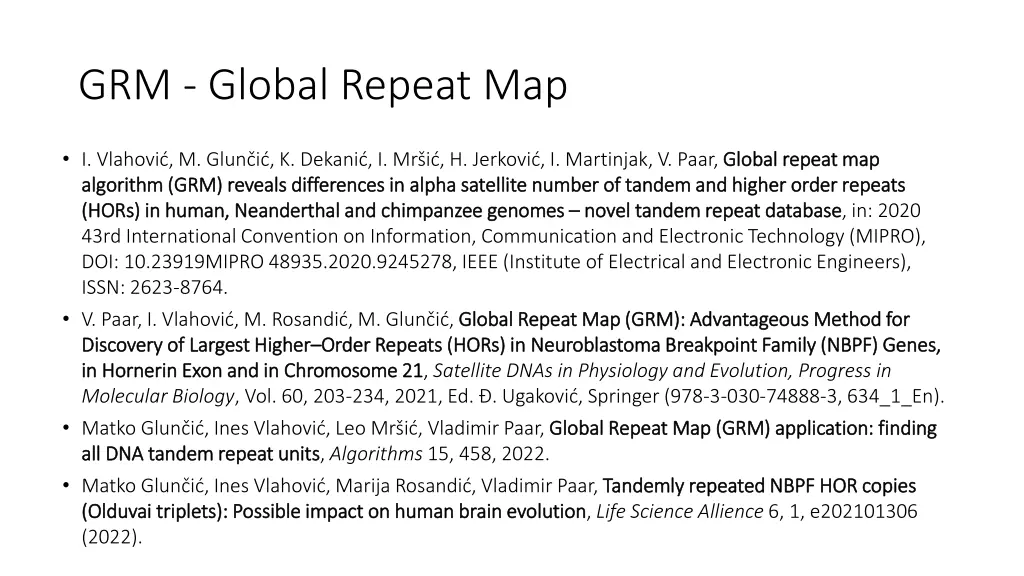
GRM - Global Repeat Map I. Vlahovi , M. Glun i , K. Dekani , I. Mrs i , H. Jerkovi , I. Martinjak, V. Paar, Global repeat map algorithm (GRM) reveals differences in alpha satellite number of tandem and higher order repeats algorithm (GRM) reveals differences in alpha satellite number of tandem and higher order repeats (HORs) in human, Neanderthal and chimpanzee genomes (HORs) in human, Neanderthal and chimpanzee genomes novel tandem repeat database 43rd International Convention on Information, Communication and Electronic Technology (MIPRO), DOI: 10.23919MIPRO 48935.2020.9245278, IEEE (Institute of Electrical and Electronic Engineers), ISSN: 2623-8764. V. Paar, I. Vlahovi , M. Rosandi , M. Glun i , Global Repeat Map (GRM): Advantageous Method for Global Repeat Map (GRM): Advantageous Method for Discovery of Largest Higher Discovery of Largest Higher Order Repeats (HORs) in Neuroblastoma Breakpoint Family (NBPF) Genes, Order Repeats (HORs) in Neuroblastoma Breakpoint Family (NBPF) Genes, in in Hornerin Hornerin Exon and in Chromosome 21 Exon and in Chromosome 21, Satellite DNAs in Physiology and Evolution, Progress in Molecular Biology, Vol. 60, 203-234, 2021, Ed. . Ugakovi , Springer (978-3-030-74888-3, 634_1_En). Matko Glun i , Ines Vlahovi , Leo Mrs i , Vladimir Paar, Global Repeat Map (GRM) application: finding all DNA tandem repeat units all DNA tandem repeat units, Algorithms 15, 458, 2022. Matko Glun i , Ines Vlahovi , Marija Rosandi , Vladimir Paar, Tandemly repeated NBPF HOR copies (Olduvai triplets): Possible impact on human brain evolution (Olduvai triplets): Possible impact on human brain evolution, Life Science Allience 6, 1, e202101306 (2022). Global repeat map novel tandem repeat database, in: 2020 Global Repeat Map (GRM) application: finding Tandemly repeated NBPF HOR copies
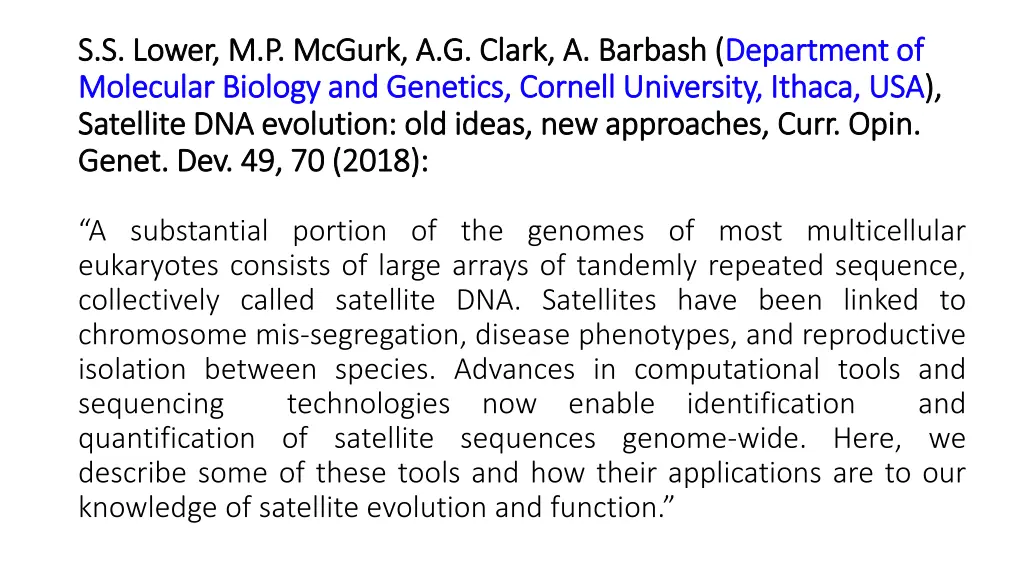
S.S. Lower, M.P. McGurk, A.G. Clark, A. S.S. Lower, M.P. McGurk, A.G. Clark, A. Barbash Molecular Biology and Genetics, Cornell University, Ithaca, USA Molecular Biology and Genetics, Cornell University, Ithaca, USA), ), Satellite DNA evolution: old ideas, new approaches, Satellite DNA evolution: old ideas, new approaches, Curr Genet. Dev. 49, 70 (2018): Genet. Dev. 49, 70 (2018): Barbash ( (Department of Department of Curr. . Opin Opin. . A substantial portion of the genomes of most multicellular eukaryotes consists of large arrays of tandemly repeated sequence, collectively called satellite DNA. Satellites have been linked to chromosome mis-segregation, disease phenotypes, and reproductive isolation between species. Advances in computational tools and sequencing technologies now quantification of satellite sequences genome-wide. Here, we describe some of these tools and how their applications are to our knowledge of satellite evolution and function. enable identification and
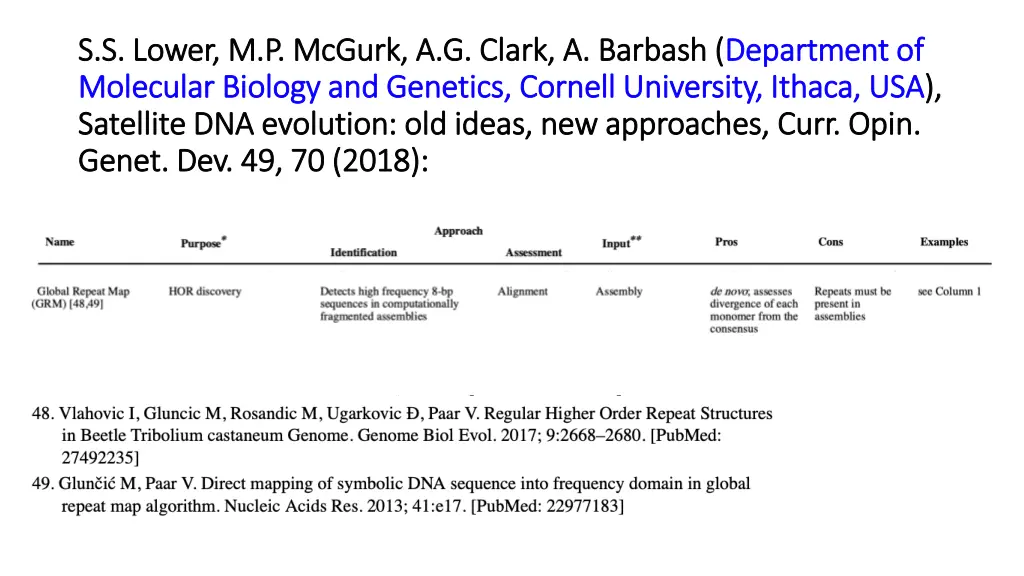
S.S. Lower, M.P. McGurk, A.G. Clark, A. S.S. Lower, M.P. McGurk, A.G. Clark, A. Barbash Molecular Biology and Genetics, Cornell University, Ithaca, USA Molecular Biology and Genetics, Cornell University, Ithaca, USA), ), Satellite DNA evolution: old ideas, new approaches, Satellite DNA evolution: old ideas, new approaches, Curr Genet. Dev. 49, 70 (2018): Genet. Dev. 49, 70 (2018): Barbash ( (Department of Department of Curr. . Opin Opin. .
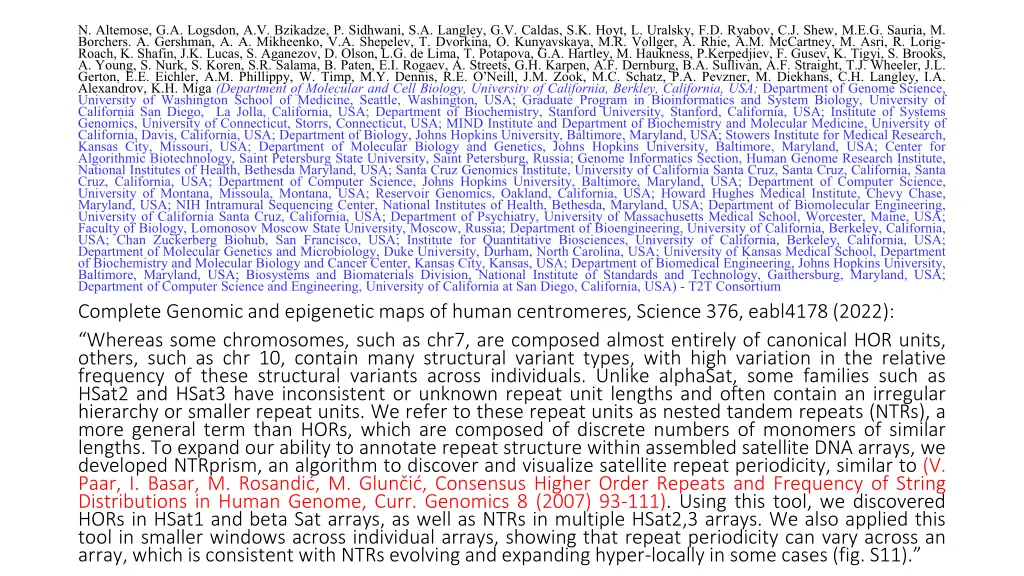
N. Altemose, G.A. Logsdon, A.V. Bzikadze, P. Sidhwani, S.A. Langley, G.V. Caldas, S.K. Hoyt, L. Uralsky, F.D. Ryabov, C.J. Shew, M.E.G. Sauria, M. Borchers. A. Gershman, A. A. Mikheenko, V.A. Shepelev, T. Dvorkina, O. Kunyavskaya, M.R. Vollger, A. Rhie, A.M. McCartney, M. Asri, R. Lorig- Roach, K. Shafin, J.K. Lucas, S. Aganezov, D. Olson, L.G. de Lima, T. Potapova, G.A. Hartley, M. Haukness, P.Kerpedjiev, F. Gusev, K. Tigyi, S. Brooks, A. Young, S. Nurk, S. Koren, S.R. Salama, B. Paten, E.I. Rogaev, A. Streets, G.H. Karpen, A.F. Dernburg, B.A. Sullivan, A.F. Straight, T.J. Wheeler, J.L. Gerton, E.E. Eichler, A.M. Phillippy, W. Timp, M.Y. Dennis, R.E. O Neill, J.M. Zook, M.C. Schatz, P.A. Pevzner, M. Diekhans, C.H. Langley, I.A. Alexandrov, K.H. Miga (Department of Molecular and Cell Biology, University of California, Berkley, California, USA; Department of Genome Science, University of Washington School of Medicine, Seattle, Washington, USA; Graduate Program in Bioinformatics and System Biology, University of California San Diego, La Jolla, California, USA; Department of Biochemistry, Stanford University, Stanford, California, USA; Institute of Systems Genomics, University of Connecticut, Storrs, Connecticut, USA; MIND Institute and Department of Biochemistry and Molecular Medicine, University of California, Davis, California, USA; Department of Biology, Johns Hopkins University, Baltimore, Maryland, USA; Stowers Institute for Medical Research, Kansas City, Missouri, USA; Department of Molecular Biology and Genetics, Johns Hopkins University, Baltimore, Maryland, USA; Center for Algorithmic Biotechnology, Saint Petersburg State University, Saint Petersburg, Russia; Genome Informatics Section, Human Genome Research Institute, National Institutes of Health, Bethesda Maryland, USA; Santa Cruz Genomics Institute, University of California Santa Cruz, Santa Cruz, California, Santa Cruz, California, USA; Department of Computer Science, Johns Hopkins University, Baltimore, Maryland, USA; Department of Computer Science, University of Montana, Missoula, Montana, USA; Reservoir Genomics, Oakland, California, USA; Howard Hughes Medical Institute, Chevy Chase, Maryland, USA; NIH Intramural Sequencing Center, National Institutes of Health, Bethesda, Maryland, USA; Department of Biomolecular Engineering, University of California Santa Cruz, California, USA; Department of Psychiatry, University of Massachusetts Medical School, Worcester, Maine, USA; Faculty of Biology, Lomonosov Moscow State University, Moscow, Russia; Department of Bioengineering, University of California, Berkeley, California, USA; Chan Zuckerberg Biohub, San Francisco, USA; Institute for Quantitative Biosciences, University of California, Berkeley, California, USA; Department of Molecular Genetics and Microbiology, Duke University, Durham, North Carolina, USA; University of Kansas Medical School, Department of Biochemistry and Molecular Biology and Cancer Center, Kansas City, Kansas, USA; Department of Biomedical Engineering, Johns Hopkins University, Baltimore, Maryland, USA; Biosystems and Biomaterials Division, National Institute of Standards and Technology, Gaithersburg, Maryland, USA; Department of Computer Science and Engineering, University of California at San Diego, California, USA) - T2T Consortium Complete Genomic and epigenetic maps of human centromeres, Science 376, eabl4178 (2022): Whereas some chromosomes, such as chr7, are composed almost entirely of canonical HOR units, others, such as chr 10, contain many structural variant types, with high variation in the relative frequency of these structural variants across individuals. Unlike alphaSat, some families such as HSat2 and HSat3 have inconsistent or unknown repeat unit lengths and often contain an irregular hierarchy or smaller repeat units. We refer to these repeat units as nested tandem repeats (NTRs), a more general term than HORs, which are composed of discrete numbers of monomers of similar lengths. To expand our ability to annotate repeat structure within assembled satellite DNA arrays, we developed NTRprism, an algorithm to discover and visualize satellite repeat periodicity, similar to (V. Paar, I. Basar, M. Rosandi , M. Glun i , Consensus Higher Order Repeats and Frequency of String Distributions in Human Genome, Curr. Genomics 8 (2007) 93-111). Using this tool, we discovered HORs in HSat1 and beta Sat arrays, as well as NTRs in multiple HSat2,3 arrays. We also applied this tool in smaller windows across individual arrays, showing that repeat periodicity can vary across an array, which is consistent with NTRs evolving and expanding hyper-locally in some cases (fig. S11).
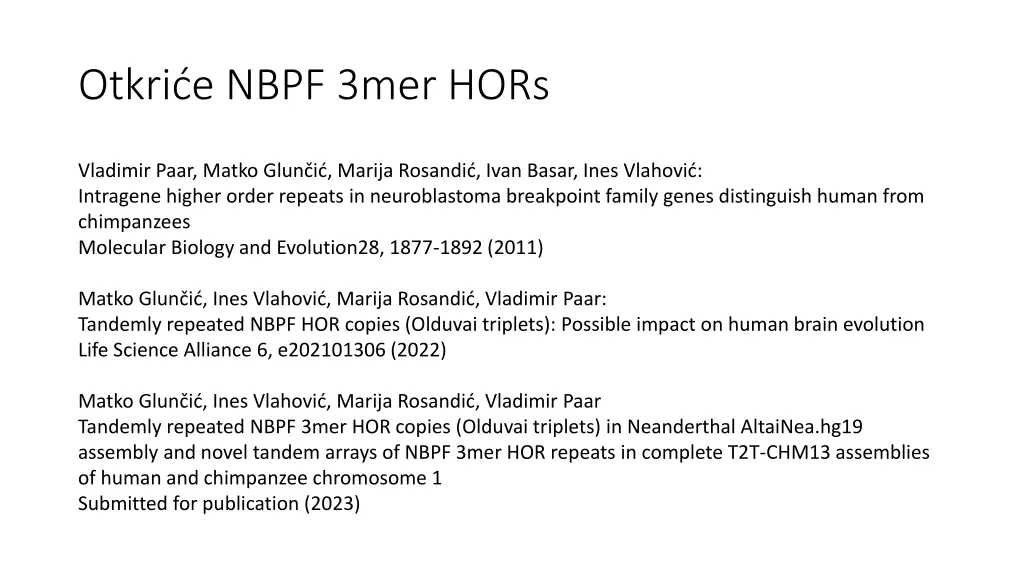
Otkrie NBPF 3mer HORs Vladimir Paar, Matko Glun i , Marija Rosandi , Ivan Basar, Ines Vlahovi : Intragene higher order repeats in neuroblastoma breakpoint family genes distinguish human from chimpanzees Molecular Biology and Evolution28, 1877-1892 (2011) Matko Glun i , Ines Vlahovi , Marija Rosandi , Vladimir Paar: Tandemly repeated NBPF HOR copies (Olduvai triplets): Possible impact on human brain evolution Life Science Alliance 6, e202101306 (2022) Matko Glun i , Ines Vlahovi , Marija Rosandi , Vladimir Paar Tandemly repeated NBPF 3mer HOR copies (Olduvai triplets) in Neanderthal AltaiNea.hg19 assembly and novel tandem arrays of NBPF 3mer HOR repeats in complete T2T-CHM13 assemblies of human and chimpanzee chromosome 1 Submitted for publication (2023)
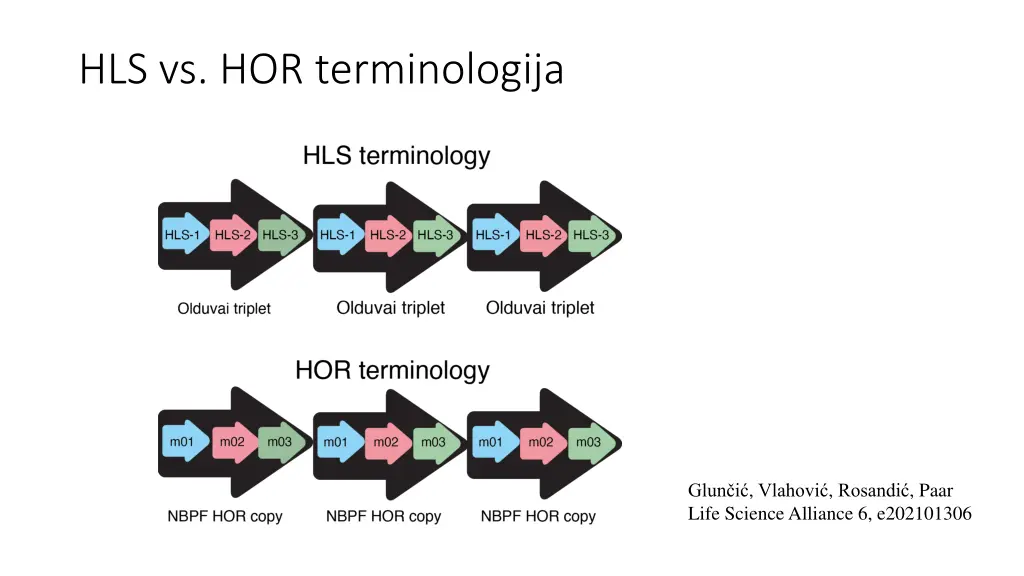
HLS vs. HOR terminologija Glun i , Vlahovi , Rosandi , Paar Life Science Alliance 6, e202101306
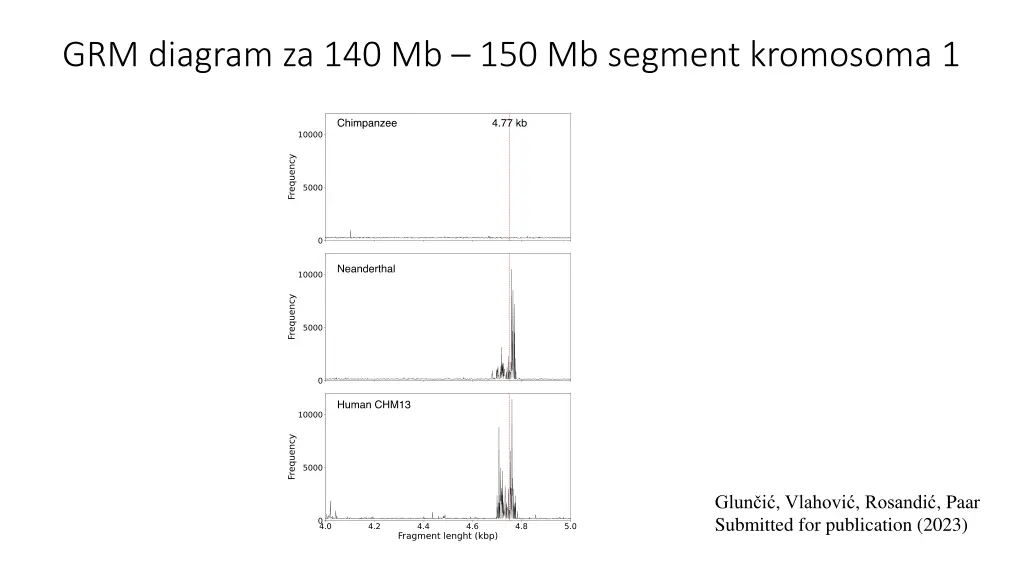
GRM diagram za 140 Mb 150 Mb segment kromosoma 1 Glun i , Vlahovi , Rosandi , Paar Submitted for publication (2023)
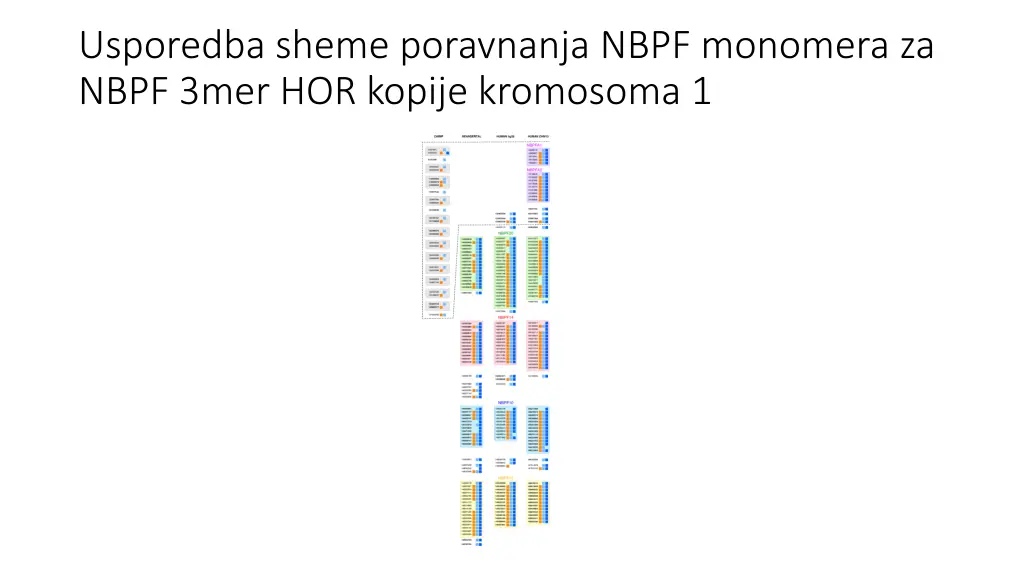
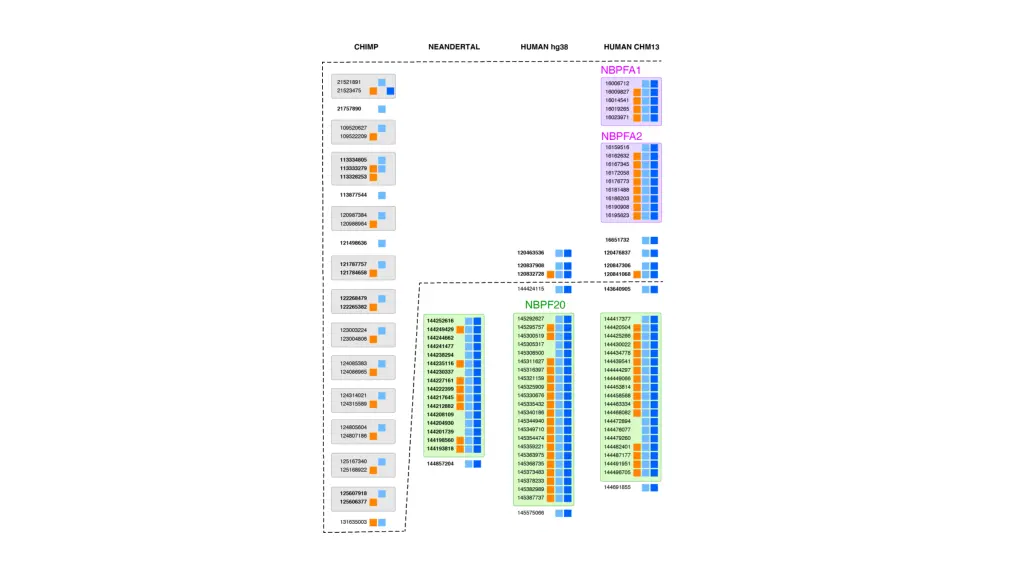
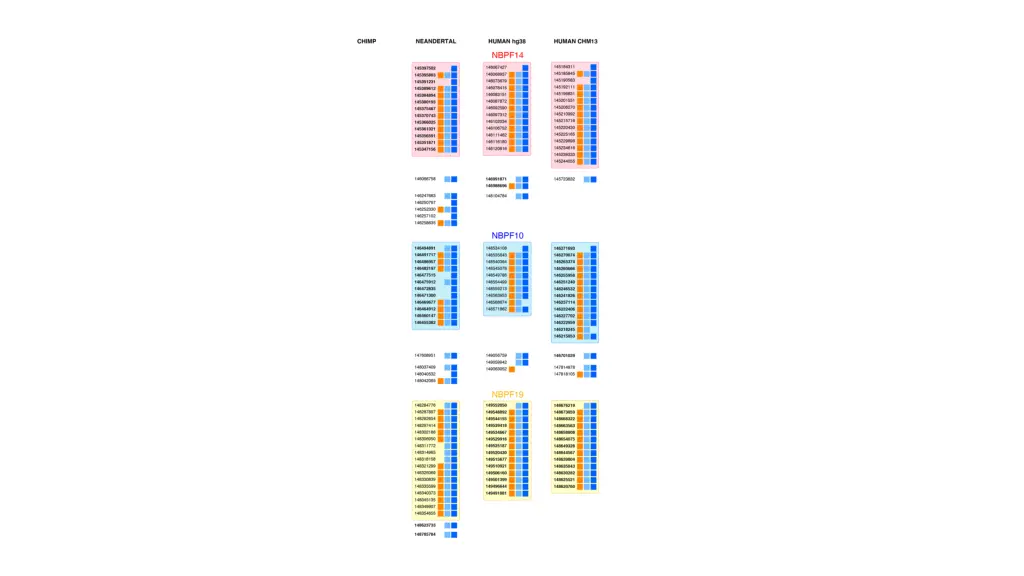
Usporedba sheme poravnanja NBPF monomera za NBPF 3mer HOR kopije kromosoma 1
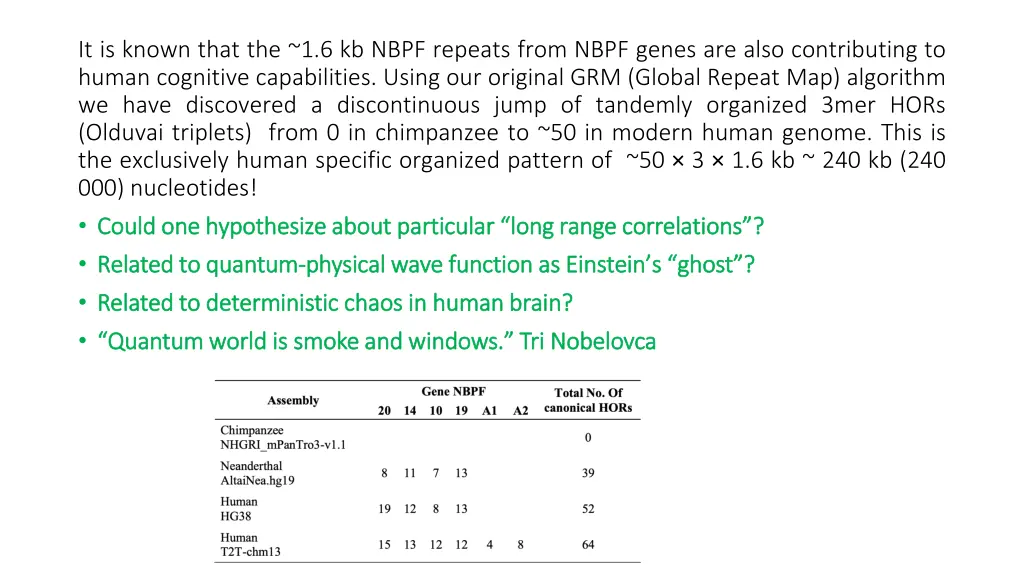
It is known that the ~1.6 kb NBPF repeats from NBPF genes are also contributing to human cognitive capabilities. Using our original GRM (Global Repeat Map) algorithm we have discovered a discontinuous jump of tandemly organized 3mer HORs (Olduvai triplets) from 0 in chimpanzee to ~50 in modern human genome. This is the exclusively human specific organized pattern of ~50 3 1.6 kb ~ 240 kb (240 000) nucleotides! Could Could one one hypothesize hypothesize about about particular particular long long range Related Related to to quantum quantum- -physical physical wave wave function function as as Einstein s Related Related to to deterministic deterministic chaos chaos in in human human brain? brain? Quantum Quantum world world is is smoke smoke and and windows windows. . Tri range correlations correlations ? ? Einstein s ghost ghost ? ? Tri Nobelovca Nobelovca
OTKRIE U HRVATSKOJ! Here we investigate the NBPF 3mer HOR structure in Neanderthal genome assembly of P bo and collaborators, in comparison to results for human hg38 chromosome 1. We compute the human NBPF 3mer HOR pattern for complete T2T-CHM13 human assembly by Miga and collaborators (T2T- Consortium). We discover in T2T-CHM13 assembly the two novel tandem arrays of NBPF 3mer HOR repeats with 5 and 9 NBPF 3mer HOR copies. We hypothesize that they correspond to the novel human specific NBPF genes (here named NBPFA1 and NBPFA2), positioned at large distance of 100 Mbp from the known NBPF genes. For understanding human evolution it is important to improve the quality of sequenced Neanderthal genome using T2T-CHM13 as a reference, to determine whether the counterparts of distant human novel NBPF genes exist in Neanderthal genome.
In addition to investigate human reference genome, we have also determined the 3mer tandems of canonical 3mer HOR copies in 20 randomly chosen human genomes (10 male and 10 female). In all cases we found the same 3mer HOR copy numbers as in the case of the reference human genome, with no mutation. On the contrary, we found point mutations with respect to the reference genome for some NBPF monomers which are not tandemly organized in canonical HORs. One more case for Einstein s paradigm: Symmetries are underlying the natural laws
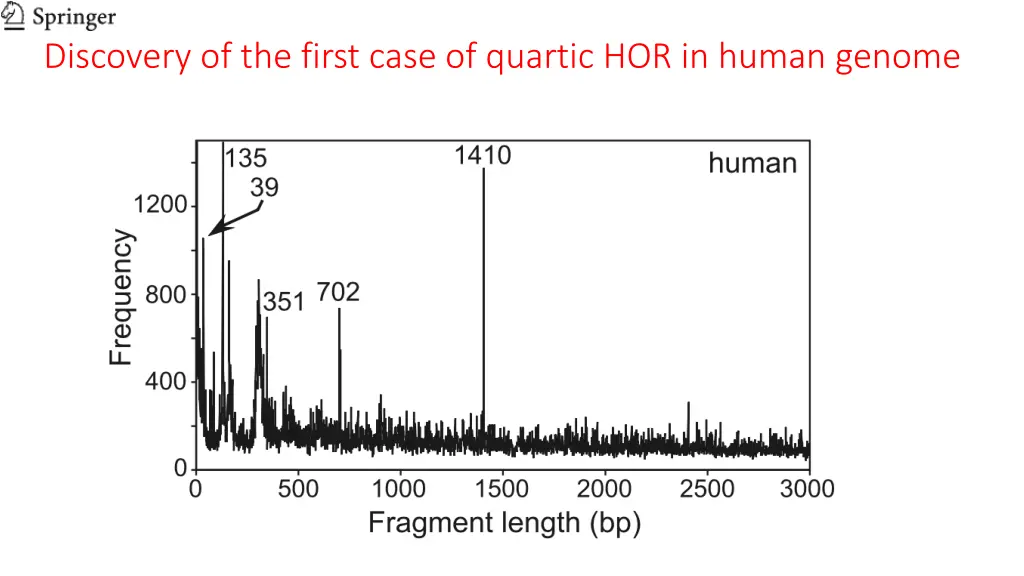
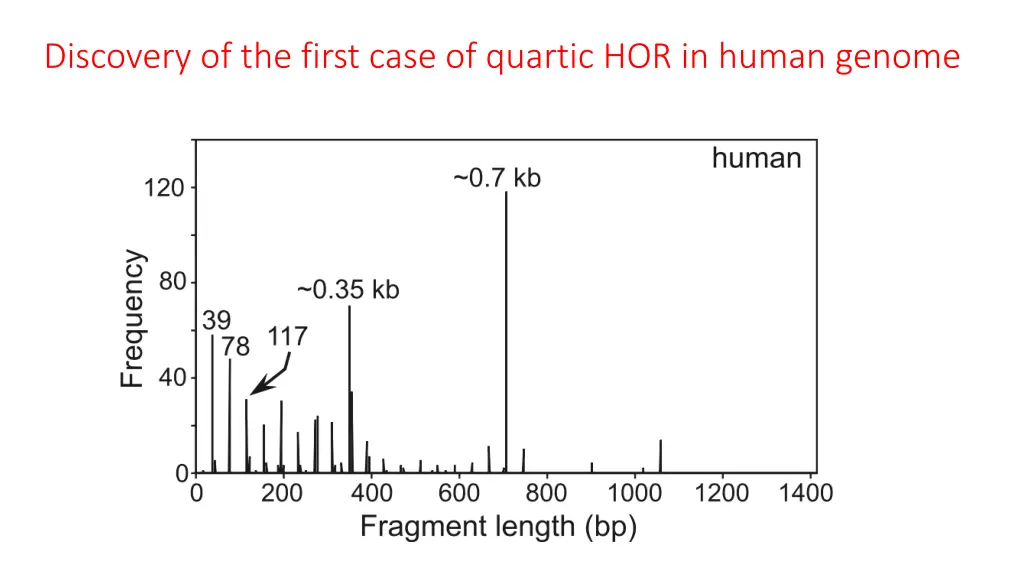
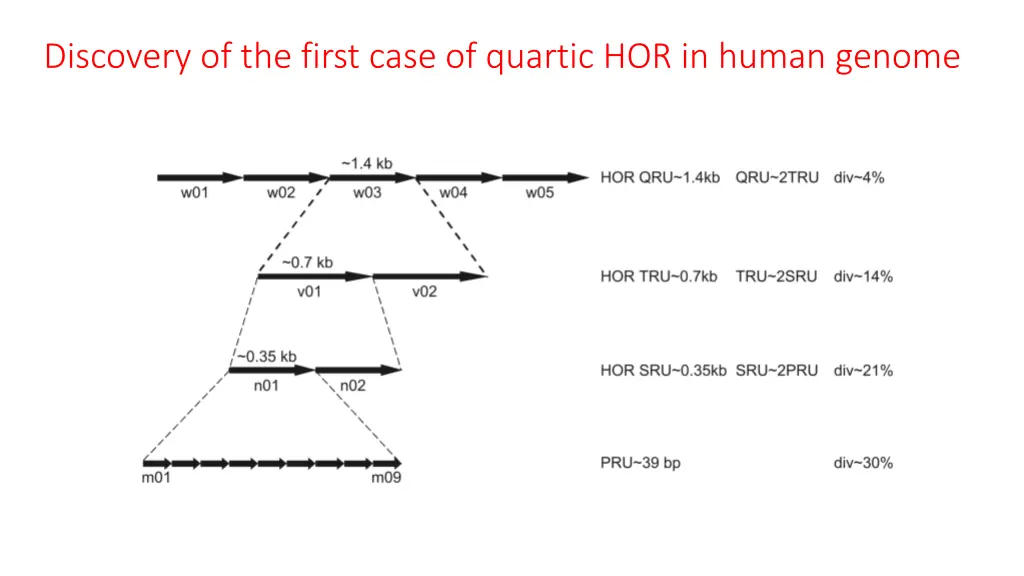
V. Romero, H. Nakaoka, I. Inoue, K. Hosomichi (Department of Genetics School of Life Sciences, SOKENDAI Graduate University of Advanced Studies, Japan; National Institute of Genetics, Mishima, Japan; Department of Bioinformatics and Genetics, Gradual School of Medical Sciences, Kanezawa University, Japan), High order formation and evolution of hornerin in primates, Genome Biology and Evolution 10, 3167-3175 (2018): "Paar et al. (Paar, Glun i , Rosandi , Basar, Vlahovi , 2011) and Takaishi et al. (2005) have different theories as to the formation of the repeated region of HRNR; both groups share the longest repeat length of 1,404 bp (longest unit), but they differed in the process. We identified the formation described by Paar et al. (2011): {[(39bp(primary) 9" 2(secondary) 2(tertiary)] 5(quartic)}, to be conserved in all primate species except the crab-eating macaque. Introduction: Paar et al. (2011) described HRNR formation using the Global Repeat map algorithm as follows: a primary repeat unit sequence (39 bp) was amplified by nine to form a secondary repeat unit (351 bp), duplication of the secondary repeat unit forms a tertiary repeat unit of 0.70 kb, and finally two tertiary repeat units form a 1.4 kb quartic repeat unit. Notably, Paar et al. (2011) detected the higher order repeat structure only in human HRNR but not in chimpanzee, which could be a driving force for the evolutionary process. Paar et al. (2011) description starts with 39 bp to form the primary repeat unit, which amplified 9 times to form the secondary unit (type n01 and n02), the secondary unit duplicated to form the tertiary unit (type v01 and v02) and finally the tertiary unit duplicated again to form the quartic unit (w01). Fig.2. Longest, second longest, quartic, tertiary, and secondary units of hornerin in primates by Takaishi et al. and Paar et al. formation. By Paar et al. formation, the number of quartic units was six for human, chimpanzee, orangutan, and crab-eating macaque and four for gorilla and ranged from 936 to 1,410 bp. The length of the longest repeat formed was 1,404 bp and shared both formations proposed by Paar et al. and Takaishi. Primary units (39 bp) described by Paar et al. (2011). The proposed formation by Takaishi et al. (2005) was [(117 bp 4) 3(subunits)] 6(units)} (fig. 1A), whereas the formation by Paar et al. (2011) was {[("39bp(primary) 9" 2(secondary)) 2(tertiary)] 5(quartic)}. We examined both possibilities and clarified which structure was detectable in primates. The phylogeny of the primary units divided primary units into nine clusters (order, 1-9) in each species tree by Paar et al. (2011). This pattern was observed for human, chimpanzee, gorilla, and orangutan... We next focused on tertiary units proposed by Paar et al. (2011). We used the secondary units to reconstruct the tertiary units (fig. 2). Paar et al. divided tertiary units into "v01" and "v02" types. Fig. 5. representation. The cluster pattern follows, "Group-1st," "Group-2nd," "Group-3rd," which fits the length of the secondary unit described by Paar et al. Hornerin has a unique and complex duplicate formation that is different from other SFPTs. The hornerin repeat formations proposed by Takaishi et al. (2005) {[(117 bp 4) 3(subunits)] 6(units)} (fig. 1A), and by Paar et al. (2011) {[("39bp(primary) 9" 2(secondary)) 2(tertiary)] 5(quartic)}. were examined and compared among several primates (fig. 1). In the repeat organization by Paar et al. (2011), 39bp of the primary unit was detected in chimpanzee, gorilla, orangutan, and crab-eating macaque (fig. 2). We confirmed that in all primates except crab-eating macaque the formation model started with the primary units which duplicated to make the secondary units, and the secondary units duplicated twice again to form the tertiary structure as described by Paar et al. (2011) (fig. 1B). The biological importance of tandem repeats was mentioned by Paar et al. (2011) as a rapidly evolving type of DNA that could contribute to phenotypic differences, even between closely related species such as humans and chimpanzees. The Global Repeat Map of Paar et al. (2011). Neuroblastoma break-point family (NBPF) copy number variability is a dramatic example of high order repeat in human and chimpanzees (Paar et al. 2011). The NBPF repeat is related to the evolutionary level of higher primates and the high order repeat pattern shows a discontinuous jump in the evolutionary step from 48 monomers in chimpanzee to 165 monomers in human, possibly related to a regulatory function of high order repeats (Paar et al. 2011). Paar et al. 2011: Paar V, Glun i M, Rosandi M, Basar I, Vlahovi I, 2011, Intragene higher order repeats in neuroblastoma breakpoint family genes distinguish humans from chimpanzees. Molecular Biology and Evolution 28(6):1877-1892. (Oxford University Press)."
Discovery of fundamental supersymmetry giving rise to genetic code E. Koonin and A.S. Novozhilov, U.S. National Institute of Health, Origin and evolution of genetic code: the universal enigma, IUBMB Life 61, 99-111, 2009: Why is the genetic code the way it is and how did it come to be, that was asked over fifty years ago at the dawn of molecular biology and might remain pertinent even in another fifty years. Marija Rosandi , Vladimir Paar, Standard Genetic Code vs. Supersymmetry Genetic Code Alphabetical table vs. Physicochemical table, BioSystems 218 (2022) 104695 We solved this problem forty years earlier than expected.
Supersymmetry genetic Code (SSyGC) Table The National Institutes of Health, National Library of Medicine: The fundamental role of symmetry in the genetic code is to decrease disorder (information entropy) between codons and to preserve the integrity ofsystem during evolution. Rosandi , Paar, Standard Genetic Code vs. Supersymmetry Genetic Code Alphabetical table vs. Physicochemical table, BioSystems 218 (2022) 104695 Rosandi , Vlahovi , Pila , Glun i , Paar, An explanation of exceptions from Chargaff s second parity rule/strand symmetry of DNA molecules, Genes 13 (2022) 1929 Rosandi , Paar, The novel Ideal Symmetry Genetic code table common purine-pyrimidine symmetry net for all RNA and DNA species. Journal of Theoretical Biology 524, 110748 (2021). Rosandi , Vlahovi , Paar, Novel look at DNA and life symmetry as evolutionary forcing, Journal of Theoretical Biology 483, 109985 (2019). Marija Rosandi , Ines Vlahovi , Vladimir Paar, Novel look at DNA and life Symmetry as evolutionary forcing, Journal of Theoretical Biology, 483 (2019) 109985 Rosandi , Vlahovi , Glun i , Paar, Trinucleodide s quadruplet symmetries and natural symmetry law of DNA creation ensuing Chargaff s second parity rule, Journal of Biomolecular Structure and Dynamics 34 (2016) 1383-1394. Rosandi , Paar, Codon sextets with leading role of serine creates ideal symmetry classification scheme of the genetic code, Gene (2014); Marija Rosandi , Vladimir Paar, Codon sextets with leading role of serine create "ideal" symmetry classification scheme of the genetic code, Gene 543 (2014) 45-52. Rosandi , Paar, Glun i , Fundamental role of start/stop regulators in whole DNA and new trinucleotide classification, Gene 531, 2 (2013) 184-190.
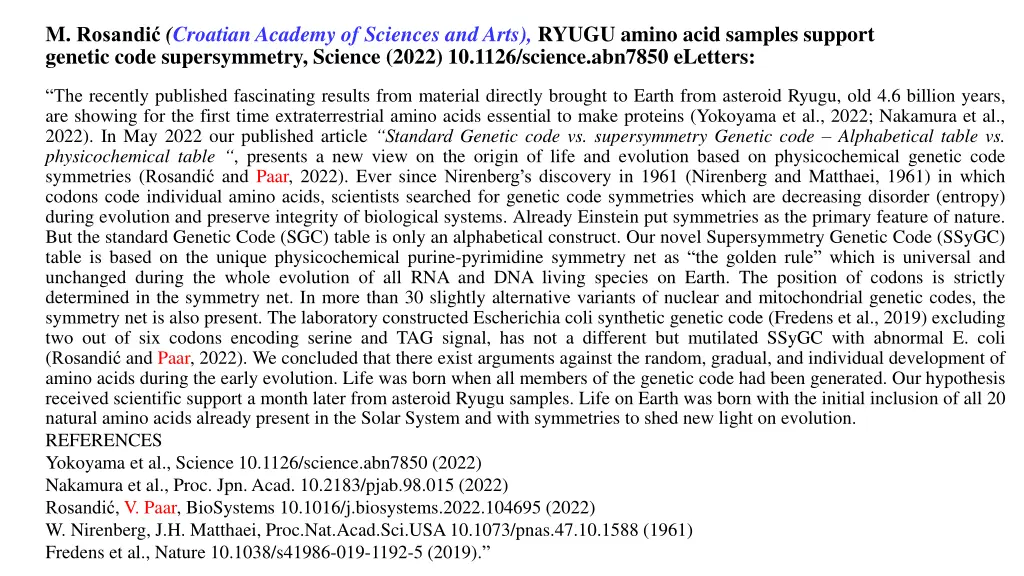
M. Rosandi(Croatian Academy of Sciences and Arts), RYUGU amino acid samples support genetic code supersymmetry, Science (2022) 10.1126/science.abn7850 eLetters: The recently published fascinating results from material directly brought to Earth from asteroid Ryugu, old 4.6 billion years, are showing for the first time extraterrestrial amino acids essential to make proteins (Yokoyama et al., 2022; Nakamura et al., 2022). In May 2022 our published article Standard Genetic code vs. supersymmetry Genetic code Alphabetical table vs. physicochemical table , presents a new view on the origin of life and evolution based on physicochemical genetic code symmetries (Rosandi and Paar, 2022). Ever since Nirenberg s discovery in 1961 (Nirenberg and Matthaei, 1961) in which codons code individual amino acids, scientists searched for genetic code symmetries which are decreasing disorder (entropy) during evolution and preserve integrity of biological systems. Already Einstein put symmetries as the primary feature of nature. But the standard Genetic Code (SGC) table is only an alphabetical construct. Our novel Supersymmetry Genetic Code (SSyGC) table is based on the unique physicochemical purine-pyrimidine symmetry net as the golden rule which is universal and unchanged during the whole evolution of all RNA and DNA living species on Earth. The position of codons is strictly determined in the symmetry net. In more than 30 slightly alternative variants of nuclear and mitochondrial genetic codes, the symmetry net is also present. The laboratory constructed Escherichia coli synthetic genetic code (Fredens et al., 2019) excluding two out of six codons encoding serine and TAG signal, has not a different but mutilated SSyGC with abnormal E. coli (Rosandi and Paar, 2022). We concluded that there exist arguments against the random, gradual, and individual development of amino acids during the early evolution. Life was born when all members of the genetic code had been generated. Our hypothesis received scientific support a month later from asteroid Ryugu samples. Life on Earth was born with the initial inclusion of all 20 natural amino acids already present in the Solar System and with symmetries to shed new light on evolution. REFERENCES Yokoyama et al., Science 10.1126/science.abn7850 (2022) Nakamura et al., Proc. Jpn. Acad. 10.2183/pjab.98.015 (2022) Rosandi , V. Paar, BioSystems 10.1016/j.biosystems.2022.104695 (2022) W. Nirenberg, J.H. Matthaei, Proc.Nat.Acad.Sci.USA 10.1073/pnas.47.10.1588 (1961) Fredens et al., Nature 10.1038/s41986-019-1192-5 (2019).
OUR HYPOTHESIS: REALIZATION OF SSyGC SUPERSYMMETRY instead of Crick s Frozen Accident Hypothesis