Exploring Myology: Understanding Muscle Functions and Structure
Myology is the study of muscles and their functions in organisms. Muscle plays a vital role in converting ATP into mechanical energy for movement. Understanding the general aspects of myology, such as muscle contraction, specialized tissues, and the importance of fascia, sheds light on the intricate mechanisms that govern bodily movement, respiration, circulation, and more.

Uploaded on Mar 06, 2025 | 2 Views
Download Presentation

Please find below an Image/Link to download the presentation.
The content on the website is provided AS IS for your information and personal use only. It may not be sold, licensed, or shared on other websites without obtaining consent from the author.If you encounter any issues during the download, it is possible that the publisher has removed the file from their server.
You are allowed to download the files provided on this website for personal or commercial use, subject to the condition that they are used lawfully. All files are the property of their respective owners.
The content on the website is provided AS IS for your information and personal use only. It may not be sold, licensed, or shared on other websites without obtaining consent from the author.
E N D
Presentation Transcript
Myology Gross Anatomy Dr. Firas A. Alhasson University of Basrah Anatomy and Histology Department Veterinary Medicine College
MYOLOGY: GENERAL Muscle is derived from the term mus or mys for mouse. Myology movement of muscles, characteristics of all organisms Main role of muscles is a device that converts the chemical energy of ATP (adenosine triphosphate) into mechanical energy of movement.
MYOLOGY: GENERAL Muscle is a specialized connective tissue It contracts (contractile units) to produce body movement in response to nerves or (humoral) hormones stimulation.
THE FUNCTIONS OF MUSCLES Muscles provide motive power for: Locomotion [movement] & Movements of body contents Respiration (diaphragm & intercostal) Circulation Alimentation (digestion GI tract, defecation, & urination. Movement of body contents) Child birth Indication of emotional states Barking, facial expression (cutaneous muscles), raising hair, or waging tail
MYOLOGY: GENERAL Muscle fiber- Myocyte (organelles, fibers etc.) and Sarcomeres Components: Protein fibers ? actin & Myosin Microfilaments Glycogen Deposit of myelin &
MYOLOGY: GENERAL Fascia is a sheet or band of fibrous connective tissue Attaching skin to underlying tissues Invests muscles, tendons, ligaments and certain organs
TYPES OF FASCIA Superficial fascia (subcutis) or (areolar) Below the skin Principal sites for the storage of fat S/C injections are made into this tissue Deep fascia Tougher fibrous sheets Fuses to bones Penetrates between muscles, Assists return of blood and lymph to heart (contraction of muscle pushes blood back)
MYOLOGY: FUNCTIONS OF FASCIA Attachment of skin and muscles Pathway for vessels and nerves Containing sheaths for muscles to operate Binds down and redirects tendon forces Fat storage It is encountered in surgery Direction of spreading fluids and pus Holds sutures securely in wound closure
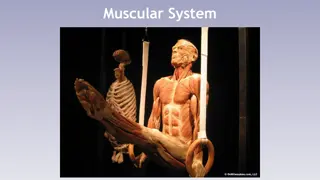
MYOLOGY: GENERAL Muscle is grouped into one of three types: Smooth muscle Cardiac muscle Skeletal muscle Voluntary (usually subject to conscious control) Striated Diaphragm and cremaster don t under control its skeletal muscles
SKELETAL MUSCLE ~ 50% of the body is the carcass All attached to bone Not limited to the skeleton. Found in the pharynx, esophagus, & skin (ie.. cutaneous trunci).
SKELETAL MUSCLE Functions: 1. Movements of animal body Prevent unwanted movements (stabilizing joints) Movement: most obvious function is to move the body, as in walking, running, writing, chewing, and swallowing. Stimulation maintains a state of muscle contraction tonus for movement of blood & lymph. Posture: Skeletal muscles maintain posture by stabilizing the flexible muscles. 2. Control of body openings and passages maintain continence : Ring-like sphincter muscles (eyelids, pupils, mouth, urethra , & anus)
SKELETAL MUSCLE Functions (cont.): 3. Generate heat by shivering. Homeostasis maintain proper body function with proper environment (i.e. enzymes need to function) Body support and maintenance of posture (tonus) Certain muscles work in opposition to gravity.
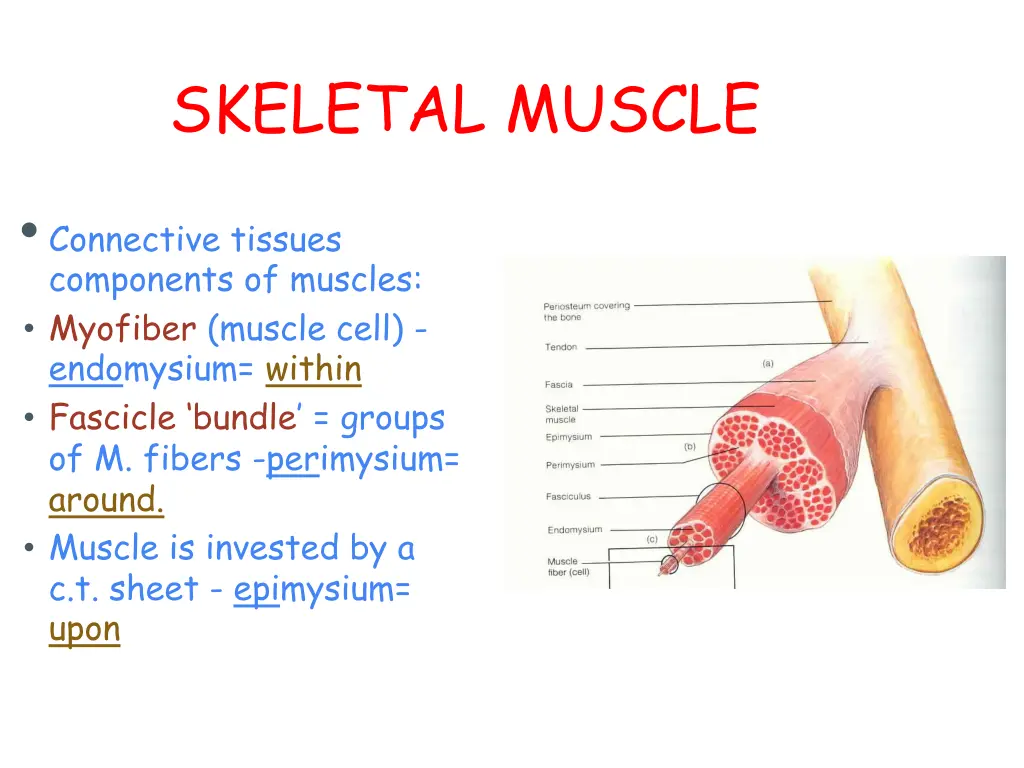
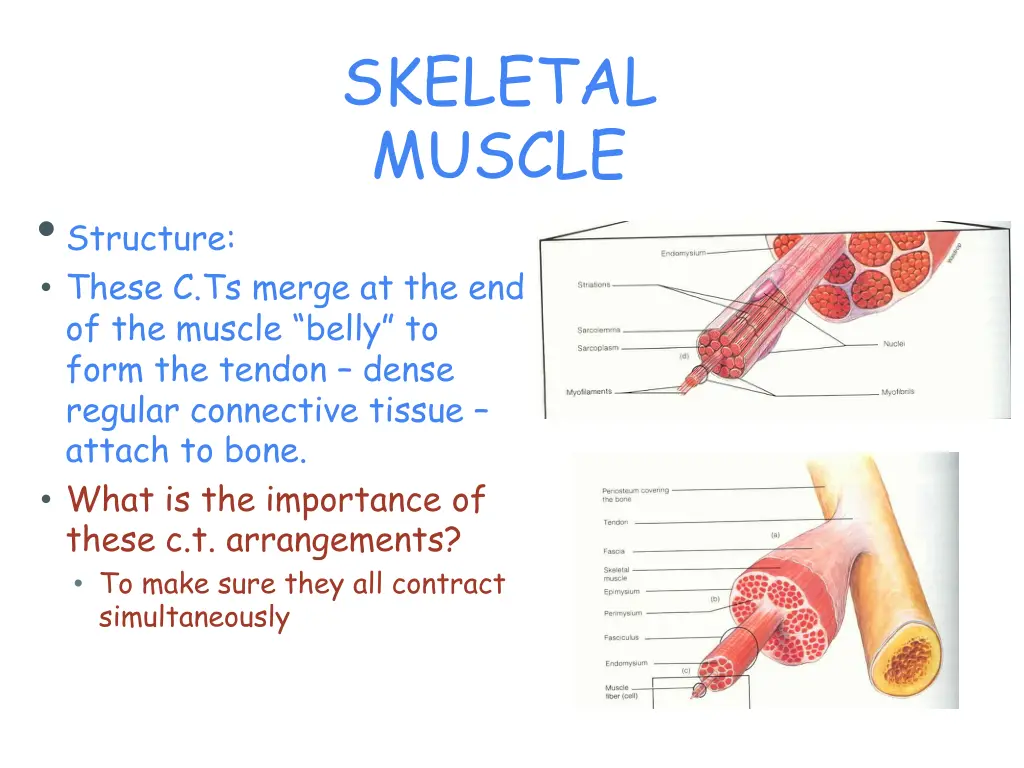
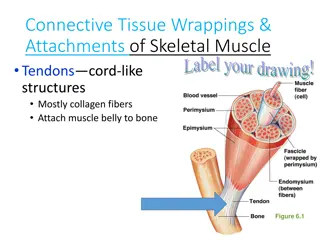
SKELETAL MUSCLE Connective tissues components of muscles: Myofiber (muscle cell) - endomysium= within Fascicle bundle = groups of M. fibers -perimysium= around. Muscle is invested by a c.t. sheet - epimysium= upon
SKELETAL MUSCLE Contracting muscle fibers would not be effective if they worked as isolated units. Each fiber is bound to adjacent fibers to form bundles, and the bundles in turn are bound to other bundles. With arrangement, the contraction in one area of a muscle works in conjunction with contracting fibers elsewhere in the muscle. The binding substance within muscles is the associated loose C.T.
SKELETAL MUSCLE Structure: These C.Ts merge at the end of the muscle belly to form the tendon dense regular connective tissue attach to bone. What is the importance of these c.t. arrangements? To make sure they all contract simultaneously
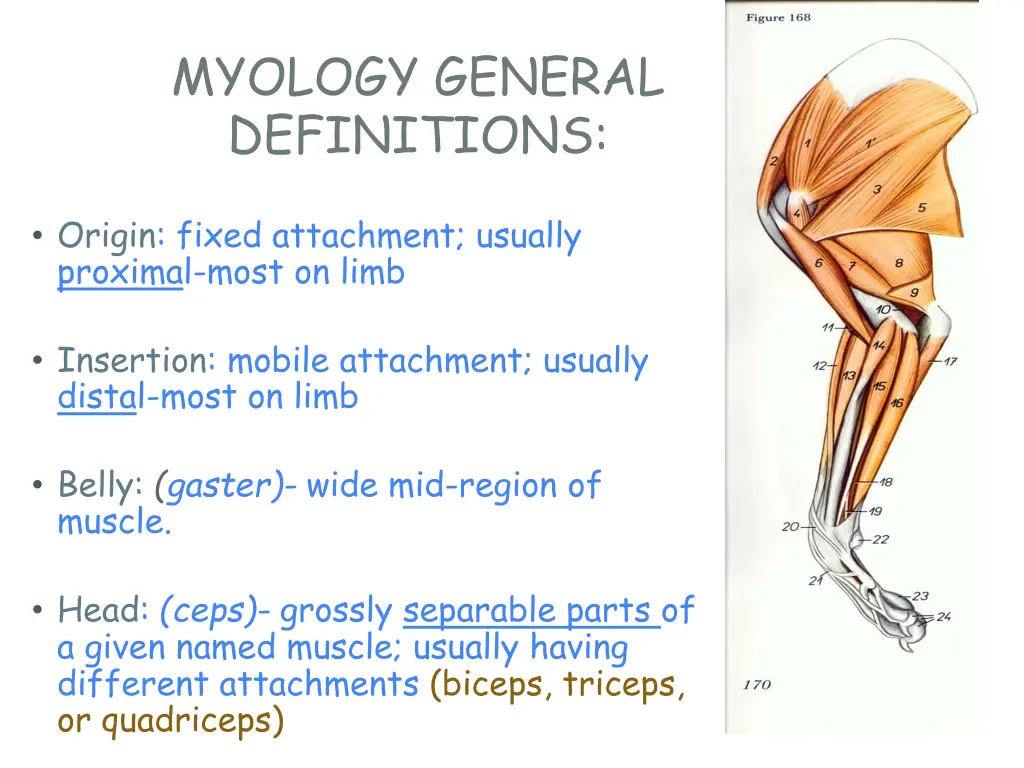
MYOLOGY GENERAL DEFINITIONS: Origin: fixed attachment; usually proximal-most on limb Insertion: mobile attachment; usually distal-most on limb Belly: (gaster)- wide mid-region of muscle. Head: (ceps)- grossly separable parts of a given named muscle; usually having different attachments (biceps, triceps, or quadriceps)
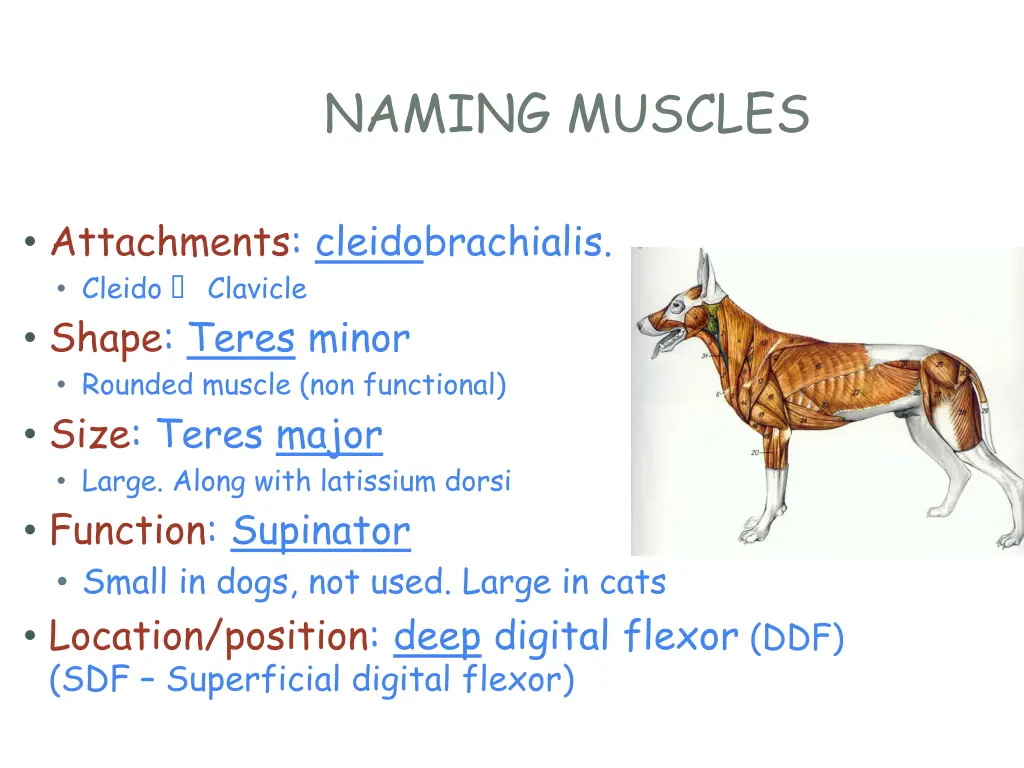
NAMING MUSCLES Attachments: cleidobrachialis. Cleido ? Clavicle Shape: Teres minor Rounded muscle (non functional) Size: Teres major Large. Along with latissium dorsi Function: Supinator Small in dogs, not used. Large in cats Location/position: deep digital flexor (DDF) (SDF Superficial digital flexor)
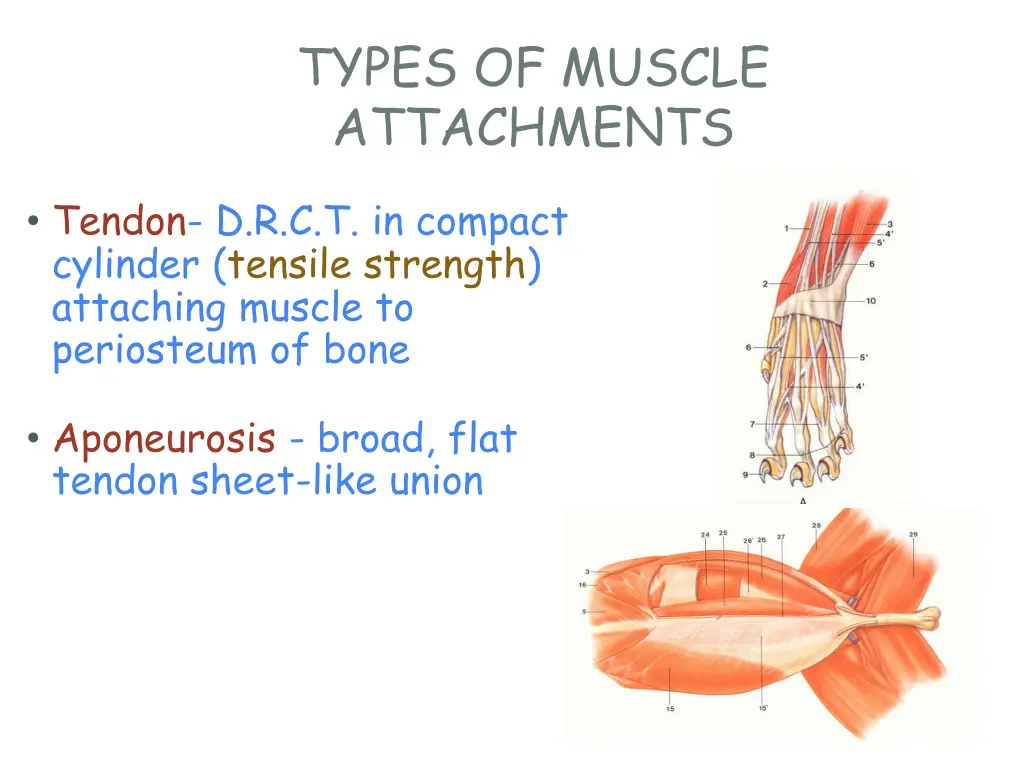
TYPES OF MUSCLE ATTACHMENTS Tendon- D.R.C.T. in compact cylinder (tensile strength) attaching muscle to periosteum of bone Aponeurosis - broad, flat tendon sheet-like union
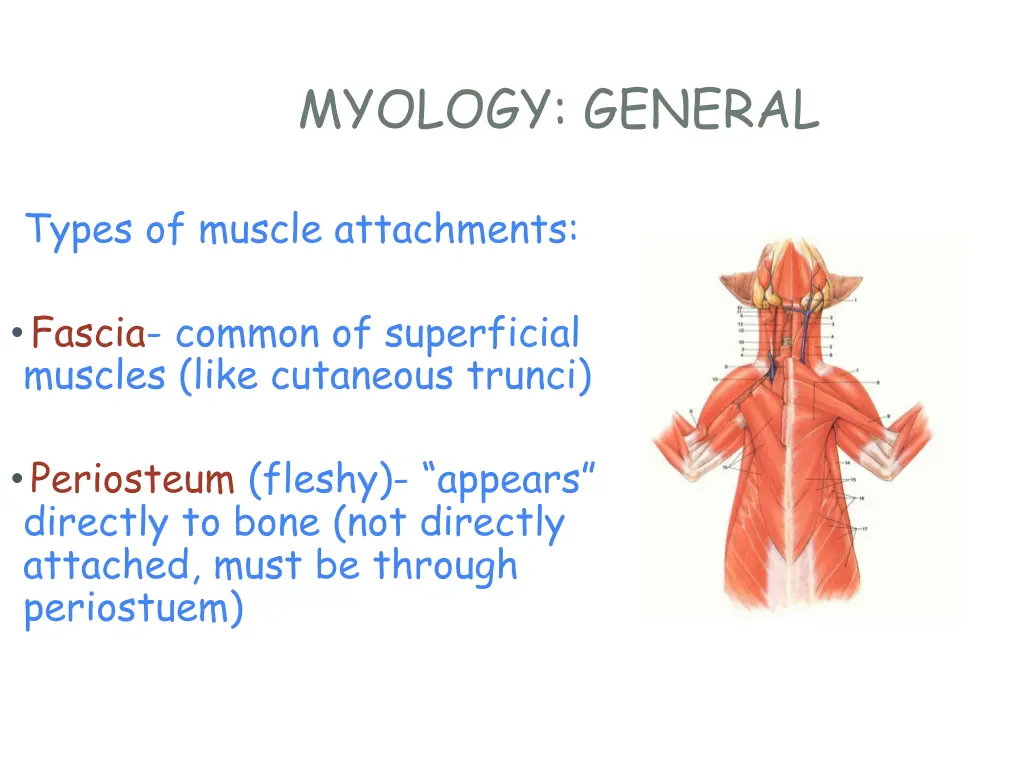
MYOLOGY: GENERAL Types of muscle attachments: Fascia- common of superficial muscles (like cutaneous trunci) Periosteum (fleshy)- appears directly to bone (not directly attached, must be through periostuem)
MUSCLE ATTACHMENTS Accessory structures [necessary for muscle function]: Tendons: Low metabolic activity (poorly vascularized) Tough, but can be damaged by excessive pressure or friction, when change direction over bony prominences
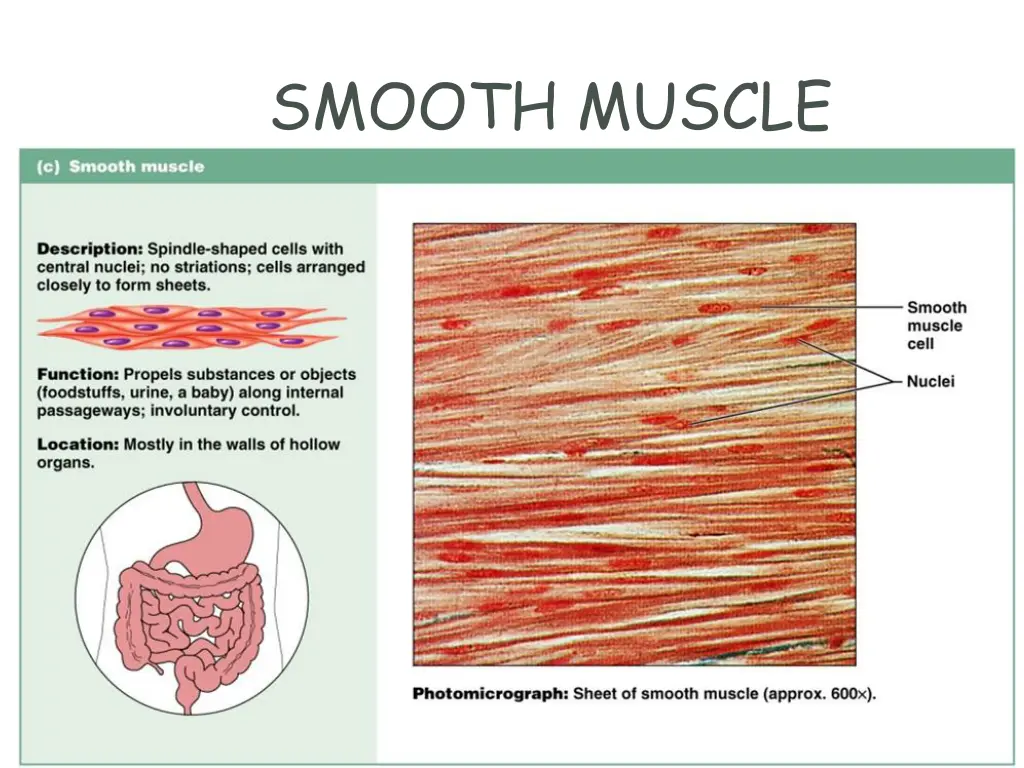
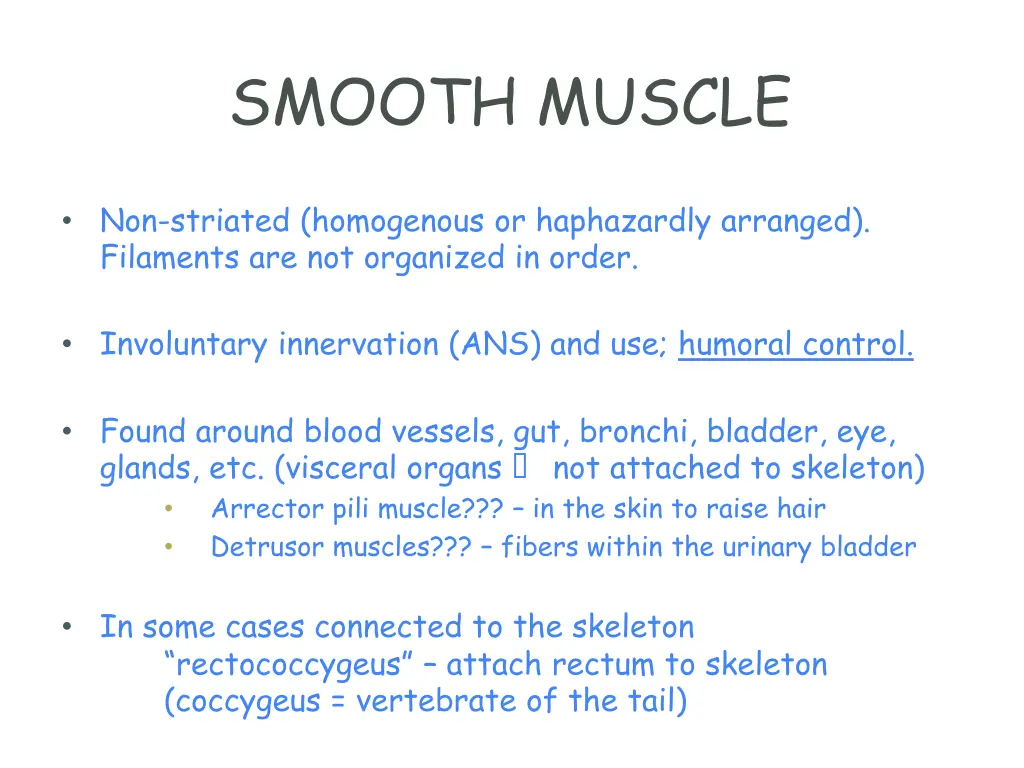
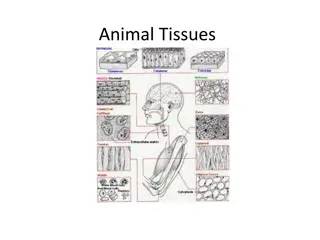
SMOOTH MUSCLE Non-striated (homogenous or haphazardly arranged). Filaments are not organized in order. Involuntary innervation (ANS) and use; humoral control. Found around blood vessels, gut, bronchi, bladder, eye, glands, etc. (visceral organs ? not attached to skeleton) Arrector pili muscle??? in the skin to raise hair Detrusor muscles??? fibers within the urinary bladder In some cases connected to the skeleton rectococcygeus attach rectum to skeleton (coccygeus = vertebrate of the tail)
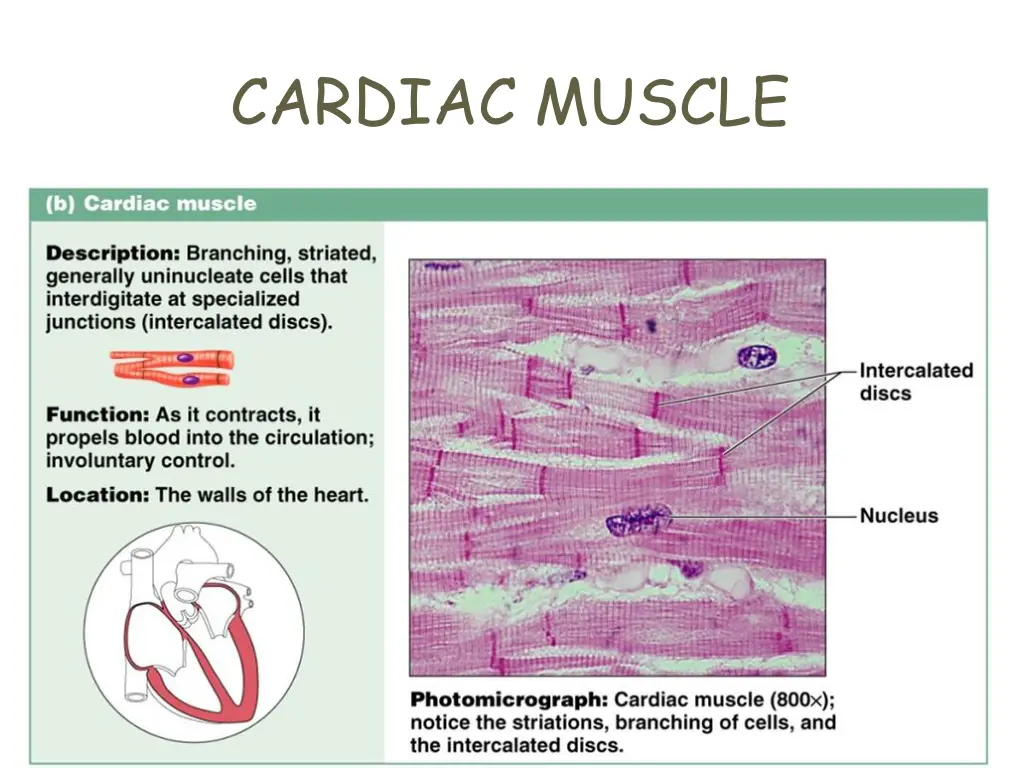
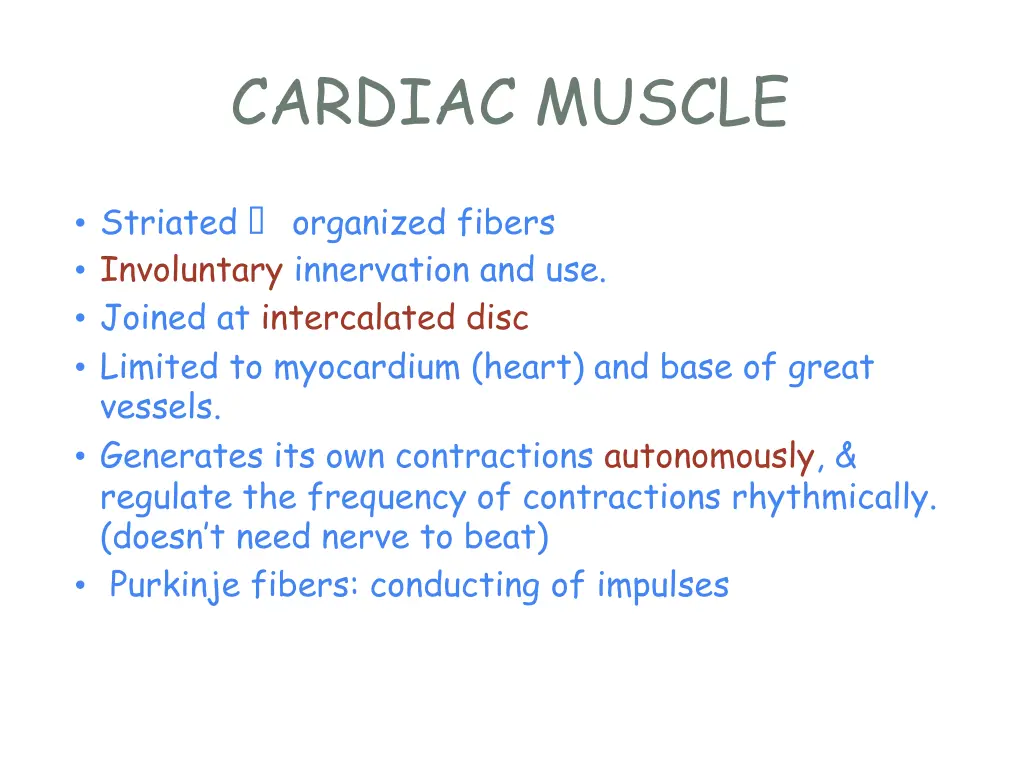
CARDIAC MUSCLE Striated ? organized fibers Involuntary innervation and use. Joined at intercalated disc Limited to myocardium (heart) and base of great vessels. Generates its own contractions autonomously, & regulate the frequency of contractions rhythmically. (doesn t need nerve to beat) Purkinje fibers: conducting of impulses
Myology The end