Exploring Software Development Lifecycle and Inheritance
Dive into software development methodologies, lifecycle models, and the concept of inheritance in programming. Understand the importance of lifecycles, different development approaches, and the iterative nature of project management.

Download Presentation

Please find below an Image/Link to download the presentation.
The content on the website is provided AS IS for your information and personal use only. It may not be sold, licensed, or shared on other websites without obtaining consent from the author. If you encounter any issues during the download, it is possible that the publisher has removed the file from their server.
You are allowed to download the files provided on this website for personal or commercial use, subject to the condition that they are used lawfully. All files are the property of their respective owners.
The content on the website is provided AS IS for your information and personal use only. It may not be sold, licensed, or shared on other websites without obtaining consent from the author.
E N D
Presentation Transcript
TeachingLondon Computing A Level Computer Science Topic 8: Software Development & Inheritance William Marsh School of Electronic Engineering and Computer Science Queen Mary University of London
Aims Review software development lifecycle Introduce Structure modelling State modelling Object modelling Introducing inheritance in modelling and Python
Software Lifecycles and Modelling
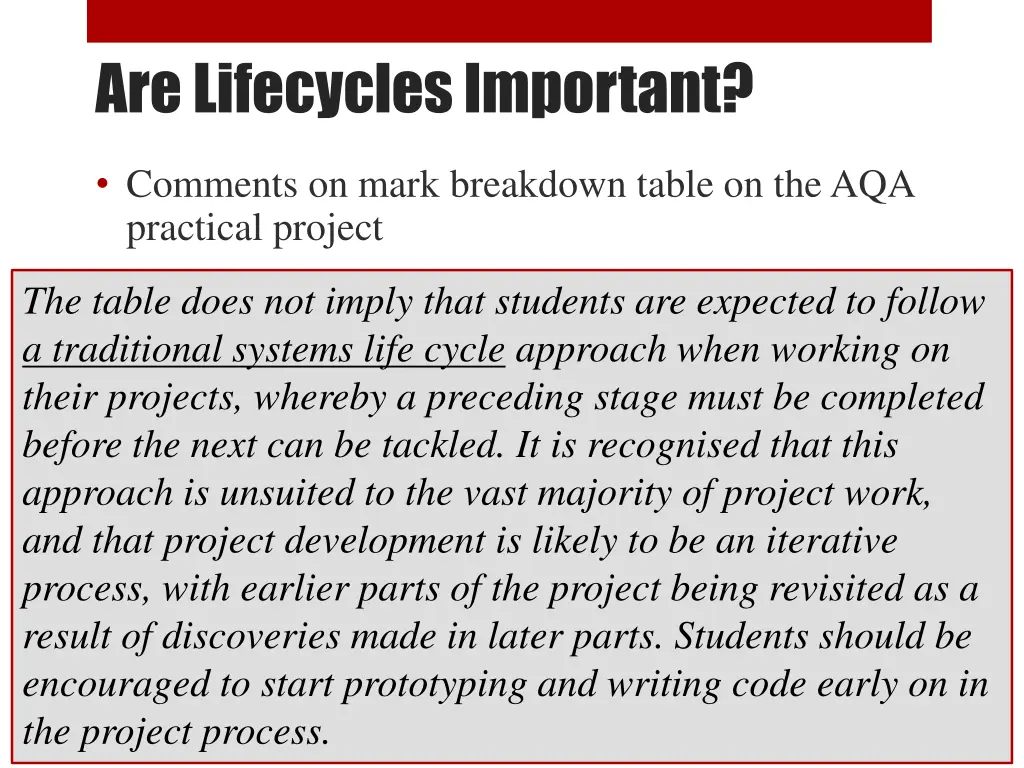
Are Lifecycles Important? Comments on mark breakdown table on the AQA practical project The table does not imply that students are expected to follow a traditional systems life cycle approach when working on their projects, whereby a preceding stage must be completed before the next can be tackled. It is recognised that this approach is unsuited to the vast majority of project work, and that project development is likely to be an iterative process, with earlier parts of the project being revisited as a result of discoveries made in later parts. Students should be encouraged to start prototyping and writing code early on in the project process.
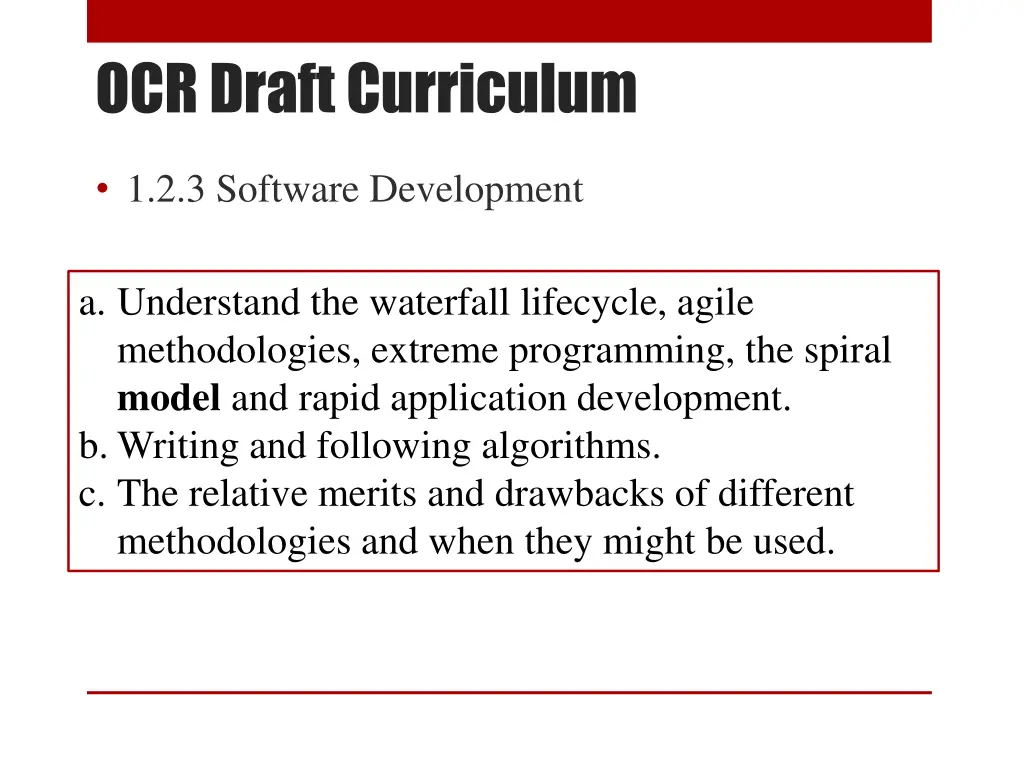
OCR Draft Curriculum 1.2.3 Software Development a. Understand the waterfall lifecycle, agile methodologies, extreme programming, the spiral model and rapid application development. b. Writing and following algorithms. c. The relative merits and drawbacks of different methodologies and when they might be used.
Hacking Just write a program Linus Torvald author of Linux Good approach for very good programmers BUT Not repeatable (c.f. factory) Does not work with teams Problem: how to organise a large project
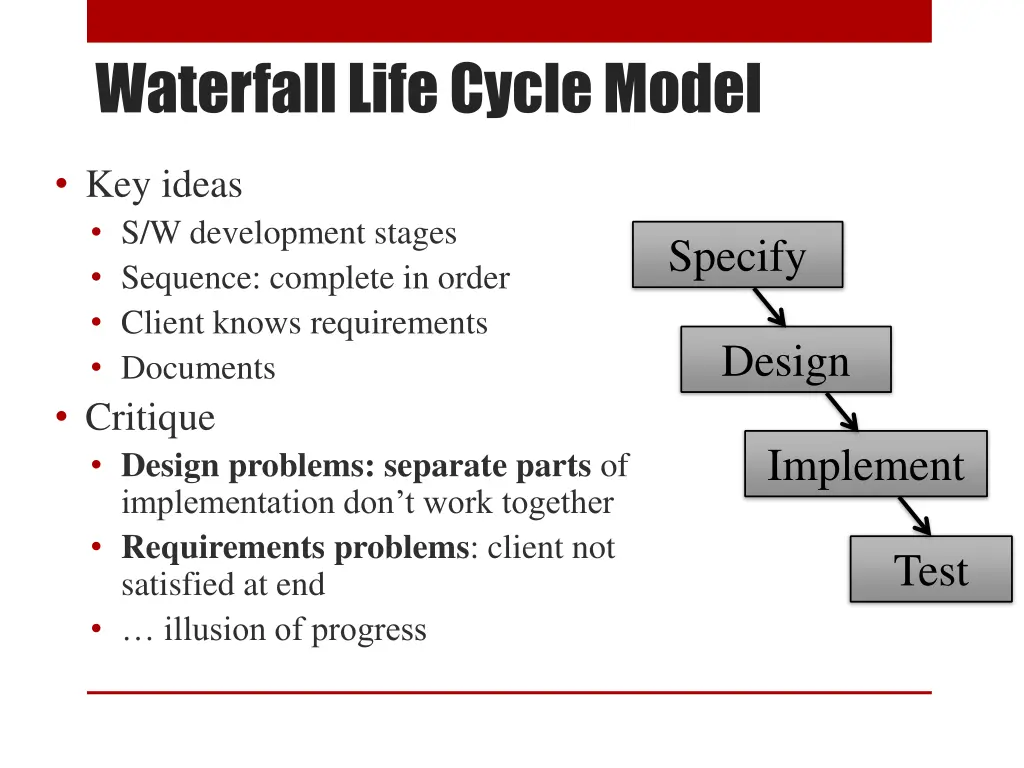
Waterfall Life Cycle Model Key ideas S/W development stages Sequence: complete in order Client knows requirements Documents Critique Design problems: separate parts of implementation don t work together Requirements problems: client not satisfied at end illusion of progress Specify Design Implement Test
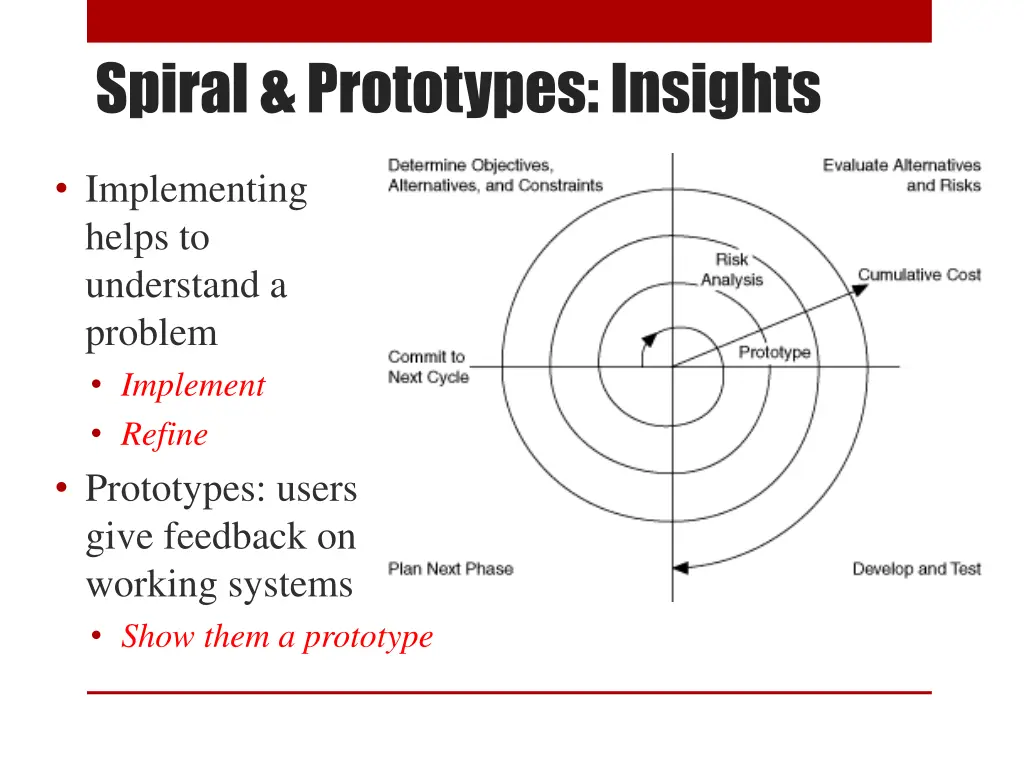
Spiral & Prototypes: Insights Implementing helps to understand a problem Implement Refine Prototypes: users give feedback on working systems Show them a prototype
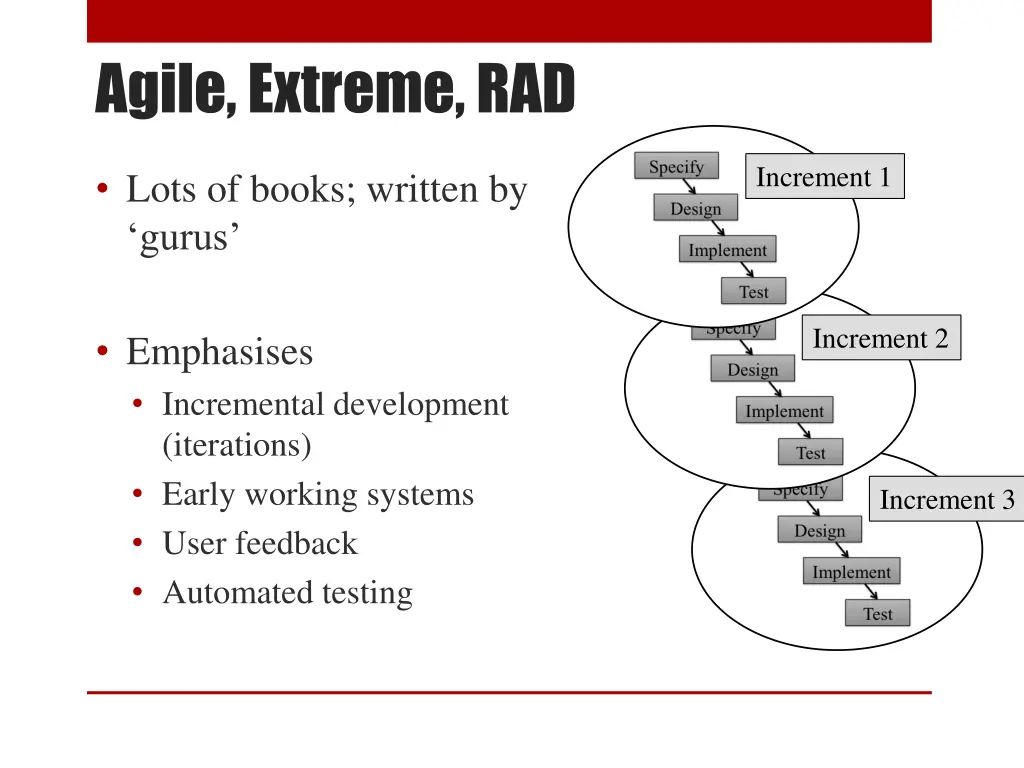
Agile, Extreme, RAD Increment 1 Lots of books; written by gurus Increment 2 Emphasises Incremental development (iterations) Early working systems User feedback Automated testing Increment 3
Summary Modern lifecycles give less emphasis to a specification Models Still important Abstract view of problem or solution Pseudo code is a model but not very abstract Flow charts are abstract compared with assembly code but not with a modern high level language
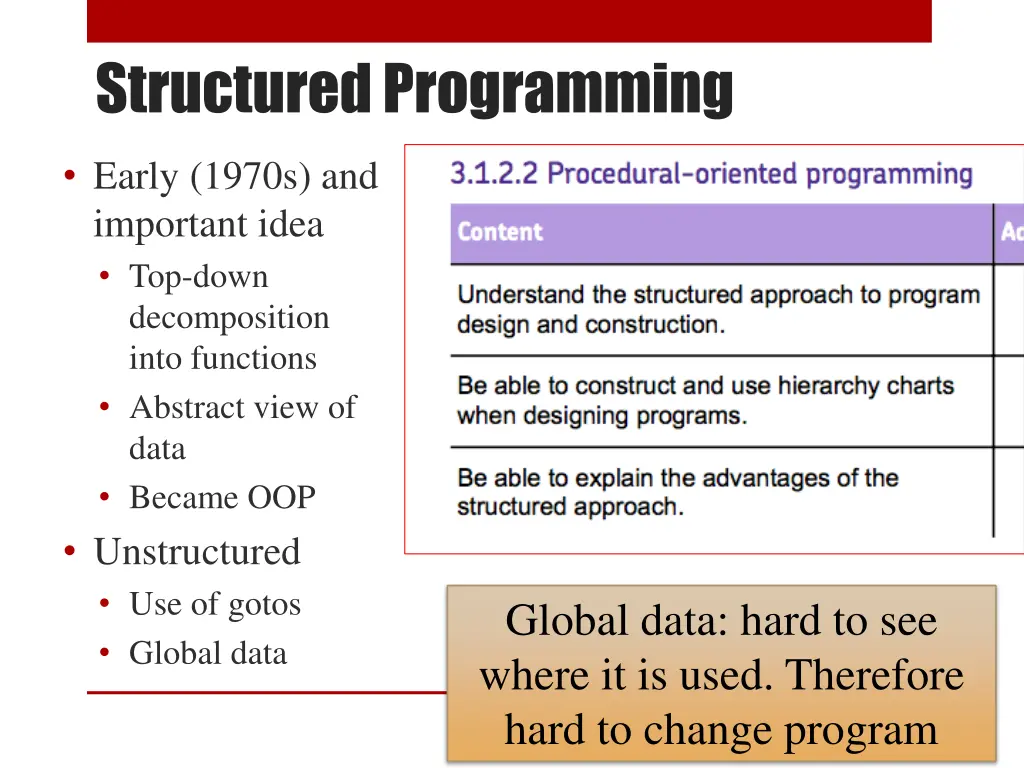
Structured Programming Early (1970s) and important idea Top-down decomposition into functions Abstract view of data Became OOP Unstructured Use of gotos Global data Global data: hard to see where it is used. Therefore hard to change program
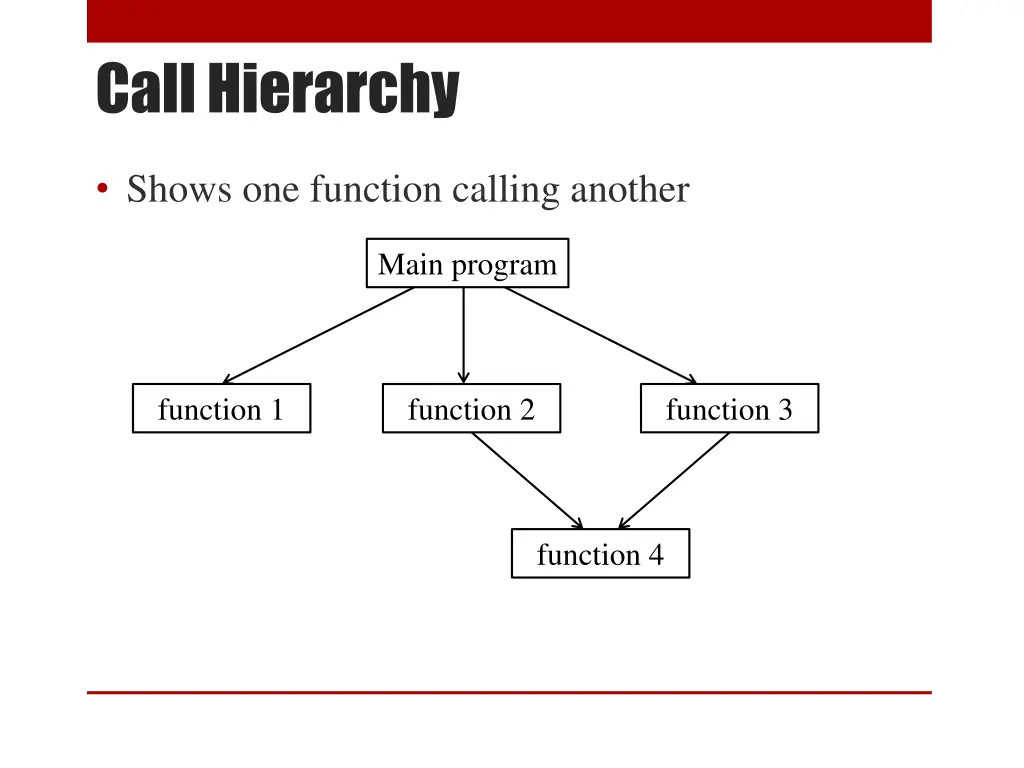
Call Hierarchy Shows one function calling another Main program function 1 function 2 function 3 function 4
Exercises 2.1, 2.2 A simple version of the minesweeper game is available. Download it and review the code. Draw a function-call structure chart. A very simple version of 20 Questions randomly selects from a fixed set of animals (for example). The player can see the answers of 3 questions (e.g. how many legs?) chosen from 5. The player then guesses the animal. Suggest a functional decomposition for this problem.
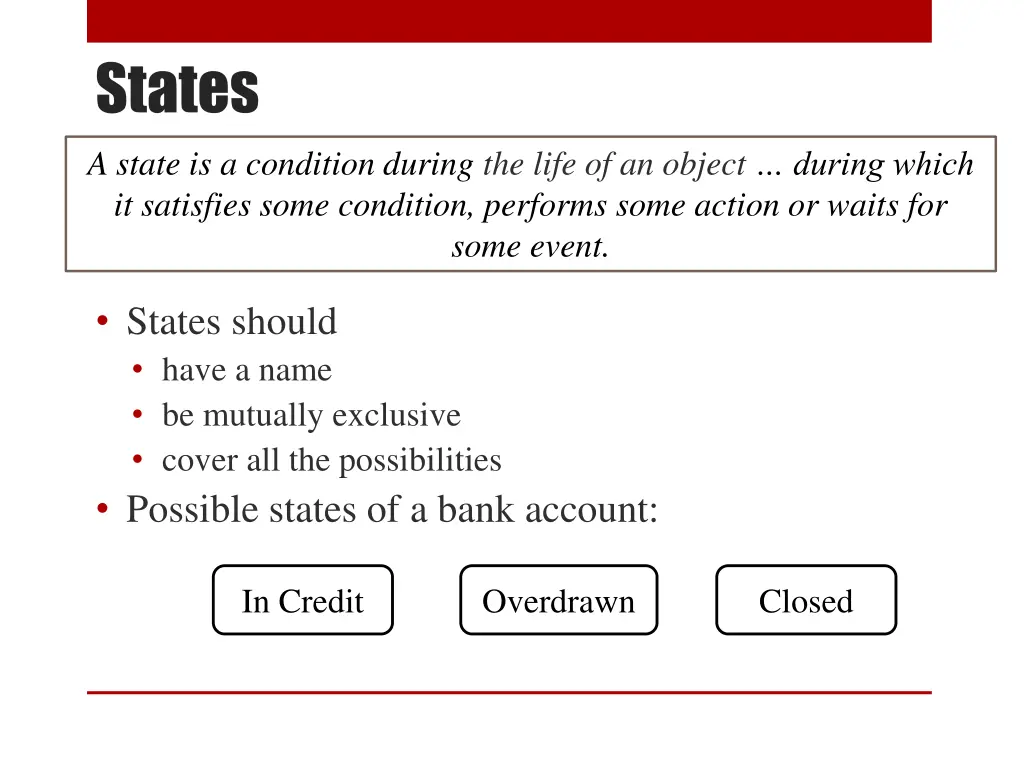
States A state is a condition during the life of an object during which it satisfies some condition, performs some action or waits for some event. States should have a name be mutually exclusive cover all the possibilities Possible states of a bank account: In Credit Overdrawn Closed
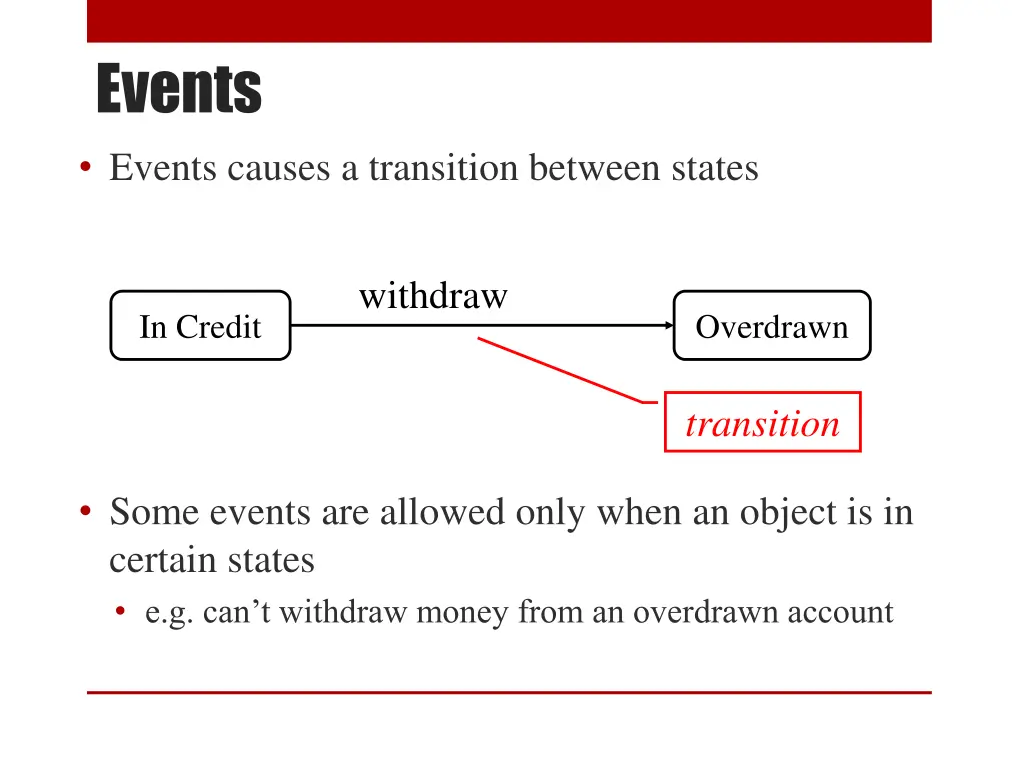
Events Events cause a change of the state of an object Event for a telephone ring answer hang up switch off A change of state is called a transition
Events Events causes a transition between states withdraw In Credit Overdrawn transition Some events are allowed only when an object is in certain states e.g. can t withdraw money from an overdrawn account
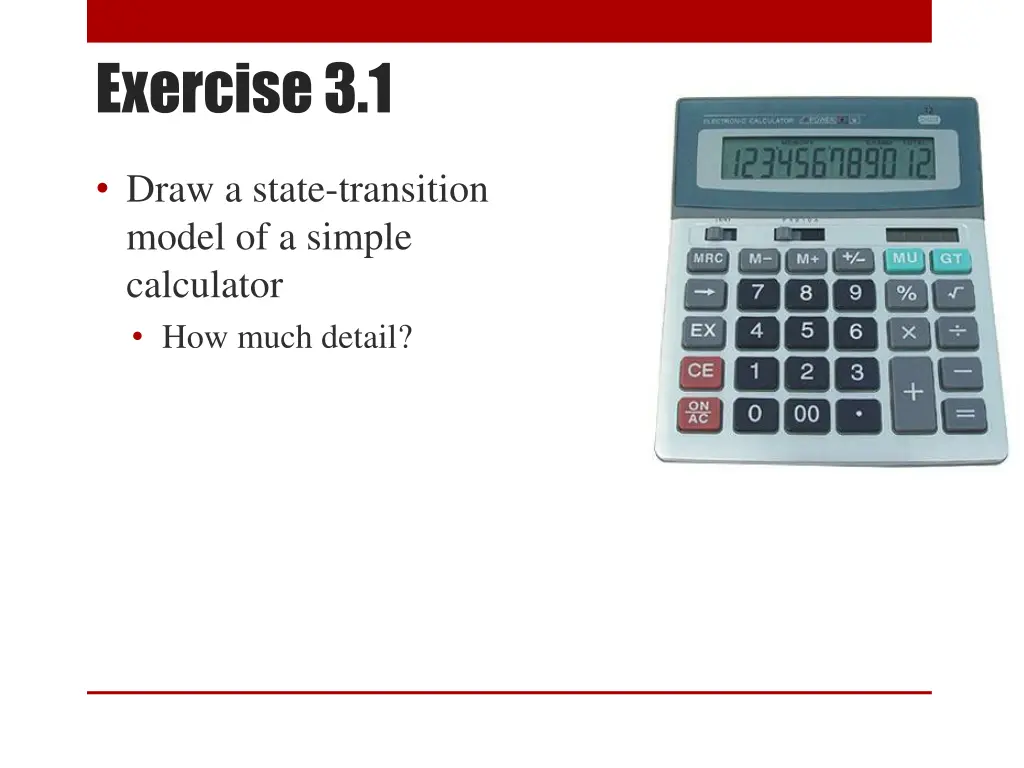
Exercise 3.1 Draw a state-transition model of a simple calculator How much detail?
Exercise 3.2 In minesweeper, a square in the minefield Can hide a mine or no mine The user can Flag (claim a mine is present) Test (claim no mine is present) Draw a state model of this. What transitions are needed? How is the game ended?
Object Modelling and Inheritance
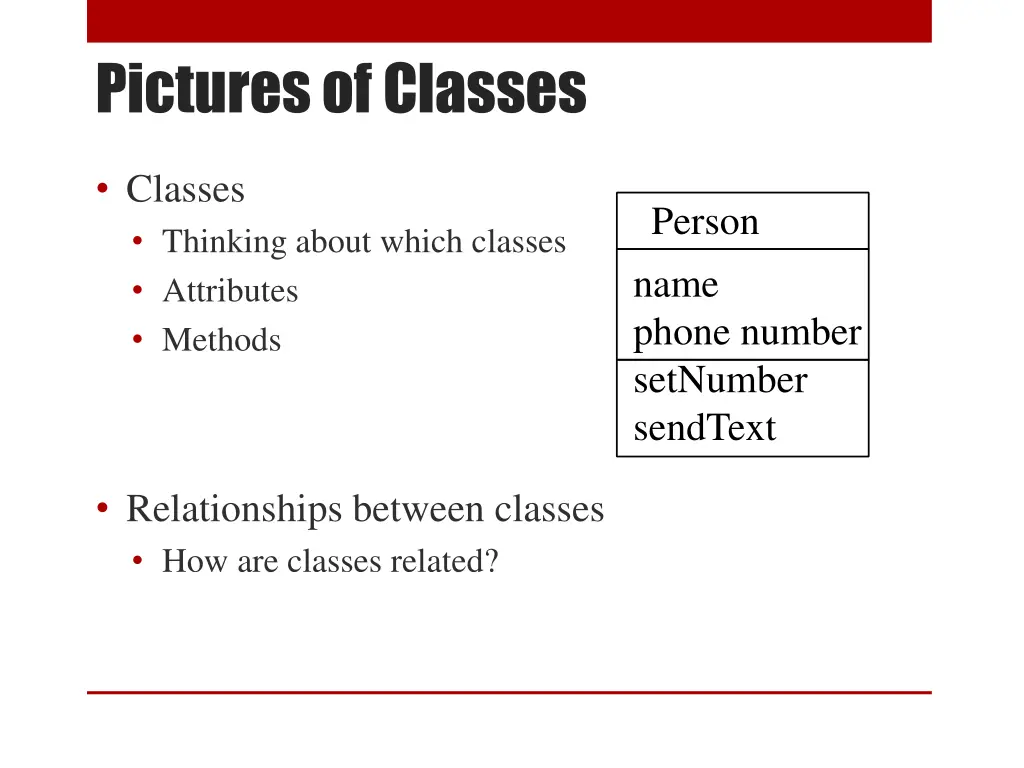
Pictures of Classes Classes Thinking about which classes Attributes Methods Person name phone number setNumber sendText Relationships between classes How are classes related?
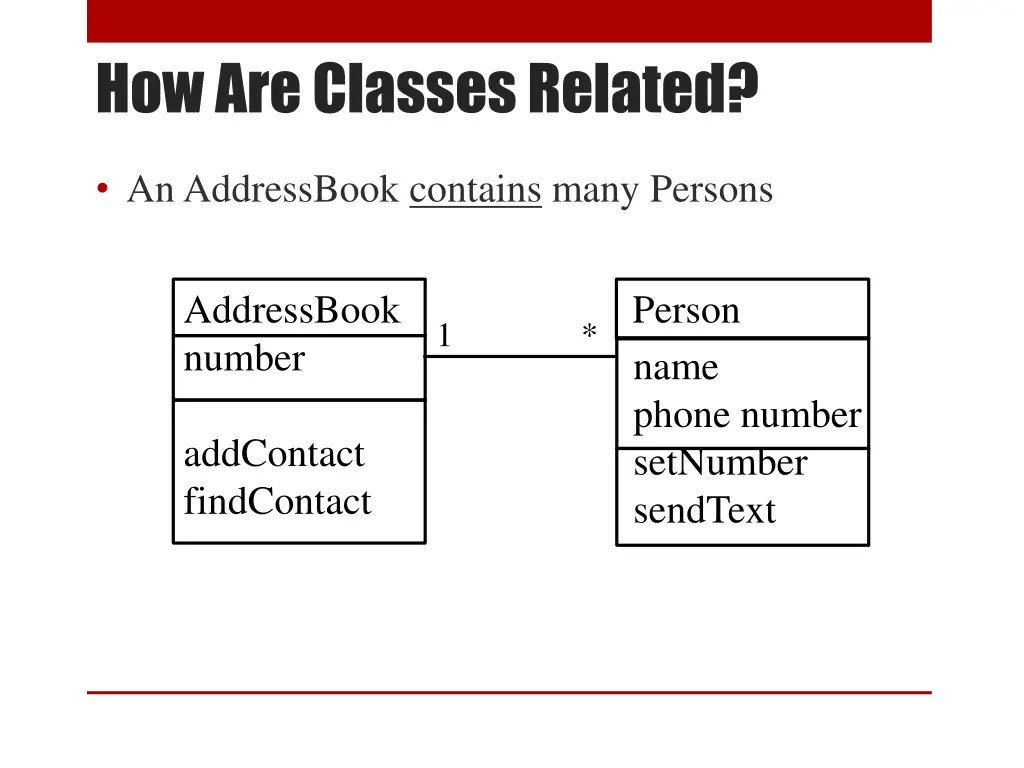
How Are Classes Related? An AddressBook contains many Persons AddressBook number Person name phone number setNumber sendText 1 * addContact findContact
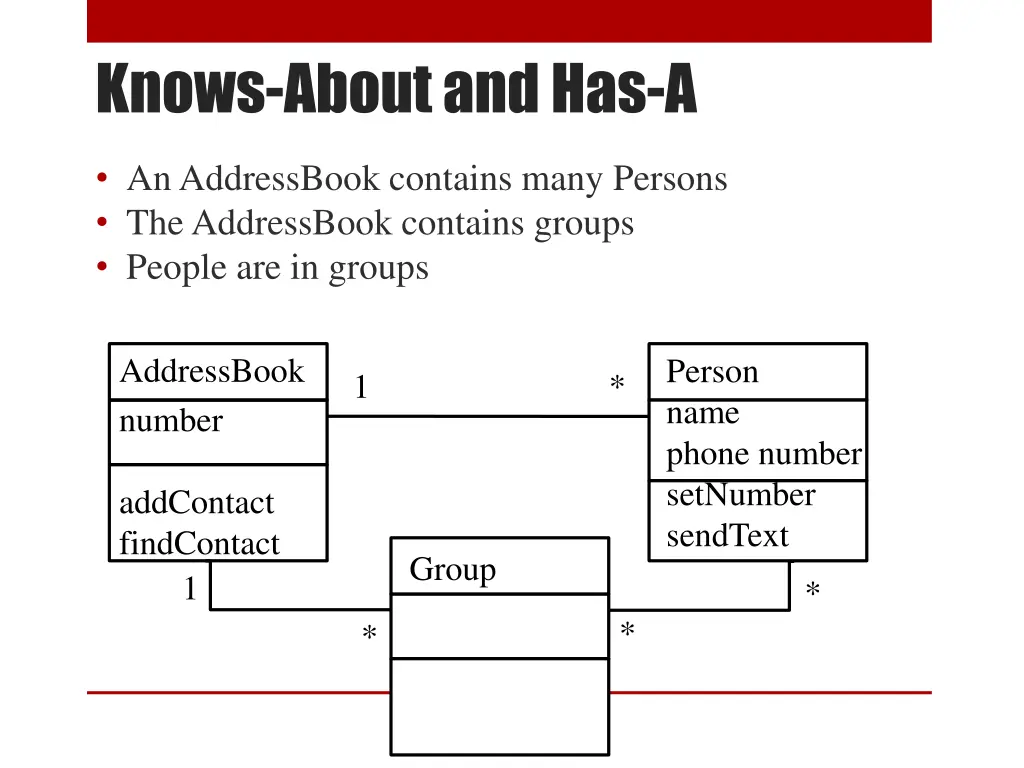
Knows-About and Has-A An AddressBook contains many Persons The AddressBook contains groups People are in groups AddressBook number Person name phone number setNumber sendText 1 * addContact findContact 1 Group * * *
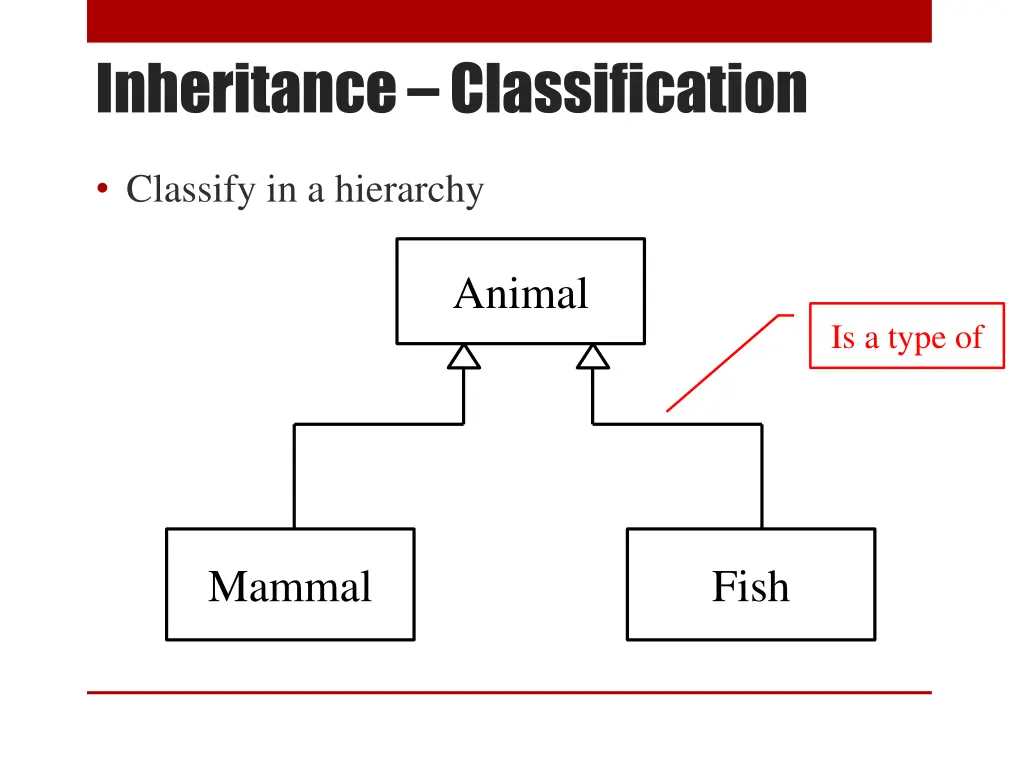
Inheritance Classification Classify in a hierarchy Animal Is a type of Mammal Fish
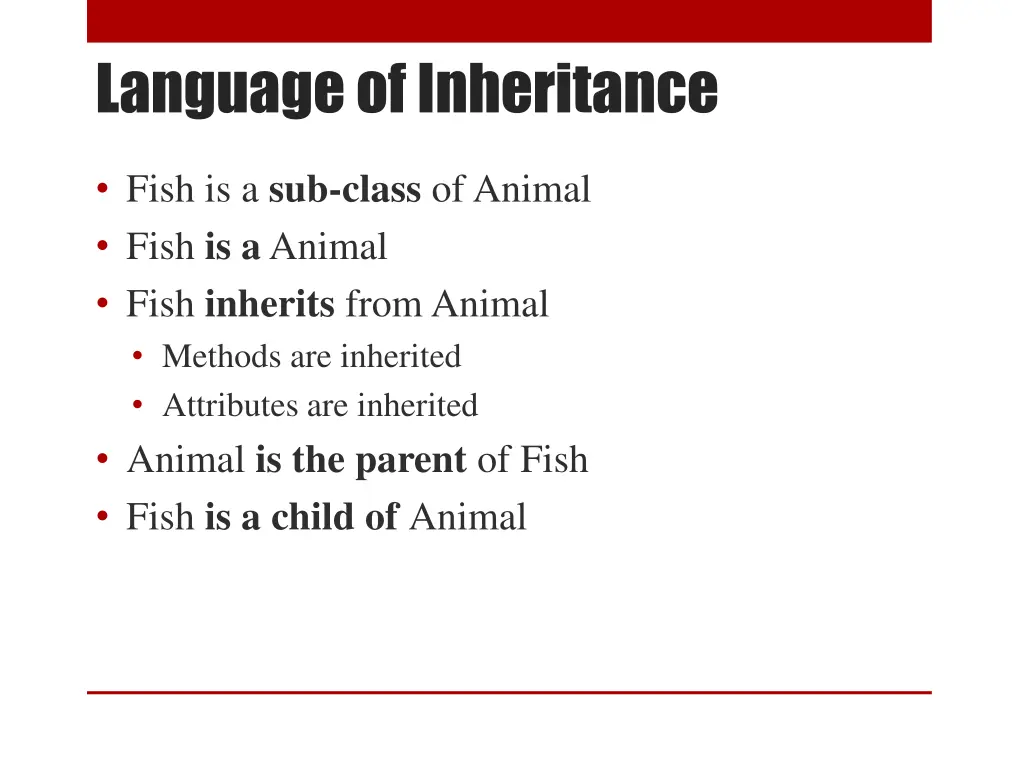
Language of Inheritance Fish is a sub-class of Animal Fish is a Animal Fish inherits from Animal Methods are inherited Attributes are inherited Animal is the parent of Fish Fish is a child of Animal
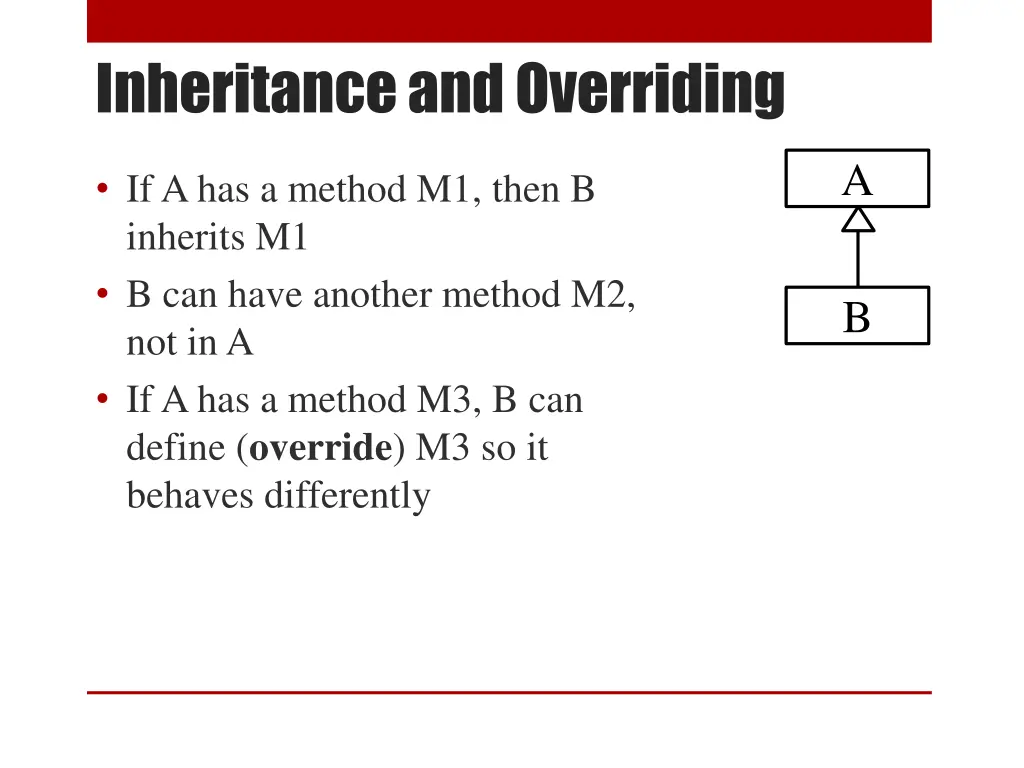
Inheritance and Overriding A If A has a method M1, then B inherits M1 B can have another method M2, not in A If A has a method M3, B can define (override) M3 so it behaves differently B
Exercises 4.1 Sketch an Object Model for the minesweeper game The school has a directory listing students and staff. Different information is held about the different categories of people. Discuss how inheritance can model this.
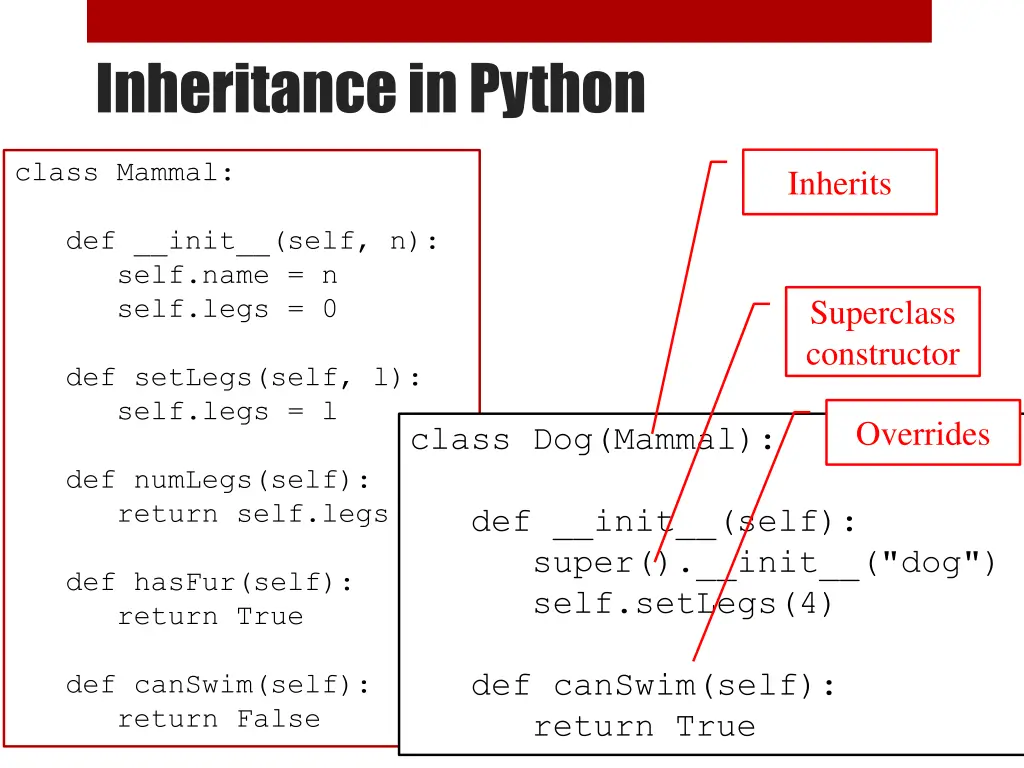
Inheritance in Python class Mammal: Inherits def __init__(self, n): self.name = n self.legs = 0 Superclass constructor def setLegs(self, l): self.legs = l Overrides class Dog(Mammal): def numLegs(self): return self.legs def __init__(self): super().__init__("dog") self.setLegs(4) def hasFur(self): return True def canSwim(self): return True def canSwim(self): return False
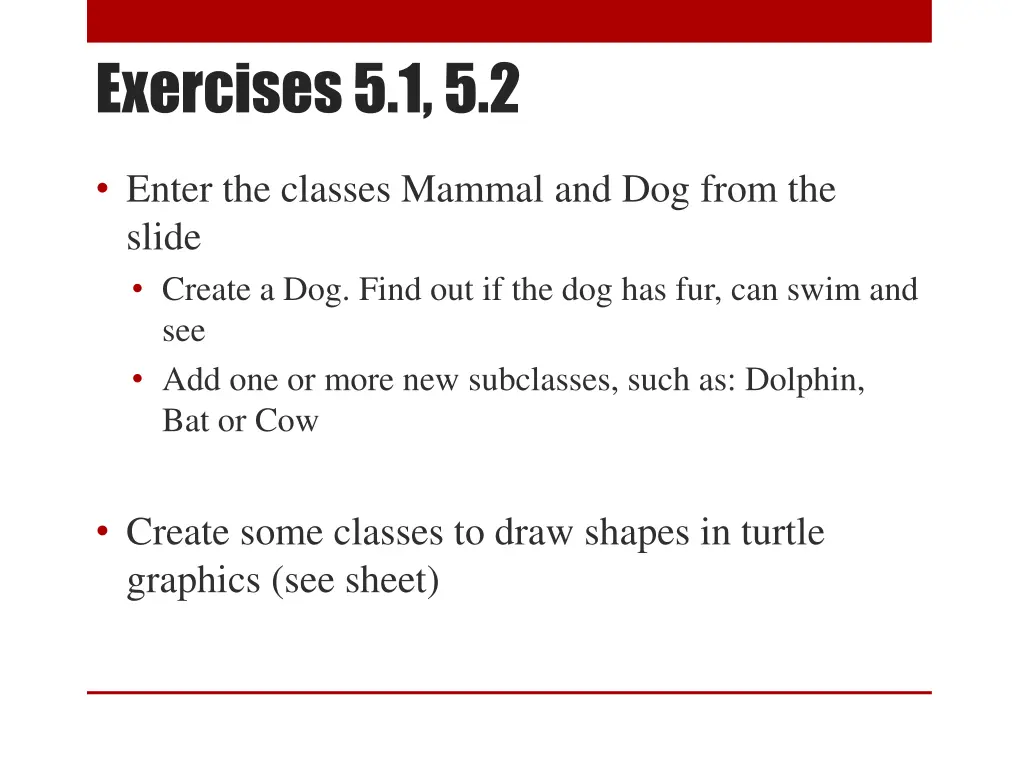
Exercises 5.1, 5.2 Enter the classes Mammal and Dog from the slide Create a Dog. Find out if the dog has fur, can swim and see Add one or more new subclasses, such as: Dolphin, Bat or Cow Create some classes to draw shapes in turtle graphics (see sheet)
Is Inheritance Useful? Very in Graphical User Interface libraries Much behaviour inherited Override when special behaviour needed In manyprograms, knows about relations are more useful
Summary Changing attitudes to lifecycles Different types of modelling Structure: Easy to use but limited Encourages structured programming Object and state modelling Both analysis and design