"Discover the diverse methods transforming financial transactions in India, from cashless options to the government's role in promoting digital transactions. Explore innovative solutions, challenges, and future trends shaping the digital payment landscape."
Please find below an Image/Link to download the presentation.
The content on the website is provided AS IS for your information and personal use only. It may not be sold, licensed, or shared on other websites without obtaining consent from the author. If you encounter any issues during the download, it is possible that the publisher has removed the file from their server.
You are allowed to download the files provided on this website for personal or commercial use, subject to the condition that they are used lawfully. All files are the property of their respective owners.
The content on the website is provided AS IS for your information and personal use only. It may not be sold, licensed, or shared on other websites without obtaining consent from the author.
E N D
Presentation Transcript
The Evolution of Digital Payments in India Exploring the diverse methods transforming financial transactions today
Table of content Cashless Future Digital Payment Methods Methods The Role of Government in in Promoting Digital Transactions 01 02 03 Benefits of Cashless Transactions Future of Digital Payments in India 05 04
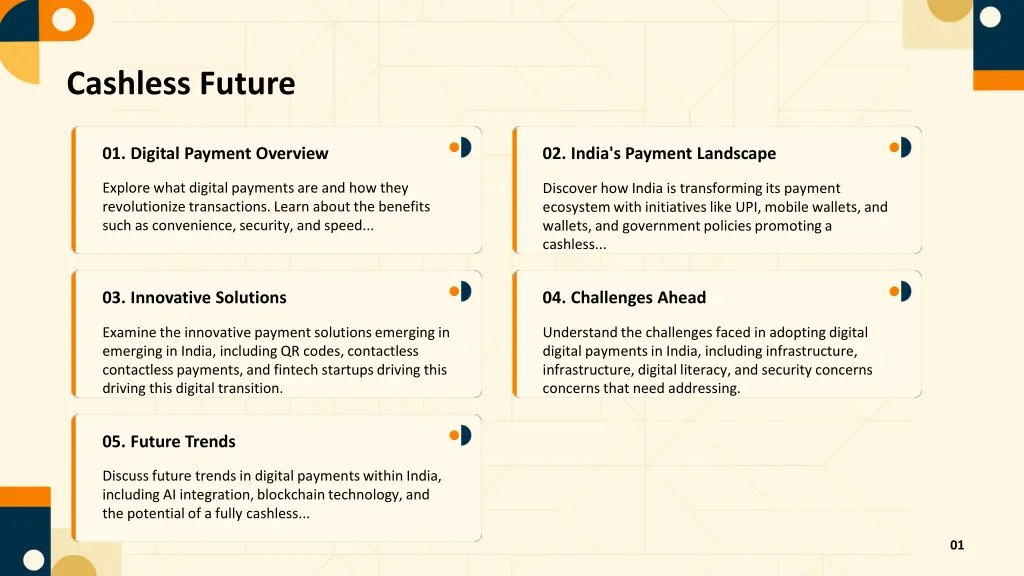
Cashless Future 01. Digital Payment Overview 02. India's Payment Landscape Explore what digital payments are and how they revolutionize transactions. Learn about the benefits such as convenience, security, and speed... Discover how India is transforming its payment ecosystem with initiatives like UPI, mobile wallets, and wallets, and government policies promoting a cashless... 03. Innovative Solutions 04. Challenges Ahead Examine the innovative payment solutions emerging in emerging in India, including QR codes, contactless contactless payments, and fintech startups driving this driving this digital transition. Understand the challenges faced in adopting digital digital payments in India, including infrastructure, infrastructure, digital literacy, and security concerns concerns that need addressing. 05. Future Trends Discuss future trends in digital payments within India, including AI integration, blockchain technology, and the potential of a fully cashless... 01
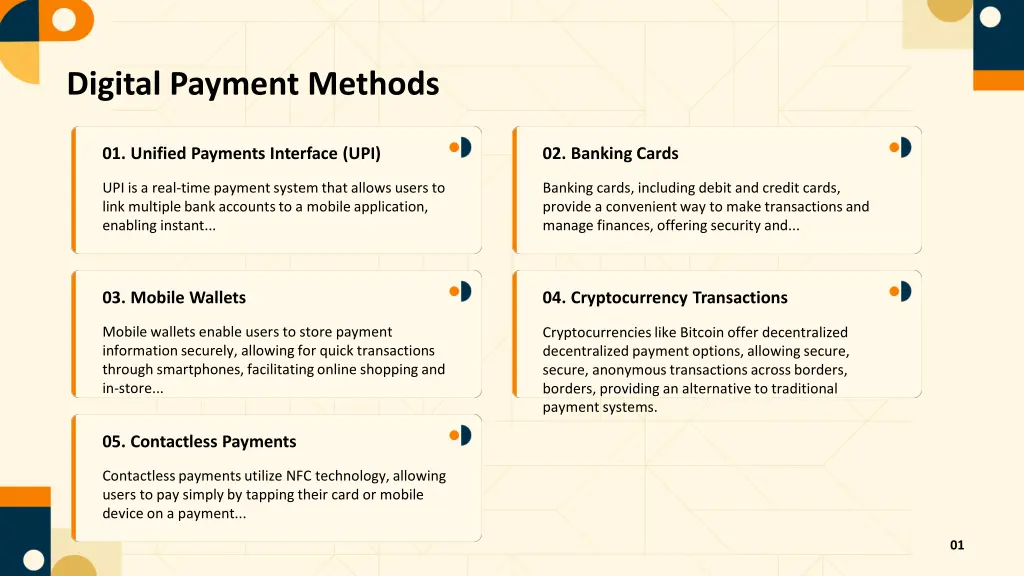
Digital Payment Methods 01. Unified Payments Interface (UPI) 02. Banking Cards UPI is a real-time payment system that allows users to link multiple bank accounts to a mobile application, enabling instant... Banking cards, including debit and credit cards, provide a convenient way to make transactions and manage finances, offering security and... 03. Mobile Wallets 04. Cryptocurrency Transactions Mobile wallets enable users to store payment information securely, allowing for quick transactions through smartphones, facilitating online shopping and in-store... Cryptocurrencies like Bitcoin offer decentralized decentralized payment options, allowing secure, secure, anonymous transactions across borders, borders, providing an alternative to traditional payment systems. 05. Contactless Payments Contactless payments utilize NFC technology, allowing users to pay simply by tapping their card or mobile device on a payment... 01
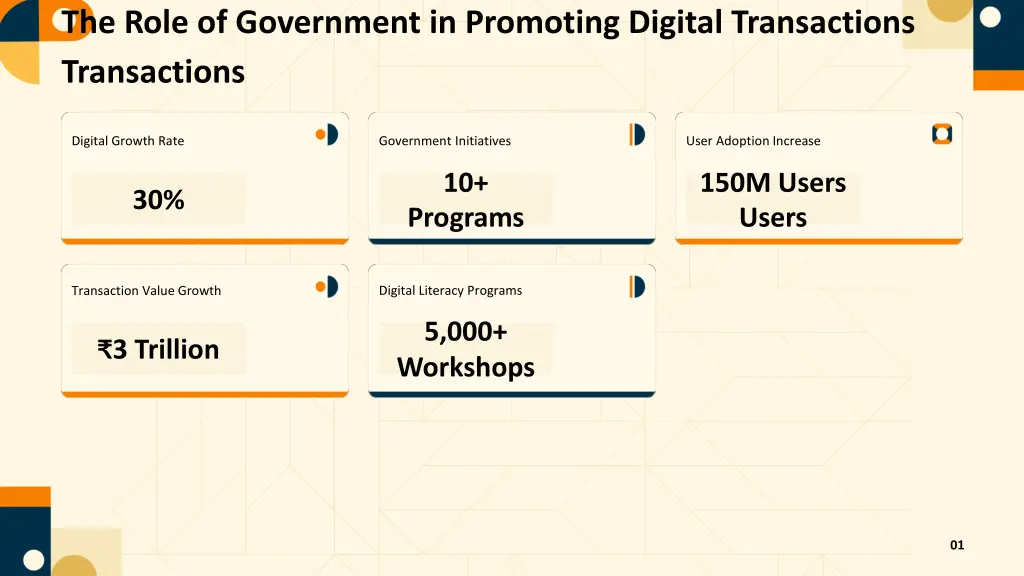
The Role of Government in Promoting Digital Transactions Transactions Digital Growth Rate Government Initiatives User Adoption Increase 10+ 150M Users Users 30% Programs Digital Literacy Programs Transaction Value Growth 5,000+ Workshops 3 Trillion 01
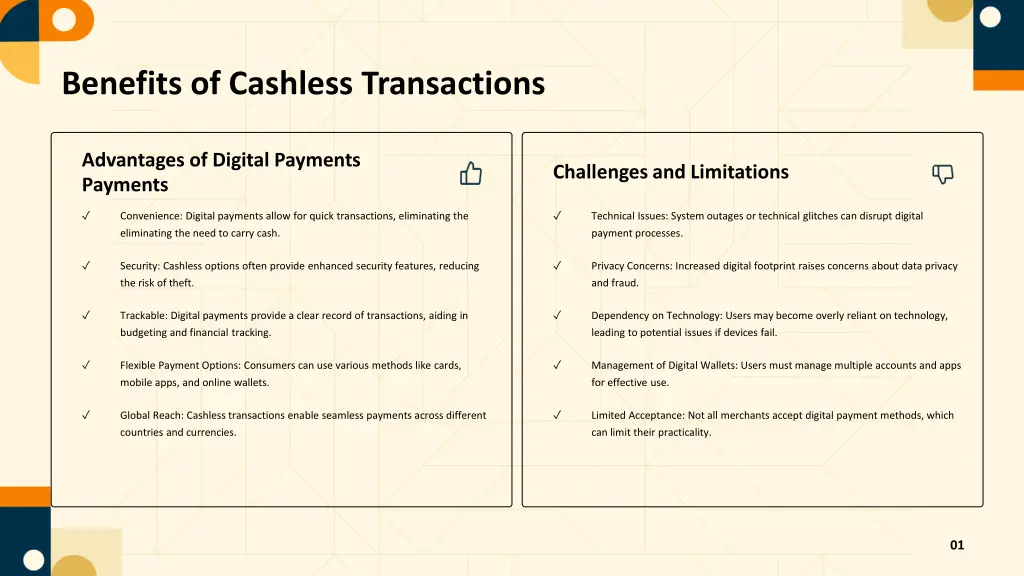
Benefits of Cashless Transactions Advantages of Digital Payments Payments Challenges and Limitations Convenience: Digital payments allow for quick transactions, eliminating the eliminating the need to carry cash. Technical Issues: System outages or technical glitches can disrupt digital payment processes. Security: Cashless options often provide enhanced security features, reducing the risk of theft. Privacy Concerns: Increased digital footprint raises concerns about data privacy and fraud. Trackable: Digital payments provide a clear record of transactions, aiding in budgeting and financial tracking. Dependency on Technology: Users may become overly reliant on technology, leading to potential issues if devices fail. Flexible Payment Options: Consumers can use various methods like cards, mobile apps, and online wallets. Management of Digital Wallets: Users must manage multiple accounts and apps for effective use. Global Reach: Cashless transactions enable seamless payments across different countries and currencies. Limited Acceptance: Not all merchants accept digital payment methods, which can limit their practicality. 01
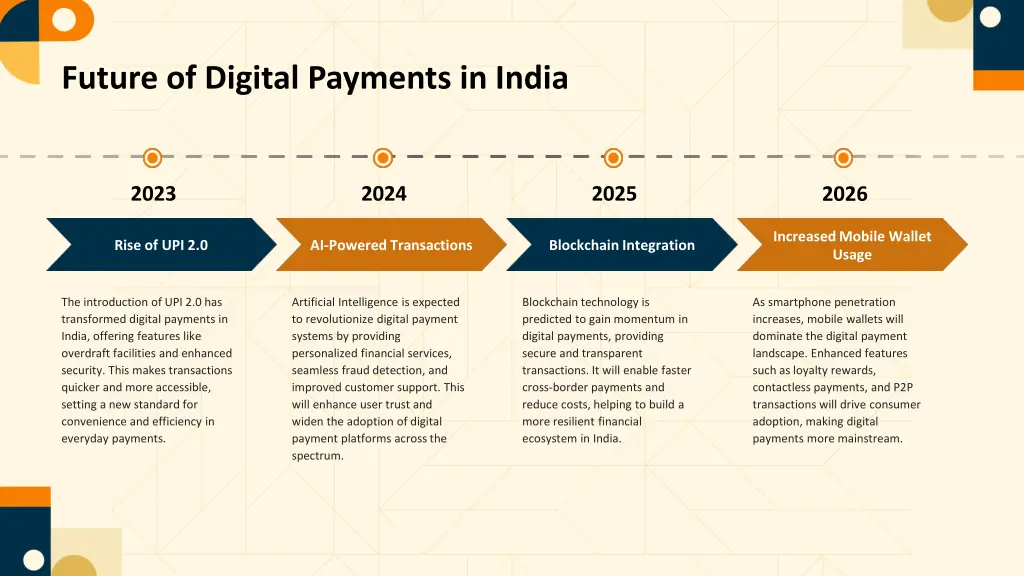
Future of Digital Payments in India 2023 2024 2025 2026 Increased Mobile Wallet Usage Rise of UPI 2.0 AI-Powered Transactions Blockchain Integration The introduction of UPI 2.0 has transformed digital payments in India, offering features like overdraft facilities and enhanced security. This makes transactions quicker and more accessible, setting a new standard for convenience and efficiency in everyday payments. Artificial Intelligence is expected to revolutionize digital payment systems by providing personalized financial services, seamless fraud detection, and improved customer support. This will enhance user trust and widen the adoption of digital payment platforms across the spectrum. Blockchain technology is predicted to gain momentum in digital payments, providing secure and transparent transactions. It will enable faster cross-border payments and reduce costs, helping to build a more resilient financial ecosystem in India. As smartphone penetration increases, mobile wallets will dominate the digital payment landscape. Enhanced features such as loyalty rewards, contactless payments, and P2P transactions will drive consumer adoption, making digital payments more mainstream.
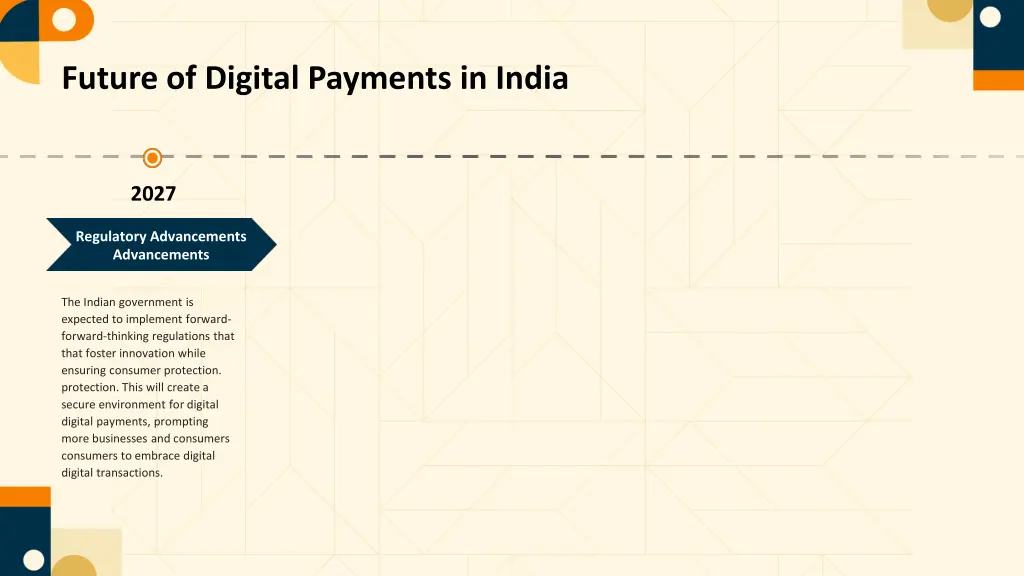
Future of Digital Payments in India 2027 Regulatory Advancements Advancements The Indian government is expected to implement forward forward- thinking regulations that that foster innovation while ensuring consumer protection. protection. This will create a secure environment for digital digital payments, prompting more businesses and consumers consumers to embrace digital digital transactions. -