In the United States, businesses can take the form of sole proprietorships, partnerships, or corporations, each with its advantages and disadvantages. Understanding these structures is crucial for entrepreneurs and investors navigating the business landscape.
Please find below an Image/Link to download the presentation.
The content on the website is provided AS IS for your information and personal use only. It may not be sold, licensed, or shared on other websites without obtaining consent from the author. If you encounter any issues during the download, it is possible that the publisher has removed the file from their server.
You are allowed to download the files provided on this website for personal or commercial use, subject to the condition that they are used lawfully. All files are the property of their respective owners.
The content on the website is provided AS IS for your information and personal use only. It may not be sold, licensed, or shared on other websites without obtaining consent from the author.
There are three main forms of business organization in the United States the sole proprietorship, the partnership and the corporation Forms of Business Organization
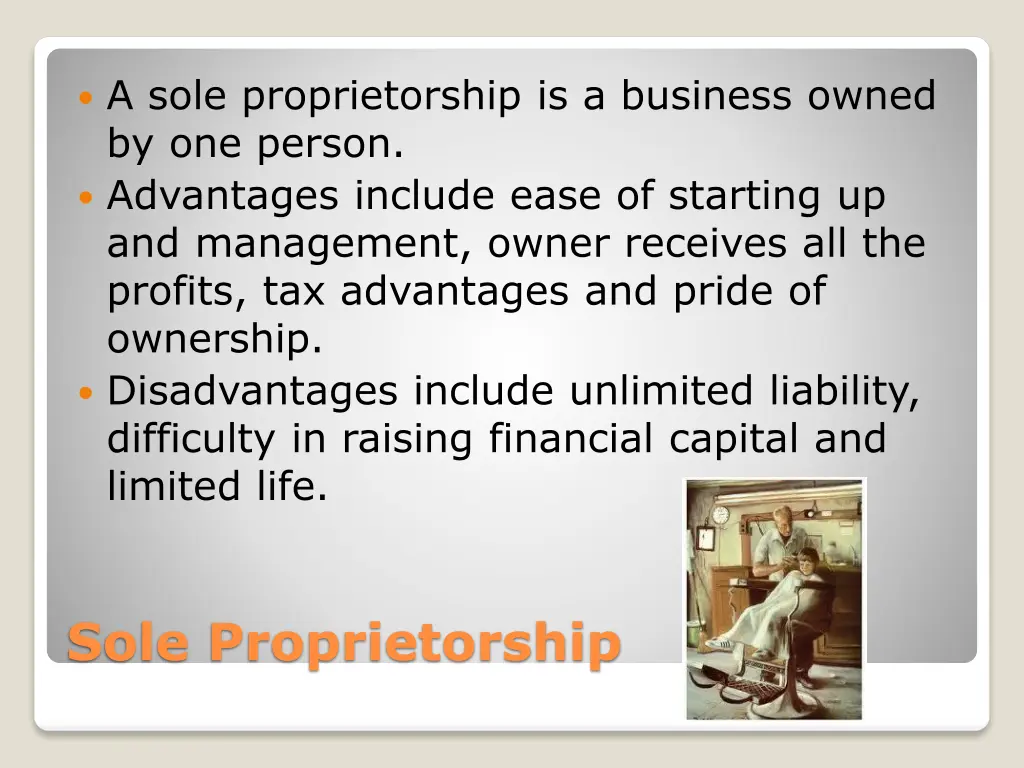
A sole proprietorship is a business owned by one person. Advantages include ease of starting up and management, owner receives all the profits, tax advantages and pride of ownership. Disadvantages include unlimited liability, difficulty in raising financial capital and limited life. Sole Proprietorship
A partnership is a business jointly owned by two or more persons. Advantages include ease of management and establishment, additional financial capital and tax advantages. Disadvantages include unlimited liability, limited life and potential conflicts between partners. Partnerships
A corporation is a form of business organization recognized by law as a separate legal entity having all the rights of an individual. Advantages include ease of raising financial capital, professional managers hired by the Board of Directors, limited liability, unlimited life. Disadvantages include the difficulty and expense of incorporating, double taxation, government regulation and potentially losing control of the business. Corporations
A market structure is a market classification according to number and size of firms, type of product and type of competition. The characteristics of market structures include the ease of entry into the market, influence over price, product differentiation and advertising. Market Structures
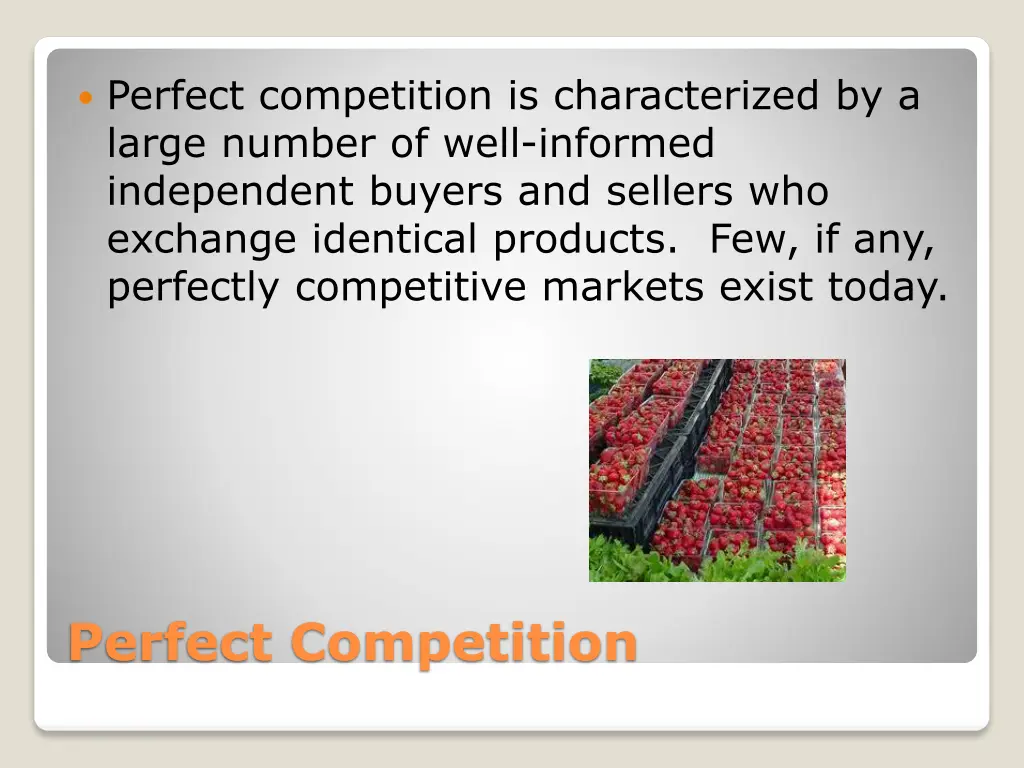
Perfect competition is characterized by a large number of well-informed independent buyers and sellers who exchange identical products. Few, if any, perfectly competitive markets exist today. Perfect Competition
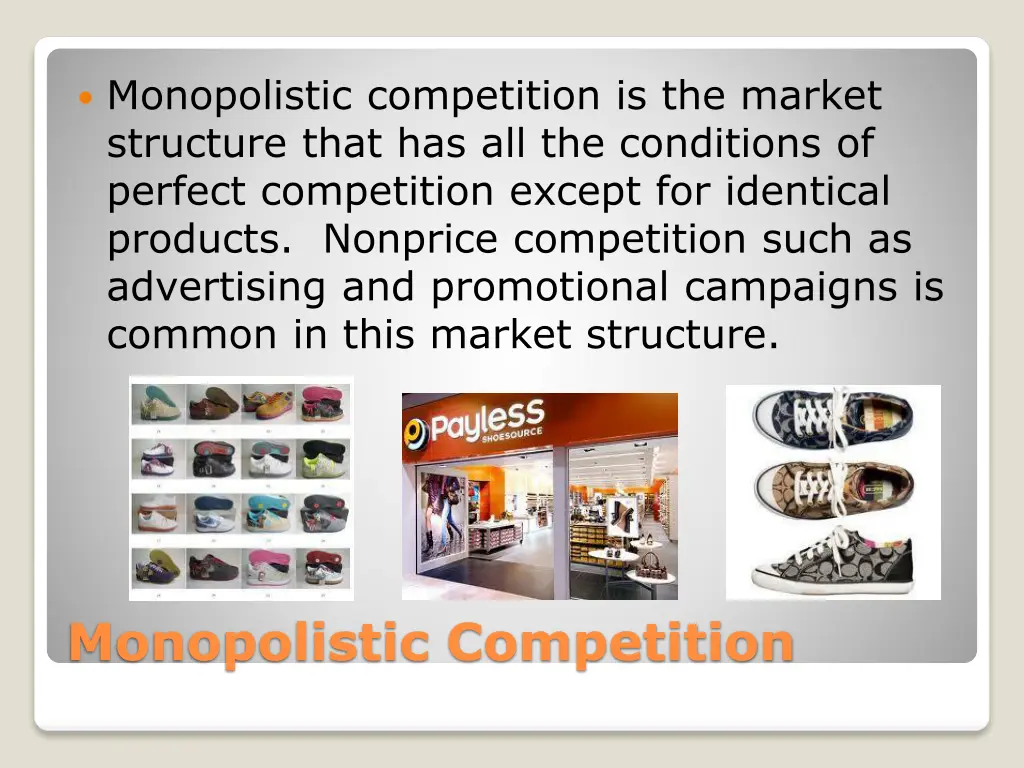
Monopolistic competition is the market structure that has all the conditions of perfect competition except for identical products. Nonprice competition such as advertising and promotional campaigns is common in this market structure. Monopolistic Competition
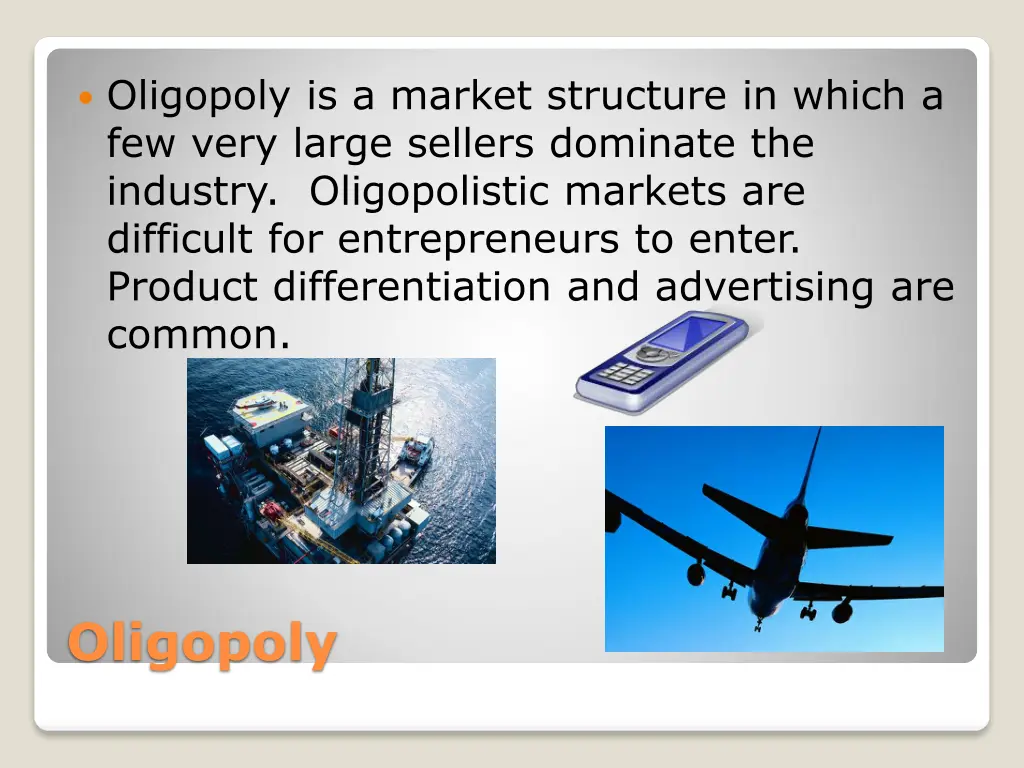
Oligopoly is a market structure in which a few very large sellers dominate the industry. Oligopolistic markets are difficult for entrepreneurs to enter. Product differentiation and advertising are common. Oligopoly
A monopoly is a market structure with only one seller of a particular product. Most monopolies are illegal. Natural monopolies, a market situation where the costs of production are minimized by having a single firm produce the product, are legal. Monopoly