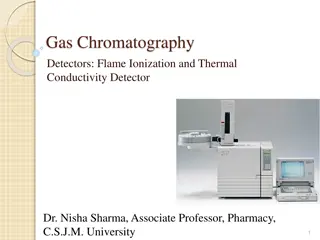
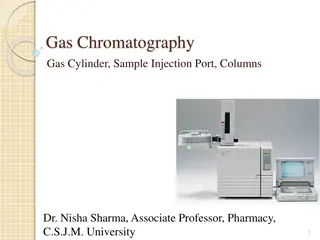
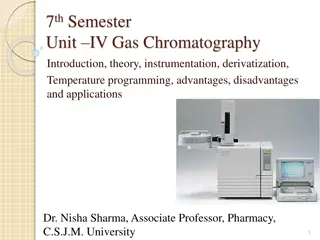
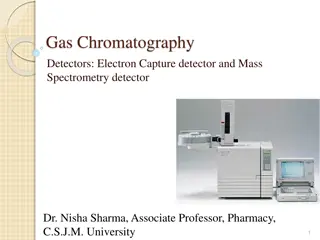
Gas chromatography (GC) is a common analytical chemistry technique used for separating and analyzing vaporizable compounds. This article provides an in-depth look at GC, including its principle, components such as injectors, detectors, and columns, and different types of detectors like TCD and FID. Explore the images and descriptions to understand the functioning of GC equipment and its applications in various fields.
Please find below an Image/Link to download the presentation.
The content on the website is provided AS IS for your information and personal use only. It may not be sold, licensed, or shared on other websites without obtaining consent from the author. If you encounter any issues during the download, it is possible that the publisher has removed the file from their server.
You are allowed to download the files provided on this website for personal or commercial use, subject to the condition that they are used lawfully. All files are the property of their respective owners.
The content on the website is provided AS IS for your information and personal use only. It may not be sold, licensed, or shared on other websites without obtaining consent from the author.
E N D
Presentation Transcript
Lab Methods Day June 25, 2014 Gas Chromatography Haiqing Guo Dept. of Fire Protection Engineering hguo@umd.edu 1/15
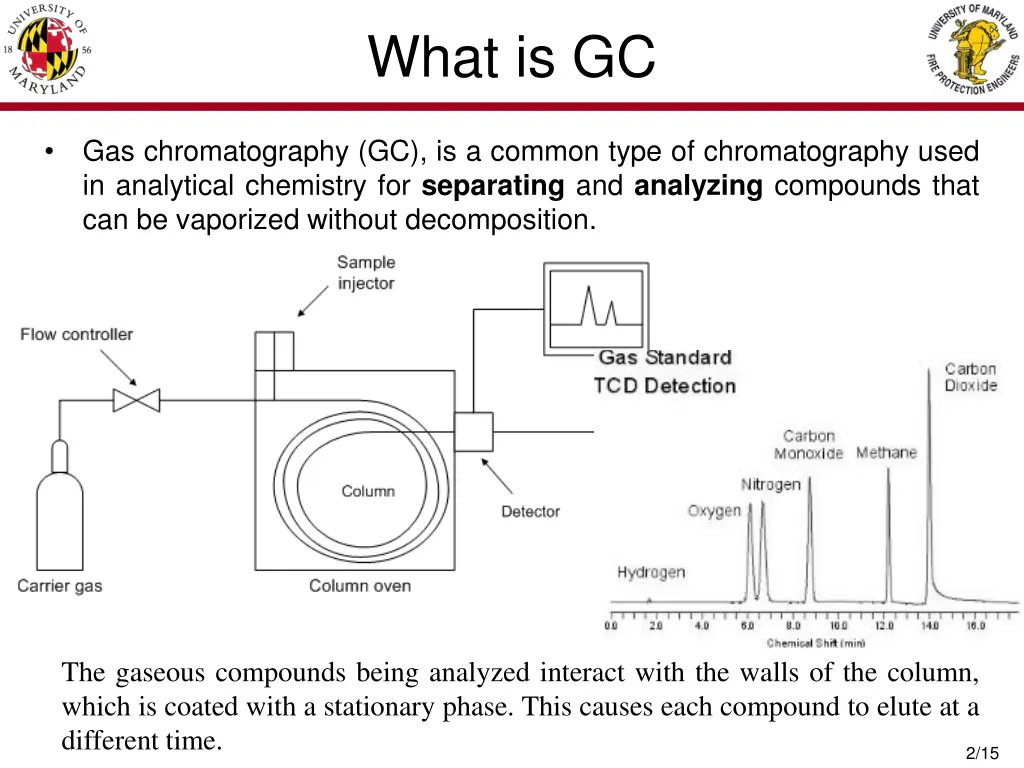
What is GC Gas chromatography (GC), is a common type of chromatography used in analytical chemistry for separating and analyzing compounds that can be vaporized without decomposition. The gaseous compounds being analyzed interact with the walls of the column, which is coated with a stationary phase. This causes each compound to elute at a different time. 2/15
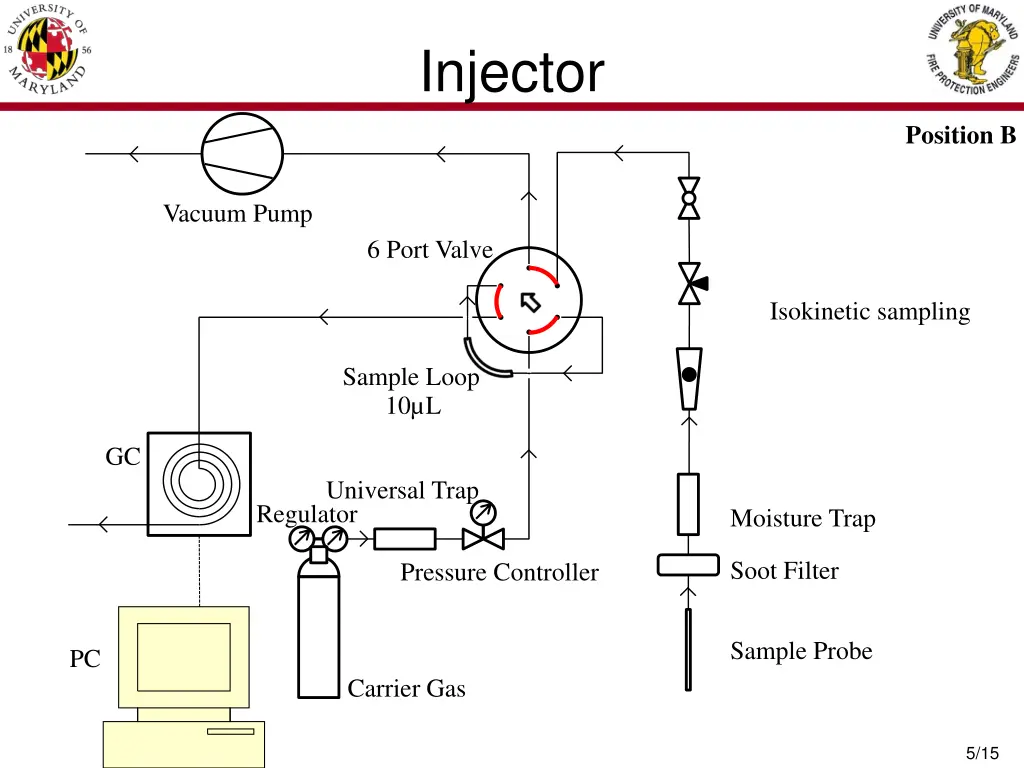
Injector Split/splitless injector Splitless, sweep the entire sample into the column. Split, sweep a portion of the sample into the column. Gas switching valve Online sampling, most common in combustion study. Normally requires a 6-port sample valve. On-column inlet Programmable Temperature Vaporizing injector Purge-and-Trap system 3/15
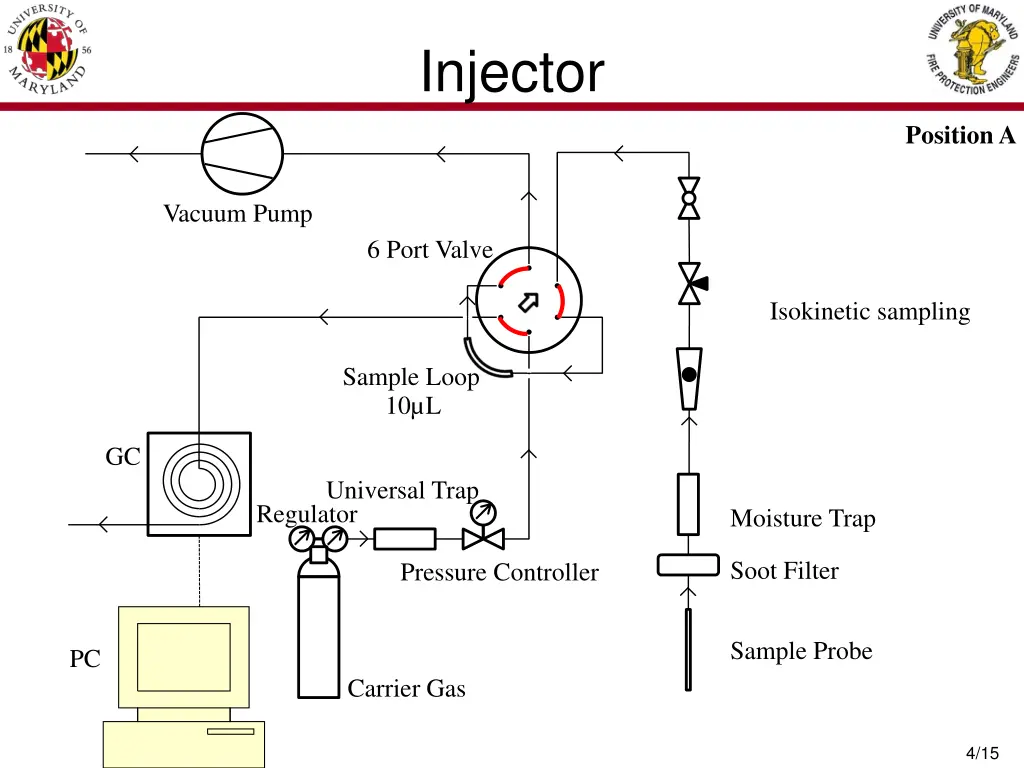
Injector Position A Vacuum Pump 6 Port Valve Isokinetic sampling Sample Loop 10 L GC Universal Trap Regulator Moisture Trap Soot Filter Pressure Controller Sample Probe PC Carrier Gas 4/15
Injector Position B Vacuum Pump 6 Port Valve Isokinetic sampling Sample Loop 10 L GC Universal Trap Regulator Moisture Trap Soot Filter Pressure Controller Sample Probe PC Carrier Gas 5/15
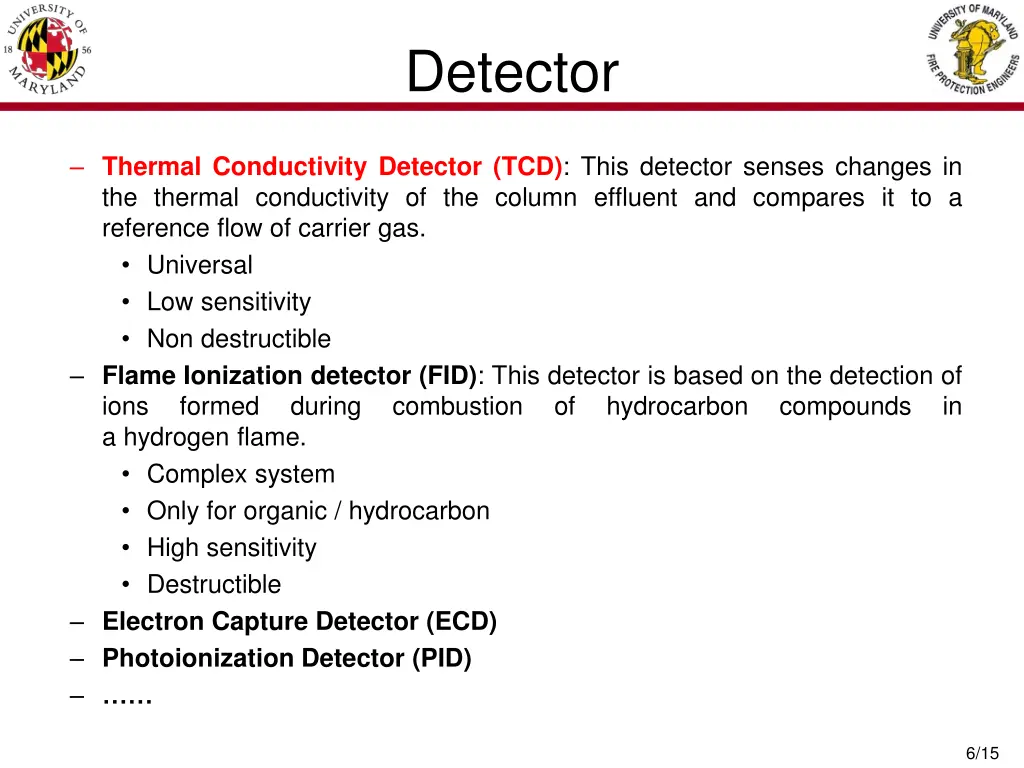
Detector Thermal Conductivity Detector (TCD): This detector senses changes in the thermal conductivity of the column effluent and compares it to a reference flow of carrier gas. Universal Low sensitivity Non destructible Flame Ionization detector (FID): This detector is based on the detection of ions formed during combustion a hydrogen flame. Complex system Only for organic / hydrocarbon High sensitivity Destructible Electron Capture Detector (ECD) Photoionization Detector (PID) of hydrocarbon compounds in 6/15
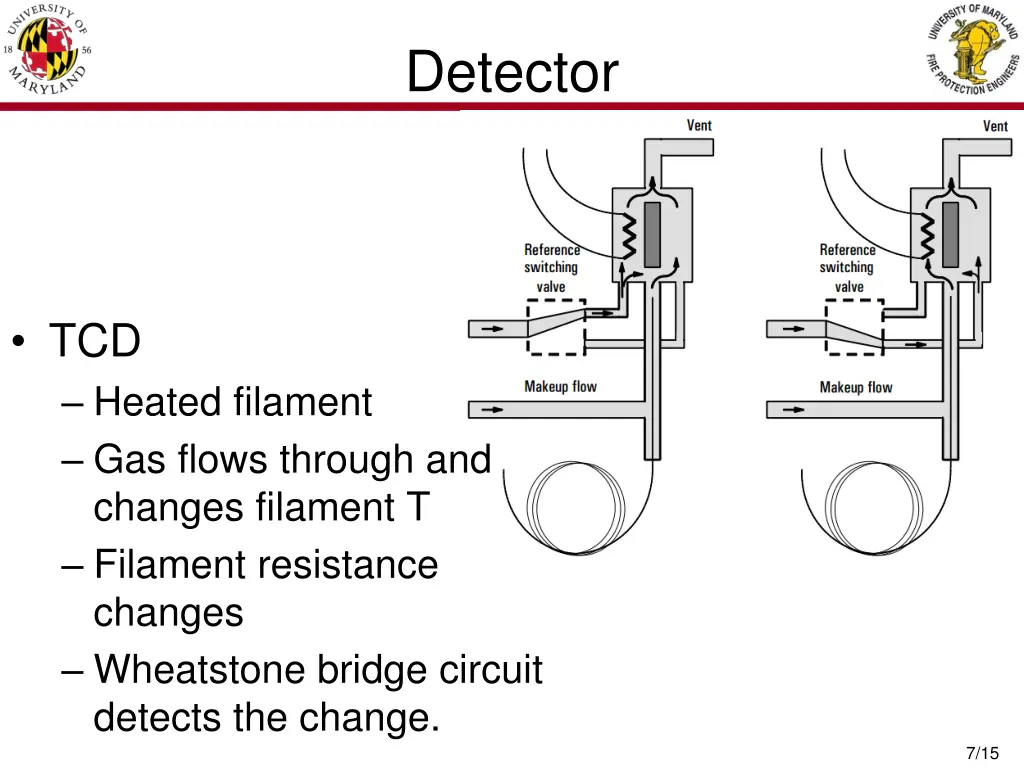
Detector TCD Heated filament Gas flows through and changes filament T Filament resistance changes Wheatstone bridge circuit detects the change. 7/15
Column Capillary Column Stationary phase coated on the capillary tubing (mostly fused silica or stainless steel). Diameters as small as 0.1 mm and lengths as long as 100 m. High efficiency (narrow peaks). Packed Column Made of a glass or a metal tubing which is densely packed with a solid support. Higher sample capacity. Larger diameter and limited range of length. Lower efficiency. Oven temperature programing can be used to achieve the optimum separation of species in the column. 8/15
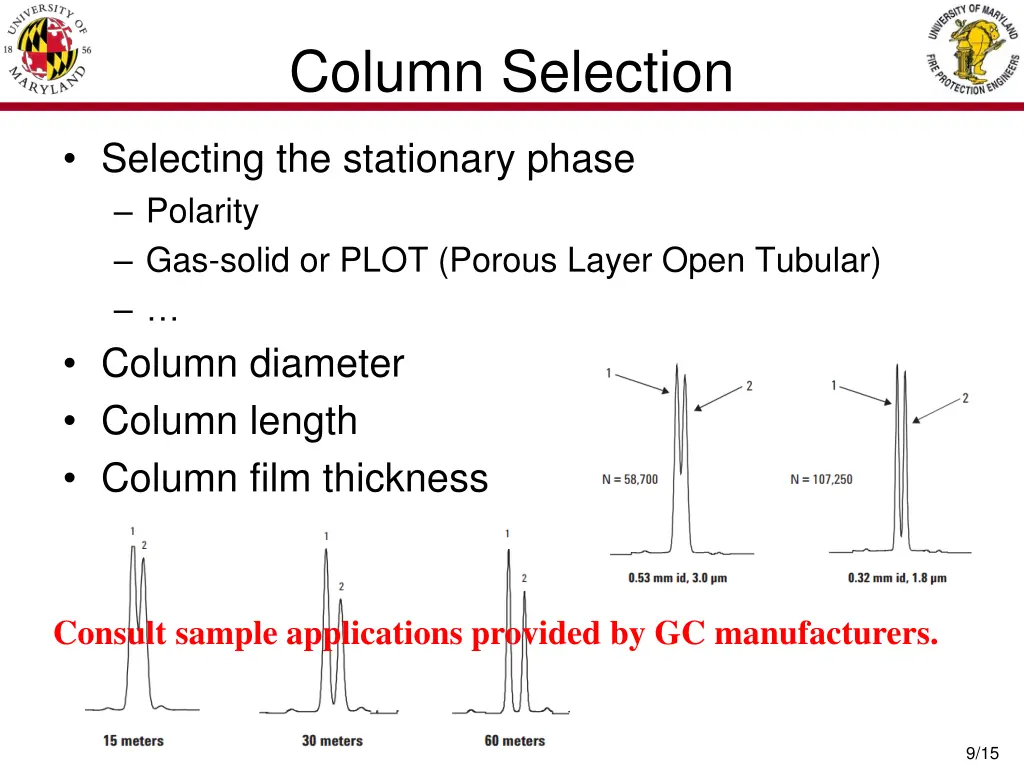
Column Selection Selecting the stationary phase Polarity Gas-solid or PLOT (Porous Layer Open Tubular) Column diameter Column length Column film thickness Consult sample applications provided by GC manufacturers. 9/15
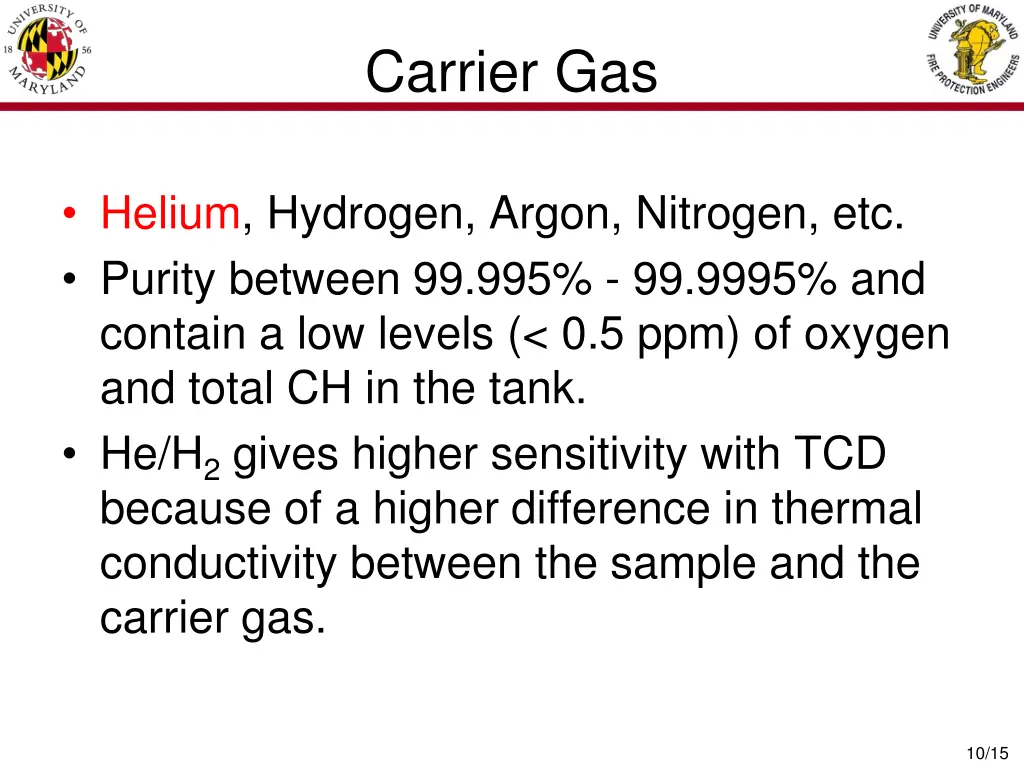
Carrier Gas Helium, Hydrogen, Argon, Nitrogen, etc. Purity between 99.995% - 99.9995% and contain a low levels (< 0.5 ppm) of oxygen and total CH in the tank. He/H2 gives higher sensitivity with TCD because of a higher difference in thermal conductivity between the sample and the carrier gas. 10/15
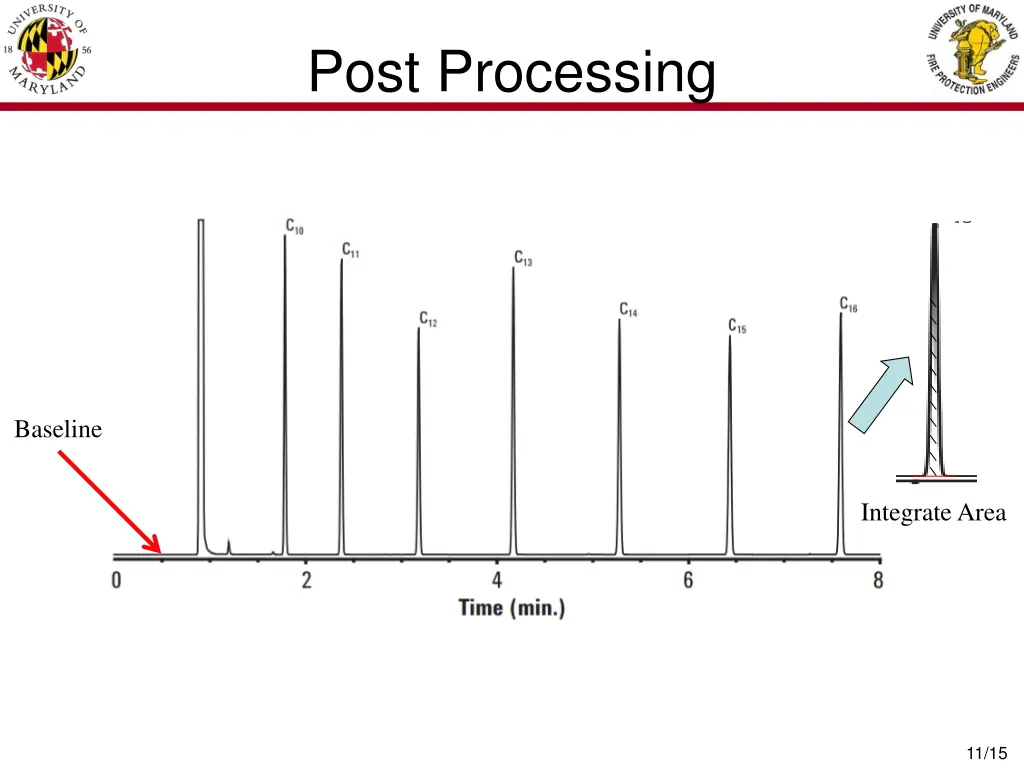
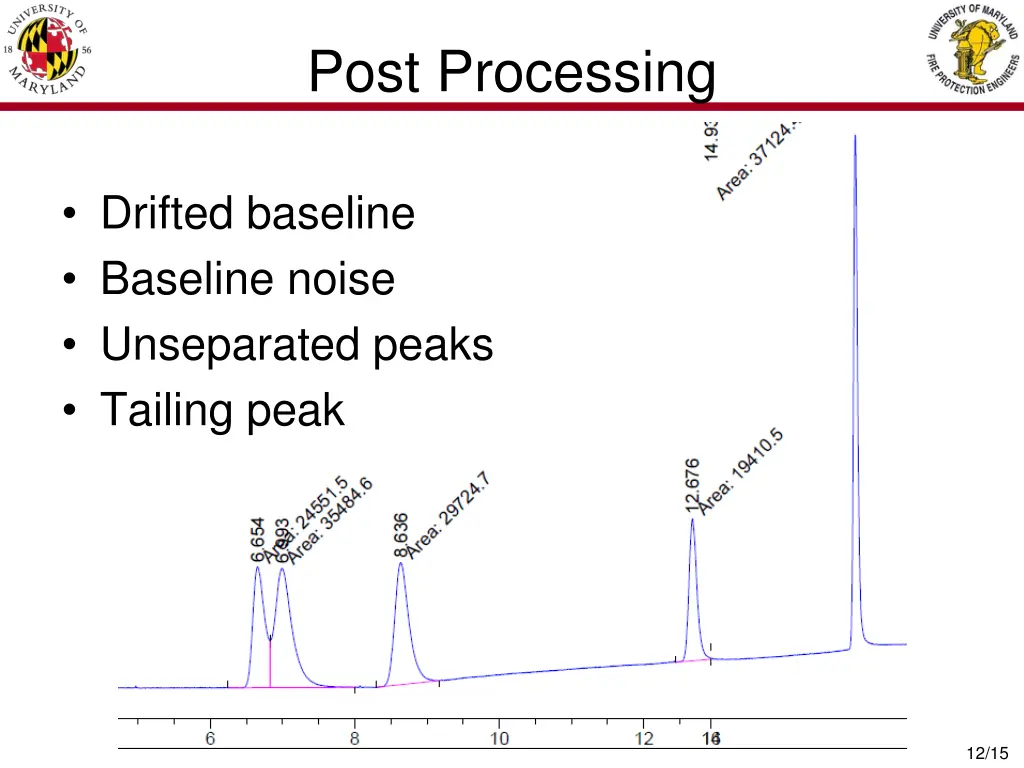
Post Processing Drifted baseline Baseline noise Unseparated peaks Tailing peak 12/15
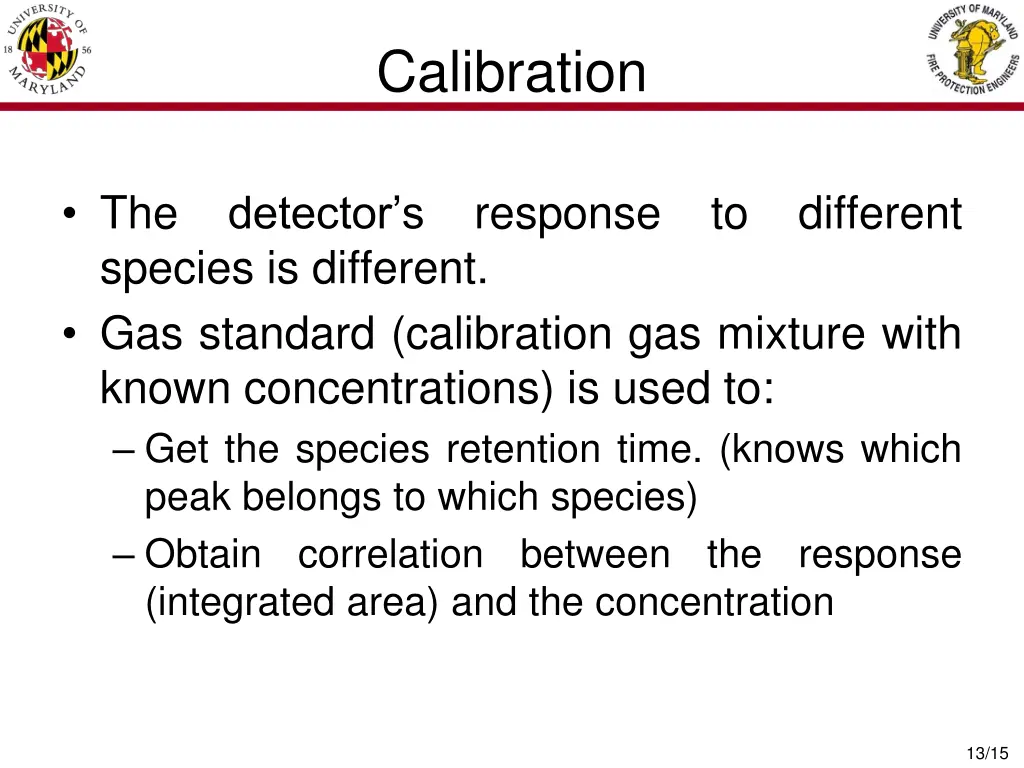
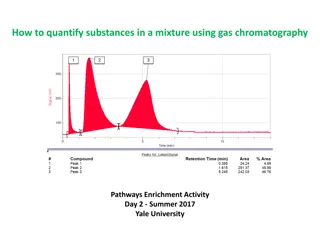
Calibration The detector s response to different species is different. Gas standard (calibration gas mixture with known concentrations) is used to: Get the species retention time. (knows which peak belongs to which species) Obtain correlation between the response (integrated area) and the concentration 13/15
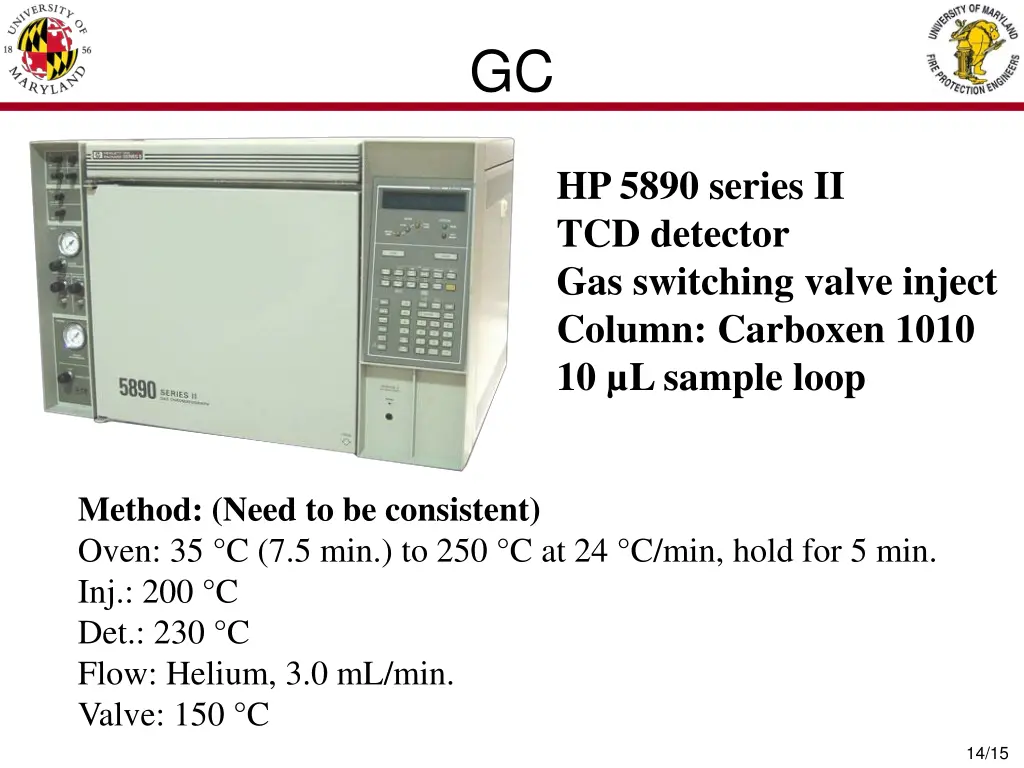
GC HP 5890 series II TCD detector Gas switching valve inject Column: Carboxen 1010 10 L sample loop Method: (Need to be consistent) Oven: 35 C (7.5 min.) to 250 C at 24 C/min, hold for 5 min. Inj.: 200 C Det.: 230 C Flow: Helium, 3.0 mL/min. Valve: 150 C 14/15
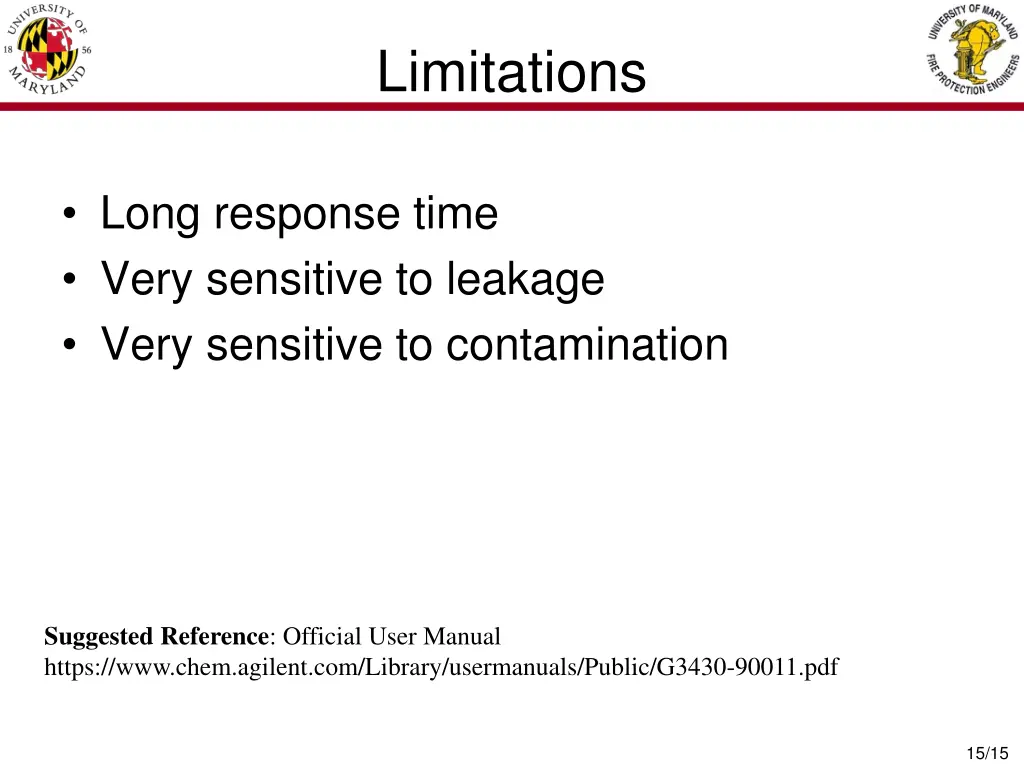
Limitations Long response time Very sensitive to leakage Very sensitive to contamination Suggested Reference: Official User Manual https://www.chem.agilent.com/Library/usermanuals/Public/G3430-90011.pdf 15/15