Gastrointestinal Tract (GIT)
The gastrointestinal tract (GIT) includes essential organs such as the oral cavity, pharynx, esophagus, stomach, small and large intestines, and accessory glands. Abdominal assessment is crucial for diagnosing various conditions, segmented into regions like the right hypochondrium and epigastric region. Key symptoms of GIT disorders include abdominal pain, nausea, and vomiting, each with distinctive characteristics and implications for treatment. Understanding these components is vital for effective medical evaluation and patient care.

Download Presentation

Please find below an Image/Link to download the presentation.
The content on the website is provided AS IS for your information and personal use only. It may not be sold, licensed, or shared on other websites without obtaining consent from the author.If you encounter any issues during the download, it is possible that the publisher has removed the file from their server.
You are allowed to download the files provided on this website for personal or commercial use, subject to the condition that they are used lawfully. All files are the property of their respective owners.
The content on the website is provided AS IS for your information and personal use only. It may not be sold, licensed, or shared on other websites without obtaining consent from the author.
E N D
Presentation Transcript
Gastrointestinal Tract (GIT) Prepared by Ali Malik Tiryag Assistant Lecturer
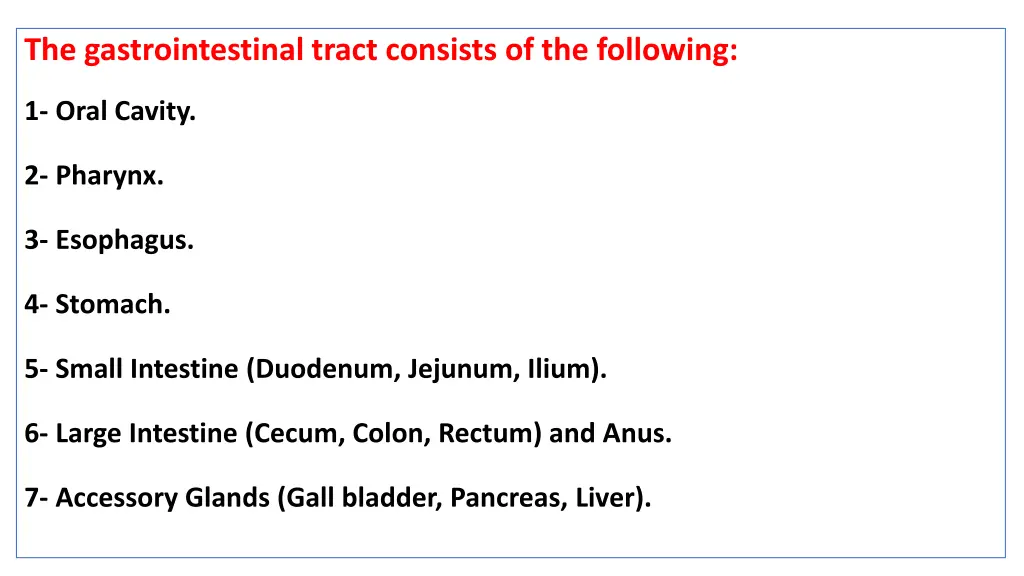
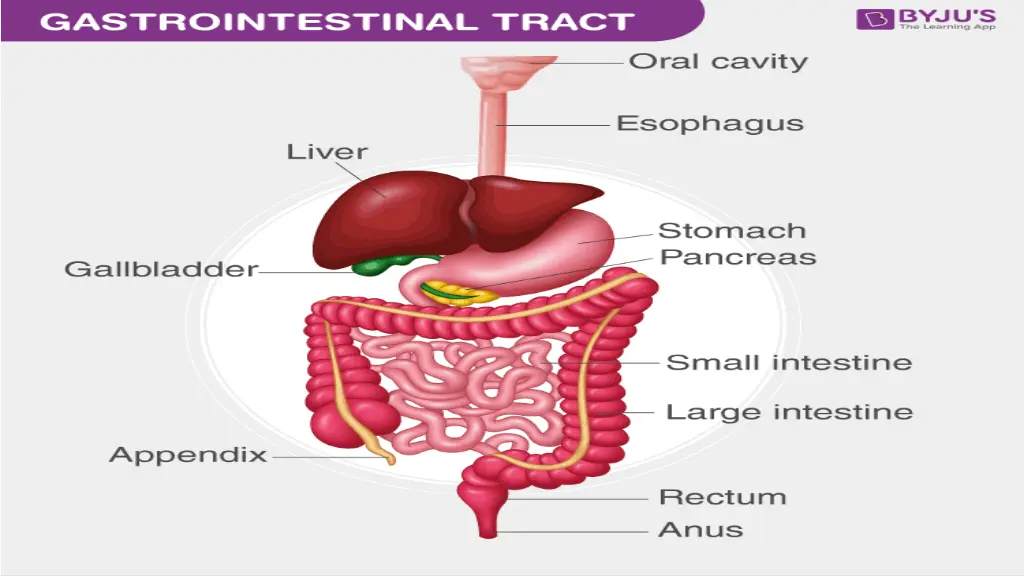
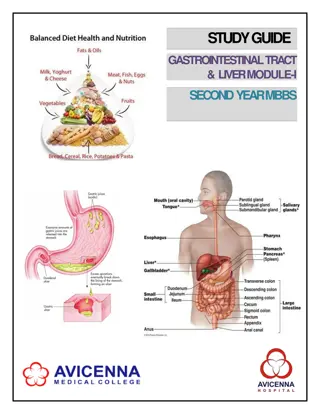
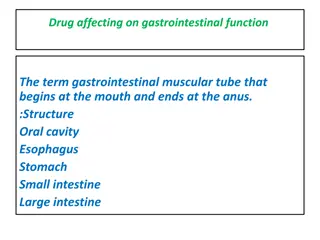
The gastrointestinal tract consists of the following: 1- Oral Cavity. 2- Pharynx. 3- Esophagus. 4- Stomach. 5- Small Intestine (Duodenum, Jejunum, Ilium). 6- Large Intestine (Cecum, Colon, Rectum) and Anus. 7- Accessory Glands (Gall bladder, Pancreas, Liver).
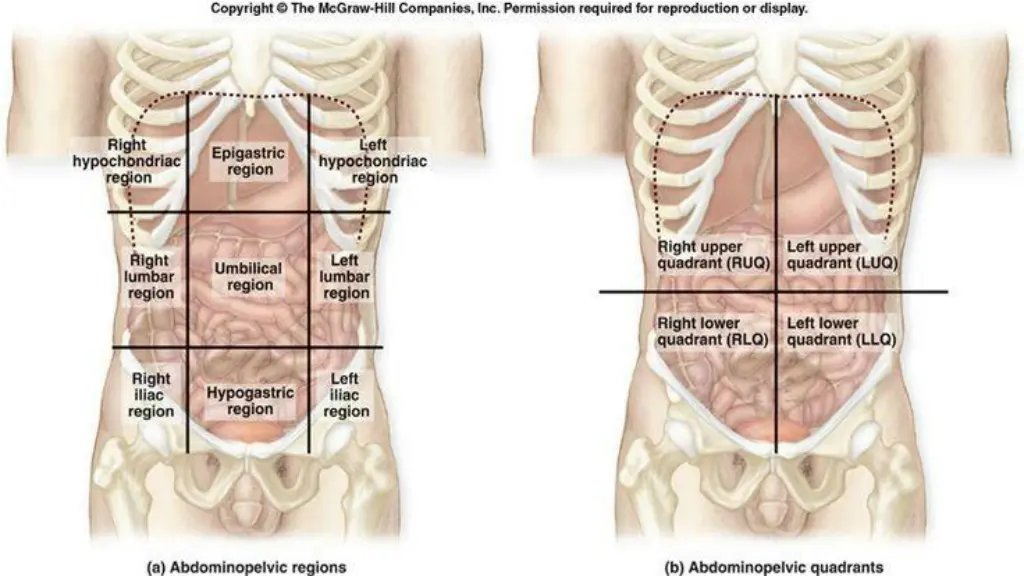
Abdominal Assessment Abdominal assessment is done according to nine regions: 1- Right Hypochondrium Region: (Liver, Gall bladder). 2- Epigastric Region: (Stomach, Duodenum, Pancreas). 3- Left Hypochondrium Region: (Spleen). 4- Right Lumbar Region: (Right Kidney, Ascending Colon). 5- Umbilical Region: (Transverse Colon, Jejunum, Umbilicus).
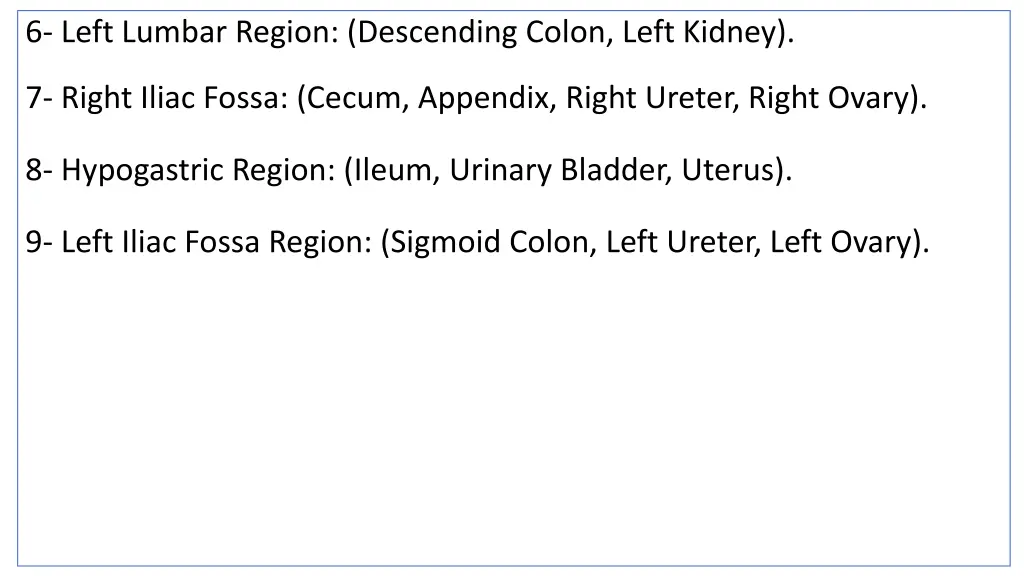
6- Left Lumbar Region: (Descending Colon, Left Kidney). 7- Right Iliac Fossa: (Cecum, Appendix, Right Ureter, Right Ovary). 8- Hypogastric Region: (Ileum, Urinary Bladder, Uterus). 9- Left Iliac Fossa Region: (Sigmoid Colon, Left Ureter, Left Ovary).
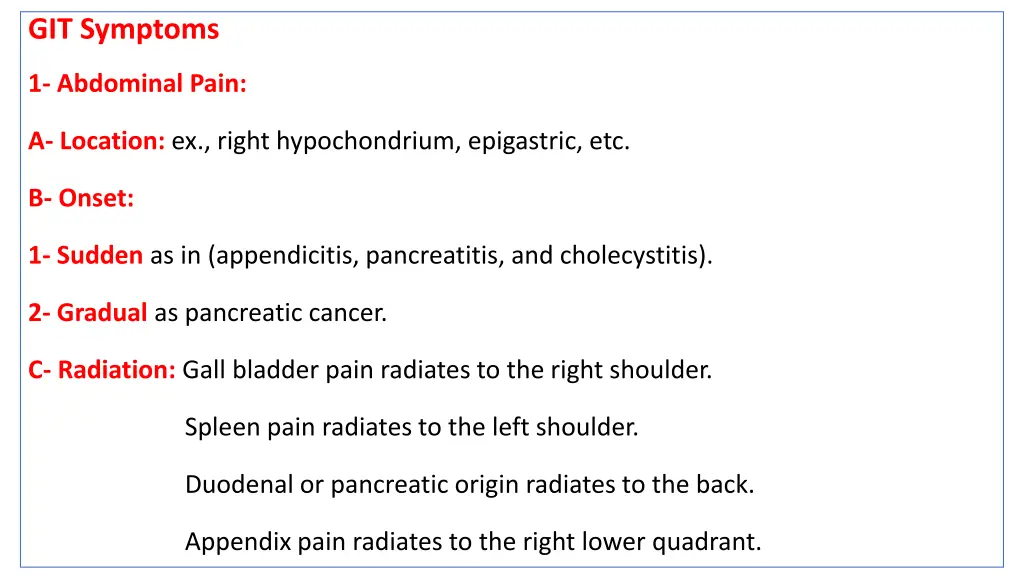
GIT Symptoms 1- Abdominal Pain: A- Location: ex., right hypochondrium, epigastric, etc. B- Onset: 1- Sudden as in (appendicitis, pancreatitis, and cholecystitis). 2- Gradual as pancreatic cancer. C- Radiation: Gall bladder pain radiates to the right shoulder. Spleen pain radiates to the left shoulder. Duodenal or pancreatic origin radiates to the back. Appendix pain radiates to the right lower quadrant.
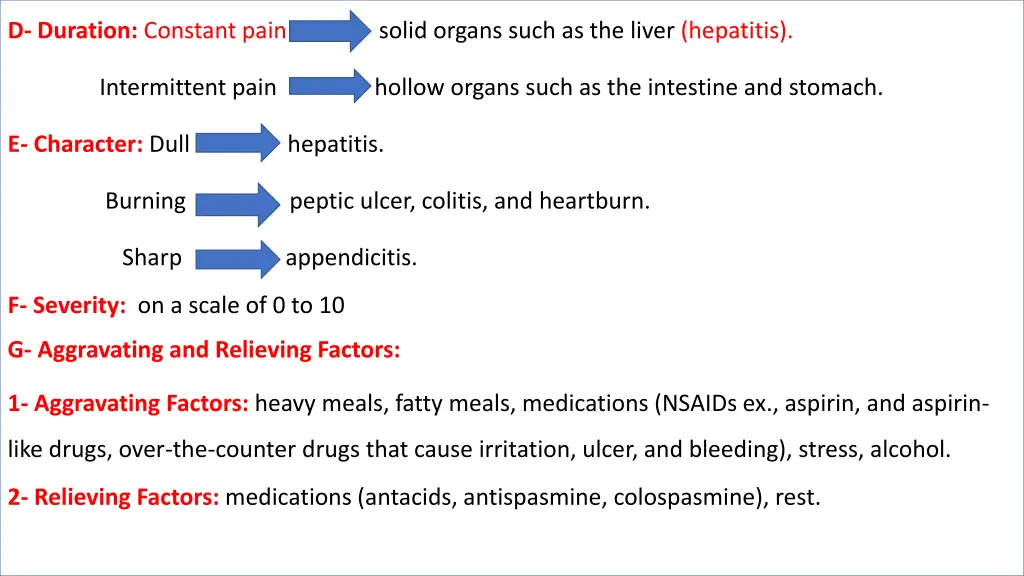
D- Duration: Constant pain solid organs such as the liver (hepatitis). Intermittent pain hollow organs such as the intestine and stomach. E- Character: Dull hepatitis. Burning peptic ulcer, colitis, and heartburn. Sharp appendicitis. F- Severity: on a scale of 0 to 10 G- Aggravating and Relieving Factors: 1- Aggravating Factors: heavy meals, fatty meals, medications (NSAIDs ex., aspirin, and aspirin- like drugs, over-the-counter drugs that cause irritation, ulcer, and bleeding), stress, alcohol. 2- Relieving Factors: medications (antacids, antispasmine, colospasmine), rest.
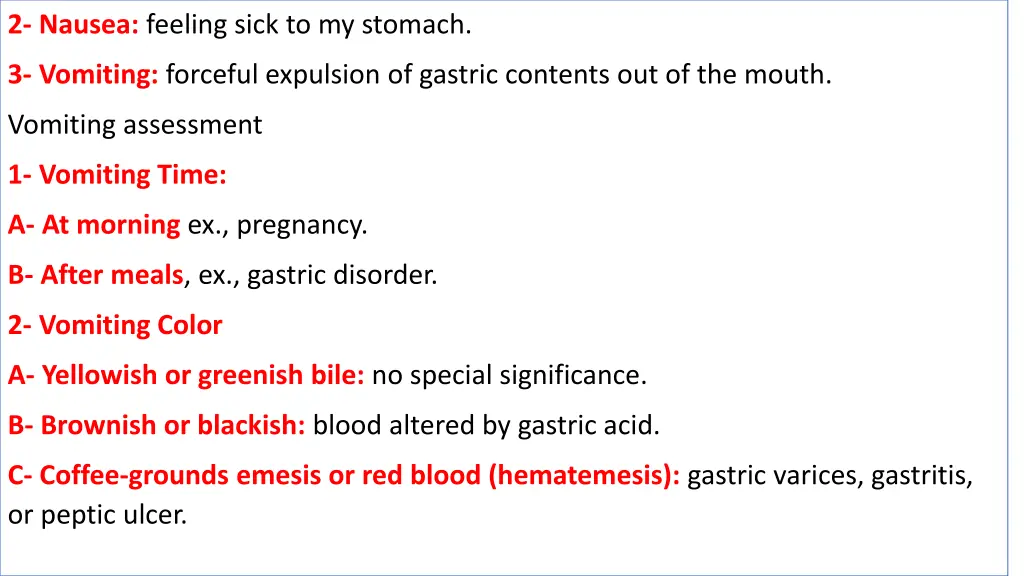
2- Nausea: feeling sick to my stomach. 3- Vomiting: forceful expulsion of gastric contents out of the mouth. Vomiting assessment 1- Vomiting Time: A- At morning ex., pregnancy. B- After meals, ex., gastric disorder. 2- Vomiting Color A- Yellowish or greenish bile: no special significance. B- Brownish or blackish: blood altered by gastric acid. C- Coffee-grounds emesis or red blood (hematemesis): gastric varices, gastritis, or peptic ulcer.
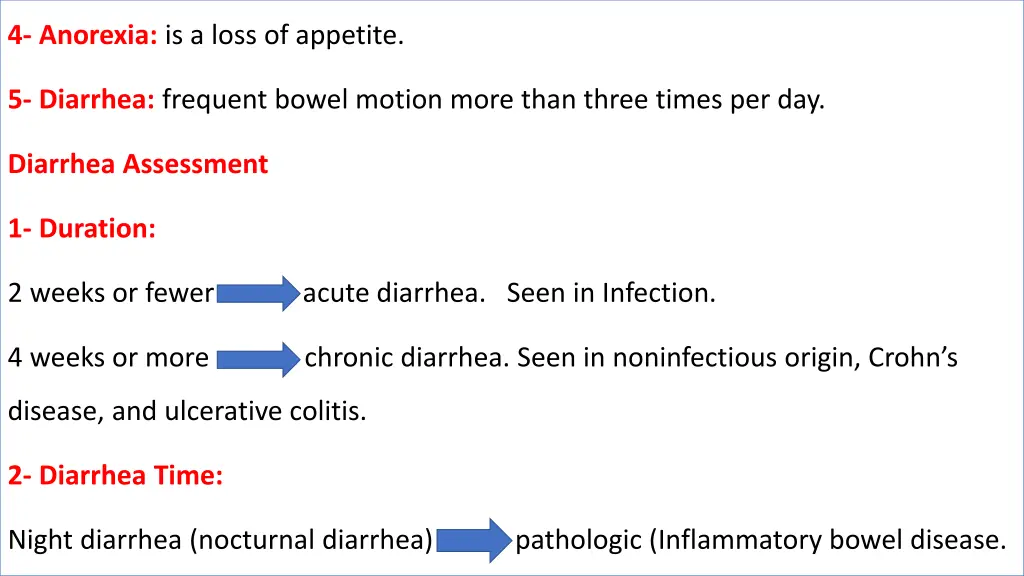
4- Anorexia: is a loss of appetite. 5- Diarrhea: frequent bowel motion more than three times per day. Diarrhea Assessment 1- Duration: 2 weeks or fewer acute diarrhea. Seen in Infection. 4 weeks or more chronic diarrhea. Seen in noninfectious origin, Crohn s disease, and ulcerative colitis. 2- Diarrhea Time: Night diarrhea (nocturnal diarrhea) pathologic (Inflammatory bowel disease.
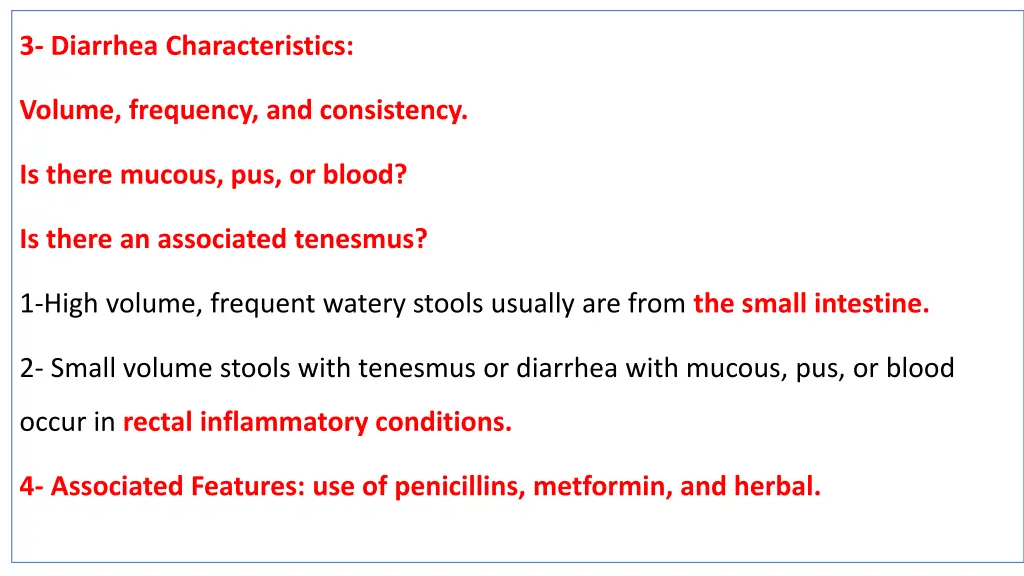
3- Diarrhea Characteristics: Volume, frequency, and consistency. Is there mucous, pus, or blood? Is there an associated tenesmus? 1-High volume, frequent watery stools usually are from the small intestine. 2- Small volume stools with tenesmus or diarrhea with mucous, pus, or blood occur in rectal inflammatory conditions. 4- Associated Features: use of penicillins, metformin, and herbal.
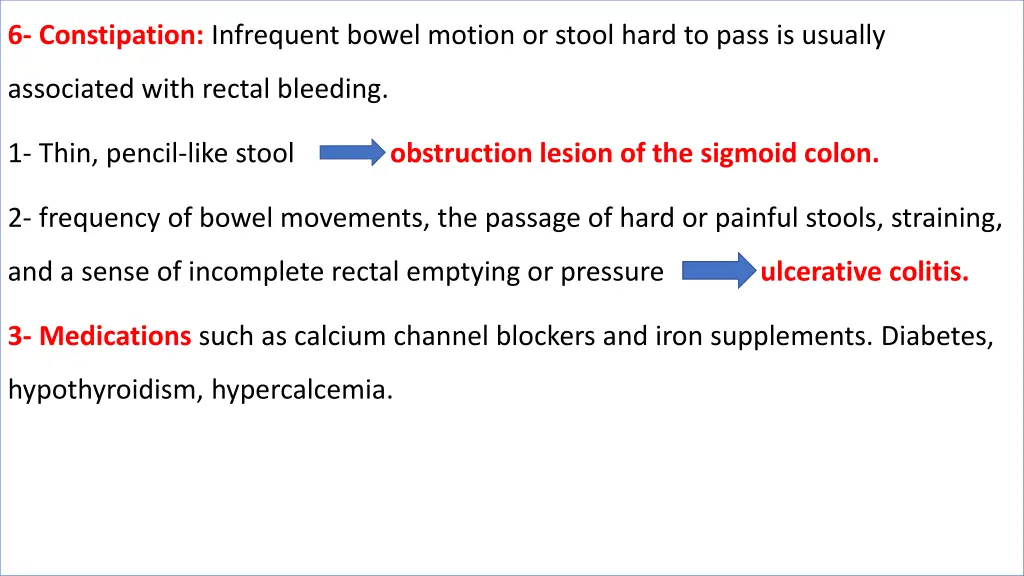
6- Constipation: Infrequent bowel motion or stool hard to pass is usually associated with rectal bleeding. 1- Thin, pencil-like stool obstruction lesion of the sigmoid colon. 2- frequency of bowel movements, the passage of hard or painful stools, straining, and a sense of incomplete rectal emptying or pressure ulcerative colitis. 3- Medications such as calcium channel blockers and iron supplements. Diabetes, hypothyroidism, hypercalcemia.
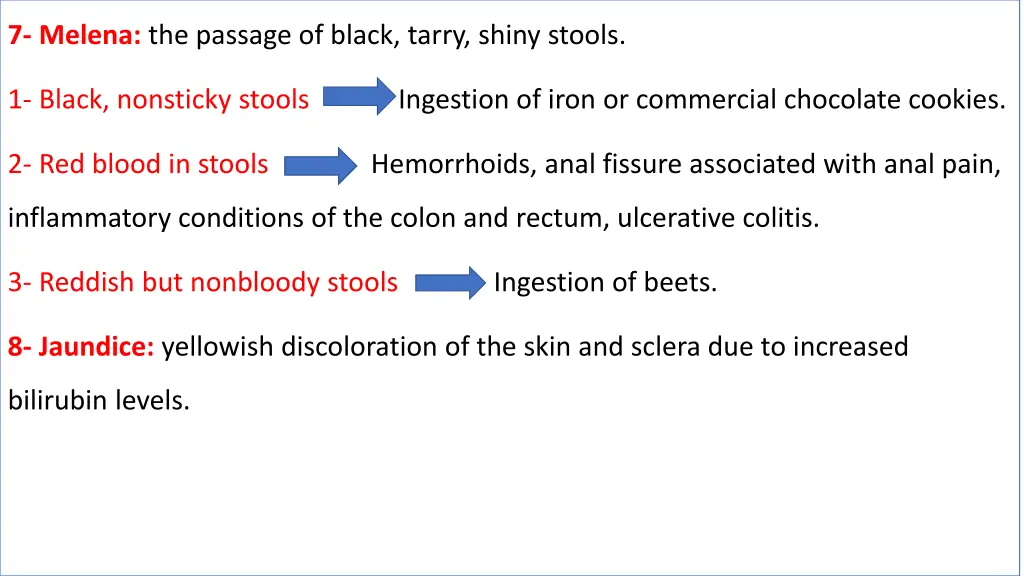
7- Melena: the passage of black, tarry, shiny stools. 1- Black, nonsticky stools Ingestion of iron or commercial chocolate cookies. 2- Red blood in stools Hemorrhoids, anal fissure associated with anal pain, inflammatory conditions of the colon and rectum, ulcerative colitis. 3- Reddish but nonbloody stools Ingestion of beets. 8- Jaundice: yellowish discoloration of the skin and sclera due to increased bilirubin levels.
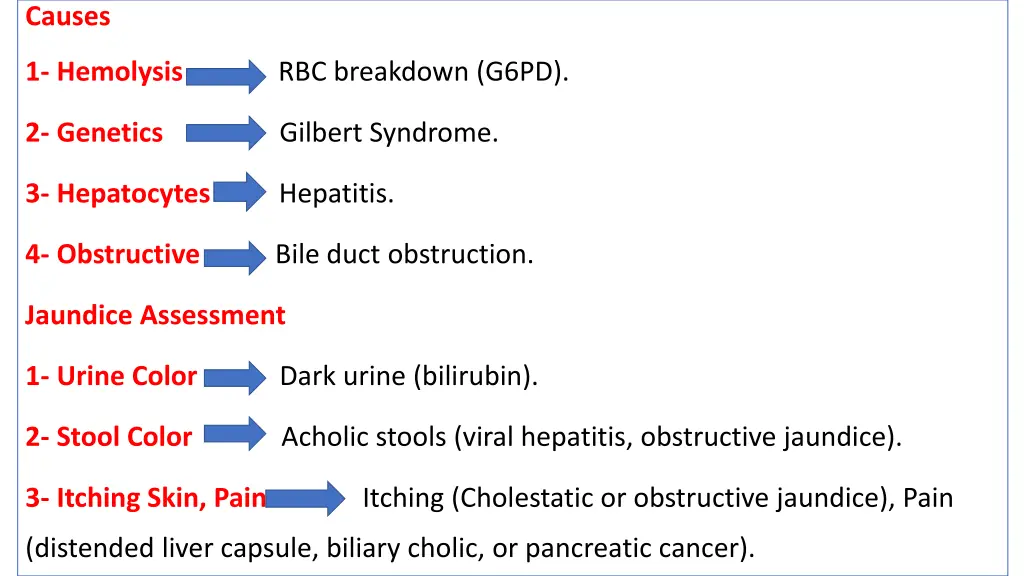
Causes 1- Hemolysis RBC breakdown (G6PD). 2- Genetics Gilbert Syndrome. 3- Hepatocytes Hepatitis. 4- Obstructive Bile duct obstruction. Jaundice Assessment 1- Urine Color Dark urine (bilirubin). 2- Stool Color Acholic stools (viral hepatitis, obstructive jaundice). 3- Itching Skin, Pain Itching (Cholestatic or obstructive jaundice), Pain (distended liver capsule, biliary cholic, or pancreatic cancer).
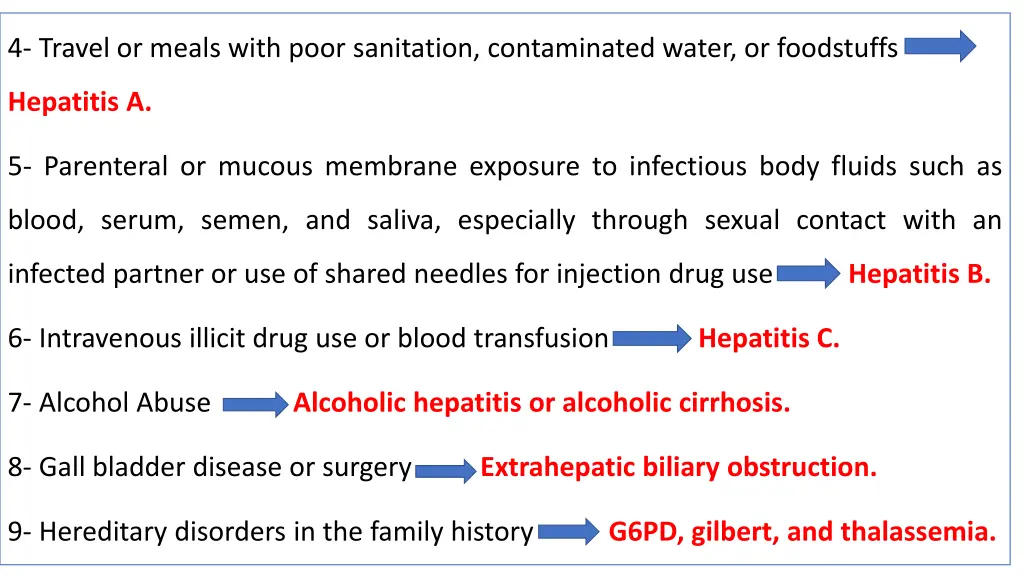
4- Travel or meals with poor sanitation, contaminated water, or foodstuffs Hepatitis A. 5- Parenteral or mucous membrane exposure to infectious body fluids such as blood, serum, semen, and saliva, especially through sexual contact with an infected partner or use of shared needles for injection drug use Hepatitis B. 6- Intravenous illicit drug use or blood transfusion Hepatitis C. 7- Alcohol Abuse Alcoholic hepatitis or alcoholic cirrhosis. 8- Gall bladder disease or surgery Extrahepatic biliary obstruction. 9- Hereditary disorders in the family history G6PD, gilbert, and thalassemia.