Genetics: Fundamentals, Genes, and Mendelian Principles
Explore the intriguing world of genetics, from the fundamental concepts to the classical and modern understanding of genes. Delve into Mendelian genetics through the study of pea plants and learn about basic terms such as genome, locus, allele, genotype, and phenotype. Uncover the key principles of heredity and variation that shape living organisms.

Download Presentation

Please find below an Image/Link to download the presentation.
The content on the website is provided AS IS for your information and personal use only. It may not be sold, licensed, or shared on other websites without obtaining consent from the author. If you encounter any issues during the download, it is possible that the publisher has removed the file from their server.
You are allowed to download the files provided on this website for personal or commercial use, subject to the condition that they are used lawfully. All files are the property of their respective owners.
The content on the website is provided AS IS for your information and personal use only. It may not be sold, licensed, or shared on other websites without obtaining consent from the author.
E N D
Presentation Transcript
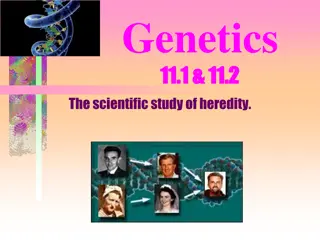
1.1 Introduction to Genetics 1.1 Introduction to Genetics Definition: It is the branch of biology which deals with the study of heredity and variation. The term genetics was coined by William Bateson but due to extensive and pioneer studies Gregor Mendel is considered as the father of genetics. Scope of Genetics Eugenics-Improvement of existing human race. Improvement in econimically important animals. To study hereditary diseases. Use in forensic sciences.
Concept of Gene Classical Concept Genes are discrete particles which are present on chromosomes. They occupy specific position on the chromosome called loci. These discrete particles are responsible for specific characters. The classical concept of gene was introduced by Walter Sutton in 1902. Modern Concept According to this concept genes are the segments of DNA present on the chromosome. Gene as a unit of Transmission or Cistron: It is the part of DNA which codes for the single polypetide chain. Gene as a unit of Recombination or Recon: It is the part of DNA which is capable of recombination i.e. exchange. Gene as a unit of Mutation or Muton: It is the part of DNA which can undergo mutation and eventually change in phenotype.
Basic Terms in Genetics Genome: Sum total of all the genes present in haploid set of chromosomes. Locus: Location of the gene of chromosome Allele: alternative form of a gene Genotype : Combination of alleles or genetic makeup of an organism Phenotype: external appearance of an organism. Homozygous: Organism having both alleles similar for a gene. Heterozygous: organism having two alleles different for a gene. Dominant: In heterozygous condition two different alleles are present. The allele which is expressed in heterozygous condition is called dominant. Recessive: while the allele which is not expressed in heterozygous condition is called recessive. Wild type and mutant alleles: In population the most commonly found phenotype is considered as wild type and the allele responsible for that character is called wild allele. While the rest of other variations in this type are considered mutants and the allele is considered as mutant allele.
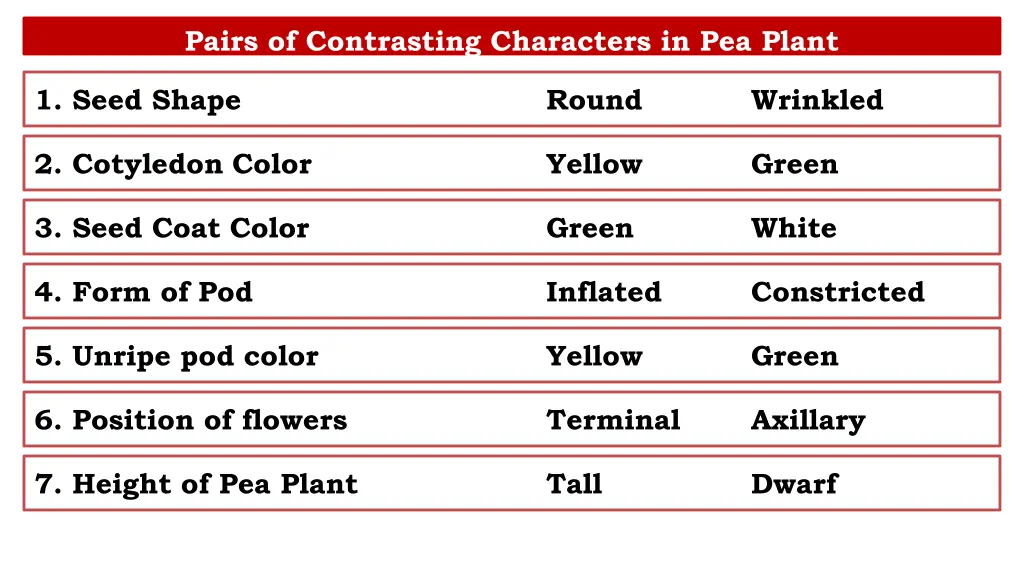
1.2 Mendelian Genetics Mendel has selected the pea plant for his studies as the pea plant is showing all the suitable characters for the study of genetics. One of the reason why selected the Garden Pea Plant as an experimental plant is that the Pea plant has more contrasting characters and they are conspicuously observed.
Pairs of Contrasting Characters in Pea Plant 1. Seed Shape Round Wrinkled 2. Cotyledon Color Yellow Green 3. Seed Coat Color Green White 4. Form of Pod Inflated Constricted 5. Unripe pod color Yellow Green 6. Position of flowers Terminal Axillary 7. Height of Pea Plant Tall Dwarf
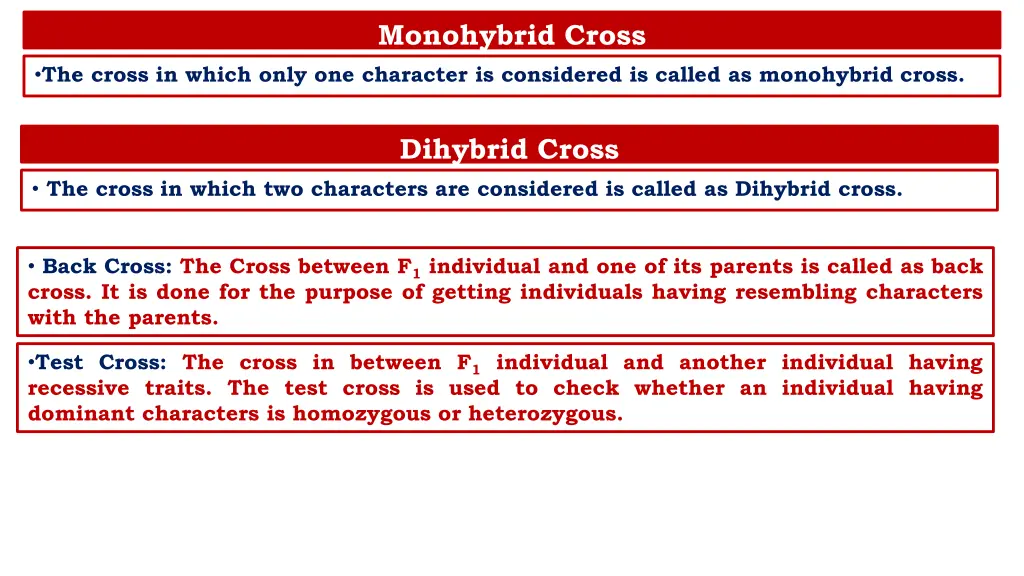
Monohybrid Cross The cross in which only one character is considered is called as monohybrid cross. Dihybrid Cross The cross in which two characters are considered is called as Dihybrid cross. Back Cross: The Cross between F1 individual and one of its parents is called as back cross. It is done for the purpose of getting individuals having resembling characters with the parents. Test Cross: The cross in between F1 individual and another individual having recessive traits. The test cross is used to check whether an individual having dominant characters is homozygous or heterozygous.
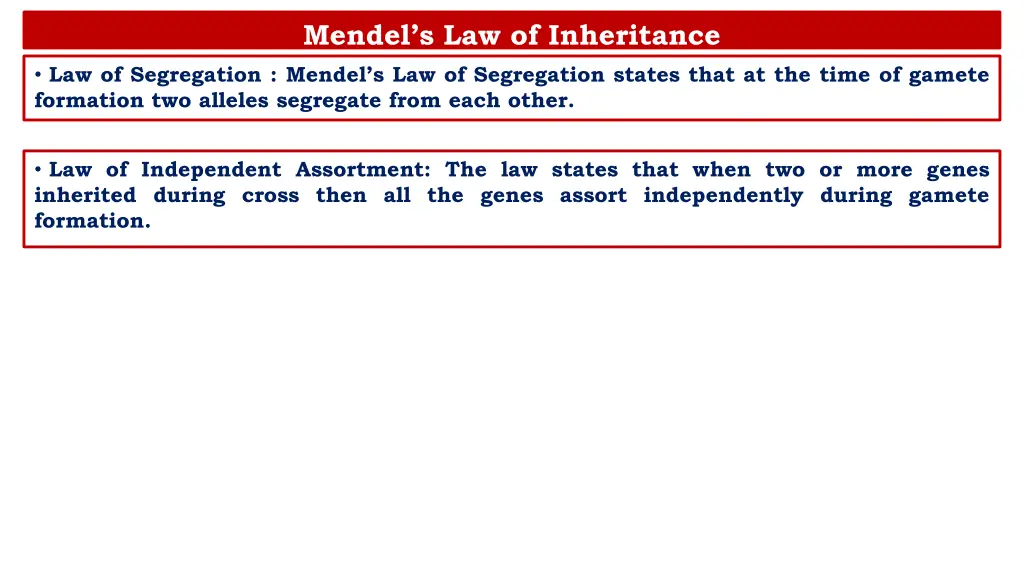
Mendels Law of Inheritance Law of Segregation : Mendel s Law of Segregation states that at the time of gamete formation two alleles segregate from each other. Law of Independent Assortment: The law states that when two or more genes inherited during cross then all the genes assort independently during gamete formation.
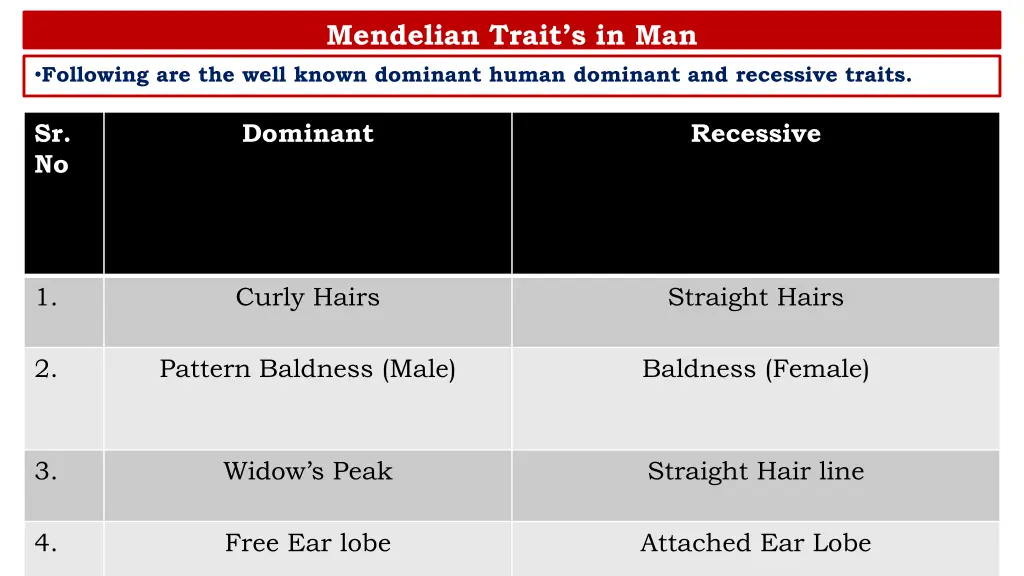
Mendelian Traits in Man Following are the well known dominant human dominant and recessive traits. Sr. No Dominant Recessive 1. Curly Hairs Straight Hairs 2. Pattern Baldness (Male) Baldness (Female) 3. Widow s Peak Straight Hair line 4. Free Ear lobe Attached Ear Lobe
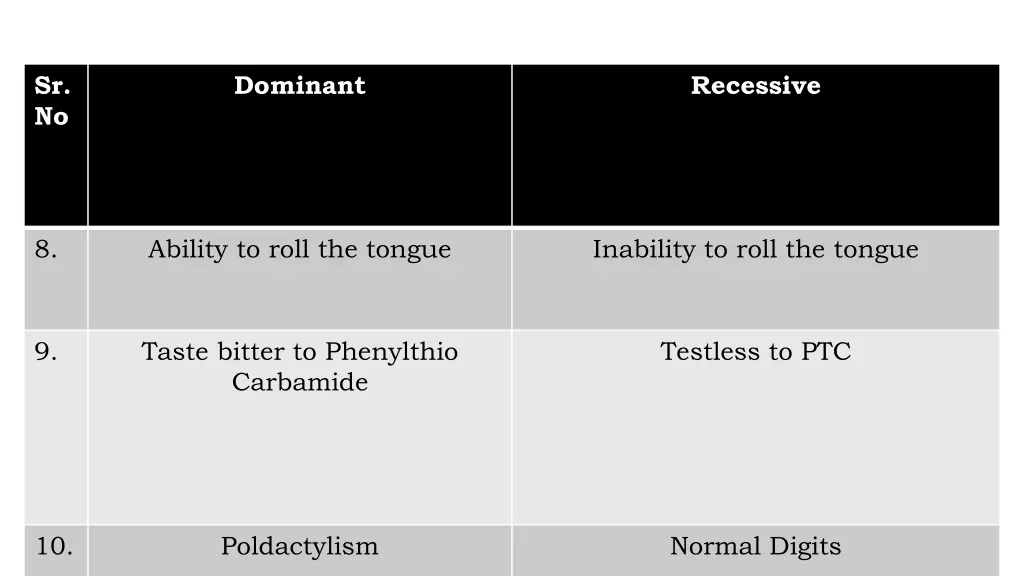
Sr. No Dominant Recessive 8. Ability to roll the tongue Inability to roll the tongue 9. Taste bitter to Phenylthio Carbamide Testless to PTC 10. Poldactylism Normal Digits
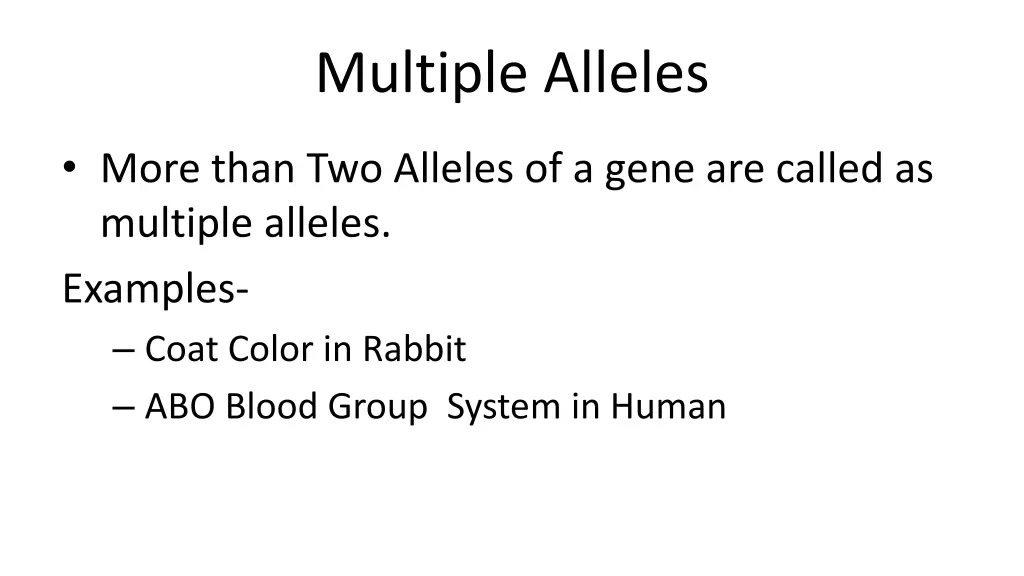
Multiple Alleles More than Two Alleles of a gene are called as multiple alleles. Examples- Coat Color in Rabbit ABO Blood Group System in Human