Global Software Development Meltdown: Business Models for Solutions
Discover Tobias Kuipers' insights on the global software development meltdown and learn about three innovative business models to address the challenges. Gain valuable information on software economics, the growing need for developers, and corporate solutions in the IT industry.

Download Presentation

Please find below an Image/Link to download the presentation.
The content on the website is provided AS IS for your information and personal use only. It may not be sold, licensed, or shared on other websites without obtaining consent from the author. If you encounter any issues during the download, it is possible that the publisher has removed the file from their server.
You are allowed to download the files provided on this website for personal or commercial use, subject to the condition that they are used lawfully. All files are the property of their respective owners.
The content on the website is provided AS IS for your information and personal use only. It may not be sold, licensed, or shared on other websites without obtaining consent from the author.
E N D
Presentation Transcript
The Global Software DevelopmentMeltdown And three business models to fix it Tobias Kuipers GETTING SOFTWARE RIGHT
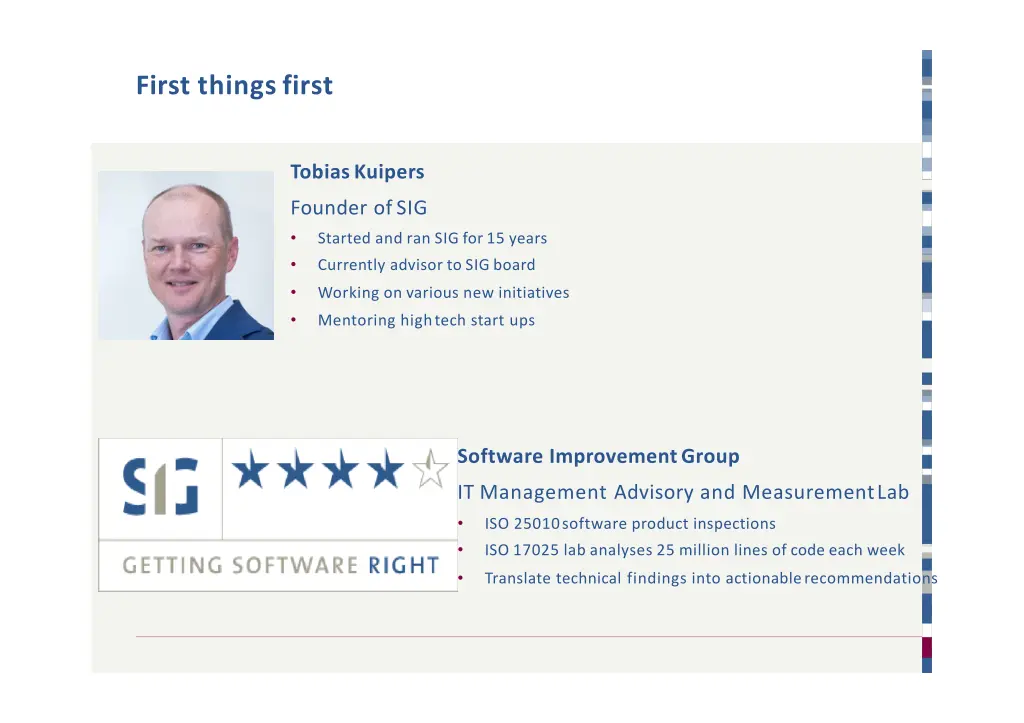
First things first TobiasKuipers Founder ofSIG Started and ran SIG for 15 years Currently advisor to SIG board Working on various new initiatives Mentoring hightech start ups Software ImprovementGroup IT Management Advisory and MeasurementLab ISO 25010software product inspections ISO 17025 lab analyses 25 million lines of code each week Translate technical findings into actionablerecommendations
15 years of SoftwareEconomics > Consulting on questionslike... How much should our IT department be spending on software development? How many people should we employ in software development? How can we stop the growth of our software budget? (After2007) We are quoted a price of X million for a project, is that fair/cheap/ expensive? > Has led to a number of statistical insights...
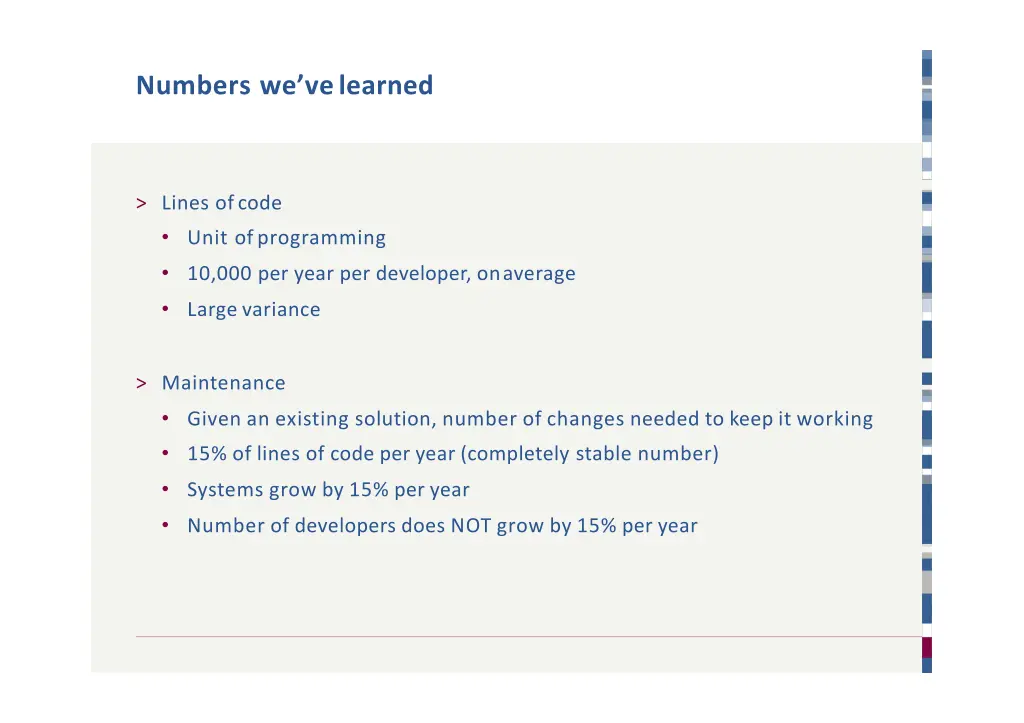
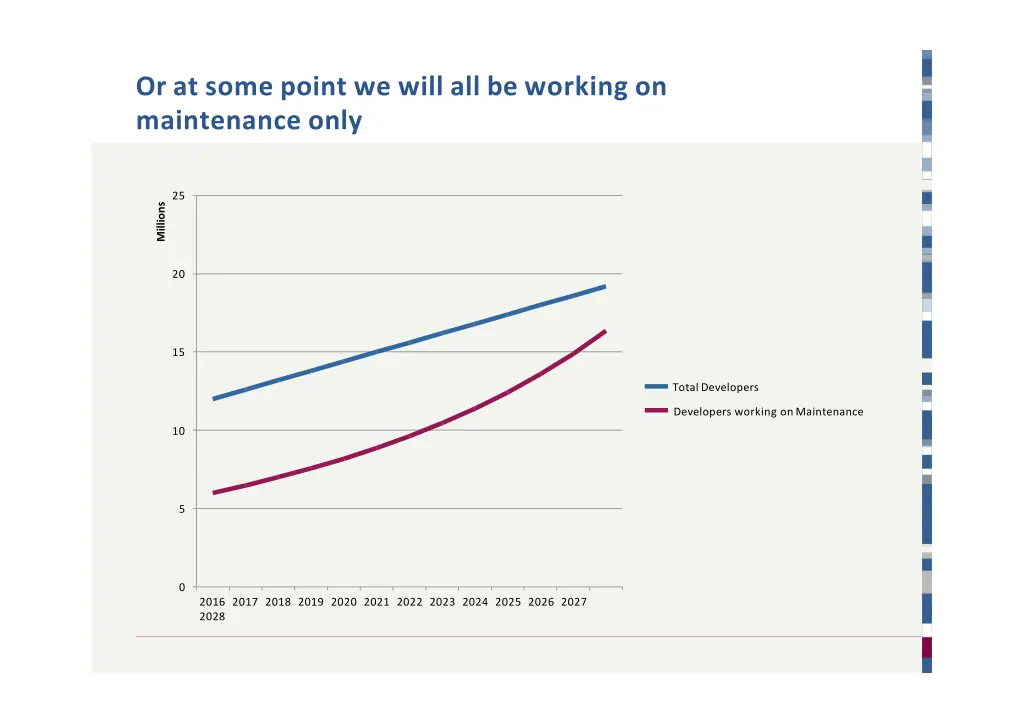
Numbers wevelearned > Lines ofcode Unit ofprogramming 10,000 per year per developer, onaverage Large variance > Maintenance Given an existing solution, number of changes needed to keep it working 15% of lines of code per year (completely stable number) Systems grow by 15% per year Number of developers does NOT grow by 15% per year
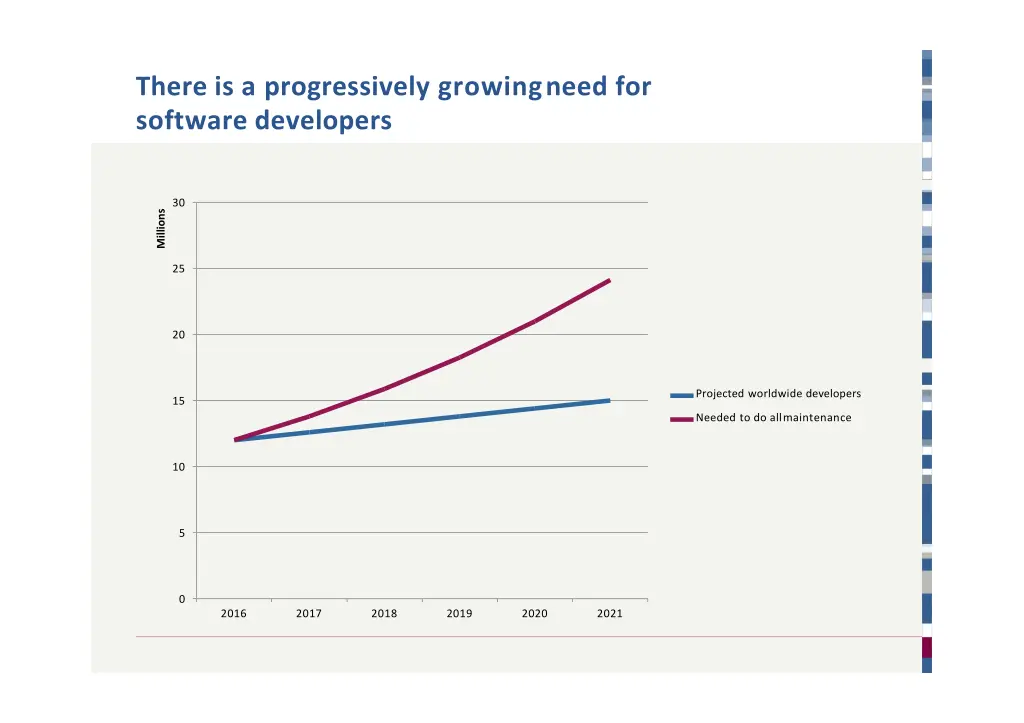
There is a progressively growingneed for software developers 30 Millions 25 20 Projected worldwide developers 15 Needed to do allmaintenance 10 5 0 2016 2017 2018 2019 2020 2021
Or at some point we will all be working on maintenance only 25 Millions 20 15 TotalDevelopers Developers working onMaintenance 10 5 0 2016 2017 2018 2019 2020 2021 2022 2023 2024 2025 2026 2027 2028
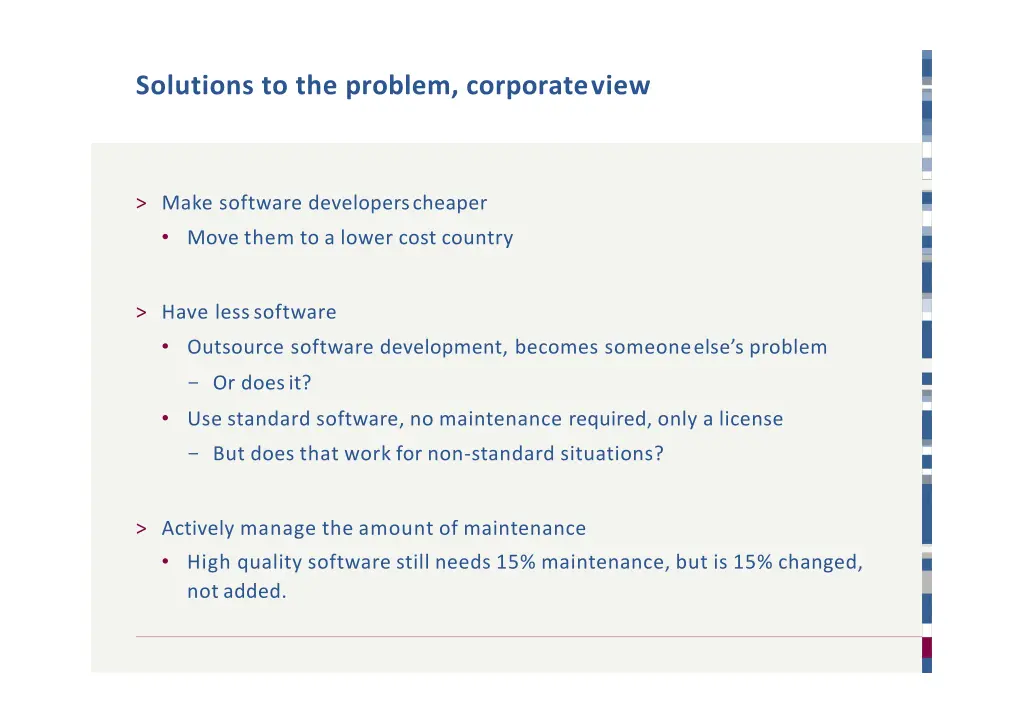
Solutions to the problem, corporateview > Make software developerscheaper Move them to a lower cost country > Have lesssoftware Outsource software development, becomes someoneelse s problem - Or doesit? Use standard software, no maintenance required, only a license - But does that work for non-standard situations? > Actively manage the amount of maintenance High quality software still needs 15% maintenance, but is 15% changed, not added.
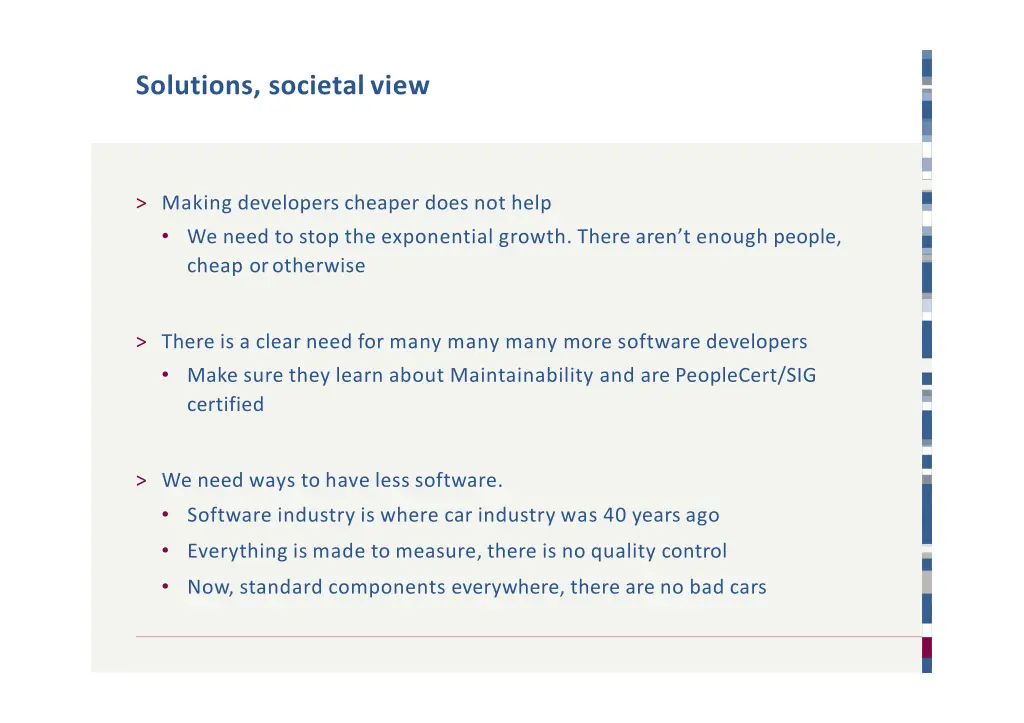
Solutions, societalview > Making developers cheaper does not help We need to stop the exponential growth. There aren t enough people, cheap orotherwise > There is a clear need for many many many more software developers Make sure they learn about Maintainability and are PeopleCert/SIG certified > We need ways to have less software. Software industry is where car industry was 40 years ago Everything is made to measure, there is no quality control Now, standard components everywhere, there are no bad cars
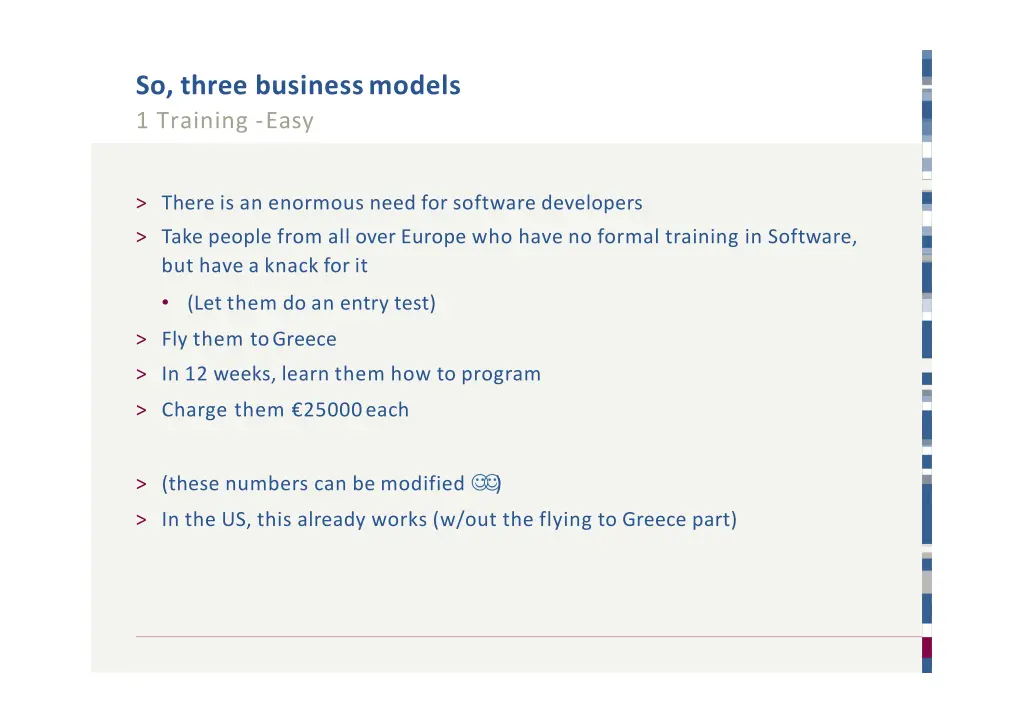
So, three businessmodels 1 Training -Easy > There is an enormous need for software developers > Take people from all over Europe who have no formal training in Software, but have a knack for it (Let them do an entry test) > Fly them toGreece > In 12 weeks, learn them how to program > Charge them 25000each > (these numbers can be modified ) > In the US, this already works (w/out the flying to Greece part)
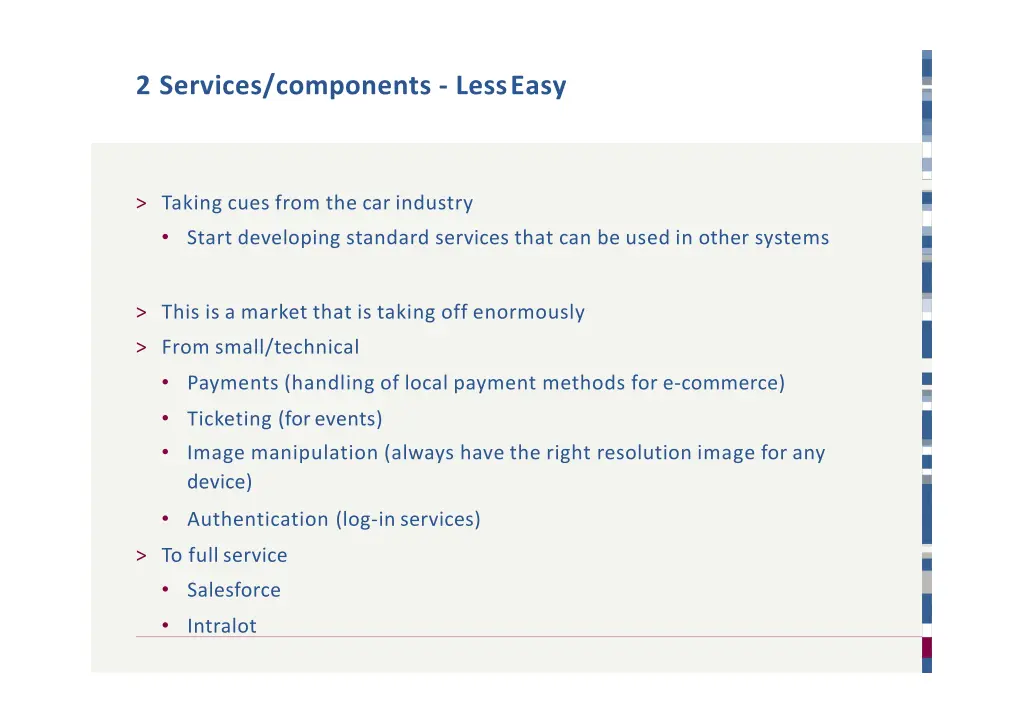
2 Services/components - LessEasy > Taking cues from the car industry Start developing standard services that can be used in other systems > This is a market that is taking off enormously > From small/technical Payments (handling of local payment methods for e-commerce) Ticketing (forevents) Image manipulation (always have the right resolution image for any device) Authentication (log-in services) > To full service Salesforce Intralot
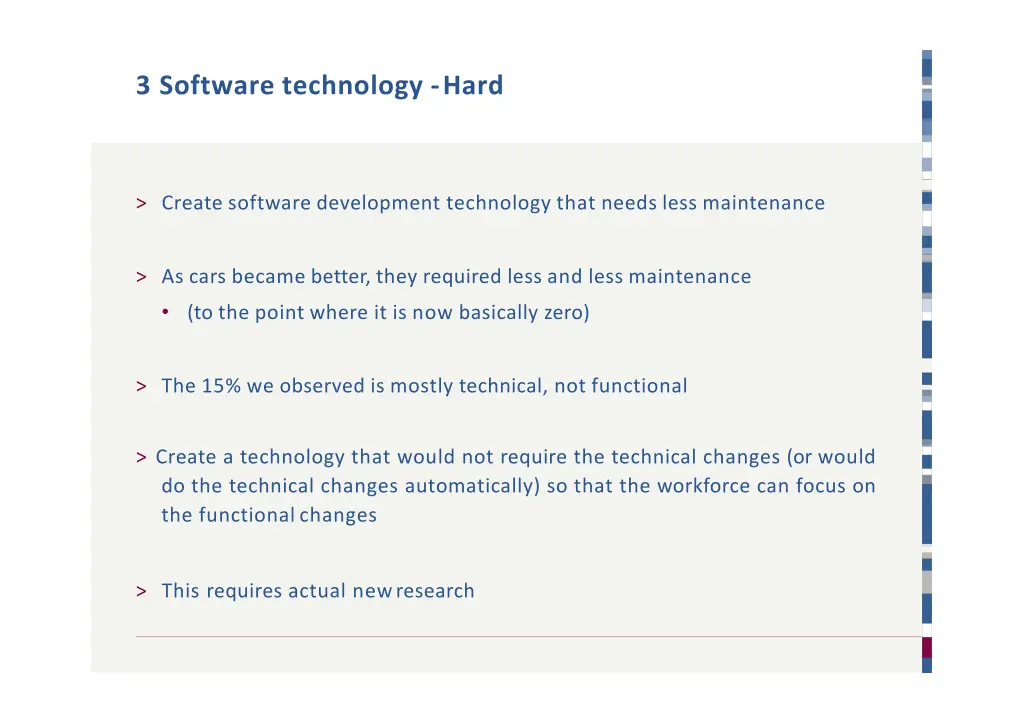
3 Software technology -Hard > Create software development technology that needs less maintenance > As cars became better, they required less and less maintenance (to the point where it is now basically zero) > The 15% we observed is mostly technical, not functional > Create a technology that would not require the technical changes (or would do the technical changes automatically) so that the workforce can focus on the functional changes > This requires actual newresearch
Wrap up > If we don t do anything, all software developers will be working exclusively on maintenance > Three business models to fix it 1. Intensive expensive training of software developers 2. Create standard components as a service for other software developers 3. Build software technology that requires less maintenance > Contact me if you would like to discuss further TobiasKuipers tobias.kuipers@gmail.com @tobiaskuipers +31614488847