good life or an erosion of patient
The presentation discusses the impact of AI, machine learning, and big data on healthcare practices, particularly how they may intensify existing biases or introduce new ones. As AI technologies become more prevalent, concerns regarding privacy, equity, and fairness emerge. Specific use cases, ethical and legal considerations, and the implications for physician roles are explored, raising questions about accountability and the moral imperative to implement these innovations in healthcare settings.

Download Presentation

Please find below an Image/Link to download the presentation.
The content on the website is provided AS IS for your information and personal use only. It may not be sold, licensed, or shared on other websites without obtaining consent from the author.If you encounter any issues during the download, it is possible that the publisher has removed the file from their server.
You are allowed to download the files provided on this website for personal or commercial use, subject to the condition that they are used lawfully. All files are the property of their respective owners.
The content on the website is provided AS IS for your information and personal use only. It may not be sold, licensed, or shared on other websites without obtaining consent from the author.
E N D
Presentation Transcript
AI x Healthcare: Facilitative of the good life or an erosion of patient trust and physician expertise? Alex Nisbet | Annotated bibliography presentation | Prepared for April 22nd
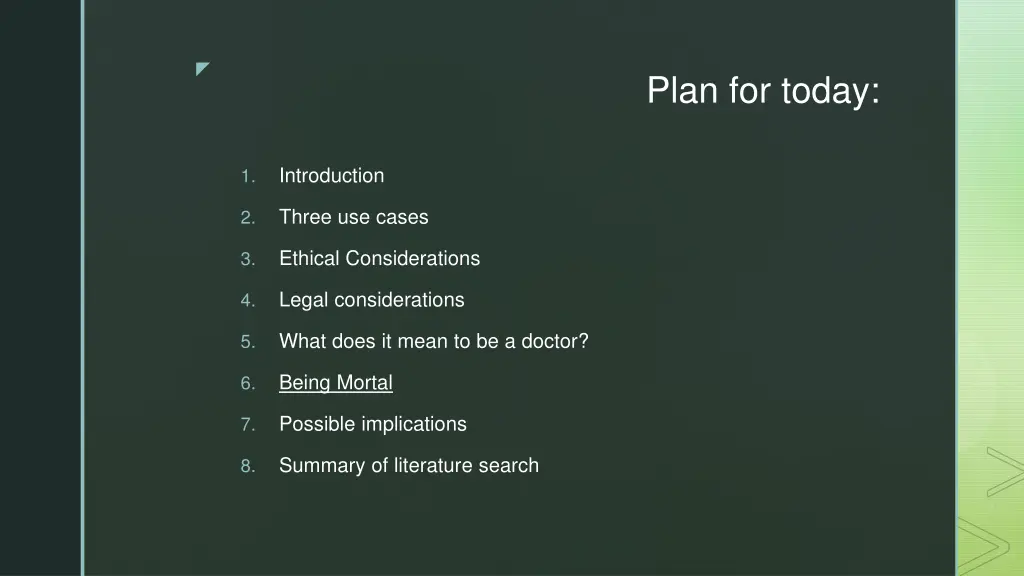
Plan for today: Introduction 1. Three use cases 2. Ethical Considerations 3. Legal considerations 4. What does it mean to be a doctor? 5. Being Mortal 6. Possible implications 7. Summary of literature search 8.
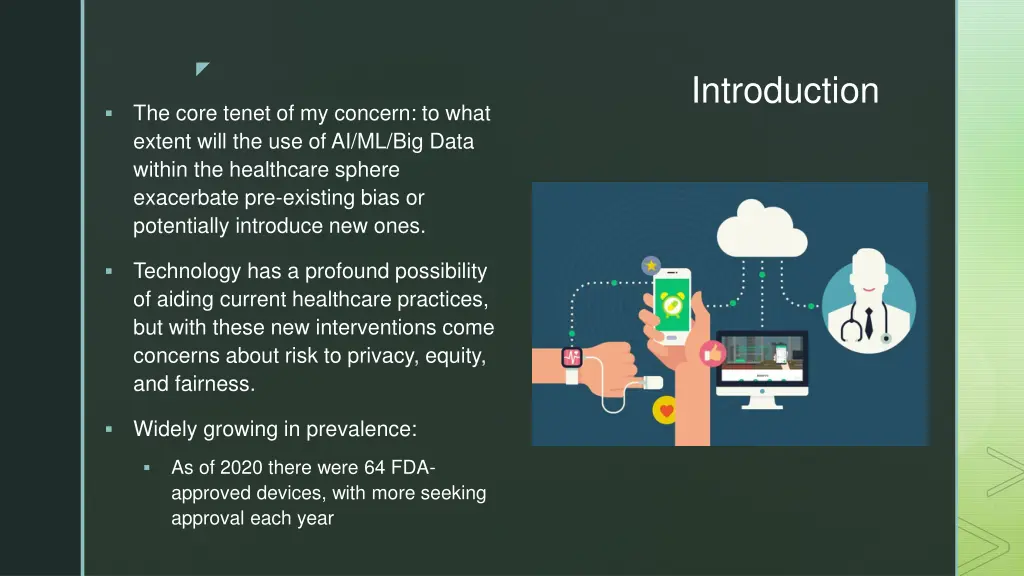
Introduction The core tenet of my concern: to what extent will the use of AI/ML/Big Data within the healthcare sphere exacerbate pre-existing bias or potentially introduce new ones. Technology has a profound possibility of aiding current healthcare practices, but with these new interventions come concerns about risk to privacy, equity, and fairness. Widely growing in prevalence: As of 2020 there were 64 FDA- approved devices, with more seeking approval each year
Learning Data sets Algorithms, specifically AI/ML programs learn from pre-disposed data sets, termed learning or training sets, in order to observe patterns that can henceforth be used to generate predictions for future relations. Problem: our status quo systemic entrenchment of inequity (can be broke down by race/ethnicity, SES, geography, etc.) may dictate that learning data sets contain misplaced inequities that inform biases Worry: That an algorithm may produce unfair results (e.g., the disadvantaging of people of color), even if developers intentionally consider only non-demographic factors
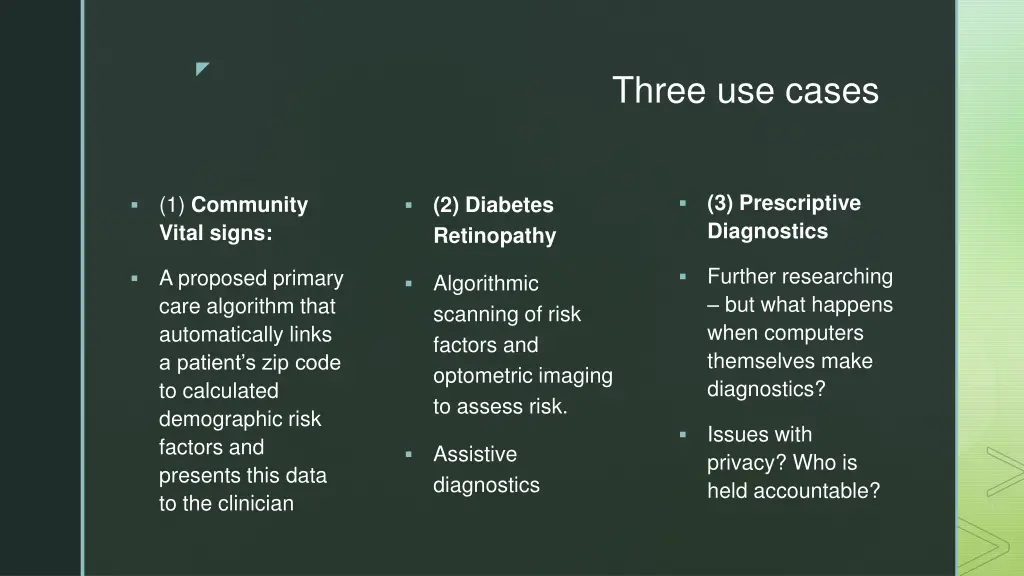
Three use cases (3) Prescriptive Diagnostics (1) Community Vital signs: (2) Diabetes Retinopathy Further researching but what happens when computers themselves make diagnostics? A proposed primary care algorithm that automatically links a patient s zip code to calculated demographic risk factors and presents this data to the clinician Algorithmic scanning of risk factors and optometric imaging to assess risk. Issues with privacy? Who is held accountable? Assistive diagnostics
Discussion Questions Are these potential use cases an invasion of privacy? The authors of Voigt 2019 bring up that if these algorithms are as beneficial as they claim to be, might we have a moral imperative TO implement them? Do the ethical qualms differ significantly by the usage of the algorithms in each case? Can one set of guidelines aid the full scope of AI/ML within healthcare?
Ethical Considerations Black Box eroding the trust of a healthcare diagnosis? Patient & Physician Autonomy Inherently in contradiction with patient-based medicine (?) Virtue based system of technology management
Legal Considerations Accountability similar to those issues raised with autonomous weaponry FDA Guidelines: Constantly updating their regulations, working to respond to adaptive machines But adaptive response is difficult Possibilities of data cooperatives Regulatory frameworks for AI reporting are actively being suggested (Norgeot 2020)
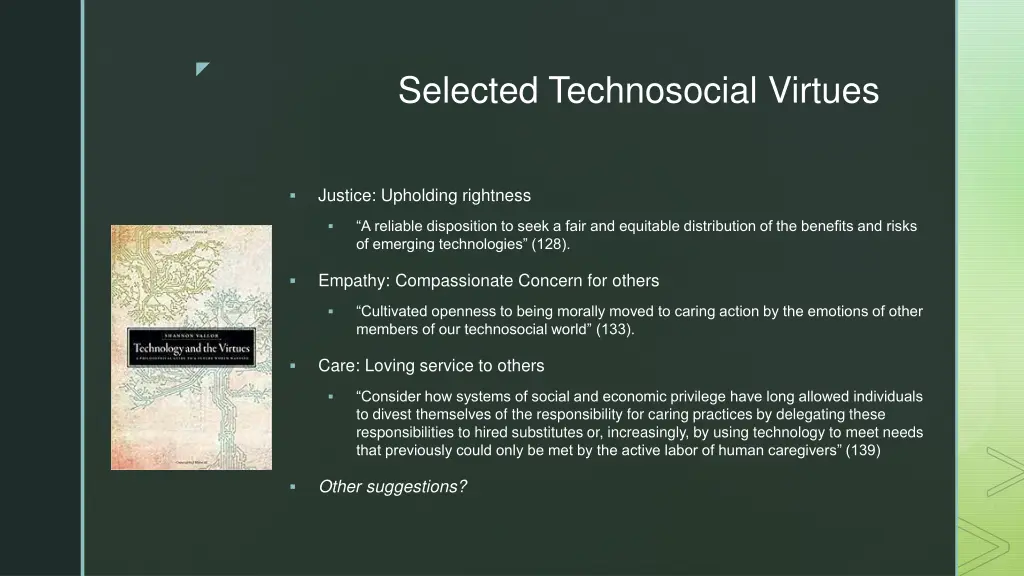
Selected Technosocial Virtues Justice: Upholding rightness A reliable disposition to seek a fair and equitable distribution of the benefits and risks of emerging technologies (128). Empathy: Compassionate Concern for others Cultivated openness to being morally moved to caring action by the emotions of other members of our technosocial world (133). Care: Loving service to others Consider how systems of social and economic privilege have long allowed individuals to divest themselves of the responsibility for caring practices by delegating these responsibilities to hired substitutes or, increasingly, by using technology to meet needs that previously could only be met by the active labor of human caregivers (139) Other suggestions?
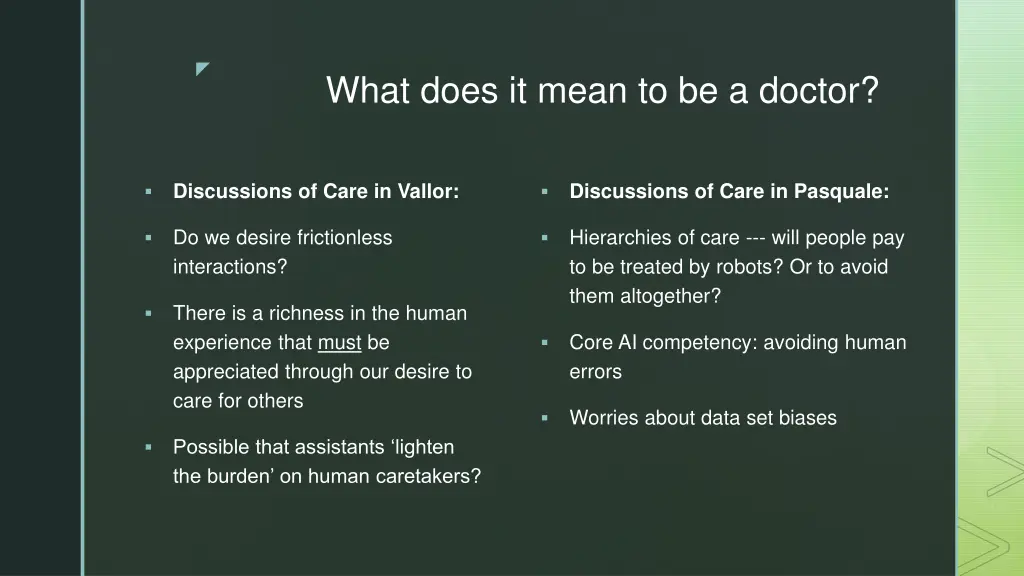
What does it mean to be a doctor? Discussions of Care in Vallor: Discussions of Care in Pasquale: Do we desire frictionless interactions? Hierarchies of care --- will people pay to be treated by robots? Or to avoid them altogether? There is a richness in the human experience that must be appreciated through our desire to care for others Core AI competency: avoiding human errors Worries about data set biases Possible that assistants lighten the burden on human caretakers?
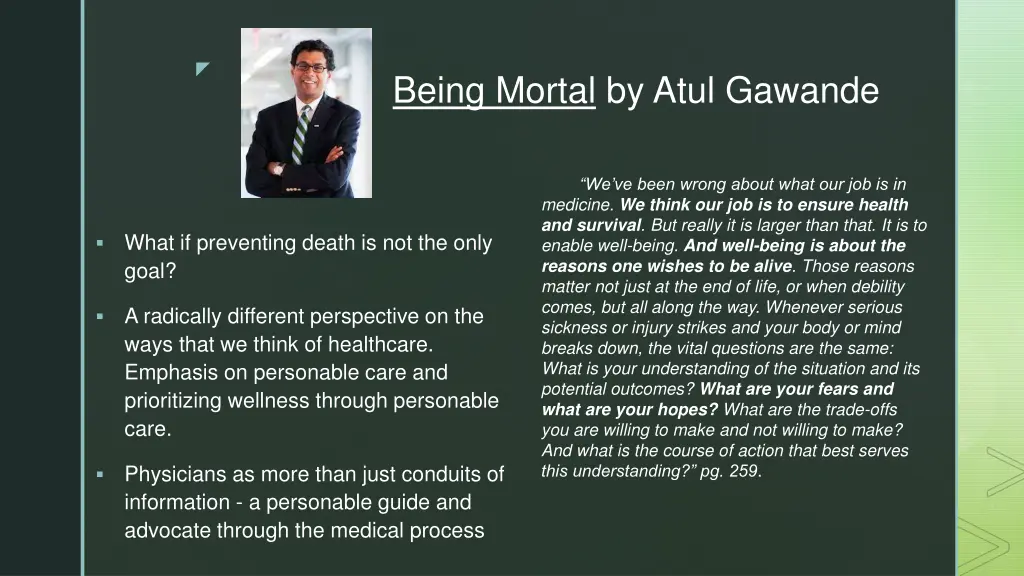
Being Mortal by Atul Gawande We ve been wrong about what our job is in medicine. We think our job is to ensure health and survival. But really it is larger than that. It is to enable well-being. And well-being is about the reasons one wishes to be alive. Those reasons matter not just at the end of life, or when debility comes, but all along the way. Whenever serious sickness or injury strikes and your body or mind breaks down, the vital questions are the same: What is your understanding of the situation and its potential outcomes? What are your fears and what are your hopes? What are the trade-offs you are willing to make and not willing to make? And what is the course of action that best serves this understanding? pg. 259. What if preventing death is not the only goal? A radically different perspective on the ways that we think of healthcare. Emphasis on personable care and prioritizing wellness through personable care. Physicians as more than just conduits of information - a personable guide and advocate through the medical process
In Closing If, as Vallor writes, technologies are extensions of the human value contexts in which they operate, how are we to interpret the intrusion of AI, machine learning, and big data on the most private sphere of our lives? What might this say about our values?
Possible implications Currently unsure of the direction that I will head in terms of implications. Possible themes include: Regulatory suggestions Ethical considerations and/or directives Educational paradigms Class suggestions?
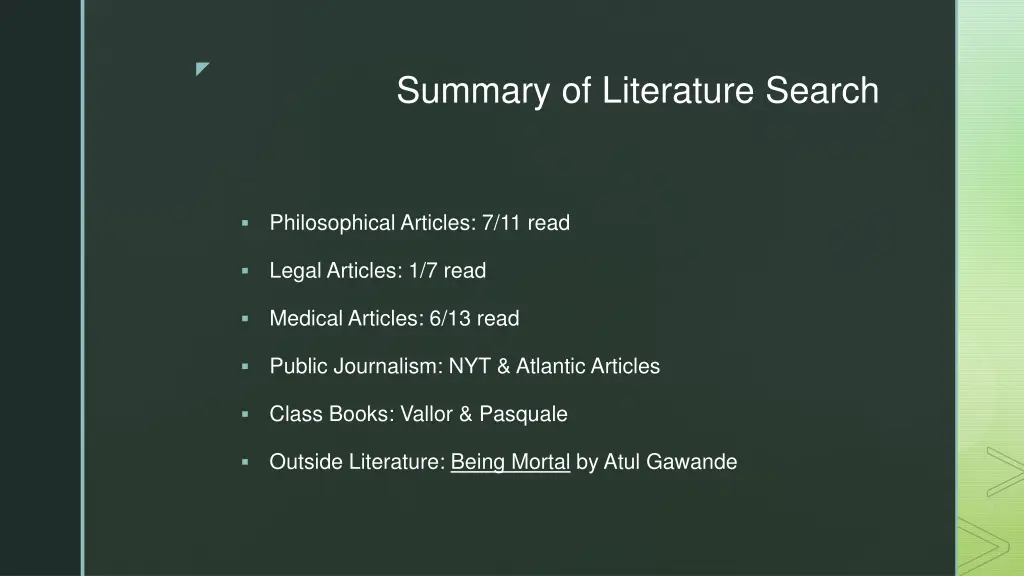
Summary of Literature Search Philosophical Articles: 7/11 read Legal Articles: 1/7 read Medical Articles: 6/13 read Public Journalism: NYT & Atlantic Articles Class Books: Vallor & Pasquale Outside Literature: Being Mortal by Atul Gawande