Grammatical semantics
In this informative content, the concept of grammatical semantics presented by Sanar Mohamed is explored, along with the meaning of major syntactic categories focusing on nouns, verbs, and adjectives. The exceptions and grammatical meaning associated with nouns are discussed, shedding light on elements like definiteness, number, animacy, gender, and more. The content also delves into the different forms of nouns, including mass nouns and count nouns, showcasing examples and explanations for better comprehension.

Download Presentation

Please find below an Image/Link to download the presentation.
The content on the website is provided AS IS for your information and personal use only. It may not be sold, licensed, or shared on other websites without obtaining consent from the author.If you encounter any issues during the download, it is possible that the publisher has removed the file from their server.
You are allowed to download the files provided on this website for personal or commercial use, subject to the condition that they are used lawfully. All files are the property of their respective owners.
The content on the website is provided AS IS for your information and personal use only. It may not be sold, licensed, or shared on other websites without obtaining consent from the author.
E N D
Presentation Transcript
Grammatical semantics Presented by Sanar mohamed
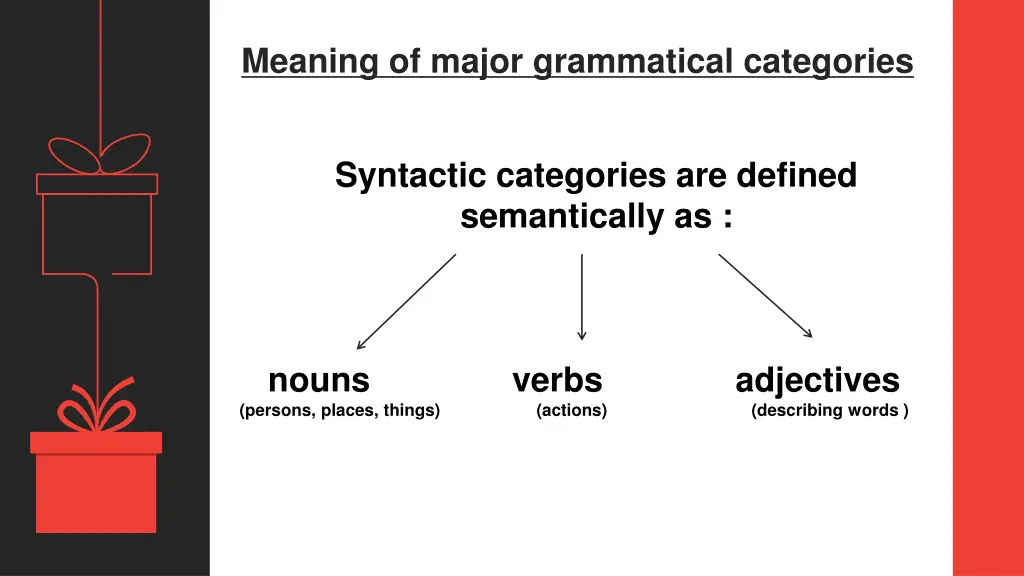
Meaning of major grammatical categories Syntactic categories are defined semantically as : nouns verbs adjectives (persons, places, things) (actions) (describing words )
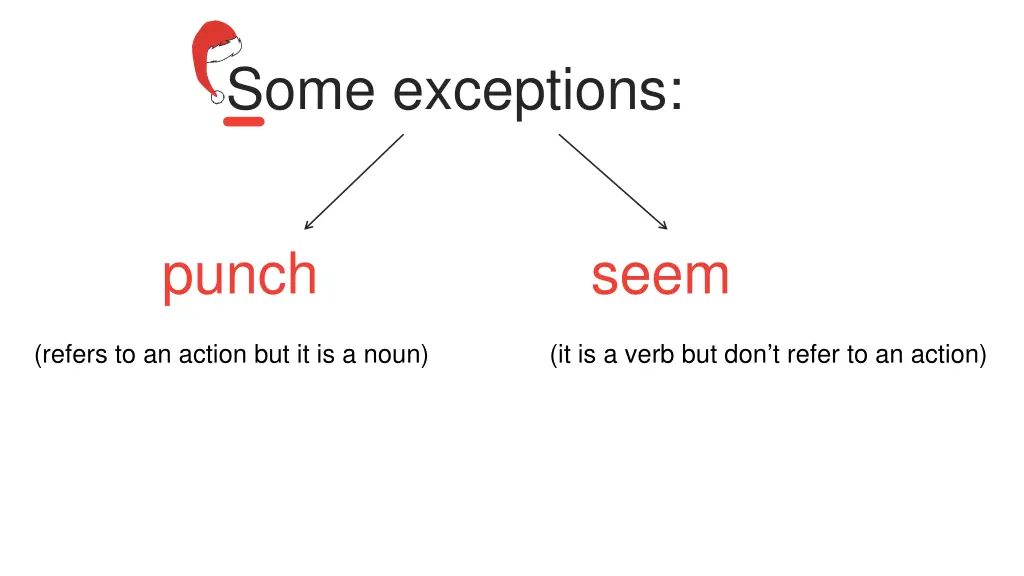
Some exceptions: punch seem (refers to an action but it is a noun) (it is a verb but don t refer to an action)
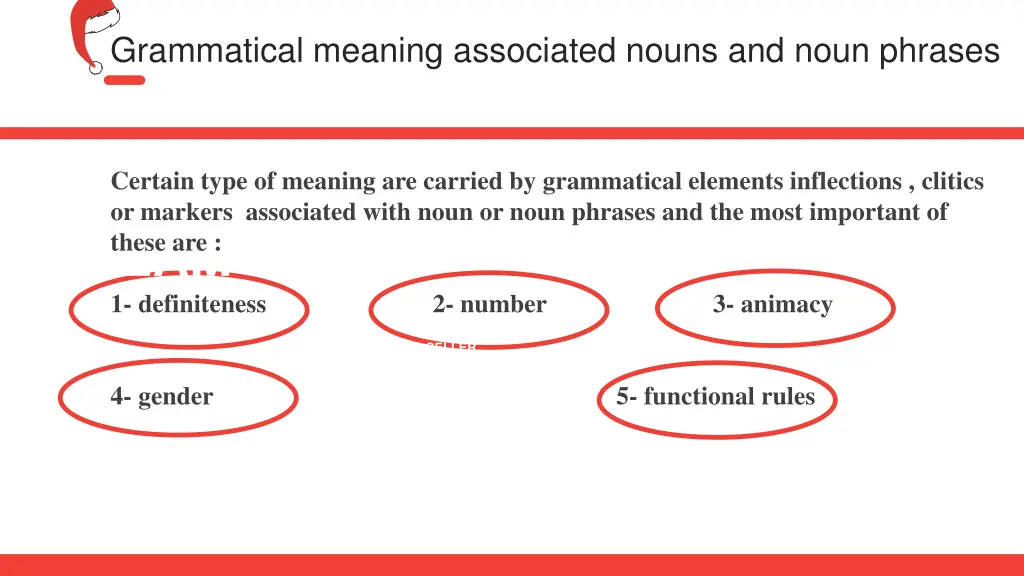
Grammatical meaning associated nouns and noun phrases Certain type of meaning are carried by grammatical elements inflections , clitics or markers associated with noun or noun phrases and the most important of these are : OUR TEAM 1- definiteness 2- number 3- animacy SELLER SELLER SELLER 4- gender 5- functional rules
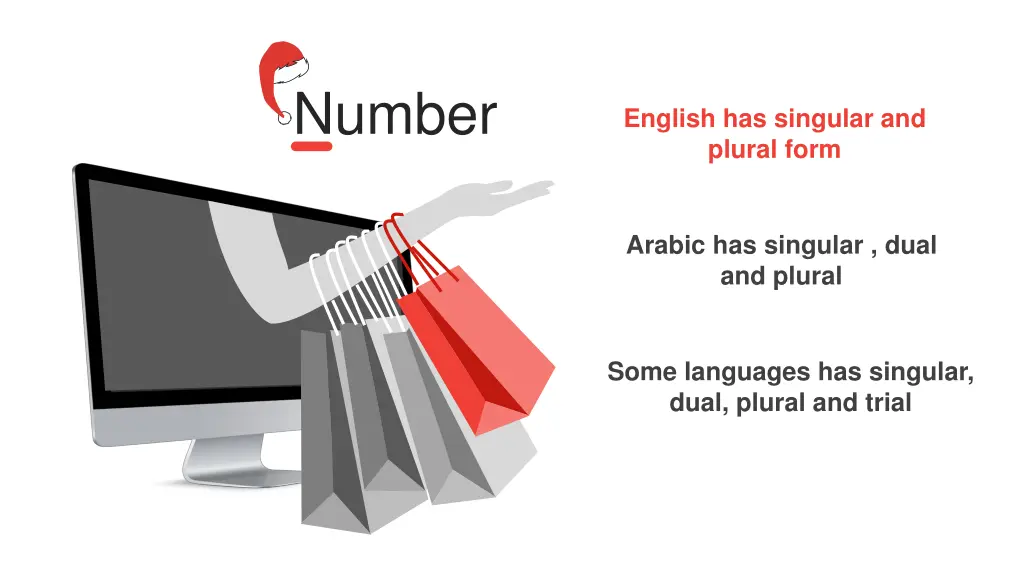
Number English has singular and plural form Arabic has singular , dual and plural Some languages has singular, dual, plural and trial
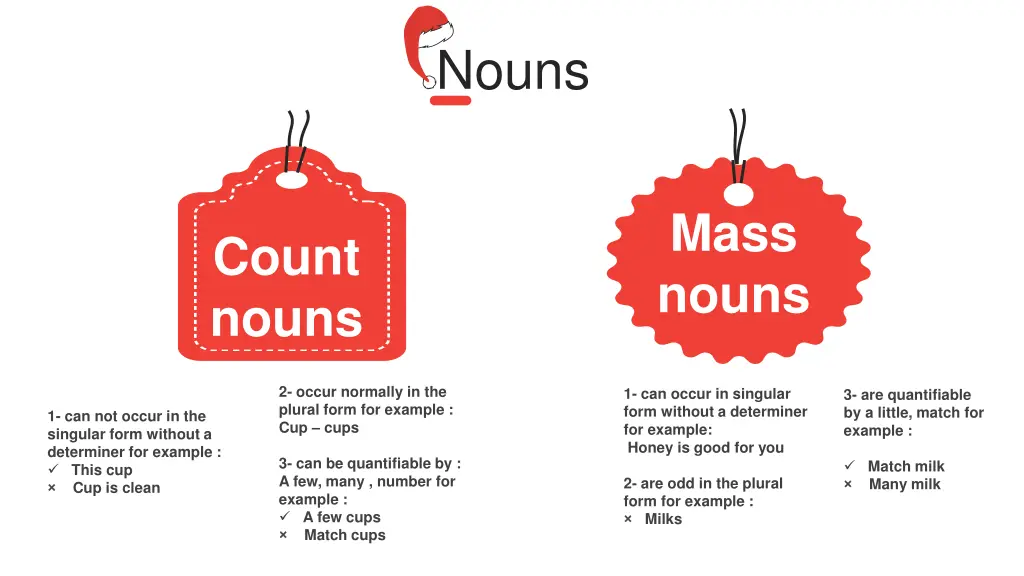
Nouns Mass nouns Count nouns 2- occur normally in the plural form for example : Cup cups 1- can occur in singular form without a determiner for example: Honey is good for you 3- are quantifiable by a little, match for example : 1- can not occur in the singular form without a determiner for example : This cup Cup is clean 3- can be quantifiable by : A few, many , number for example : A few cups Match cups Match milk Many milk 2- are odd in the plural form for example : Milks
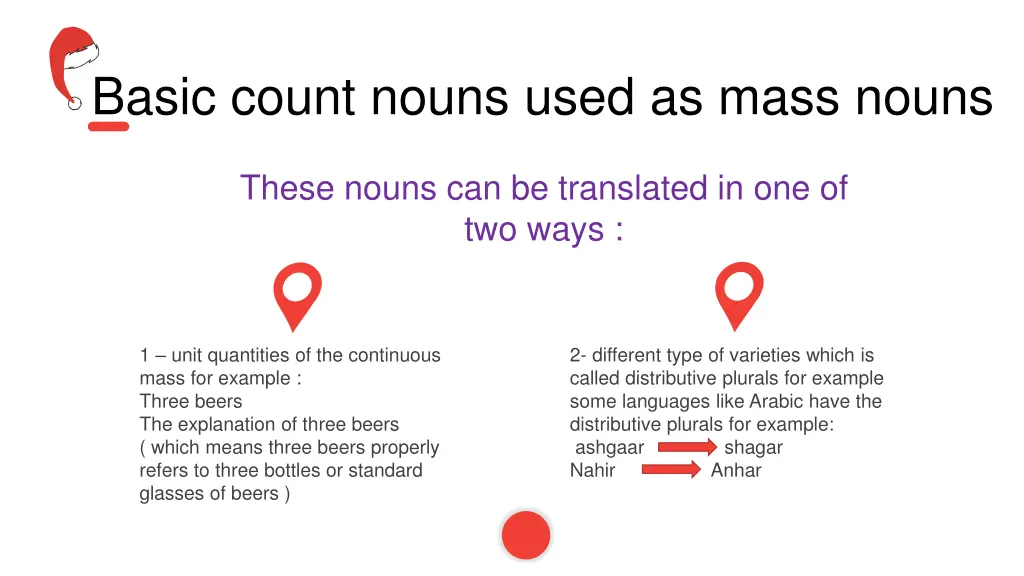
Basic count nouns used as mass nouns These nouns can be translated in one of two ways : 1 unit quantities of the continuous mass for example : Three beers The explanation of three beers ( which means three beers properly refers to three bottles or standard glasses of beers ) 2- different type of varieties which is called distributive plurals for example some languages like Arabic have the distributive plurals for example: ashgaar shagar Nahir Anhar
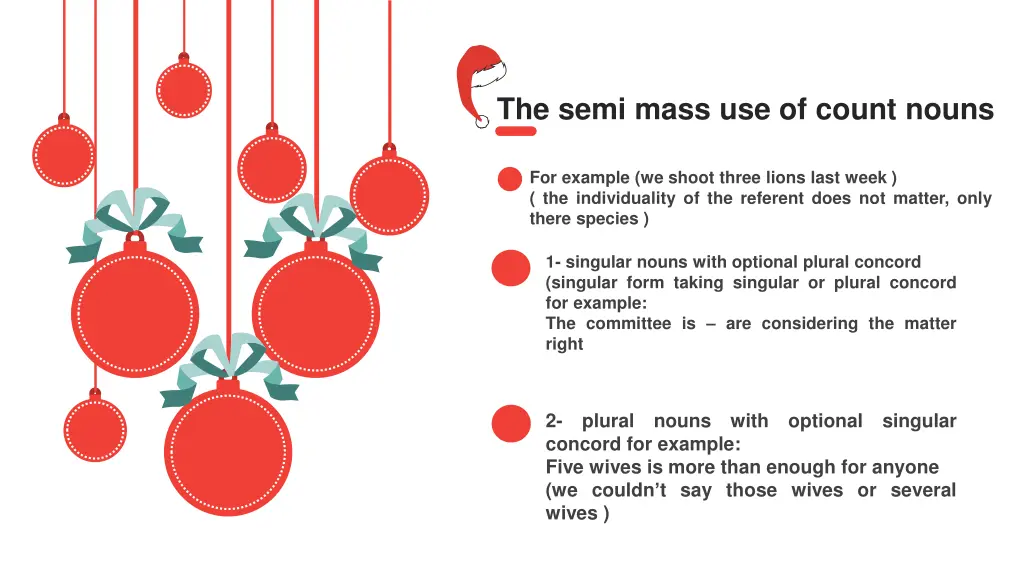
The semi mass use of count nouns For example (we shoot three lions last week ) ( the individuality of the referent does not matter, only there species ) 1- singular nouns with optional plural concord (singular form taking singular or plural concord for example: The committee is are considering the matter right 2- plural nouns with optional singular concord for example: Five wives is more than enough for anyone (we couldn t say those wives or several wives )
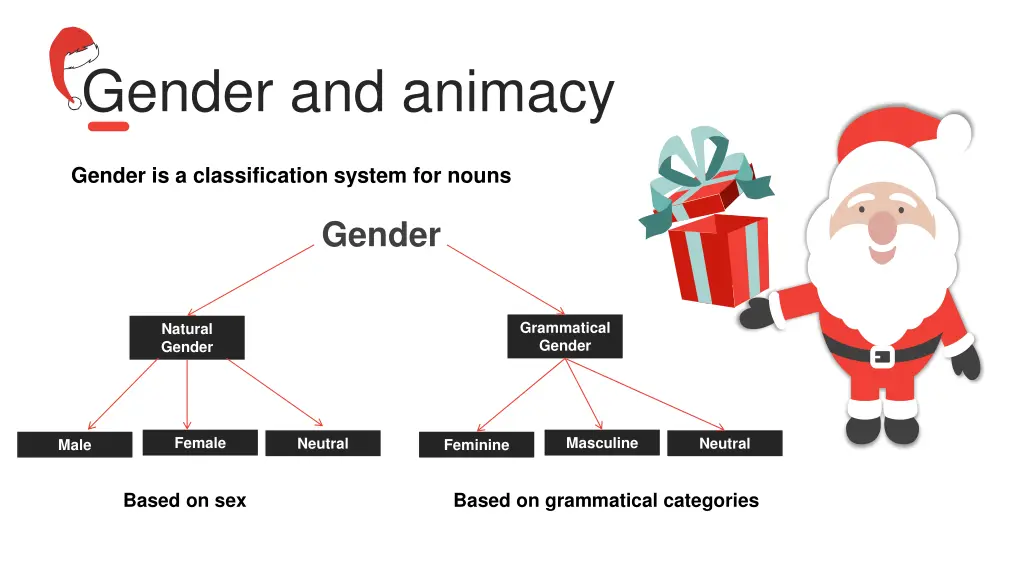
Gender and animacy Gender is a classification system for nouns Gender Grammatical Gender Natural Gender Female Masculine Neutral Neutral Male Feminine Based on sex Based on grammatical categories
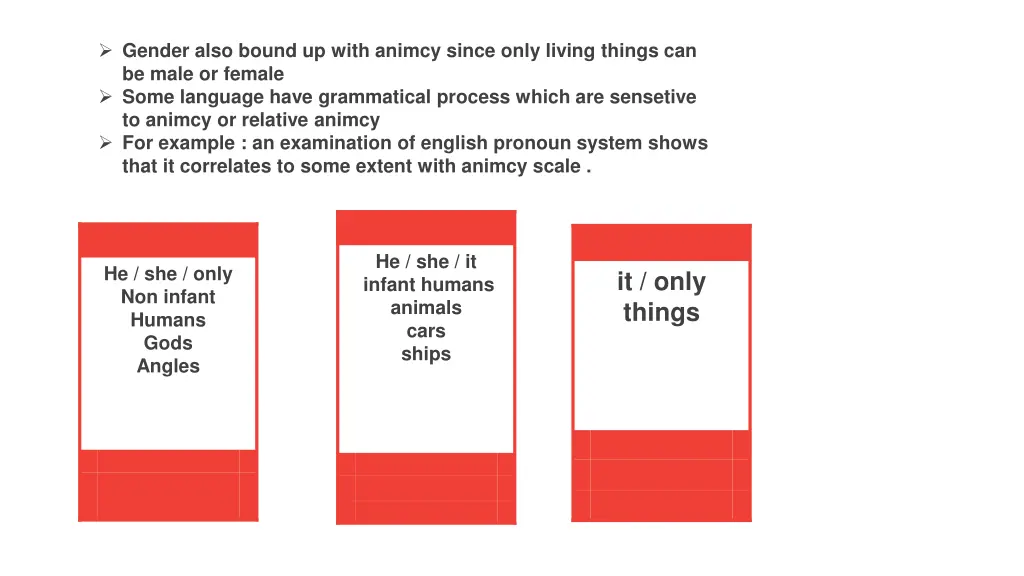
Gender also bound up with animcy since only living things can be male or female Some language have grammatical process which are sensetive to animcy or relative animcy For example : an examination of english pronoun system shows that it correlates to some extent with animcy scale . He / she / it infant humans animals cars ships He / she / only Non infant Humans Gods Angles it / only things
Grammatical meaning associated with verb Tense Tense of the verb use to express the event referred to in the sentence with reference to the time at which the utterance was produced $130 HALF PRICE SALE Limited Time only CHRISTMAS It can be indicated by time adverbials for Example (yesterday, next week, last year ). BIG SALE 50% Off
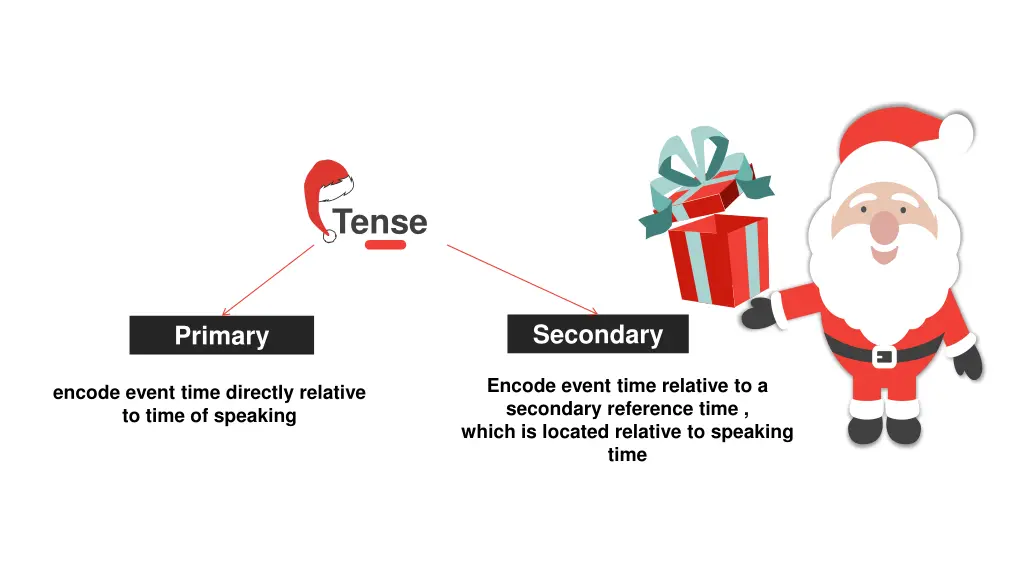
Tense Secondary Primary Encode event time relative to a secondary reference time , which is located relative to speaking time encode event time directly relative to time of speaking
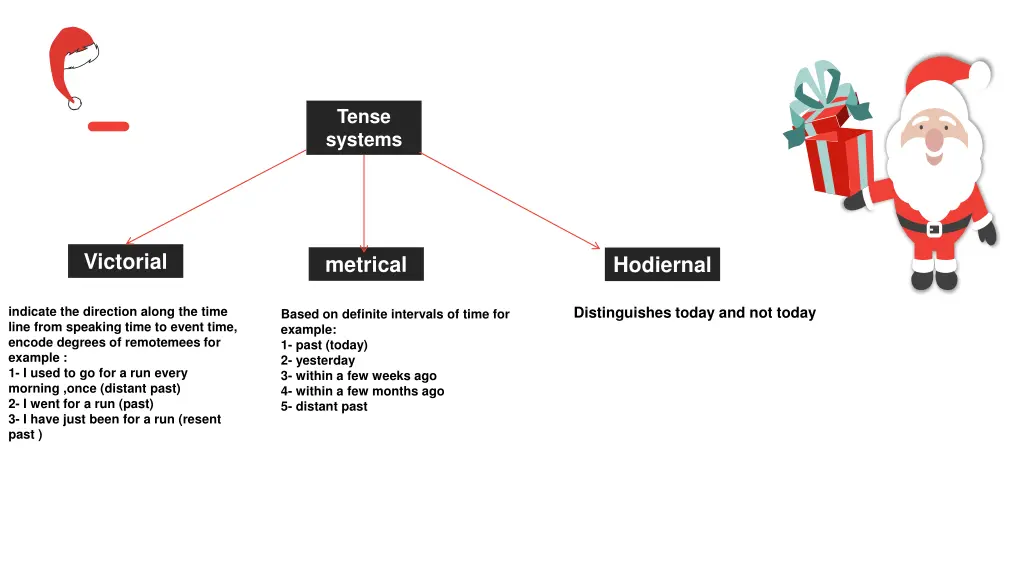
Tense systems Victorial metrical Hodiernal Distinguishes today and not today indicate the direction along the time line from speaking time to event time, encode degrees of remotemees for example : 1- I used to go for a run every morning ,once (distant past) 2- I went for a run (past) 3- I have just been for a run (resent past ) Based on definite intervals of time for example: 1- past (today) 2- yesterday 3- within a few weeks ago 4- within a few months ago 5- distant past
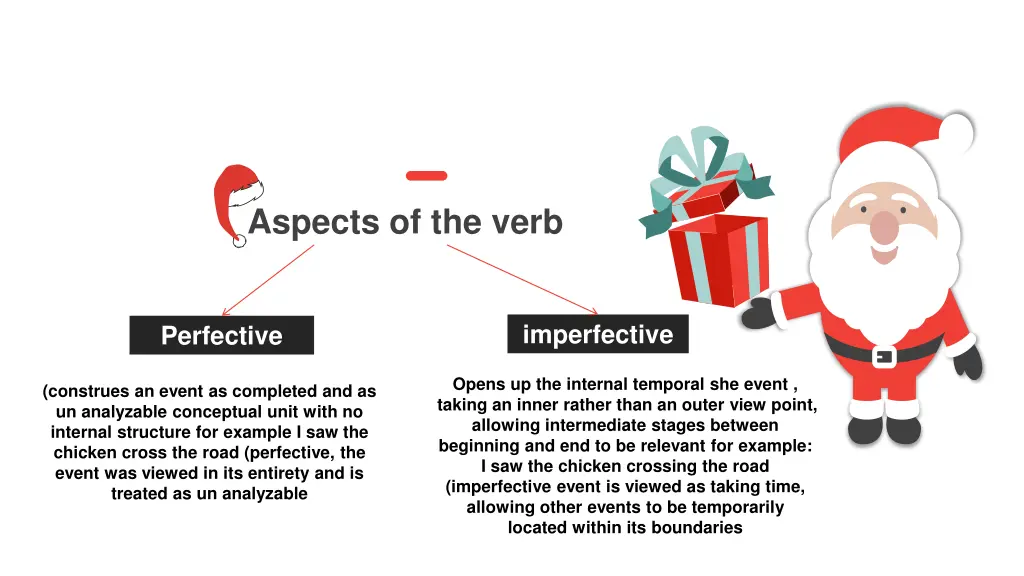
Aspects of the verb imperfective Perfective Opens up the internal temporal she event , taking an inner rather than an outer view point, allowing intermediate stages between beginning and end to be relevant for example: I saw the chicken crossing the road (imperfective event is viewed as taking time, allowing other events to be temporarily located within its boundaries (construes an event as completed and as un analyzable conceptual unit with no internal structure for example I saw the chicken cross the road (perfective, the event was viewed in its entirety and is treated as un analyzable
Modality Model expressions are those which signal a particular attitude on the part of the speaker to the proposition expressed or the situation described For example : it is probably the case that imported versions are cheaper (it is probably the case that ) indicate the speakers assessment of the like hood of the proposition (imported versions are cheaper) being true
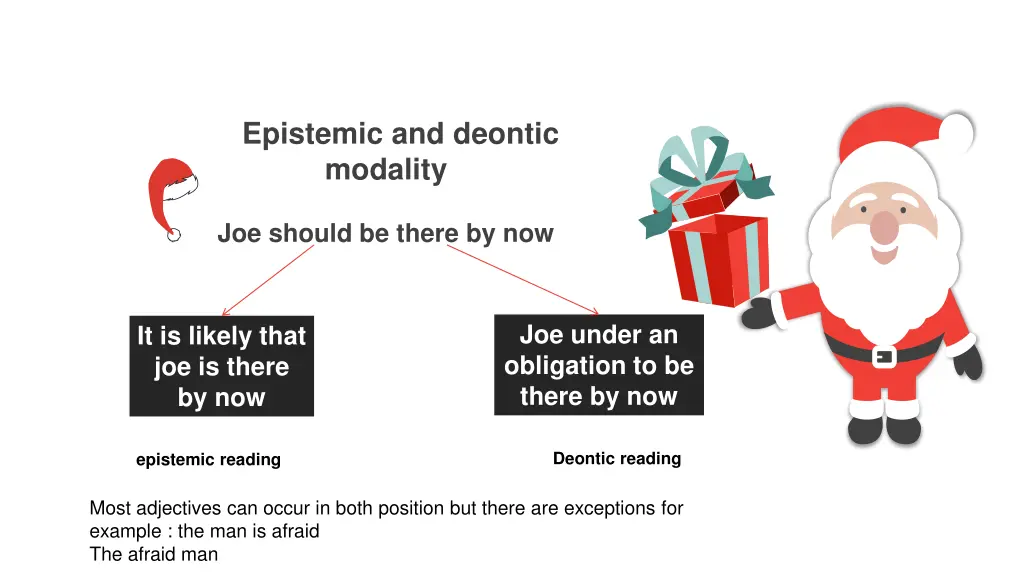
Epistemic and deontic modality Joe should be there by now Joe under an obligation to be there by now It is likely that joe is there by now Deontic reading epistemic reading Most adjectives can occur in both position but there are exceptions for example : the man is afraid The afraid man
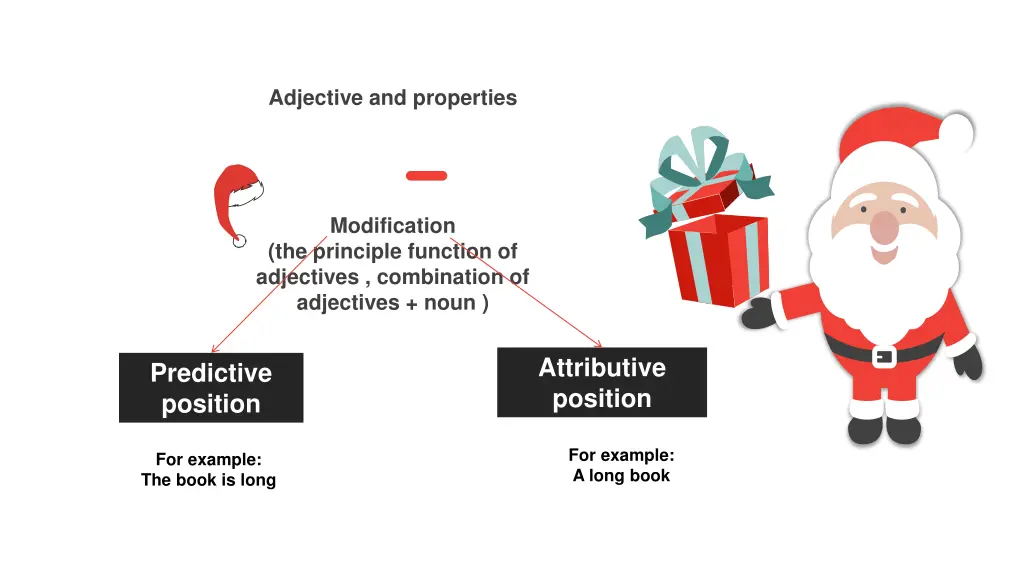
Adjective and properties Modification (the principle function of adjectives , combination of adjectives + noun ) Attributive position Predictive position For example: A long book For example: The book is long
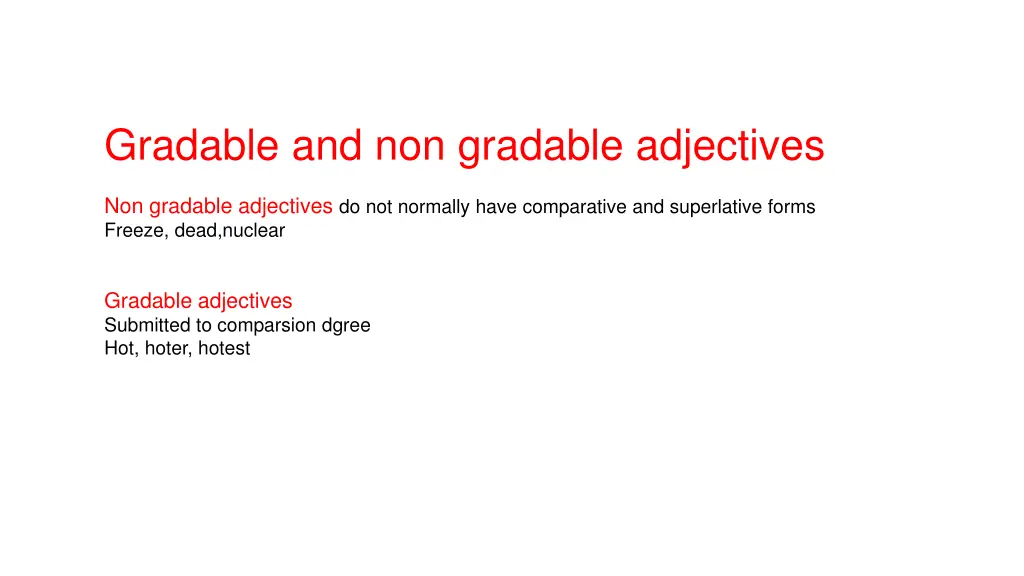
Gradable and non gradable adjectives Non gradable adjectives do not normally have comparative and superlative forms Freeze, dead,nuclear Gradable adjectives Submitted to comparsion dgree Hot, hoter, hotest
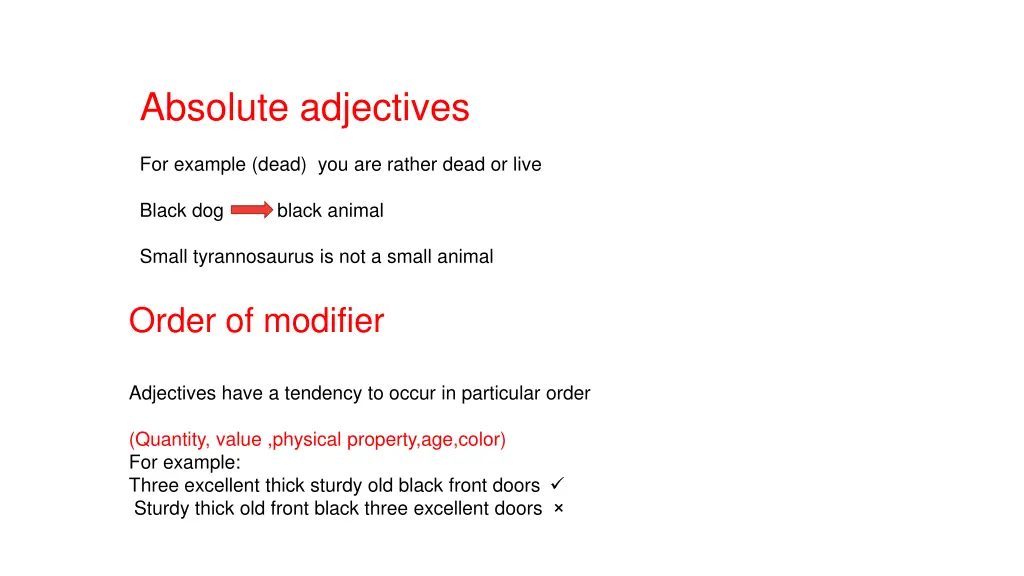
Absolute adjectives For example (dead) you are rather dead or live Black dog black animal Small tyrannosaurus is not a small animal Order of modifier Adjectives have a tendency to occur in particular order (Quantity, value ,physical property,age,color) For example: Three excellent thick sturdy old black front doors Sturdy thick old front black three excellent doors
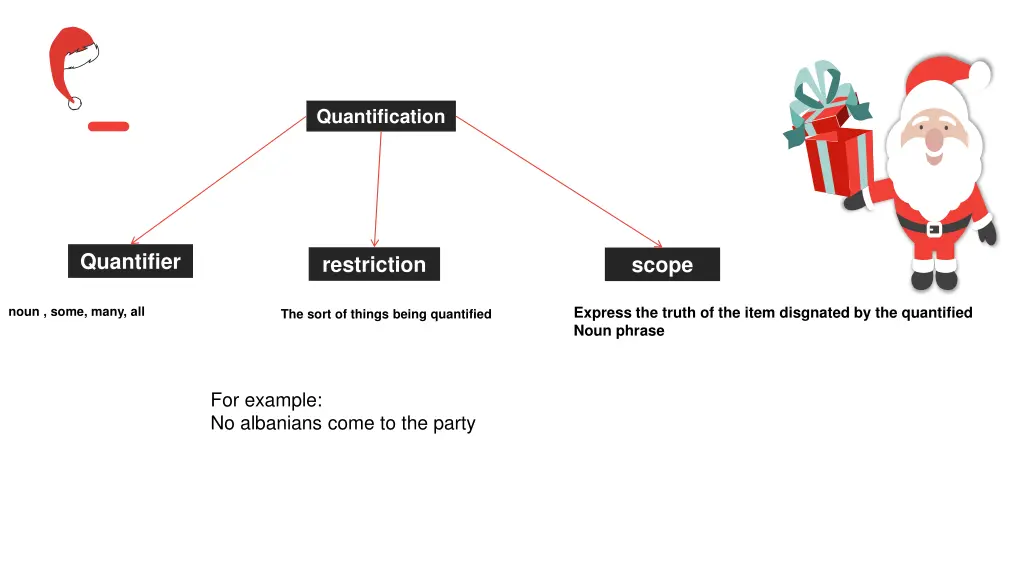
Quantification Quantifier restriction scope Express the truth of the item disgnated by the quantified Noun phrase noun , some, many, all The sort of things being quantified For example: No albanians come to the party
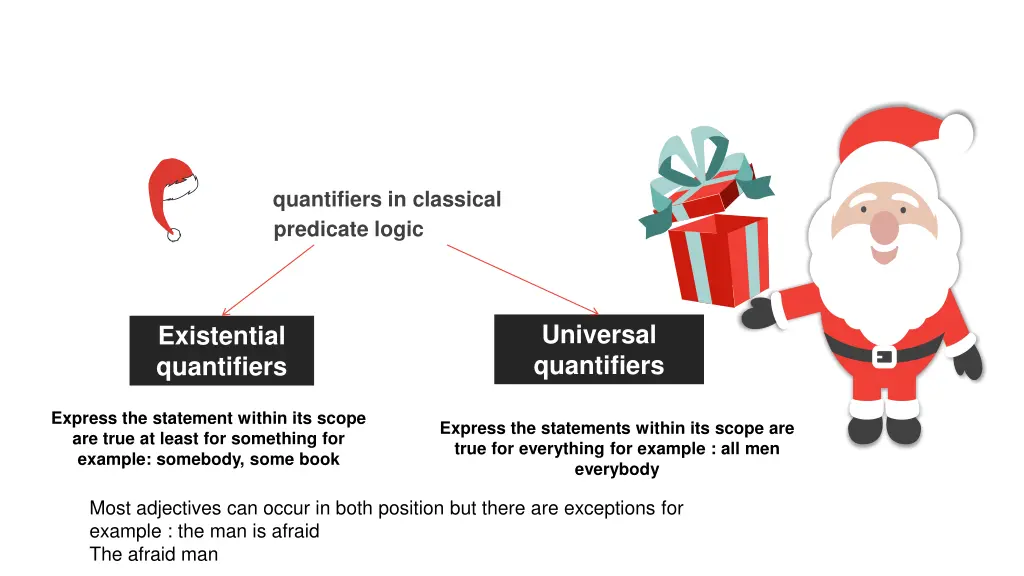
quantifiers in classical predicate logic Universal quantifiers Existential quantifiers Express the statement within its scope are true at least for something for example: somebody, some book Express the statements within its scope are true for everything for example : all men everybody Most adjectives can occur in both position but there are exceptions for example : the man is afraid The afraid man
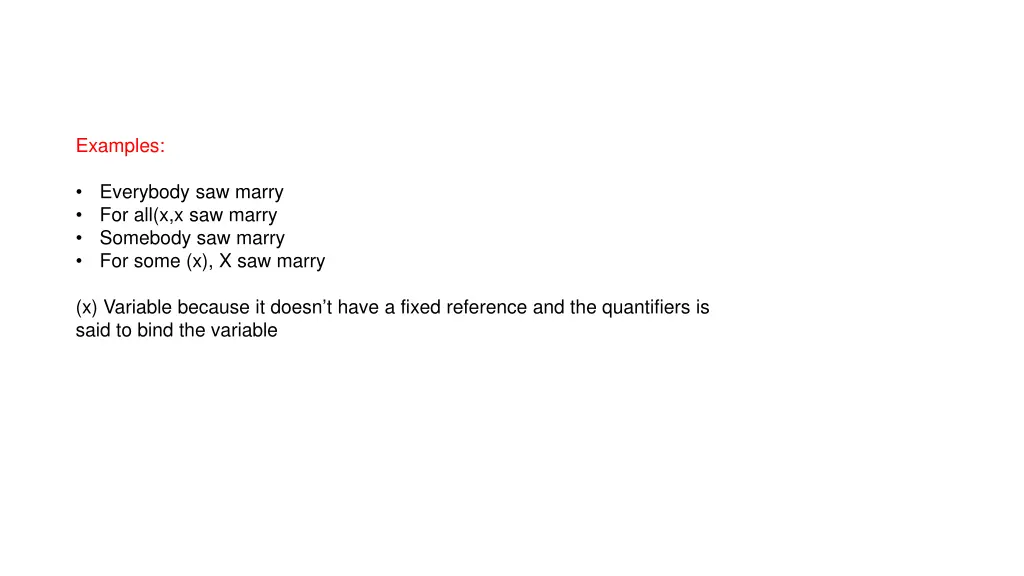
Examples: Everybody saw marry For all(x,x saw marry Somebody saw marry For some (x), X saw marry (x) Variable because it doesn t have a fixed reference and the quantifiers is said to bind the variable
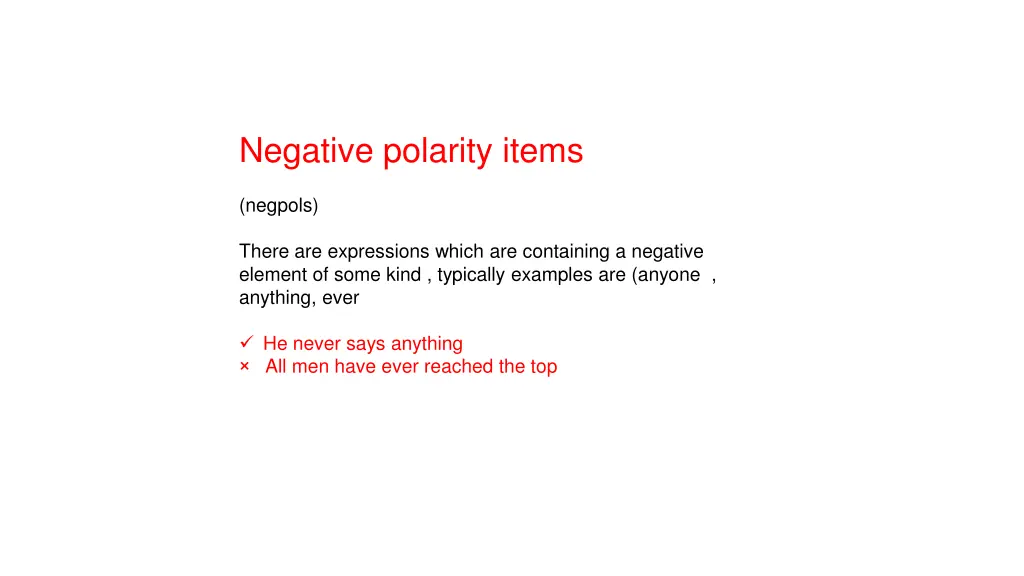
Negative polarity items (negpols) There are expressions which are containing a negative element of some kind , typically examples are (anyone , anything, ever He never says anything All men have ever reached the top
Thank You Insert the Sub Title of Your Presentation