Green Climate Fund Readiness Webinar: Climate Change and Health Priorities
This content explores the intersection of climate change and health in the WHO AFRO region, focusing on adaptation strategies, key frameworks, and historical initiatives. It highlights the importance of assessing vulnerability, implementing national adaptation plans, capacity building, and community engagement for climate resilience. The Health and Environment history graph showcases the evolution of interministerial efforts to address environmental threats to health in Africa and sustainably develop the region.

Download Presentation

Please find below an Image/Link to download the presentation.
The content on the website is provided AS IS for your information and personal use only. It may not be sold, licensed, or shared on other websites without obtaining consent from the author. If you encounter any issues during the download, it is possible that the publisher has removed the file from their server.
You are allowed to download the files provided on this website for personal or commercial use, subject to the condition that they are used lawfully. All files are the property of their respective owners.
The content on the website is provided AS IS for your information and personal use only. It may not be sold, licensed, or shared on other websites without obtaining consent from the author.
E N D
Presentation Transcript
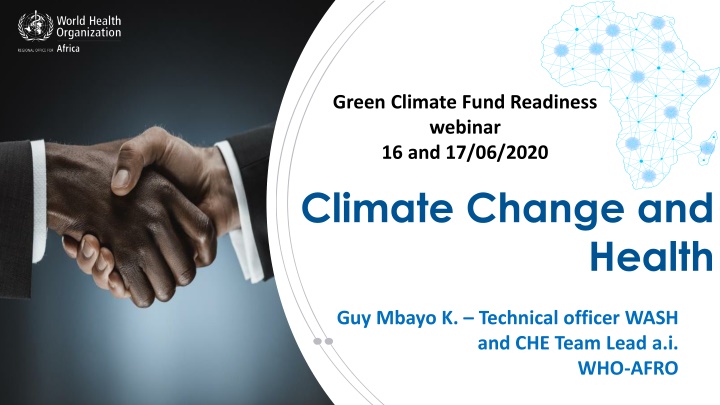
Green Climate Fund Readiness webinar 16 and 17/06/2020 Climate Change and Health Guy Mbayo K. Technical officer WASH and CHE Team Lead a.i. WHO-AFRO
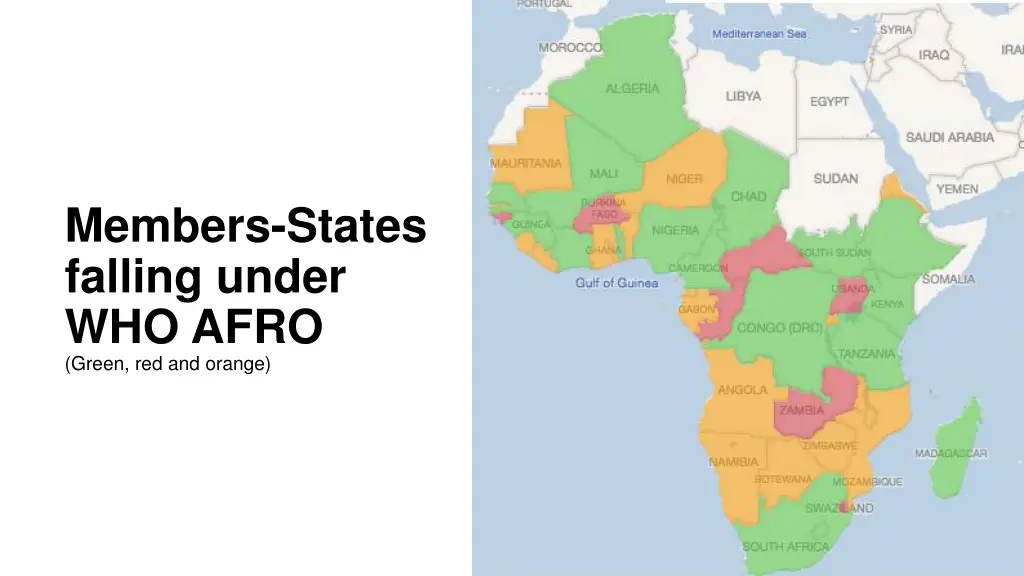
Members-States falling under WHO AFRO (Green, red and orange)
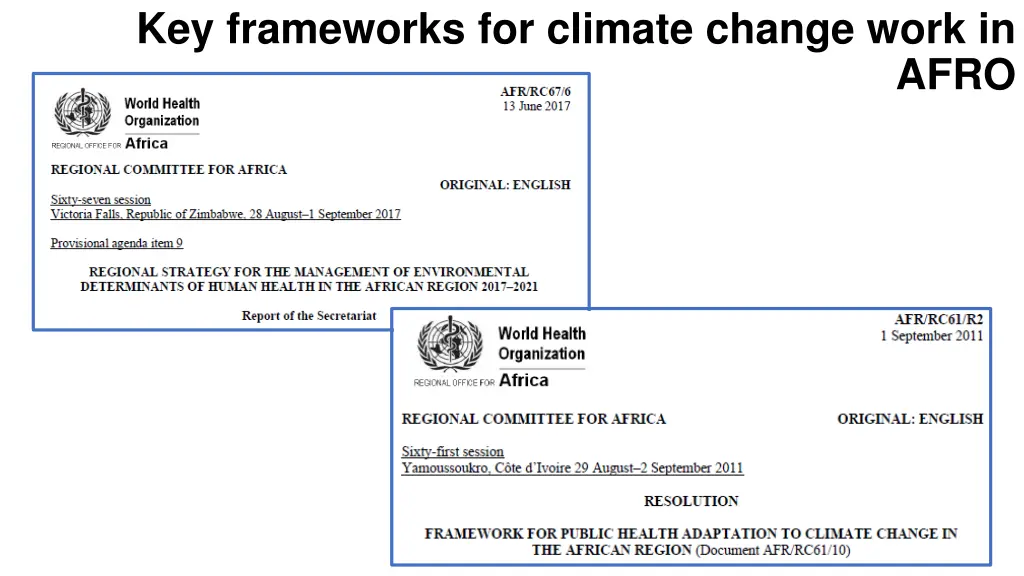
ADAPTATION TO CLIMATE CHANGE WHO AFRO strategic priorities (Resolution AFR/RC61/R2) (a) conduct assessments of vulnerability and adaptation to climate change; (b) develop and implement health national adaption plans to climate change; (c) support capacity building for mainstreaming climate resilience in health programming so as to improve early warning and surveillance of climate sensitive diseases; (d) promote win-win partnerships, intersectoral collaboration, and advocacy for Member States access to global multilateral financial mechanisms, including the GEF and the GCF (e) support community engagement through awareness raising and social mobilization, and the development and implementation of community-based adaptation programmes. 4
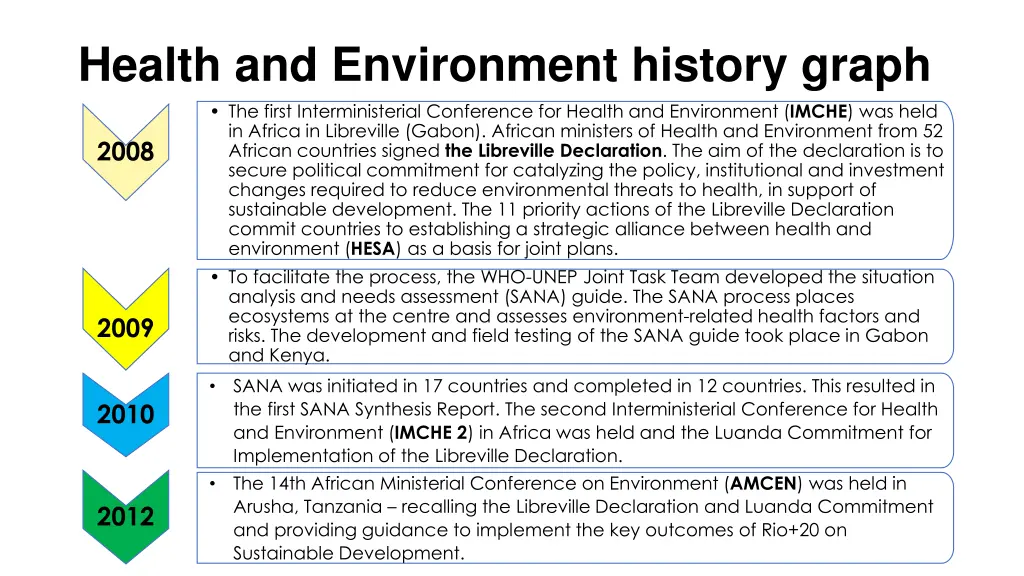
Health and Environment history graph The first Interministerial Conference for Health and Environment (IMCHE) was held in Africa in Libreville (Gabon). African ministers of Health and Environment from 52 African countries signed the Libreville Declaration. The aim of the declaration is to secure political commitment for catalyzing the policy, institutional and investment changes required to reduce environmental threats to health, in support of sustainable development. The 11 priority actions of the Libreville Declaration commit countries to establishing a strategic alliance between health and environment (HESA) as a basis for joint plans. To facilitate the process, the WHO-UNEP Joint Task Team developed the situation analysis and needs assessment (SANA) guide. The SANA process places ecosystems at the centre and assesses environment-related health factors and risks. The development and field testing of the SANA guide took place in Gabon and Kenya. SANA was initiated in 17 countries and completed in 12 countries. This resulted in the first SANA Synthesis Report. The second Interministerial Conference for Health and Environment (IMCHE 2) in Africa was held and the Luanda Commitment for Implementation of the Libreville Declaration. 2008 2009 2010 The 14th African Ministerial Conference on Environment (AMCEN) was held in Arusha, Tanzania recalling the Libreville Declaration and Luanda Commitment and providing guidance to implement the key outcomes of Rio+20 on Sustainable Development. 2012
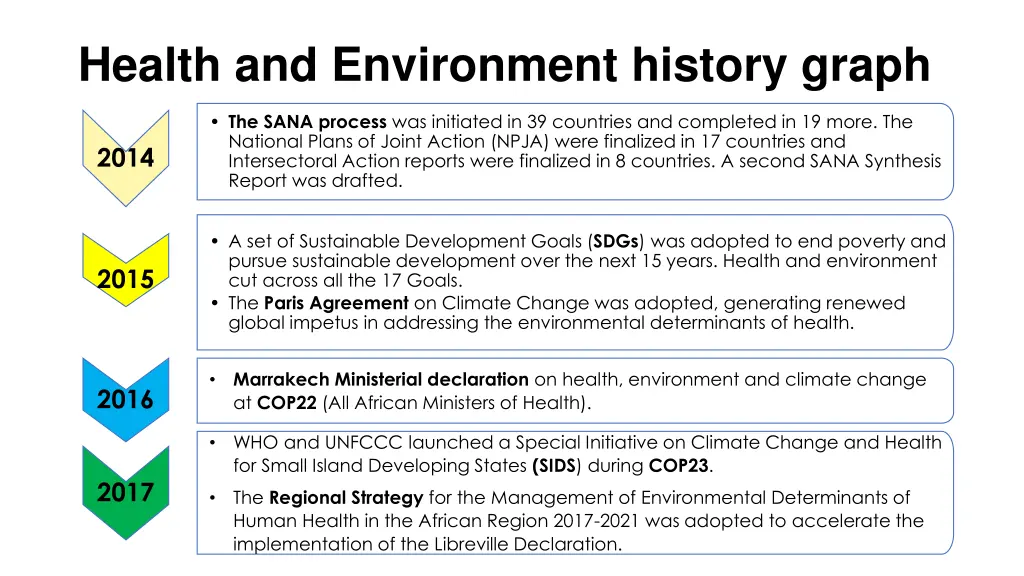
Health and Environment history graph The SANA process was initiated in 39 countries and completed in 19 more. The National Plans of Joint Action (NPJA) were finalized in 17 countries and Intersectoral Action reports were finalized in 8 countries. A second SANA Synthesis Report was drafted. 2014 A set of Sustainable Development Goals (SDGs) was adopted to end poverty and pursue sustainable development over the next 15 years. Health and environment cut across all the 17 Goals. The Paris Agreement on Climate Change was adopted, generating renewed global impetus in addressing the environmental determinants of health. 2015 Marrakech Ministerial declaration on health, environment and climate change at COP22 (All African Ministers of Health). 2016 WHO and UNFCCC launched a Special Initiative on Climate Change and Health for Small Island Developing States (SIDS) during COP23. 2017 The Regional Strategy for the Management of Environmental Determinants of Human Health in the African Region 2017-2021 was adopted to accelerate the implementation of the Libreville Declaration.
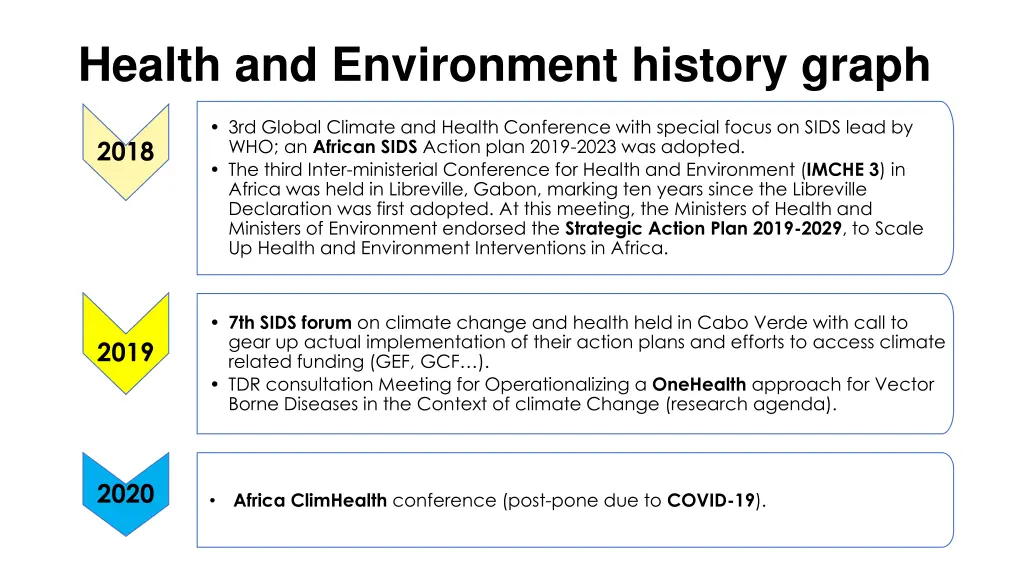
Health and Environment history graph 3rd Global Climate and Health Conference with special focus on SIDS lead by WHO; an African SIDS Action plan 2019-2023 was adopted. The third Inter-ministerial Conference for Health and Environment (IMCHE 3) in Africa was held in Libreville, Gabon, marking ten years since the Libreville Declaration was first adopted. At this meeting, the Ministers of Health and Ministers of Environment endorsed the Strategic Action Plan 2019-2029, to Scale Up Health and Environment Interventions in Africa. 2018 7th SIDS forum on climate change and health held in Cabo Verde with call to gear up actual implementation of their action plans and efforts to access climate related funding (GEF, GCF ). TDR consultation Meeting for Operationalizing a OneHealth approach for Vector Borne Diseases in the Context of climate Change (research agenda). 2019 2020 Africa ClimHealth conference (post-pone due to COVID-19).
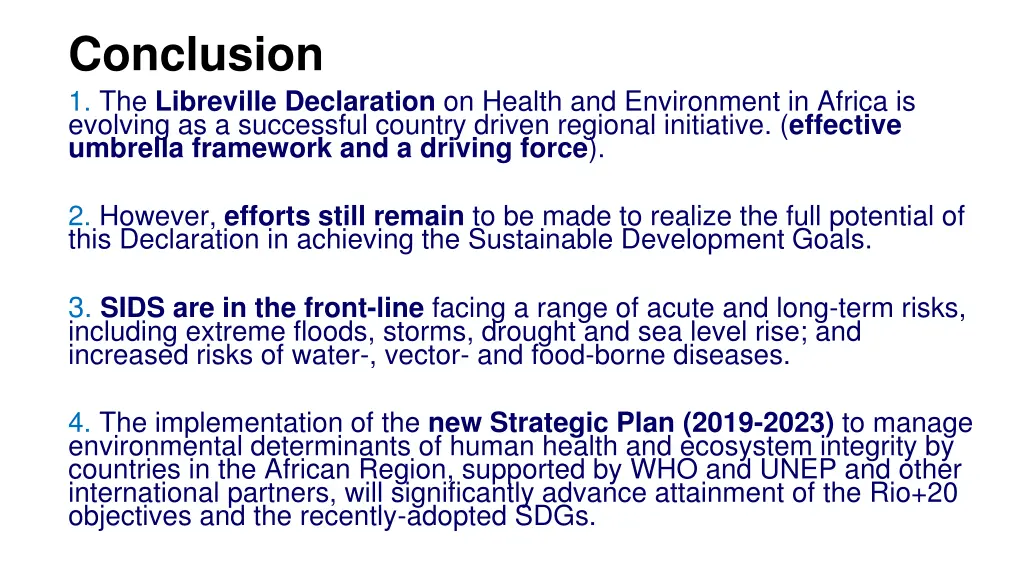
Conclusion 1. The Libreville Declaration on Health and Environment in Africa is evolving as a successful country driven regional initiative. (effective umbrella framework and a driving force). 2. However, efforts still remain to be made to realize the full potential of this Declaration in achieving the Sustainable Development Goals. 3. SIDS are in the front-line facing a range of acute and long-term risks, including extreme floods, storms, drought and sea level rise; and increased risks of water-, vector- and food-borne diseases. 4. The implementation of the new Strategic Plan (2019-2023) to manage environmental determinants of human health and ecosystem integrity by countries in the African Region, supported by WHO and UNEP and other international partners, will significantly advance attainment of the Rio+20 objectives and the recently-adopted SDGs.