Green Deal and Transport Sustainability Videoconference

This videoconference on 21st June focuses on sustainable mobility, GHG emissions reduction, and climate change mitigation in the transport sector. Featuring discussions with key industry players, including Fiat and Iveco, on Lithuanian perspectives towards a greener mobility future. The event aims to leverage PNRR resources for supporting infrastructure for electric cars and biofuel use, aligning with the EU's transport policies and upcoming energy and climate legislation.

Download Presentation

Please find below an Image/Link to download the presentation.
The content on the website is provided AS IS for your information and personal use only. It may not be sold, licensed, or shared on other websites without obtaining consent from the author.If you encounter any issues during the download, it is possible that the publisher has removed the file from their server.
You are allowed to download the files provided on this website for personal or commercial use, subject to the condition that they are used lawfully. All files are the property of their respective owners.
The content on the website is provided AS IS for your information and personal use only. It may not be sold, licensed, or shared on other websites without obtaining consent from the author.
E N D
Presentation Transcript
Towards the Green deal and transport sustainability videoconference, 21 June 10.00-11.30
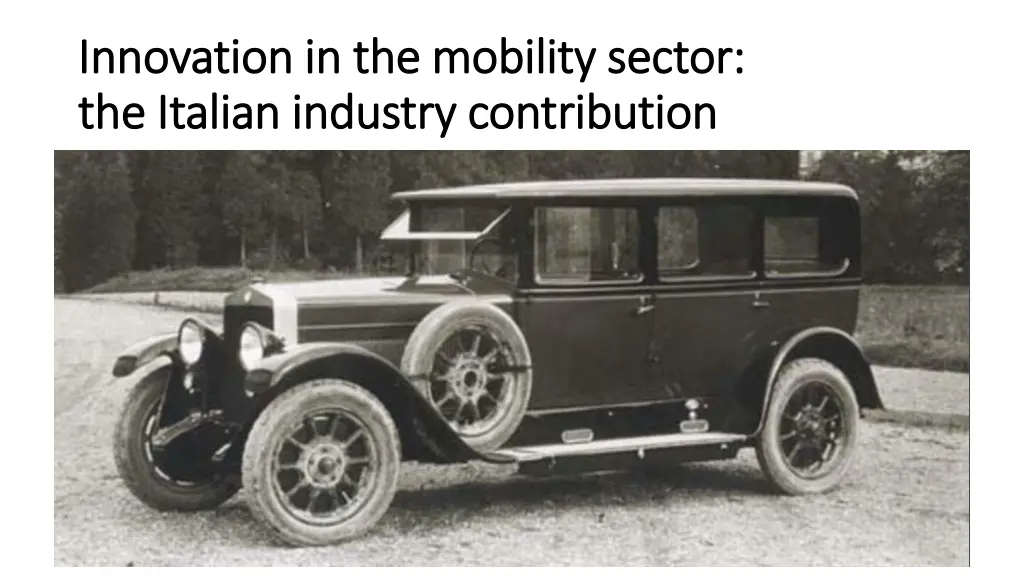
Innovation Innovation in the mobility sector: in the mobility sector: the the Italian industry Italian industry contribution contribution
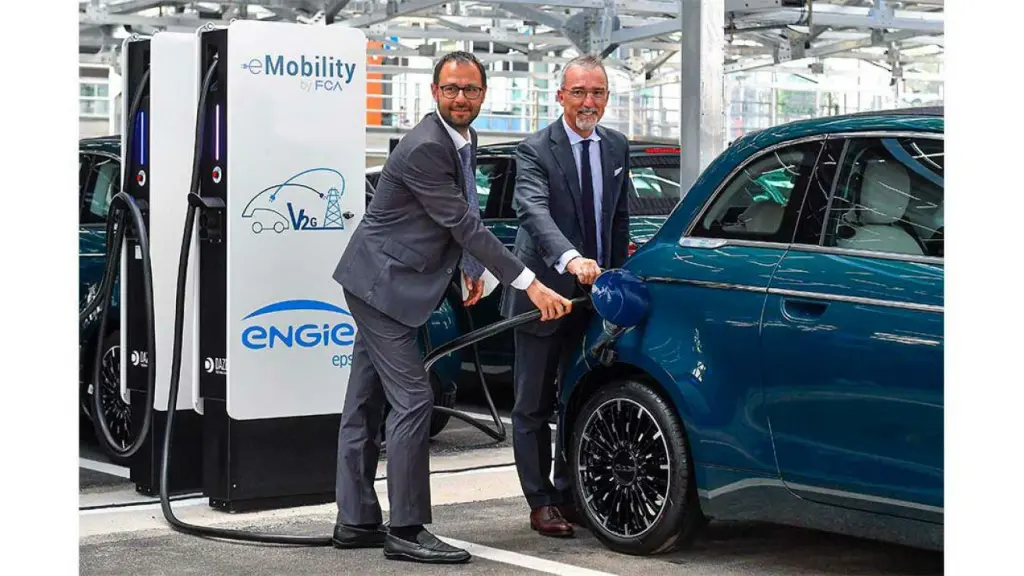
Following the 24thMarch event on the Italian contribution to the Glasgow COP26 on climate change, this videoconference intends to discuss with the responsible of the Ministry of Transport and Communications for sustainable mobility and the representatives of Italian industrial companies Fiat and Iveco the Lithuanian perspectives towards a mobility sector committed to reduce GHG emissions contribute to mitigate the Climate change threats ready to use the PNRR resources to create a supporting infrastructure for a growing share of electric cars and an increasing use of biofuel for goods transport in the framework of the EU increased attention to the transport policies
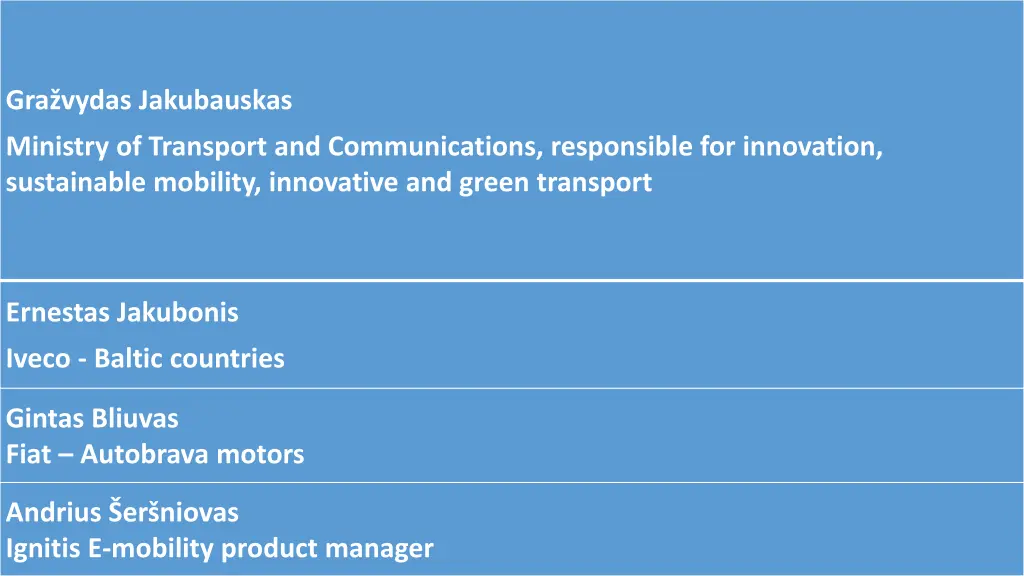
Gravydas Jakubauskas Ministry of Transport and Communications, responsible for innovation, sustainable mobility, innovative and green transport Ernestas Jakubonis Iveco - Baltic countries Gintas Bliuvas Fiat Autobrava motors Andrius er niovas Ignitis E-mobility product manager
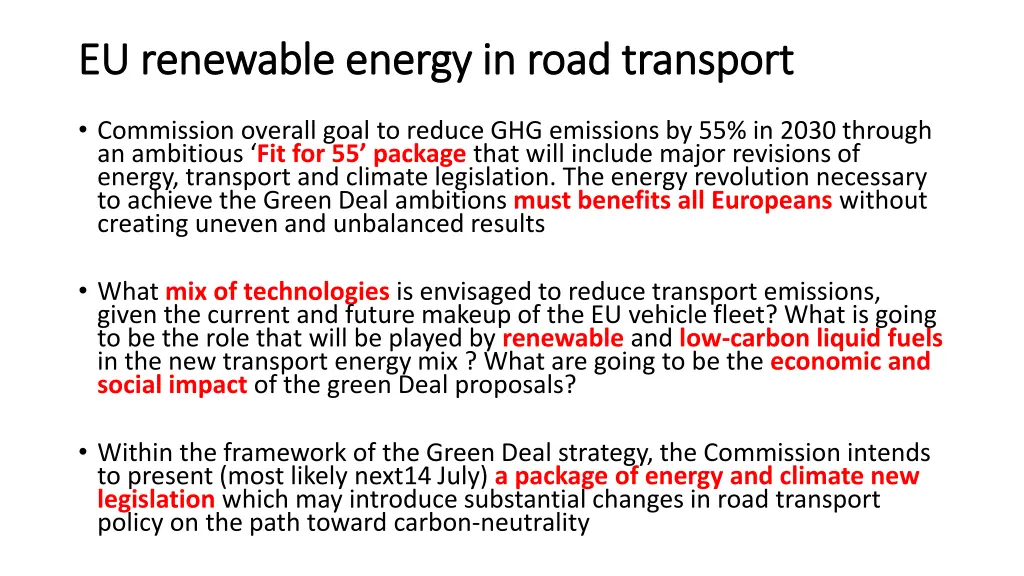
EU renewable energy in road transport EU renewable energy in road transport Commission overall goal to reduce GHG emissions by 55% in 2030 through an ambitious Fit for 55 package that will include major revisions of energy, transport and climate legislation. The energy revolution necessary to achieve the Green Deal ambitions must benefits all Europeans without creating uneven and unbalanced results What mix of technologies is envisaged to reduce transport emissions, given the current and future makeup of the EU vehicle fleet? What is going to be the role that will be played by renewable and low-carbon liquid fuels in the new transport energy mix ? What are going to be the economic and social impact of the green Deal proposals? Within the framework of the Green Deal strategy, the Commission intends to present (most likely next14 July) a package of energy and climate new legislation which may introduce substantial changes in road transport policy on the path toward carbon-neutrality
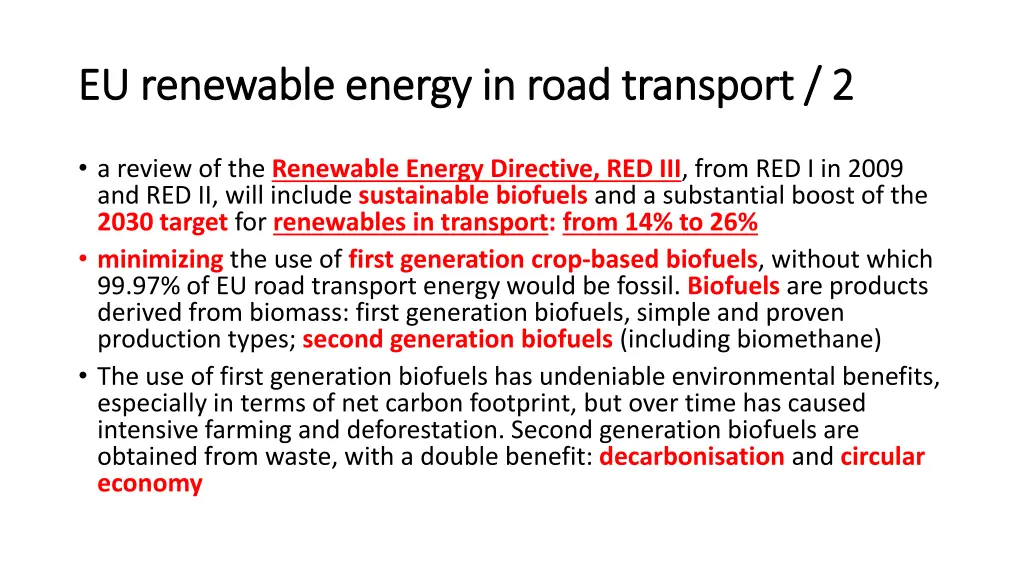
EU renewable energy in road EU renewable energy in road transport / 2 transport / 2 a review of the Renewable Energy Directive, RED III, from RED I in 2009 and RED II, will include sustainable biofuels and a substantial boost of the 2030 target for renewables in transport: from 14% to 26% minimizing the use of first generation crop-based biofuels, without which 99.97% of EU road transport energy would be fossil. Biofuels are products derived from biomass: first generation biofuels, simple and proven production types; second generation biofuels (including biomethane) The use of first generation biofuels has undeniable environmental benefits, especially in terms of net carbon footprint, but over time has caused intensive farming and deforestation. Second generation biofuels are obtained from waste, with a double benefit: decarbonisation and circular economy
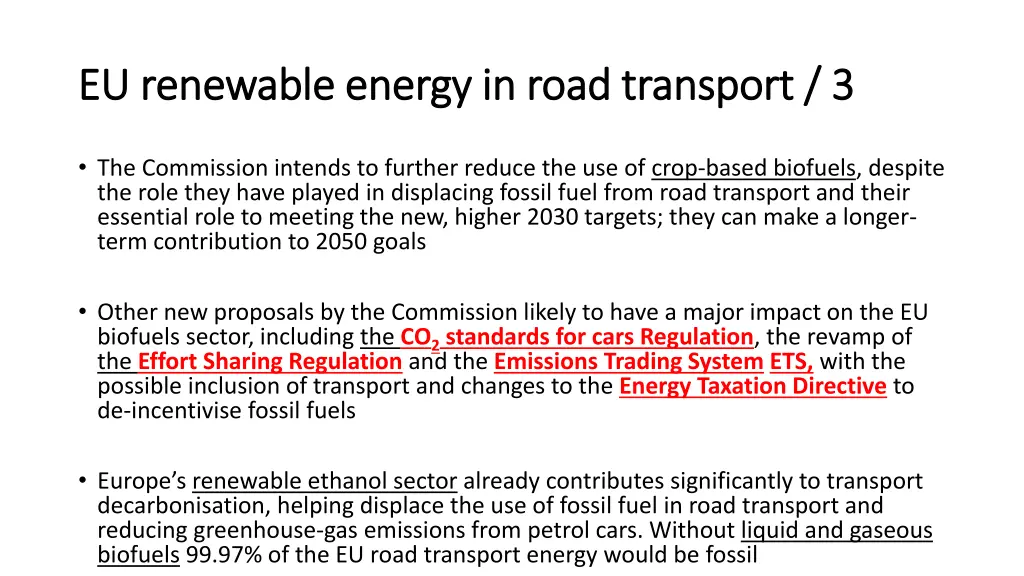
EU renewable energy in road transport / EU renewable energy in road transport / 3 3 The Commission intends to further reduce the use of crop-based biofuels, despite the role they have played in displacing fossil fuel from road transport and their essential role to meeting the new, higher 2030 targets; they can make a longer- term contribution to 2050 goals Other new proposals by the Commission likely to have a major impact on the EU biofuels sector, including the CO2standards for cars Regulation, the revamp of the Effort Sharing Regulation and the Emissions Trading System ETS, with the possible inclusion of transport and changes to the Energy Taxation Directive to de-incentivise fossil fuels Europe s renewable ethanol sector already contributes significantly to transport decarbonisation, helping displace the use of fossil fuel in road transport and reducing greenhouse-gas emissions from petrol cars. Without liquid and gaseous biofuels 99.97% of the EU road transport energy would be fossil
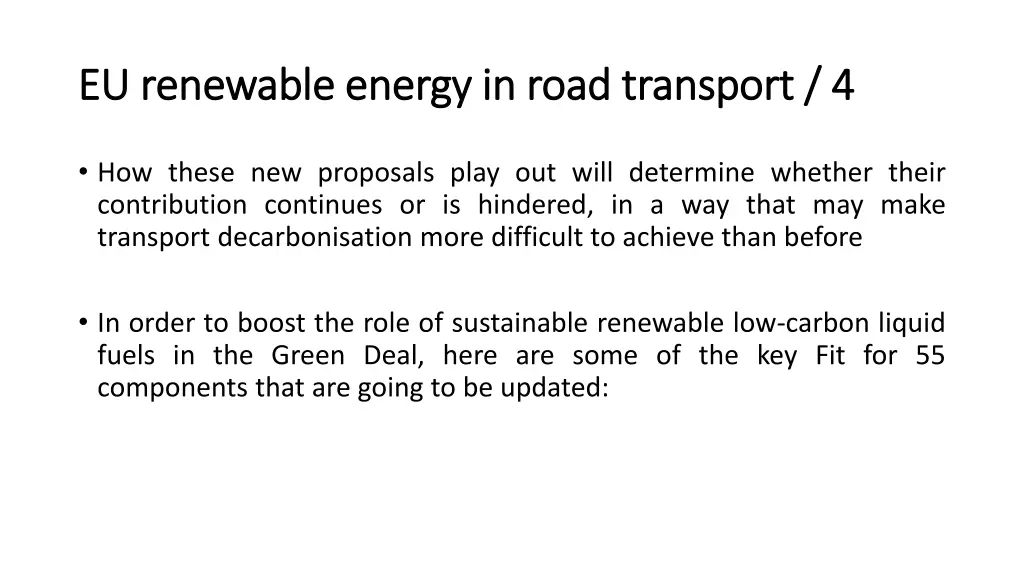
EU renewable energy in road EU renewable energy in road transport / 4 transport / 4 How these new proposals play out will determine whether their contribution continues or is hindered, in a way that may make transport decarbonisation more difficult to achieve than before In order to boost the role of sustainable renewable low-carbon liquid fuels in the Green Deal, here are some of the key Fit for 55 components that are going to be updated:
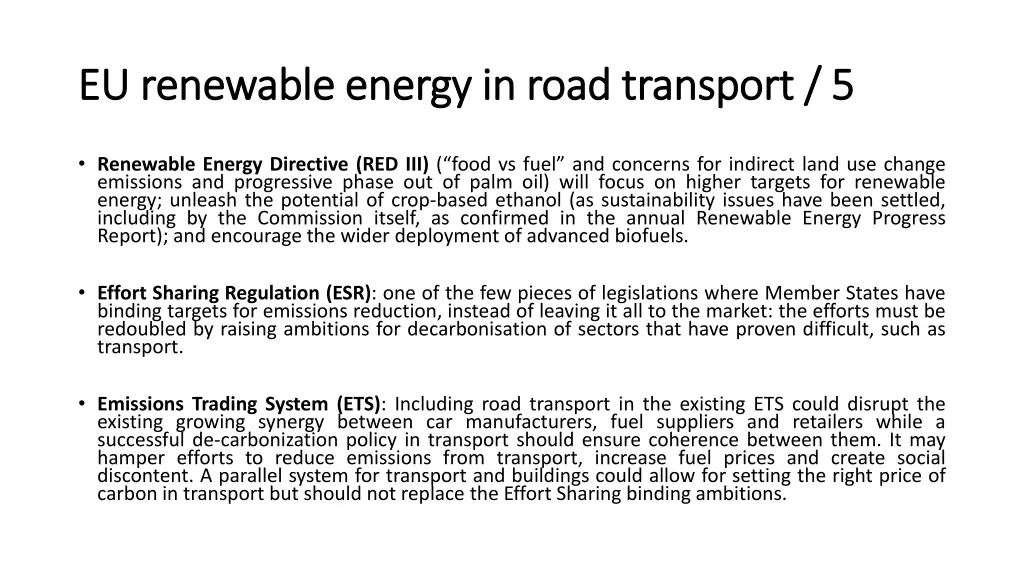
EU renewable energy in road EU renewable energy in road transport / 5 transport / 5 Renewable Energy Directive (RED III) ( food vs fuel and concerns for indirect land use change emissions and progressive phase out of palm oil) will focus on higher targets for renewable energy; unleash the potential of crop-based ethanol (as sustainability issues have been settled, including by the Commission itself, as confirmed in the annual Renewable Energy Progress Report); and encourage the wider deployment of advanced biofuels. Effort Sharing Regulation (ESR): one of the few pieces of legislations where Member States have binding targets for emissions reduction, instead of leaving it all to the market: the efforts must be redoubled by raising ambitions for decarbonisation of sectors that have proven difficult, such as transport. Emissions Trading System (ETS): Including road transport in the existing ETS could disrupt the existing growing synergy between car manufacturers, fuel suppliers and retailers while a successful de-carbonization policy in transport should ensure coherence between them. It may hamper efforts to reduce emissions from transport, increase fuel prices and create social discontent. A parallel system for transport and buildings could allow for setting the right price of carbon in transport but should not replace the Effort Sharing binding ambitions.
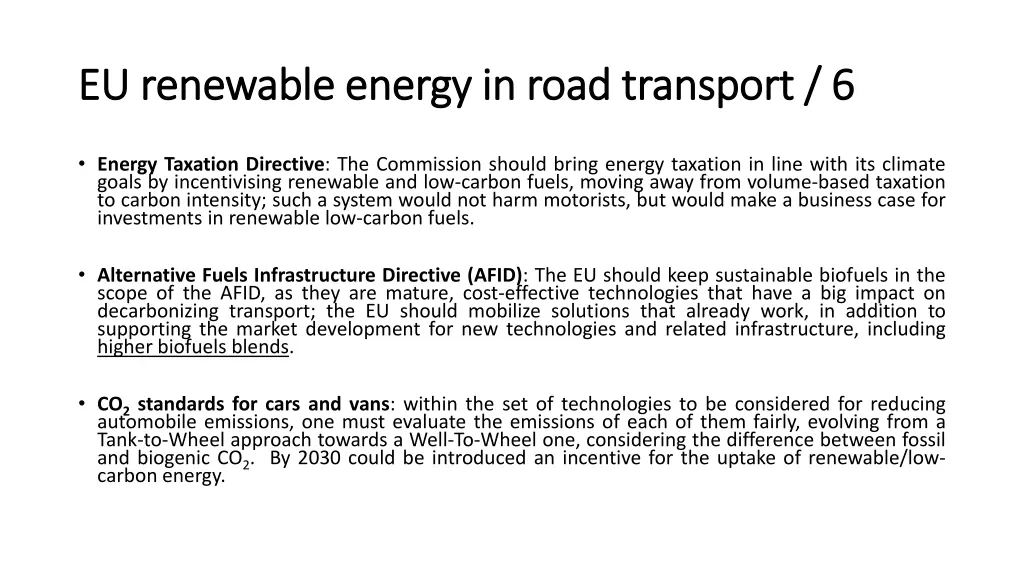
EU renewable energy in road EU renewable energy in road transport / 6 transport / 6 Energy Taxation Directive: The Commission should bring energy taxation in line with its climate goals by incentivising renewable and low-carbon fuels, moving away from volume-based taxation to carbon intensity; such a system would not harm motorists, but would make a business case for investments in renewable low-carbon fuels. Alternative Fuels Infrastructure Directive (AFID): The EU should keep sustainable biofuels in the scope of the AFID, as they are mature, cost-effective technologies that have a big impact on decarbonizing transport; the EU should mobilize solutions that already work, in addition to supporting the market development for new technologies and related infrastructure, including higher biofuels blends. CO2standards for cars and vans: within the set of technologies to be considered for reducing automobile emissions, one must evaluate the emissions of each of them fairly, evolving from a Tank-to-Wheel approach towards a Well-To-Wheel one, considering the difference between fossil and biogenic CO2. By 2030 could be introduced an incentive for the uptake of renewable/low- carbon energy.
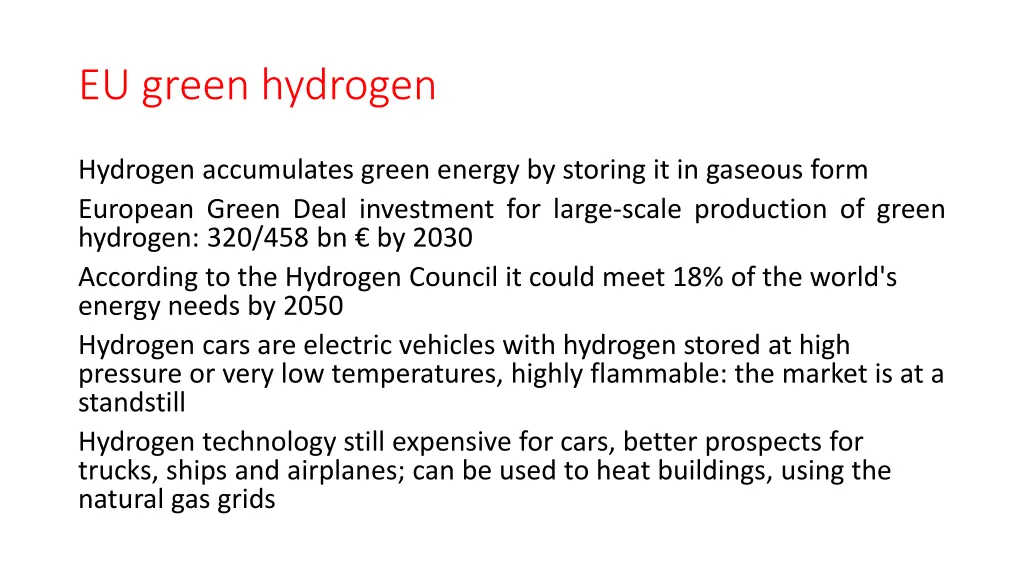
EU green hydrogen Hydrogen accumulates green energy by storing it in gaseous form European Green Deal investment for large-scale production of green hydrogen: 320/458 bn by 2030 According to the Hydrogen Council it could meet 18% of the world's energy needs by 2050 Hydrogen cars are electric vehicles with hydrogen stored at high pressure or very low temperatures, highly flammable: the market is at a standstill Hydrogen technology still expensive for cars, better prospects for trucks, ships and airplanes; can be used to heat buildings, using the natural gas grids
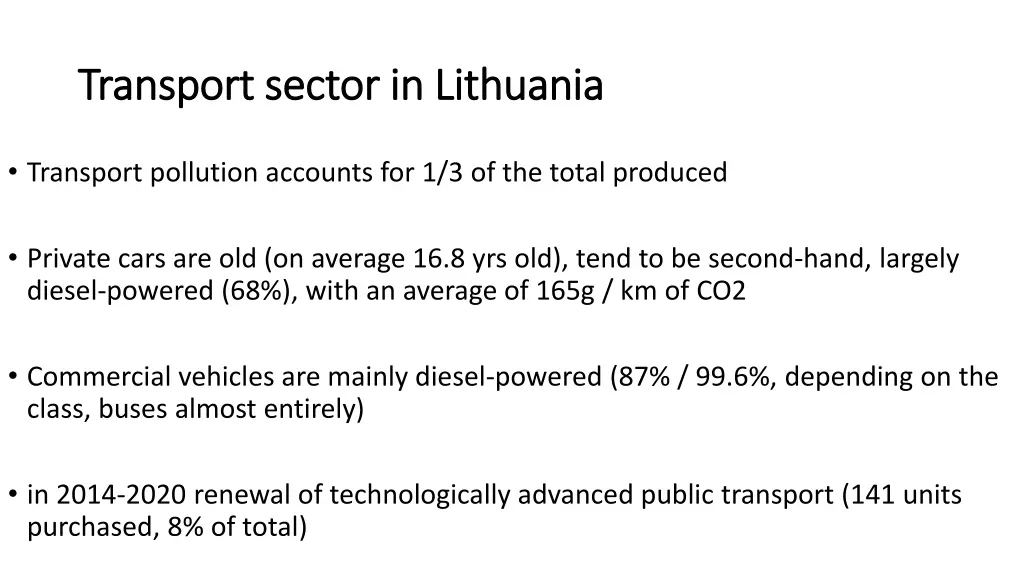
Transport sector in Lithuania Transport sector in Lithuania Transport pollution accounts for 1/3 of the total produced Private cars are old (on average 16.8 yrs old), tend to be second-hand, largely diesel-powered (68%), with an average of 165g / km of CO2 Commercial vehicles are mainly diesel-powered (87% / 99.6%, depending on the class, buses almost entirely) in 2014-2020 renewal of technologically advanced public transport (141 units purchased, 8% of total)
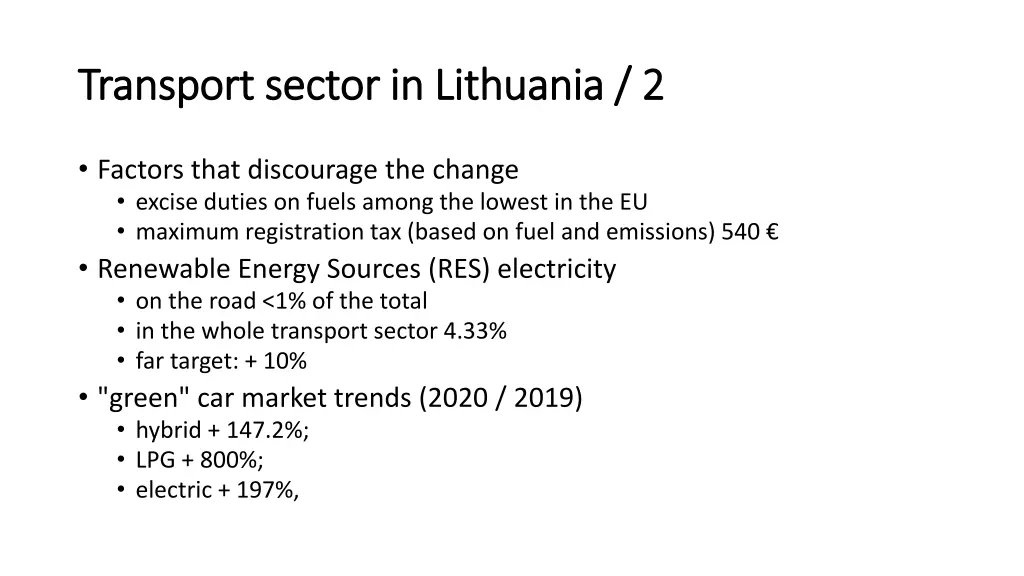
Transport Transport sector in Lithuania / 2 sector in Lithuania / 2 Factors that discourage the change excise duties on fuels among the lowest in the EU maximum registration tax (based on fuel and emissions) 540 Renewable Energy Sources (RES) electricity on the road <1% of the total in the whole transport sector 4.33% far target: + 10% "green" car market trends (2020 / 2019) hybrid + 147.2%; LPG + 800%; electric + 197%,
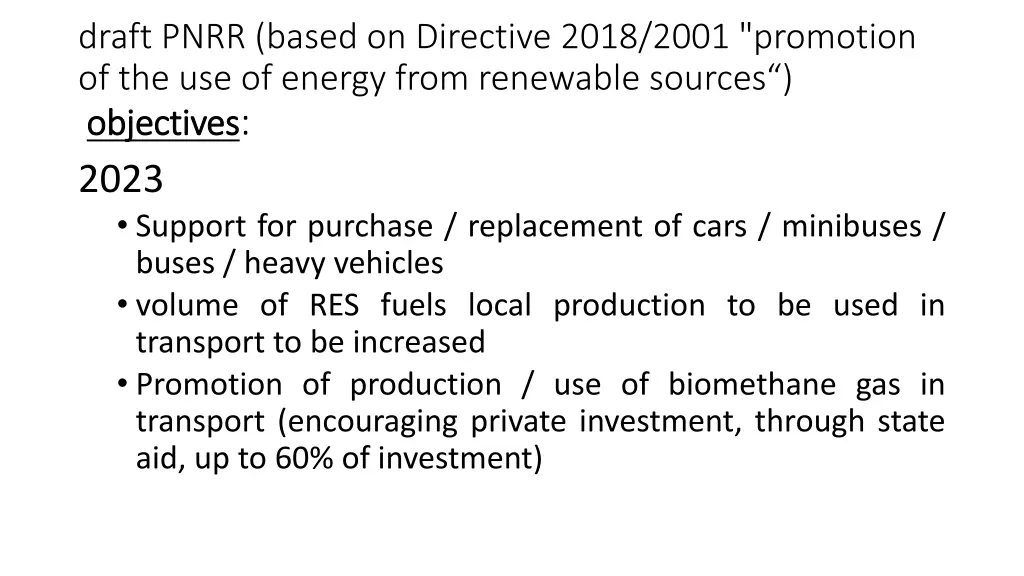
draft PNRR (based on Directive 2018/2001 "promotion of the use of energy from renewable sources ) objectives objectives: 2023 Support for purchase / replacement of cars / minibuses / buses / heavy vehicles volume of RES fuels local production to be used in transport to be increased Promotion of production / use of biomethane gas in transport (encouraging private investment, through state aid, up to 60% of investment)
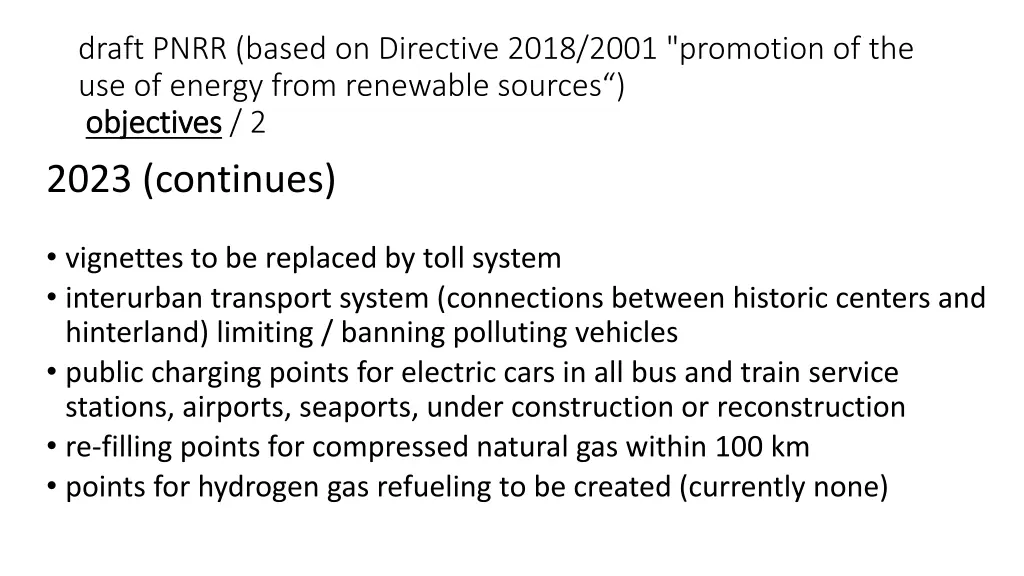
draft PNRR (based on Directive 2018/2001 "promotion of the use of energy from renewable sources ) objectives objectives / 2 2023 (continues) vignettes to be replaced by toll system interurban transport system (connections between historic centers and hinterland) limiting / banning polluting vehicles public charging points for electric cars in all bus and train service stations, airports, seaports, under construction or reconstruction re-filling points for compressed natural gas within 100 km points for hydrogen gas refueling to be created (currently none)
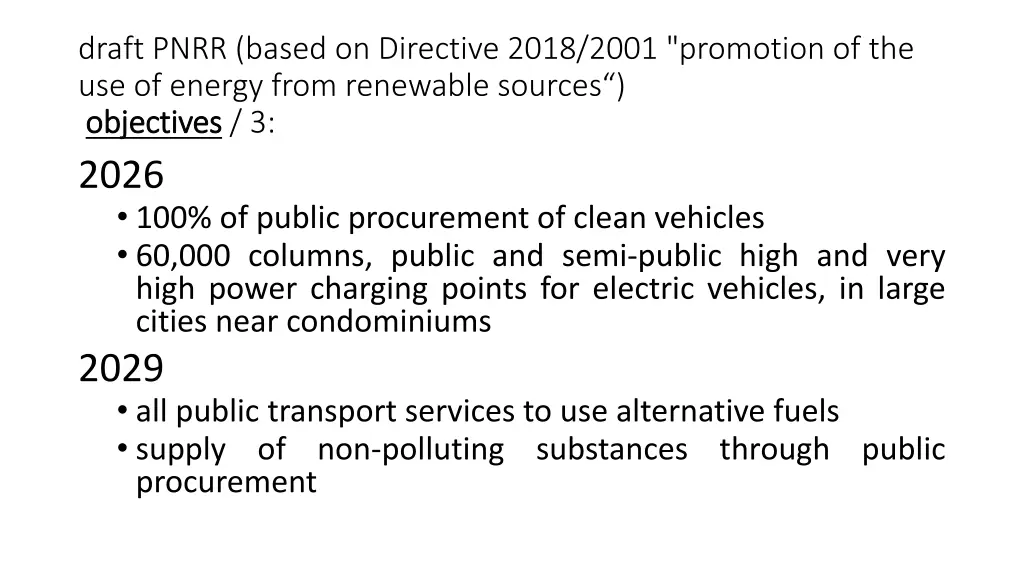
draft PNRR (based on Directive 2018/2001 "promotion of the use of energy from renewable sources ) objectives objectives / 3: 2026 100% of public procurement of clean vehicles 60,000 columns, public and semi-public high and very high power charging points for electric vehicles, in large cities near condominiums 2029 all public transport services to use alternative fuels supply of non-polluting procurement substances through public
Thank you Thank you for your kind for your kind attention ! attention !