Homogeneous Charge Compression Ignition of Methane Research
Explore the potential of Homogeneous Charge Compression Ignition (HCCI) for methane, analyzing its benefits like low emissions and fuel efficiency compared to traditional engine types. Utilize CHEMKIN kinetics data to study ignition timing and the impact of formaldehyde on ignition. Investigate pressure traces from compression and ignition with varying initial temperatures.

Download Presentation

Please find below an Image/Link to download the presentation.
The content on the website is provided AS IS for your information and personal use only. It may not be sold, licensed, or shared on other websites without obtaining consent from the author. If you encounter any issues during the download, it is possible that the publisher has removed the file from their server.
You are allowed to download the files provided on this website for personal or commercial use, subject to the condition that they are used lawfully. All files are the property of their respective owners.
The content on the website is provided AS IS for your information and personal use only. It may not be sold, licensed, or shared on other websites without obtaining consent from the author.
E N D
Presentation Transcript
Homogeneous Charge Compression Ignition of Methane
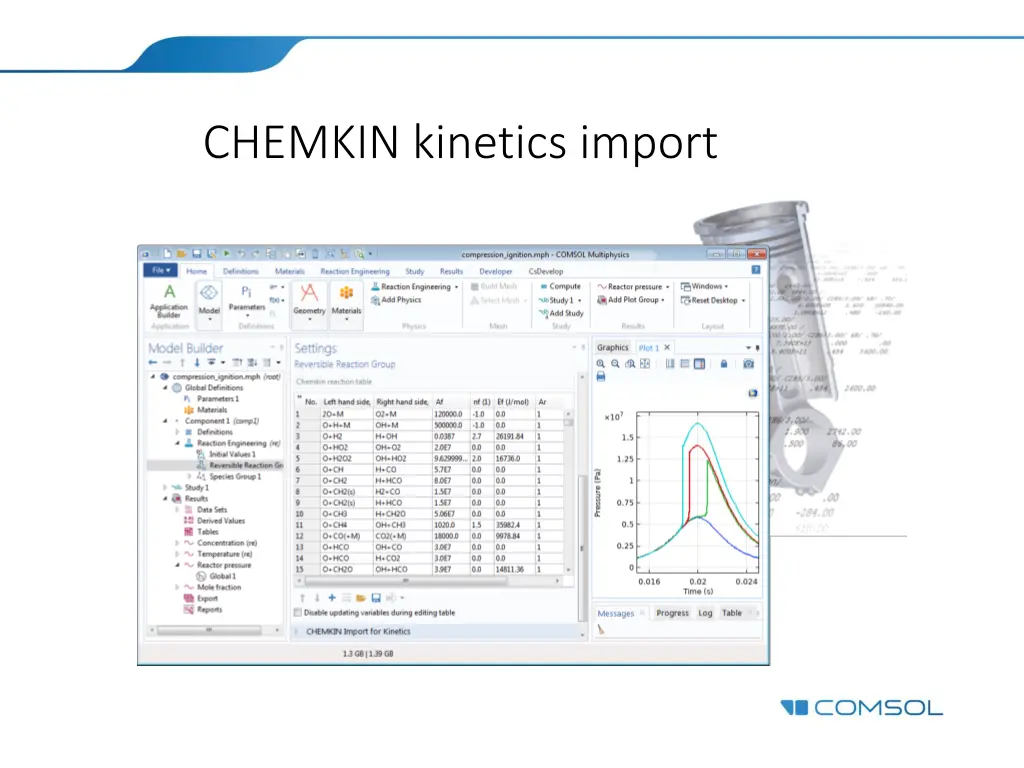
Homogeneous Charge Compression Ignition of Methane Alternative to traditional spark and compression-ignition engines Low combustion temperatures Low levels of NOx emissions Homogeneous nature of the fuel Low levels of particulate matter One important issue, timing of the ignition Examine the HCCI of methane Import data from CHEMKIN Kinetics and Thermo input files Calculate the mass and energy balances Solve for different initial temperatures Investigate the effect of Formaldehyde on the ignition
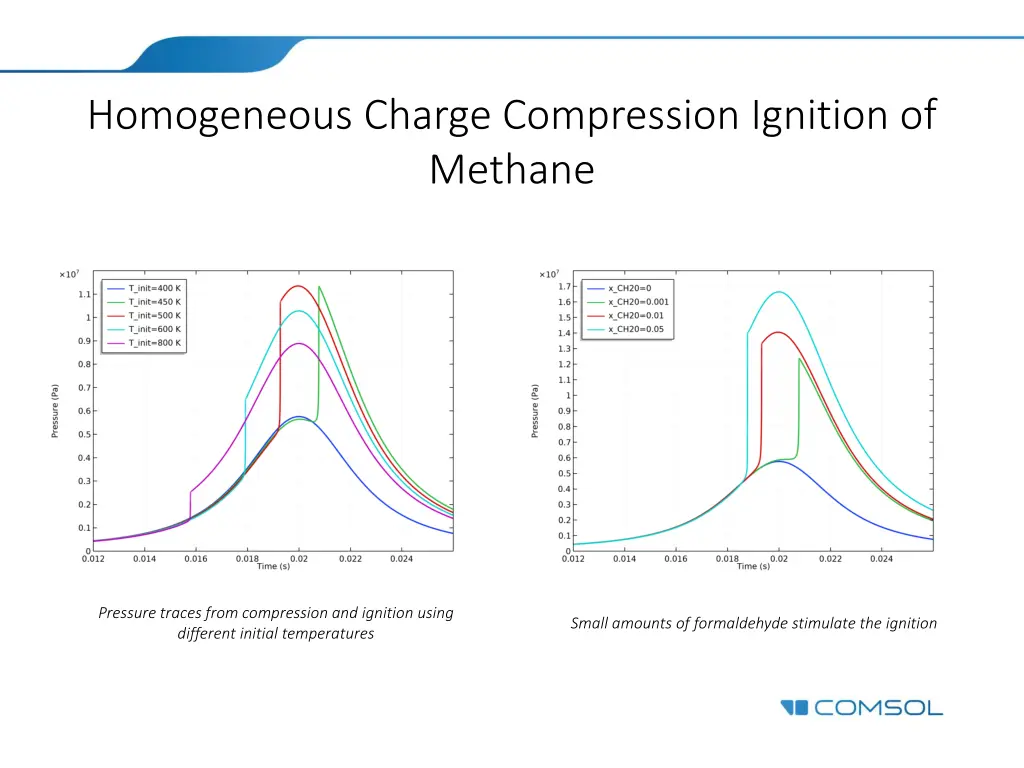
Homogeneous Charge Compression Ignition of Methane Pressure traces from compression and ignition using different initial temperatures Small amounts of formaldehyde stimulate the ignition