Hypoxia and cyanosis
Hypoxia, defined as oxygen deficiency in tissue cells, can result from various factors like hypoventilation, anemia, stagnant circulation, and tissue toxicity. Explore the types of hypoxia, their causes, and effects on the body, ranging from impaired judgment to potential coma and death.

Download Presentation

Please find below an Image/Link to download the presentation.
The content on the website is provided AS IS for your information and personal use only. It may not be sold, licensed, or shared on other websites without obtaining consent from the author.If you encounter any issues during the download, it is possible that the publisher has removed the file from their server.
You are allowed to download the files provided on this website for personal or commercial use, subject to the condition that they are used lawfully. All files are the property of their respective owners.
The content on the website is provided AS IS for your information and personal use only. It may not be sold, licensed, or shared on other websites without obtaining consent from the author.
E N D
Presentation Transcript
Hypoxiaand cyanosis Dr.Aida Korish Assoc.Prof.Physiology KSU iaidakorish@yahoo.com Dr.AidaKorish 1
Objectives By the end of this lecture you should be able to: Define hypoxia and list its various physiological and pathological causes. Define hypo and hyper-ventilation in terms of arterial PCO2 and PO2. Define cyanosis and its clinical presentation Define ventilation/perfusion (V /Q) ratio and its normal values. Dr.AidaKorish 2
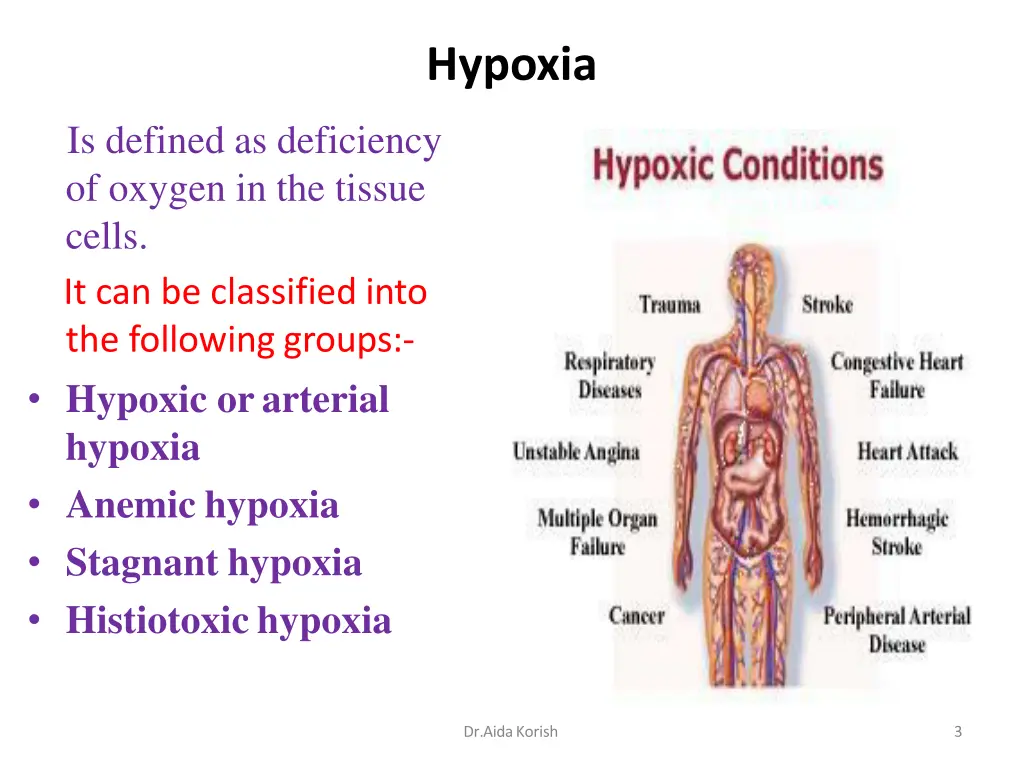
Hypoxia Is defined as deficiency of oxygen in the tissue cells. It can be classified into the following groups:- Hypoxic orarterial hypoxia Anemic hypoxia Stagnant hypoxia Histiotoxichypoxia Dr.AidaKorish 3
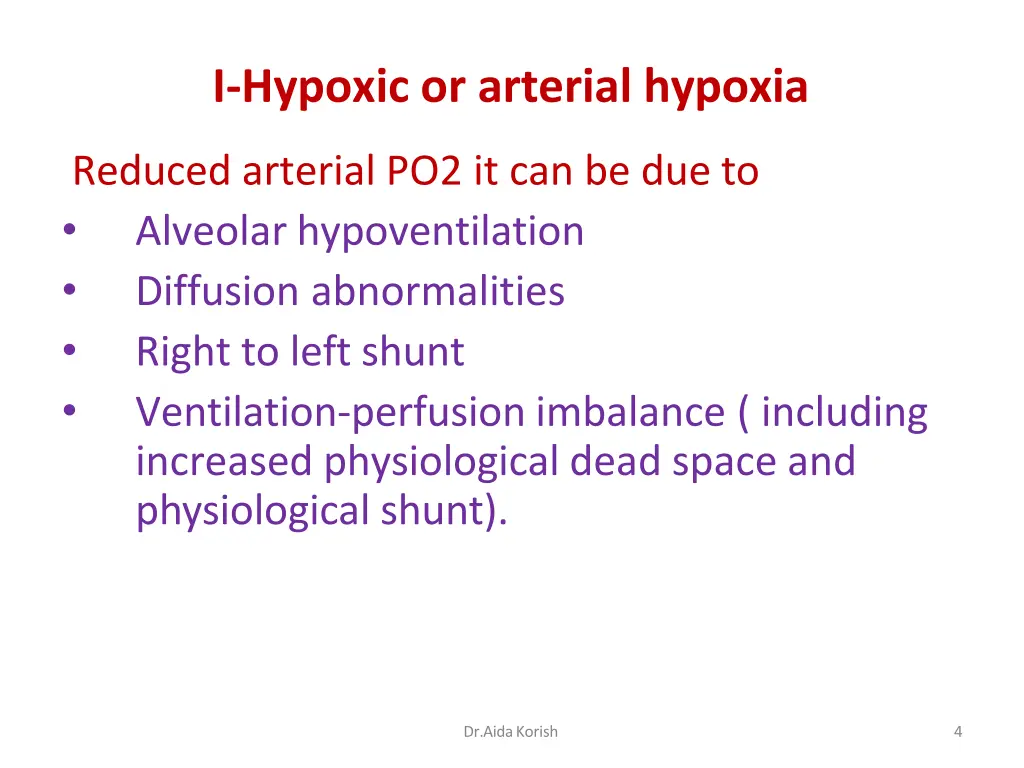
I-Hypoxic or arterial hypoxia Reduced arterial PO2 it can be due to Alveolar hypoventilation Diffusion abnormalities Right to left shunt Ventilation-perfusion imbalance ( including increased physiological dead space and physiological shunt). Dr.AidaKorish 4
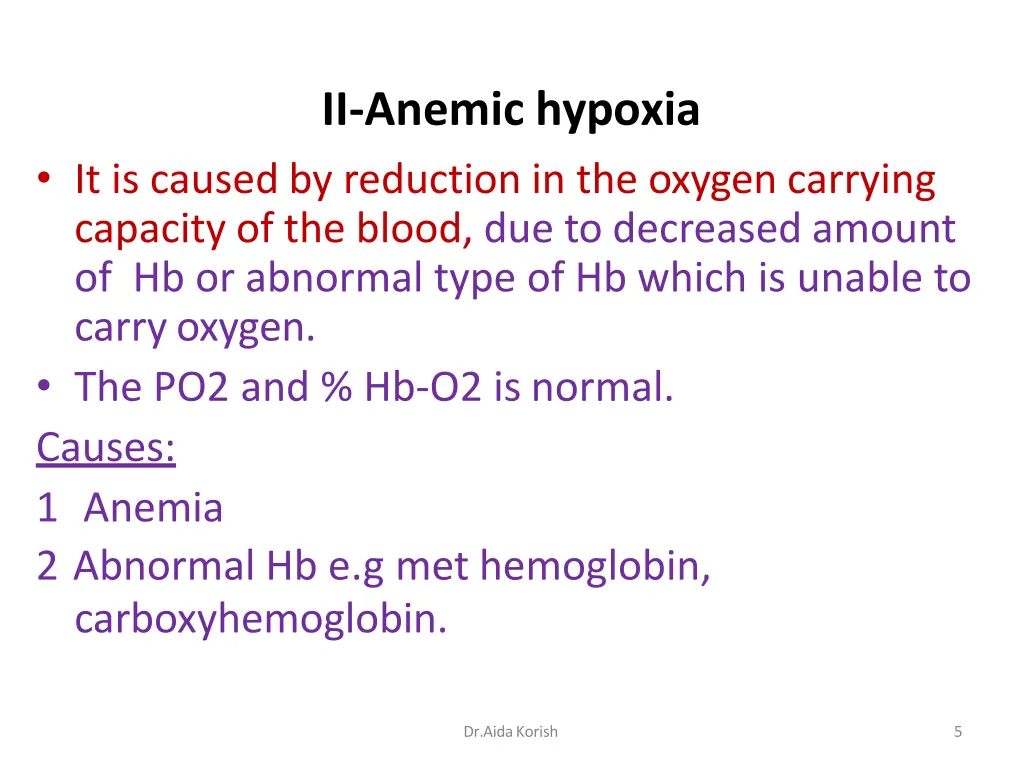
II-Anemic hypoxia It is caused by reduction in the oxygen carrying capacity of the blood, due to decreased amount of Hb or abnormal type of Hb which is unable to carryoxygen. The PO2 and % Hb-O2 is normal. Causes: 1 Anemia 2 Abnormal Hb e.g met hemoglobin, carboxyhemoglobin. Dr.AidaKorish 5
III-Stagnant hypoxia: Caused by reduced blood flow through the tissues, so more and more oxygen is extracted from the blood, and due to slow circulation less oxygen is carried by the blood at the lung , leading to hypoxia. Causes: 1-General slowingof the circulation, as in heart failure and shock 2-Local slowing e.g vasoconstriction, cold, arterial wall spasm. Dr.AidaKorish 6
IV-Histiotoxic hypoxia This is inability of the tissues to use oxygen due to inhibition of the oxidative enzyme activity e.g cyanide poisoning causing blockade of the cytochrome oxidase activity Dr.AidaKorish 7
Effects of hypoxia According to the degree of hypoxiait could lead to impairment of judgment, inability to perform complex calculations, headache, nausea, irritability, dyspnea, increased heart rate, reduction in muscle working capacity, even coma and death may result. Dr.AidaKorish 8
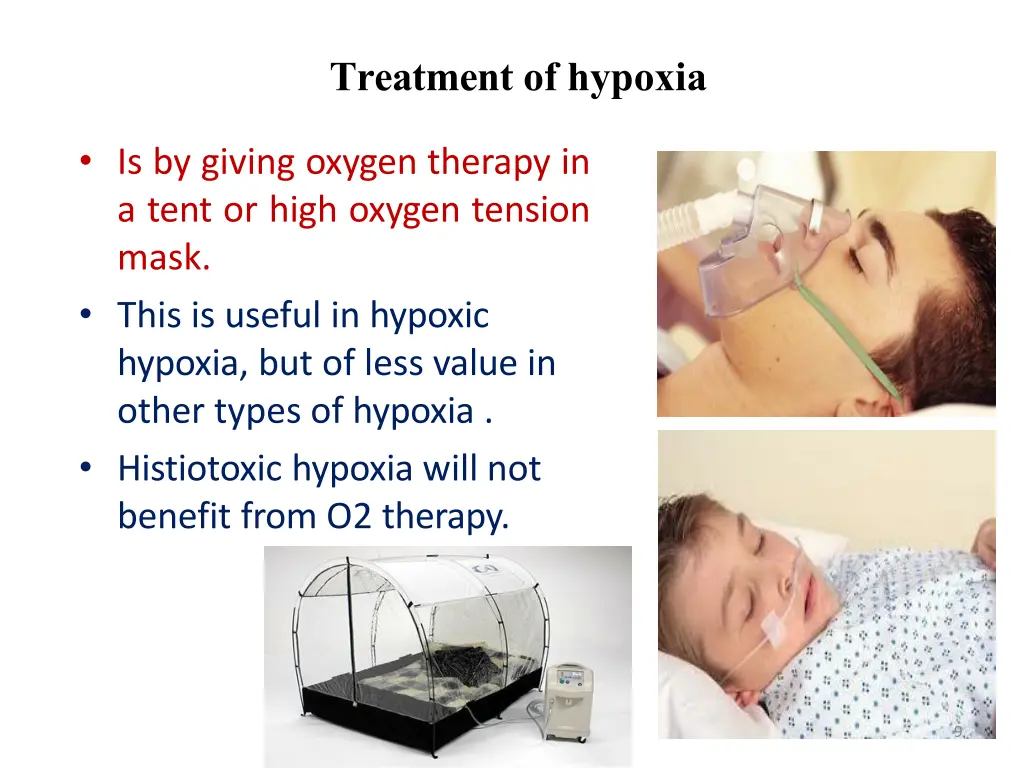
Treatment of hypoxia Is by giving oxygen therapy in a tent or high oxygen tension mask. This is useful in hypoxic hypoxia, but of less value in other types of hypoxia . Histiotoxic hypoxia will not benefit from O2 therapy. 9 Dr.AidaKorish
Hypercapnea Excess of CO2 in body fluids, it usually occurs with hypoxia, PCO2 increases above 52 mmHg, it decreases the PH Features of hypercapnea Peripheral vasodilatation Sweating Warm extremities and bounding pulse Muscle twitching Headache, drowsiness and com Papilledema ( swelling of optic disc) Dr.AidaKorish 10
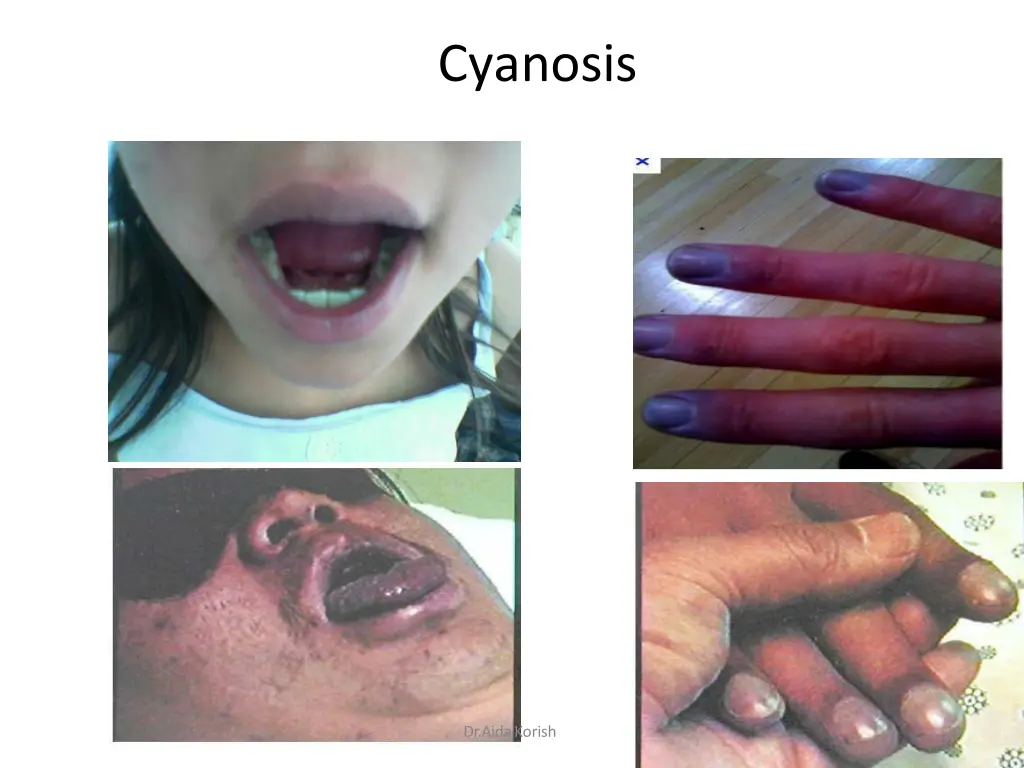
Cyanosis Dr.AidaKorish 11
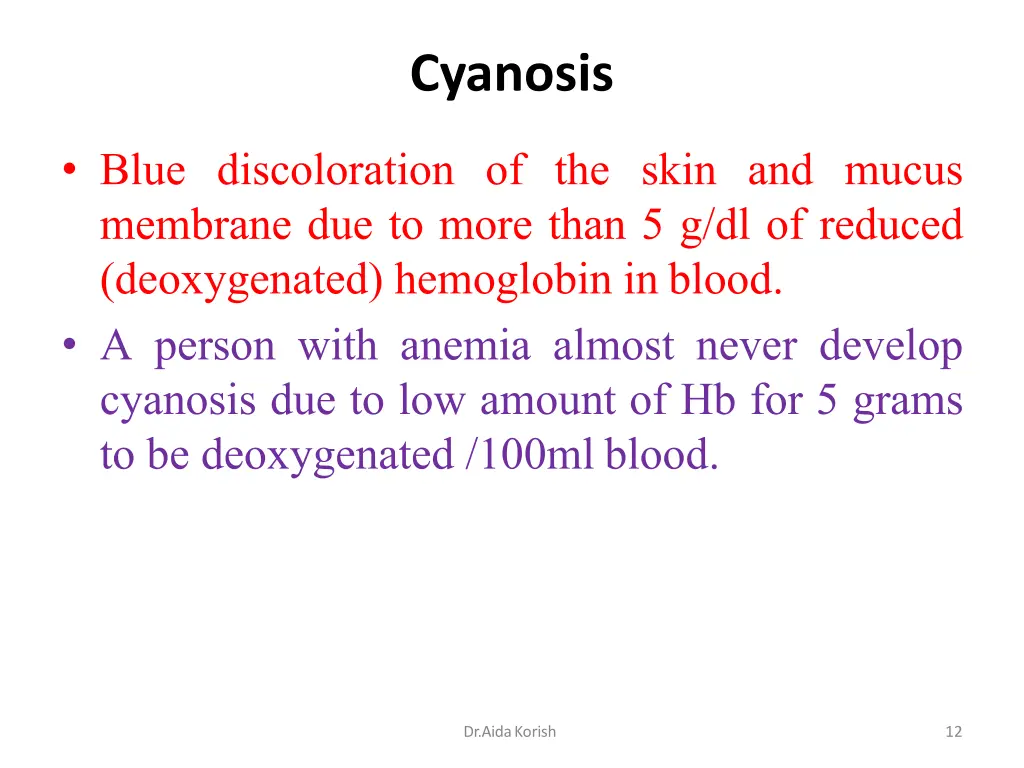
Cyanosis Blue discoloration of the skin and mucus membrane due to more than 5 g/dl of reduced (deoxygenated) hemoglobin in blood. A person with anemia almost never develop cyanosis due to low amount of Hb for 5 grams to be deoxygenated /100ml blood. Dr.AidaKorish 12
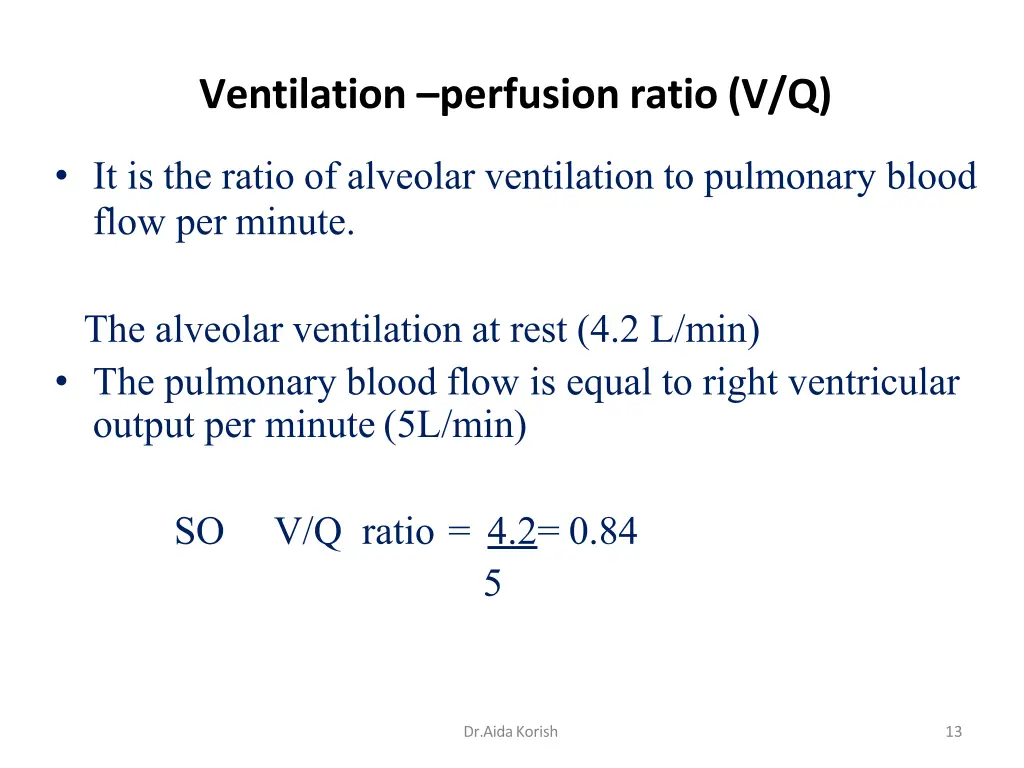
Ventilation perfusion ratio (V/Q) It is the ratio of alveolar ventilation to pulmonary blood flow per minute. The alveolar ventilation at rest (4.2 L/min) The pulmonary blood flow is equal to right ventricular output per minute (5L/min) SO V/Q ratio = 4.2= 0.84 5 Dr.AidaKorish 13
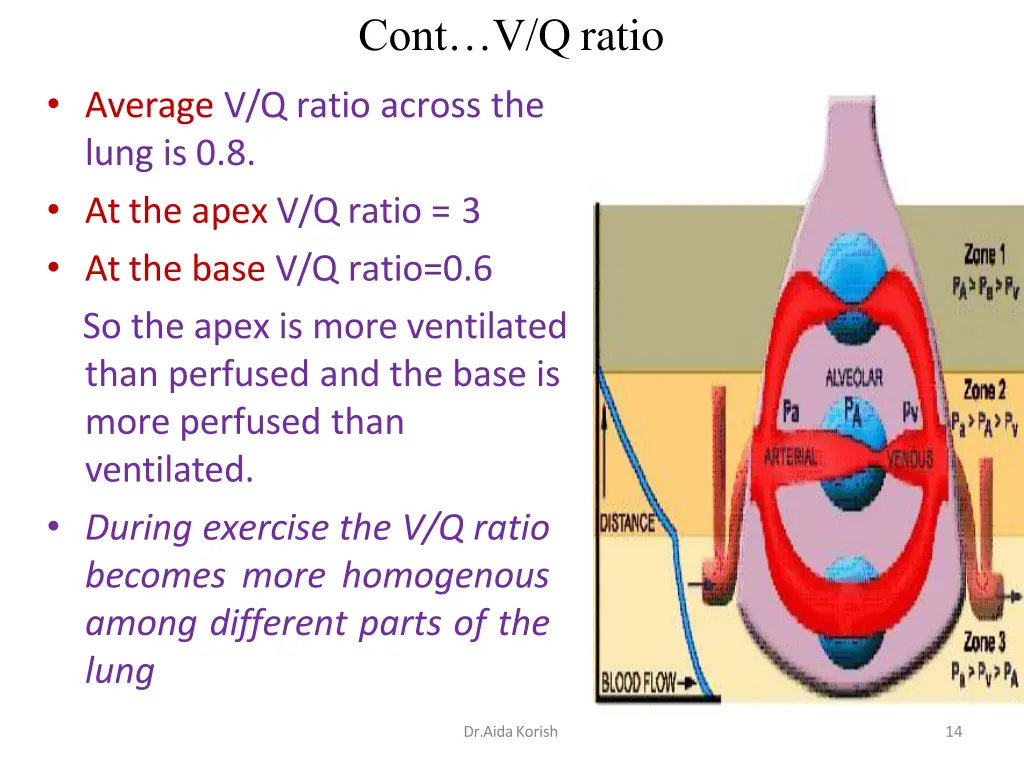
ContV/Q ratio Average V/Q ratio across the lung is 0.8. At the apex V/Q ratio = 3 At the base V/Q ratio=0.6 So the apex is more ventilated than perfused and the base is more perfused than ventilated. During exercise the V/Q ratio becomes more homogenous among different parts of the lung Dr.AidaKorish 14
Ventilation/perfusion abnormalities Dr.AidaKorish 15
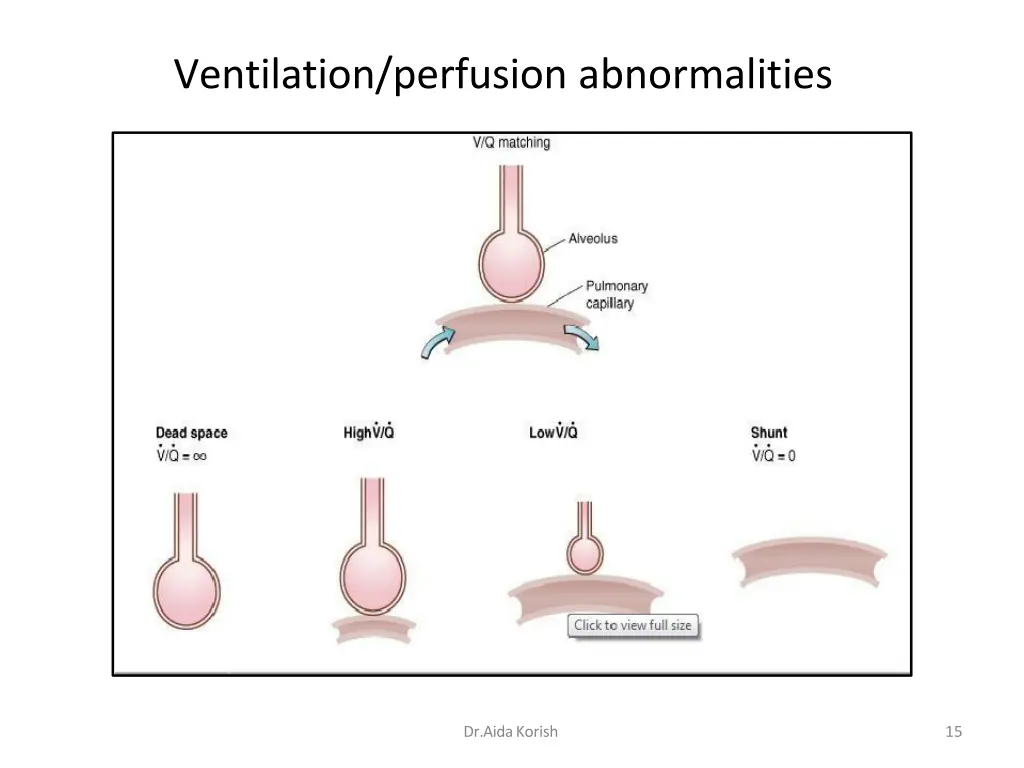
Cont V/Qratio The main function of this ratio is to determine the state of oxygenation in the body. Any mismatch in the ratio can result in hypoxia. When the V/Q ratio is less than normal this is called physiologic shunt (a certain fraction of the venous blood is passing through the pulmonary capillaries without being oxygenated i.e shunted blood). When V/Q is more than normal this is called Physiologic dead space (when the ventilation of some of the alveoli is great but the alveolar blood flow is low, ventilation of these alveoli is wasted). Dr.AidaKorish 16
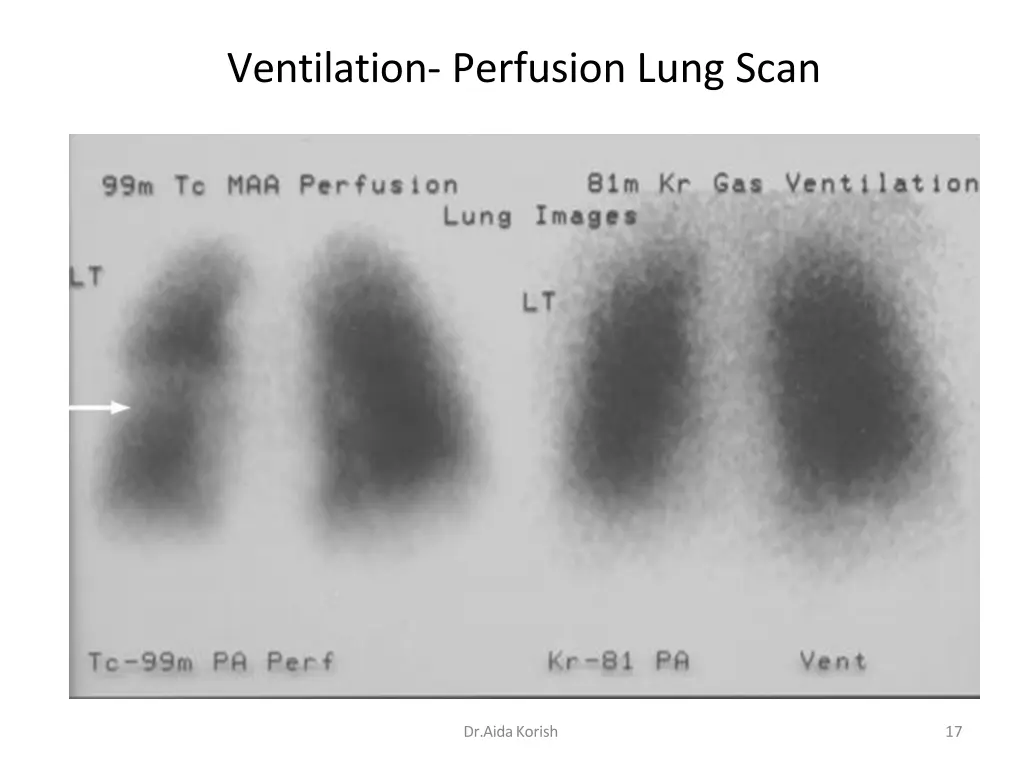
Ventilation- Perfusion Lung Scan Dr.AidaKorish 17
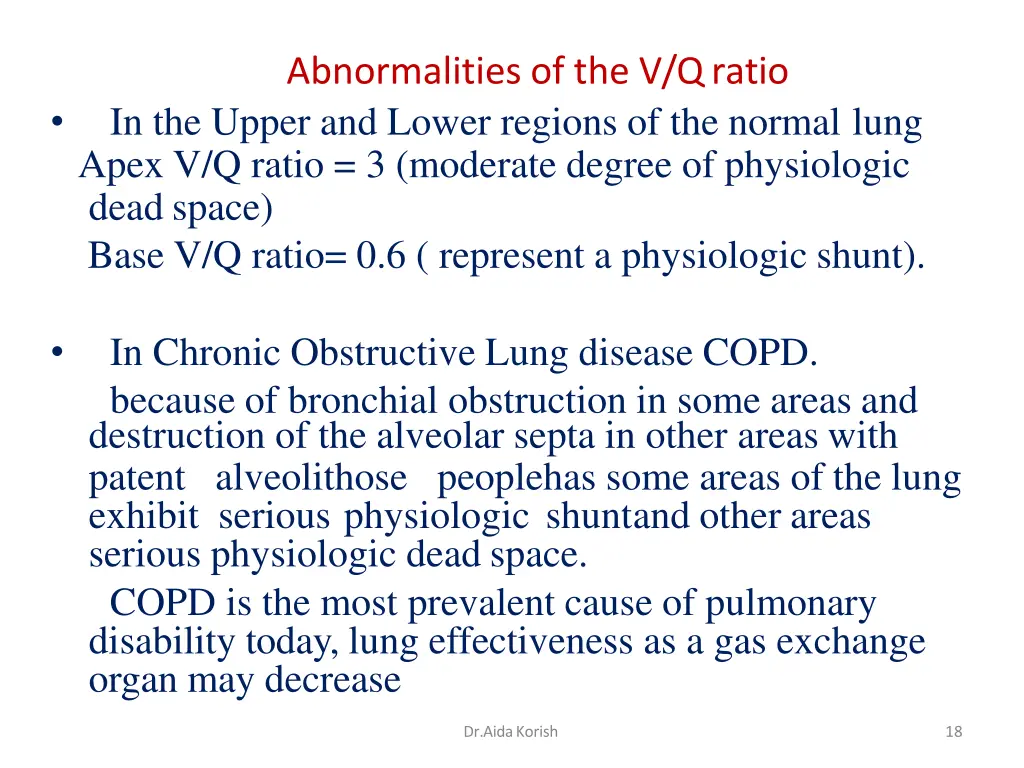
Abnormalities of the V/Qratio In the Upper and Lower regions of the normal lung Apex V/Q ratio = 3 (moderate degree of physiologic dead space) Base V/Q ratio= 0.6 ( represent a physiologic shunt). In Chronic Obstructive Lung disease COPD. because of bronchial obstruction in some areas and destruction of the alveolar septa in other areas with patent alveolithose peoplehas some areas of the lung exhibit serious physiologic shuntand other areas serious physiologic dead space. COPD is the most prevalent cause of pulmonary disability today, lung effectiveness as a gas exchange organ may decrease Dr.AidaKorish 18