Identifying People with Disabilities in Federal Surveys
A study on identifying people with disabilities in federal surveys using six self-report difficulty questions, covering various types of disabilities such as hearing, vision, cognitive, ambulatory, self-care, and independent living. The research aims to analyze and compare disability estimates across different national surveys to understand disparities and inequities.

Download Presentation

Please find below an Image/Link to download the presentation.
The content on the website is provided AS IS for your information and personal use only. It may not be sold, licensed, or shared on other websites without obtaining consent from the author.If you encounter any issues during the download, it is possible that the publisher has removed the file from their server.
You are allowed to download the files provided on this website for personal or commercial use, subject to the condition that they are used lawfully. All files are the property of their respective owners.
The content on the website is provided AS IS for your information and personal use only. It may not be sold, licensed, or shared on other websites without obtaining consent from the author.
E N D
Presentation Transcript
Identifying People with Disabilities in Federal Identifying People with Disabilities in Federal Surveys Surveys Eric A. Lauer, MPH Andrew J. Houtenville, PhD Institute On Disability University of New Hampshire Durham, New Hampshire, United States 1
Financial Disclosure & Disclaimer The following personal financial relationships with commercial interests relevant to this presentation existed during the past 12 months: No relationships to disclose The presentation is part of a project of the StatsRRTC, which is funded by the U.S. Department of Health and Human Services, National Institute for Disability, Independent Living, and Rehabilitation Research (NIDILRR) under cooperative agreement H133B130015. This presentation does not necessarily represent the policy of the Department of Health and Human Services, and you should not assume endorsement by the Federal Government (Edgar, 75.620 (b)). 2
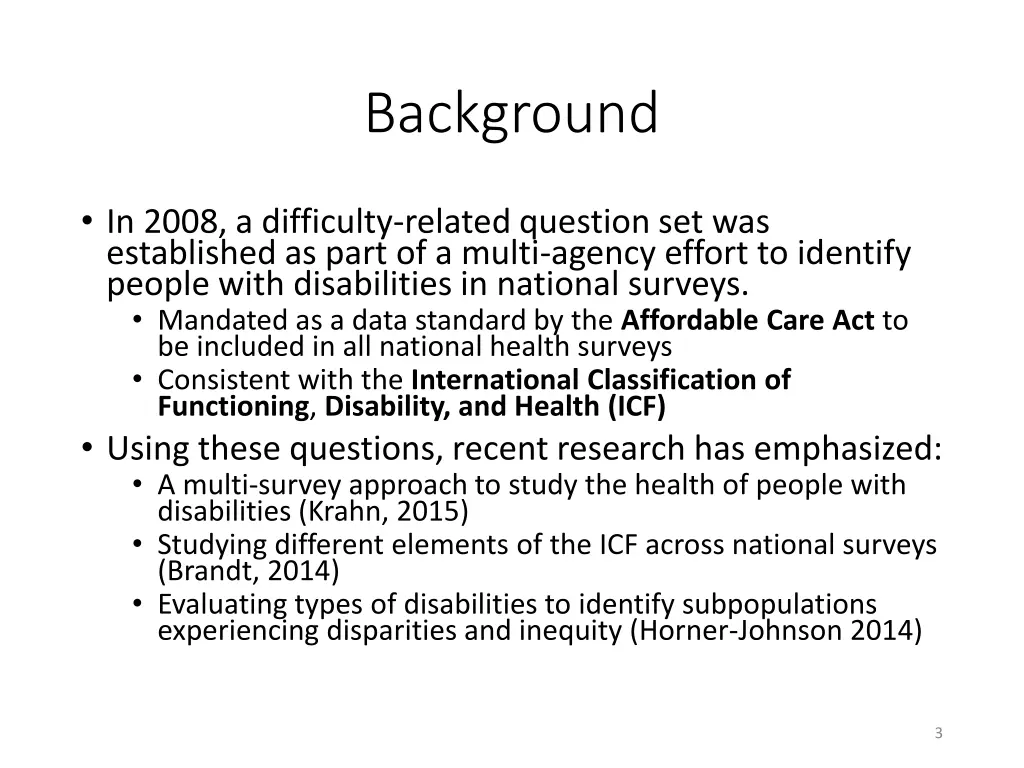
Background In 2008, a difficulty-related question set was established as part of a multi-agency effort to identify people with disabilities in national surveys. Mandated as a data standard by the Affordable Care Act to be included in all national health surveys Consistent with the International Classification of Functioning, Disability, and Health (ICF) Using these questions, recent research has emphasized: A multi-survey approach to study the health of people with disabilities (Krahn, 2015) Studying different elements of the ICF across national surveys (Brandt, 2014) Evaluating types of disabilities to identify subpopulations experiencing disparities and inequity (Horner-Johnson 2014) 3
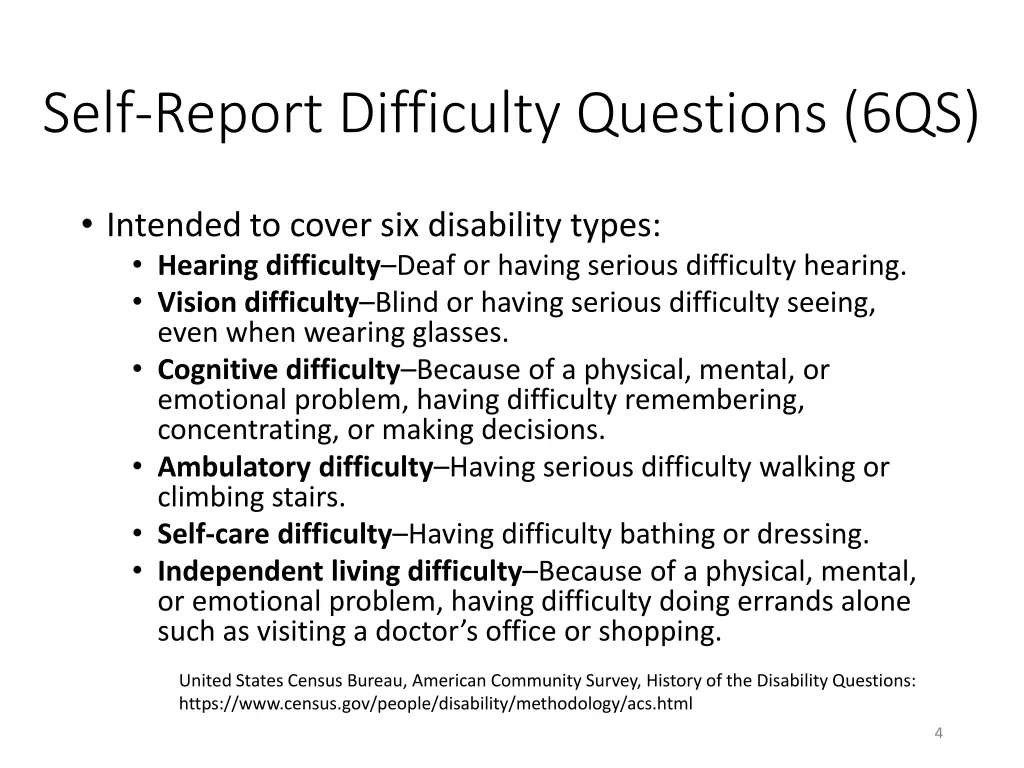
Self-Report Difficulty Questions (6QS) Intended to cover six disability types: Hearing difficulty Deaf or having serious difficulty hearing. Vision difficulty Blind or having serious difficulty seeing, even when wearing glasses. Cognitive difficulty Because of a physical, mental, or emotional problem, having difficulty remembering, concentrating, or making decisions. Ambulatory difficulty Having serious difficulty walking or climbing stairs. Self-care difficulty Having difficulty bathing or dressing. Independent living difficulty Because of a physical, mental, or emotional problem, having difficulty doing errands alone such as visiting a doctor s office or shopping. United States Census Bureau, American Community Survey, History of the Disability Questions: https://www.census.gov/people/disability/methodology/acs.html 4
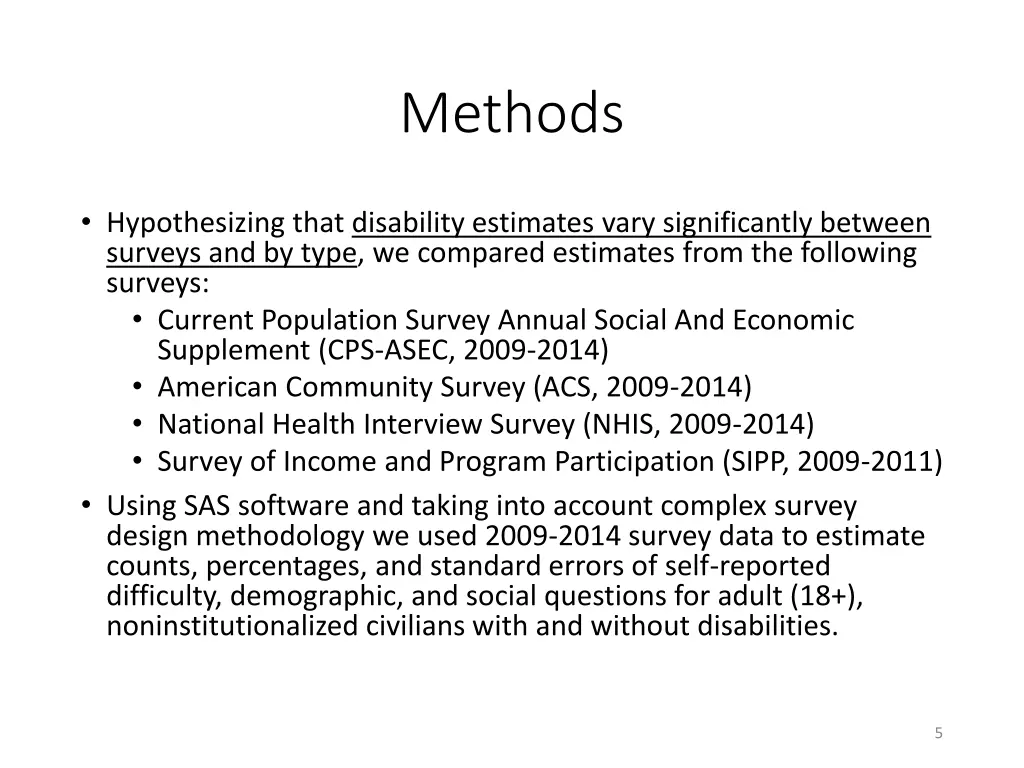
Methods Hypothesizing that disability estimates vary significantly between surveys and by type, we compared estimates from the following surveys: Current Population Survey Annual Social And Economic Supplement (CPS-ASEC, 2009-2014) American Community Survey (ACS, 2009-2014) National Health Interview Survey (NHIS, 2009-2014) Survey of Income and Program Participation (SIPP, 2009-2011) Using SAS software and taking into account complex survey design methodology we used 2009-2014 survey data to estimate counts, percentages, and standard errors of self-reported difficulty, demographic, and social questions for adult (18+), noninstitutionalized civilians with and without disabilities. 5
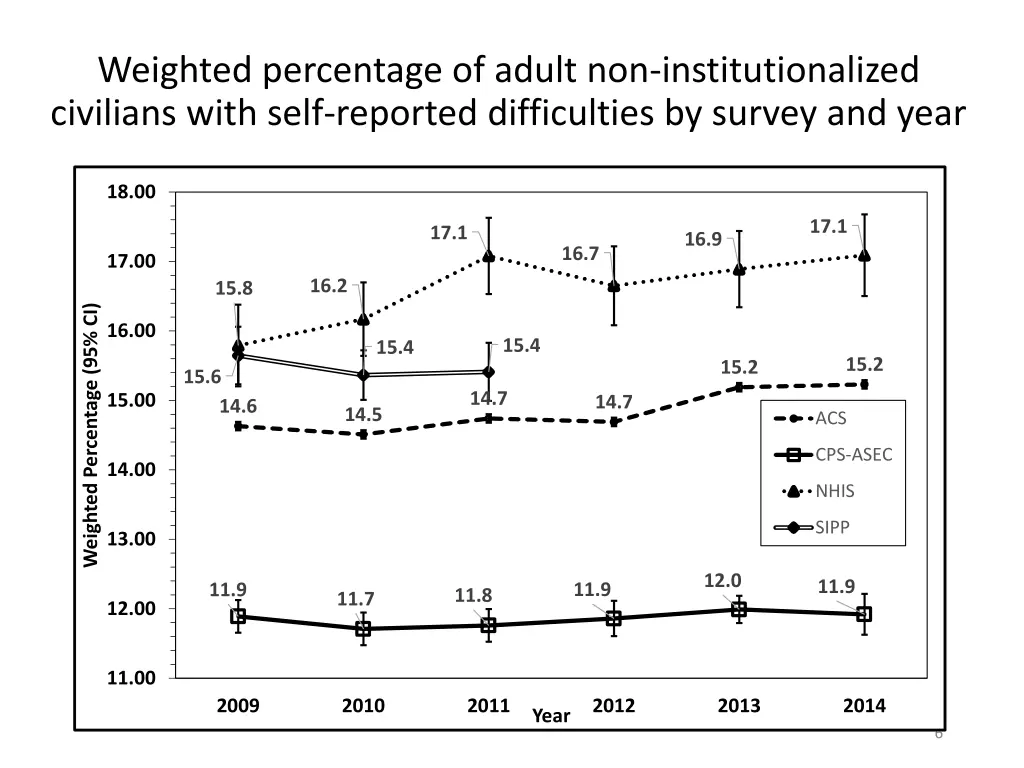
Weighted percentage of adult non-institutionalized civilians with self-reported difficulties by survey and year 18.00 17.1 17.1 16.9 16.7 17.00 16.2 15.8 Weighted Percentage (95% CI) 16.00 15.4 15.4 15.2 15.2 15.6 14.7 15.00 14.7 14.6 14.5 ACS CPS-ASEC 14.00 NHIS SIPP 13.00 12.0 11.9 11.9 11.9 11.8 11.7 12.00 11.00 2009 2010 2011 2012 2013 2014 Year 6
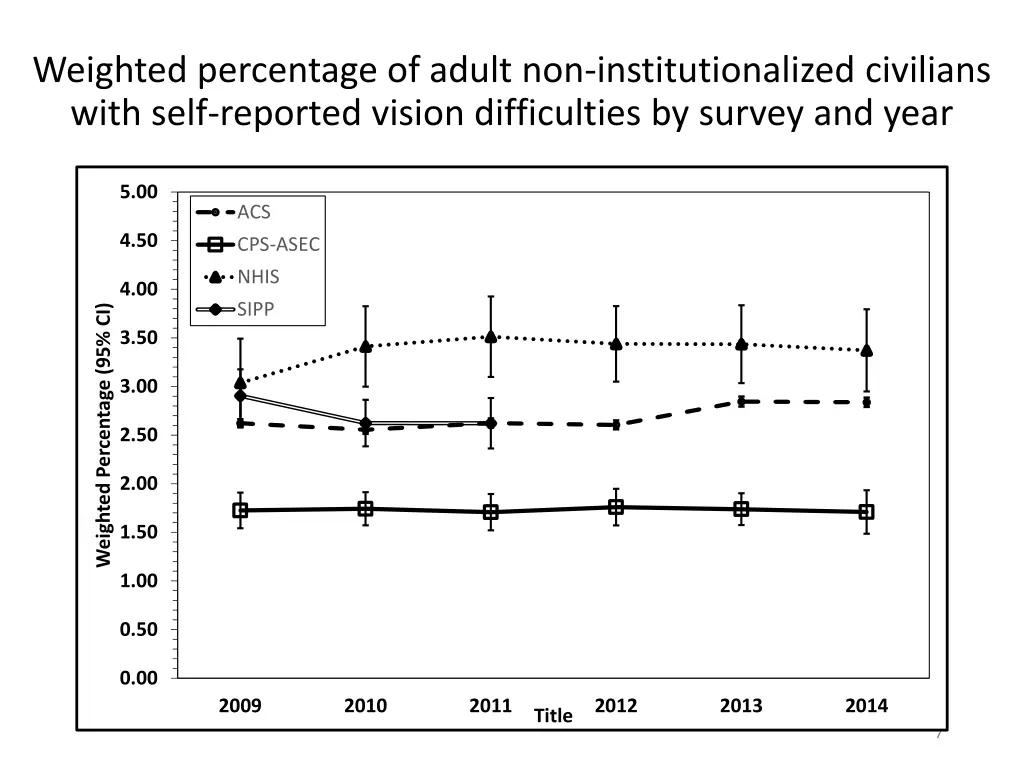
Weighted percentage of adult non-institutionalized civilians with self-reported vision difficulties by survey and year 5.00 ACS 4.50 CPS-ASEC NHIS 4.00 SIPP Weighted Percentage (95% CI) 3.50 3.00 2.50 2.00 1.50 1.00 0.50 0.00 2009 2010 2011 2012 2013 2014 Title 7
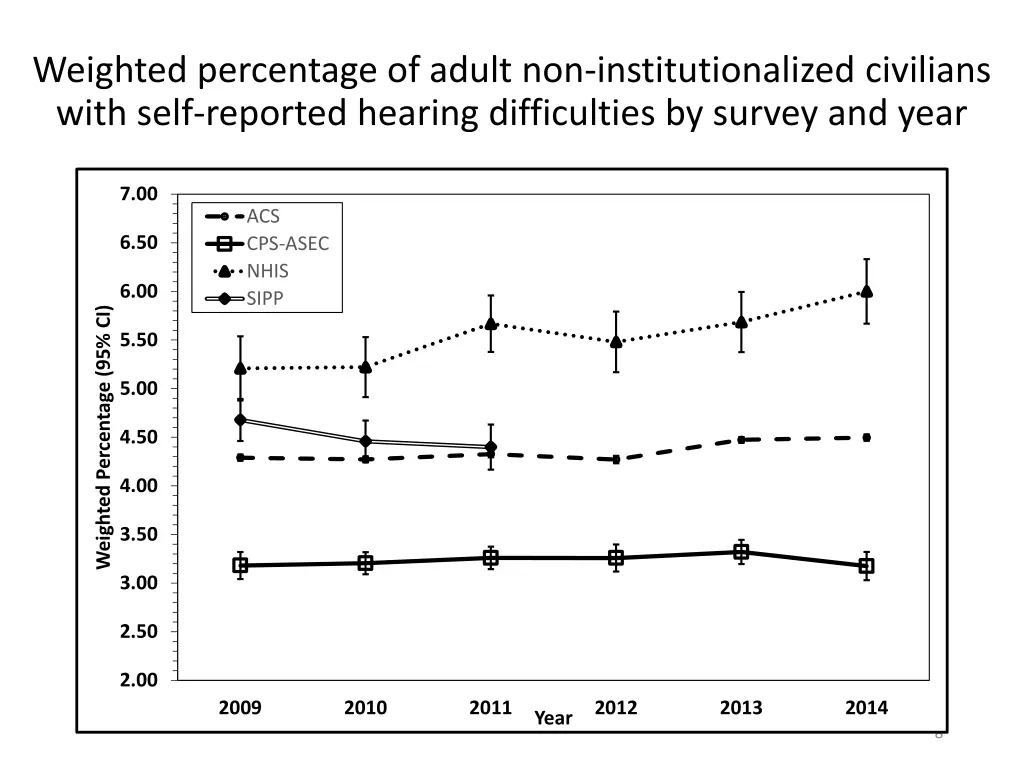
Weighted percentage of adult non-institutionalized civilians with self-reported hearing difficulties by survey and year 7.00 ACS CPS-ASEC NHIS SIPP 6.50 6.00 Weighted Percentage (95% CI) 5.50 5.00 4.50 4.00 3.50 3.00 2.50 2.00 2009 2010 2011 2012 2013 2014 Year 8
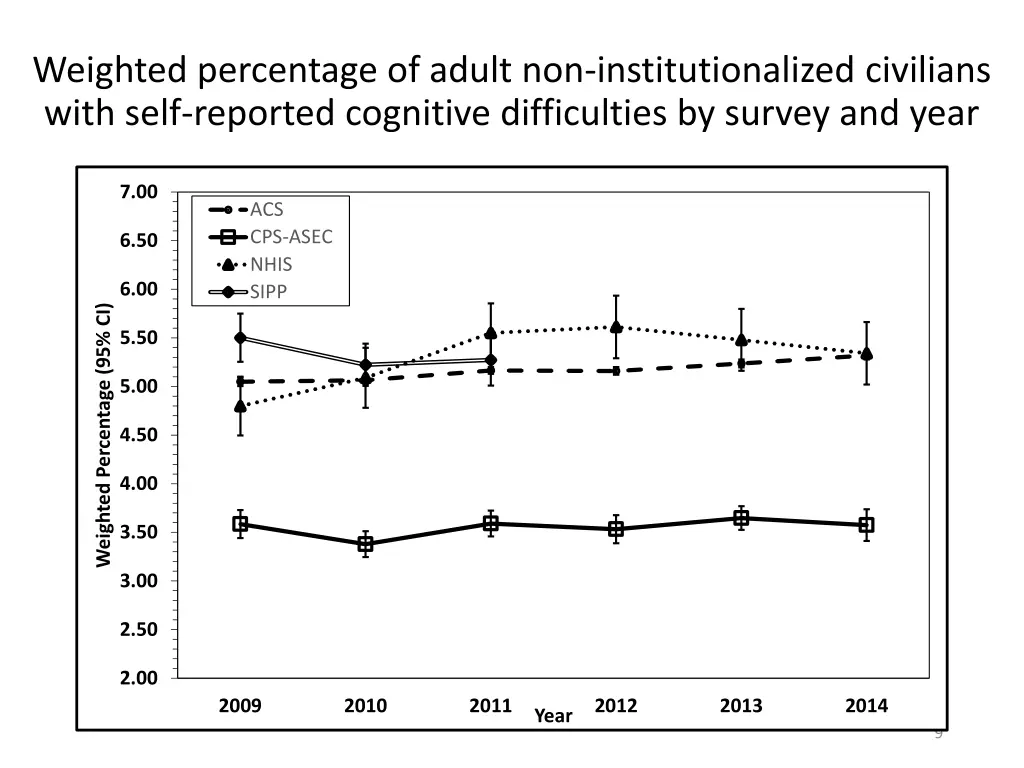
Weighted percentage of adult non-institutionalized civilians with self-reported cognitive difficulties by survey and year 7.00 ACS CPS-ASEC NHIS SIPP 6.50 6.00 Weighted Percentage (95% CI) 5.50 5.00 4.50 4.00 3.50 3.00 2.50 2.00 2009 2010 2011 2012 2013 2014 Year 9
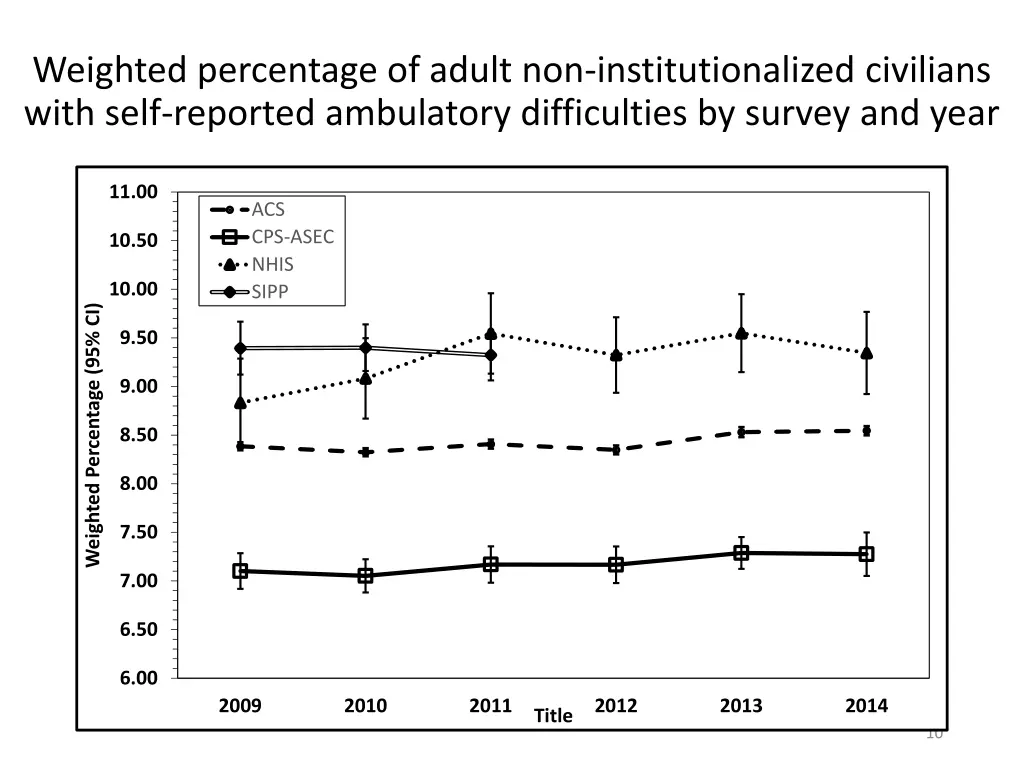
Weighted percentage of adult non-institutionalized civilians with self-reported ambulatory difficulties by survey and year 11.00 ACS CPS-ASEC NHIS SIPP 10.50 10.00 Weighted Percentage (95% CI) 9.50 9.00 8.50 8.00 7.50 7.00 6.50 6.00 2009 2010 2011 2012 2013 2014 Title 10
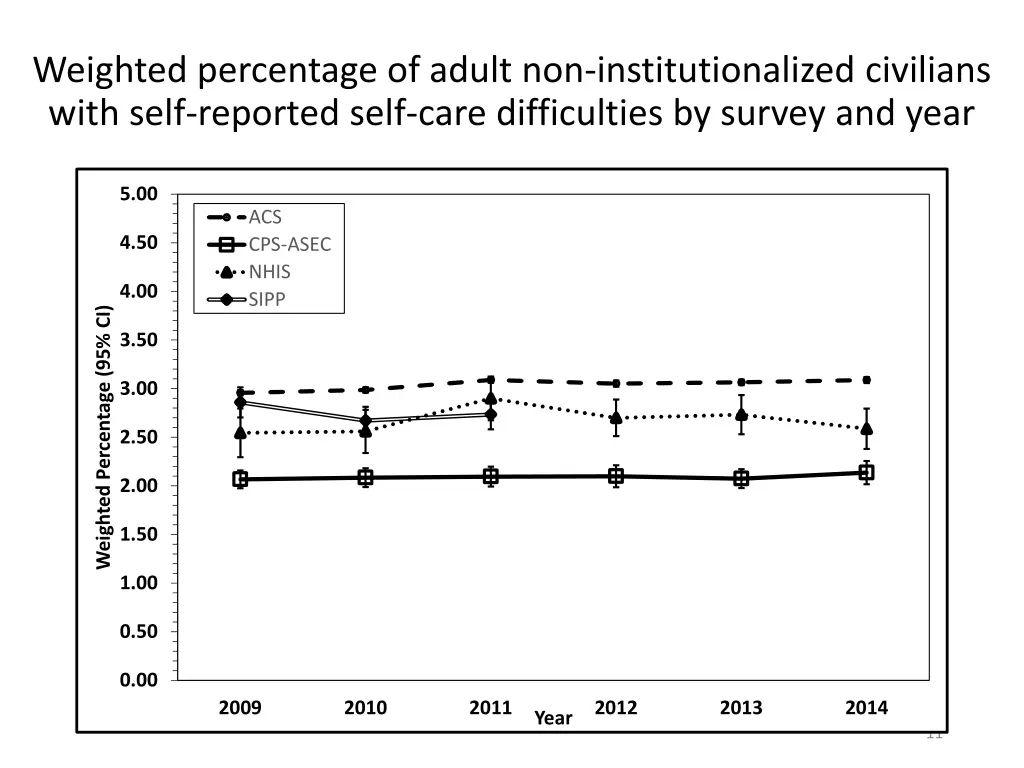
Weighted percentage of adult non-institutionalized civilians with self-reported self-care difficulties by survey and year 5.00 ACS CPS-ASEC NHIS SIPP 4.50 4.00 Weighted Percentage (95% CI) 3.50 3.00 2.50 2.00 1.50 1.00 0.50 0.00 2009 2010 2011 2012 2013 2014 Year 11
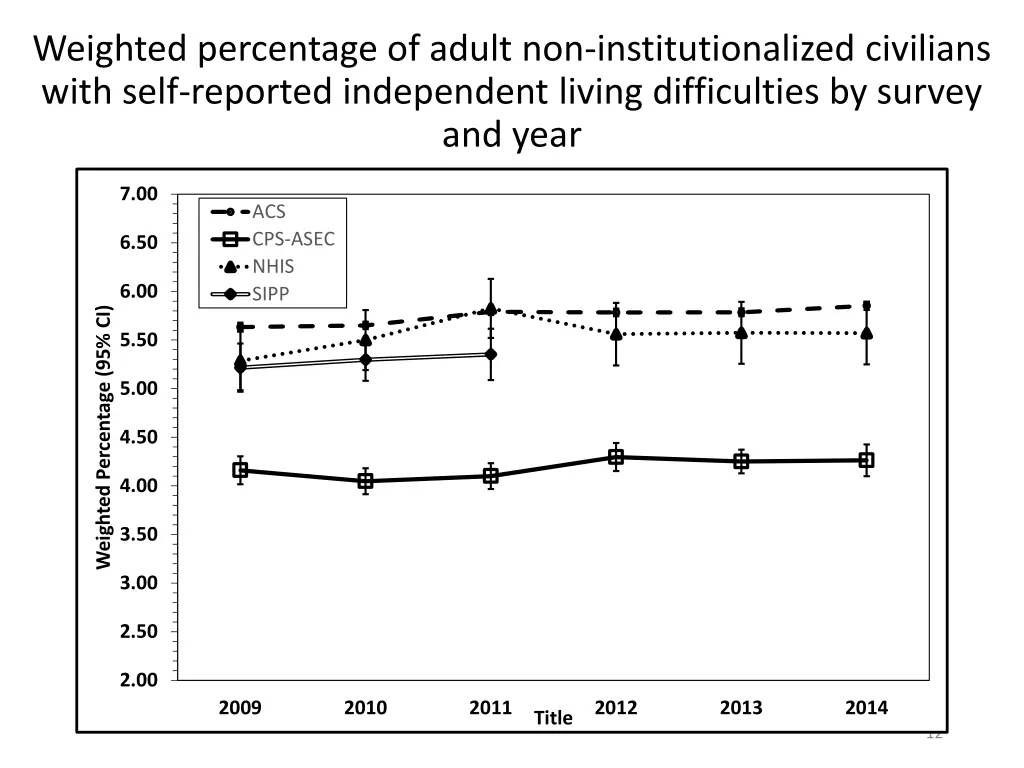
Weighted percentage of adult non-institutionalized civilians with self-reported independent living difficulties by survey and year 7.00 ACS CPS-ASEC NHIS SIPP 6.50 6.00 Weighted Percentage (95% CI) 5.50 5.00 4.50 4.00 3.50 3.00 2.50 2.00 2009 2010 2011 2012 2013 2014 Title 12
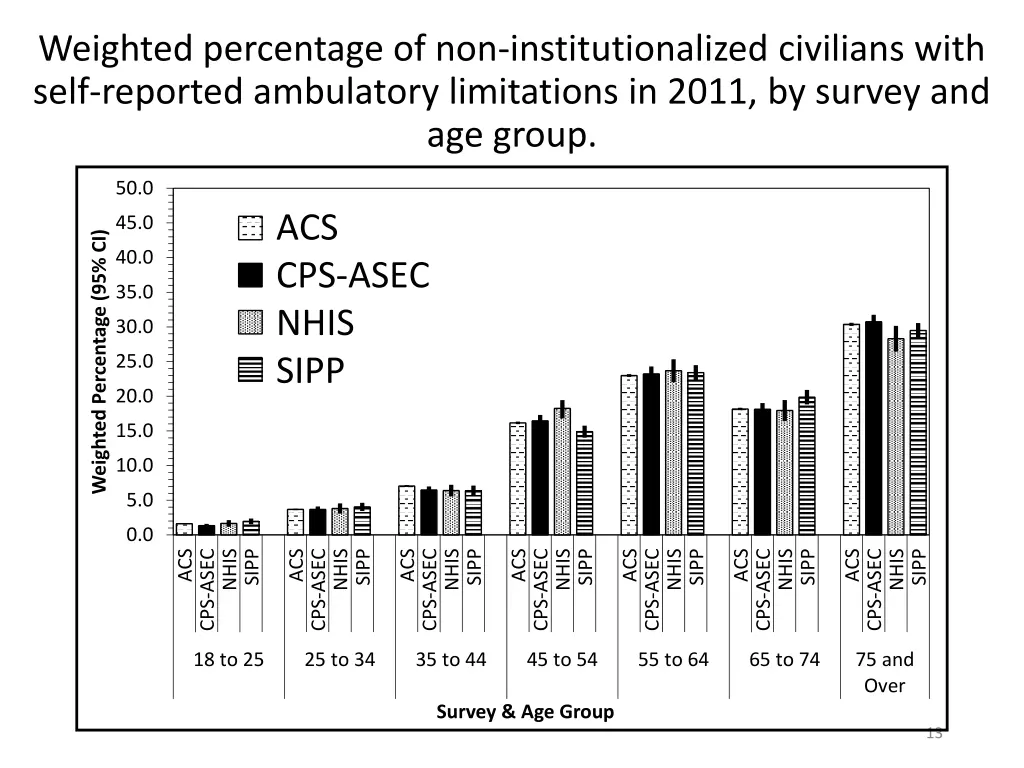
Weighted percentage of non-institutionalized civilians with self-reported ambulatory limitations in 2011, by survey and age group. 50.0 18 to 25 ACS 18 to 25 CPS-ASEC 18 to 25 NHIS 18 to 25 SIPP SIPP ACS CPS-ASEC NHIS 45.0 Weighted Percentage (95% CI) 40.0 35.0 30.0 25.0 20.0 15.0 10.0 5.0 0.0 SIPP SIPP SIPP SIPP SIPP SIPP SIPP ACS NHIS ACS NHIS ACS NHIS ACS NHIS ACS NHIS ACS NHIS ACS NHIS CPS-ASEC CPS-ASEC CPS-ASEC CPS-ASEC CPS-ASEC CPS-ASEC CPS-ASEC 18 to 25 25 to 34 35 to 44 45 to 54 55 to 64 65 to 74 75 and Over Survey & Age Group 13
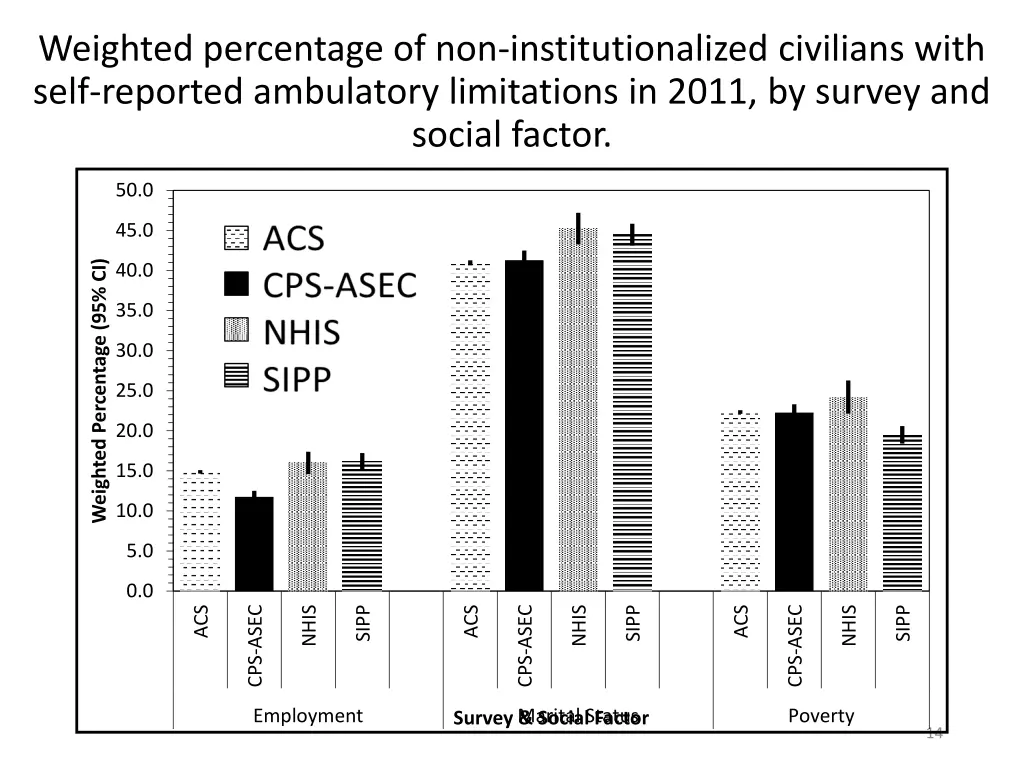
Weighted percentage of non-institutionalized civilians with self-reported ambulatory limitations in 2011, by survey and social factor. 50.0 45.0 Weighted Percentage (95% CI) 40.0 35.0 30.0 25.0 20.0 15.0 10.0 5.0 0.0 CPS-ASEC CPS-ASEC CPS-ASEC SIPP SIPP SIPP NHIS NHIS NHIS ACS ACS ACS Employment Marital Status Poverty Survey & Social Factor 14
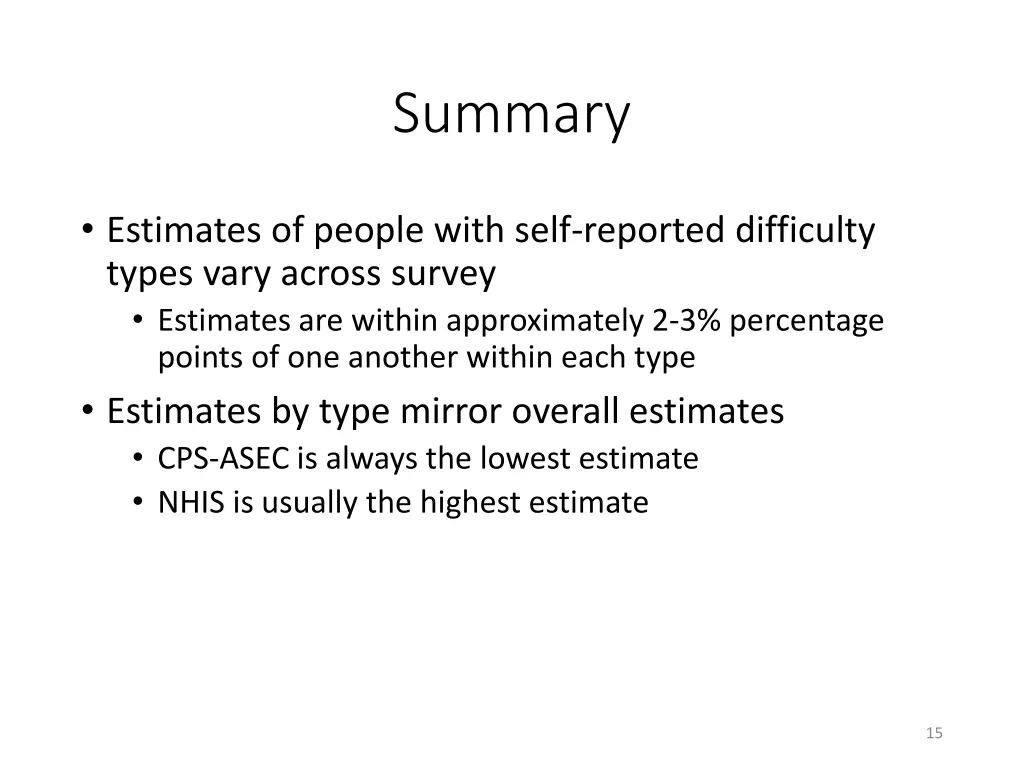
Summary Estimates of people with self-reported difficulty types vary across survey Estimates are within approximately 2-3% percentage points of one another within each type Estimates by type mirror overall estimates CPS-ASEC is always the lowest estimate NHIS is usually the highest estimate 15
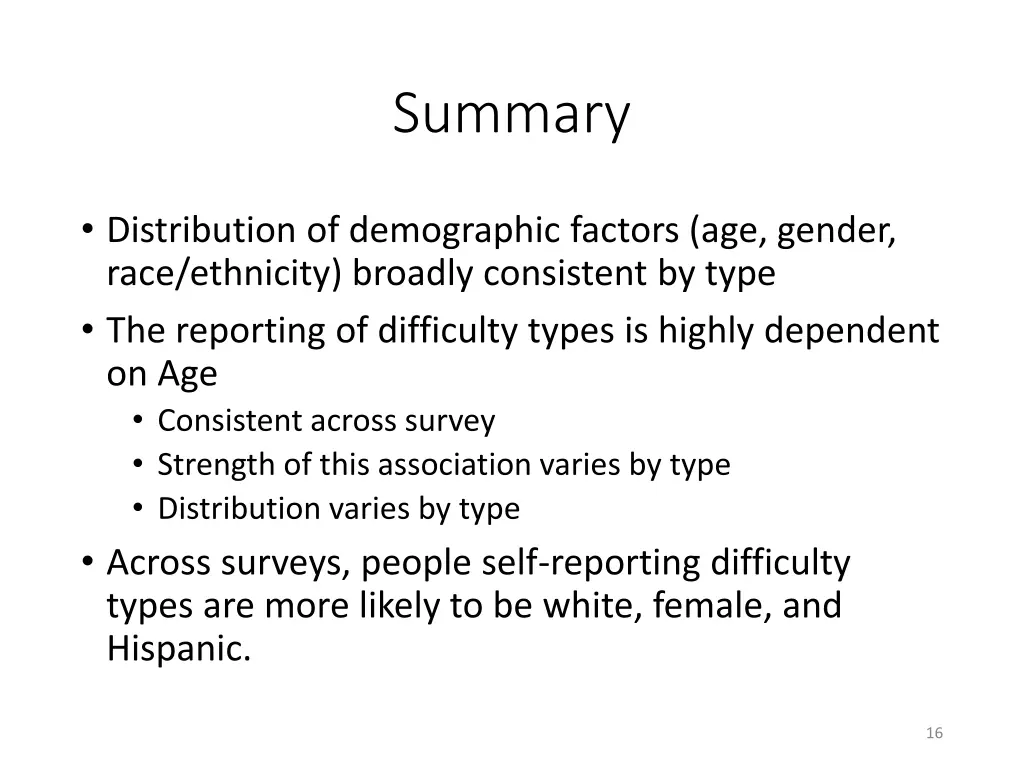
Summary Distribution of demographic factors (age, gender, race/ethnicity) broadly consistent by type The reporting of difficulty types is highly dependent on Age Consistent across survey Strength of this association varies by type Distribution varies by type Across surveys, people self-reporting difficulty types are more likely to be white, female, and Hispanic. 16
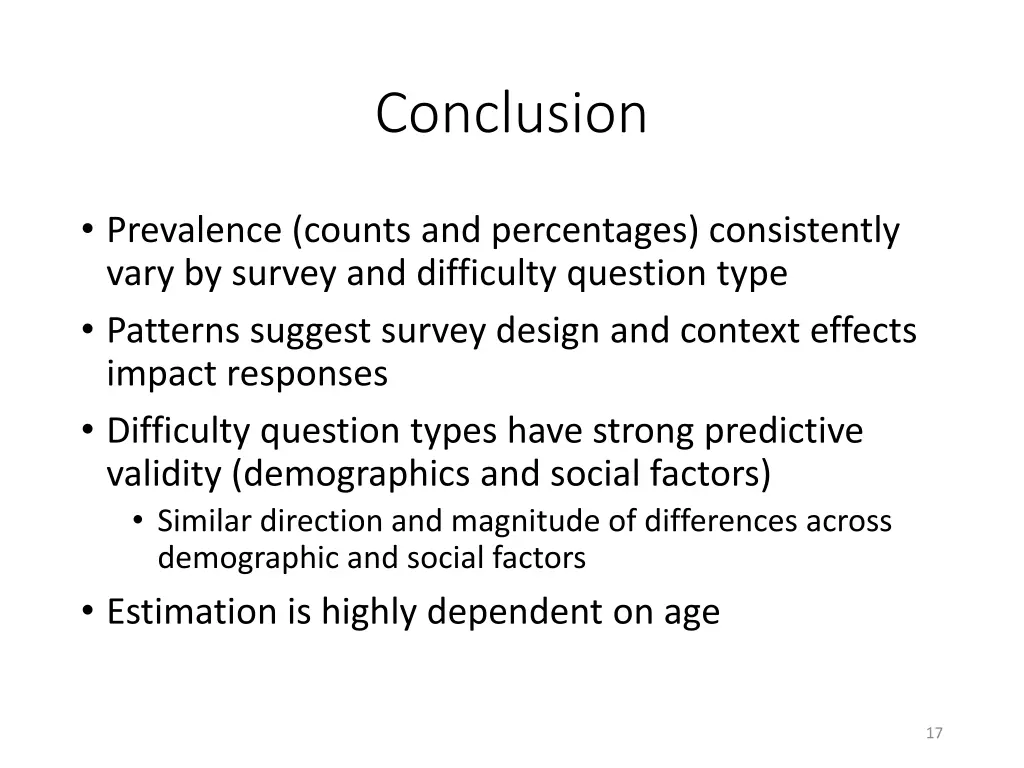
Conclusion Prevalence (counts and percentages) consistently vary by survey and difficulty question type Patterns suggest survey design and context effects impact responses Difficulty question types have strong predictive validity (demographics and social factors) Similar direction and magnitude of differences across demographic and social factors Estimation is highly dependent on age 17
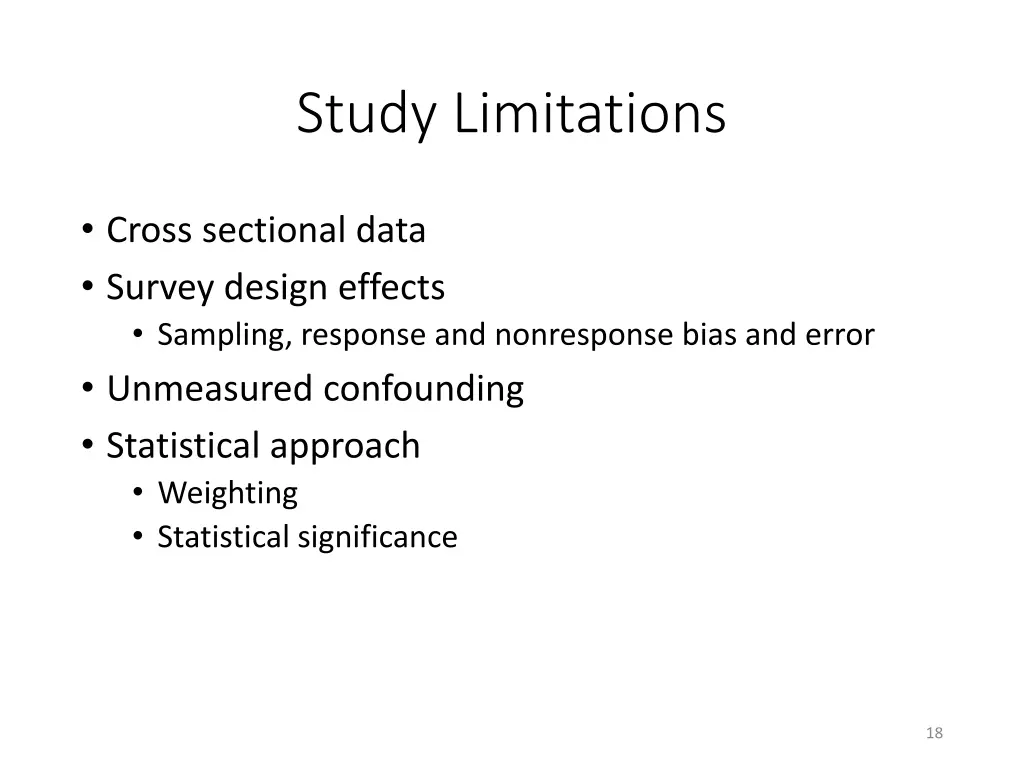
Study Limitations Cross sectional data Survey design effects Sampling, response and nonresponse bias and error Unmeasured confounding Statistical approach Weighting Statistical significance 18
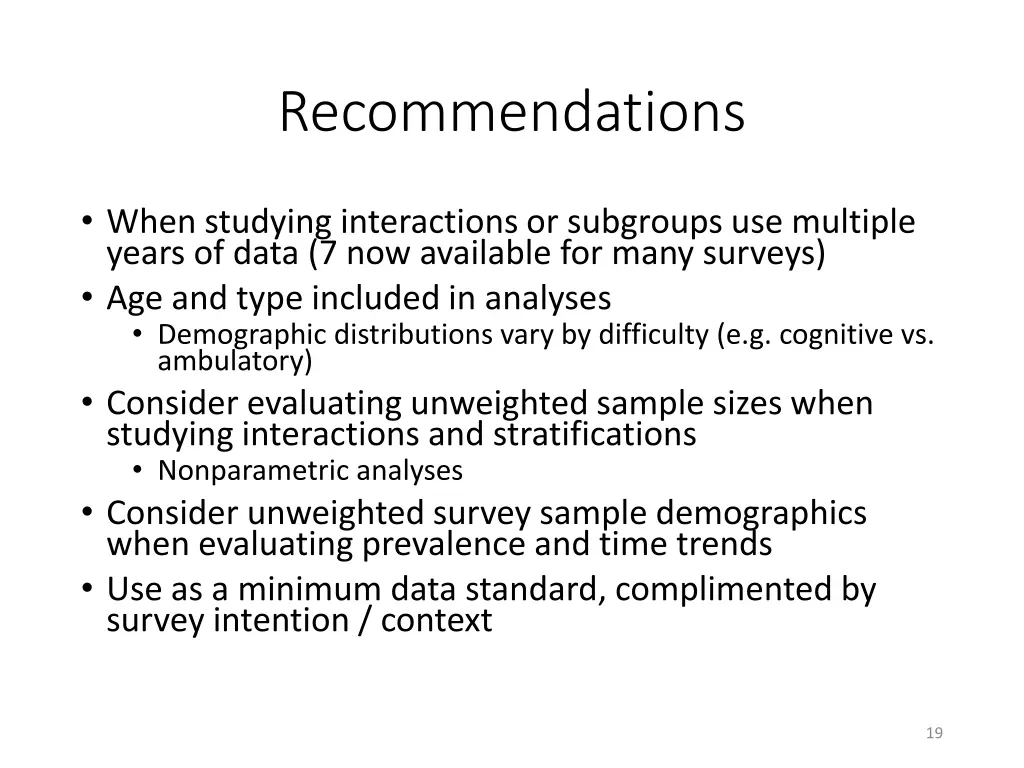
Recommendations When studying interactions or subgroups use multiple years of data (7 now available for many surveys) Age and type included in analyses Demographic distributions vary by difficulty (e.g. cognitive vs. ambulatory) Consider evaluating unweighted sample sizes when studying interactions and stratifications Nonparametric analyses Consider unweighted survey sample demographics when evaluating prevalence and time trends Use as a minimum data standard, complimented by survey intention / context 19
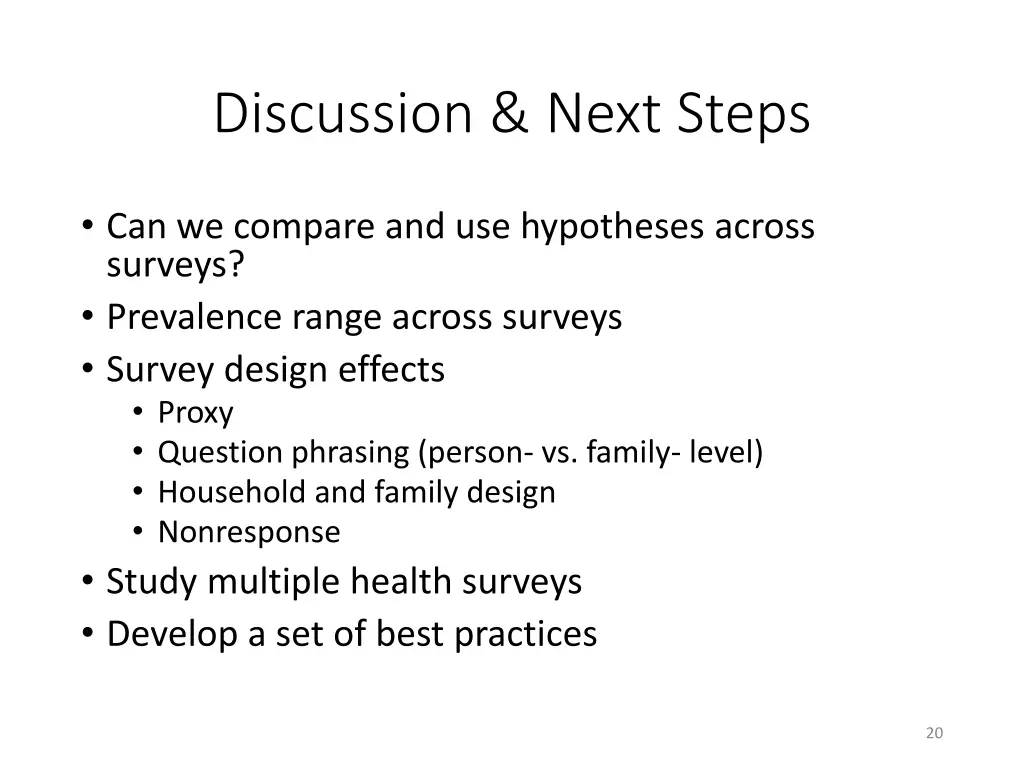
Discussion & Next Steps Can we compare and use hypotheses across surveys? Prevalence range across surveys Survey design effects Proxy Question phrasing (person- vs. family- level) Household and family design Nonresponse Study multiple health surveys Develop a set of best practices 20