Explore the effectiveness of CCTV in aiding police investigations, with findings on the frequency of CCTV footage requests by police, factors influencing requests, and the impact on crime clearance outcomes. Insights from studies and data analysis shed light on how CCTV assists law enforcement in solving crimes.
Please find below an Image/Link to download the presentation.
The content on the website is provided AS IS for your information and personal use only. It may not be sold, licensed, or shared on other websites without obtaining consent from the author. If you encounter any issues during the download, it is possible that the publisher has removed the file from their server.
You are allowed to download the files provided on this website for personal or commercial use, subject to the condition that they are used lawfully. All files are the property of their respective owners.
The content on the website is provided AS IS for your information and personal use only. It may not be sold, licensed, or shared on other websites without obtaining consent from the author.
E N D
Presentation Transcript
Does CCTV help police solve crime? Presentation to the Applied Research in Crime and Justice Conference Anthony Morgan, Christopher Dowling, Alexandra Gannoni & Penny Jorna Australian Institute of Criminology 14 February 2019 www.aic.gov.au
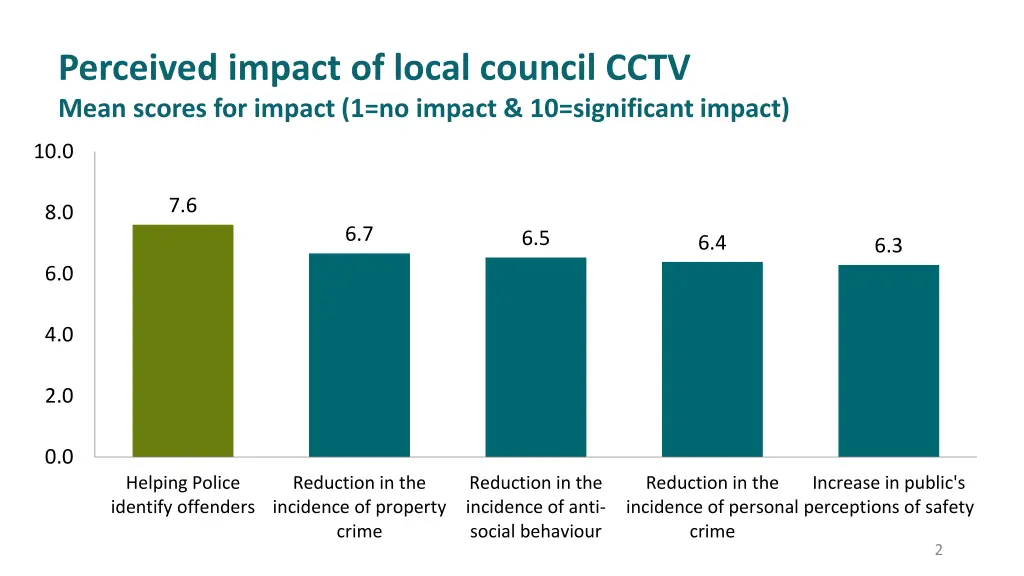
Perceived impact of local council CCTV Mean scores for impact (1=no impact & 10=significant impact) 10.0 7.6 8.0 6.7 6.5 6.4 6.3 6.0 4.0 2.0 0.0 Helping Police identify offenders Reduction in the incidence of property crime Reduction in the incidence of anti- social behaviour Reduction in the incidence of personal crime Increase in public's perceptions of safety 2
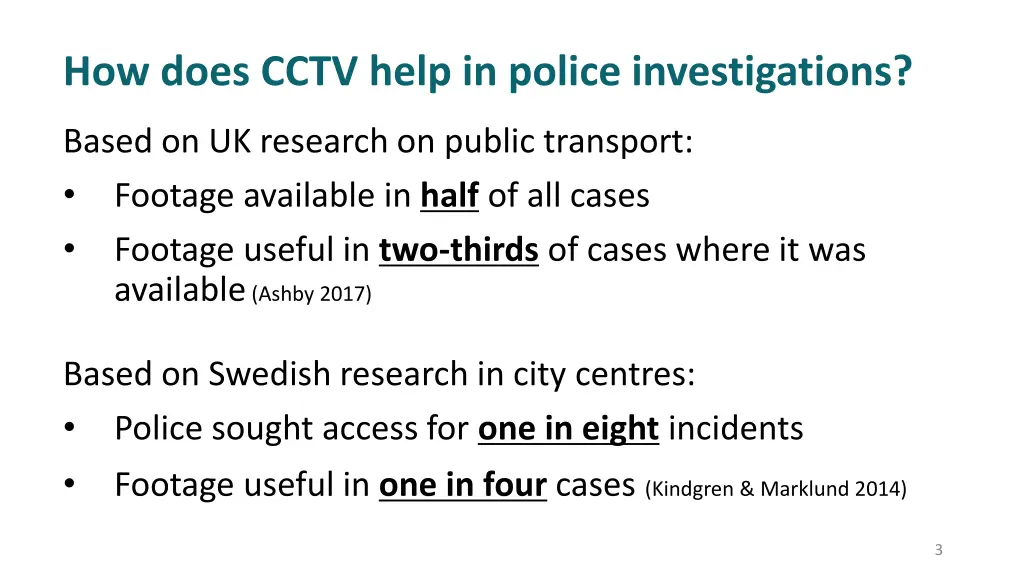
How does CCTV help in police investigations? Based on UK research on public transport: Footage available in half of all cases Footage useful in two-thirds of cases where it was available (Ashby 2017) Based on Swedish research in city centres: Police sought access for one in eight incidents Footage useful in one in four cases(Kindgren & Marklund 2014) 3
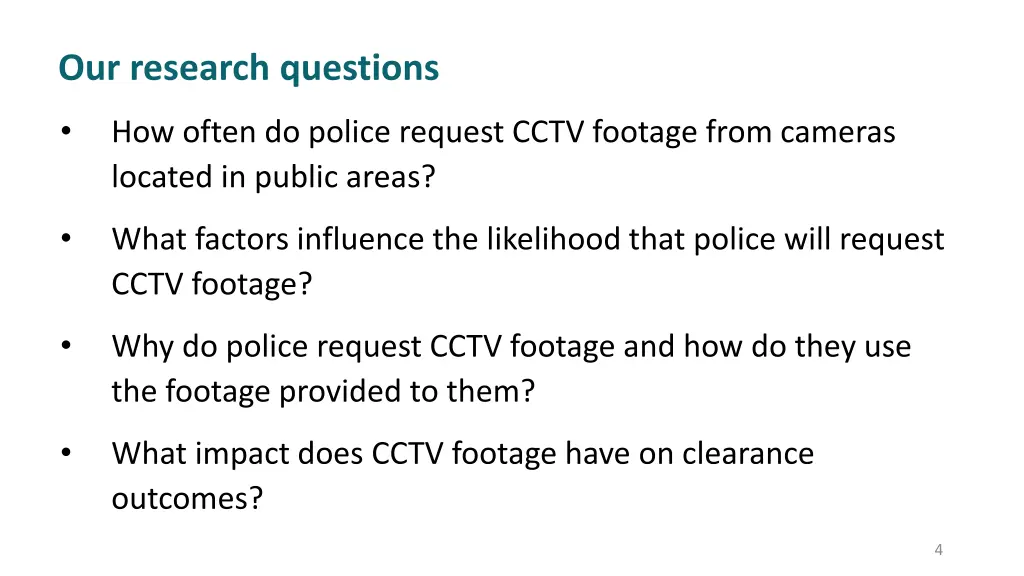
Our research questions How often do police request CCTV footage from cameras located in public areas? What factors influence the likelihood that police will request CCTV footage? Why do police request CCTV footage and how do they use the footage provided to them? What impact does CCTV footage have on clearance outcomes? 4
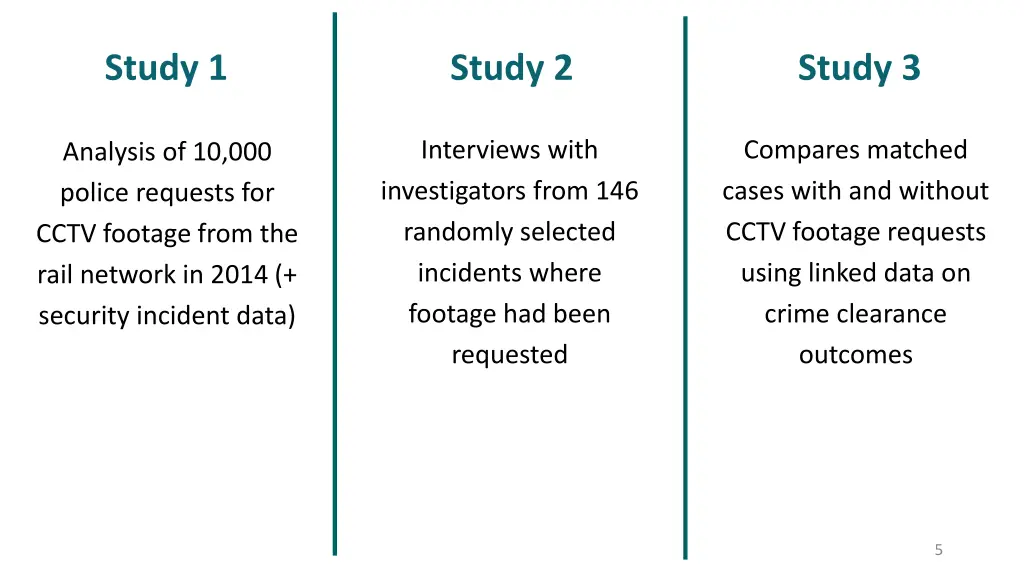
Study 1 Study 2 Study 3 Interviews with investigators from 146 randomly selected incidents where footage had been requested Compares matched cases with and without CCTV footage requests using linked data on crime clearance outcomes Analysis of 10,000 police requests for CCTV footage from the rail network in 2014 (+ security incident data) 5 By Hugh Llewelyn from Keynsham, UK;cropped and adjusted by uploader EurovisionNim - H22, CC BY-SA 2.0, https://commons.wikimedia.org/w/index.php?curid=54970057
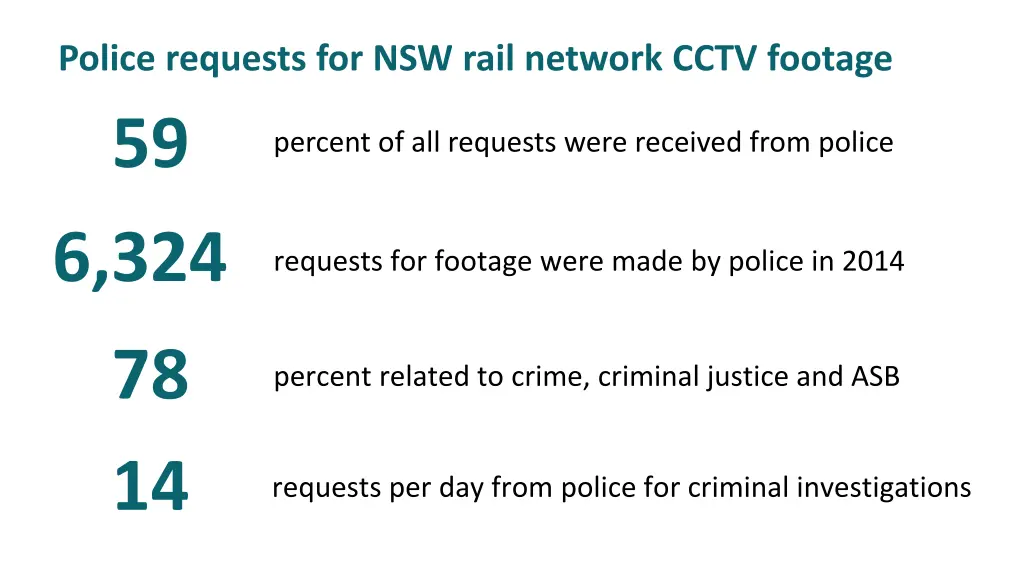
Police requests for NSW rail network CCTV footage 59 percent of all requests were received from police 6,324 requests for footage were made by police in 2014 78 percent related to crime, criminal justice and ASB 14 requests per day from police for criminal investigations
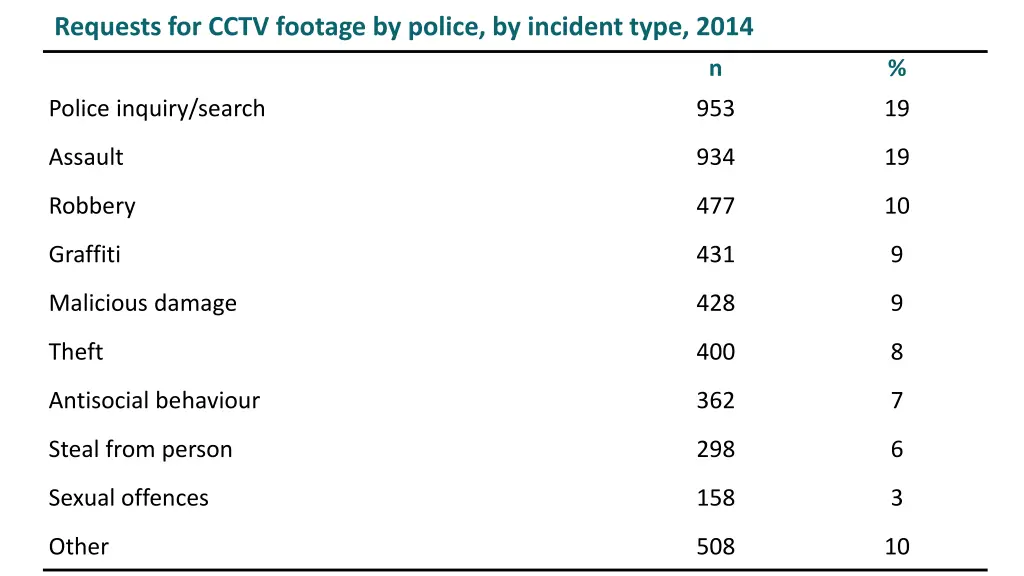
Requests for CCTV footage by police, by incident type, 2014 n % Police inquiry/search 953 19 Assault 934 19 Robbery 477 10 Graffiti 431 9 Malicious damage 428 9 Theft 400 8 Antisocial behaviour 362 7 Steal from person 298 6 Sexual offences 158 3 Other 508 10
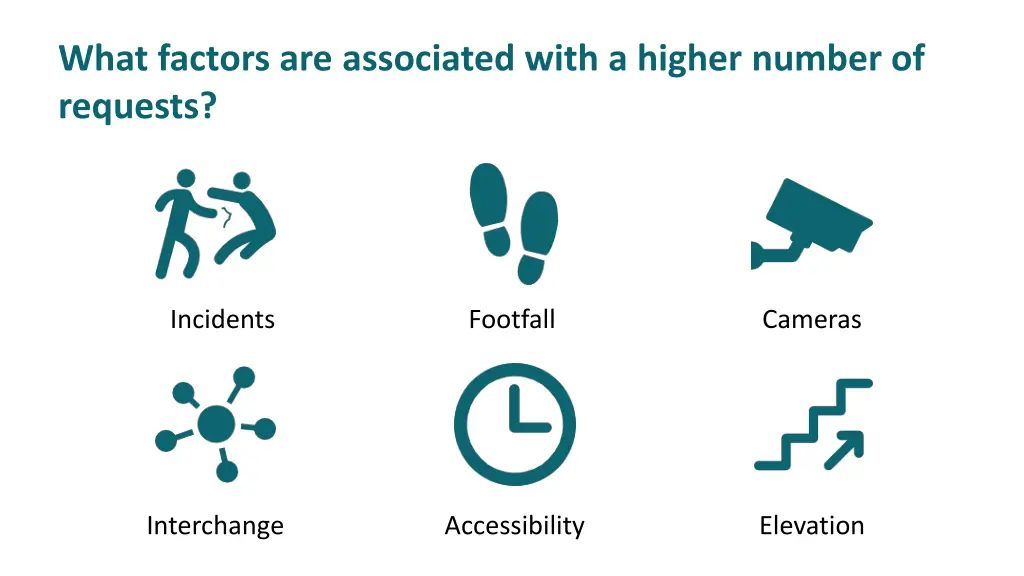
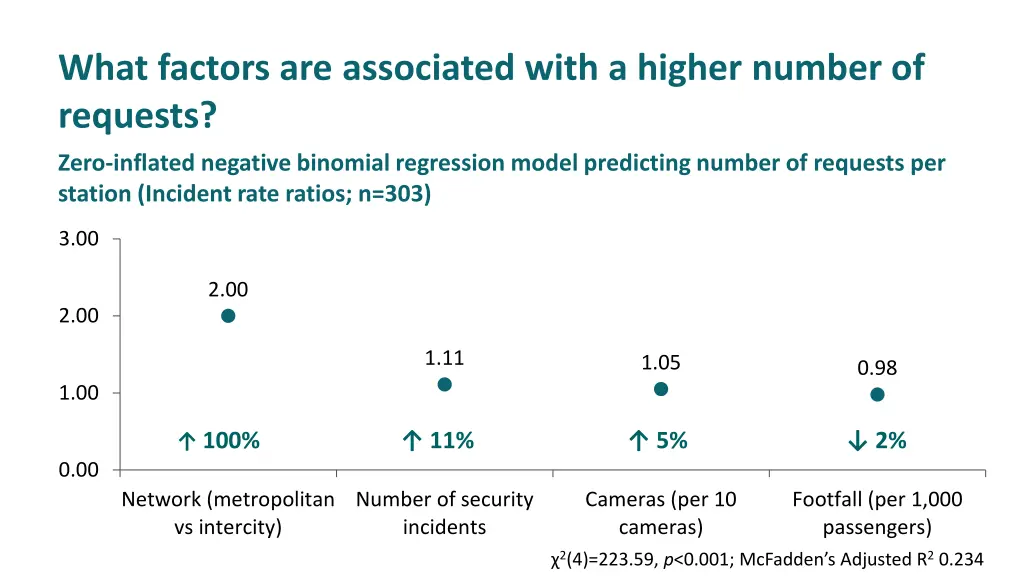
What factors are associated with a higher number of requests? Zero-inflated negative binomial regression model predicting number of requests per station (Incident rate ratios; n=303) 3.00 2.00 2.00 1.11 1.05 0.98 1.00 100% 11% 5% 2% 0.00 Network (metropolitan vs intercity) Number of security incidents Cameras (per 10 cameras) 2(4)=223.59, p<0.001; McFadden s Adjusted R2 0.234 Footfall (per 1,000 passengers)
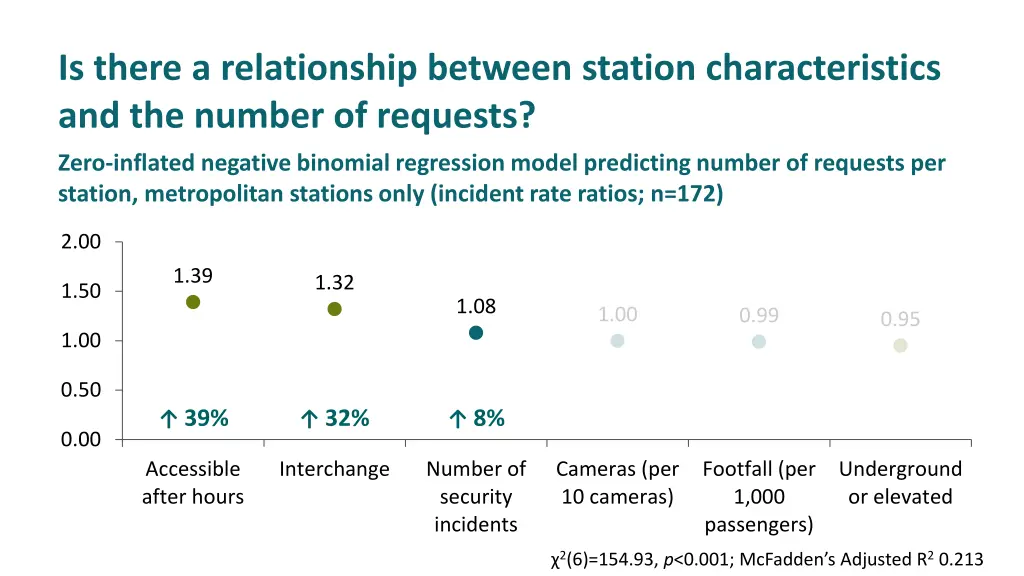
Is there a relationship between station characteristics and the number of requests? Zero-inflated negative binomial regression model predicting number of requests per station, metropolitan stations only (incident rate ratios; n=172) 2.00 1.39 1.32 1.50 1.08 1.00 0.99 0.95 1.00 0.50 39% 32% 8% 0.00 Accessible after hours Interchange Number of security incidents Cameras (per 10 cameras) Footfall (per 1,000 passengers) Underground or elevated 2(6)=154.93, p<0.001; McFadden s Adjusted R2 0.213
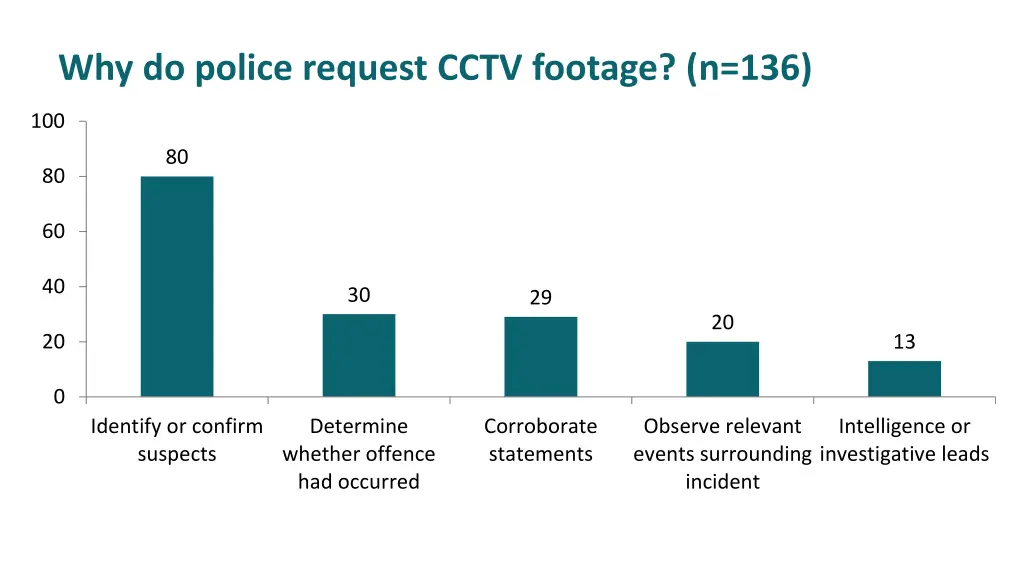
Why do police request CCTV footage? (n=136) 100 80 80 60 40 30 29 20 20 13 0 Identify or confirm suspects Determine whether offence had occurred Corroborate statements Observe relevant events surrounding incident Intelligence or investigative leads
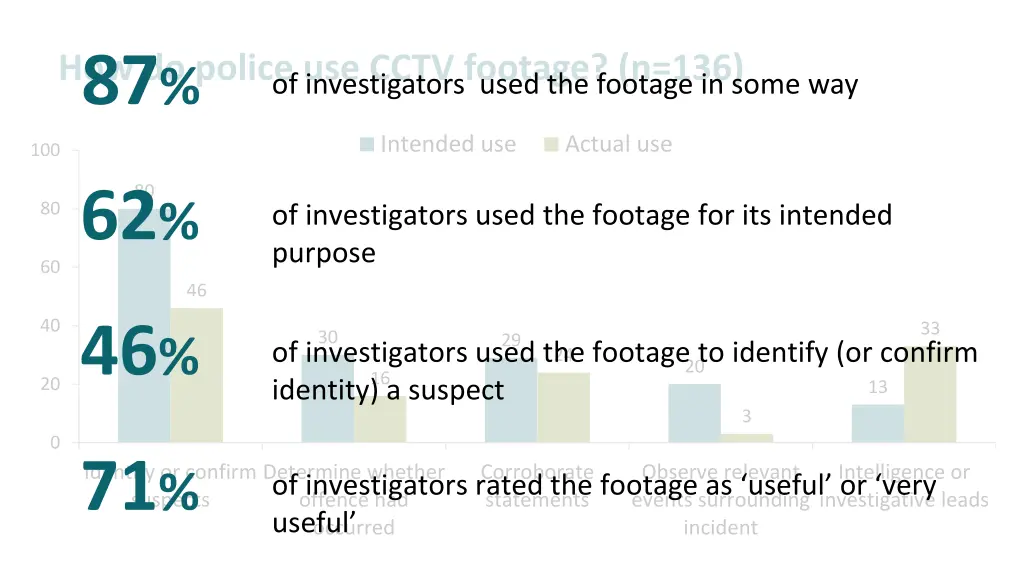
How do police use CCTV footage? (n=136) of investigators used the footage in some way 87% Intended use Actual use 100 62% 80 80 of investigators used the footage for its intended purpose 60 46 40 46% 33 30 29 of investigators used the footage to identify (or confirm identity) a suspect 24 20 16 20 13 3 0 Identify or confirm suspects 71% Determine whether offence had occurred useful Corroborate statements Observe relevant events surrounding incident Intelligence or investigative leads of investigators rated the footage as useful or very
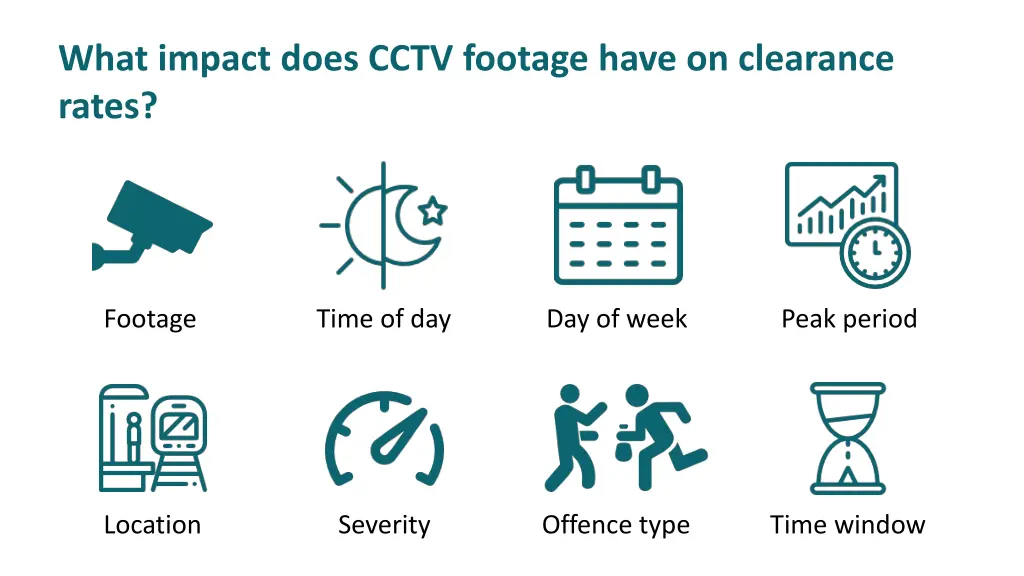
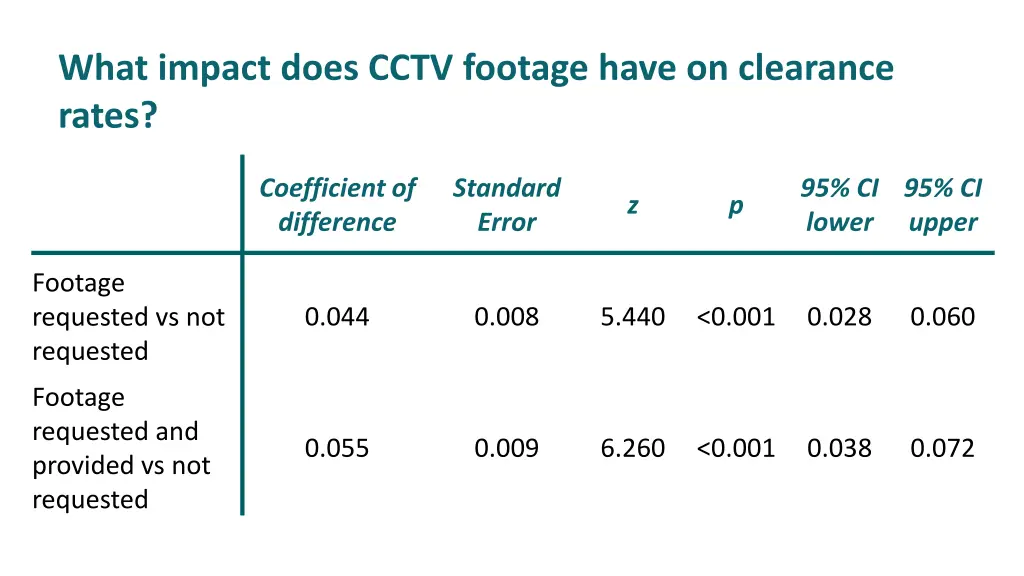
What impact does CCTV footage have on clearance rates? Coefficient of difference Standard Error 95% CI lower 95% CI upper z p Footage requested vs not requested 0.044 0.008 5.440 <0.001 0.028 0.060 Footage requested and provided vs not requested 0.055 0.009 6.260 <0.001 0.038 0.072
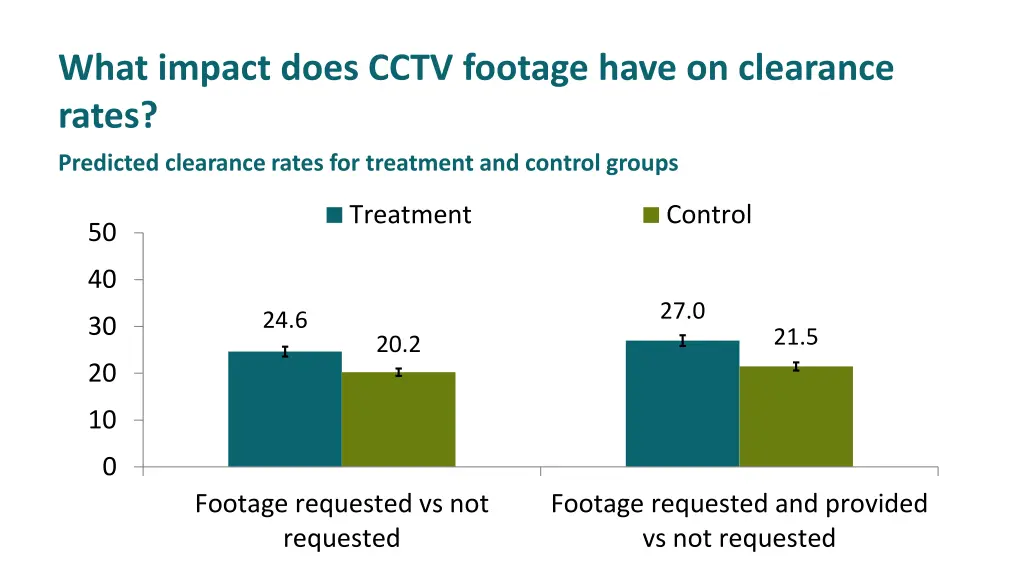
What impact does CCTV footage have on clearance rates? Predicted clearance rates for treatment and control groups Treatment Control 50 40 27.0 24.6 30 21.5 20.2 20 10 0 Footage requested vs not requested Footage requested and provided vs not requested
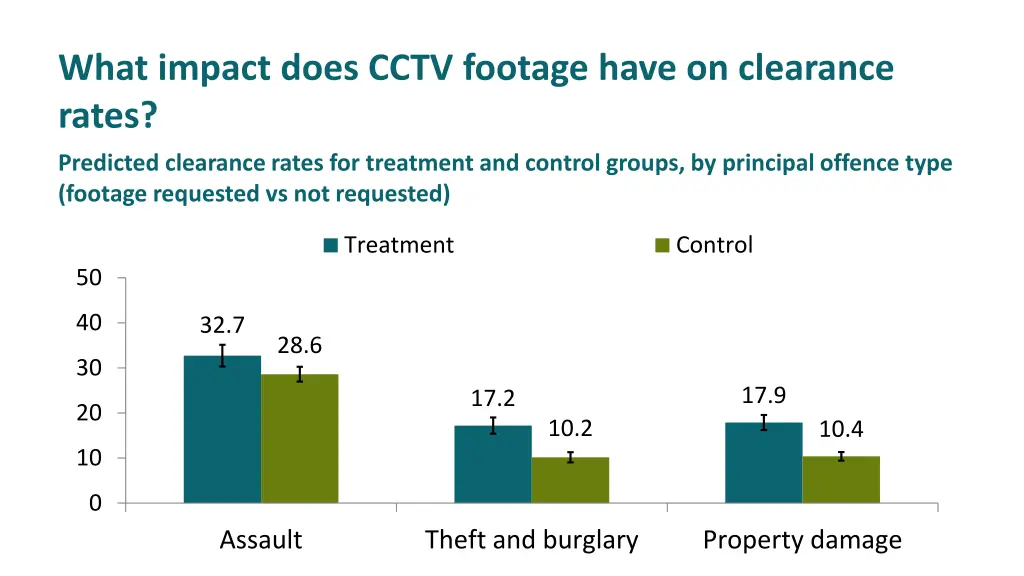
What impact does CCTV footage have on clearance rates? Predicted clearance rates for treatment and control groups, by principal offence type (footage requested vs not requested) Treatment Control 50 40 32.7 28.6 30 17.9 17.2 20 10.2 10.4 10 0 Assault Theft and burglary Property damage
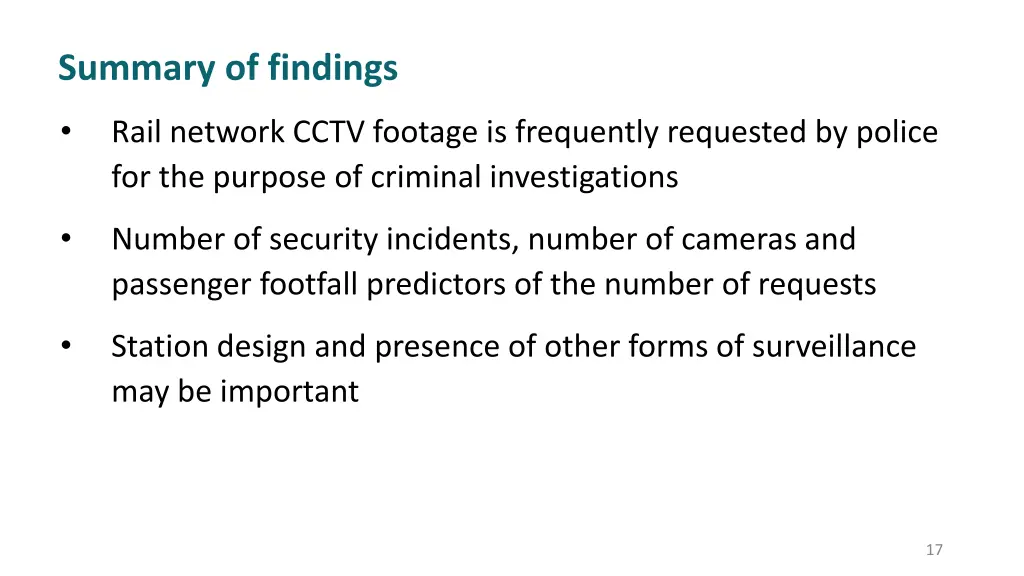
Summary of findings Rail network CCTV footage is frequently requested by police for the purpose of criminal investigations Number of security incidents, number of cameras and passenger footfall predictors of the number of requests Station design and presence of other forms of surveillance may be important 17
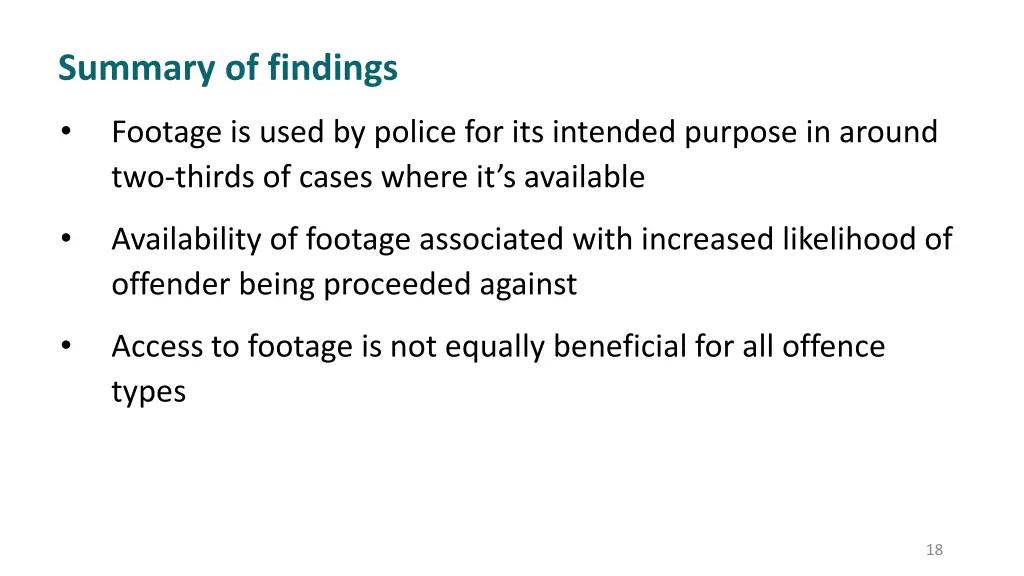
Summary of findings Footage is used by police for its intended purpose in around two-thirds of cases where it s available Availability of footage associated with increased likelihood of offender being proceeded against Access to footage is not equally beneficial for all offence types 18
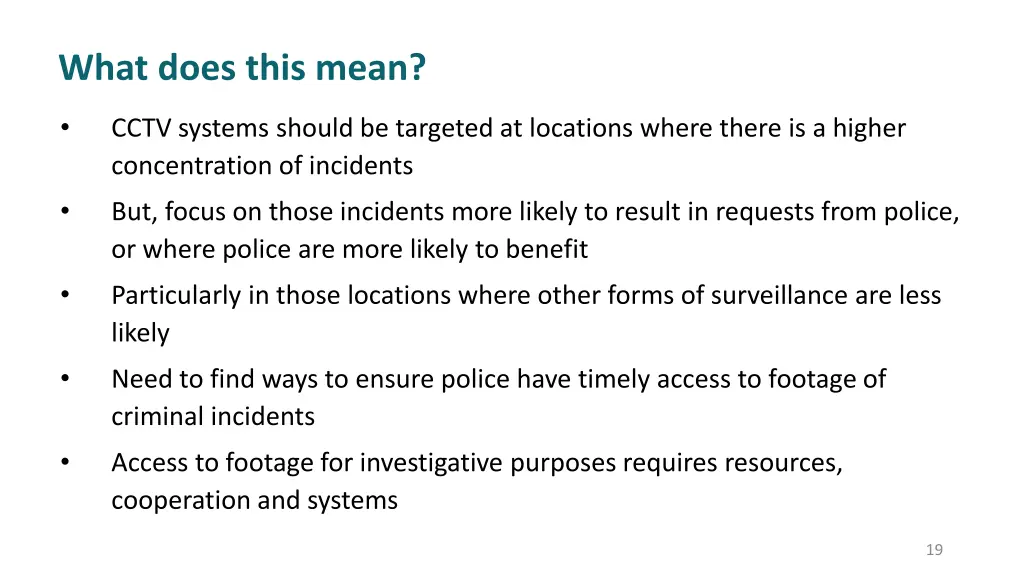
What does this mean? CCTV systems should be targeted at locations where there is a higher concentration of incidents But, focus on those incidents more likely to result in requests from police, or where police are more likely to benefit Particularly in those locations where other forms of surveillance are less likely Need to find ways to ensure police have timely access to footage of criminal incidents Access to footage for investigative purposes requires resources, cooperation and systems 19