Improving HIV Outcomes with Ryan White Program Data
Explore how client-level data from the Ryan White HIV/AIDS Program is used to target interventions and address health inequities in the U.S., aiming to enhance care for vulnerable populations living with HIV/AIDS.

Download Presentation

Please find below an Image/Link to download the presentation.
The content on the website is provided AS IS for your information and personal use only. It may not be sold, licensed, or shared on other websites without obtaining consent from the author. If you encounter any issues during the download, it is possible that the publisher has removed the file from their server.
You are allowed to download the files provided on this website for personal or commercial use, subject to the condition that they are used lawfully. All files are the property of their respective owners.
The content on the website is provided AS IS for your information and personal use only. It may not be sold, licensed, or shared on other websites without obtaining consent from the author.
E N D
Presentation Transcript
These Data Show the Way to Better Care Improving HIV Outcomes: Using Ryan White HIV/AIDS Program Client-level Data to Target Interventions and Address Health Inequities in the U.S. September 16, 2016 Stacy Cohen, MPH, Chief Evaluation, Analysis, and Dissemination Branch Division of Policy and Data, HIV/AIDS Bureau Health Resources and Services Administration
Todays Session About the Ryan White HIV/AIDS Program (RWHAP) Who we serve Measuring outcomes Using client-level data Using data at the local level Resources
About the Ryan White HIV/AIDS Program
HAB Vision and Mission Vision Optimal HIV/AIDS care and treatment for all Mission Provide leadership and resources to assure access to and retention in high quality, integrated care and treatment services for vulnerable people living with HIV/AIDS and their families
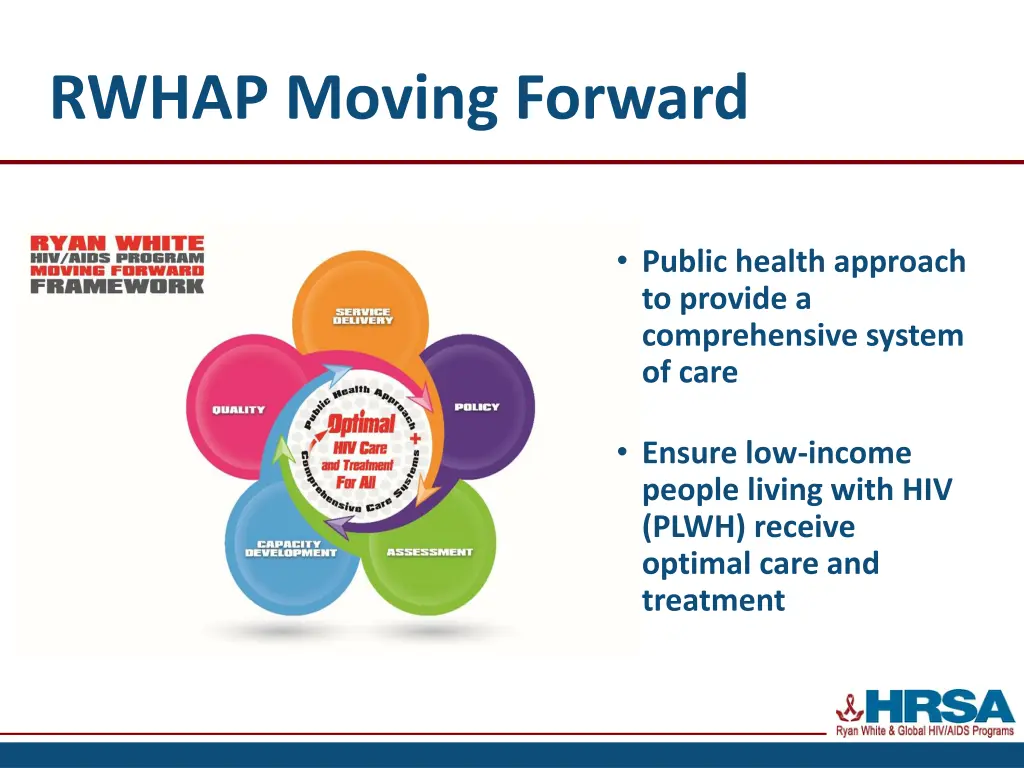
RWHAP Moving Forward Public health approach to provide a comprehensive system of care Ensure low-income people living with HIV (PLWH) receive optimal care and treatment
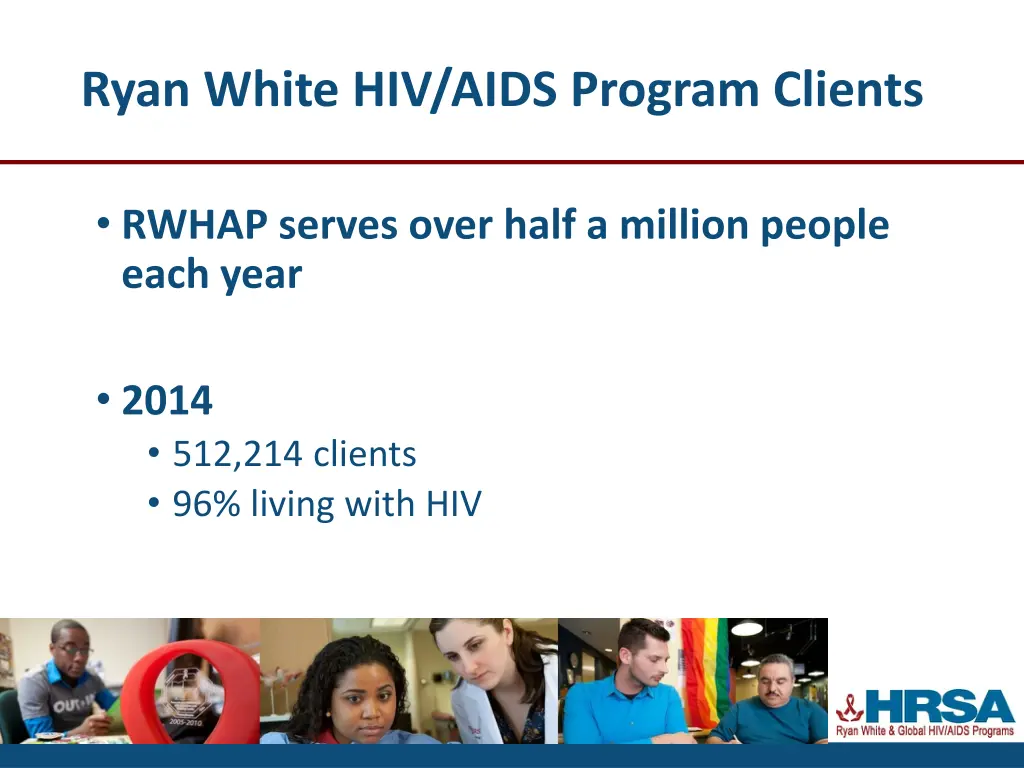
Ryan White HIV/AIDS Program Clients RWHAP serves over half a million people each year 2014 512,214 clients 96% living with HIV
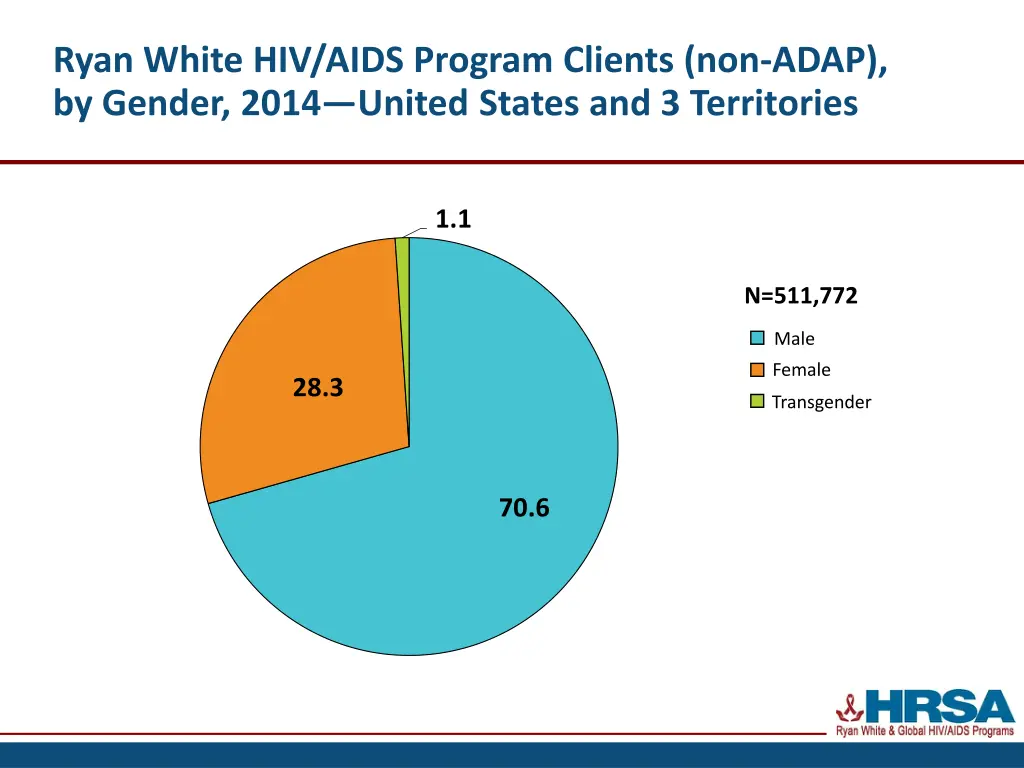
Ryan White HIV/AIDS Program Clients (non-ADAP), by Gender, 2014 United States and 3 Territories 1.1 N=511,772 Male Female 28.3 Transgender 70.6
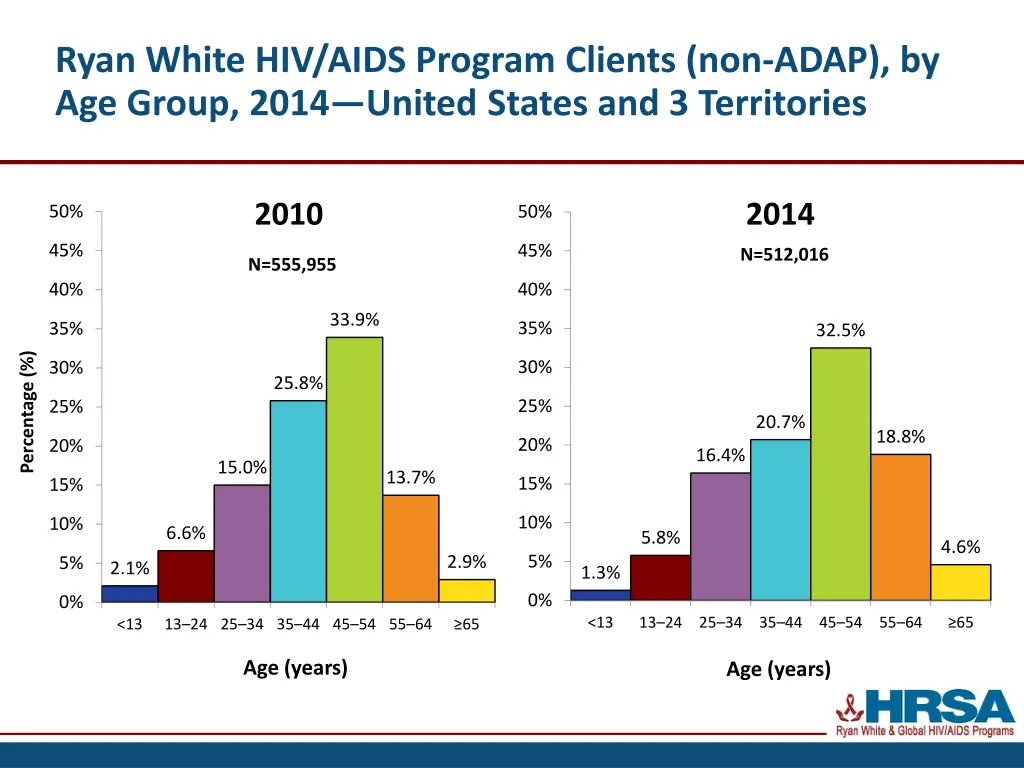
Ryan White HIV/AIDS Program Clients (non-ADAP), by Age Group, 2014 United States and 3 Territories 2010 2014 50% 50% 45% 45% N=512,016 N=555,955 40% 40% 33.9% 35% 35% 32.5% Percentage (%) 30% 30% 25.8% 25% 25% 20.7% 18.8% 20% 20% 16.4% 15.0% 13.7% 15% 15% 10% 10% 6.6% 5.8% 4.6% 5% 2.9% 5% 2.1% 1.3% 0% 0% <13 13 24 25 34 35 44 45 54 55 64 65 <13 13 24 25 34 35 44 45 54 55 64 65 Age (years) Age (years)
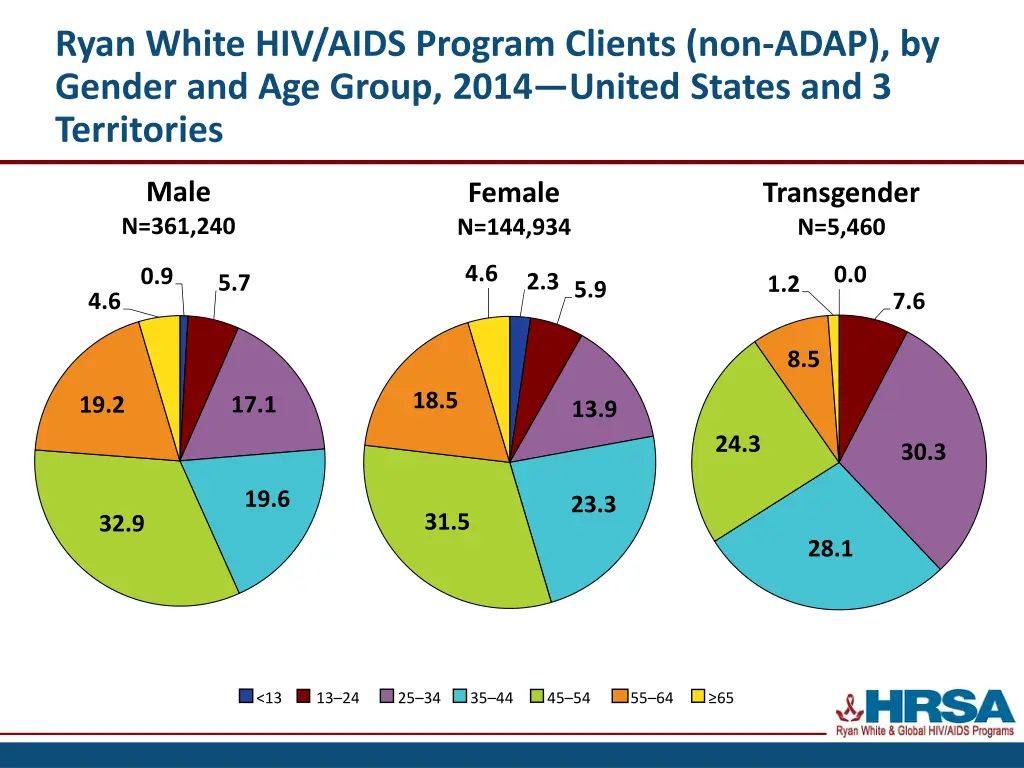
Ryan White HIV/AIDS Program Clients (non-ADAP), by Gender and Age Group, 2014 United States and 3 Territories Male N=361,240 Female N=144,934 Transgender N=5,460 4.6 0.0 0.9 2.35.9 5.7 1.2 7.6 4.6 8.5 18.5 17.1 19.2 13.9 24.3 30.3 19.6 23.3 31.5 32.9 28.1 <13 13 24 25 34 35 44 45 54 55 64 65
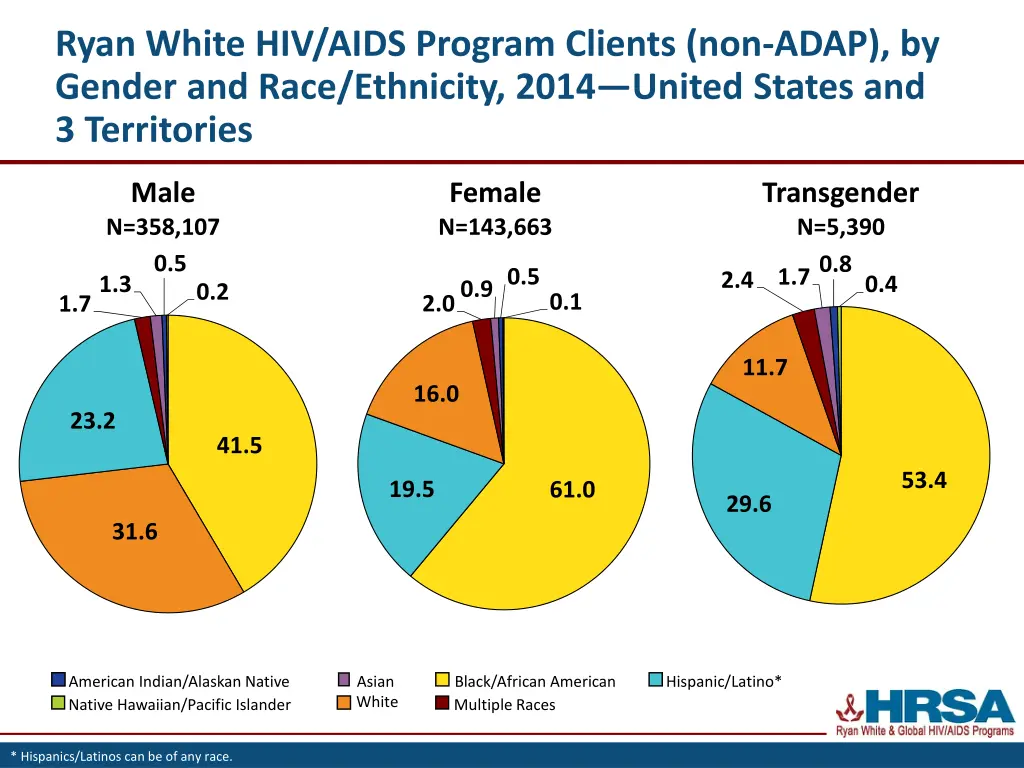
Ryan White HIV/AIDS Program Clients (non-ADAP), by Gender and Race/Ethnicity, 2014 United States and 3 Territories Male N=358,107 Female N=143,663 Transgender N=5,390 0.5 1.70.8 2.00.90.5 2.4 1.71.3 0.4 0.2 0.1 11.7 16.0 23.2 41.5 53.4 19.5 61.0 29.6 31.6 American Indian/Alaskan Native Native Hawaiian/Pacific Islander Asian Black/African American Multiple Races Hispanic/Latino* White * Hispanics/Latinos can be of any race.
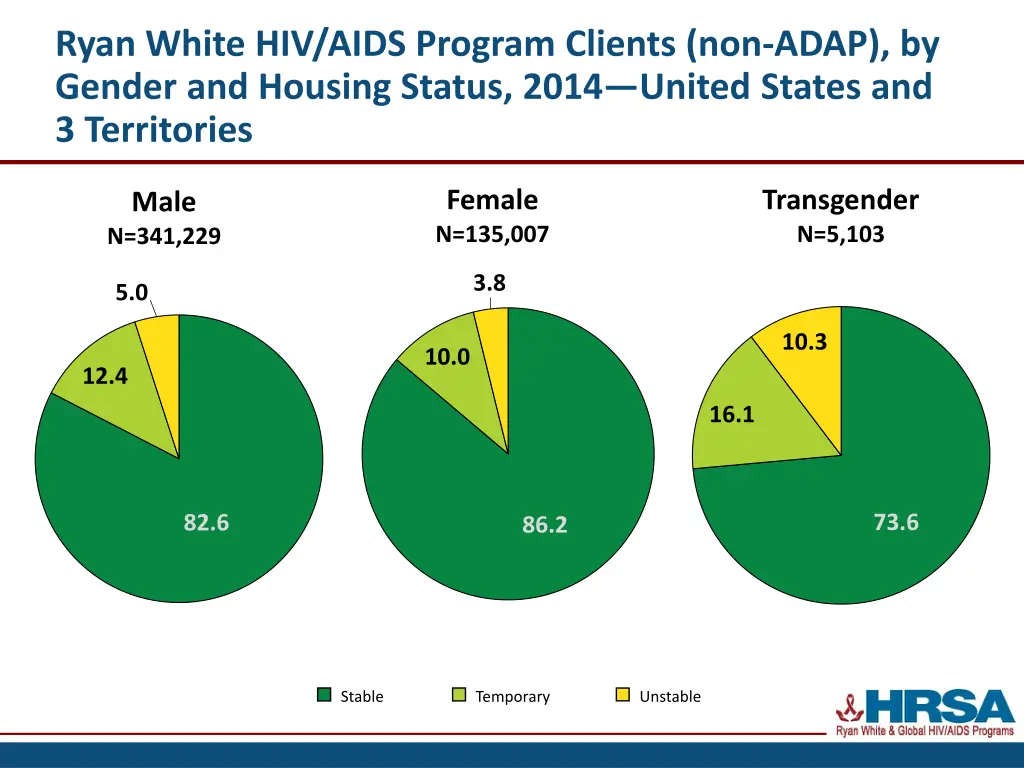
Ryan White HIV/AIDS Program Clients (non-ADAP), by Gender and Housing Status, 2014 United States and 3 Territories Female N=135,007 Transgender N=5,103 Male N=341,229 3.8 5.0 10.3 10.0 12.4 16.1 73.6 82.6 86.2 Stable Temporary Unstable
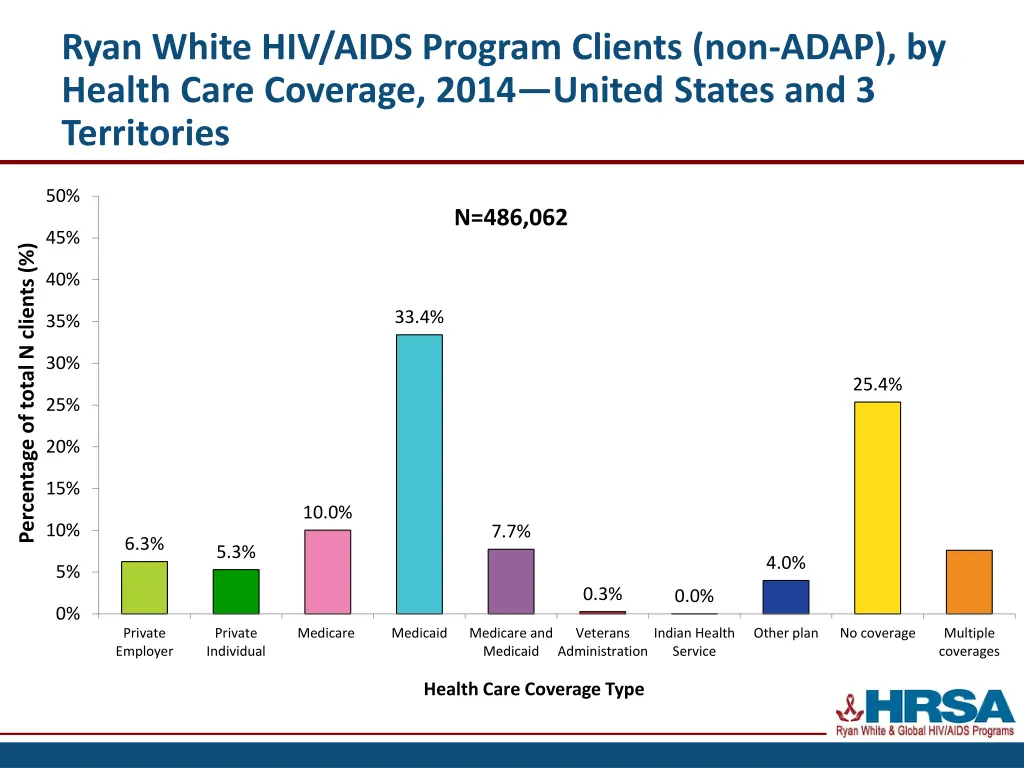
Ryan White HIV/AIDS Program Clients (non-ADAP), by Health Care Coverage, 2014 United States and 3 Territories 50% N=486,062 45% Percentage of total N clients (%) 40% 33.4% 35% 30% 25.4% 25% 20% 15% 10.0% 10% 7.7% 6.3% 5.3% 4.0% 5% 0.3% 0.0% 0% Private Employer Private Individual Medicare Medicaid Medicare and Medicaid Veterans Administration Indian Health Service Other plan No coverage Multiple coverages Health Care Coverage Type
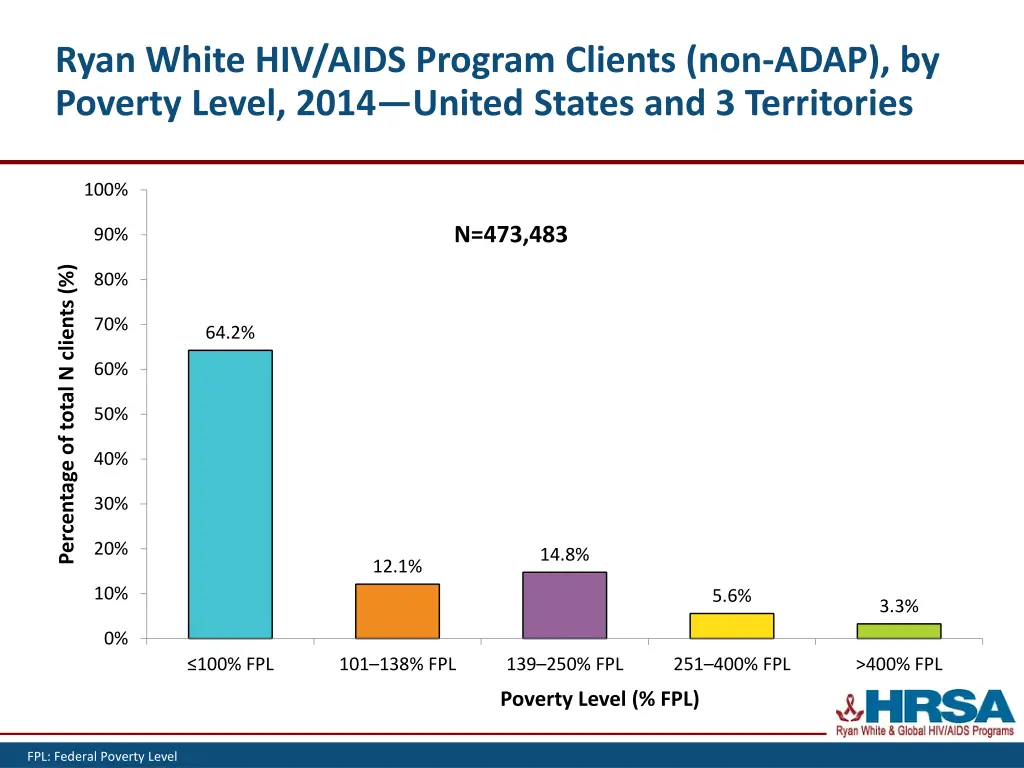
Ryan White HIV/AIDS Program Clients (non-ADAP), by Poverty Level, 2014 United States and 3 Territories 100% N=473,483 90% Percentage of total N clients (%) 80% 70% 64.2% 60% 50% 40% 30% 20% 14.8% 12.1% 10% 5.6% 3.3% 0% 100% FPL 101 138% FPL 139 250% FPL 251 400% FPL >400% FPL Poverty Level (% FPL) FPL: Federal Poverty Level
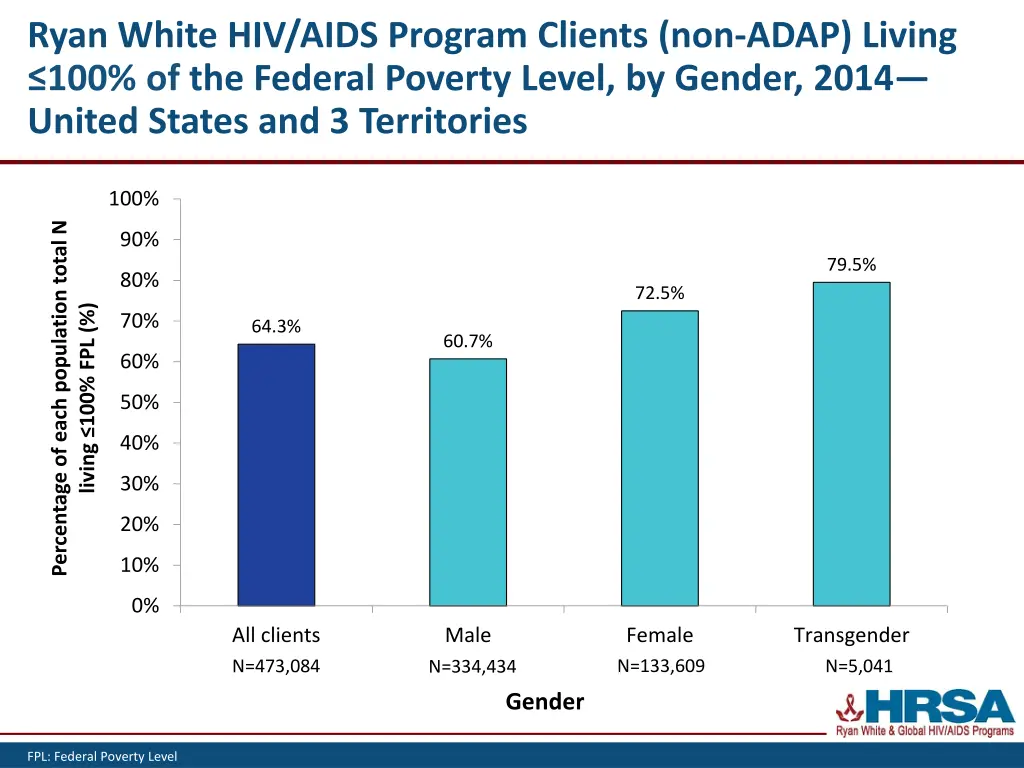
Ryan White HIV/AIDS Program Clients (non-ADAP) Living 100% of the Federal Poverty Level, by Gender, 2014 United States and 3 Territories 100% Percentage of each population total N 90% 79.5% 80% 72.5% living 100% FPL (%) 70% 64.3% 60.7% 60% 50% 40% 30% 20% 10% 0% All clients N=473,084 Male Female N=133,609 Transgender N=5,041 N=334,434 Gender FPL: Federal Poverty Level
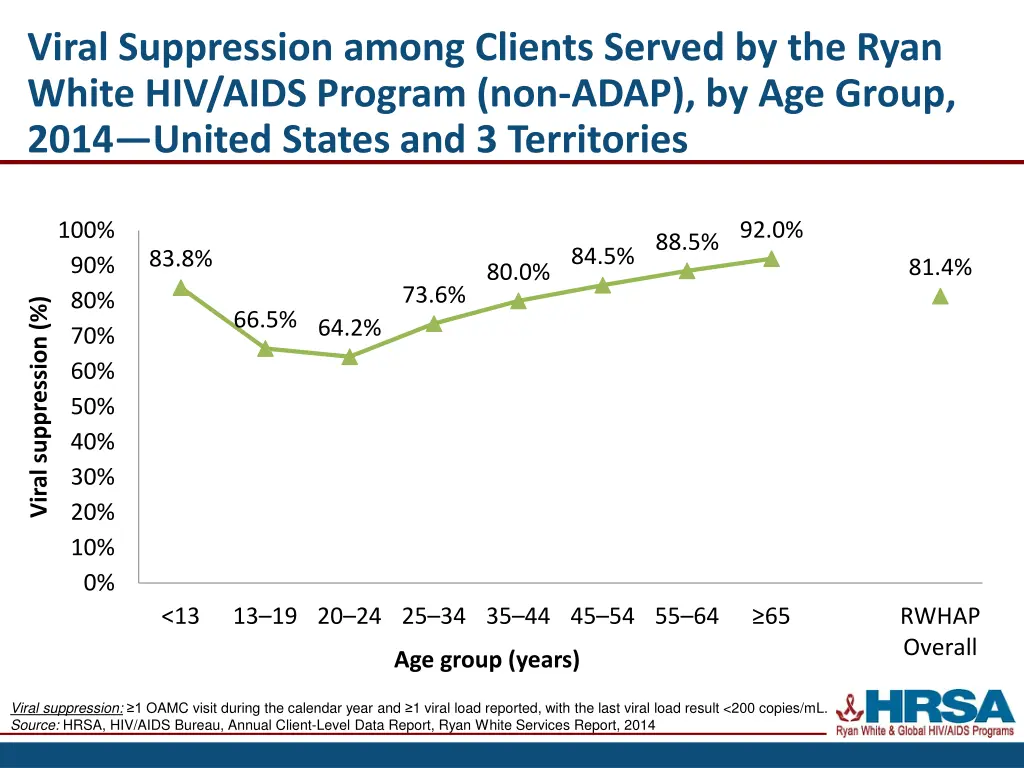
Viral Suppression among Clients Served by the Ryan White HIV/AIDS Program (non-ADAP), by Age Group, 2014 United States and 3 Territories 92.0% 100% 88.5% 84.5% 83.8% 90% 81.4% 80.0% 73.6% 80% Viral suppression (%) 66.5%64.2% 70% 60% 50% 40% 30% 20% 10% 0% <13 13 19 20 24 25 34 35 44 45 54 55 64 65 RWHAP Overall Age group (years) Viral suppression: 1 OAMC visit during the calendar year and 1 viral load reported, with the last viral load result <200 copies/mL. Source: HRSA, HIV/AIDS Bureau, Annual Client-Level Data Report, Ryan White Services Report, 2014
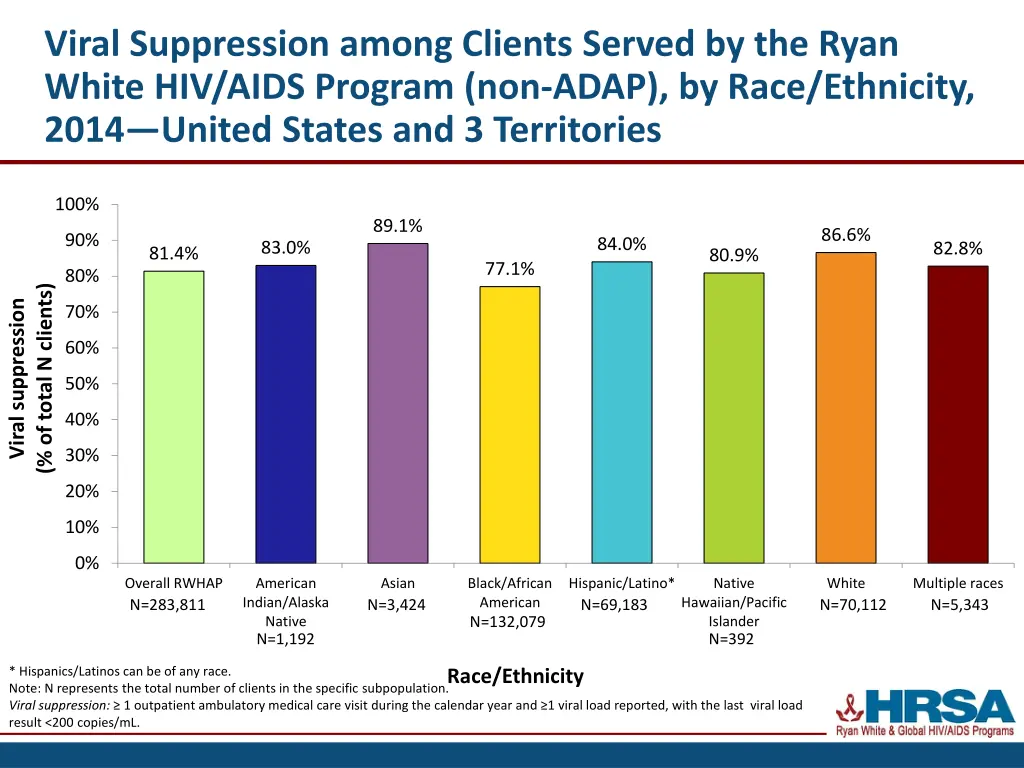
Viral Suppression among Clients Served by the Ryan White HIV/AIDS Program (non-ADAP), by Race/Ethnicity, 2014 United States and 3 Territories 100% 89.1% 86.6% 90% 84.0% 83.0% 82.8% 81.4% 80.9% 77.1% 80% (% of total N clients) Viral suppression 70% 60% 50% 40% 30% 20% 10% 0% Overall RWHAP N=283,811 American Indian/Alaska Native N=1,192 Asian N=3,424 Black/African American N=132,079 Hispanic/Latino* N=69,183 Native White N=70,112 Multiple races N=5,343 Hawaiian/Pacific Islander N=392 * Hispanics/Latinos can be of any race. Note: N represents the total number of clients in the specific subpopulation. Viral suppression: 1 outpatient ambulatory medical care visit during the calendar year and 1 viral load reported, with the last viral load result <200 copies/mL. Race/Ethnicity
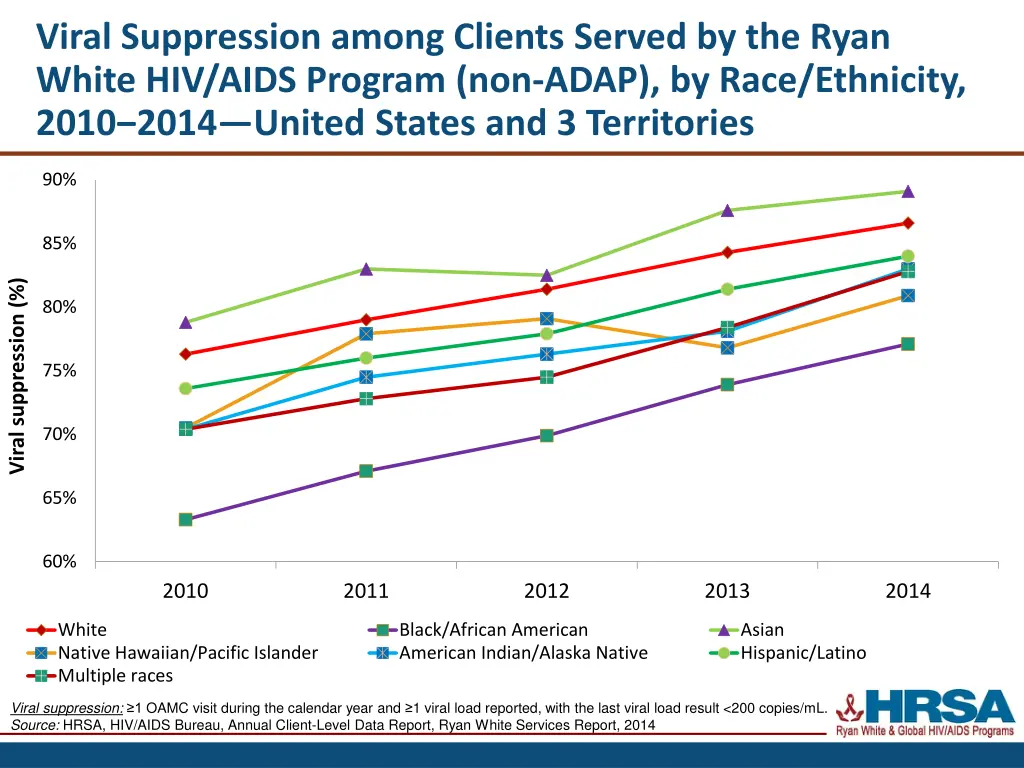
Viral Suppression among Clients Served by the Ryan White HIV/AIDS Program (non-ADAP), by Race/Ethnicity, 2010 2014 United States and 3 Territories 90% 85% Viral suppression (%) 80% 75% 70% 65% 60% 2010 2011 2012 2013 2014 White Native Hawaiian/Pacific Islander Multiple races Black/African American American Indian/Alaska Native Asian Hispanic/Latino Viral suppression: 1 OAMC visit during the calendar year and 1 viral load reported, with the last viral load result <200 copies/mL. Source: HRSA, HIV/AIDS Bureau, Annual Client-Level Data Report, Ryan White Services Report, 2014
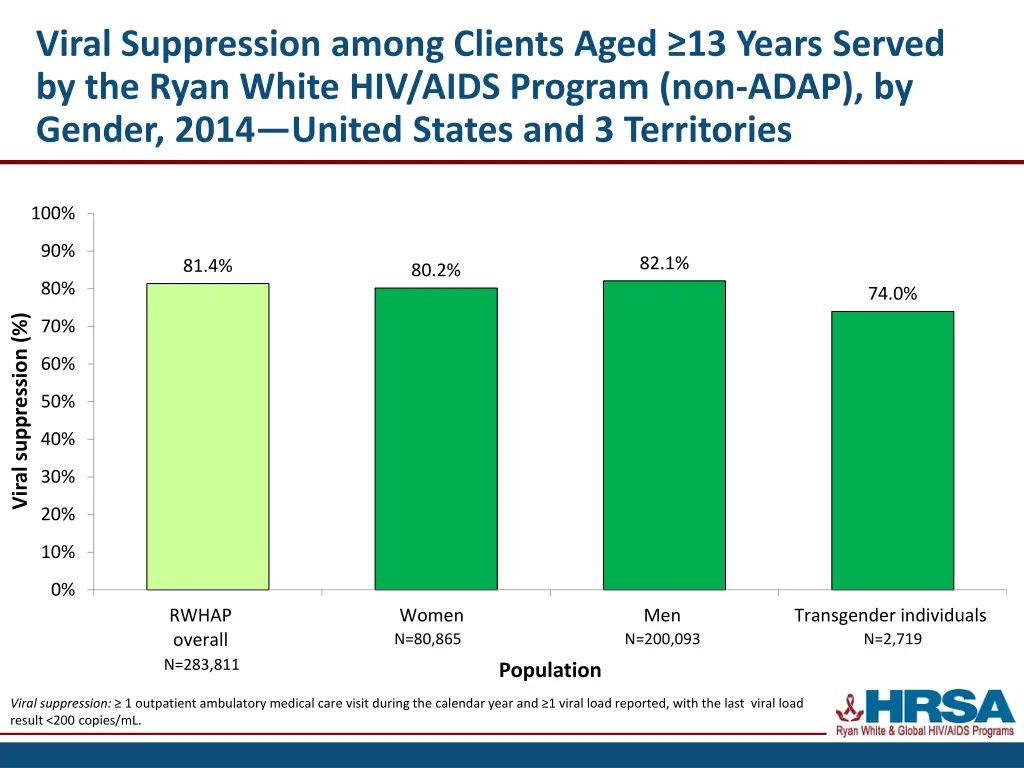
Viral Suppression among Clients Aged 13 Years Served by the Ryan White HIV/AIDS Program (non-ADAP), by Gender, 2014 United States and 3 Territories 100% 90% 82.1% 81.4% 80.2% 80% 74.0% Viral suppression (%) 70% 60% 50% 40% 30% 20% 10% 0% RWHAP overall N=283,811 Women N=80,865 Men Transgender individuals N=2,719 N=200,093 Population Viral suppression: 1 outpatient ambulatory medical care visit during the calendar year and 1 viral load reported, with the last viral load result <200 copies/mL.
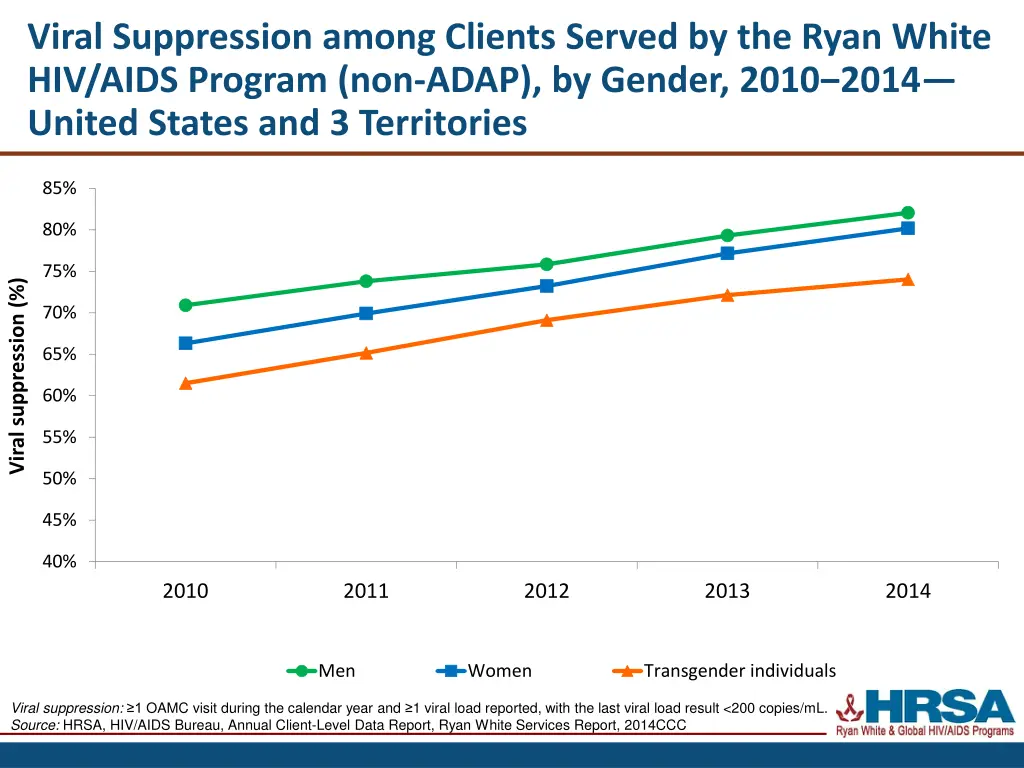
Viral Suppression among Clients Served by the Ryan White HIV/AIDS Program (non-ADAP), by Gender, 2010 2014 United States and 3 Territories 85% 80% 75% Viral suppression (%) 70% 65% 60% 55% 50% 45% 40% 2010 2011 2012 2013 2014 Men Women Transgender individuals Viral suppression: 1 OAMC visit during the calendar year and 1 viral load reported, with the last viral load result <200 copies/mL. Source: HRSA, HIV/AIDS Bureau, Annual Client-Level Data Report, Ryan White Services Report, 2014CCC
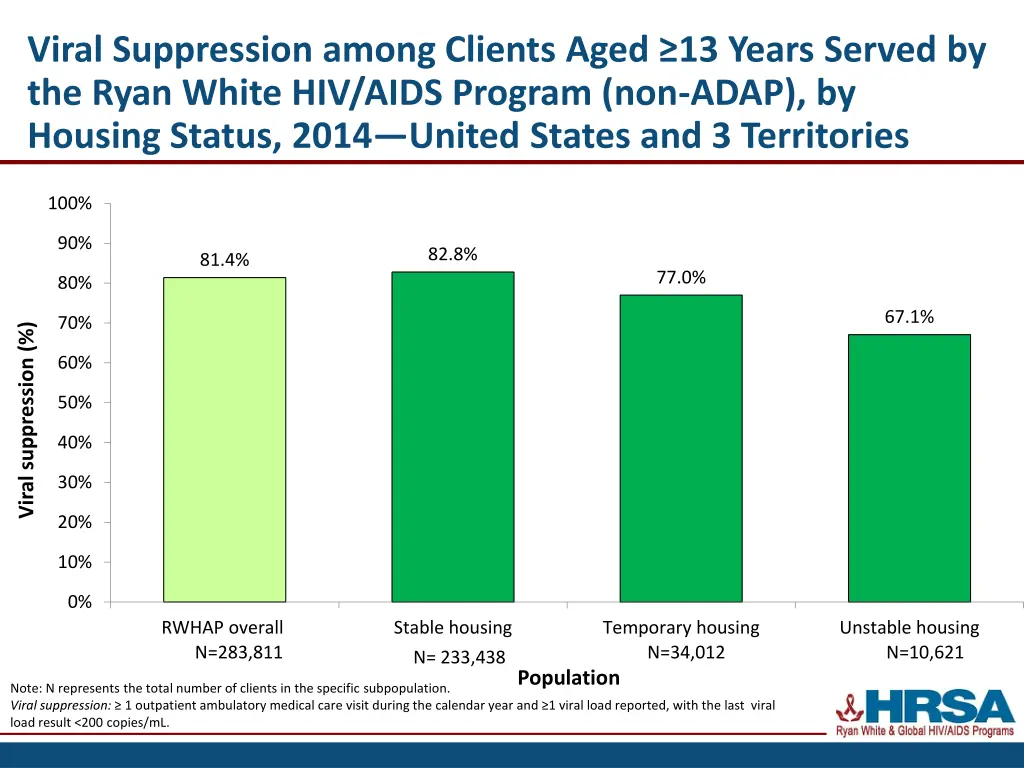
Viral Suppression among Clients Aged 13 Years Served by the Ryan White HIV/AIDS Program (non-ADAP), by Housing Status, 2014 United States and 3 Territories 100% 90% 82.8% 81.4% 77.0% 80% 67.1% 70% Viral suppression (%) 60% 50% 40% 30% 20% 10% 0% RWHAP overall N=283,811 Stable housing N= 233,438 Temporary housing N=34,012 Unstable housing N=10,621 Population Note: N represents the total number of clients in the specific subpopulation. Viral suppression: 1 outpatient ambulatory medical care visit during the calendar year and 1 viral load reported, with the last viral load result <200 copies/mL.
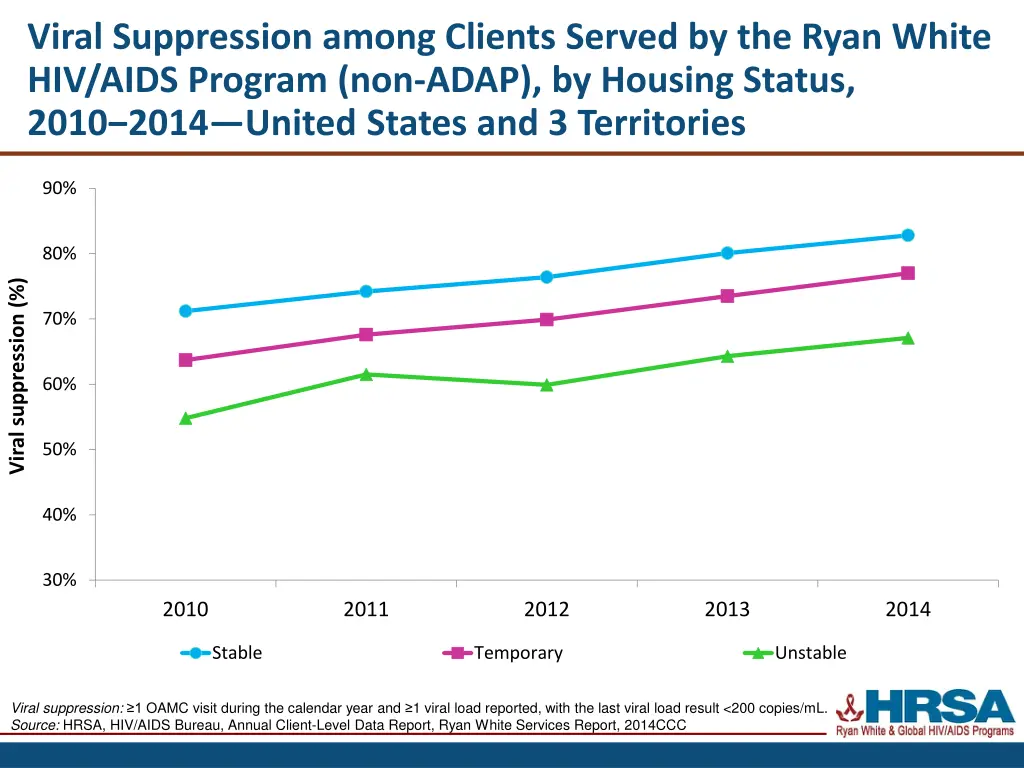
Viral Suppression among Clients Served by the Ryan White HIV/AIDS Program (non-ADAP), by Housing Status, 2010 2014 United States and 3 Territories 90% 80% Viral suppression (%) 70% 60% 50% 40% 30% 2010 2011 2012 2013 2014 Stable Temporary Unstable Viral suppression: 1 OAMC visit during the calendar year and 1 viral load reported, with the last viral load result <200 copies/mL. Source: HRSA, HIV/AIDS Bureau, Annual Client-Level Data Report, Ryan White Services Report, 2014CCC
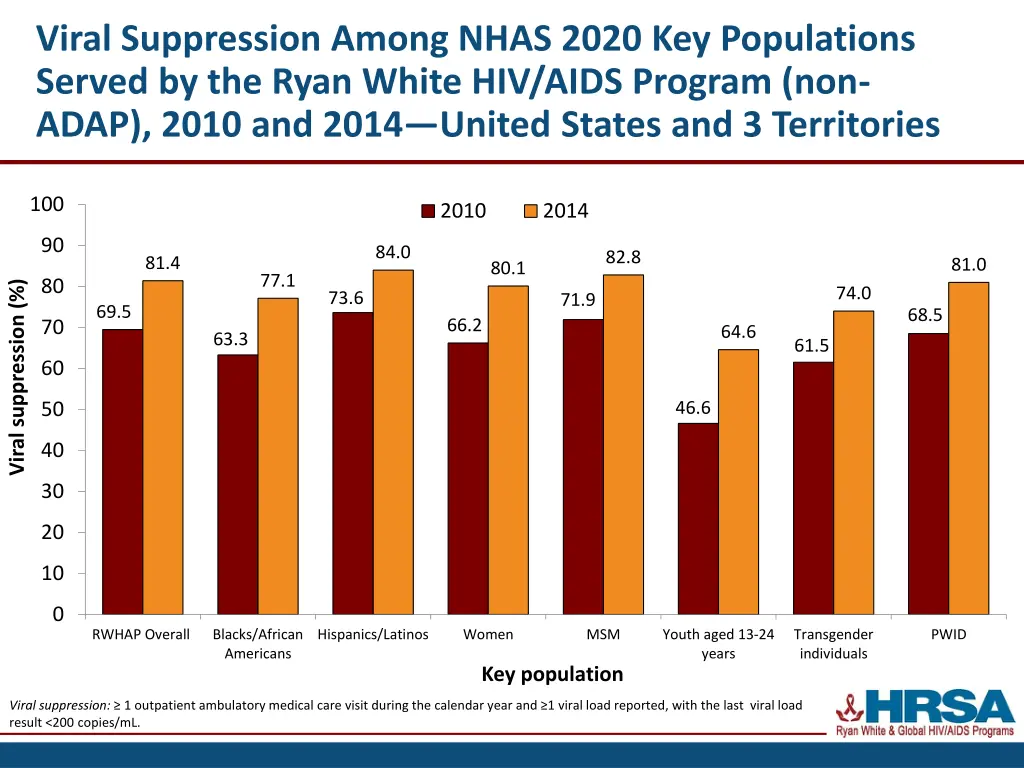
Viral Suppression Among NHAS 2020 Key Populations Served by the Ryan White HIV/AIDS Program (non- ADAP), 2010 and 2014 United States and 3 Territories 100 2010 2014 90 84.0 82.8 81.4 81.0 80.1 77.1 80 Viral suppression (%) 74.0 73.6 71.9 69.5 68.5 66.2 70 64.6 63.3 61.5 60 46.6 50 40 30 20 10 0 RWHAP Overall Blacks/African Americans Hispanics/Latinos Women MSM Youth aged 13-24 years Transgender individuals PWID Key population Viral suppression: 1 outpatient ambulatory medical care visit during the calendar year and 1 viral load reported, with the last viral load result <200 copies/mL.
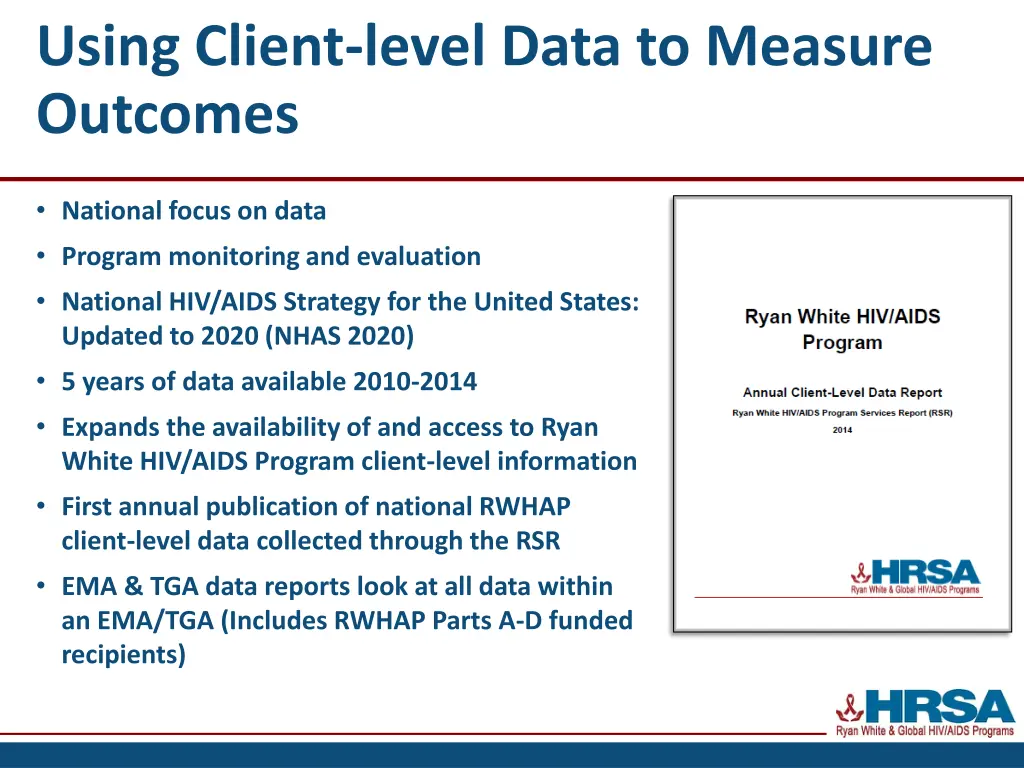
Using Client-level Data to Measure Outcomes National focus on data Program monitoring and evaluation National HIV/AIDS Strategy for the United States: Updated to 2020 (NHAS 2020) 5 years of data available 2010-2014 Expands the availability of and access to Ryan White HIV/AIDS Program client-level information First annual publication of national RWHAP client-level data collected through the RSR EMA & TGA data reports look at all data within an EMA/TGA (Includes RWHAP Parts A-D funded recipients)
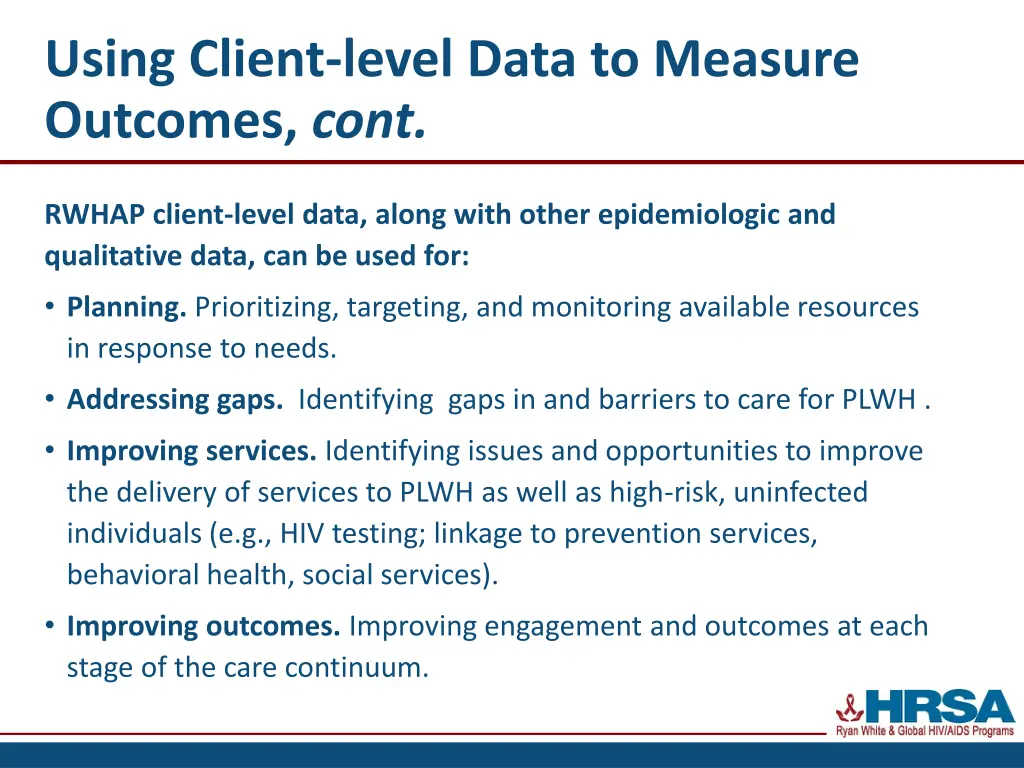
Using Client-level Data to Measure Outcomes, cont. RWHAP client-level data, along with other epidemiologic and qualitative data, can be used for: Planning. Prioritizing, targeting, and monitoring available resources in response to needs. Addressing gaps. Identifying gaps in and barriers to care for PLWH . Improving services. Identifying issues and opportunities to improve the delivery of services to PLWH as well as high-risk, uninfected individuals (e.g., HIV testing; linkage to prevention services, behavioral health, social services). Improving outcomes. Improving engagement and outcomes at each stage of the care continuum.
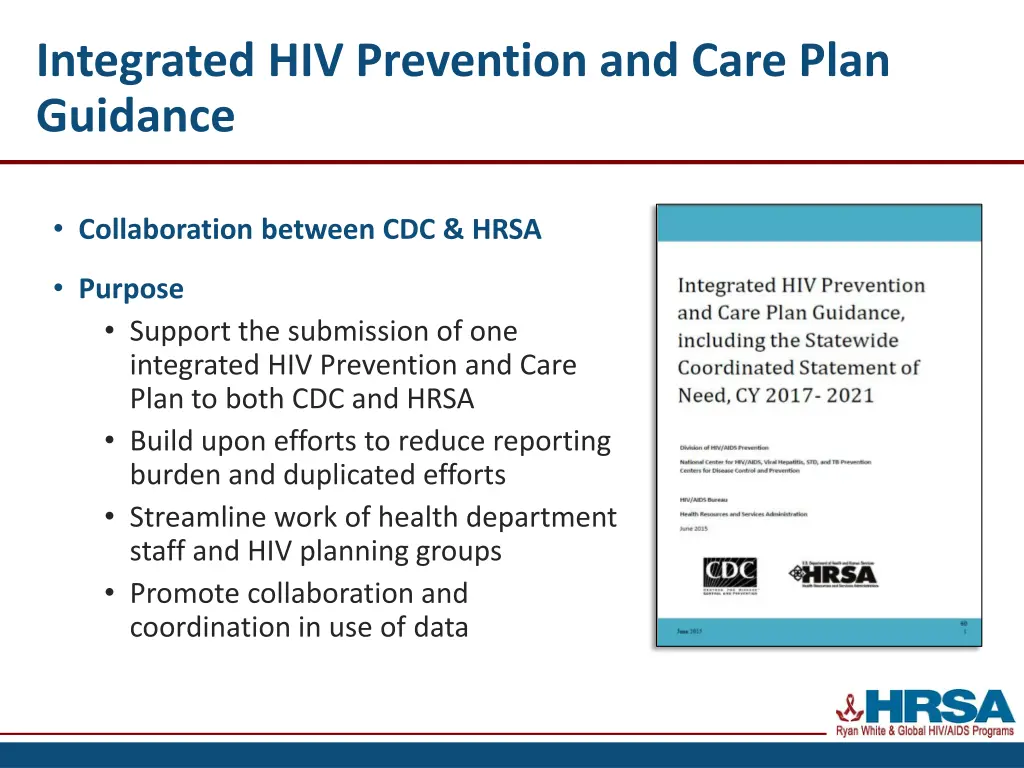
Integrated HIV Prevention and Care Plan Guidance Collaboration between CDC & HRSA Purpose Support the submission of one integrated HIV Prevention and Care Plan to both CDC and HRSA Build upon efforts to reduce reporting burden and duplicated efforts Streamline work of health department staff and HIV planning groups Promote collaboration and coordination in use of data
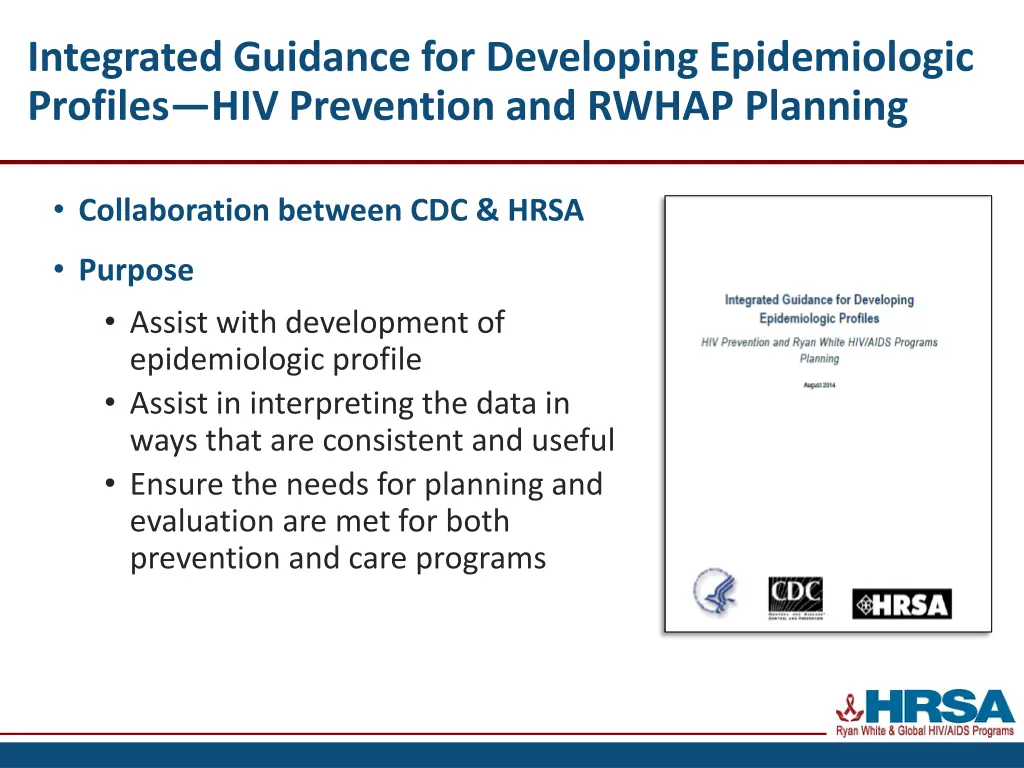
Integrated Guidance for Developing Epidemiologic Profiles HIV Prevention and RWHAP Planning Collaboration between CDC & HRSA Purpose Assist with development of epidemiologic profile Assist in interpreting the data in ways that are consistent and useful Ensure the needs for planning and evaluation are met for both prevention and care programs
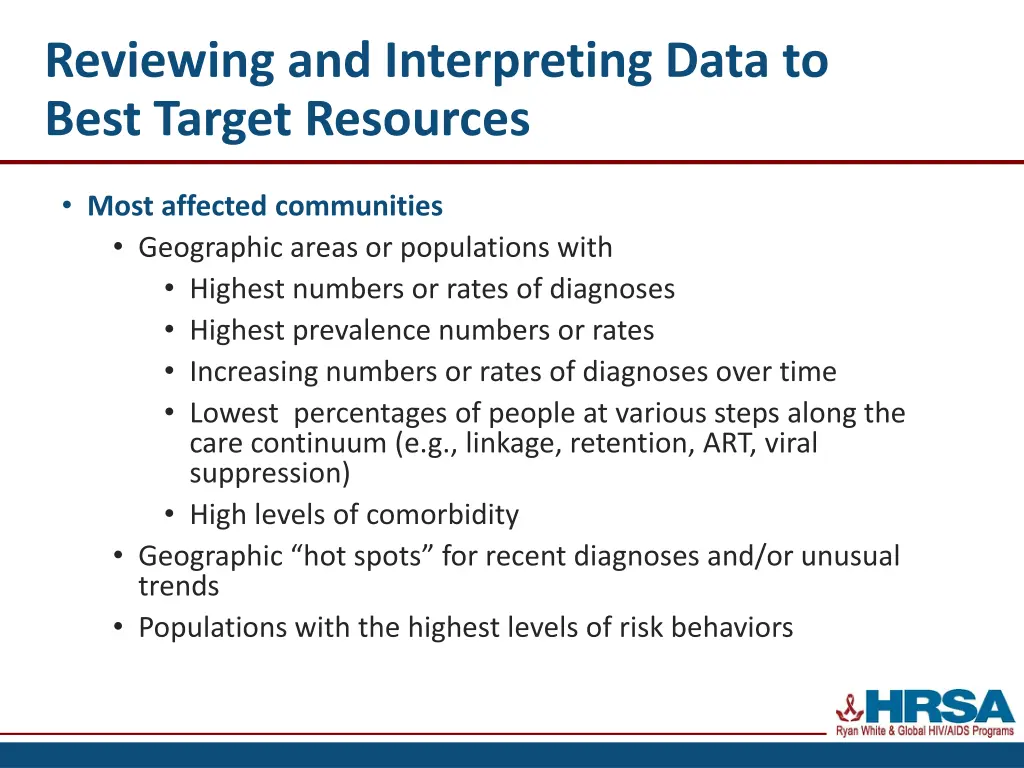
Reviewing and Interpreting Data to Best Target Resources Most affected communities Geographic areas or populations with Highest numbers or rates of diagnoses Highest prevalence numbers or rates Increasing numbers or rates of diagnoses over time Lowest percentages of people at various steps along the care continuum (e.g., linkage, retention, ART, viral suppression) High levels of comorbidity Geographic hot spots for recent diagnoses and/or unusual trends Populations with the highest levels of risk behaviors
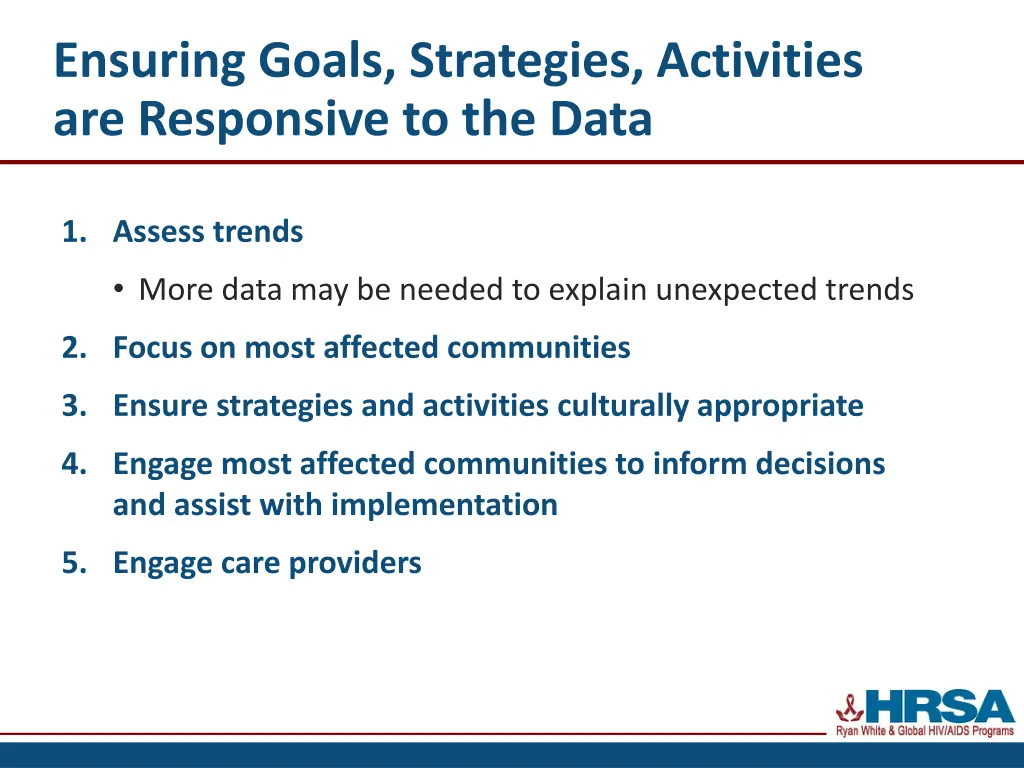
Ensuring Goals, Strategies, Activities are Responsive to the Data 1. Assess trends More data may be needed to explain unexpected trends 2. Focus on most affected communities 3. Ensure strategies and activities culturally appropriate 4. Engage most affected communities to inform decisions and assist with implementation 5. Engage care providers
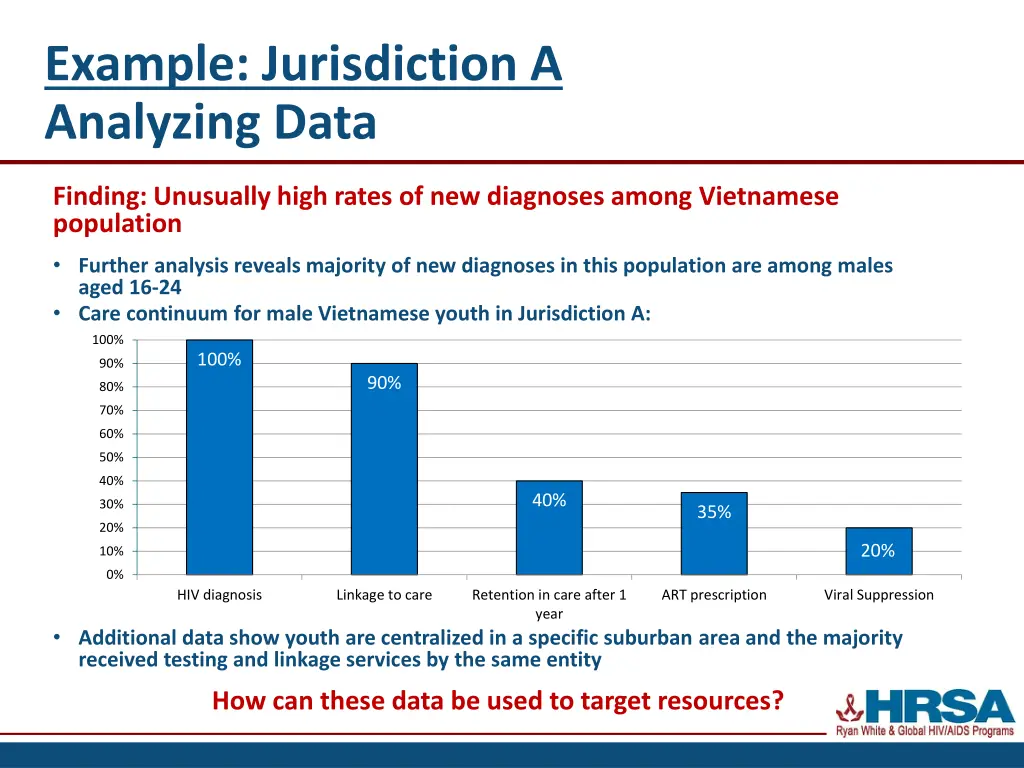
Example: Jurisdiction A Analyzing Data Finding: Unusually high rates of new diagnoses among Vietnamese population Further analysis reveals majority of new diagnoses in this population are among males aged 16-24 Care continuum for male Vietnamese youth in Jurisdiction A: 100% 100% 90% 90% 80% 70% 60% 50% 40% 40% 30% 35% 20% 20% 10% 0% HIV diagnosis Linkage to care Retention in care after 1 year ART prescription Viral Suppression Additional data show youth are centralized in a specific suburban area and the majority received testing and linkage services by the same entity How can these data be used to target resources?
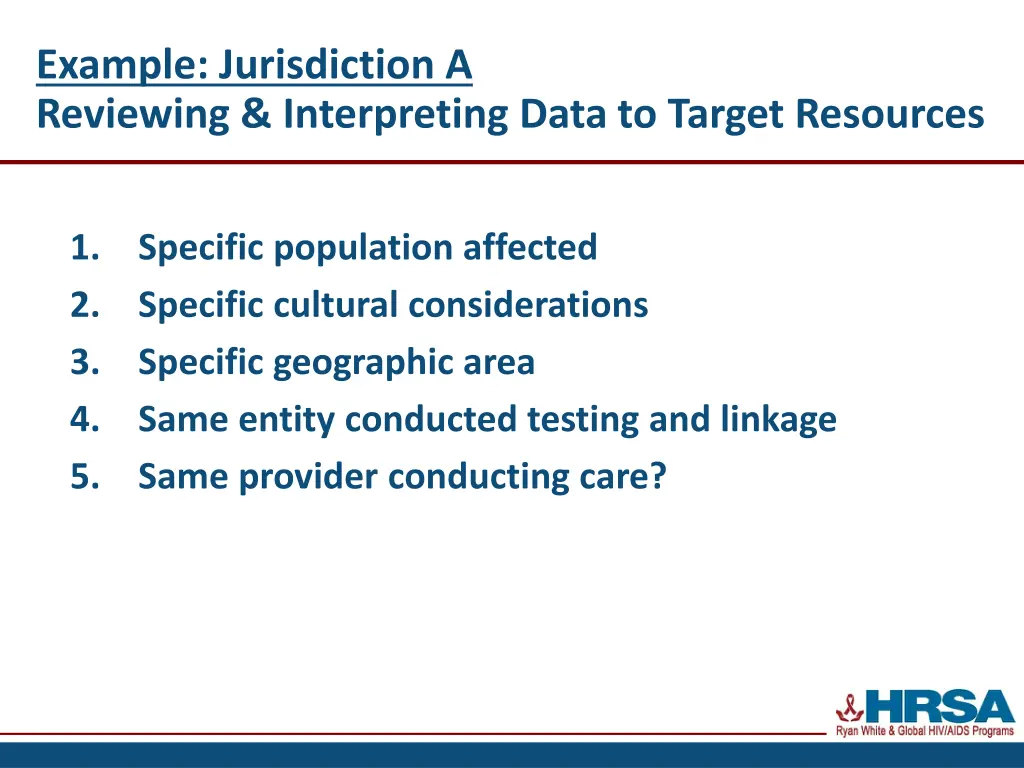
Example: Jurisdiction A Reviewing & Interpreting Data to Target Resources 1. 2. 3. 4. 5. Specific population affected Specific cultural considerations Specific geographic area Same entity conducted testing and linkage Same provider conducting care?
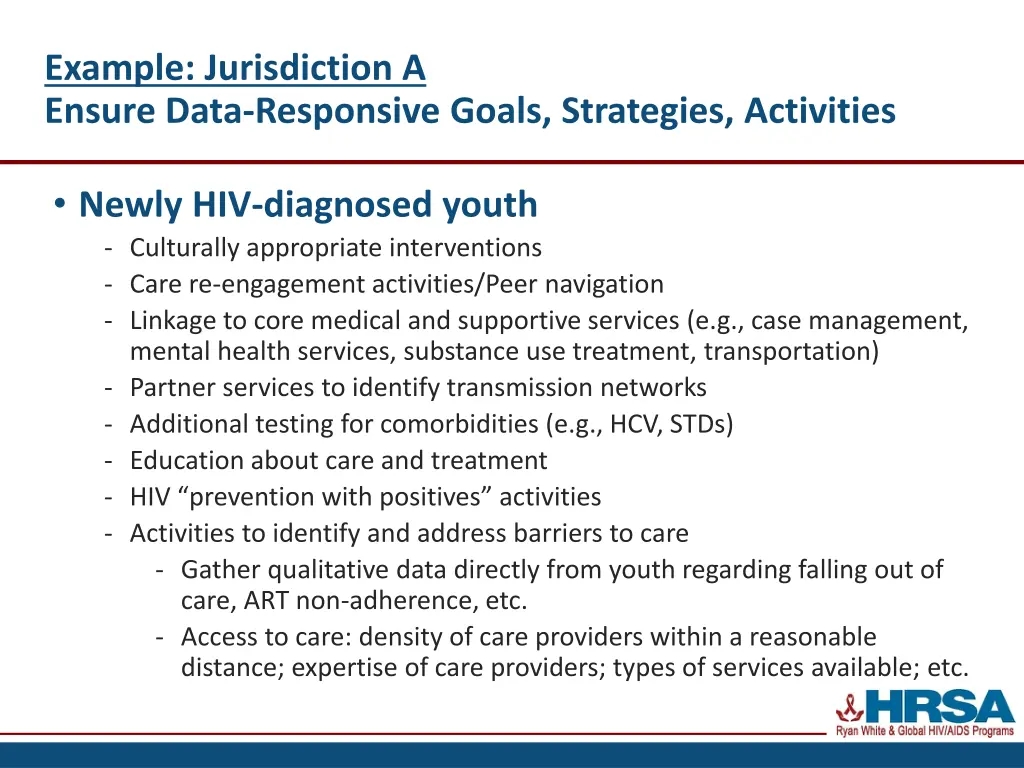
Example: Jurisdiction A Ensure Data-Responsive Goals, Strategies, Activities Newly HIV-diagnosed youth - Culturally appropriate interventions - Care re-engagement activities/Peer navigation - Linkage to core medical and supportive services (e.g., case management, mental health services, substance use treatment, transportation) - Partner services to identify transmission networks - Additional testing for comorbidities (e.g., HCV, STDs) - Education about care and treatment - HIV prevention with positives activities - Activities to identify and address barriers to care - Gather qualitative data directly from youth regarding falling out of care, ART non-adherence, etc. - Access to care: density of care providers within a reasonable distance; expertise of care providers; types of services available; etc.
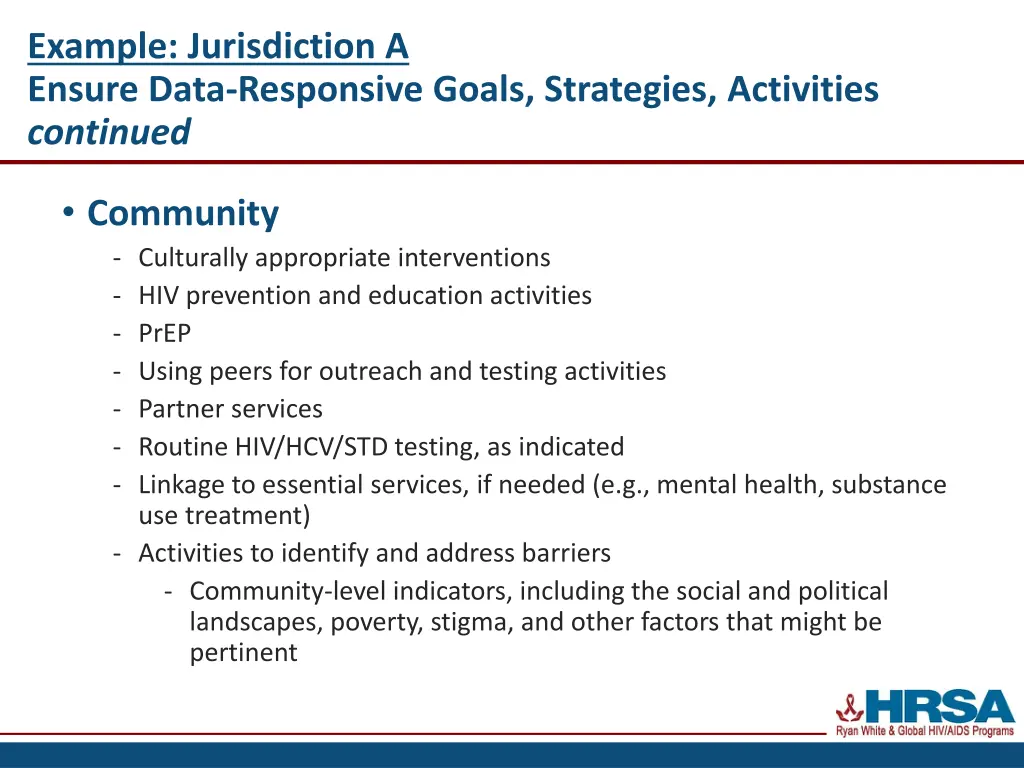
Example: Jurisdiction A Ensure Data-Responsive Goals, Strategies, Activities continued Community - Culturally appropriate interventions - HIV prevention and education activities - PrEP - Using peers for outreach and testing activities - Partner services - Routine HIV/HCV/STD testing, as indicated - Linkage to essential services, if needed (e.g., mental health, substance use treatment) - Activities to identify and address barriers - Community-level indicators, including the social and political landscapes, poverty, stigma, and other factors that might be pertinent
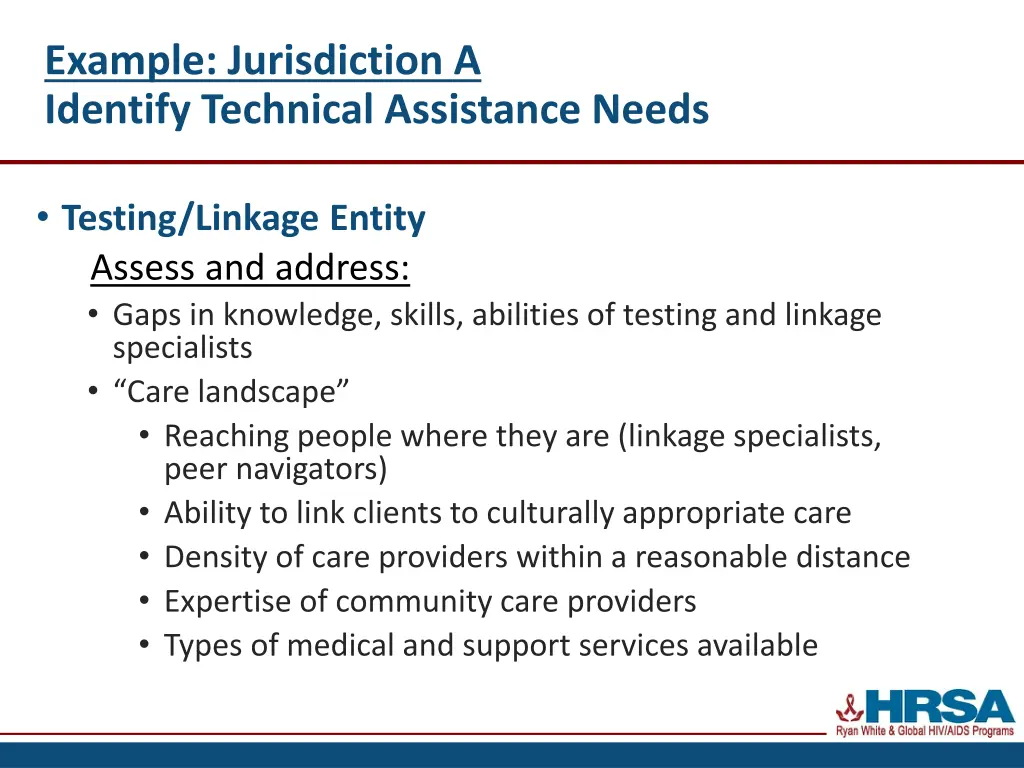
Example: Jurisdiction A Identify Technical Assistance Needs Testing/Linkage Entity Assess and address: Gaps in knowledge, skills, abilities of testing and linkage specialists Care landscape Reaching people where they are (linkage specialists, peer navigators) Ability to link clients to culturally appropriate care Density of care providers within a reasonable distance Expertise of community care providers Types of medical and support services available
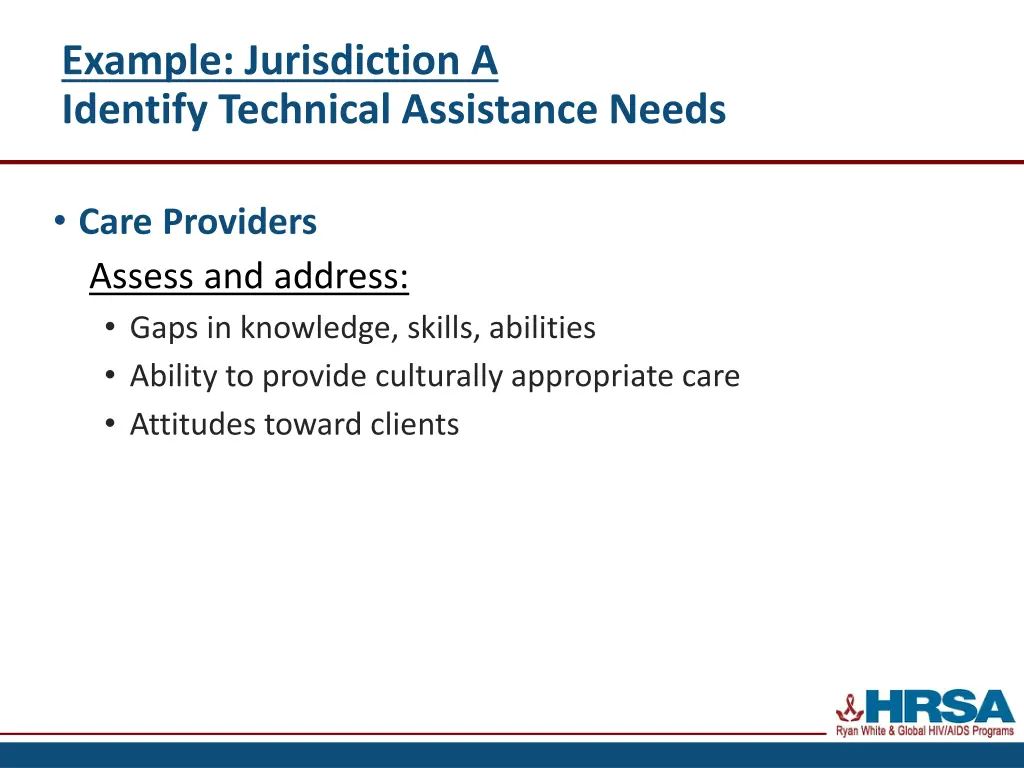
Example: Jurisdiction A Identify Technical Assistance Needs Care Providers Assess and address: Gaps in knowledge, skills, abilities Ability to provide culturally appropriate care Attitudes toward clients
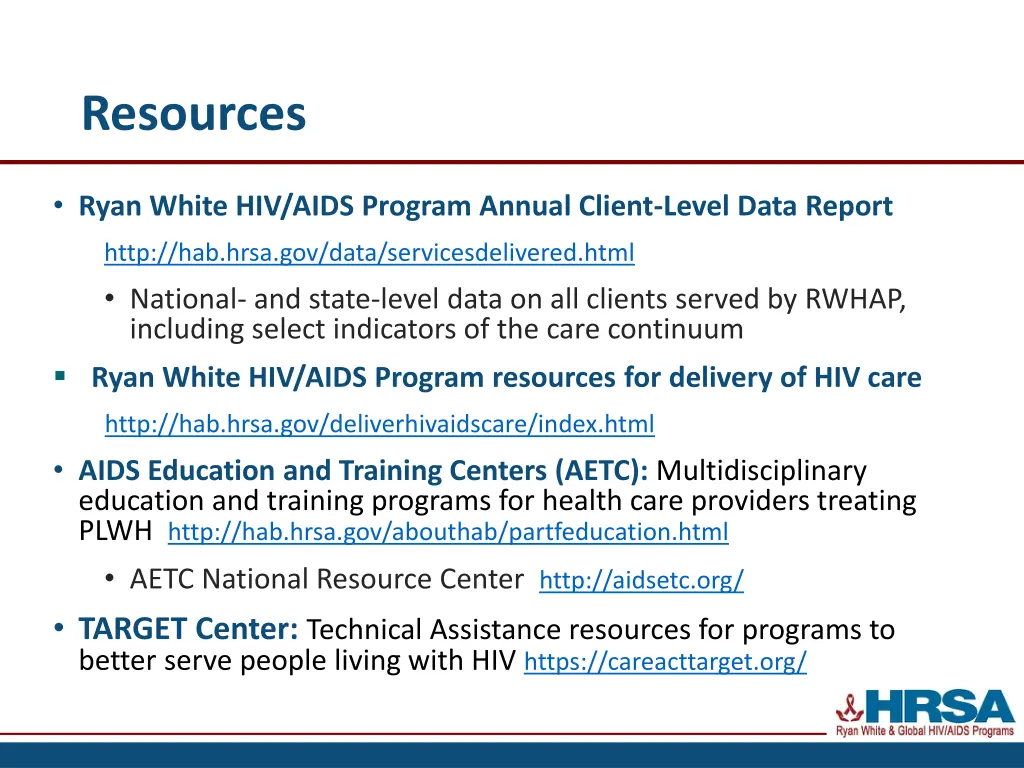
Resources Ryan White HIV/AIDS Program Annual Client-Level Data Report http://hab.hrsa.gov/data/servicesdelivered.html National- and state-level data on all clients served by RWHAP, including select indicators of the care continuum Ryan White HIV/AIDS Program resources for delivery of HIV care http://hab.hrsa.gov/deliverhivaidscare/index.html AIDS Education and Training Centers (AETC): Multidisciplinary education and training programs for health care providers treating PLWH http://hab.hrsa.gov/abouthab/partfeducation.html AETC National Resource Center http://aidsetc.org/ TARGET Center: Technical Assistance resources for programs to better serve people living with HIV https://careacttarget.org/
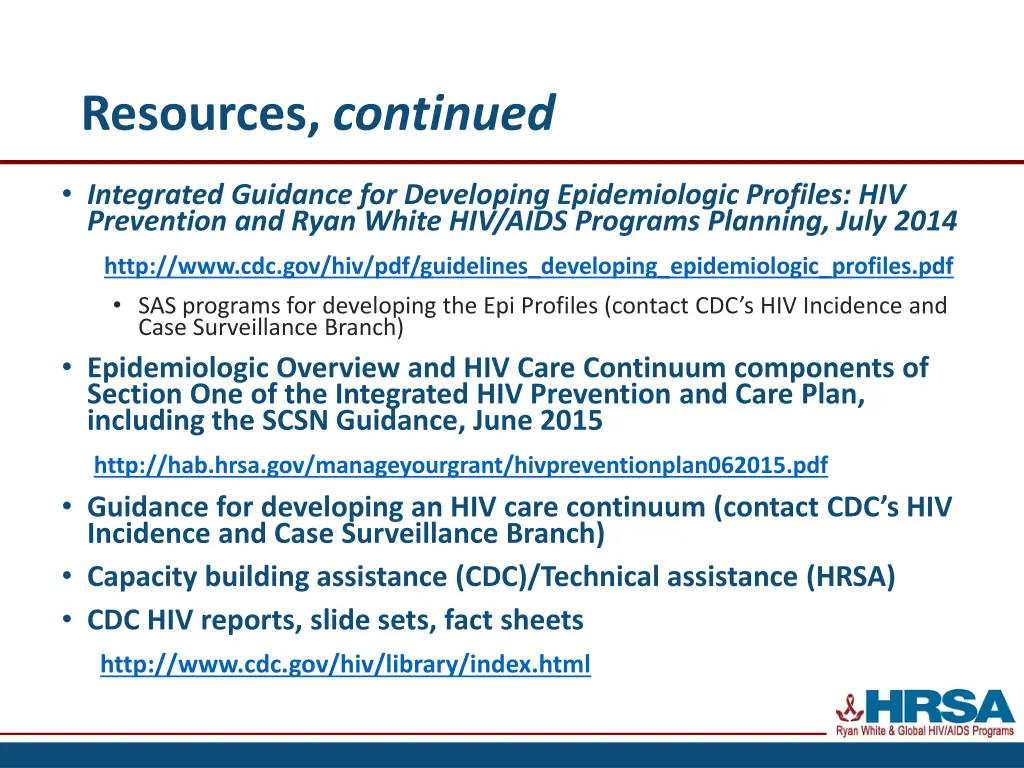
Resources, continued Integrated Guidance for Developing Epidemiologic Profiles: HIV Prevention and Ryan White HIV/AIDS Programs Planning, July 2014 http://www.cdc.gov/hiv/pdf/guidelines_developing_epidemiologic_profiles.pdf SAS programs for developing the Epi Profiles (contact CDC s HIV Incidence and Case Surveillance Branch) Epidemiologic Overview and HIV Care Continuum components of Section One of the Integrated HIV Prevention and Care Plan, including the SCSN Guidance, June 2015 http://hab.hrsa.gov/manageyourgrant/hivpreventionplan062015.pdf Guidance for developing an HIV care continuum (contact CDC s HIV Incidence and Case Surveillance Branch) Capacity building assistance (CDC)/Technical assistance (HRSA) CDC HIV reports, slide sets, fact sheets http://www.cdc.gov/hiv/library/index.html
Thank you Stacy Cohen, MPH HIV/AIDS Bureau sgagne@hrsa.gov