Improving LLM-based Code Clone Detection with Functionally Equivalent Methods
Enhance the accuracy of code clone detection using functionally equivalent methods with a focus on Large Language Models (LLMs). This research overview delves into the challenges posed by code clones, their impact on system maintenance, and the need for effective detection tools and refactoring. Explore how dataset utilization and clone classification play crucial roles in improving clone detection accuracy.

Download Presentation

Please find below an Image/Link to download the presentation.
The content on the website is provided AS IS for your information and personal use only. It may not be sold, licensed, or shared on other websites without obtaining consent from the author. If you encounter any issues during the download, it is possible that the publisher has removed the file from their server.
You are allowed to download the files provided on this website for personal or commercial use, subject to the condition that they are used lawfully. All files are the property of their respective owners.
The content on the website is provided AS IS for your information and personal use only. It may not be sold, licensed, or shared on other websites without obtaining consent from the author.
E N D
Presentation Transcript
Improving Accuracy of LLM-based Code Clone Detection Using Functionally Equivalent Methods Ryutaro Inoue Yoshiki Higo Osaka University 1
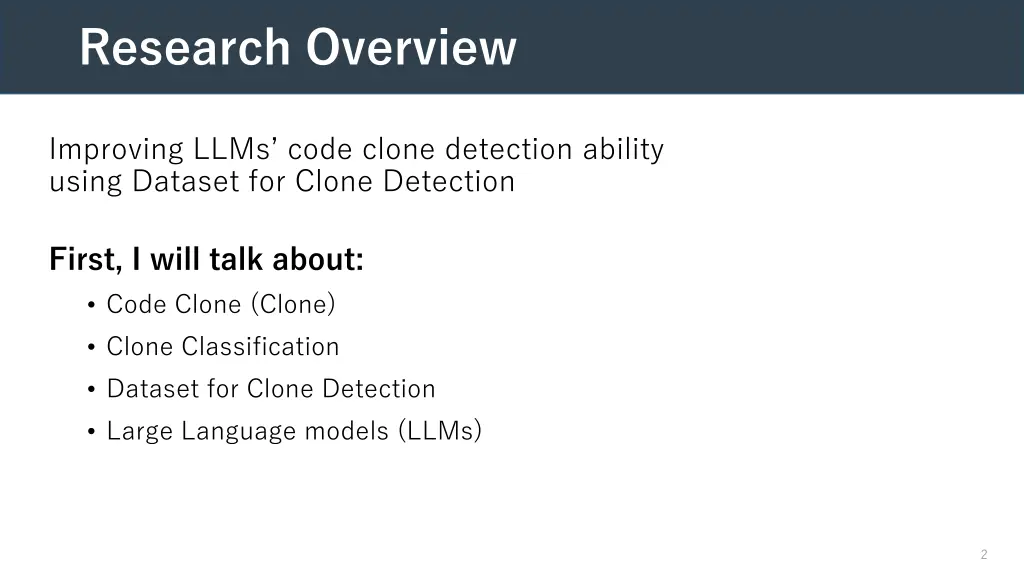
Research Overview Improving LLMs code clone detection ability using Dataset for Clone Detection First, I will talk about: Code Clone (Clone) Clone Classification Dataset for Clone Detection Large Language models (LLMs) 2
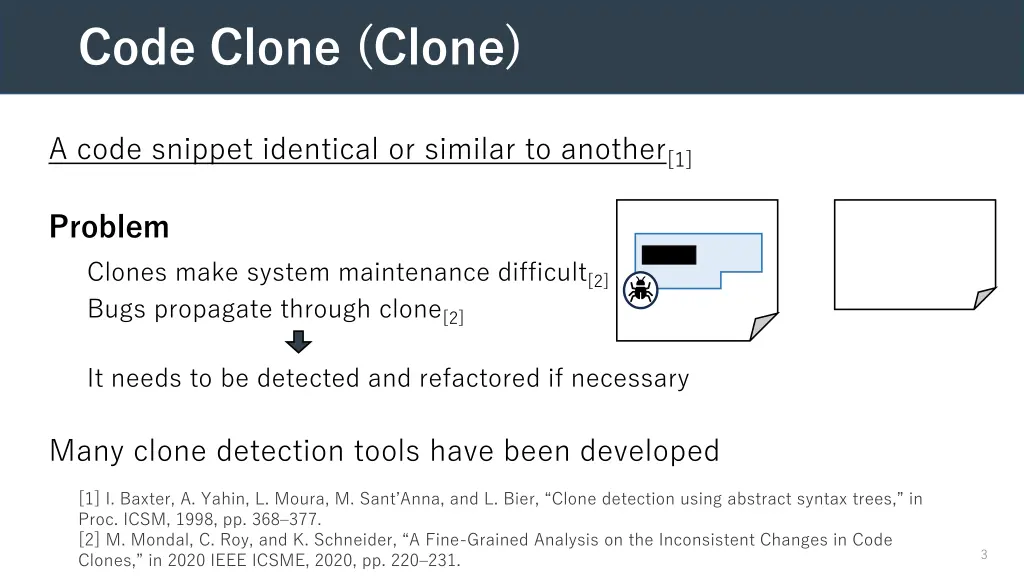
Code Clone (Clone) A code snippet identical or similar to another[1] Problem Clones make system maintenance difficult[2] Bugs propagate through clone[2] It needs to be detected and refactored if necessary Many clone detection tools have been developed [1] I. Baxter, A. Yahin, L. Moura, M. Sant Anna, and L. Bier, Clone detection using abstract syntax trees, in Proc. ICSM, 1998, pp. 368 377. [2] M. Mondal, C. Roy, and K. Schneider, A Fine-Grained Analysis on the Inconsistent Changes in Code Clones, in 2020 IEEE ICSME, 2020, pp. 220 231. 3
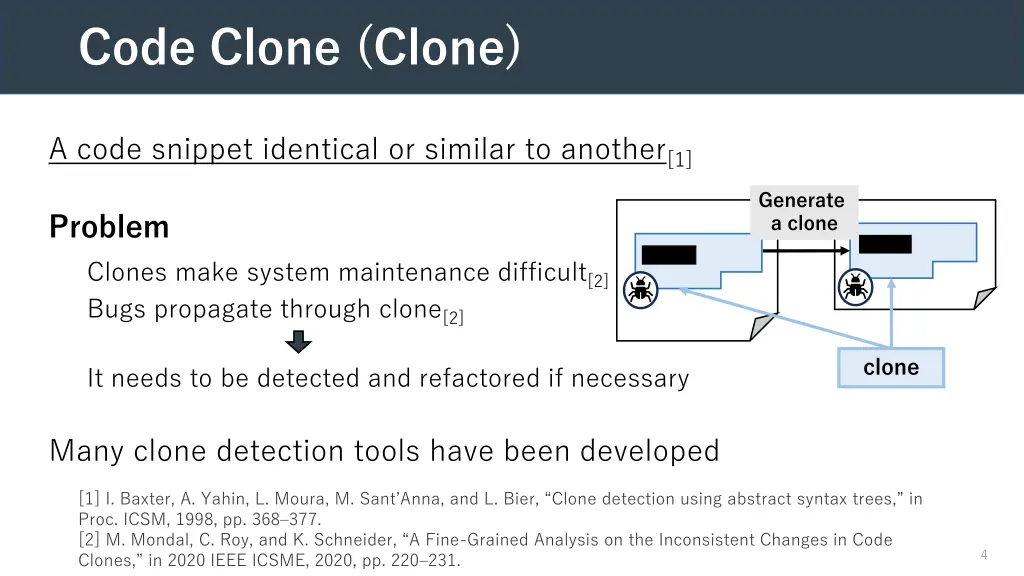
Code Clone (Clone) A code snippet identical or similar to another[1] Generate a clone Problem Clones make system maintenance difficult[2] Bugs propagate through clone[2] clone It needs to be detected and refactored if necessary Many clone detection tools have been developed [1] I. Baxter, A. Yahin, L. Moura, M. Sant Anna, and L. Bier, Clone detection using abstract syntax trees, in Proc. ICSM, 1998, pp. 368 377. [2] M. Mondal, C. Roy, and K. Schneider, A Fine-Grained Analysis on the Inconsistent Changes in Code Clones, in 2020 IEEE ICSME, 2020, pp. 220 231. 4
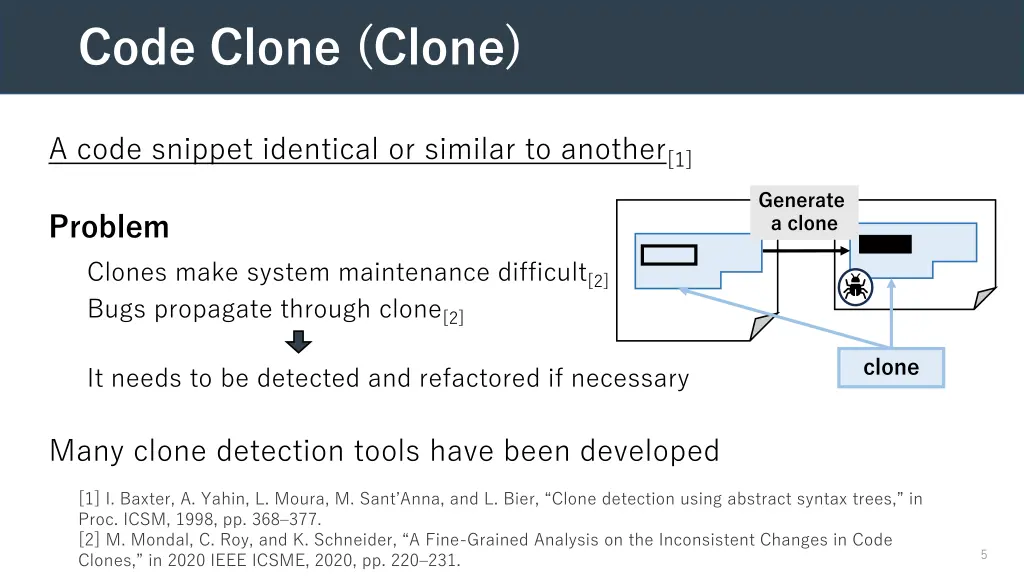
Code Clone (Clone) A code snippet identical or similar to another[1] Generate a clone Problem Clones make system maintenance difficult[2] Bugs propagate through clone[2] clone It needs to be detected and refactored if necessary Many clone detection tools have been developed [1] I. Baxter, A. Yahin, L. Moura, M. Sant Anna, and L. Bier, Clone detection using abstract syntax trees, in Proc. ICSM, 1998, pp. 368 377. [2] M. Mondal, C. Roy, and K. Schneider, A Fine-Grained Analysis on the Inconsistent Changes in Code Clones, in 2020 IEEE ICSME, 2020, pp. 220 231. 5
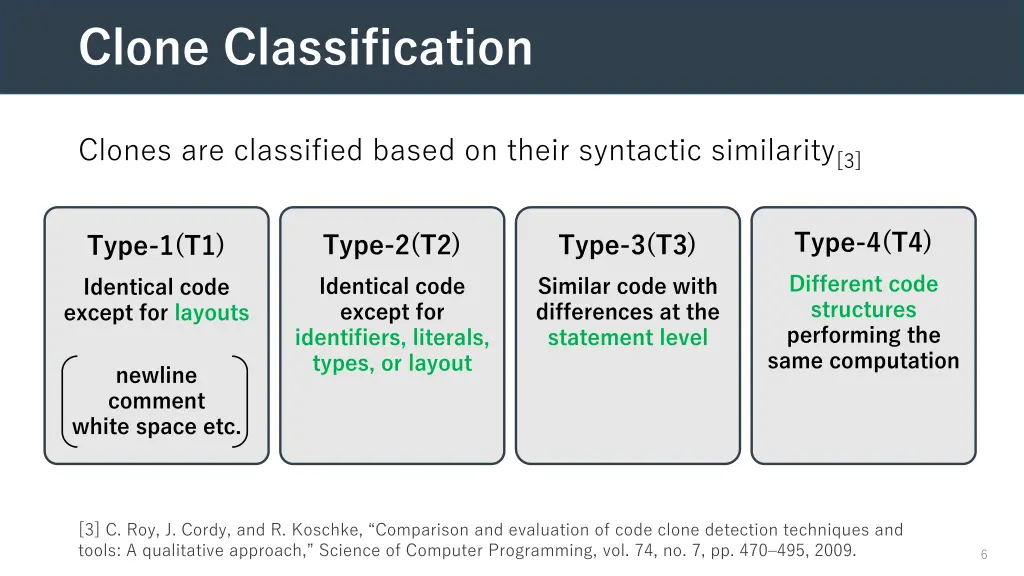
Clone Classification Clones are classified based on their syntactic similarity[3] Type-4(T4) Type-2(T2) Type-3(T3) Type-1(T1) Different code structures performing the same computation Identical code except for identifiers, literals, types, or layout Similar code with differences at the statement level Identical code except for layouts newline comment white space etc. [3] C. Roy, J. Cordy, and R. Koschke, Comparison and evaluation of code clone detection techniques and tools: A qualitative approach, Science of Computer Programming, vol. 74, no. 7, pp. 470 495, 2009. 6
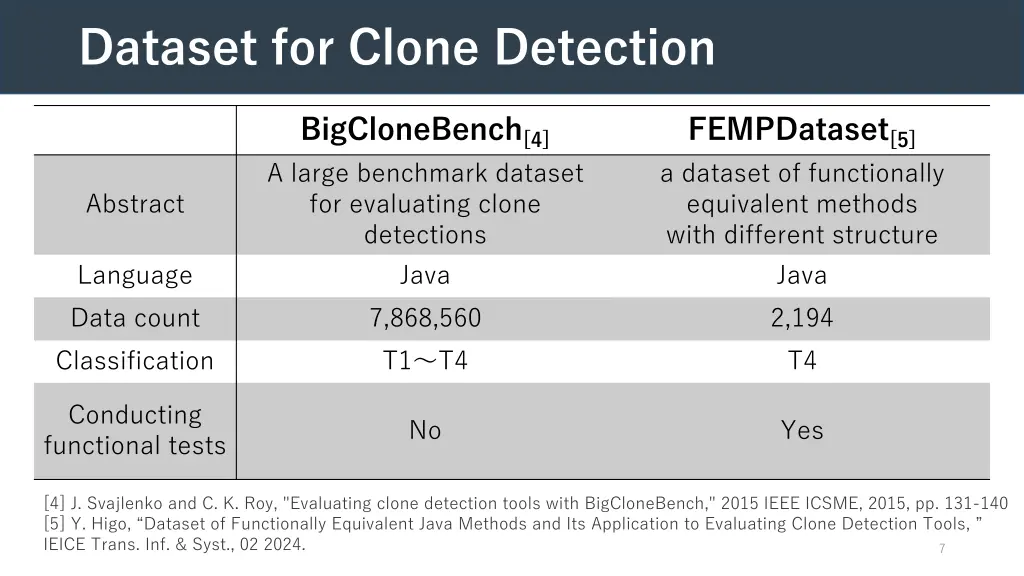
Dataset for Clone Detection BigCloneBench[4] A large benchmark dataset for evaluating clone detections Java FEMPDataset[5] a dataset of functionally equivalent methods with different structure Java Abstract Language Data count 7,868,560 2,194 Classification T1 T4 T4 Conducting functional tests No Yes [4] J. Svajlenko and C. K. Roy, "Evaluating clone detection tools with BigCloneBench," 2015 IEEE ICSME, 2015, pp. 131-140 [5] Y. Higo, Dataset of Functionally Equivalent Java Methods and Its Application to Evaluating Clone Detection Tools, IEICE Trans. Inf. & Syst., 02 2024. 7
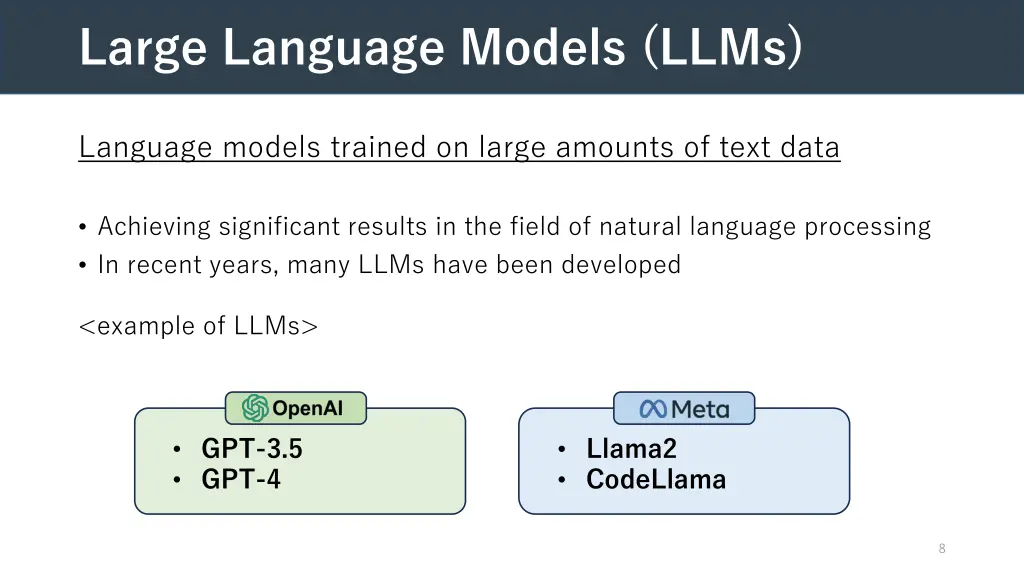
Large Language Models (LLMs) Language models trained on large amounts of text data Achieving significant results in the field of natural language processing In recent years, many LLMs have been developed <example of LLMs> GPT-3.5 GPT-4 Llama2 CodeLlama 8
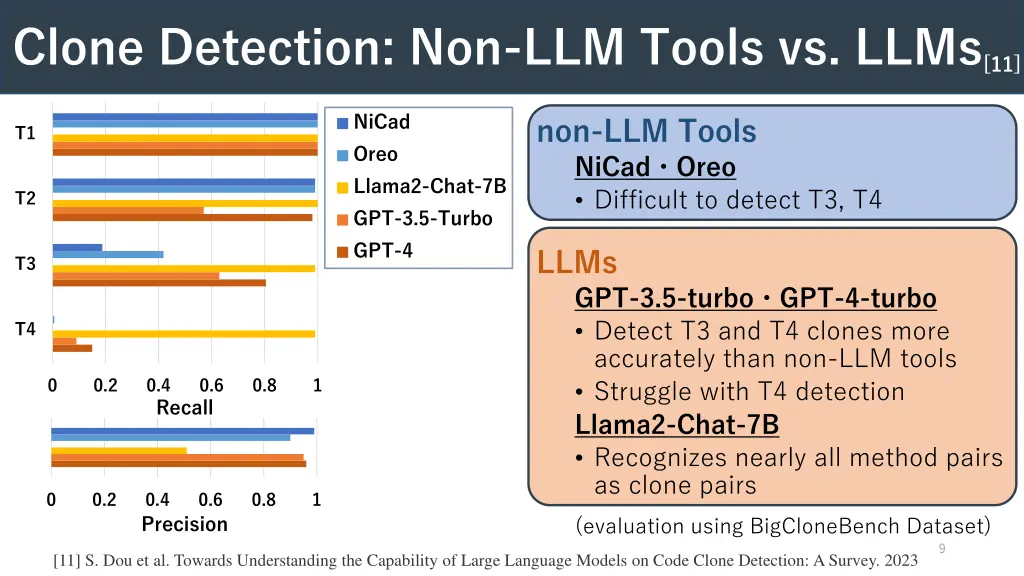
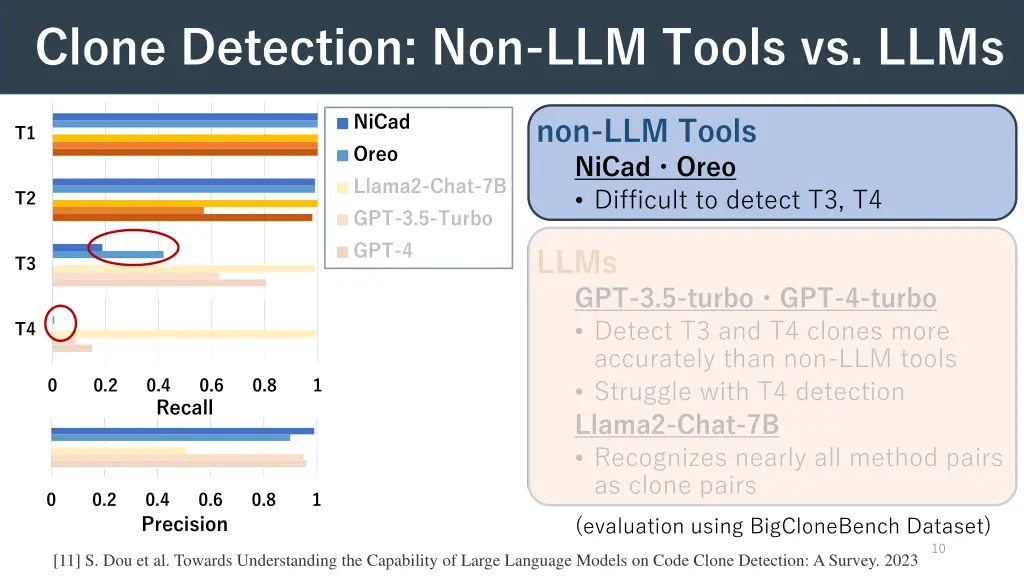
Clone Detection: Non-LLM Tools vs. LLMs[11] NiCad non-LLM Tools NiCad Oreo Difficult to detect T3, T4 T1 Oreo Llama2-Chat-7B T2 GPT-3.5-Turbo GPT-4 LLMs GPT-3.5-turbo GPT-4-turbo Detect T3 and T4 clones more accurately than non-LLM tools Struggle with T4 detection Llama2-Chat-7B Recognizes nearly all method pairs as clone pairs T3 T4 0 0.2 0.4 Recall 0.6 0.8 1 0 0.2 0.4 Precision 0.6 0.8 1 (evaluation using BigCloneBench Dataset) 9 [11] S. Dou et al. Towards Understanding the Capability of Large Language Models on Code Clone Detection: A Survey. 2023
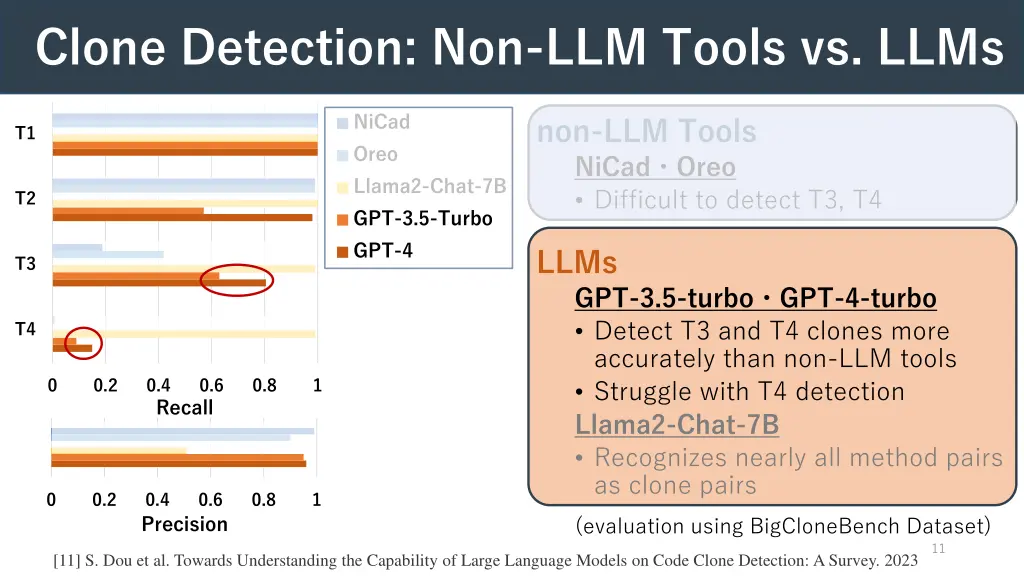
Clone Detection: Non-LLM Tools vs. LLMs NiCad non-LLM Tools NiCad Oreo Difficult to detect T3, T4 T1 Oreo Llama2-Chat-7B T2 GPT-3.5-Turbo GPT-4 LLMs GPT-3.5-turbo GPT-4-turbo Detect T3 and T4 clones more accurately than non-LLM tools Struggle with T4 detection Llama2-Chat-7B Recognizes nearly all method pairs as clone pairs T3 T4 0 0.2 0.4 Recall 0.6 0.8 1 0 0.2 0.4 Precision 0.6 0.8 1 (evaluation using BigCloneBench Dataset) 10 [11] S. Dou et al. Towards Understanding the Capability of Large Language Models on Code Clone Detection: A Survey. 2023
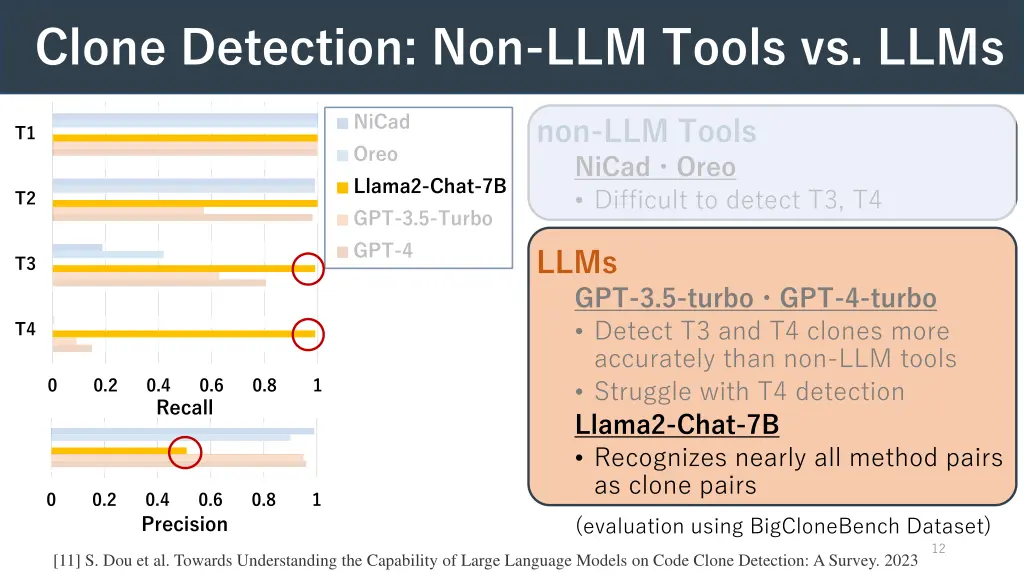
Clone Detection: Non-LLM Tools vs. LLMs NiCad non-LLM Tools NiCad Oreo Difficult to detect T3, T4 T1 Oreo Llama2-Chat-7B T2 GPT-3.5-Turbo GPT-4 LLMs GPT-3.5-turbo GPT-4-turbo Detect T3 and T4 clones more accurately than non-LLM tools Struggle with T4 detection Llama2-Chat-7B Recognizes nearly all method pairs as clone pairs T3 T4 0 0.2 0.4 Recall 0.6 0.8 1 0 0.2 0.4 Precision 0.6 0.8 1 (evaluation using BigCloneBench Dataset) 11 [11] S. Dou et al. Towards Understanding the Capability of Large Language Models on Code Clone Detection: A Survey. 2023
Clone Detection: Non-LLM Tools vs. LLMs NiCad non-LLM Tools NiCad Oreo Difficult to detect T3, T4 T1 Oreo Llama2-Chat-7B T2 GPT-3.5-Turbo GPT-4 LLMs GPT-3.5-turbo GPT-4-turbo Detect T3 and T4 clones more accurately than non-LLM tools Struggle with T4 detection Llama2-Chat-7B Recognizes nearly all method pairs as clone pairs T3 T4 0 0.2 0.4 Recall 0.6 0.8 1 0 0.2 0.4 Precision 0.6 0.8 1 (evaluation using BigCloneBench Dataset) 12 [11] S. Dou et al. Towards Understanding the Capability of Large Language Models on Code Clone Detection: A Survey. 2023
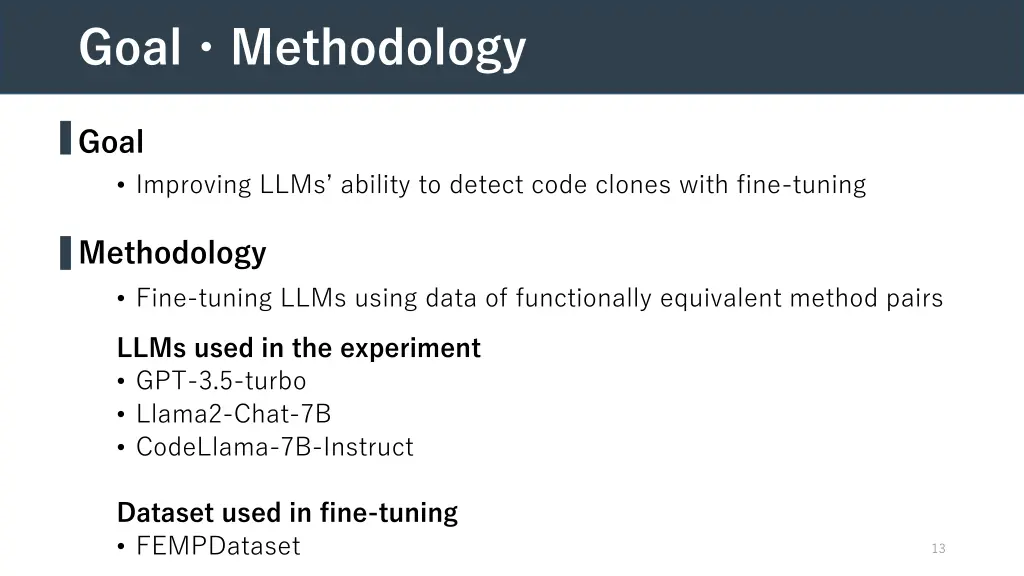
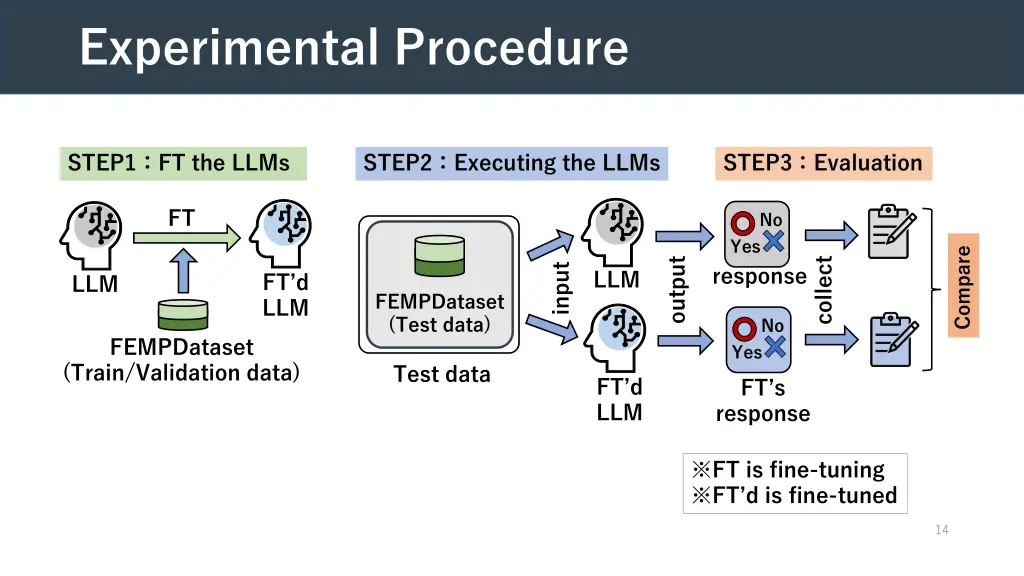
GoalMethodology Goal Improving LLMs ability to detect code clones with fine-tuning Methodology Fine-tuning LLMs using data of functionally equivalent method pairs LLMs used in the experiment GPT-3.5-turbo Llama2-Chat-7B CodeLlama-7B-Instruct Dataset used in fine-tuning FEMPDataset 13
Experimental Procedure STEP1 FT the LLMs STEP2 Executing the LLMs STEP3 Evaluation FT No Yes Compare collect output input response LLM FT d LLM LLM FEMPDataset (Test data) No FEMPDataset (Train/Validation data) Yes Test data FT d LLM FT s response FT is fine-tuning FT d is fine-tuned 14
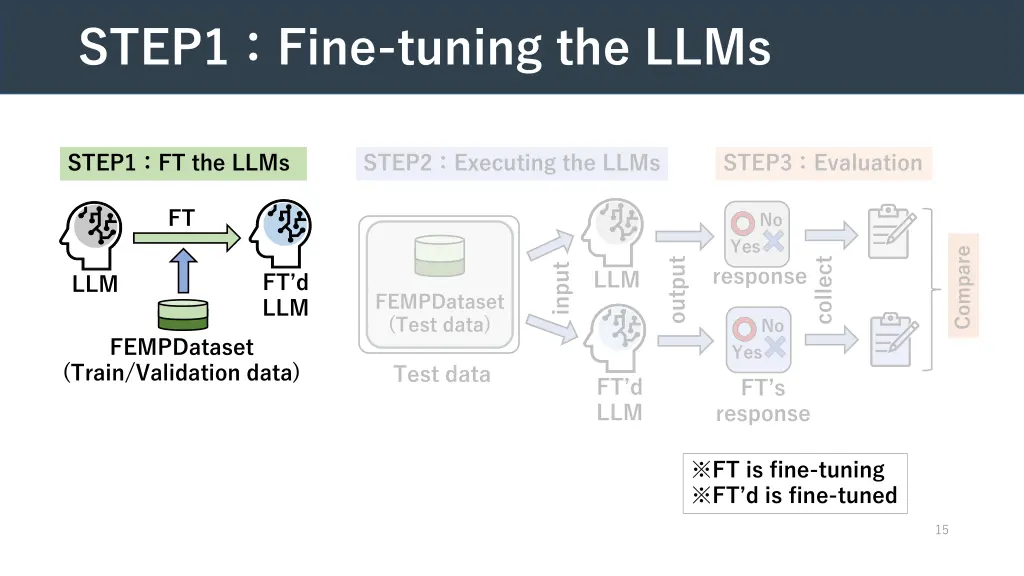
STEP1Fine-tuning the LLMs STEP1 FT the LLMs STEP2 Executing the LLMs STEP3 Evaluation FT No Yes Compare collect output input response LLM FT d LLM LLM FEMPDataset (Test data) No FEMPDataset (Train/Validation data) Yes Test data FT d LLM FT s response FT is fine-tuning FT d is fine-tuned 15
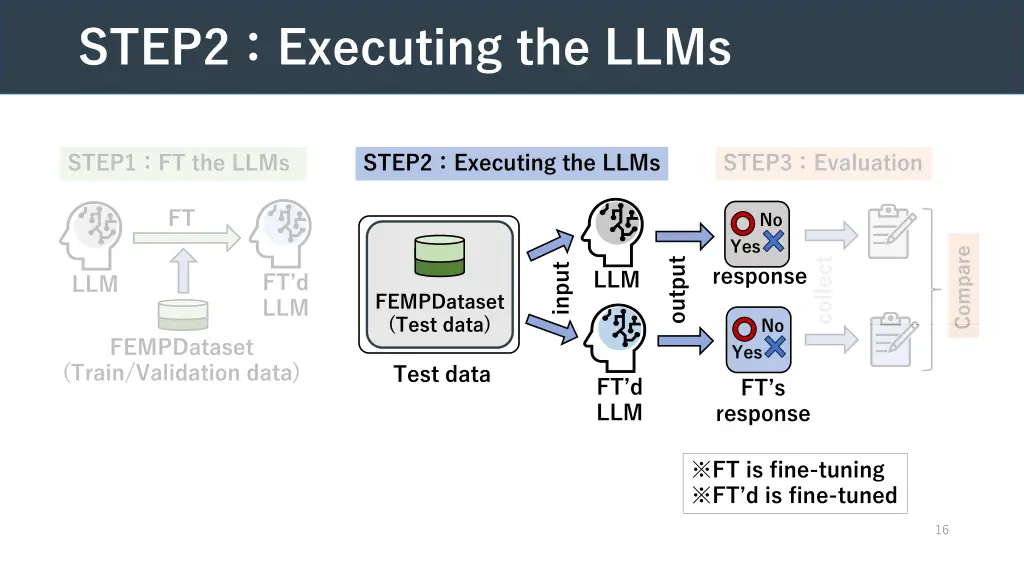
STEP2Executing the LLMs STEP1 FT the LLMs STEP2 Executing the LLMs STEP3 Evaluation FT No Yes Compare collect output input response LLM FT d LLM LLM FEMPDataset (Test data) No FEMPDataset (Train/Validation data) Yes Test data FT d LLM FT s response FT is fine-tuning FT d is fine-tuned 16
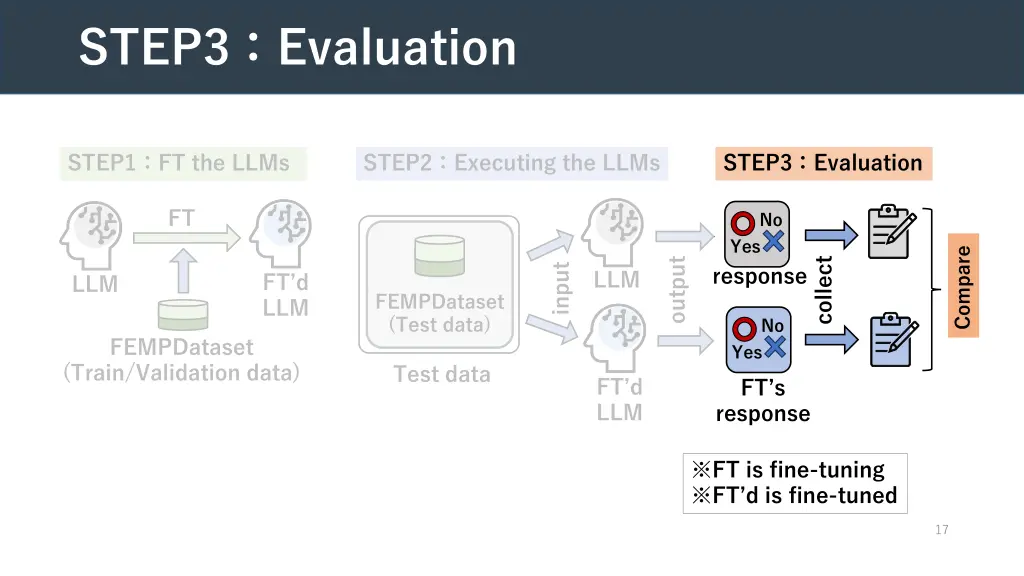
STEP3Evaluation STEP1 FT the LLMs STEP2 Executing the LLMs STEP3 Evaluation FT No Yes Compare collect output input response LLM FT d LLM LLM FEMPDataset (Test data) No FEMPDataset (Train/Validation data) Yes Test data FT d LLM FT s response FT is fine-tuning FT d is fine-tuned 17
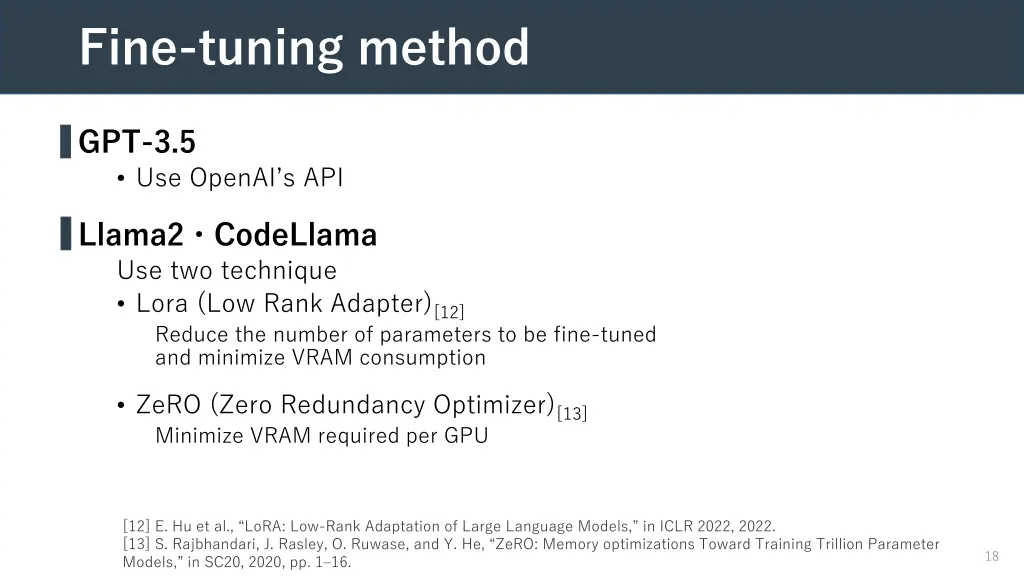
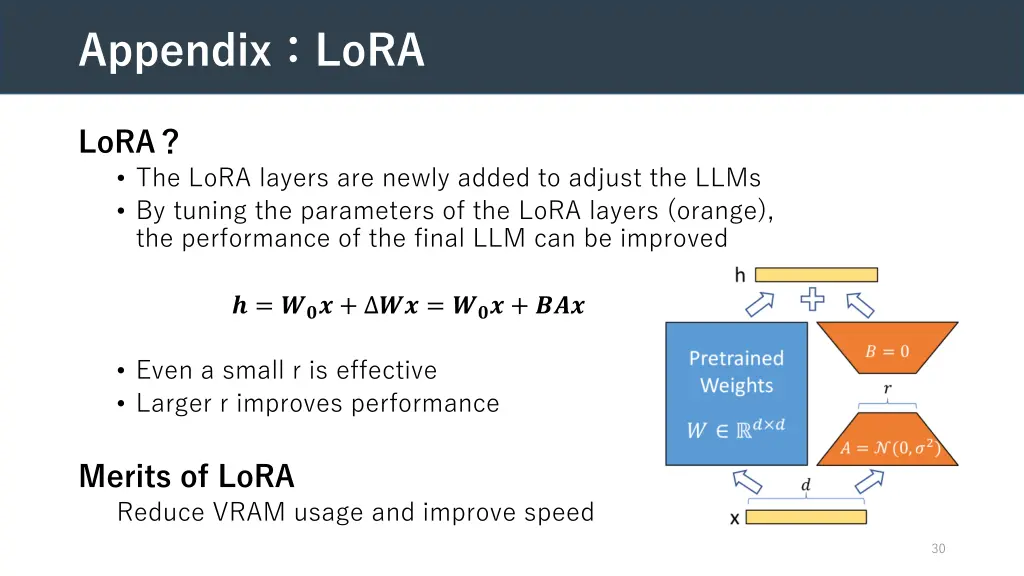
Fine-tuning method GPT-3.5 Use OpenAI s API Llama2 CodeLlama Use two technique Lora (Low Rank Adapter)[12] Reduce the number of parameters to be fine-tuned and minimize VRAM consumption ZeRO (Zero Redundancy Optimizer)[13] Minimize VRAM required per GPU [12] E. Hu et al., LoRA: Low-Rank Adaptation of Large Language Models, in ICLR 2022, 2022. [13] S. Rajbhandari, J. Rasley, O. Ruwase, and Y. He, ZeRO: Memory optimizations Toward Training Trillion Parameter Models, in SC20, 2020, pp. 1 16. 18
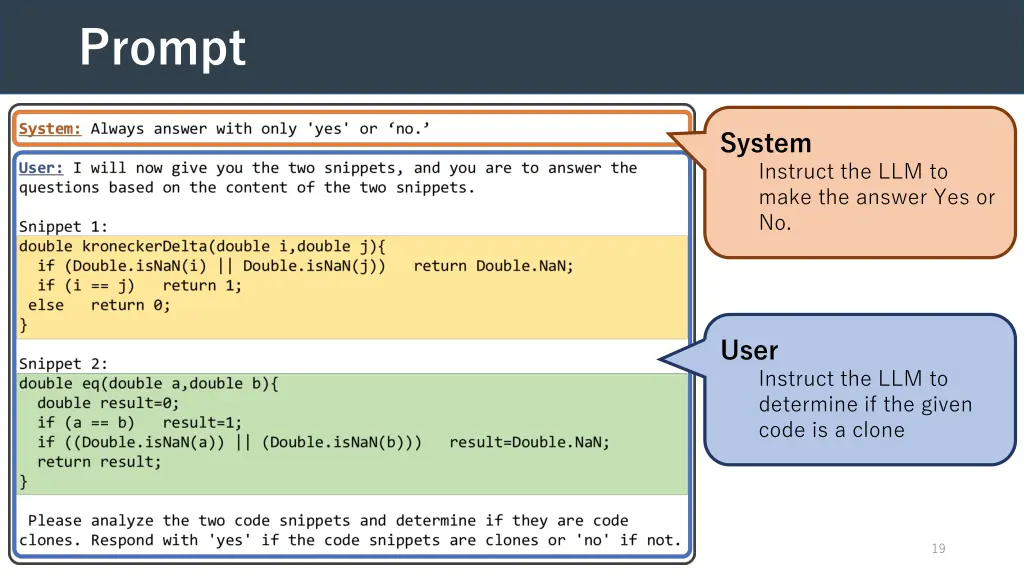
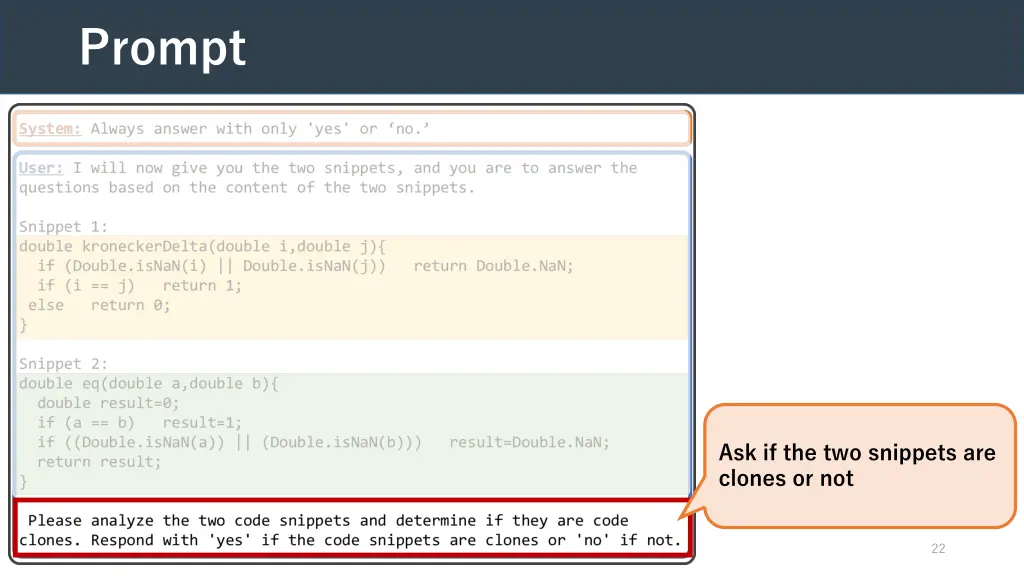
Prompt System Instruct the LLM to make the answer Yes or No. User Instruct the LLM to determine if the given code is a clone 19
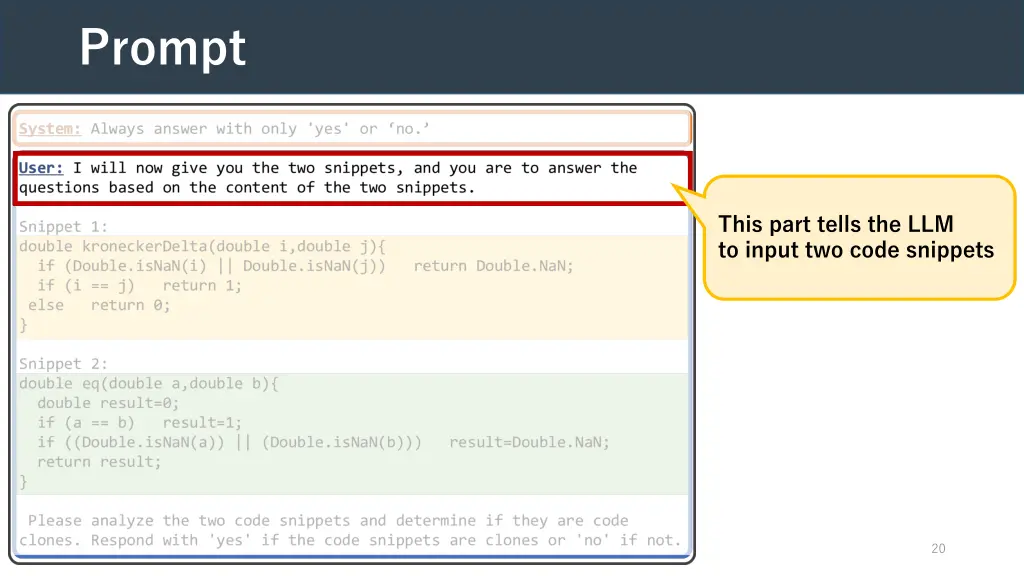
Prompt This part tells the LLM to input two code snippets 20
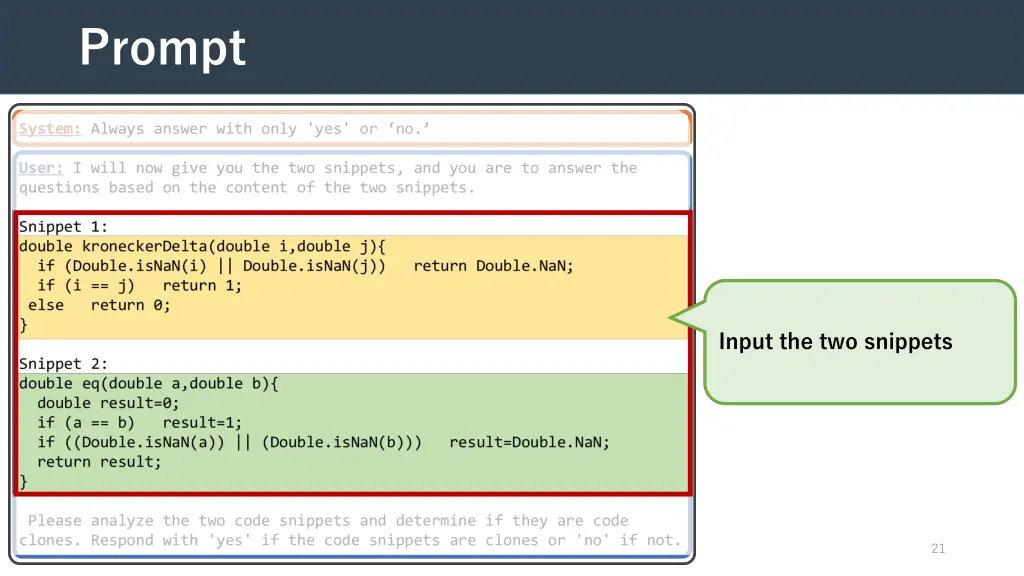
Prompt Input the two snippets 21
Prompt Ask if the two snippets are clones or not 22
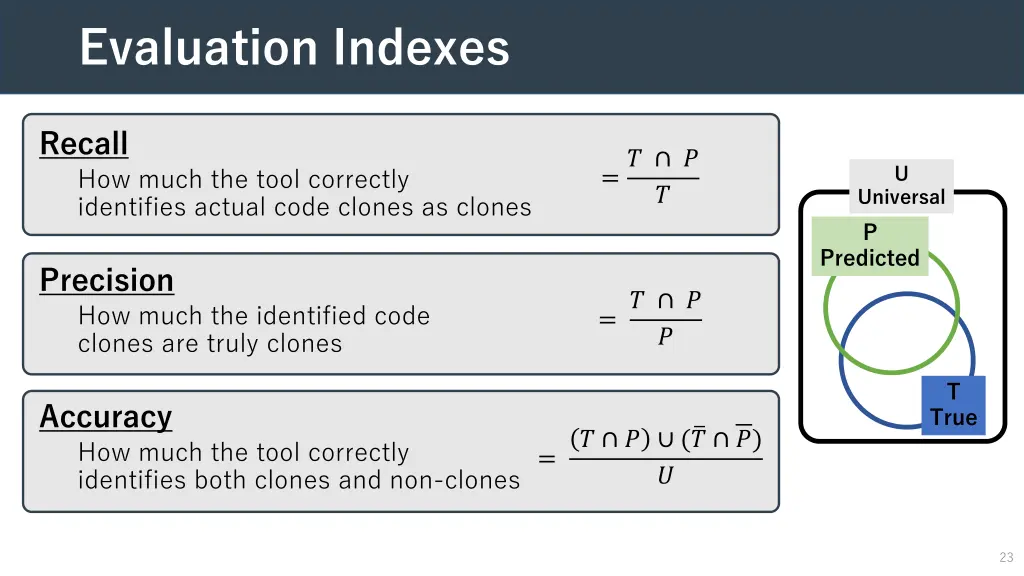
Evaluation Indexes Recall How much the tool correctly identifies actual code clones as clones =? ? U ? Universal P Predicted Precision How much the identified code clones are truly clones ? ? ? = T Accuracy How much the tool correctly identifies both clones and non-clones True ? ? ( ? ?) ? = 23
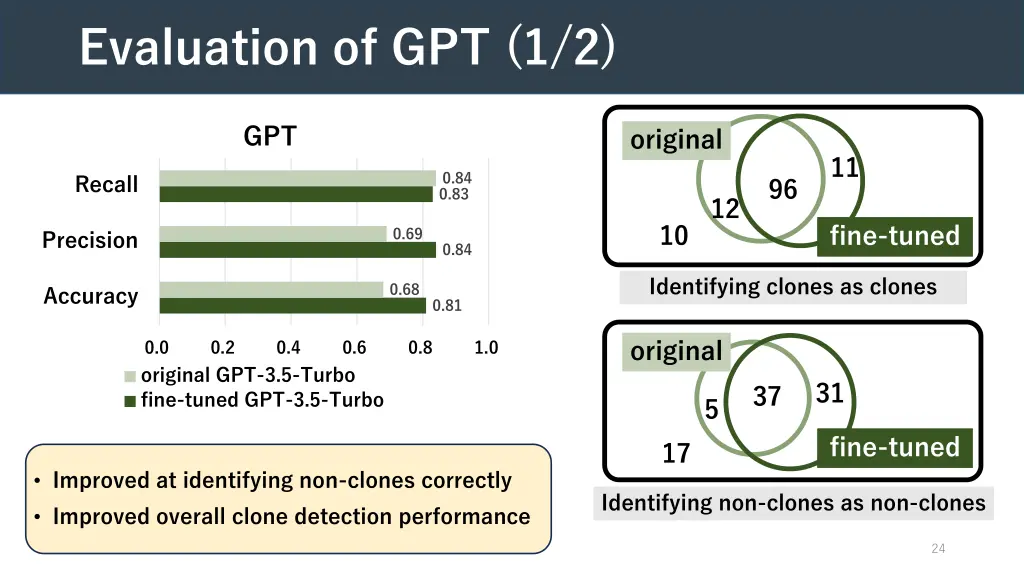
Evaluation of GPT (1/2) GPT original 11 0.84 Recall 96 0.83 12 fine-tuned 10 0.69 Precision 0.84 Identifying clones as clones 0.68 Accuracy 0.81 original 0.0 original GPT-3.5-Turbo fine-tuned GPT-3.5-Turbo 0.2 0.4 0.6 0.8 1.0 31 37 5 fine-tuned 17 Improved at identifying non-clones correctly Identifying non-clones as non-clones Improved overall clone detection performance 24
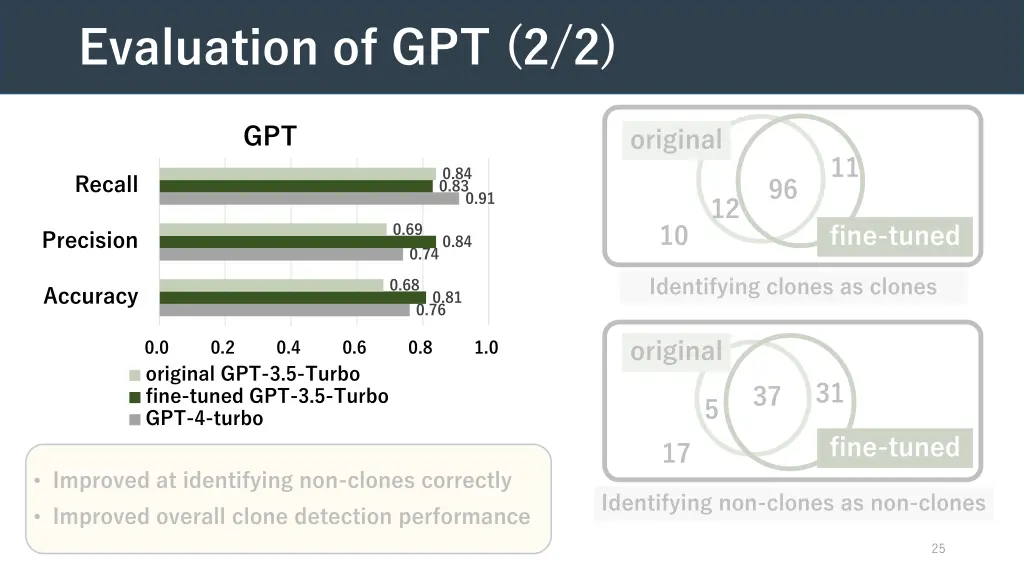
Evaluation of GPT (2/2) GPT original 11 0.84 Recall 96 0.83 0.91 12 0.69 fine-tuned 10 Precision 0.84 0.74 Identifying clones as clones 0.68 Accuracy 0.81 0.76 original 0.0 original GPT-3.5-Turbo fine-tuned GPT-3.5-Turbo GPT-4-turbo 0.2 0.4 0.6 0.8 1.0 31 37 5 fine-tuned 17 Improved at identifying non-clones correctly Identifying non-clones as non-clones Improved overall clone detection performance 25
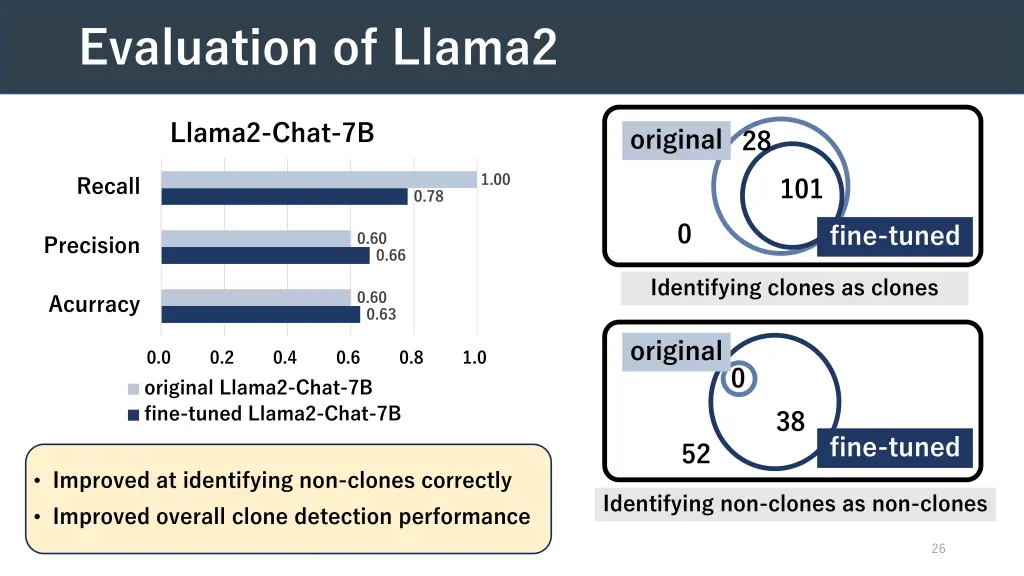
Evaluation of Llama2 Llama2-Chat-7B original 28 1.00 Recall 101 0.78 0 fine-tuned 0.60 Precision 0.66 Identifying clones as clones 0.60 Acurracy 0.63 original 0.0 0.2 0.4 0.6 0.8 1.0 0 original Llama2-Chat-7B fine-tuned Llama2-Chat-7B 38 fine-tuned 52 Improved at identifying non-clones correctly Identifying non-clones as non-clones Improved overall clone detection performance 26
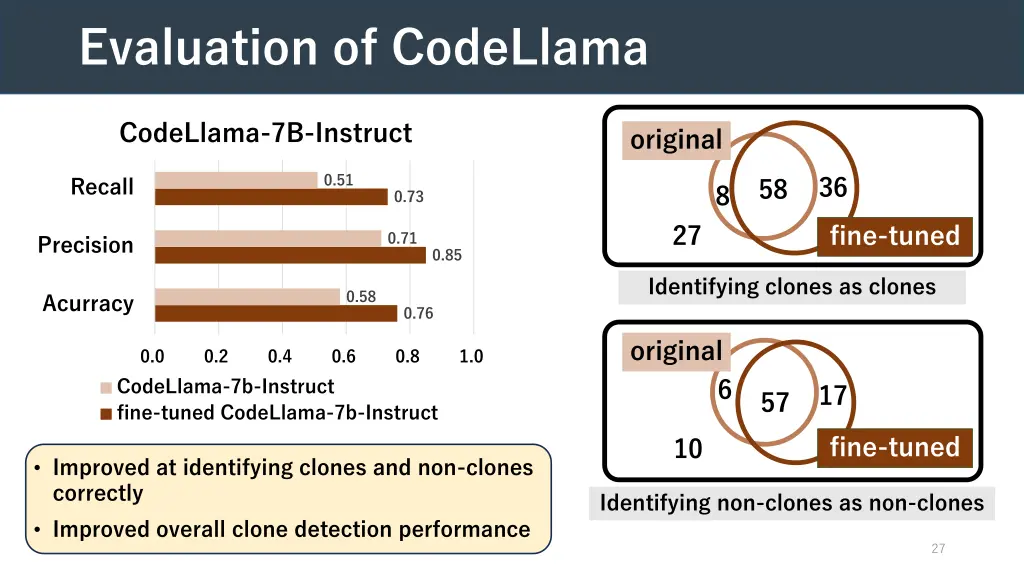
Evaluation of CodeLlama CodeLlama-7B-Instruct original 0.51 36 Recall 58 8 0.73 fine-tuned 27 0.71 Precision 0.85 Identifying clones as clones 0.58 Acurracy 0.76 original 0.0 0.2 0.4 0.6 0.8 1.0 CodeLlama-7b-Instruct fine-tuned CodeLlama-7b-Instruct 6 17 57 fine-tuned 10 Improved at identifying clones and non-clones correctly Identifying non-clones as non-clones Improved overall clone detection performance 27
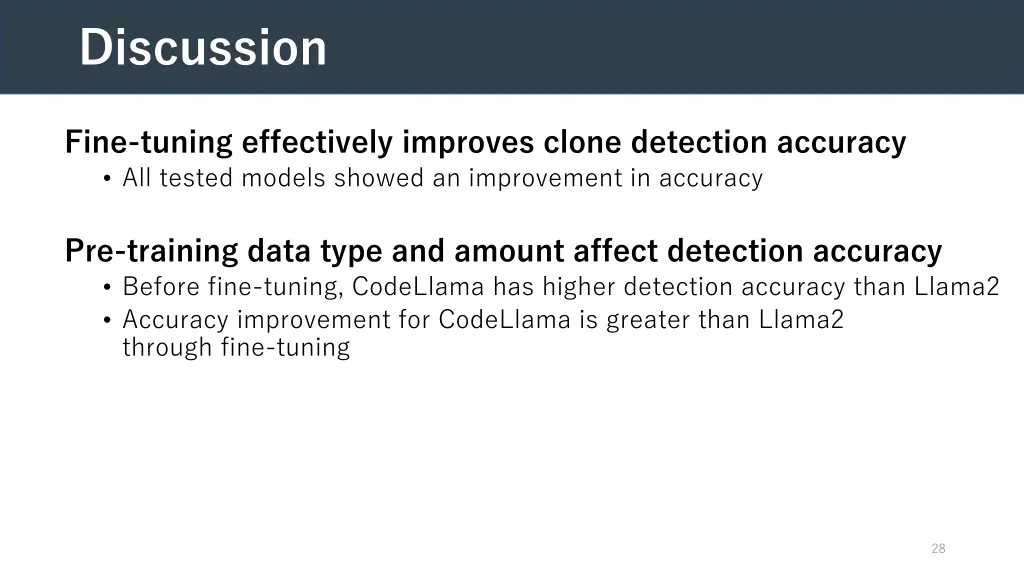
Discussion Fine-tuning effectively improves clone detection accuracy All tested models showed an improvement in accuracy Pre-training data type and amount affect detection accuracy Before fine-tuning, CodeLlama has higher detection accuracy than Llama2 Accuracy improvement for CodeLlama is greater than Llama2 through fine-tuning 28
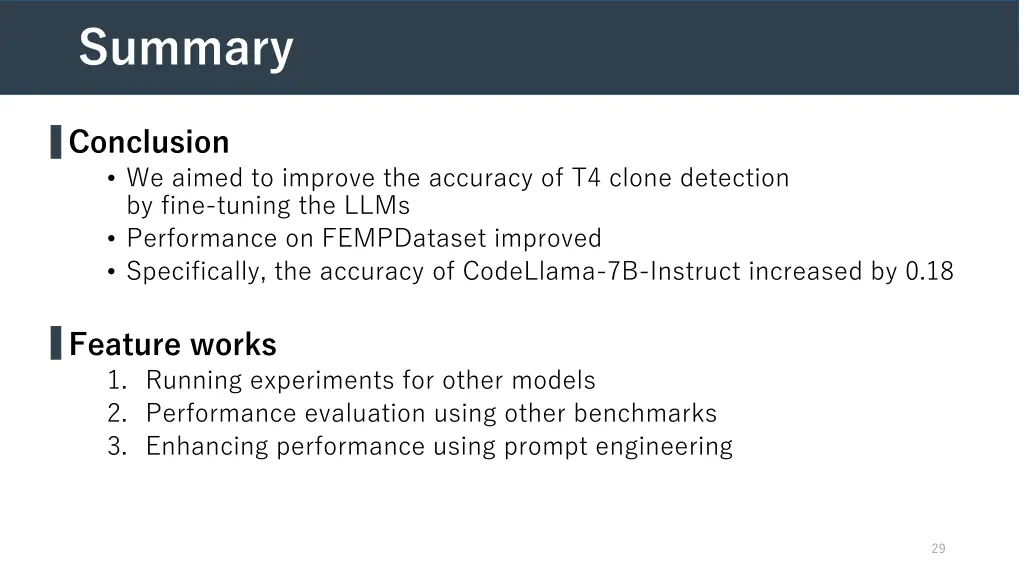
Summary Conclusion We aimed to improve the accuracy of T4 clone detection by fine-tuning the LLMs Performance on FEMPDataset improved Specifically, the accuracy of CodeLlama-7B-Instruct increased by 0.18 Feature works 1. Running experiments for other models 2. Performance evaluation using other benchmarks 3. Enhancing performance using prompt engineering 29
AppendixLoRA LoRA The LoRA layers are newly added to adjust the LLMs By tuning the parameters of the LoRA layers (orange), the performance of the final LLM can be improved ? = ??? + ?? = ??? + ??? Even a small r is effective Larger r improves performance Merits of LoRA Reduce VRAM usage and improve speed 30
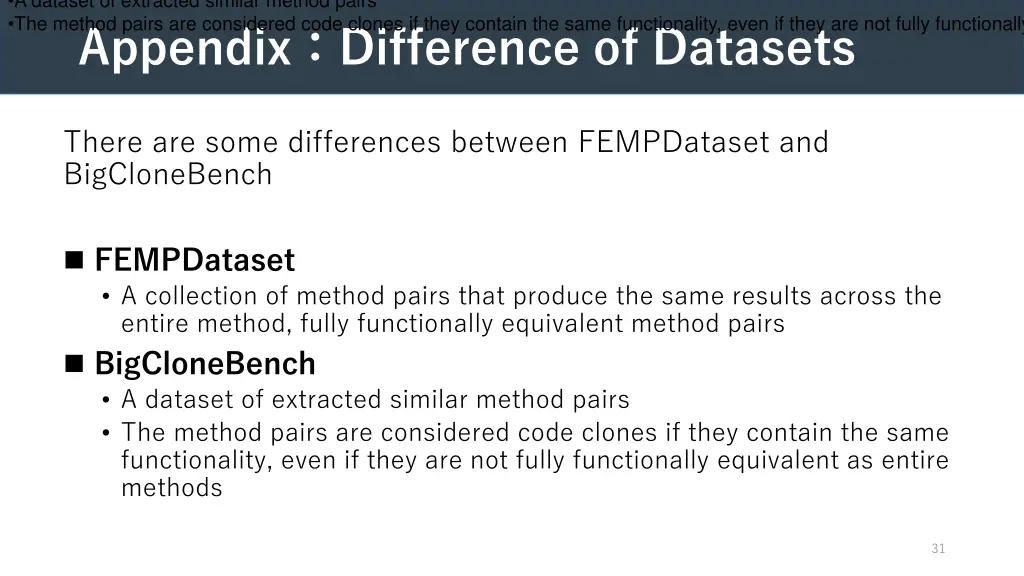
A dataset of extracted similar method pairs The method pairs are considered code clones if they contain the same functionality, even if they are not fully functionally e Appendix Difference of Datasets There are some differences between FEMPDataset and BigCloneBench FEMPDataset A collection of method pairs that produce the same results across the entire method, fully functionally equivalent method pairs BigCloneBench A dataset of extracted similar method pairs The method pairs are considered code clones if they contain the same functionality, even if they are not fully functionally equivalent as entire methods 31