Discover how morality plays and interludes during the late medieval period influenced Renaissance drama. Morality plays taught moral lessons through allegorical characters, while interludes provided comic relief and satire, shaping the development of comedic structures in Renaissance theatre.
Please find below an Image/Link to download the presentation.
The content on the website is provided AS IS for your information and personal use only. It may not be sold, licensed, or shared on other websites without obtaining consent from the author. If you encounter any issues during the download, it is possible that the publisher has removed the file from their server.
You are allowed to download the files provided on this website for personal or commercial use, subject to the condition that they are used lawfully. All files are the property of their respective owners.
The content on the website is provided AS IS for your information and personal use only. It may not be sold, licensed, or shared on other websites without obtaining consent from the author.
E N D
Presentation Transcript
3. PRECURSORS TO RENAISSANCE 3. PRECURSORS TO RENAISSANCE DRAMA: DRAMA: MORALITY PLAYS AND INTERLUDES MORALITY PLAYS AND INTERLUDES MORALITY PLAYS MORALITY PLAYS AND AND INTERLUDES INTERLUDES. .
A A - -Morality plays Morality plays were allegorical dramas that flourished during the late medieval period. These plays aimed to teach moral lessons and depict the struggle between good and evil. Characters often personified abstract concepts such as Virtue, Vice Everyman, and Death. Morality plays were performed by traveling acting troupes and were popular among both the educated elite and the common people.
These plays heavily influenced Renaissance drama by : These plays heavily influenced Renaissance drama by : 1. Introducing certain dramatic conventions and techniques. 2.Morality plays featured a didactic tone, emphasizing moral instruction and the consequences of one s actions. This moral purpose was later incorporated into Renaissance works, particularly in the plays of Christopher Marlowe and William Shakespeare. 3. Popularized the use of allegory, wherein characters and events symbolize abstract ideas or moral qualities.This technique found its way into Renaissance drama,where it was employed to explore complex themes and convey deeper meanings. The allegorical figures in morality plays also paved the way for the development of stock characters in Renaissance theatre.
Interludes Interludes B B - -Interludes Interludes, on the other hand, were shorter, less formal dramatio pieces that gained popularity in the late medieval period and continued into the early Renaissance. Interludes were performed between the acts of larger works or as standalone performances. . They often featured farcical elements, slapstick comedy, and social satire. Interludes were characterized by their light-hearted and entertaining nature, providing comic relief in between more serious or moralistic plays. They offered a break from the didacticism of morality plays and allowed for more playful and irreverent performances. Interludes focused on humor, satire, and the depiction of everyday life, often mocking social conventions and norms.
The influence of interludes on Renaissance drama can be seen in the works of playwrights like Ben Jonson and John Heywood. These playwrights :- 1.Incorporated elements of farce and satire into their plays, bringing a comic and satirical dimension to the Renaissance stage. 2. Interludes also contributed to the development of comedic structures and techniques that would later be refined and expanded upon in Renaissance comedy.
In summary, morality plays and interludes were important precursors to Renaissance drama. Morality plays laid the groundwork for the didactic and moralistic aspects of Renaissance theatre, while interludes introduced elements of comedy, satire, and everyday life.These early theatrical forms influenced the content,structure, and style of Renaissance drama, providing a foundation upon which the innovative works of the period were built.
How did morality plays and interludes differ in terms of their themes and tone? Morality plays were primarily :- 1. Focused on moral and religious teachings. 2. They were didactic in nature, aiming to instruct the audience on the principles of good and evil and the consequences of one s actions. 3. The plays often featured allegorical characters, representing abstract concepts like Virtue, Vice, Everyman, and Death. 4. The themes explored in morality plays revolved around the struggle between right and wrong, the importance of repentance, and the journey towards salvation. 5. The tone of morality plays was serious and moralistic, emphasizing the need for virtuous behavior and the punishment of sin.
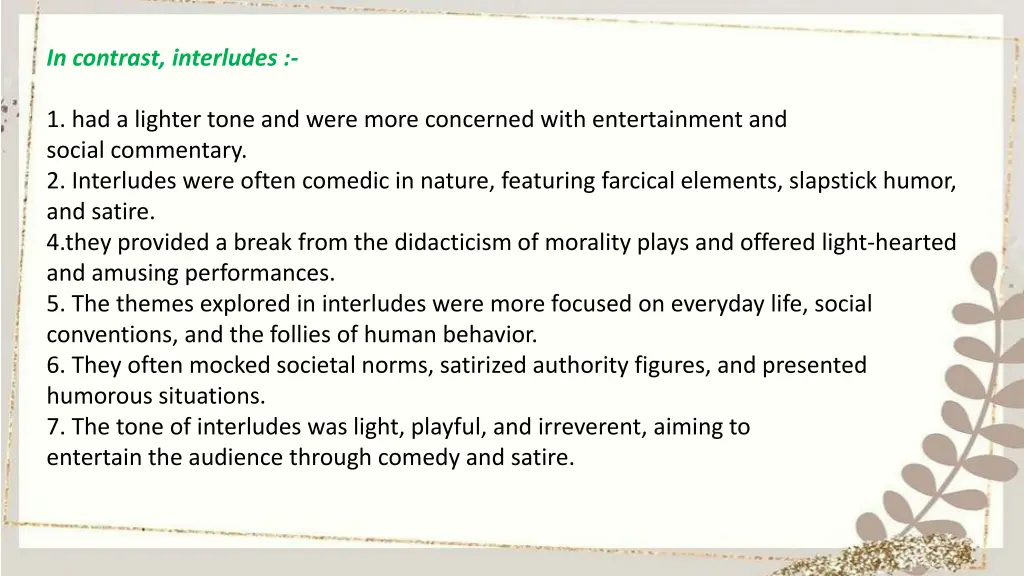
In contrast, interludes :- 1. had a lighter tone and were more concerned with entertainment and social commentary. 2. Interludes were often comedic in nature, featuring farcical elements, slapstick humor, and satire. 4.they provided a break from the didacticism of morality plays and offered light-hearted and amusing performances. 5. The themes explored in interludes were more focused on everyday life, social conventions, and the follies of human behavior. 6. They often mocked societal norms, satirized authority figures, and presented humorous situations. 7. The tone of interludes was light, playful, and irreverent, aiming to entertain the audience through comedy and satire.
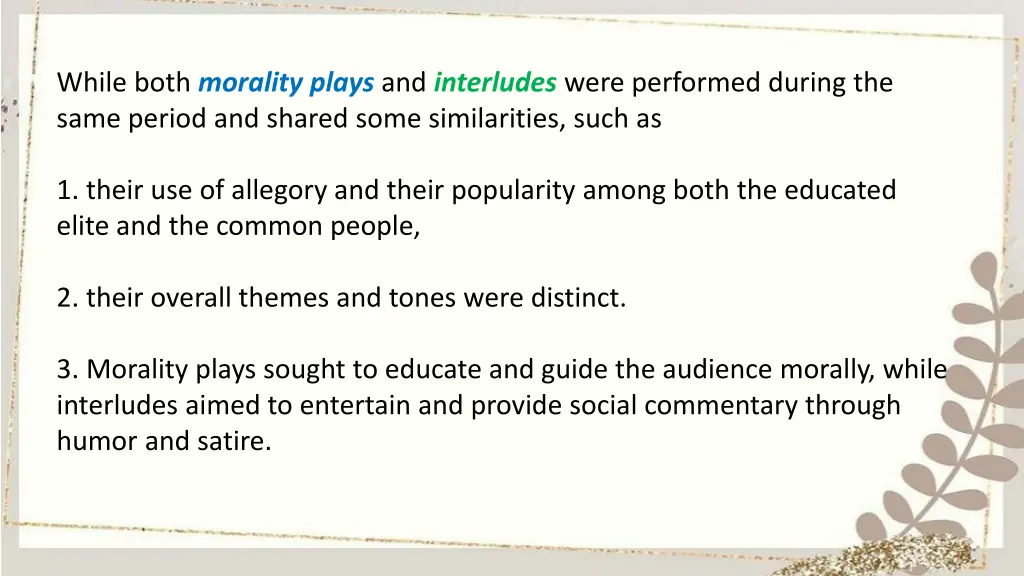
While both morality plays and interludes were performed during the same period and shared some similarities, such as 1. their use of allegory and their popularity among both the educated elite and the common people, 2. their overall themes and tones were distinct. 3. Morality plays sought to educate and guide the audience morally, while interludes aimed to entertain and provide social commentary through humor and satire.
Thank you Thank you Have a nice day Have a nice day