Innovative Approach Utilizing Avatar Mice and Mass Spectrometry for Breast Cancer Biomarker Discovery
Combining avatar mice models and targeted mass spectrometry, researchers aim to identify blood biomarkers for early detection of breast cancer. By analyzing human proteins in mouse plasma harboring breast cancer xenografts, this study offers a promising avenue for discovering tumor-derived biomarkers. The approach simplifies biomarker discovery and could potentially lead to a roadmap for early detection in solid tumors.

Uploaded on | 0 Views
Download Presentation

Please find below an Image/Link to download the presentation.
The content on the website is provided AS IS for your information and personal use only. It may not be sold, licensed, or shared on other websites without obtaining consent from the author. If you encounter any issues during the download, it is possible that the publisher has removed the file from their server.
You are allowed to download the files provided on this website for personal or commercial use, subject to the condition that they are used lawfully. All files are the property of their respective owners.
The content on the website is provided AS IS for your information and personal use only. It may not be sold, licensed, or shared on other websites without obtaining consent from the author.
E N D
Presentation Transcript
Unique approach combining avatar mice and targeted mass spectrometry to identify blood biomarkers for early detection of breast cancer Amanda Paulovich, M.D., Ph.D. Member, Clinical Research Division Fred Hutchinson Cancer Research Center Mike Lewis, Ph.D. Associate Professor Baylor College of Medicine Steve Skates, Ph.D. Massachusetts General Hospital
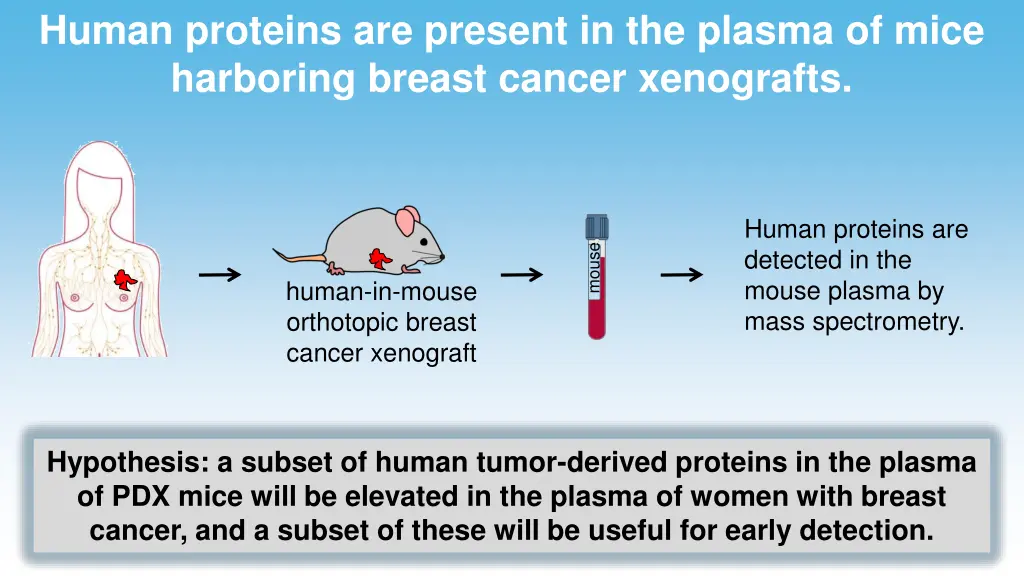
Human proteins are present in the plasma of mice harboring breast cancer xenografts. Human proteins are detected in the mouse plasma by mass spectrometry. mouse human-in-mouse orthotopic breast cancer xenograft Hypothesis: a subset of human tumor-derived proteins in the plasma of PDX mice will be elevated in the plasma of women with breast cancer, and a subset of these will be useful for early detection.
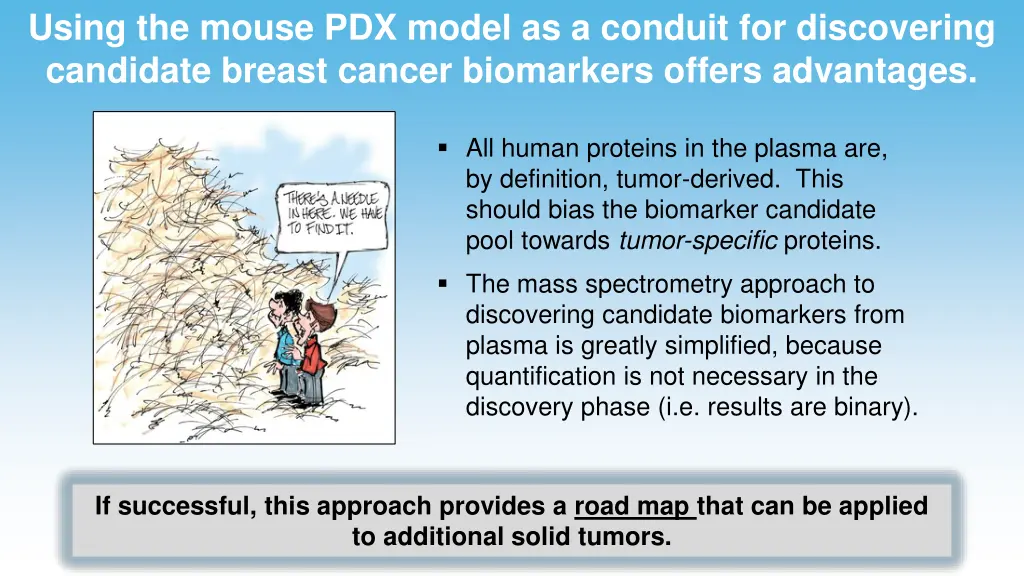
Using the mouse PDX model as a conduit for discovering candidate breast cancer biomarkers offers advantages. All human proteins in the plasma are, by definition, tumor-derived. This should bias the biomarker candidate pool towards tumor-specific proteins. The mass spectrometry approach to discovering candidate biomarkers from plasma is greatly simplified, because quantification is not necessary in the discovery phase (i.e. results are binary). If successful, this approach provides a road map that can be applied to additional solid tumors.
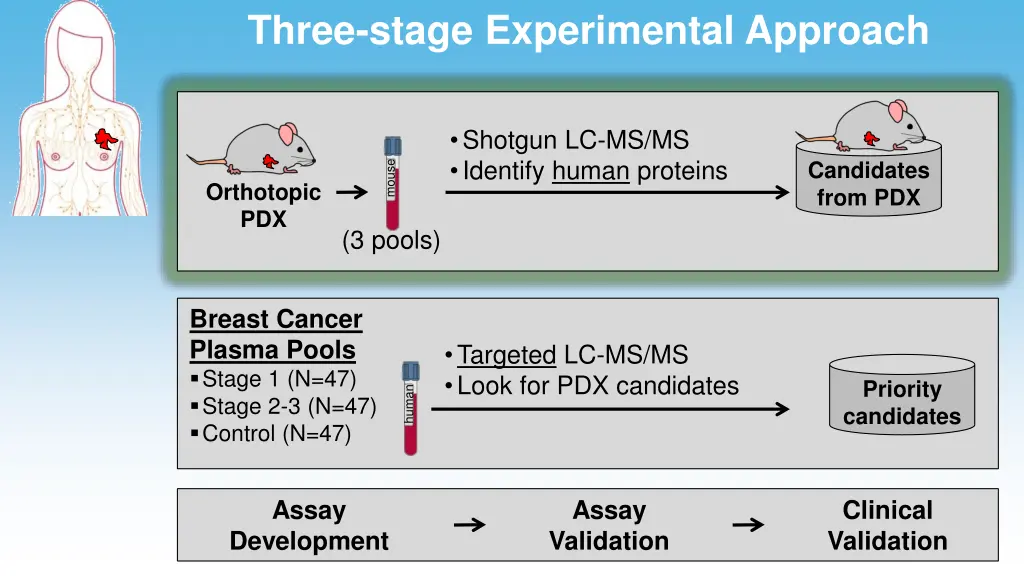
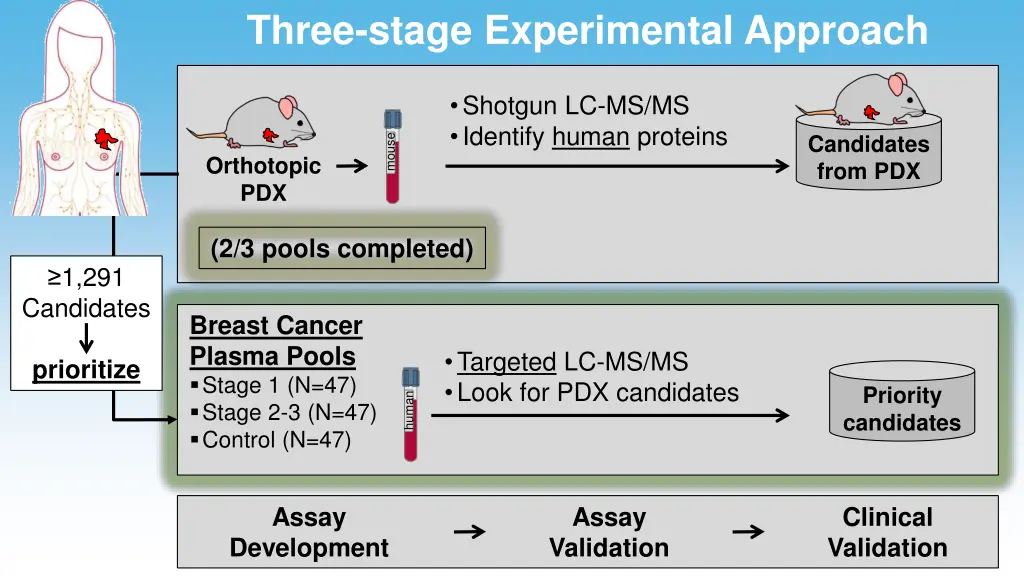
Three-stage Experimental Approach Shotgun LC-MS/MS Identify human proteins Candidates from PDX mouse Orthotopic PDX (3 pools) Breast Cancer Plasma Pools Stage 1 (N=47) Stage 2-3 (N=47) Control (N=47) Targeted LC-MS/MS Look for PDX candidates Priority candidates human Assay Assay Validation Clinical Validation Development
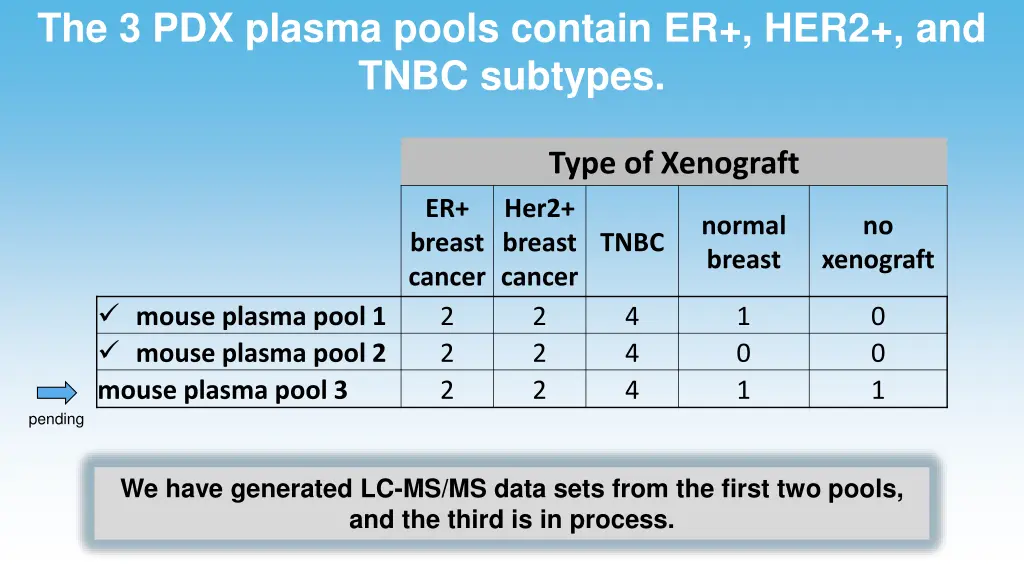
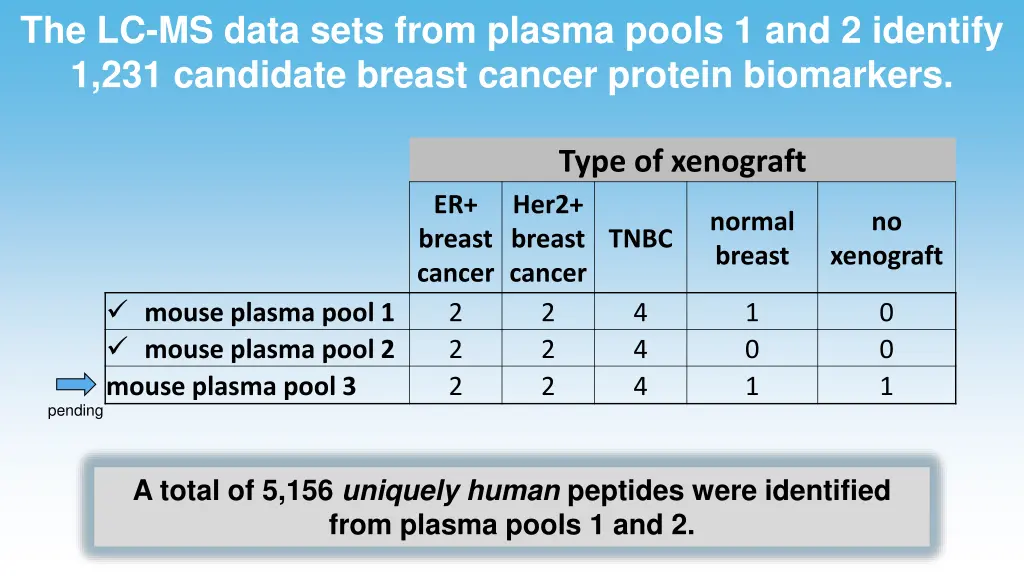
The 3 PDX plasma pools contain ER+, HER2+, and TNBC subtypes. Type of Xenograft Her2+ breast cancer 2 4 2 4 2 4 ER+ breast cancer 2 2 2 normal breast no TNBC xenograft mouse plasma pool 1 mouse plasma pool 2 mouse plasma pool 3 1 0 1 0 0 1 pending We have generated LC-MS/MS data sets from the first two pools, and the third is in process.
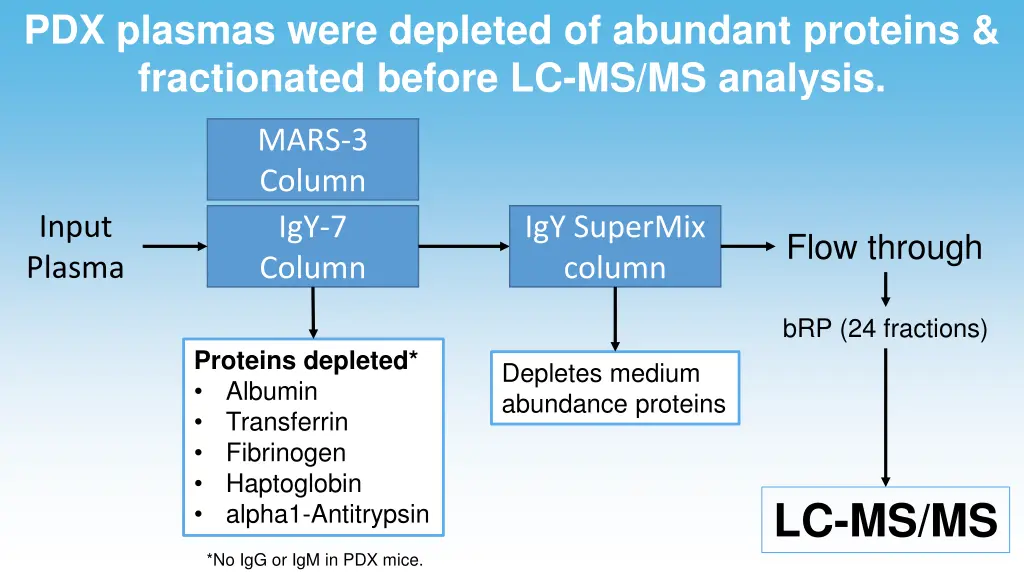
PDX plasmas were depleted of abundant proteins & fractionated before LC-MS/MS analysis. MARS-3 Column Input Plasma IgY-7 Column IgY SuperMix column Flow through bRP (24 fractions) Proteins depleted* Albumin Transferrin Fibrinogen Haptoglobin alpha1-Antitrypsin Depletes medium abundance proteins LC-MS/MS *No IgG or IgM in PDX mice.
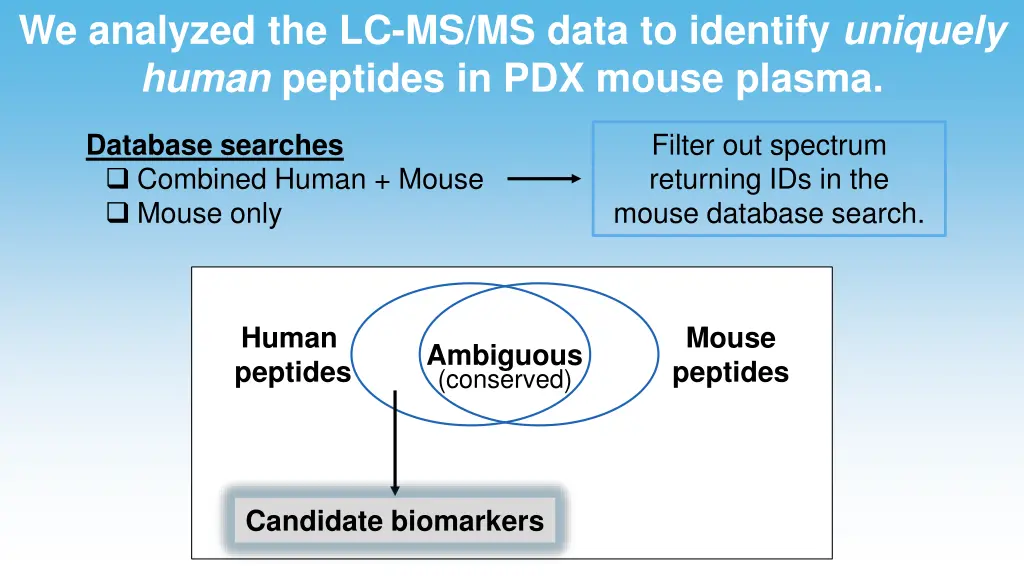
We analyzed the LC-MS/MS data to identify uniquely human peptides in PDX mouse plasma. Filter out spectrum returning IDs in the mouse database search. Database searches Combined Human + Mouse Mouse only Human peptides Mouse peptides Ambiguous (conserved) Candidate biomarkers
The LC-MS data sets from plasma pools 1 and 2 identify 1,231 candidate breast cancer protein biomarkers. Type of xenograft Her2+ breast cancer 2 4 2 4 2 4 ER+ breast cancer 2 2 2 normal breast no TNBC xenograft mouse plasma pool 1 mouse plasma pool 2 mouse plasma pool 3 1 0 1 0 0 1 pending A total of 5,156 uniquely human peptides were identified from plasma pools 1 and 2.
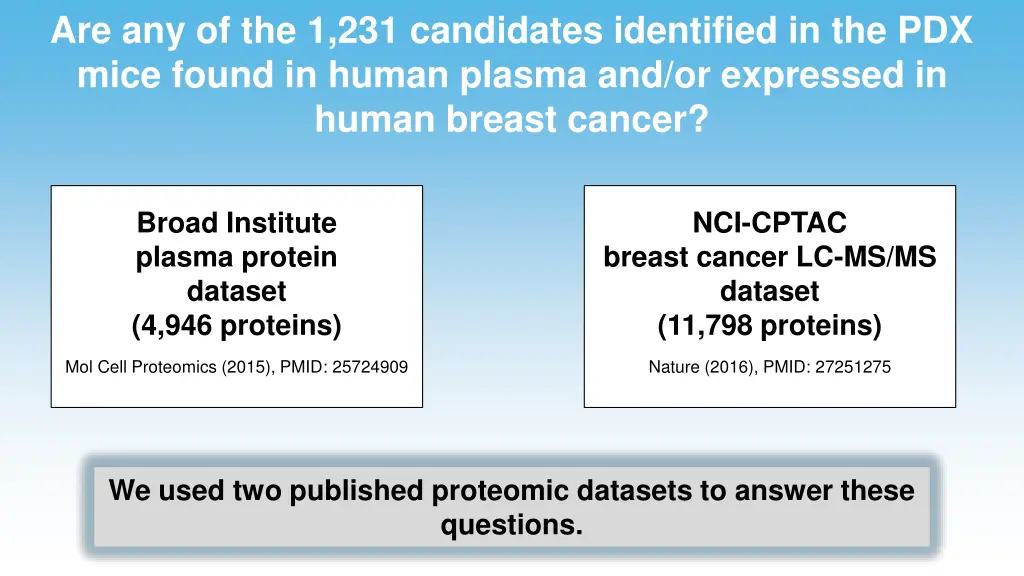
Are any of the 1,231 candidates identified in the PDX mice found in human plasma and/or expressed in human breast cancer? Broad Institute plasma protein dataset (4,946 proteins) NCI-CPTAC breast cancer LC-MS/MS dataset (11,798 proteins) Mol Cell Proteomics (2015), PMID: 25724909 Nature (2016), PMID: 27251275 We used two published proteomic datasets to answer these questions.
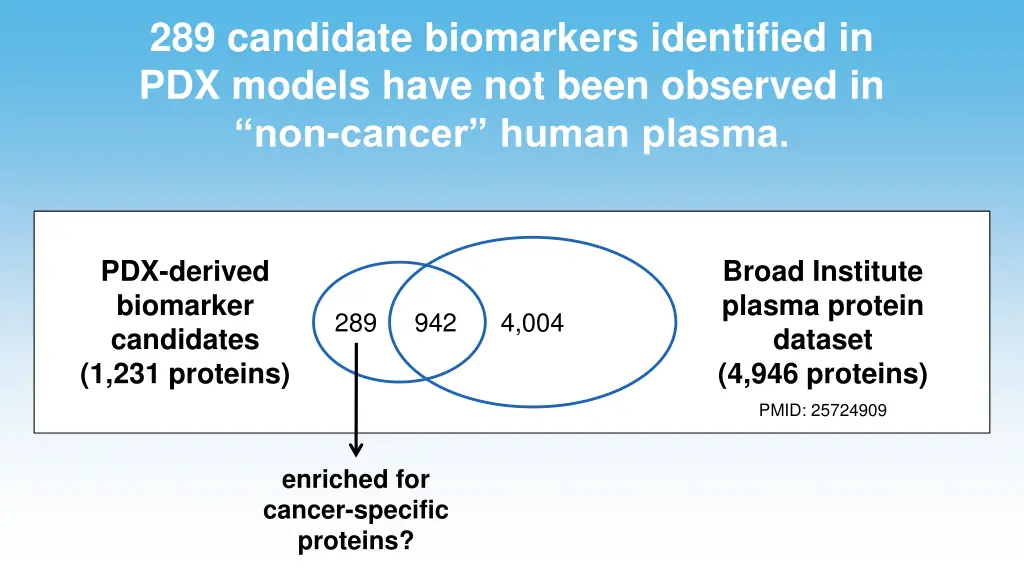
289 candidate biomarkers identified in PDX models have not been observed in non-cancer human plasma. PDX-derived biomarker candidates (1,231 proteins) Broad Institute plasma protein dataset (4,946 proteins) 289 942 4,004 PMID: 25724909 enriched for cancer-specific proteins?
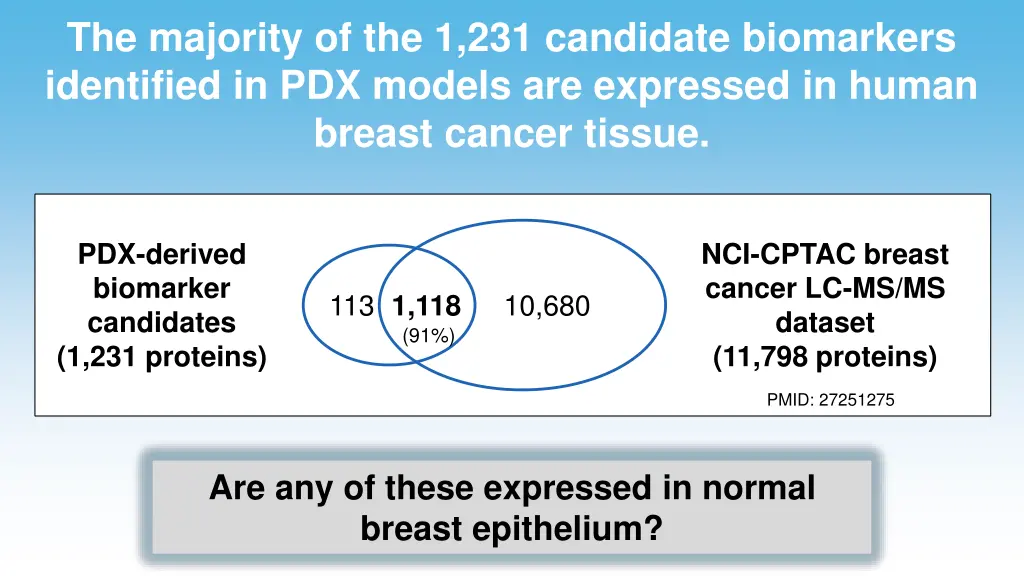
The majority of the 1,231 candidate biomarkers identified in PDX models are expressed in human breast cancer tissue. PDX-derived biomarker candidates (1,231 proteins) NCI-CPTAC breast cancer LC-MS/MS dataset (11,798 proteins) 113 1,118 10,680 (91%) PMID: 27251275 Are any of these expressed in normal breast epithelium?
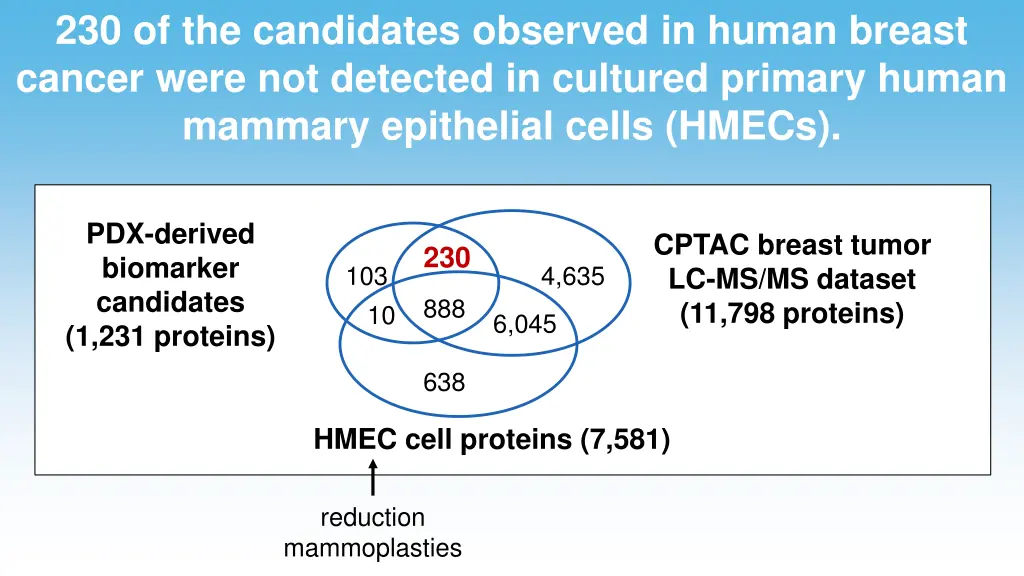
230 of the candidates observed in human breast cancer were not detected in cultured primary human mammary epithelial cells (HMECs). PDX-derived biomarker candidates (1,231 proteins) CPTAC breast tumor LC-MS/MS dataset (11,798 proteins) 230 103 4,635 888 10 6,045 638 HMEC cell proteins (7,581) reduction mammoplasties
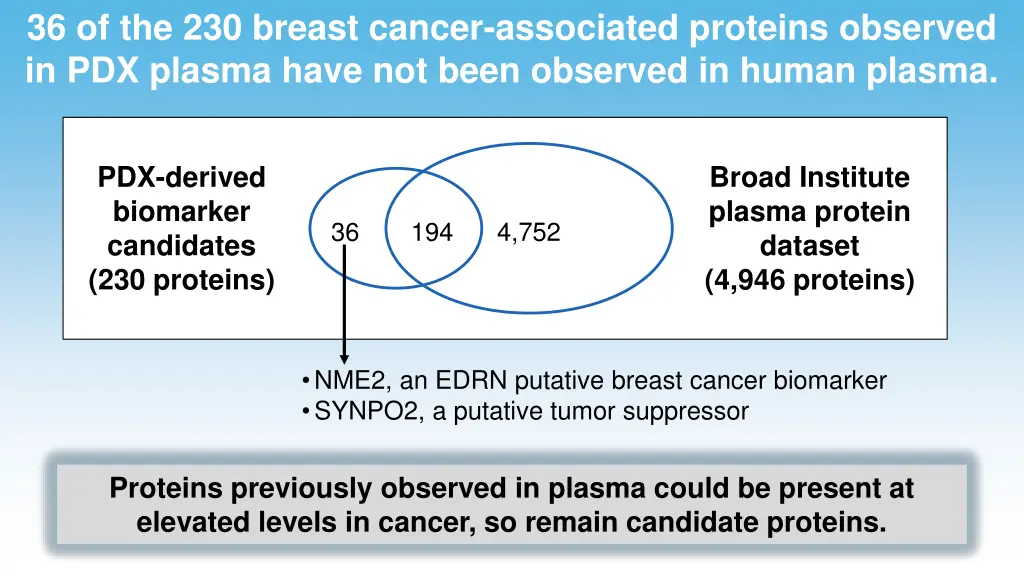
36 of the 230 breast cancer-associated proteins observed in PDX plasma have not been observed in human plasma. PDX-derived biomarker candidates (230 proteins) Broad Institute plasma protein dataset (4,946 proteins) 36 194 4,752 NME2, an EDRN putative breast cancer biomarker SYNPO2, a putative tumor suppressor Proteins previously observed in plasma could be present at elevated levels in cancer, so remain candidate proteins.
Three-stage Experimental Approach Shotgun LC-MS/MS Identify human proteins Candidates from PDX mouse Orthotopic PDX (2/3 pools completed) 1,291 Candidates Breast Cancer Plasma Pools Stage 1 (N=47) Stage 2-3 (N=47) Control (N=47) Targeted LC-MS/MS Look for PDX candidates prioritize Priority candidates human Assay Assay Validation Clinical Validation Development
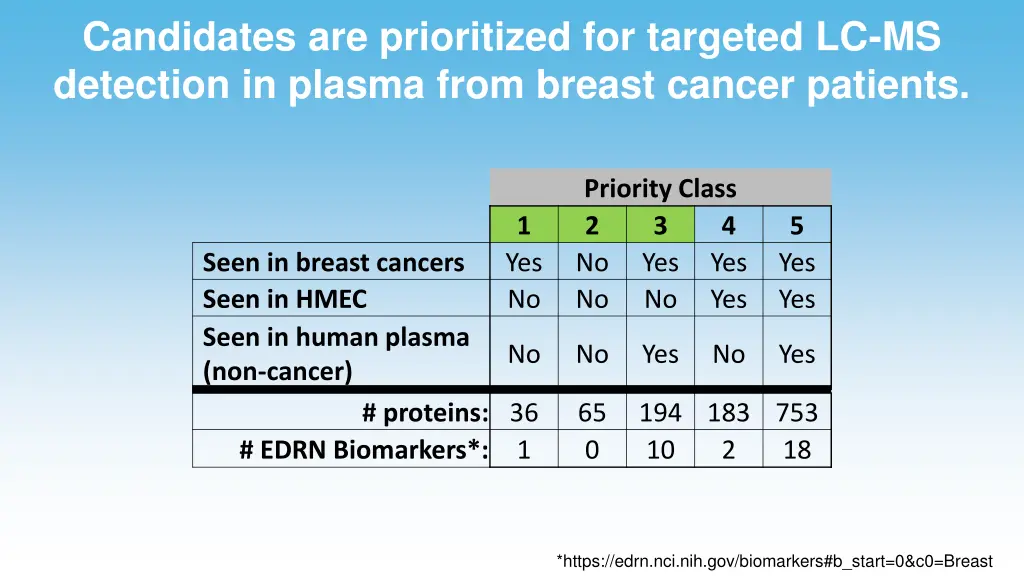
Candidates are prioritized for targeted LC-MS detection in plasma from breast cancer patients. Priority Class 2 3 No Yes No No 1 4 5 Seen in breast cancers Seen in HMEC Seen in human plasma (non-cancer) Yes No Yes Yes Yes Yes No No Yes No Yes # proteins: 36 65 0 194 183 753 10 2 # EDRN Biomarkers*: 1 18 *https://edrn.nci.nih.gov/biomarkers#b_start=0&c0=Breast
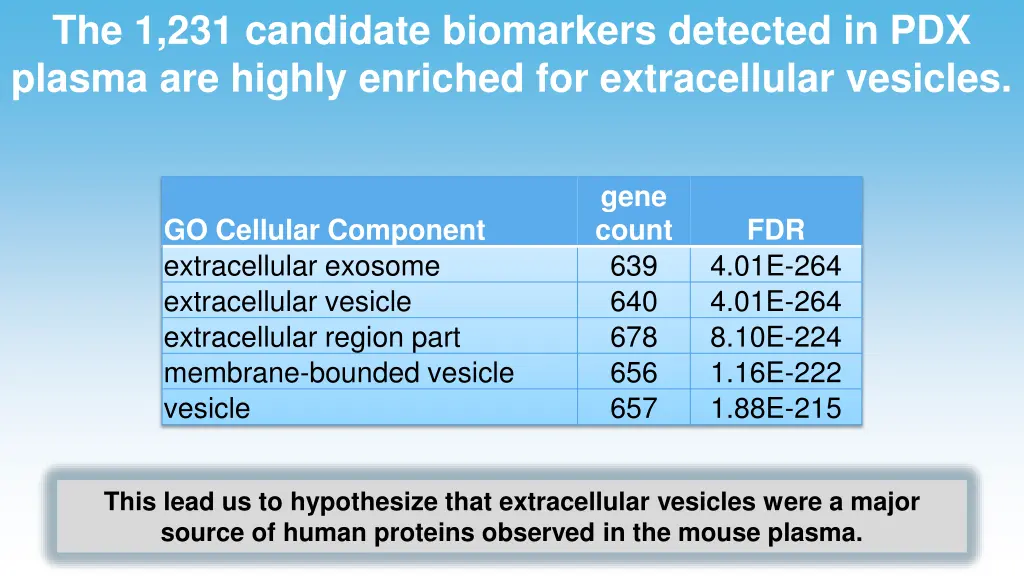
The 1,231 candidate biomarkers detected in PDX plasma are highly enriched for extracellular vesicles. gene count 639 640 678 656 657 GO Cellular Component extracellular exosome extracellular vesicle extracellular region part membrane-bounded vesicle vesicle FDR 4.01E-264 4.01E-264 8.10E-224 1.16E-222 1.88E-215 This lead us to hypothesize that extracellular vesicles were a major source of human proteins observed in the mouse plasma.
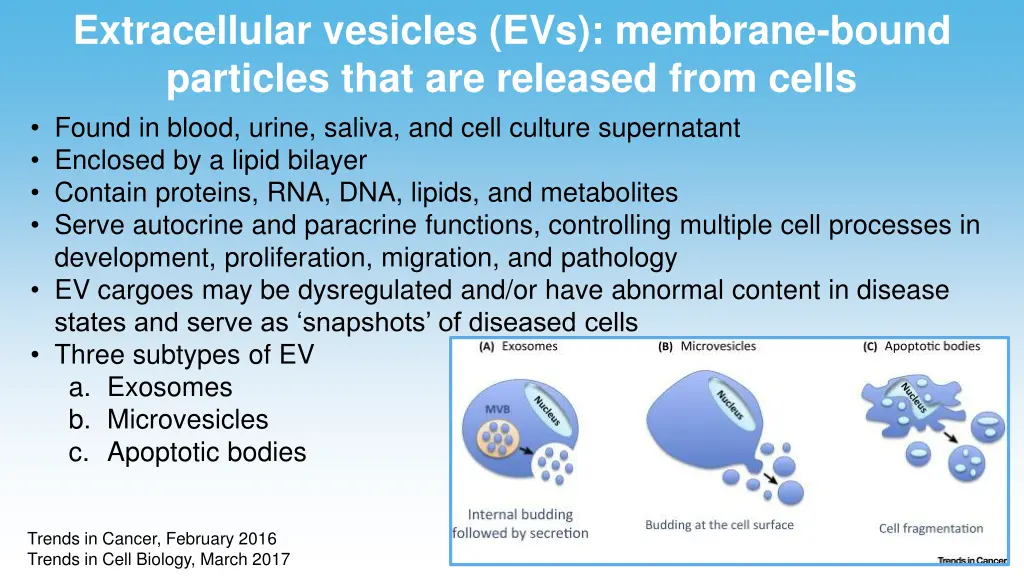
Extracellular vesicles (EVs): membrane-bound particles that are released from cells Found in blood, urine, saliva, and cell culture supernatant Enclosed by a lipid bilayer Contain proteins, RNA, DNA, lipids, and metabolites Serve autocrine and paracrine functions, controlling multiple cell processes in development, proliferation, migration, and pathology EV cargoes may be dysregulated and/or have abnormal content in disease states and serve as snapshots of diseased cells Three subtypes of EV a. Exosomes b. Microvesicles c. Apoptotic bodies Trends in Cancer, February 2016 Trends in Cell Biology, March 2017
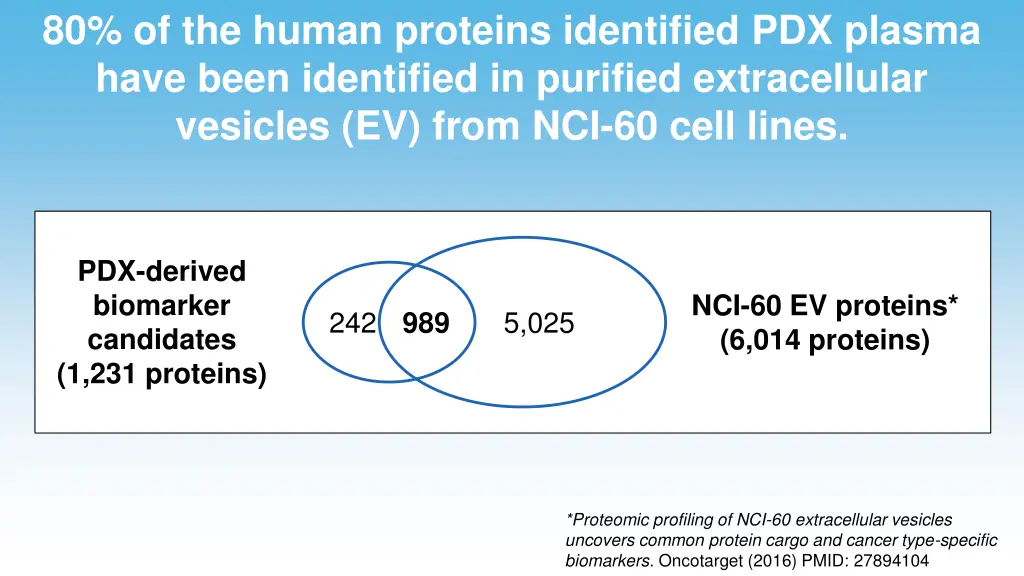
80% of the human proteins identified PDX plasma have been identified in purified extracellular vesicles (EV) from NCI-60 cell lines. PDX-derived biomarker candidates (1,231 proteins) NCI-60 EV proteins* (6,014 proteins) 242 5,025 989 *Proteomic profiling of NCI-60 extracellular vesicles uncovers common protein cargo and cancer type-specific biomarkers. Oncotarget (2016) PMID: 27894104
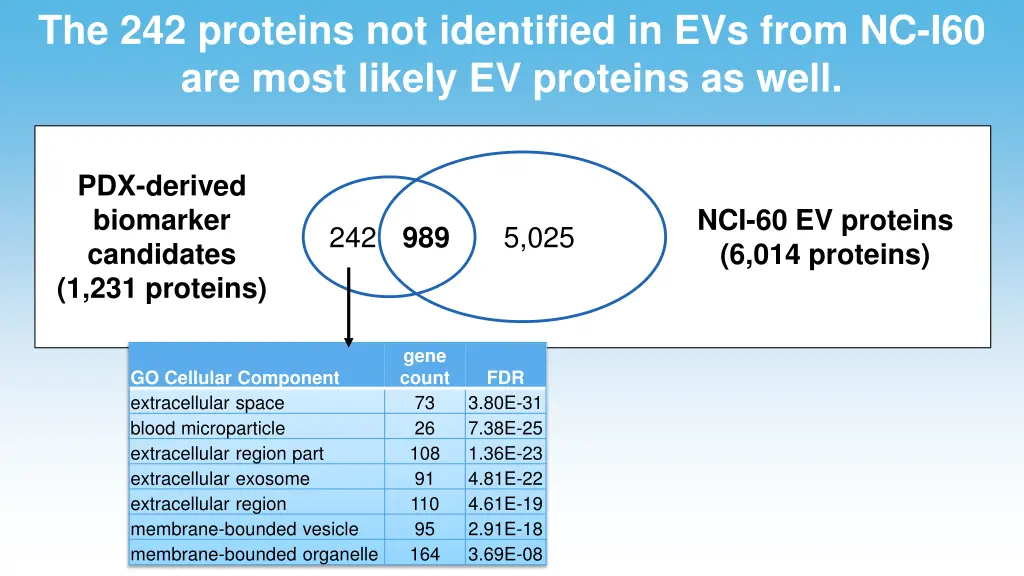
The 242 proteins not identified in EVs from NC-I60 are most likely EV proteins as well. PDX-derived biomarker candidates (1,231 proteins) NCI-60 EV proteins (6,014 proteins) 242 5,025 989 gene count 73 26 108 91 110 95 164 GO Cellular Component extracellular space blood microparticle extracellular region part extracellular exosome extracellular region membrane-bounded vesicle membrane-bounded organelle FDR 3.80E-31 7.38E-25 1.36E-23 4.81E-22 4.61E-19 2.91E-18 3.69E-08
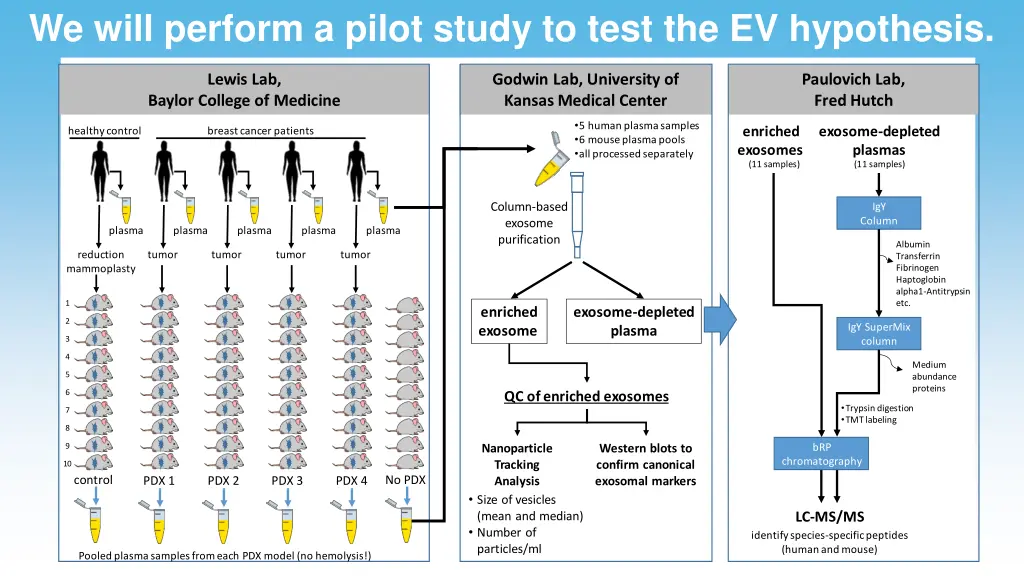
We will perform a pilot study to test the EV hypothesis. Lewis Lab, Godwin Lab, University of Kansas Medical Center Paulovich Lab, Fred Hutch Baylor College of Medicine 5 human plasma samples 6 mouse plasma pools all processed separately enriched exosomes (11 samples) exosome-depleted plasmas (11 samples) healthy control breast cancer patients Column-based exosome purification IgY Column plasma plasma plasma plasma plasma Albumin Transferrin Fibrinogen Haptoglobin alpha1-Antitrypsin etc. reduction mammoplasty tumor tumor tumor tumor 1 enriched exosome exosome-depleted plasma 2 IgY SuperMix column 3 4 Medium abundance proteins 5 6 QC of enriched exosomes Trypsin digestion TMT labeling 7 8 9 bRP Nanoparticle Tracking Analysis Size of vesicles (mean and median) Number of particles/ml Western blots to confirm canonical exosomal markers chromatography 10 control No PDX PDX 1 PDX 2 PDX 3 PDX 4 LC-MS/MS identify species-specific peptides (human and mouse) Pooled plasma samples from each PDX model (no hemolysis!)
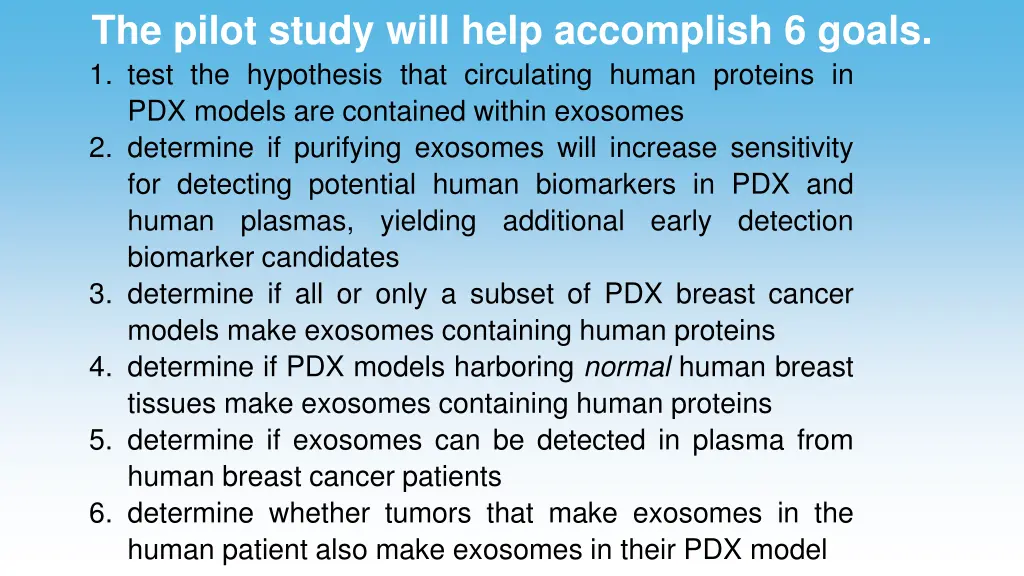
The pilot study will help accomplish 6 goals. 1. test the hypothesis that circulating human proteins in PDX models are contained within exosomes 2. determine if purifying exosomes will increase sensitivity for detecting potential human biomarkers in PDX and human plasmas, yielding additional early detection biomarker candidates 3. determine if all or only a subset of PDX breast cancer models make exosomes containing human proteins 4. determine if PDX models harboring normal human breast tissues make exosomes containing human proteins 5. determine if exosomes can be detected in plasma from human breast cancer patients 6. determine whether tumors that make exosomes in the human patient also make exosomes in their PDX model
Thank you Steve Skates Richard Ivey Jake Kennedy ChenWei Lin Jeff Whiteaker Regine Schoenherr Travis Lorentzen Amanda Paulovich Michael Lewis John Landua Tao Liu Karin Rodland Vladislav Petyuk Samuel Payne