Insights into Business Economics Concepts
Explore the realm of Business Economics covering topics like market demand, production analysis, cost and profit analysis, pricing, and more. Understand basic concepts, incrementalism, economic analysis tools, equations, and market demand through detailed explanations and visuals.

Download Presentation

Please find below an Image/Link to download the presentation.
The content on the website is provided AS IS for your information and personal use only. It may not be sold, licensed, or shared on other websites without obtaining consent from the author. If you encounter any issues during the download, it is possible that the publisher has removed the file from their server.
You are allowed to download the files provided on this website for personal or commercial use, subject to the condition that they are used lawfully. All files are the property of their respective owners.
The content on the website is provided AS IS for your information and personal use only. It may not be sold, licensed, or shared on other websites without obtaining consent from the author.
E N D
Presentation Transcript
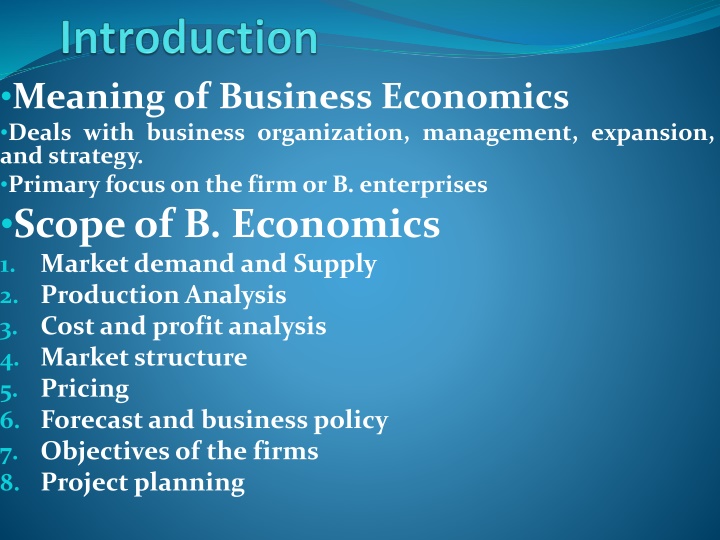
Meaning of Business Economics Deals with business organization, management, expansion, and strategy. Primary focuson the firm or B. enterprises Scopeof B. Economics 1. Marketdemand and Supply 2. Production Analysis 3. Costand profitanalysis 4. Marketstructure 5. Pricing 6. Forecastand businesspolicy 7. Objectivesof the firms 8. Projectplanning
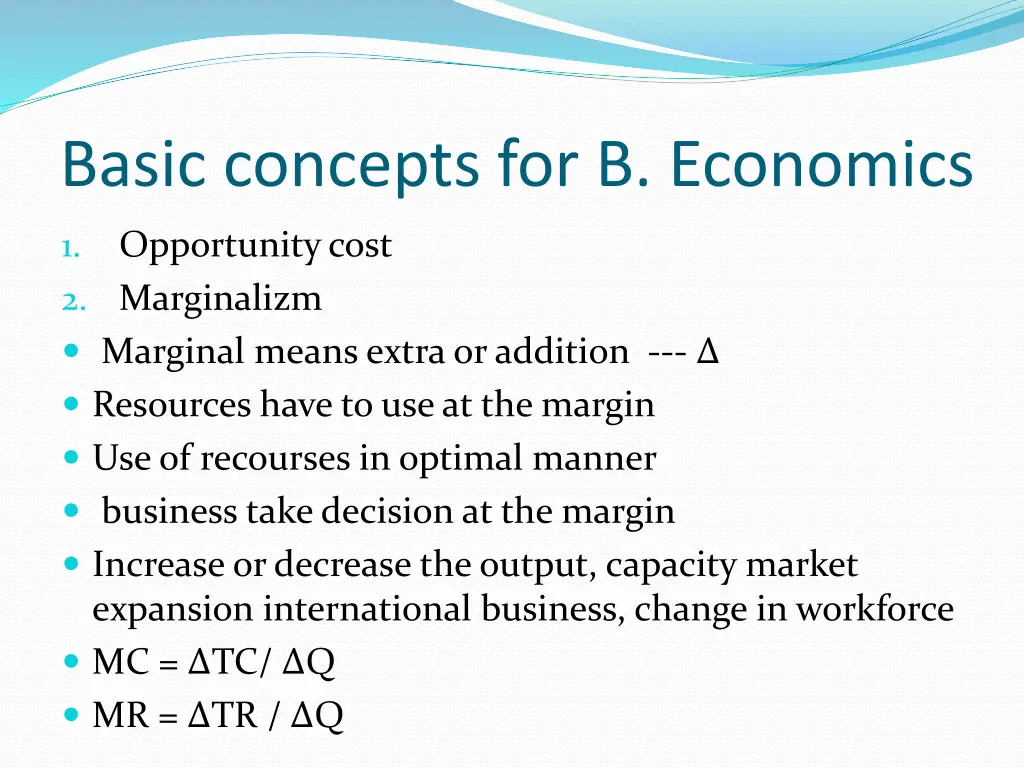
Basic concepts for B. Economics Opportunity cost 1. 2. Marginalizm Marginal means extra or addition --- Resources have to use at the margin Use of recourses in optimal manner business take decision at the margin Increase or decrease the output, capacity market expansion international business, change in workforce MC = TC/ Q MR = TR / Q
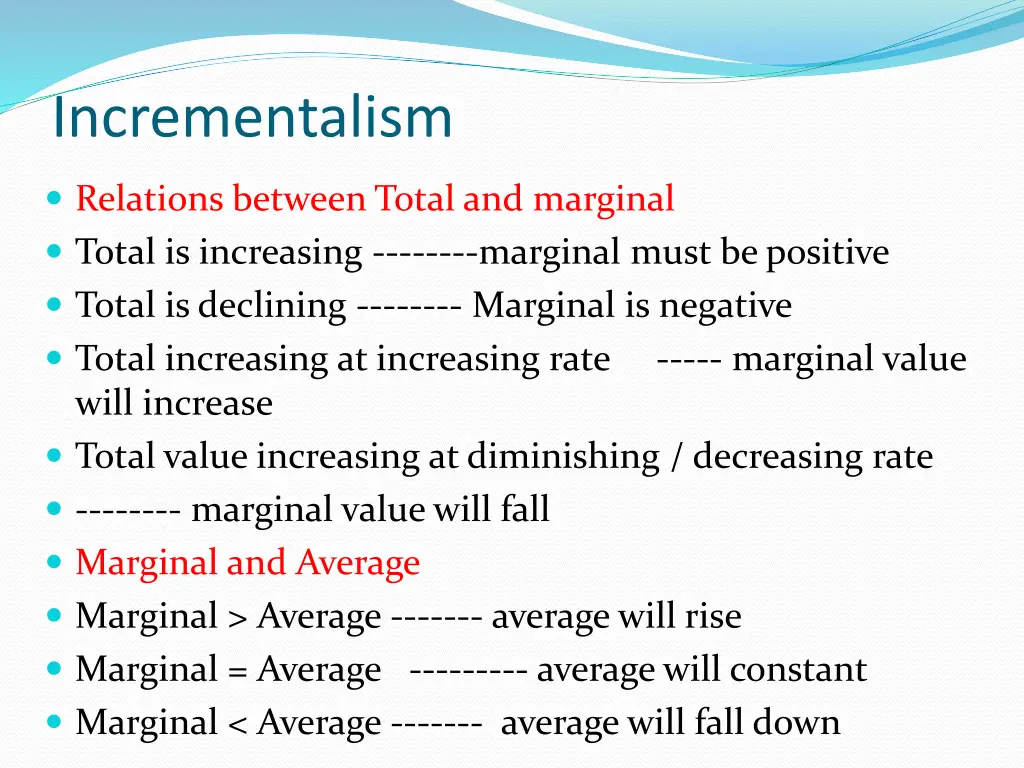
Incrementalism Relations between Total and marginal Total is increasing --------marginal must be positive Total is declining -------- Marginal is negative Total increasing at increasing rate ----- marginal value will increase Total value increasing at diminishing / decreasing rate -------- marginal value will fall Marginal and Average Marginal > Average ------- average will rise Marginal = Average --------- average will constant Marginal < Average ------- average will fall down
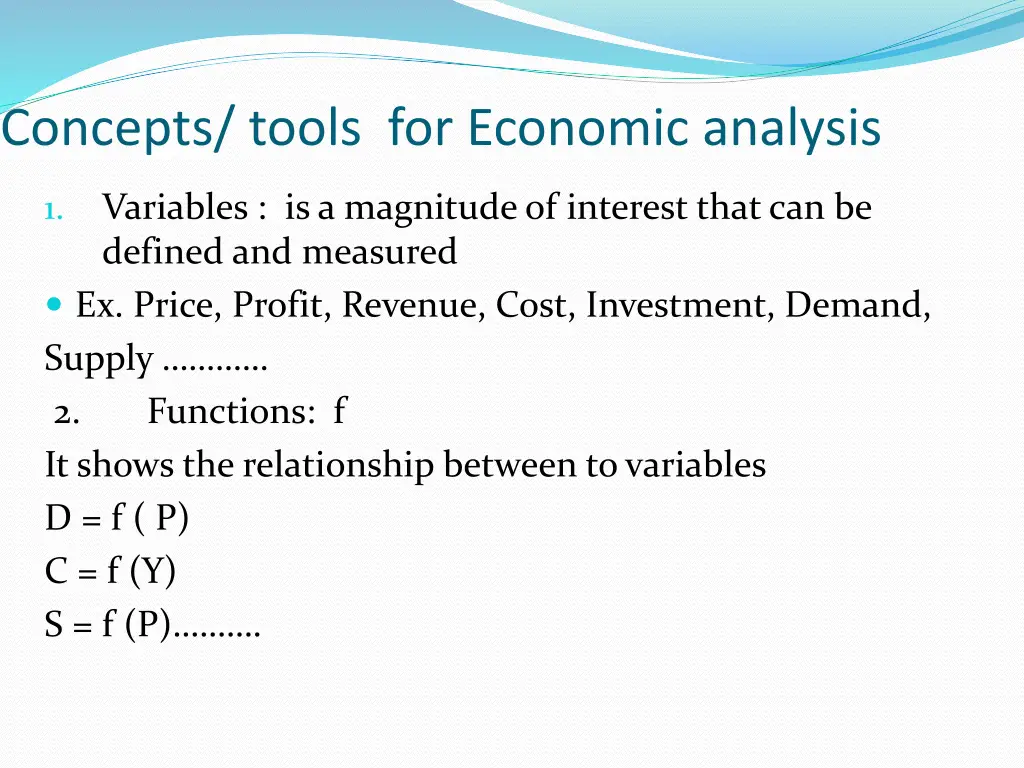
Concepts/ tools for Economic analysis Variables : is a magnitude of interest that can be defined and measured Ex. Price, Profit, Revenue, Cost, Investment, Demand, Supply 2. Functions: f It shows the relationship between to variables D = f ( P) C = f (Y) S = f (P) . 1.
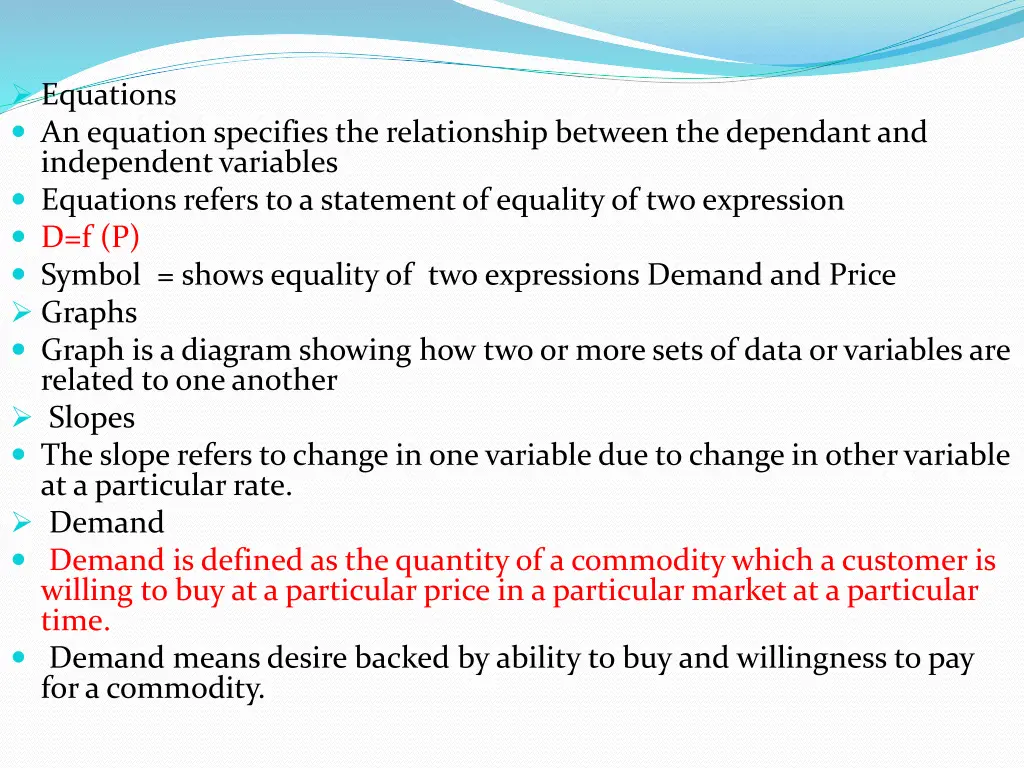
Equations An equation specifies the relationship between the dependant and independent variables Equations refers to a statement of equality of two expression D=f (P) Symbol = shows equality of two expressions Demand and Price Graphs Graph is a diagram showing how two or more sets of data or variables are related to one another Slopes The slope refers to change in one variable due to change in other variable at a particular rate. Demand Demand is defined as the quantity of a commodity which a customer is willing to buy at a particular price in a particular market at a particular time. Demand means desire backed by ability to buy and willingness to pay for a commodity.
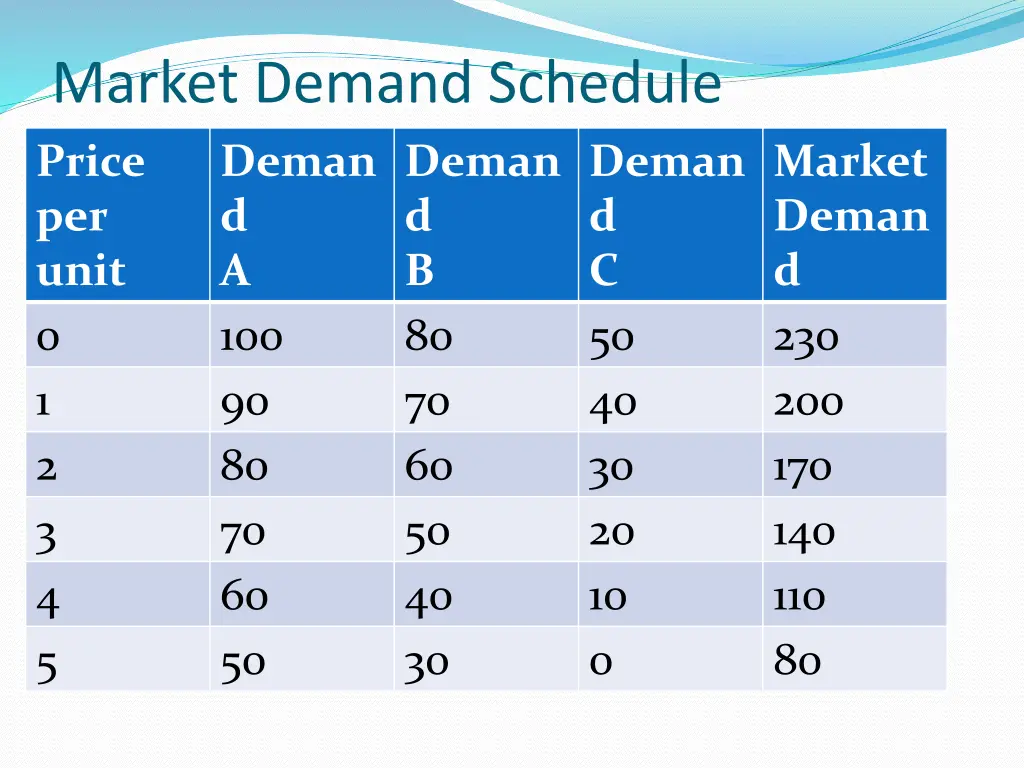
Market Demand Schedule Price per unit 0 1 2 3 4 5 Deman d A 100 90 80 70 60 50 Deman d B 80 70 60 50 40 30 Deman d C 50 40 30 20 10 0 Market Deman d 230 200 170 140 110 80
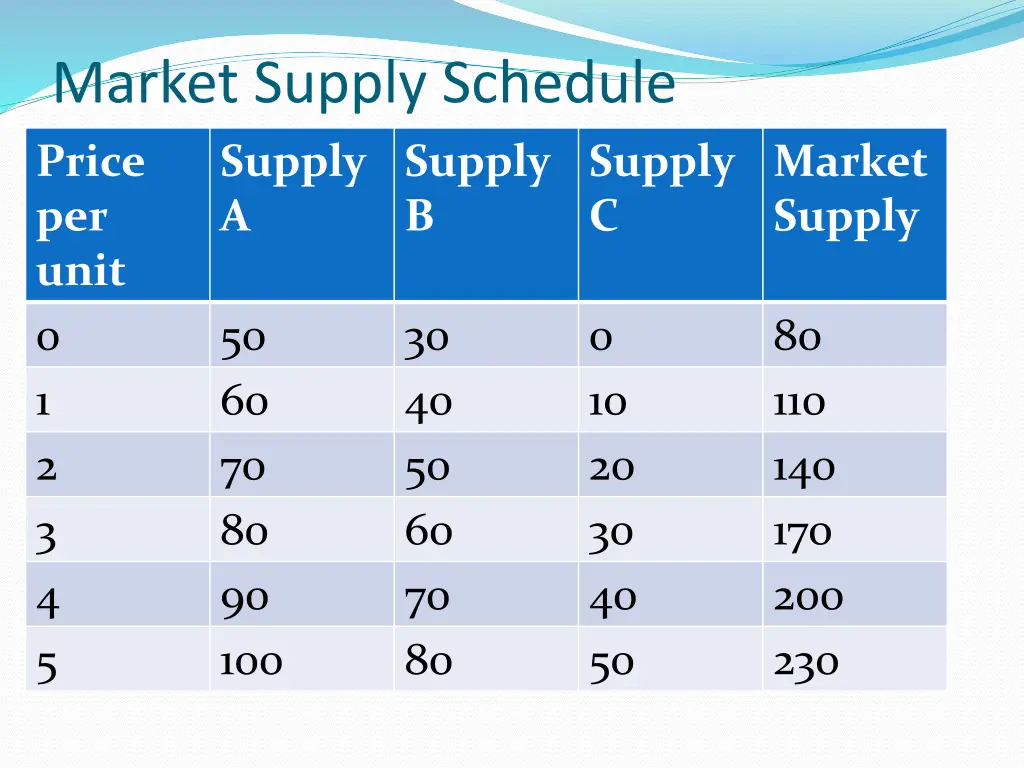
Market Supply Schedule Price per unit 0 1 2 3 4 5 Supply A Supply B Supply C Market Supply 50 60 70 80 90 100 30 40 50 60 70 80 0 10 20 30 40 50 80 110 140 170 200 230
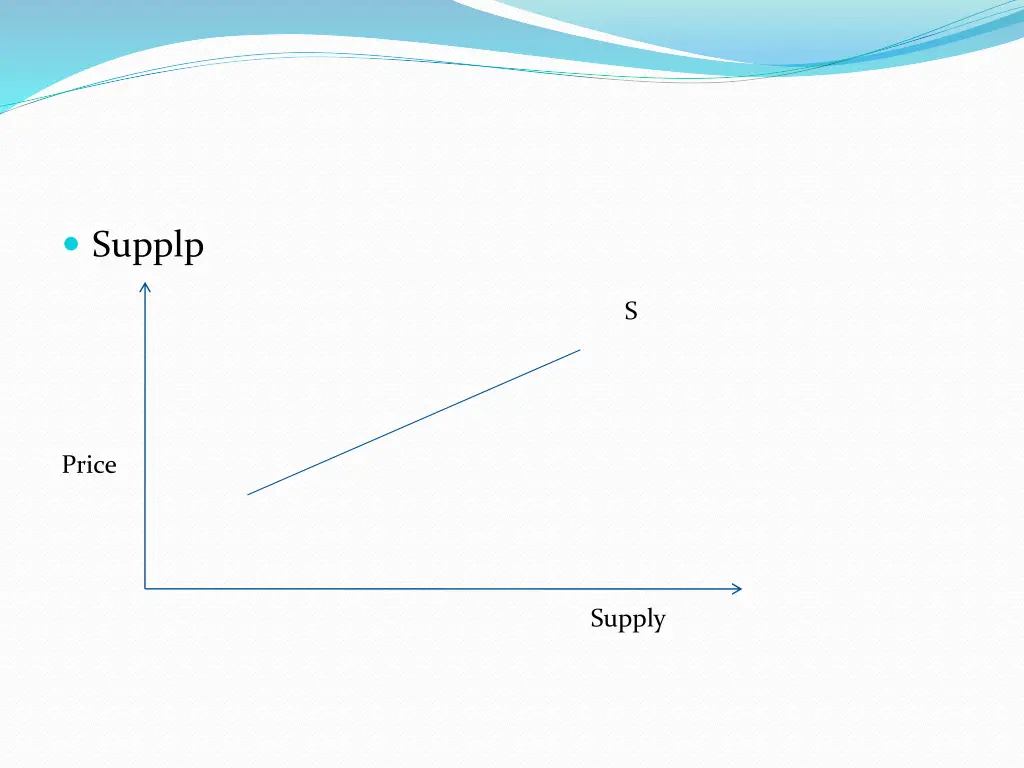
Supplp S Price Supply
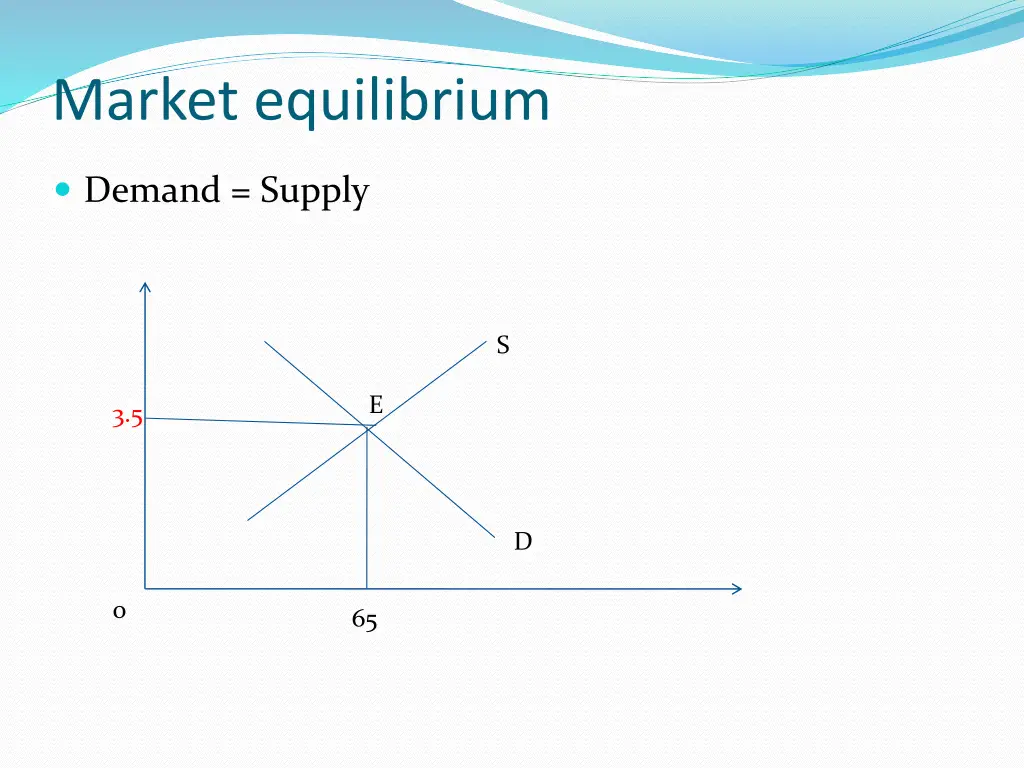
Market equilibrium Demand = Supply S E 3.5 D o 65
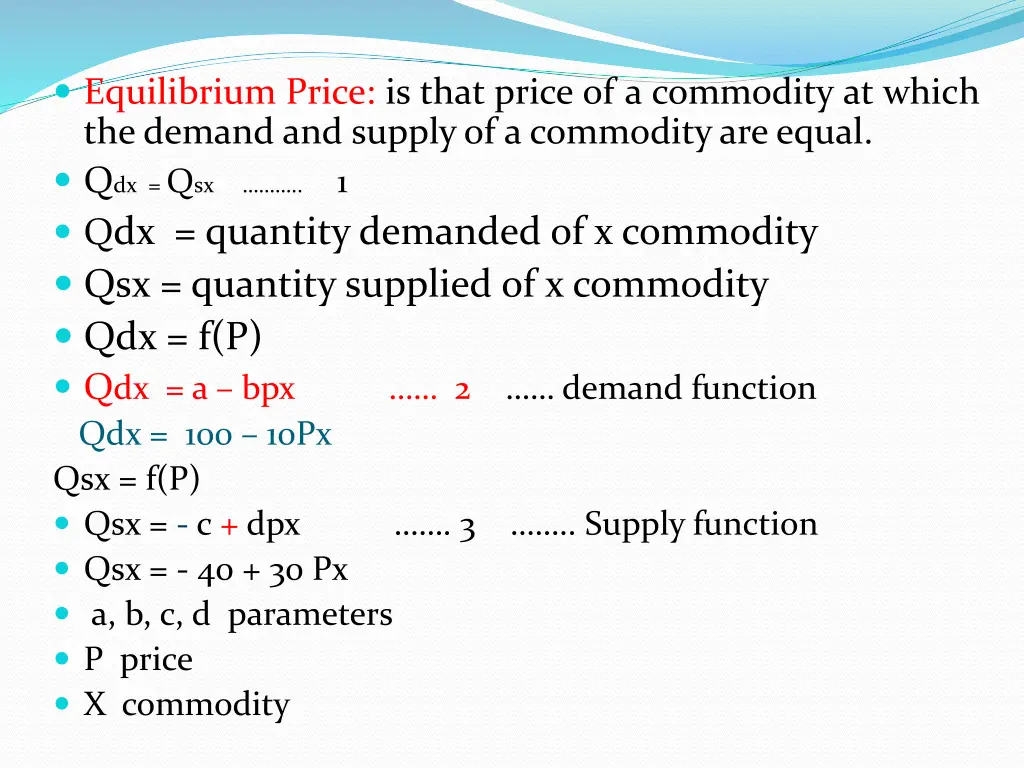
Equilibrium Price: is that price of a commodity at which the demand and supply of a commodity are equal. Qdx = Qsx .. 1 Qdx = quantity demanded of x commodity Qsx = quantity supplied of x commodity Qdx = f(P) Qdx = a bpx 2 demand function Qdx = 100 10Px Qsx = f(P) Qsx = - c + dpx . 3 .. Supply function Qsx = - 40 + 30 Px a, b, c, d parameters P price X commodity
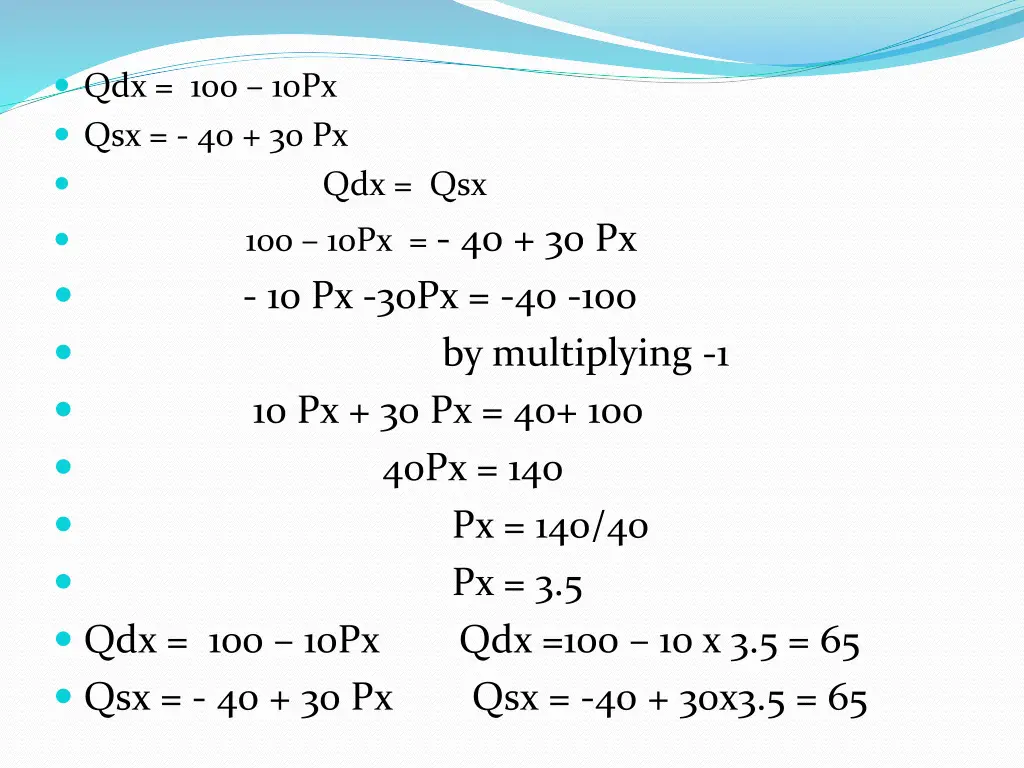
Qdx = 100 10Px Qsx = - 40 + 30 Px Qdx = Qsx 100 10Px = - 40 + 30 Px - 10 Px -30Px = -40 -100 by multiplying -1 10 Px + 30 Px = 40+ 100 40Px = 140 Px = 140/40 Px = 3.5 Qdx = 100 10Px Qdx =100 10 x 3.5 = 65 Qsx = - 40 + 30 Px Qsx = -40 + 30x3.5 = 65
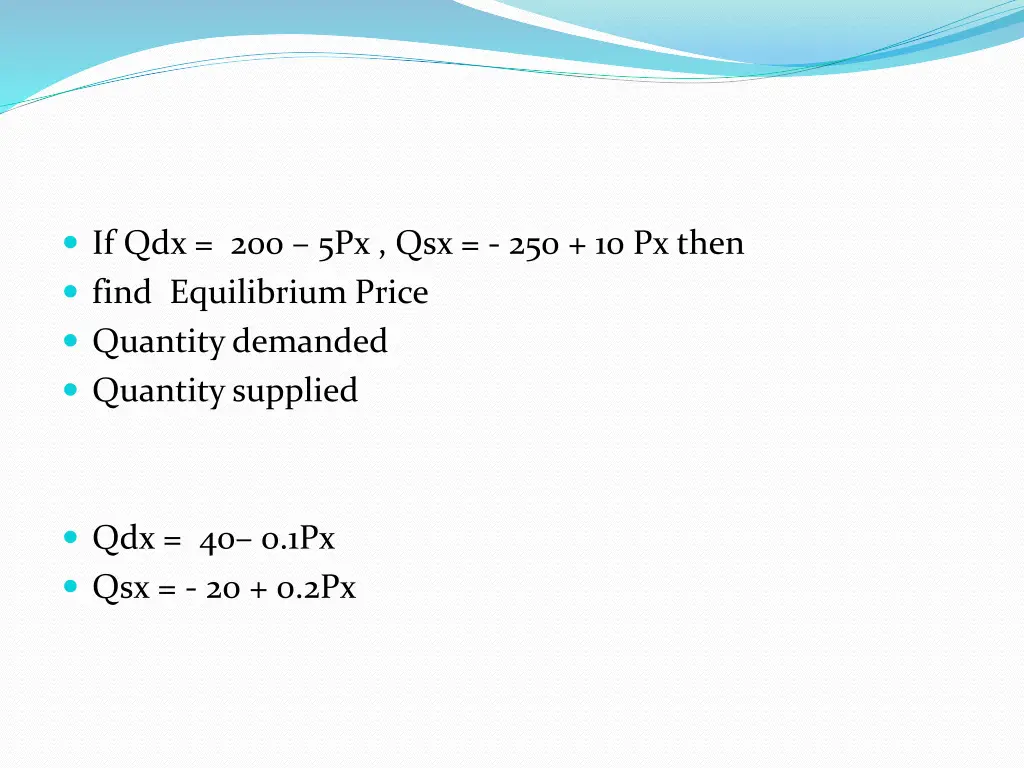
If Qdx = 200 5Px , Qsx = - 250 + 10 Px then find Equilibrium Price Quantity demanded Quantity supplied Qdx = 40 0.1Px Qsx = - 20 + 0.2Px
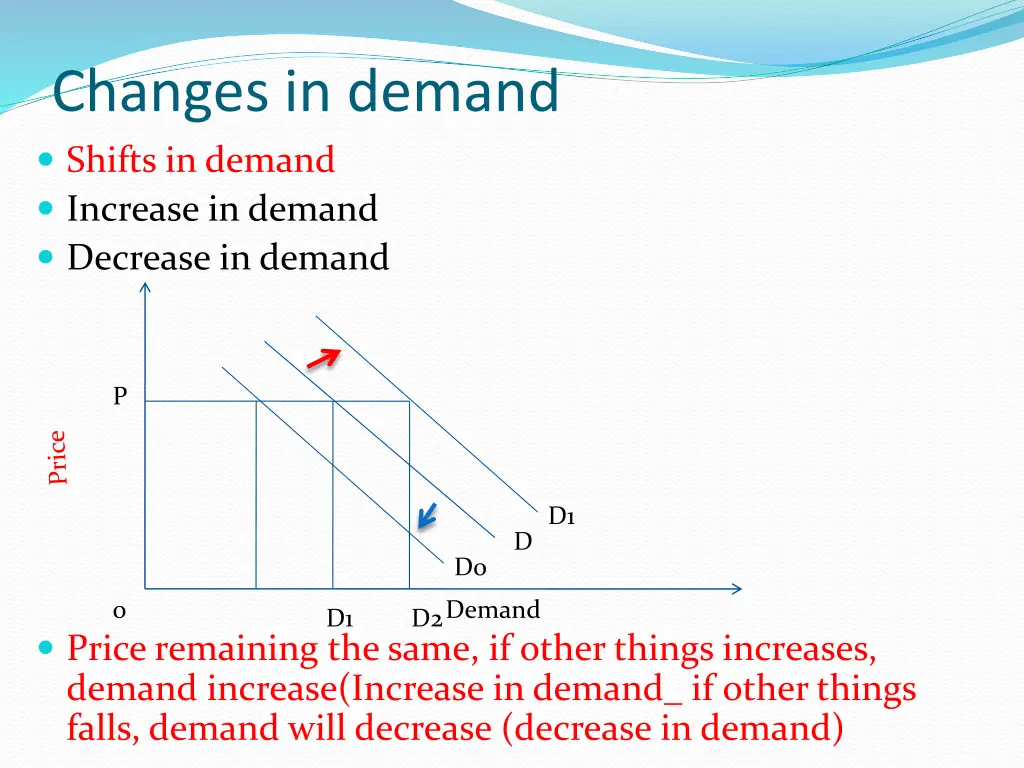
Changes in demand Shifts in demand Increase in demand Decrease in demand P D1 D D0 o Demand D1 D2 Price remaining the same, if other things increases, demand increase(Increase in demand_ if other things falls, demand will decrease (decrease in demand)
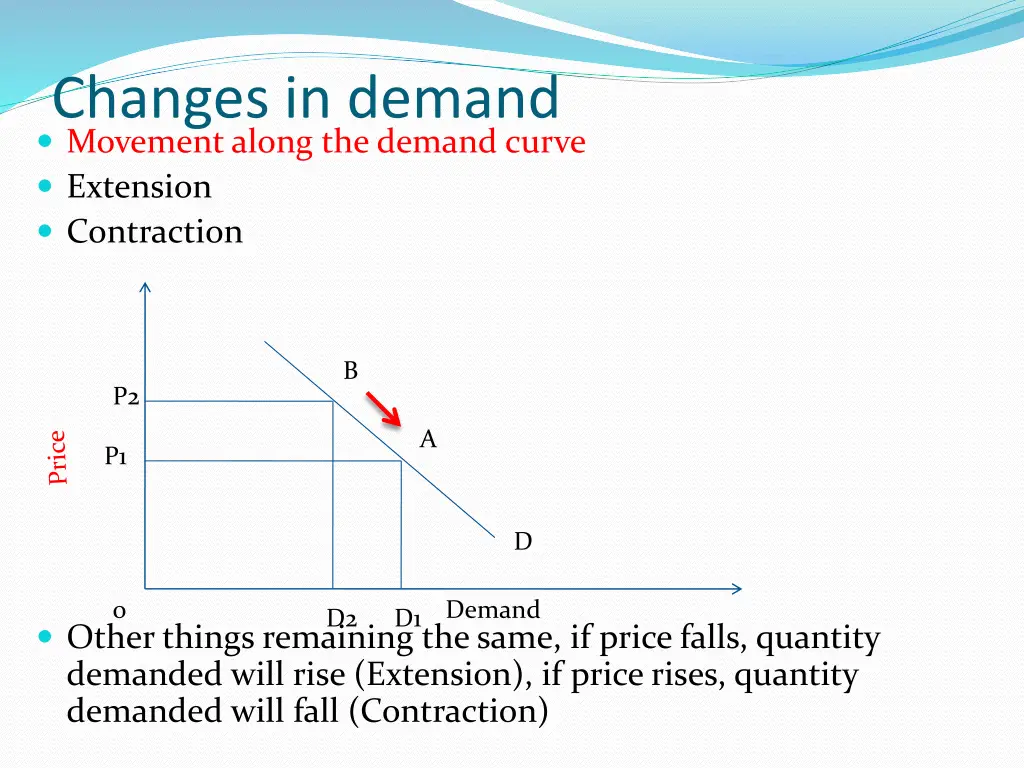
Changes in demand Movement along the demand curve Extension Contraction B P2 A P1 D o Demand D2 D1 Other things remaining the same, if price falls, quantity demanded will rise (Extension), if price rises, quantity demanded will fall (Contraction)
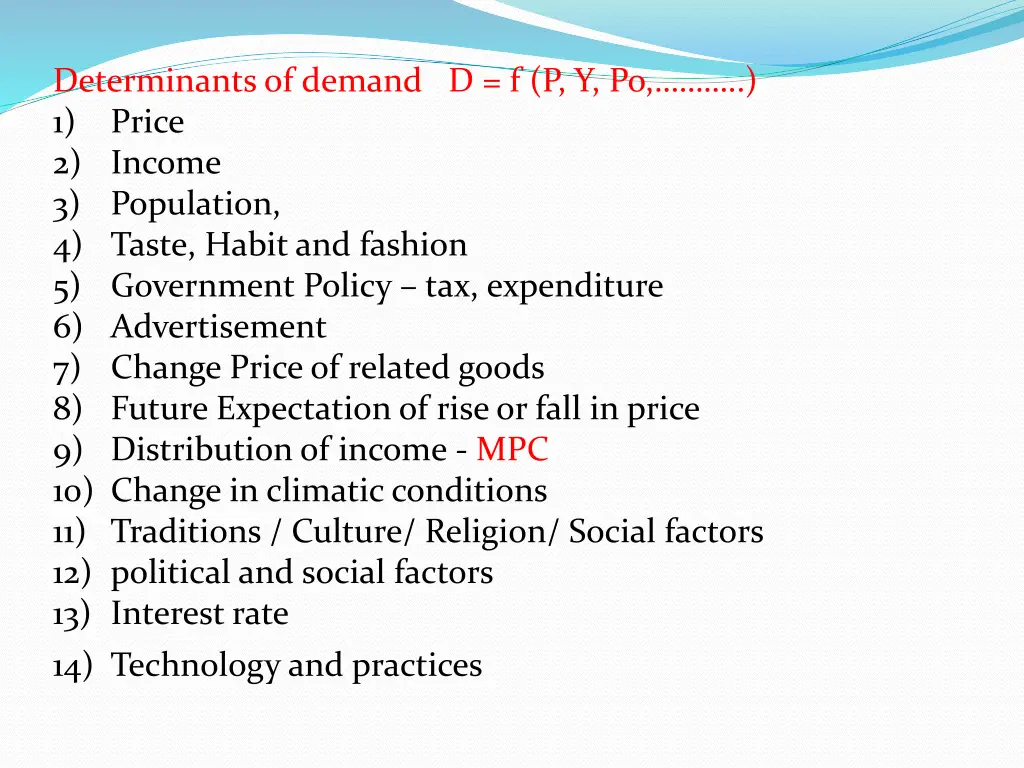
Determinants of demand D = f (P, Y, Po,..) 1) Price 2) Income 3) Population, 4) Taste, Habit and fashion 5) Government Policy tax, expenditure 6) Advertisement 7) Change Price of related goods 8) Future Expectation of rise or fall in price 9) Distribution of income - MPC 10) Change in climatic conditions 11) Traditions / Culture/ Religion/ Social factors 12) political and social factors 13) Interest rate 14) Technology and practices
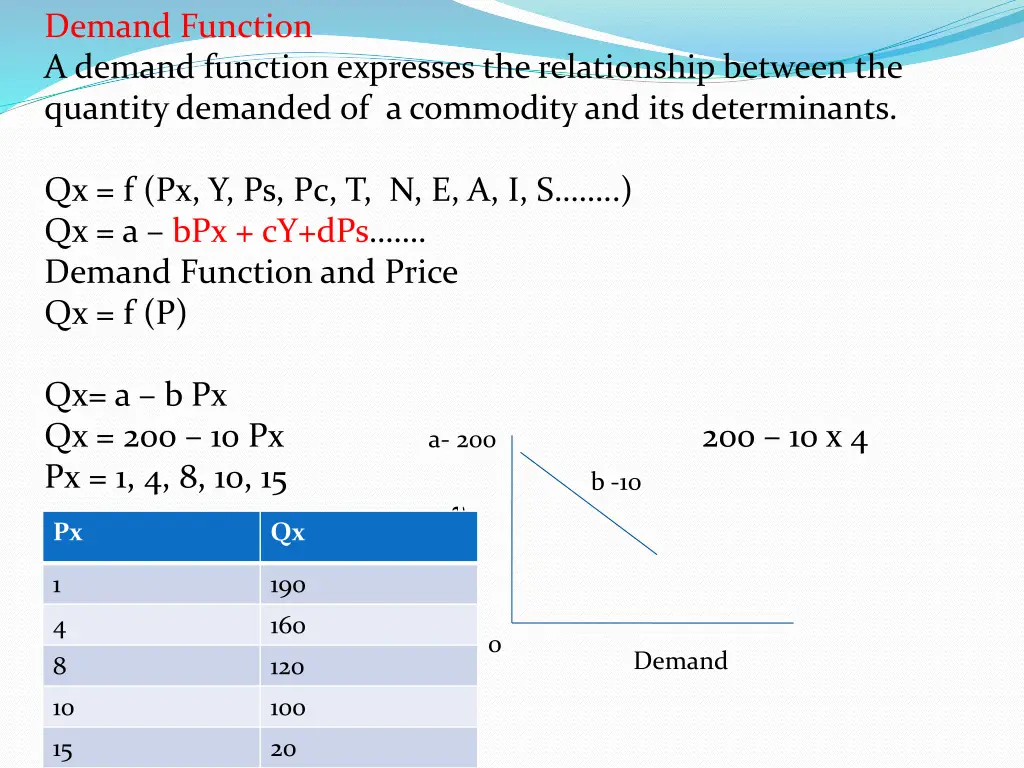
Demand Function A demand function expresses the relationship between the quantity demanded of a commodity and its determinants. Qx = f (Px, Y, Ps, Pc, T, N, E, A, I, S ..) Qx = a bPx + cY+dPs . Demand Function and Price Qx = f (P) Qx= a b Px Qx = 200 10 Px 200 10 x 4 Px = 1, 4, 8, 10, 15 Price 1 190 a- 200 b -10 Px Qx 4 160 0 Demand 8 120 10 100 15 20