Insights on Philosophy in Plautus' Works
Explore philosophical themes in Plautus' works focusing on the interaction between comedy and philosophy, identity, AI dangers, and more. Delve into thought-provoking ideas from Roman comedy and reflective dialogues intertwined with ancient philosophical perspectives.

Download Presentation

Please find below an Image/Link to download the presentation.
The content on the website is provided AS IS for your information and personal use only. It may not be sold, licensed, or shared on other websites without obtaining consent from the author. If you encounter any issues during the download, it is possible that the publisher has removed the file from their server.
You are allowed to download the files provided on this website for personal or commercial use, subject to the condition that they are used lawfully. All files are the property of their respective owners.
The content on the website is provided AS IS for your information and personal use only. It may not be sold, licensed, or shared on other websites without obtaining consent from the author.
E N D
Presentation Transcript
Philosophy in Plautus DAVID DE SALVO
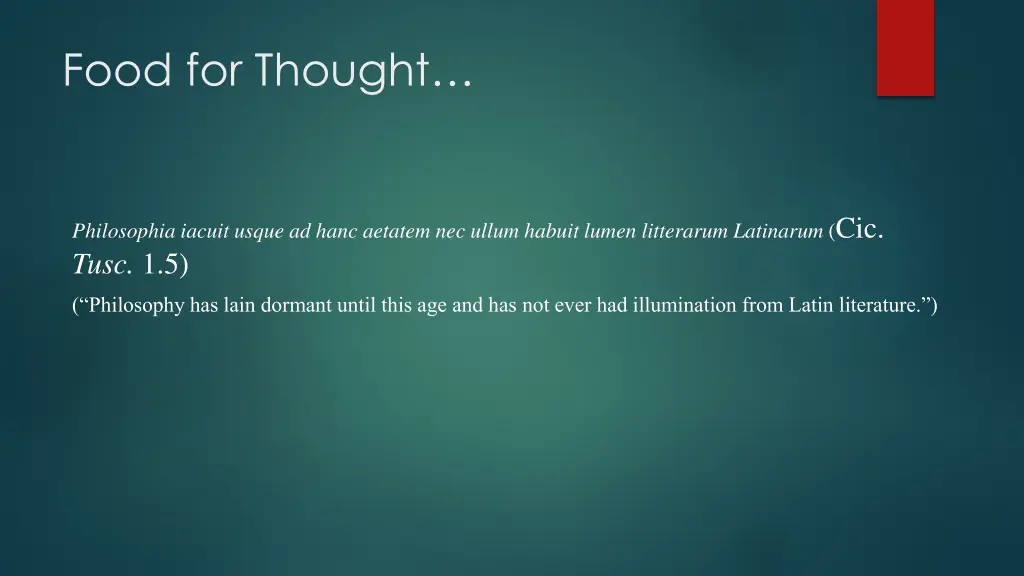
Food for Thought Philosophia iacuit usque ad hanc aetatem nec ullum habuit lumen litterarum Latinarum (Cic. Tusc. 1.5) ( Philosophy has lain dormant until this age and has not ever had illumination from Latin literature. )
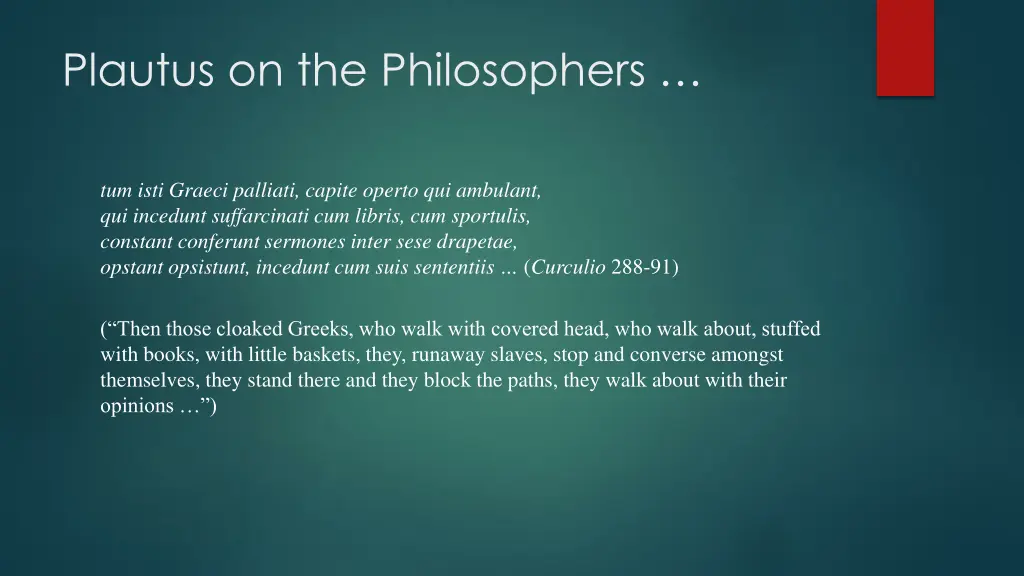
Plautus on the Philosophers tum isti Graeci palliati, capite operto qui ambulant, qui incedunt suffarcinati cum libris, cum sportulis, constant conferunt sermones inter sese drapetae, opstant opsistunt, incedunt cum suis sententiis (Curculio 288-91) ( Then those cloaked Greeks, who walk with covered head, who walk about, stuffed with books, with little baskets, they, runaway slaves, stop and converse amongst themselves, they stand there and they block the paths, they walk about with their opinions )
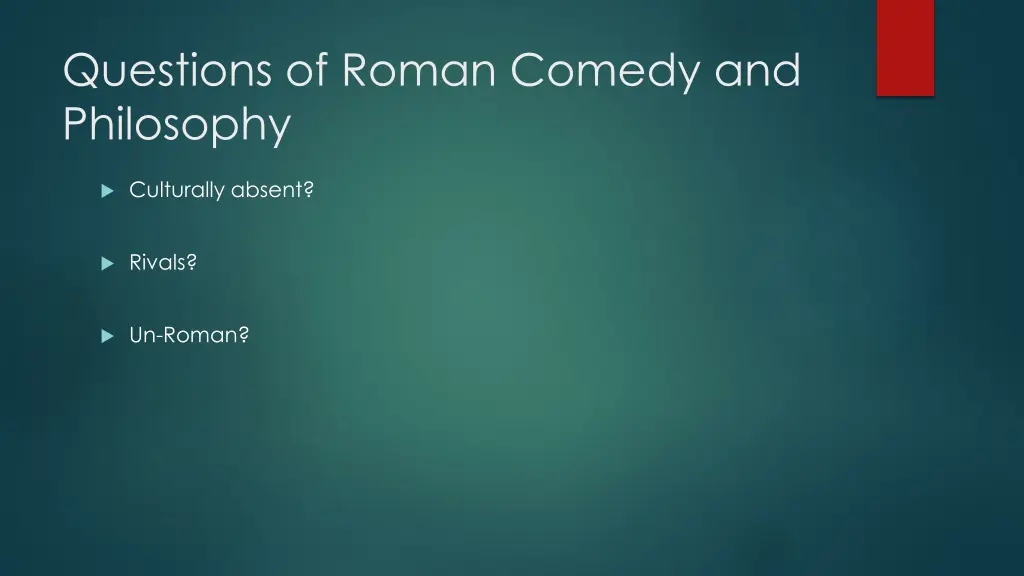
Questions of Roman Comedy and Philosophy Culturally absent? Rivals? Un-Roman?
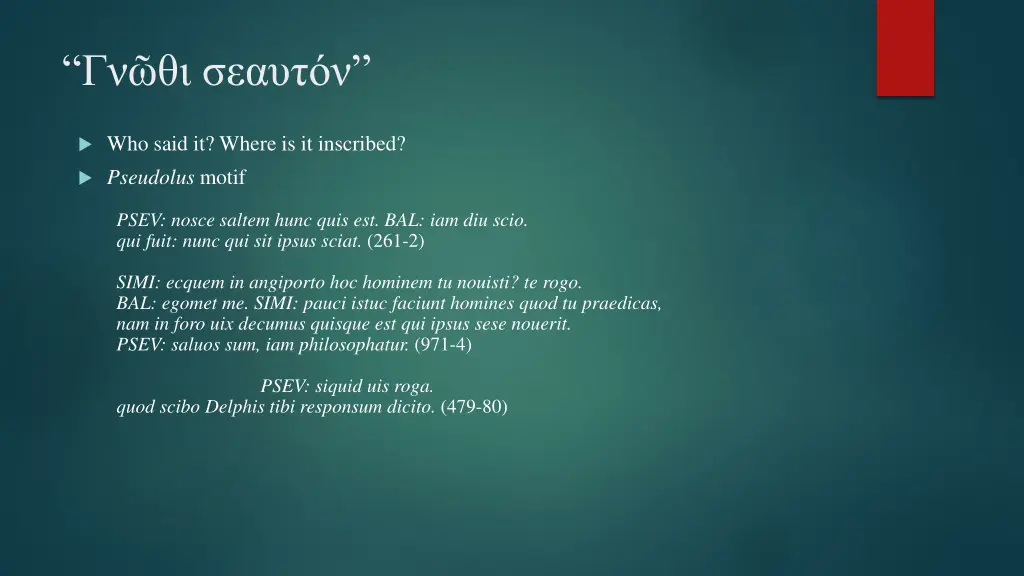
Who said it? Where is it inscribed? Pseudolus motif PSEV: nosce saltem hunc quis est. BAL: iam diu scio. qui fuit: nunc qui sit ipsus sciat. (261-2) SIMI: ecquem in angiporto hoc hominem tu nouisti? te rogo. BAL: egomet me. SIMI: pauci istuc faciunt homines quod tu praedicas, nam in foro uix decumus quisque est qui ipsus sese nouerit. PSEV: saluos sum, iam philosophatur. (971-4) PSEV: siquid uis roga. quod scibo Delphis tibi responsum dicito. (479-80)
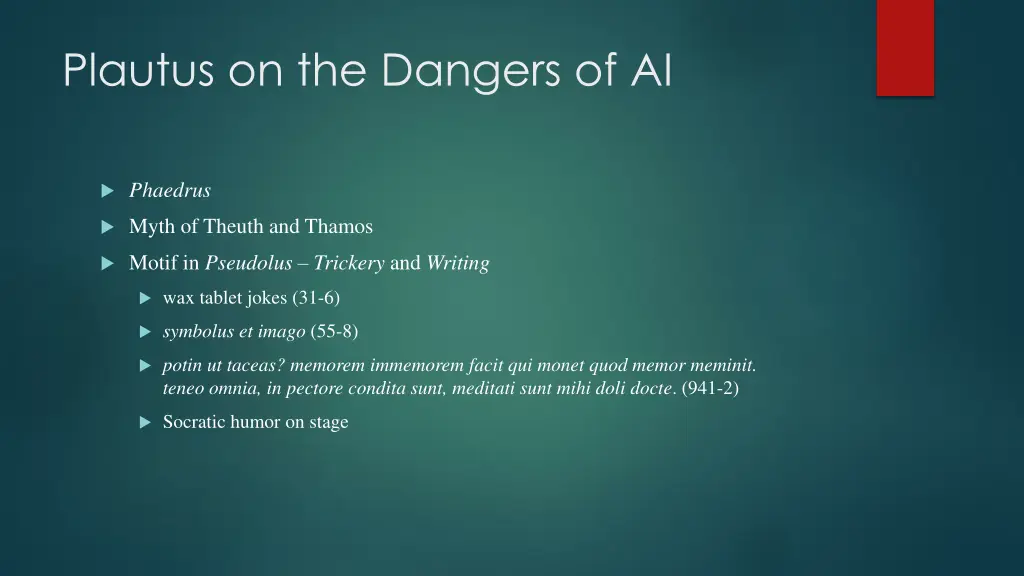
Plautus on the Dangers of AI Phaedrus Myth of Theuth and Thamos Motif in Pseudolus Trickery and Writing wax tablet jokes (31-6) symbolus et imago (55-8) potin ut taceas? memorem immemorem facit qui monet quod memor meminit. teneo omnia, in pectore condita sunt, meditati sunt mihi doli docte. (941-2) Socratic humor on stage
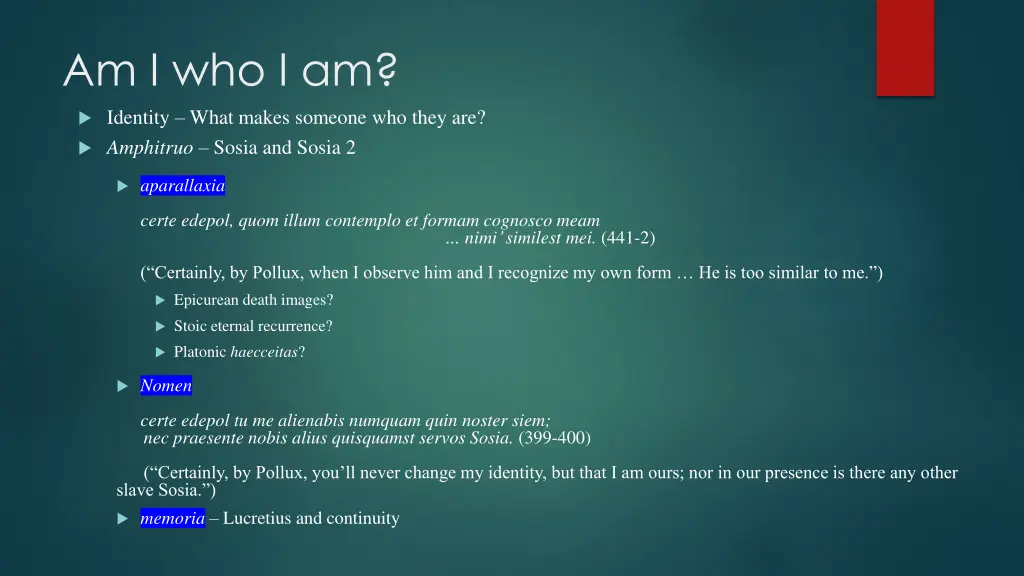
Am I who I am? Identity What makes someone who they are? Amphitruo Sosia and Sosia 2 aparallaxia certe edepol, quom illum contemplo et formam cognosco meam nimi similest mei. (441-2) ( Certainly, by Pollux, when I observe him and I recognize my own form He is too similar to me. ) Epicurean death images? Stoic eternal recurrence? Platonic haecceitas? Nomen certe edepol tu me alienabis numquam quin noster siem; nec praesente nobis alius quisquamst servos Sosia. (399-400) ( Certainly, by Pollux, you ll never change my identity, but that I am ours; nor in our presence is there any other slave Sosia. ) memoria Lucretius and continuity
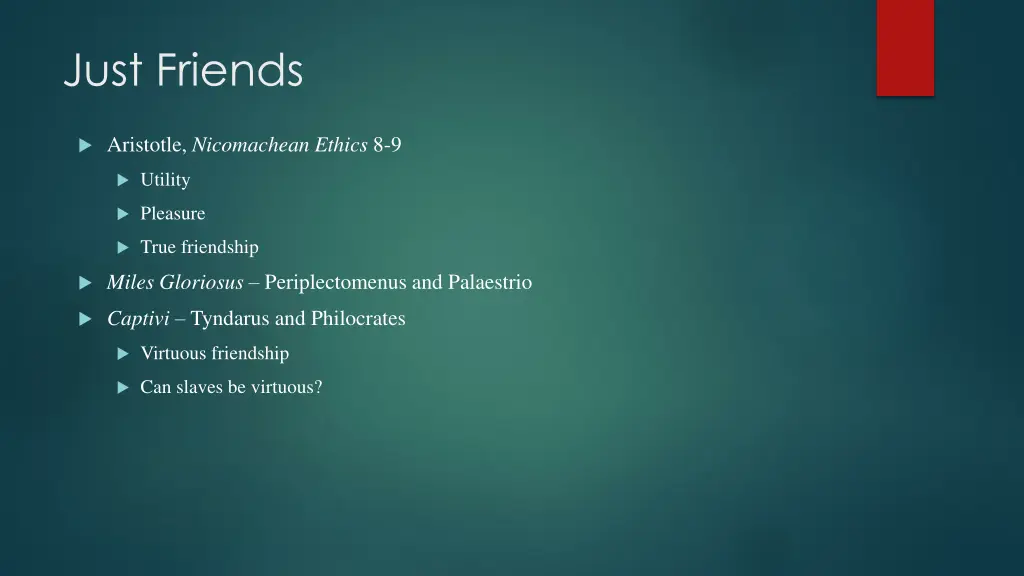
Just Friends Aristotle, Nicomachean Ethics 8-9 Utility Pleasure True friendship Miles Gloriosus Periplectomenus and Palaestrio Captivi Tyndarus and Philocrates Virtuous friendship Can slaves be virtuous?
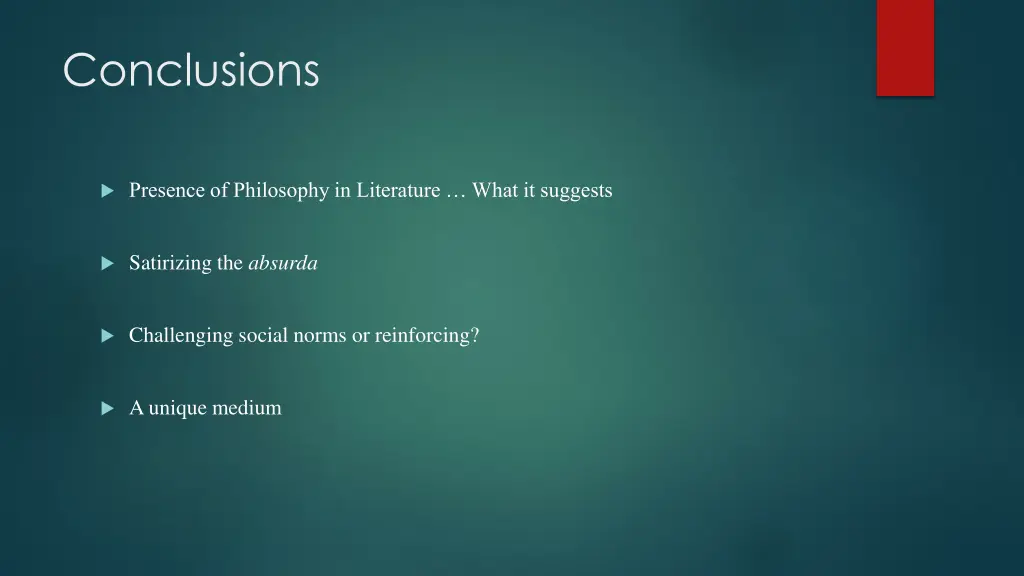
Conclusions Presence of Philosophy in Literature What it suggests Satirizing the absurda Challenging social norms or reinforcing? A unique medium
Bibliography Caston, R. 2014. The Divided Self: Plautus and Terence on Identity and Impersonation. In Plautine Trends: Studies in Plautine Comedy and its Reception, eds. I.N. Perysinakis and E. Karakasis, 43-61. Berlin: De Gruyter. Caston, R. 2021. Friends without Benefits? Philosophical Dimensions of Plautus Conception of Friendship. In Plautus Erudite Comedy: New Insights into the Work of a doctus poeta, eds. S. Papaioannou and C. Demetriou, 175-93. Newcastle upon Tyne: Cambridge Scholars. Dutsch, D. 2014. The Beginnings: Philosophy in Roman Literature before 155 BCE. In The Philosophizing Muse: The Influence of Greek Philosophy on Roman Poetry, eds. M. Garani and D. Konstan, 1-25. Newcastle upon Tyne: Cambridge Scholars. Hunter, Richard L. 1985. The New Comedy of Greece and Rome. Cambridge: Cambridge University Press. McCarthy, K. 2000. Slaves, Masters, and the Art of Authority in Plautus. Princeton: Princeton University Press. van den Berg, C. 2021. Phaedrus in the Forum: Plautus Pseudolus and Plato s Phaedrus. In Latin Poetry and its Reception: Essays for Susanna Braund, ed. C. W. Marshall, 91-106. London: Routledge.