Explore the impact of interactive visualization versus static visualization, discussing benefits like improved cognition and support for big data analyses, while also considering drawbacks like potential biases and subjective influences. Various studies are referenced to provide a detailed overview of the topic.
Please find below an Image/Link to download the presentation.
The content on the website is provided AS IS for your information and personal use only. It may not be sold, licensed, or shared on other websites without obtaining consent from the author. If you encounter any issues during the download, it is possible that the publisher has removed the file from their server.
You are allowed to download the files provided on this website for personal or commercial use, subject to the condition that they are used lawfully. All files are the property of their respective owners.
The content on the website is provided AS IS for your information and personal use only. It may not be sold, licensed, or shared on other websites without obtaining consent from the author.
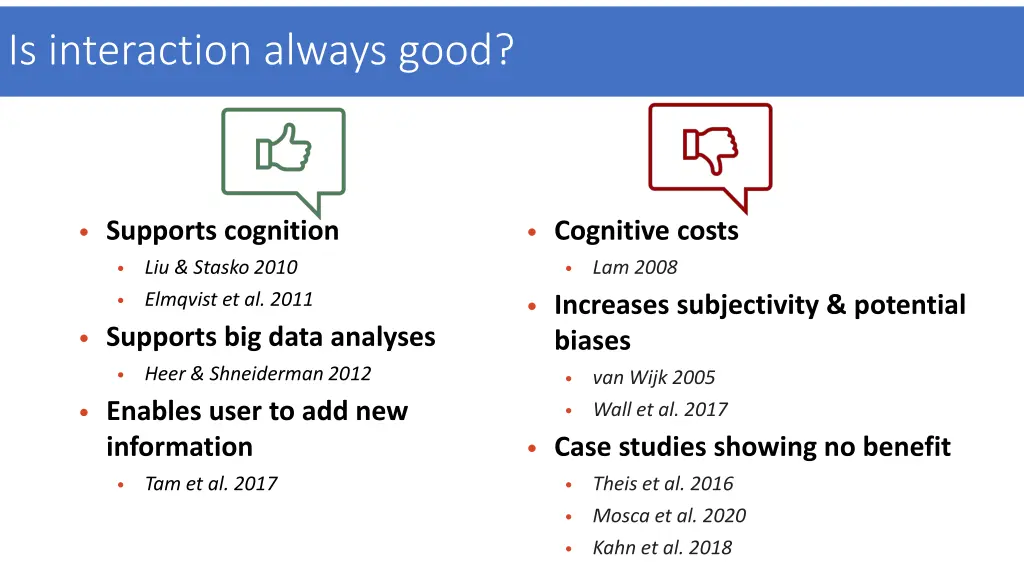
Is interaction always good? Supports cognition Cognitive costs Liu & Stasko 2010 Elmqvist et al. 2011 Lam 2008 Increases subjectivity & potential biases Supports big data analyses Heer & Shneiderman 2012 van Wijk 2005 Wall et al. 2017 Enables user to add new information Case studies showing no benefit Tam et al. 2017 Theis et al. 2016 Mosca et al. 2020 Kahn et al. 2018
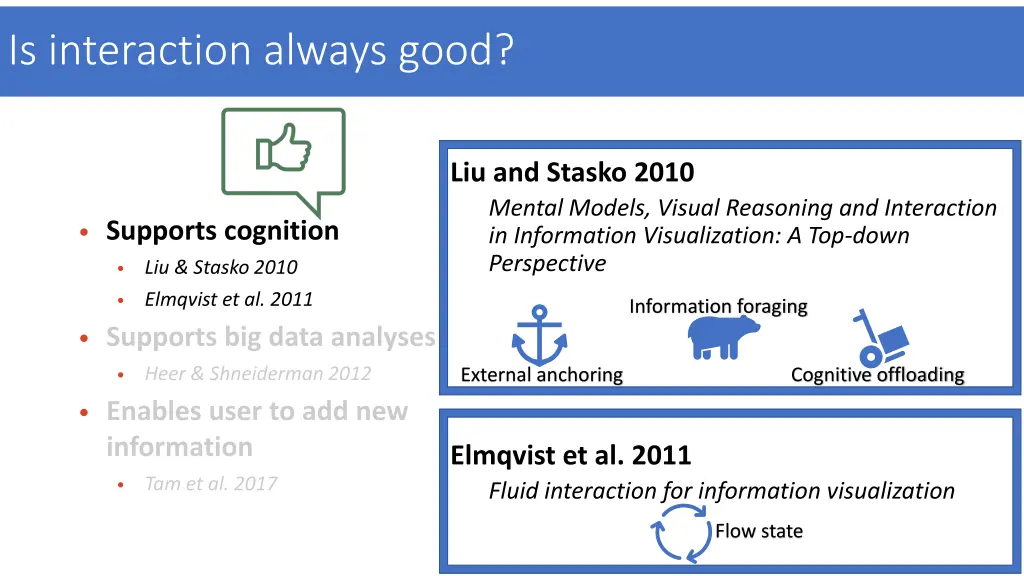
Is interaction always good? Liu and Stasko 2010 Mental Models, Visual Reasoning and Interaction in Information Visualization: A Top-down Perspective Supports cognition Liu & Stasko 2010 Elmqvist et al. 2011 Information foraging External anchoring Cognitive offloading Elmqvist et al. 2011 Fluid interaction for information visualization Flow state
Is interaction always good? Heer & Shneiderman 2012 Interactive Dynamics for Visual Analysis view creation View creation Supports big data analyses Heer & Shneiderman 2012 refinement Refinement exploration Exploration
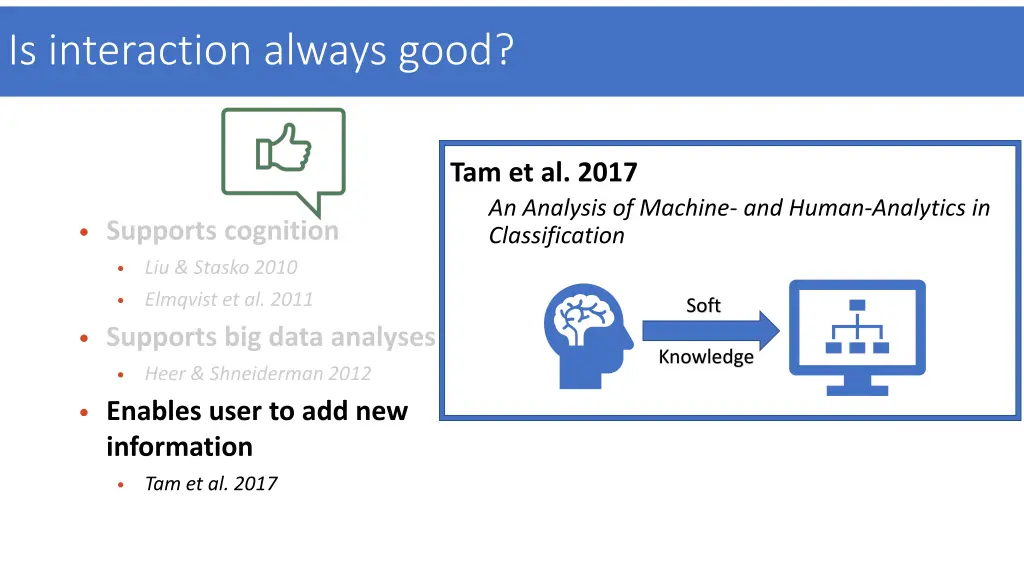
Is interaction always good? Tam et al. 2017 An Analysis of Machine- and Human-Analytics in Classification Soft Knowledge Enables user to add new information Tam et al. 2017
Is interaction always good? Lam 2008 A Framework of Interaction Costs in Information Visualization Cognitive costs Lam 2008
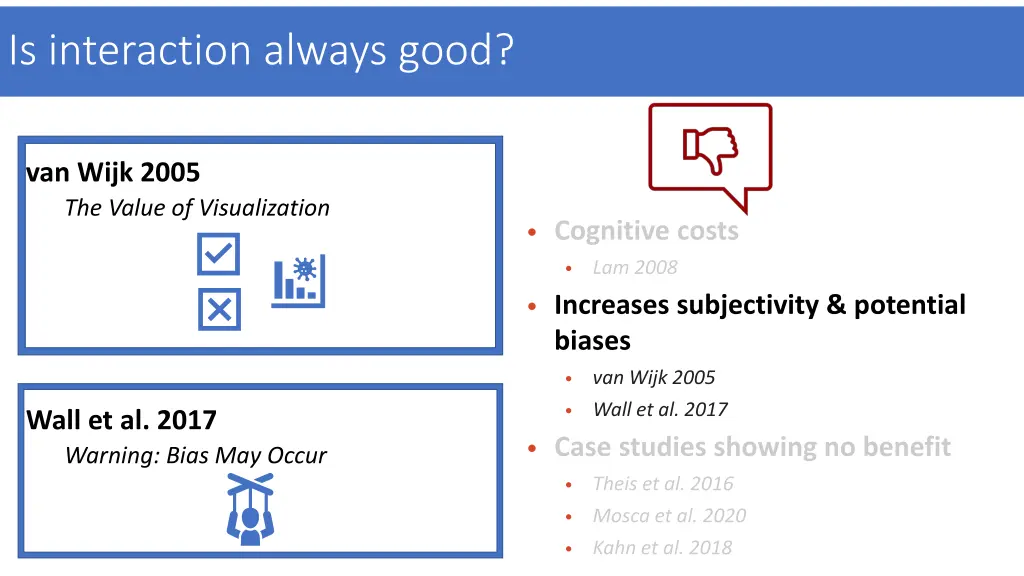
Is interaction always good? van Wijk 2005 The Value of Visualization Increases subjectivity & potential biases van Wijk 2005 Wall et al. 2017 Wall et al. 2017 Warning: Bias May Occur
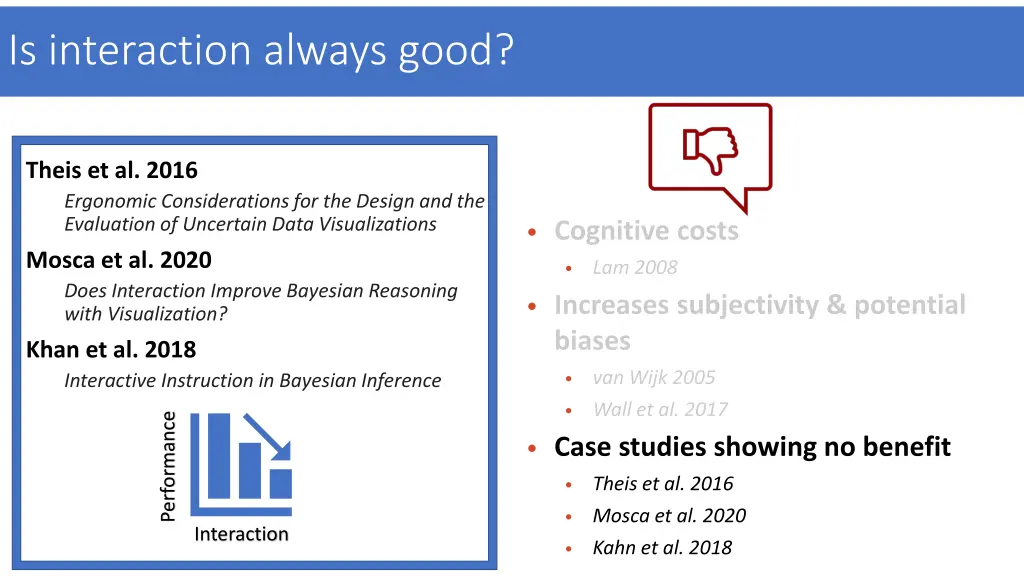
Is interaction always good? Theis et al. 2016 Ergonomic Considerations for the Design and the Evaluation of Uncertain Data Visualizations Mosca et al. 2020 Does Interaction Improve Bayesian Reasoning with Visualization? Khan et al. 2018 Interactive Instruction in Bayesian Inference Performance Case studies showing no benefit Theis et al. 2016 Mosca et al. 2020 Kahn et al. 2018 Interaction
Is interaction always good? Supports cognition Cognitive costs Liu & Stasko 2010 Elmqvist et al. 2011 Lam 2008 Increases subjectivity & potential biases Supports big data analyses Heer & Shneiderman 2012 van Wijk 2005 Wall et al. 2017 Enables user to add new information Case studies showing no benefit Tam et al. 2017 Theis et al. 2016 Mosca et al. 2020 Kahn et al. 2018
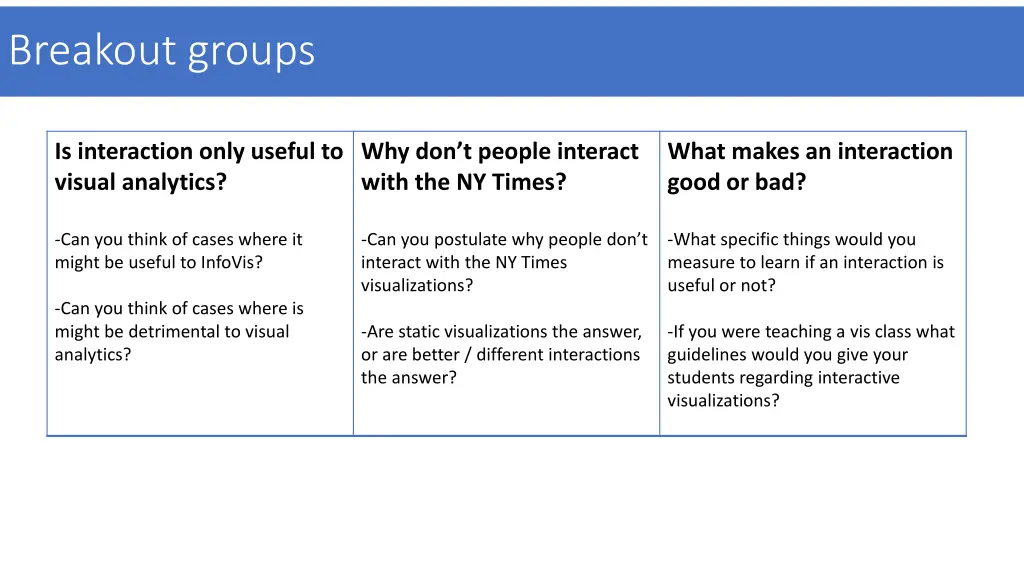
Breakout groups Is interaction only useful to visual analytics? Why don t people interact with the NY Times? What makes an interaction good or bad? -Can you think of cases where it might be useful to InfoVis? -Can you postulate why people don t interact with the NY Times visualizations? -What specific things would you measure to learn if an interaction is useful or not? -Can you think of cases where is might be detrimental to visual analytics? -Are static visualizations the answer, or are better / different interactions the answer? -If you were teaching a vis class what guidelines would you give your students regarding interactive visualizations?
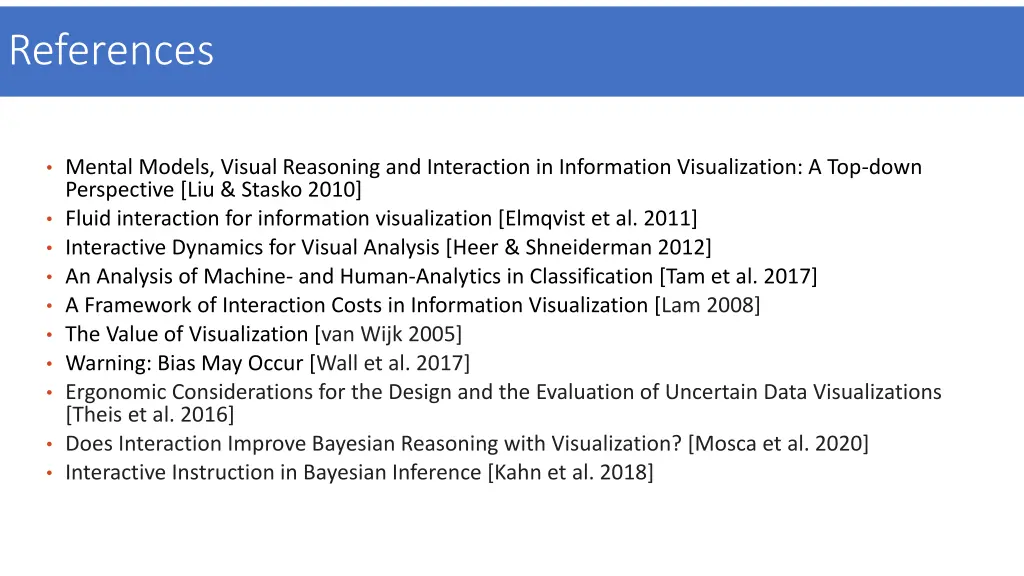
References Mental Models, Visual Reasoning and Interaction in Information Visualization: A Top-down Perspective [Liu & Stasko 2010] Fluid interaction for information visualization [Elmqvist et al. 2011] Interactive Dynamics for Visual Analysis [Heer & Shneiderman 2012] An Analysis of Machine- and Human-Analytics in Classification [Tam et al. 2017] A Framework of Interaction Costs in Information Visualization [Lam 2008] The Value of Visualization [van Wijk 2005] Warning: Bias May Occur [Wall et al. 2017] Ergonomic Considerations for the Design and the Evaluation of Uncertain Data Visualizations [Theis et al. 2016] Does Interaction Improve Bayesian Reasoning with Visualization? [Mosca et al. 2020] Interactive Instruction in Bayesian Inference [Kahn et al. 2018]