Internet Security Risks and Protection Guidelines
Safeguarding personal information and devices is crucial in the digital age to mitigate threats like identity theft, malware, and phishing scams. Learn about computer and internet security, including tips for securing mobile devices and social networks.

Download Presentation

Please find below an Image/Link to download the presentation.
The content on the website is provided AS IS for your information and personal use only. It may not be sold, licensed, or shared on other websites without obtaining consent from the author. If you encounter any issues during the download, it is possible that the publisher has removed the file from their server.
You are allowed to download the files provided on this website for personal or commercial use, subject to the condition that they are used lawfully. All files are the property of their respective owners.
The content on the website is provided AS IS for your information and personal use only. It may not be sold, licensed, or shared on other websites without obtaining consent from the author.
E N D
Presentation Transcript
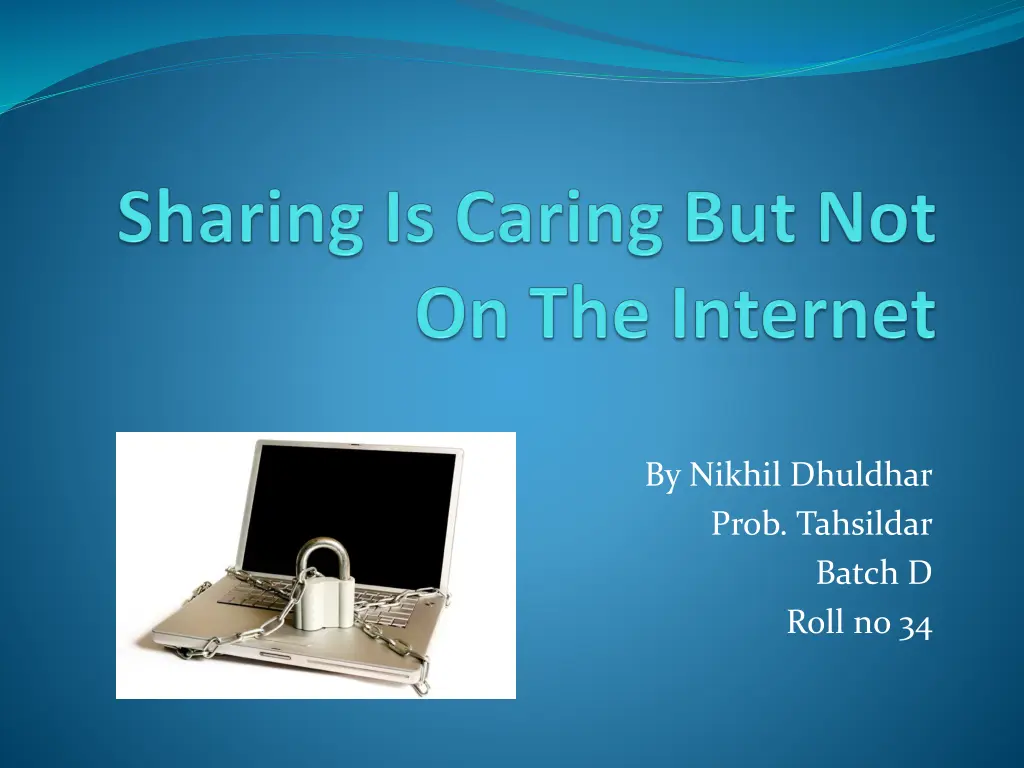
By Nikhil Dhuldhar Prob. Tahsildar Batch D Roll no 34
The more people who have access to personal information like what you look like, who your friends are and what your habits are, the bigger the risks are. One 2018 Harris Poll online survey put the number of Americans affected by identity theft at around 60 million, meaning that it is more important than ever to monitor and control privacy.
Todays Discussion Overview of Computer and Internet Security 1) 2) What is Computer and Internet Security 3) Who Should be Concerned 4) Why Should I Care 5) General Security Tips 6) Securing Mobile Devices and Social Networks 7) Mobile Devices Risks 8) How are Location Sharing Technologies used Risks of Location Sharing Technologies Examples of Location Sharing Technologies
What is Computer, Our and Internet Security Computer and our Security 1) 2) Protecting ourselves, computers, information, and services from unauthorized access, change or destruction. 3) Internet and our security extends this concept to systems that are connected to the Internet Browsing the Internet Electronic Commerce Social Networking Emailing
Who Should be concerned Anyone who uses Computers 1) 2) Mobile Devices 3) The Internet 4) Email 5) Social Networks
Why Should I Care? Infections from viruses, spyware, or malware Virus - Program designed to infect your computer, replicates itself , and usually causes lost or corrupt data Spyware is a type of malicious code that tracks your habits on the internet without you knowing it; usually collects personal information
Why Should I Care.. Contd Phishing, Hoaxes, Malware, Scams and Spam The most prevalent and persistent threats to your security come to you in your Inbox. They come by different names and may even appear legitimate and even supposedly from people you may know. They all have this in common: they are designed to get you to click on an item like an attachment, link or picture.
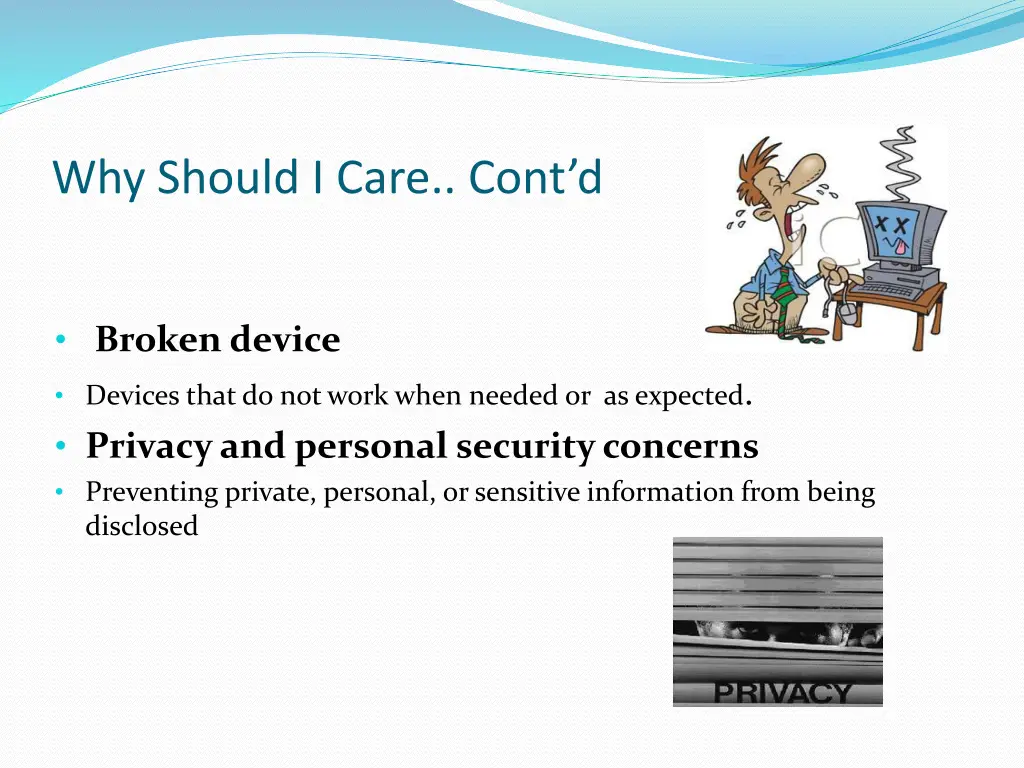
Why Should I Care.. Contd Broken device Devices that do not work when needed or as expected. Privacy and personal security concerns Preventing private, personal, or sensitive information from being disclosed
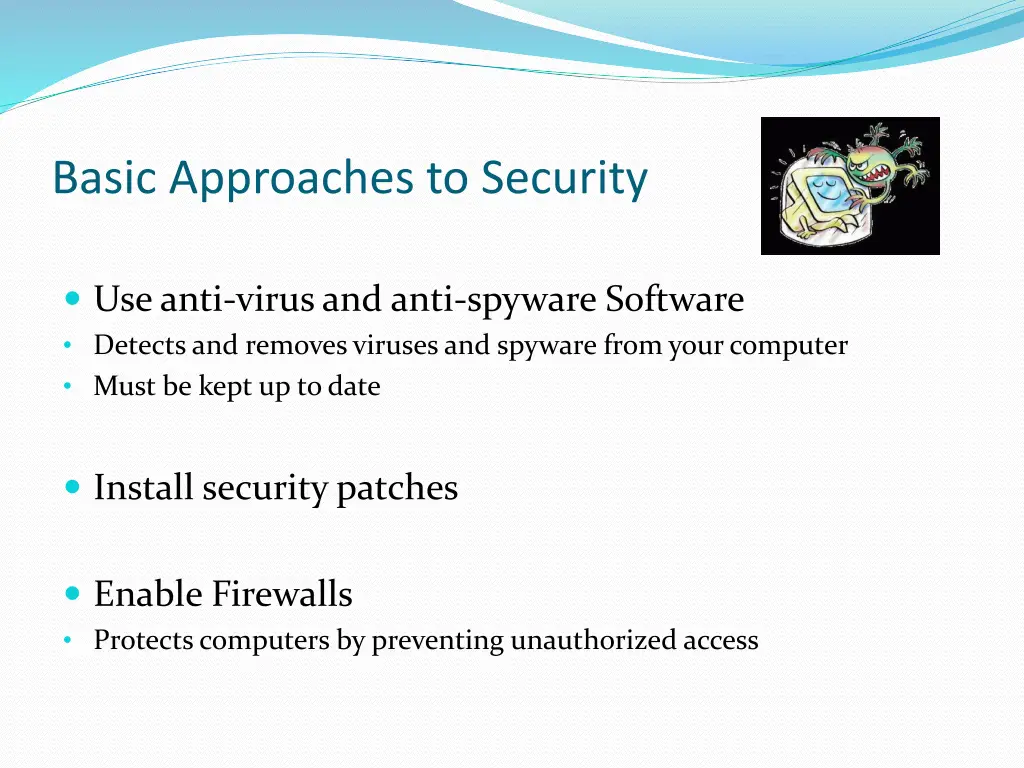
Basic Approaches to Security Use anti-virus and anti-spyware Software Detects and removes viruses and spyware from your computer Must be kept up to date Install security patches Enable Firewalls Protects computers by preventing unauthorized access
Basic Approaches to Security Use strong passwords to protect computers Be cautious about downloading free software or files from untrusted sites Basic Approaches to Security Most prevalent threats to your security come to you in your Inbox; are all designed to get you to click on an item like an attachment, link or picture. If you click, you could launch harmful programs or be directed to a harmful website.
Basic Approaches to Security Think before you click on links Most threats are targeted in hopes that you will click on a harmful link, attachment, picture, video or icon in an email or web page Stop: Do not automatically click on Internet links until you have confidence in them. Think: Look at the actual address for the links in question. For instance if the link indicates Click Here be sure to hover your mouse pointer over the link and investigate before you proceed. Click: Only after you are confident that the site is safe. 1) 2) 3) 4) 5)
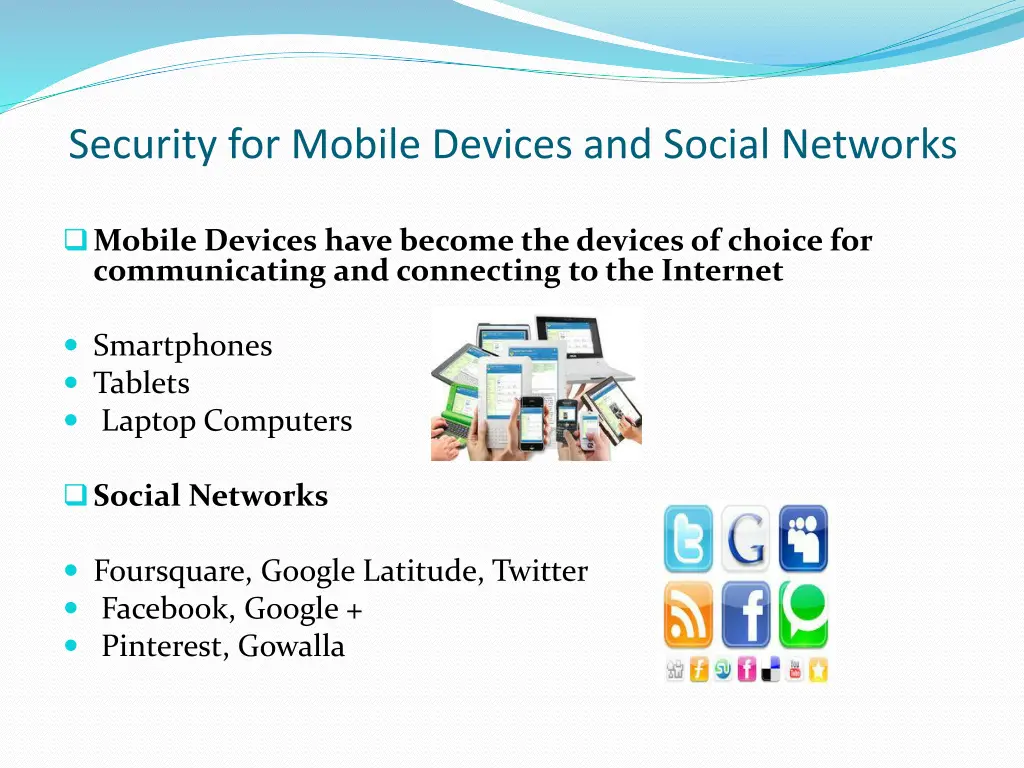
Security for Mobile Devices and Social Networks Mobile Devices have become the devices of choice for communicating and connecting to the Internet Smartphones Tablets Laptop Computers Social Networks Foursquare, Google Latitude, Twitter Facebook, Google + Pinterest, Gowalla
Mobile Devices - Risks Mobile devices are easy to lose or steal Can carry large amount of data If stolen, an unsecured Smartphone grants access to your private information: email correspondence, address books, and any unsecured documents. Often unprotected Data may be sniffed during unprotected wireless communications
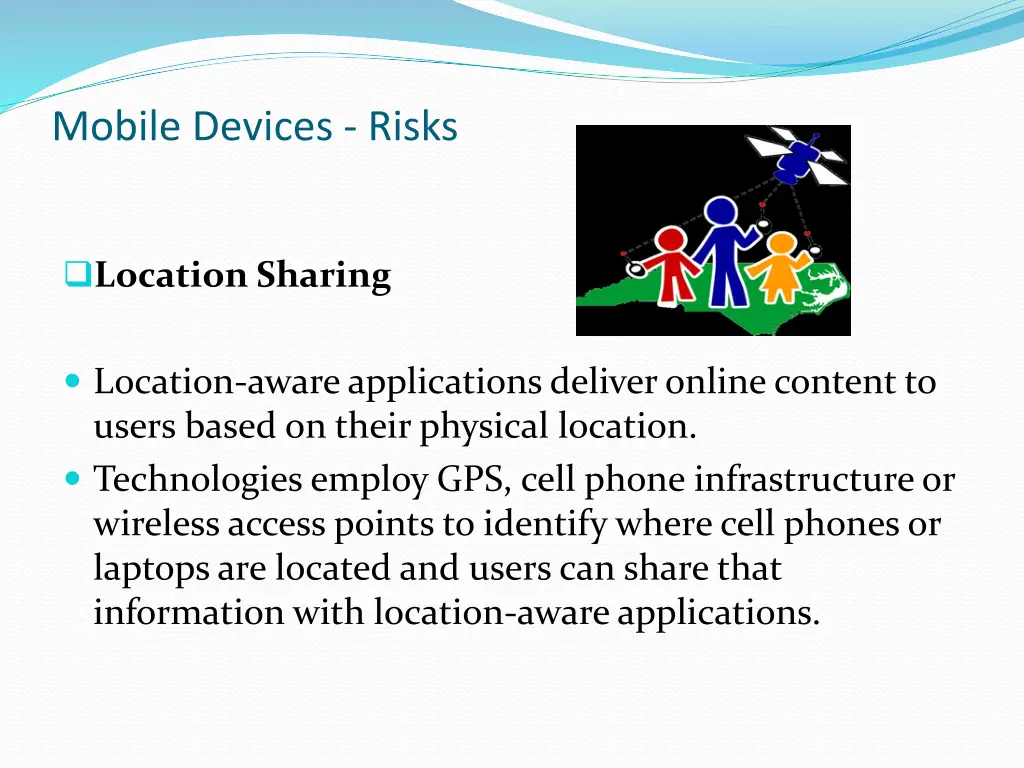
Mobile Devices - Risks Location Sharing Location-aware applications deliver online content to users based on their physical location. Technologies employ GPS, cell phone infrastructure or wireless access points to identify where cell phones or laptops are located and users can share that information with location-aware applications.
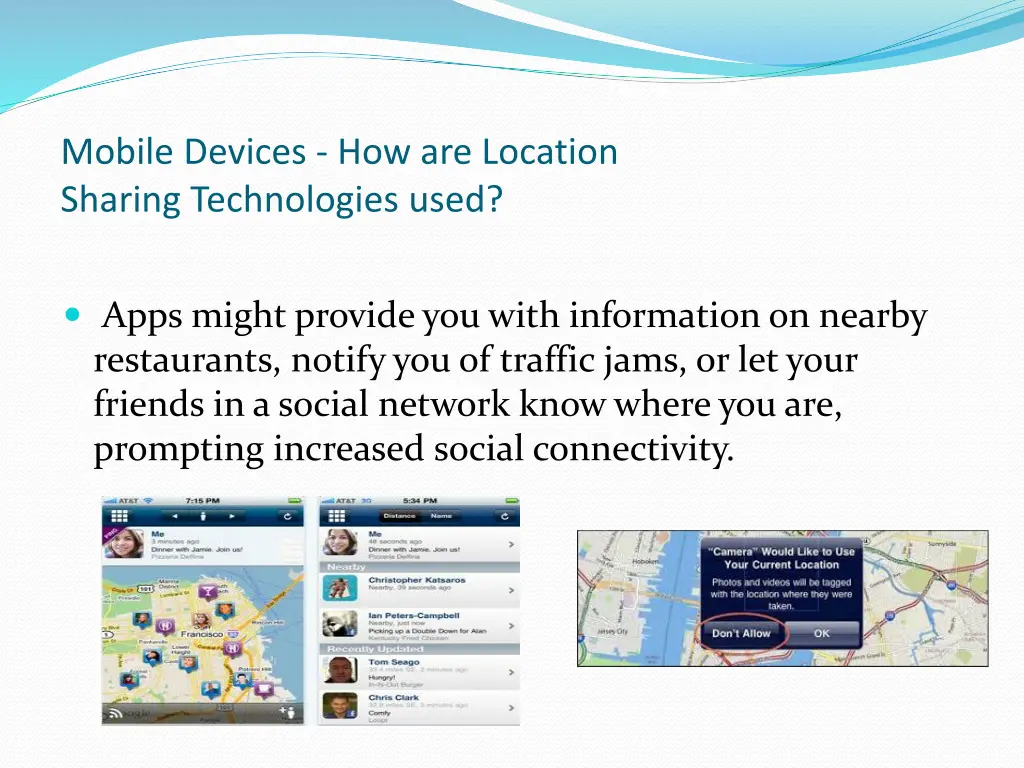
Mobile Devices - How are Location Sharing Technologies used? Apps might provide you with information on nearby restaurants, notify you of traffic jams, or let your friends in a social network know where you are, prompting increased social connectivity.
Risks of Location Sharing Technologies Makes users human homing beacons 1) 2) Increases the chances of being stalked 3) May reveal when you are home or away
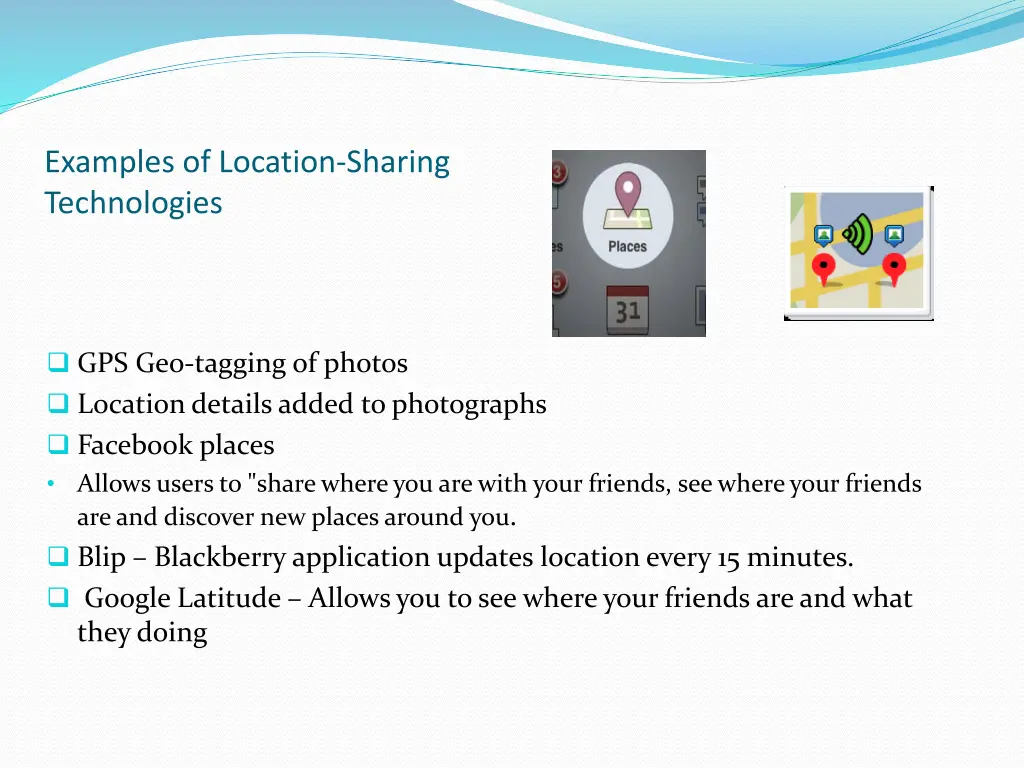
Examples of Location-Sharing Technologies GPS Geo-tagging of photos Location details added to photographs Facebook places Allows users to "share where you are with your friends, see where your friends are and discover new places around you. Blip Blackberry application updates location every 15 minutes. Google Latitude Allows you to see where your friends are and what they doing
Security Guidelines for Location Sharing Technologies Most apps offer privacy controls-enable them Some privacy controls are not always easy to access Know what applications you have and research privacy controls Disable GPS capabilities and geotagging features
Security Guidelines - Mobile Devices Enable auto-lock 1) 2) Enable password protection 3) Keep the phone OS and apps up-to-date 4) Enable remote wipe feature where possible 5) Avoid connecting to public wireless network when possible.
Security Guidelines - Social Networks Security Guidelines Before you post, ask the following: Will this post/picture cause a problem for me? Would I say this in front of my mother? Limit the number of people that see it Share public information with the public Share inner thoughts and personal feelings with close friends
Security Guidelines - Social Networks Limit your visibility on services Do not Friend or Connect with people that you have not met in person or know well Limit your check-in information to friends only Never check in at your home, school, work
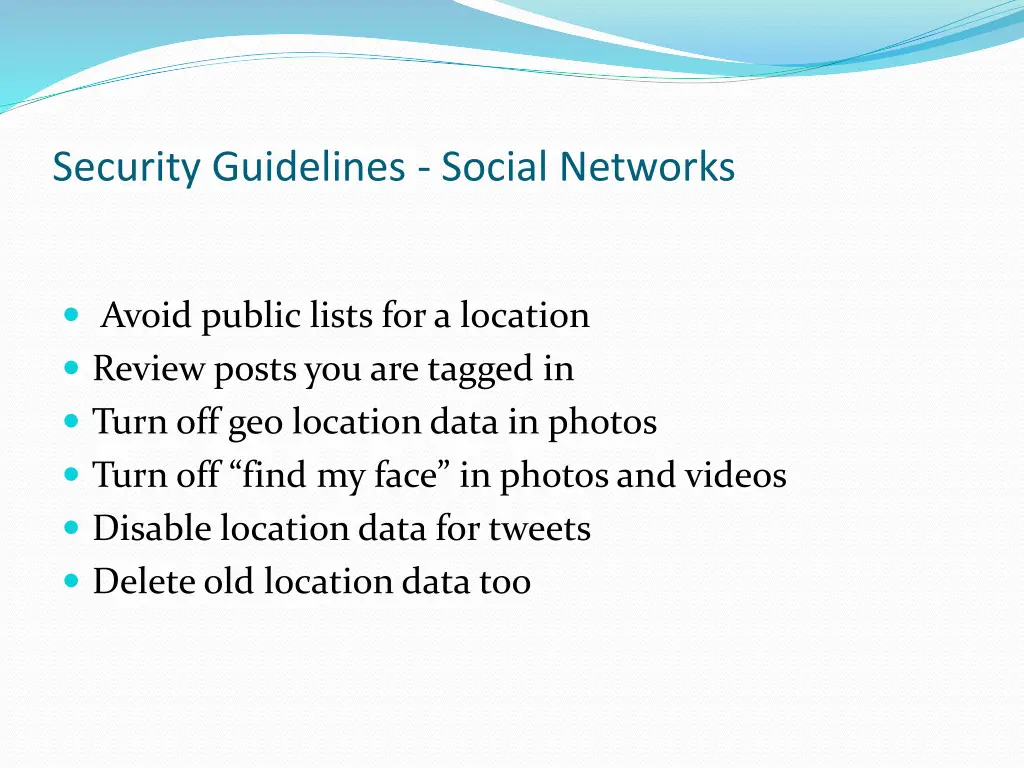
Security Guidelines - Social Networks Avoid public lists for a location Review posts you are tagged in Turn off geo location data in photos Turn off find my face in photos and videos Disable location data for tweets Delete old location data too
Stay Safe. Think before you click and try to share when online or offline.