Introduction to Animal Cell Culture Techniques
Animal cell culture involves cultivating animal cells in an artificial environment, utilizing techniques such as mincing, enzymatic processing, and chemical supplementation. Learn about culture media, serum advantages, types of artificial culture media, and essential components for cell growth.

Download Presentation

Please find below an Image/Link to download the presentation.
The content on the website is provided AS IS for your information and personal use only. It may not be sold, licensed, or shared on other websites without obtaining consent from the author.If you encounter any issues during the download, it is possible that the publisher has removed the file from their server.
You are allowed to download the files provided on this website for personal or commercial use, subject to the condition that they are used lawfully. All files are the property of their respective owners.
The content on the website is provided AS IS for your information and personal use only. It may not be sold, licensed, or shared on other websites without obtaining consent from the author.
E N D
Presentation Transcript
Lab 5 CELL CULTURE Human genetics Medical Laboratories Techniques Department MSc. Hussein Salim
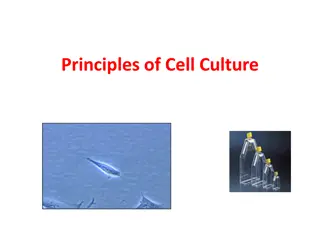
animal cell culture It is the process of cultivating animal cells in an artificial environment (in vitro) under control, we taking the cells from an animal organ, tissue in a mechanical (Mincing, shearing, sieves) enzymatic manner (Trypsin, pronase, collagenase, dispase) Chemical taking the cells from a previously manufactured strain in the laboratory and transplanting them into a selective environment inside glass or plastic vessels (a suitable culture medium containing all nutrients, growth factors and gases needed for cell growth).
Culture medium It is the environment provided for the growth of the cells in the laboratory, similar to those conditions that the cells have been exposed to in vivo. Culture media consists of: Physical media: a support or matrix Chemical media: appropriate nutrients, hormones and stromal factors. Serum is the most economical, easily available and most widely used culture medium for animal cell culture; Fetal bovine serum (FBS) is the preferred one.
Types of artificial culture media There are three types of artificial culture media: Serum free culture medium Protein- free culture medium Chemically defined media examples on artificial culture media. o Eagles minimal essential medium (EMEM) o Dulbecco's modified enriched medium(DMEM) o Roswell park memorial institute (RPMI)
Serum provides the following Basic nutrients Hormones and growth factors Attachment and spreading factors Binding proteins (albumin, vitronectin, transferrin). hormones, vitamins, minerals, lipids Protease inhibitors Disadvantages of serum Virus, fungi and bacteria may contaminate the serum easily Some enzymes presents in serum can convert the cell secretions into toxic compounds
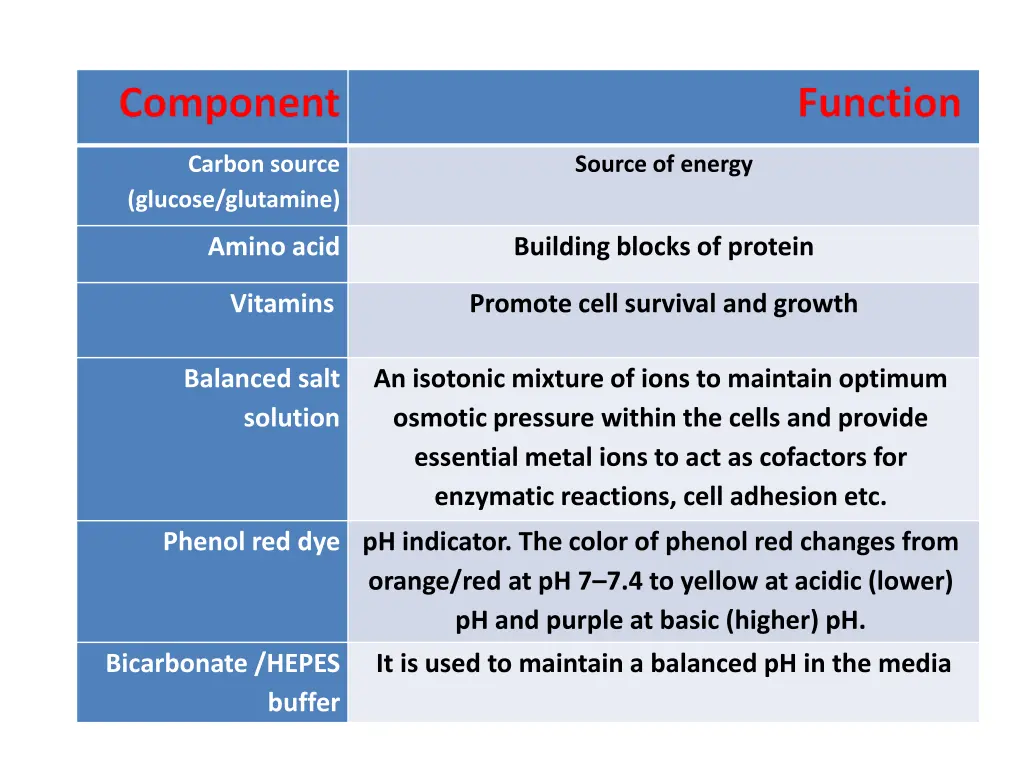
Component Function Carbon source (glucose/glutamine) Source of energy Amino acid Building blocks of protein Vitamins Promote cell survival and growth Balanced salt solution An isotonic mixture of ions to maintain optimum osmotic pressure within the cells and provide essential metal ions to act as cofactors for enzymatic reactions, cell adhesion etc. Phenol red dye pH indicator. The color of phenol red changes from orange/red at pH 7 7.4 to yellow at acidic (lower) pH and purple at basic (higher) pH. Bicarbonate /HEPES It is used to maintain a balanced pH in the media buffer
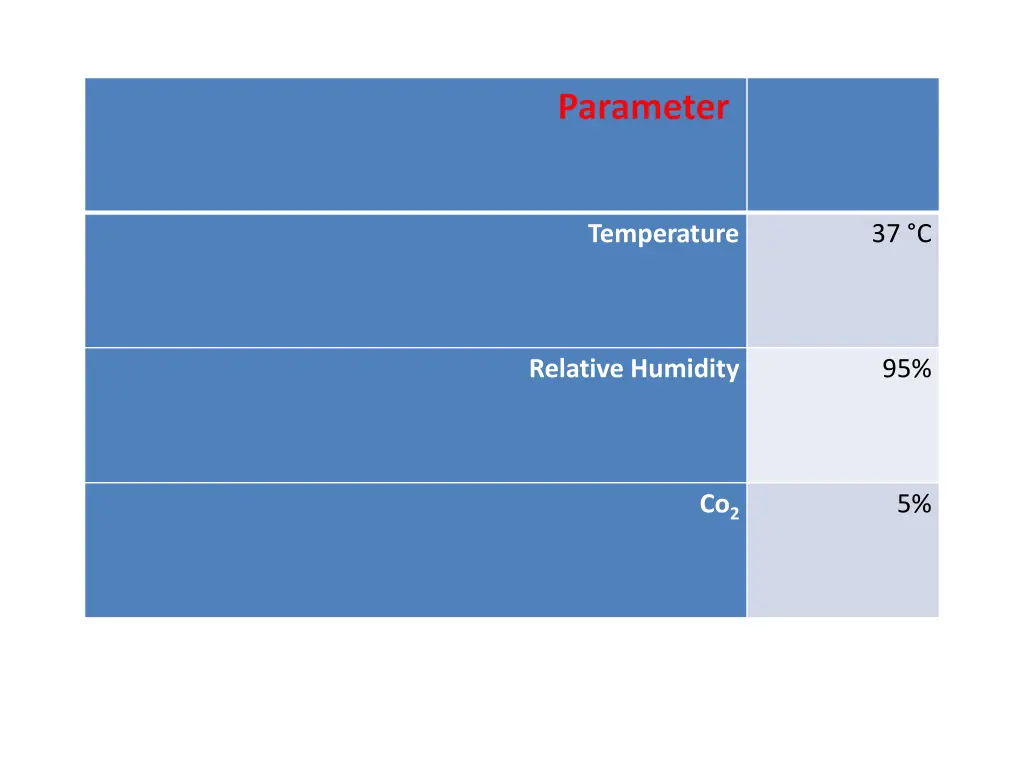
Parameter Temperature 37 C Relative Humidity 95% Co2 5%
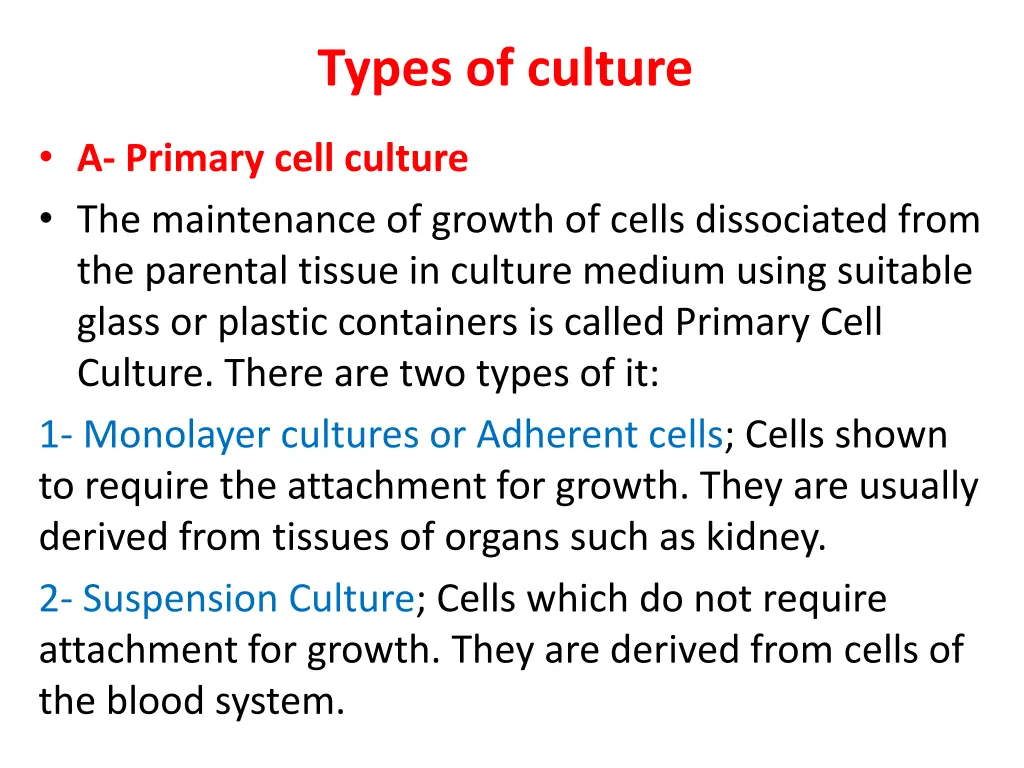
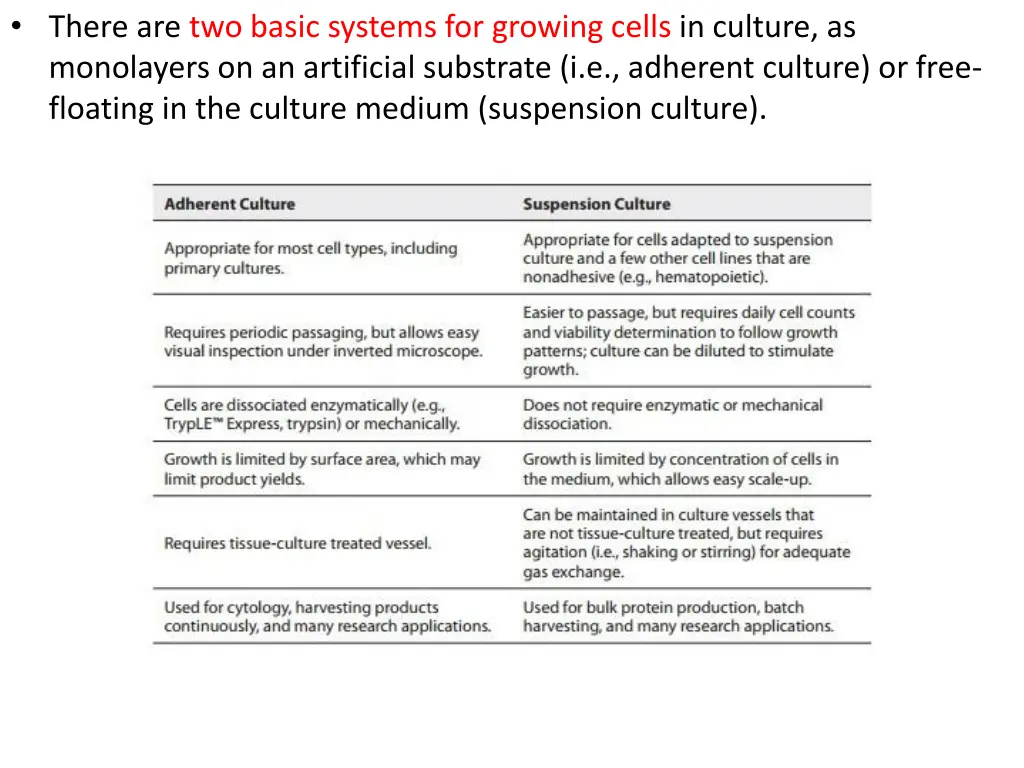
Types of culture A- Primary cell culture The maintenance of growth of cells dissociated from the parental tissue in culture medium using suitable glass or plastic containers is called Primary Cell Culture. There are two types of it: 1- Monolayer cultures or Adherent cells; Cells shown to require the attachment for growth. They are usually derived from tissues of organs such as kidney. 2- Suspension Culture; Cells which do not require attachment for growth. They are derived from cells of the blood system.
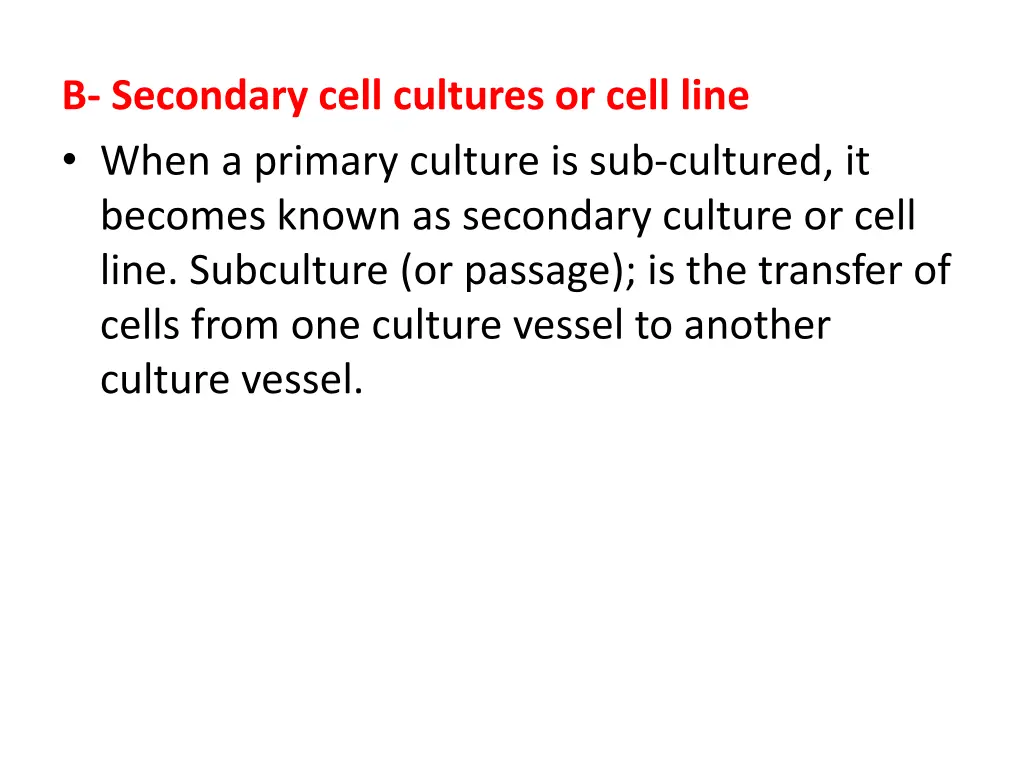
B- Secondary cell cultures or cell line When a primary culture is sub-cultured, it becomes known as secondary culture or cell line. Subculture (or passage); is the transfer of cells from one culture vessel to another culture vessel.
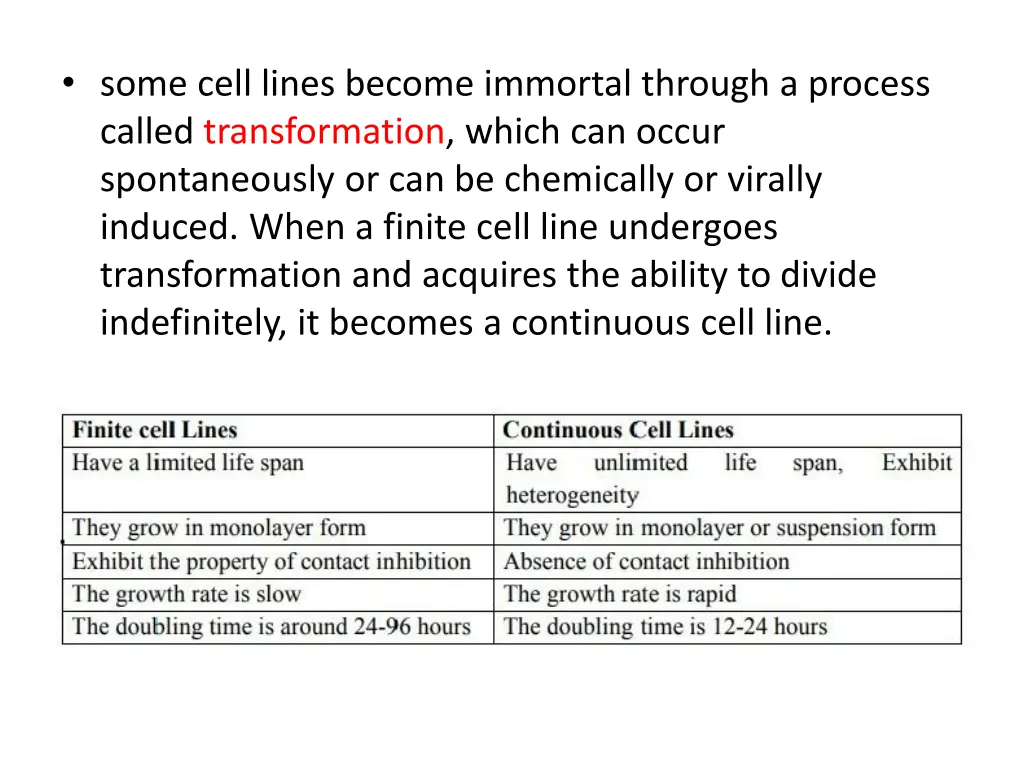
some cell lines become immortal through a process called transformation, which can occur spontaneously or can be chemically or virally induced. When a finite cell line undergoes transformation and acquires the ability to divide indefinitely, it becomes a continuous cell line.
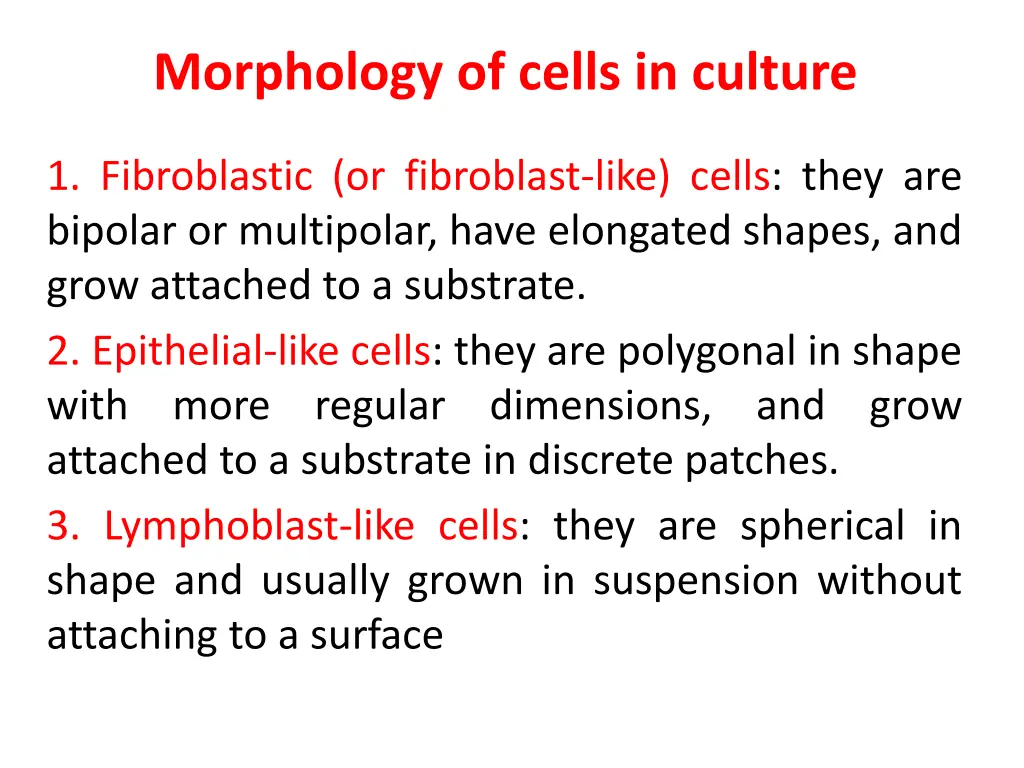
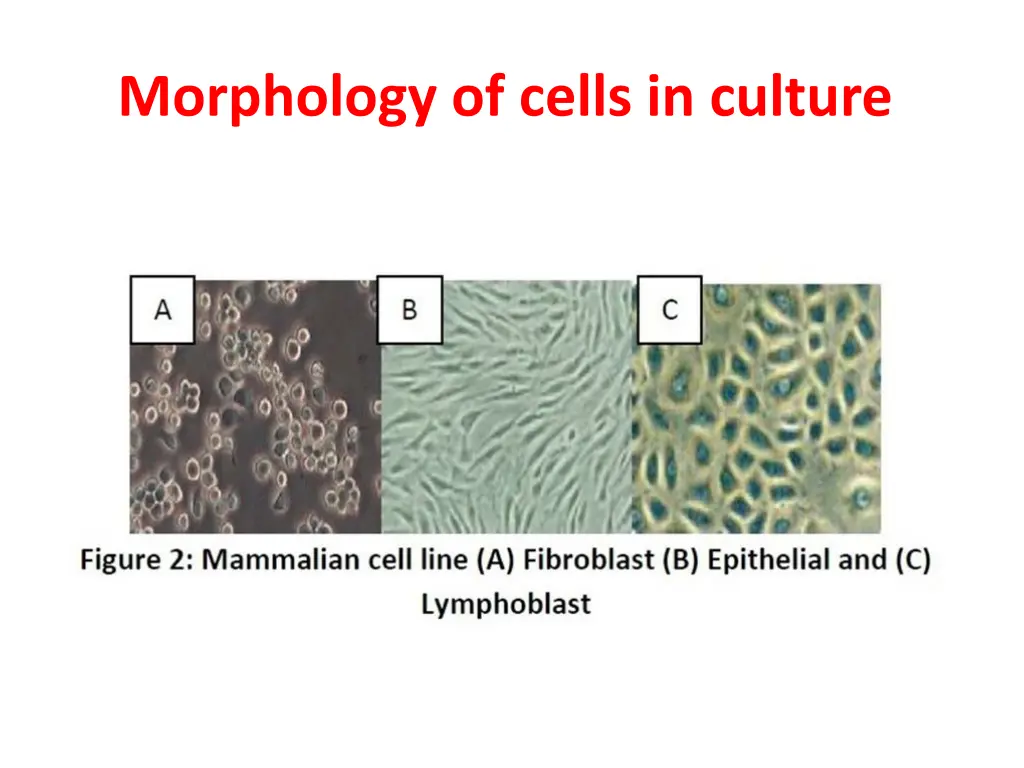
Morphology of cells in culture 1. Fibroblastic (or fibroblast-like) cells: they are bipolar or multipolar, have elongated shapes, and grow attached to a substrate. 2. Epithelial-like cells: they are polygonal in shape with more regular dimensions, attached to a substrate in discrete patches. 3. Lymphoblast-like cells: they are spherical in shape and usually grown in suspension without attaching to a surface and grow
There are two basic systems for growing cells in culture, as monolayers on an artificial substrate (i.e., adherent culture) or free- floating in the culture medium (suspension culture).
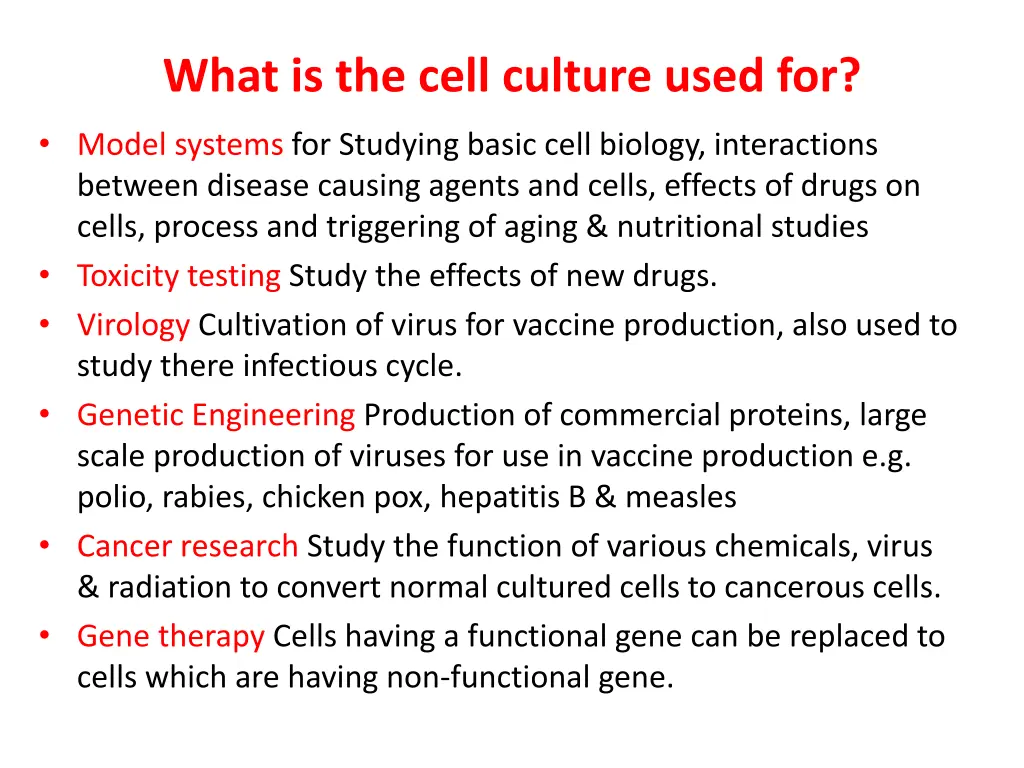
What is the cell culture used for? Model systems for Studying basic cell biology, interactions between disease causing agents and cells, effects of drugs on cells, process and triggering of aging & nutritional studies Toxicity testing Study the effects of new drugs. Virology Cultivation of virus for vaccine production, also used to study there infectious cycle. Genetic Engineering Production of commercial proteins, large scale production of viruses for use in vaccine production e.g. polio, rabies, chicken pox, hepatitis B & measles Cancer research Study the function of various chemicals, virus & radiation to convert normal cultured cells to cancerous cells. Gene therapy Cells having a functional gene can be replaced to cells which are having non-functional gene.