Introduction to CS.490/590 and Free GPU Access on Colab
This presentation covers the fundamentals of machine learning, introducing essential concepts such as supervised and unsupervised learning. It discusses the challenges of programming behavior manually in complex systems and highlights the benefits of algorithmic learning from data. Additionally, it provides guidance on utilizing Google Colab for free access to Nvidia K80 GPUs, ideal for students and practitioners in the field.

Download Presentation

Please find below an Image/Link to download the presentation.
The content on the website is provided AS IS for your information and personal use only. It may not be sold, licensed, or shared on other websites without obtaining consent from the author.If you encounter any issues during the download, it is possible that the publisher has removed the file from their server.
You are allowed to download the files provided on this website for personal or commercial use, subject to the condition that they are used lawfully. All files are the property of their respective owners.
The content on the website is provided AS IS for your information and personal use only. It may not be sold, licensed, or shared on other websites without obtaining consent from the author.
E N D
Presentation Transcript
CS 490/590Lecture 1: Introduction Eren Gultepe Adapted from Roger Grosse
How to get free GPUs Colab (Recommended) Google Colab is a web-based iPython Notebook service that has access to a free Nvidia K80 GPU per Google account.
What is machinelearning? For many problems, it s difficult to program the correct behavior by hand recognizing people and objects understanding humanspeech Machine learning approach: program an algorithm to automatically learn from data, or fromexperience Some reasons you might want to use a learningalgorithm: hard to code up a solution by hand (e.g. vision,speech) system needs to adapt to a changing environment (e.g. spam detection) want the system to perform better than the human programmers privacy/fairness (e.g. ranking search results)
What is machinelearning? Types of machine learning Supervised learning: have labeled examples of the correct behavior Reinforcement learning: learning system receives a reward signal, tries to learn to maximize the reward signal Unsupervised learning: no labeled examples instead, looking for interesting patterns in the data
Supervised learningexamples Supervised learning: have labeled examples of the correct behavior e.g. Handwritten digit classification with the MNIST dataset Task: given an image of a handwritten digit, predict the digit class Input: the image Target: the digit class
Supervised learningexamples Supervised learning: have labeled examples of the correct behavior e.g. Handwritten digit classification with the MNIST dataset Task: given an image of a handwritten digit, predict the digit class Input: the image Target: the digit class Data: 70,000 images of handwritten digits labeled by humans Training set: first 60,000 images, usedto train the network Test set: last 10,000 images, not available during training, used to evaluate performance
Supervised learningexamples Supervised learning: have labeled examples of the correct behavior e.g. Handwritten digit classification with the MNIST dataset Task: given an image of a handwritten digit, predict the digit class Input: the image Target: the digit class Data: 70,000 images of handwritten digits labeled by humans Training set: first 60,000 images, usedto train the network Test set: last 10,000 images, not available during training, used to evaluate performance This dataset is the fruit fly of neural netresearch Neural nets already achieved > 99% accuracy in the 1990s, but we still continue to learn a lot fromit
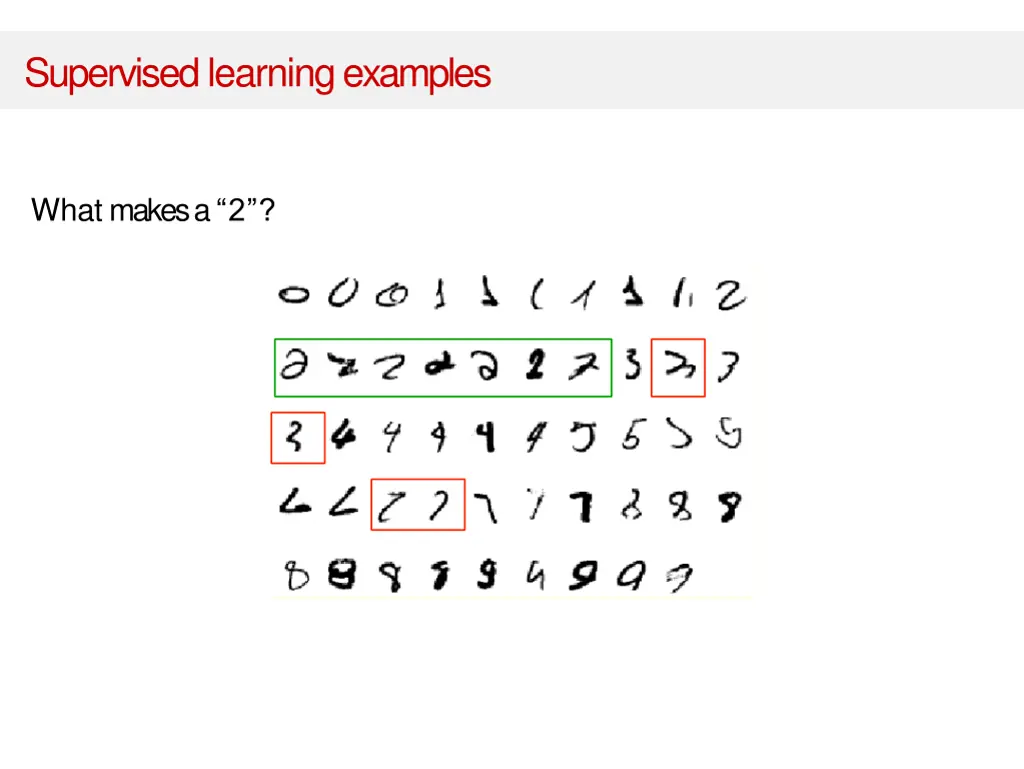
Supervised learningexamples What makes a 2 ?
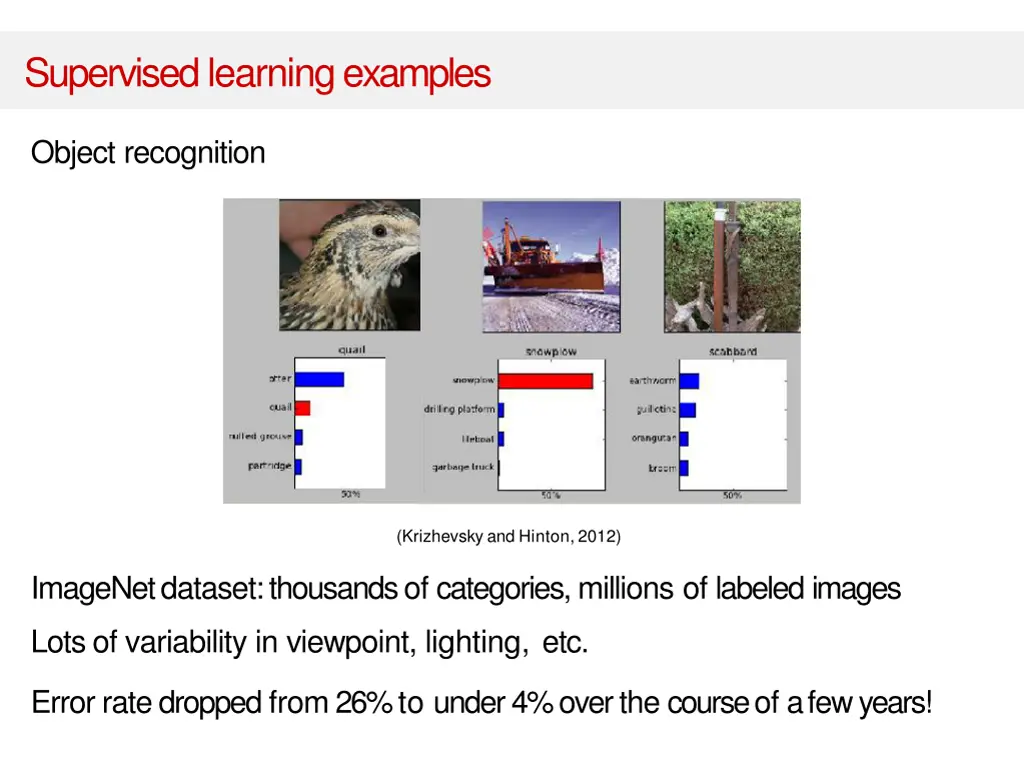
Supervised learningexamples Object recognition (Krizhevsky and Hinton,2012) ImageNet dataset: thousands of categories, millions of labeled images Lots of variability in viewpoint, lighting, etc. Error rate dropped from 26% to under 4% over the course of a few years!
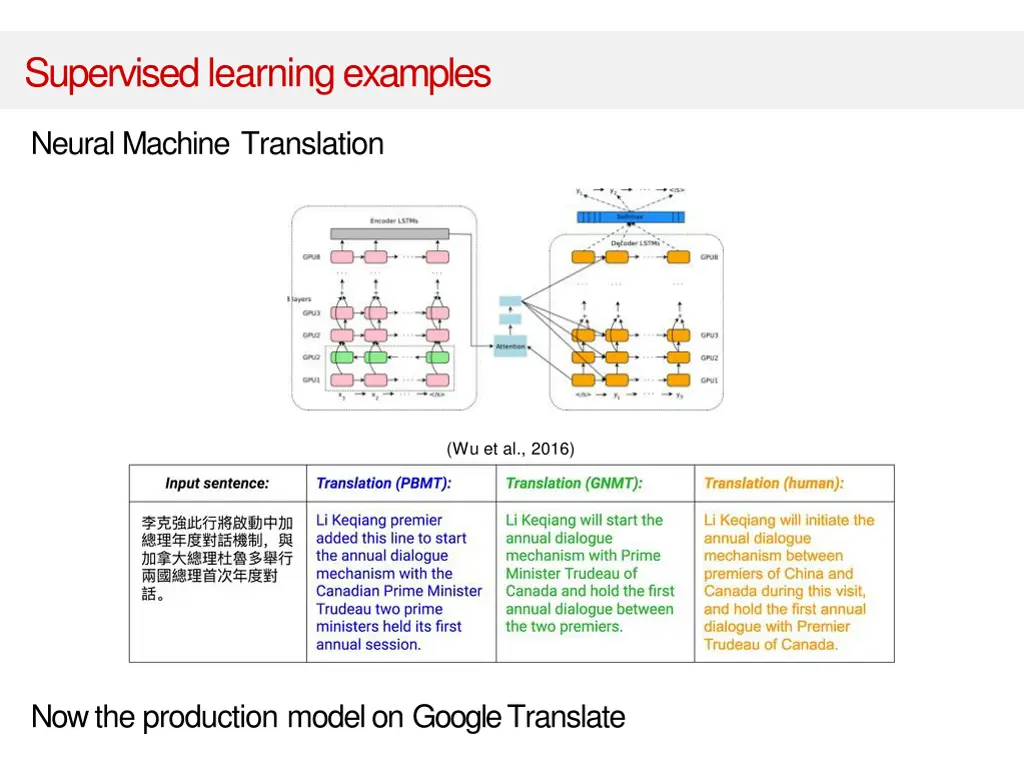
Supervised learningexamples Neural Machine Translation (Wu et al., 2016) Now the production model on Google Translate
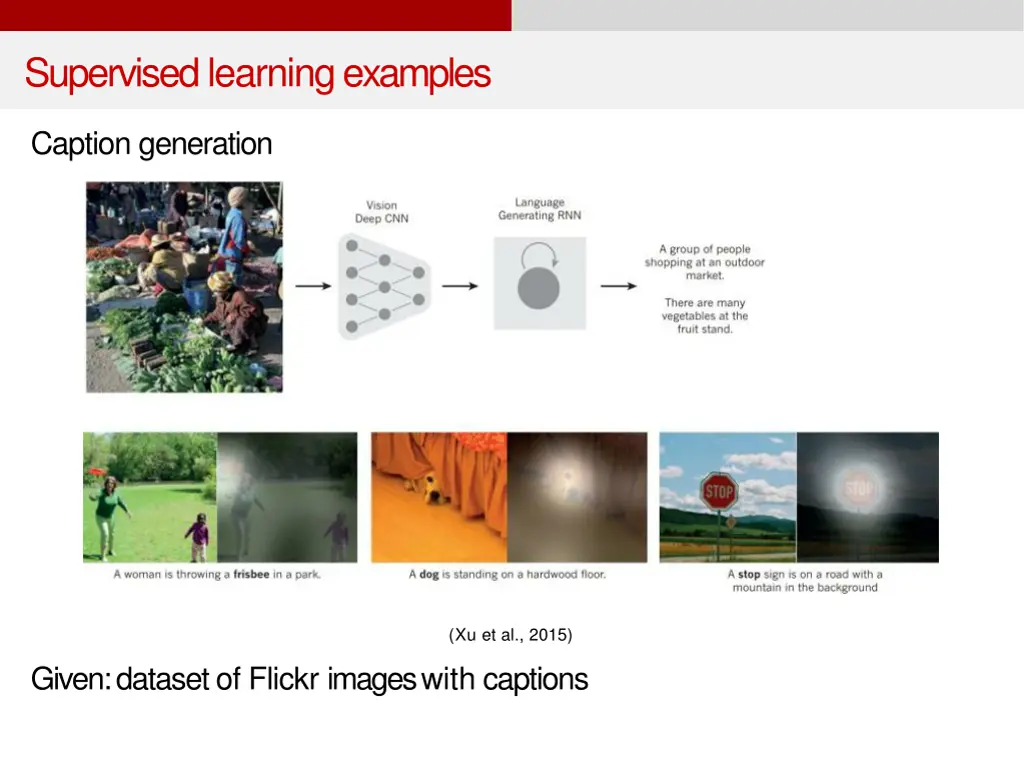
Supervised learningexamples Caption generation (Xu et al., 2015) Given: dataset of Flickr images with captions
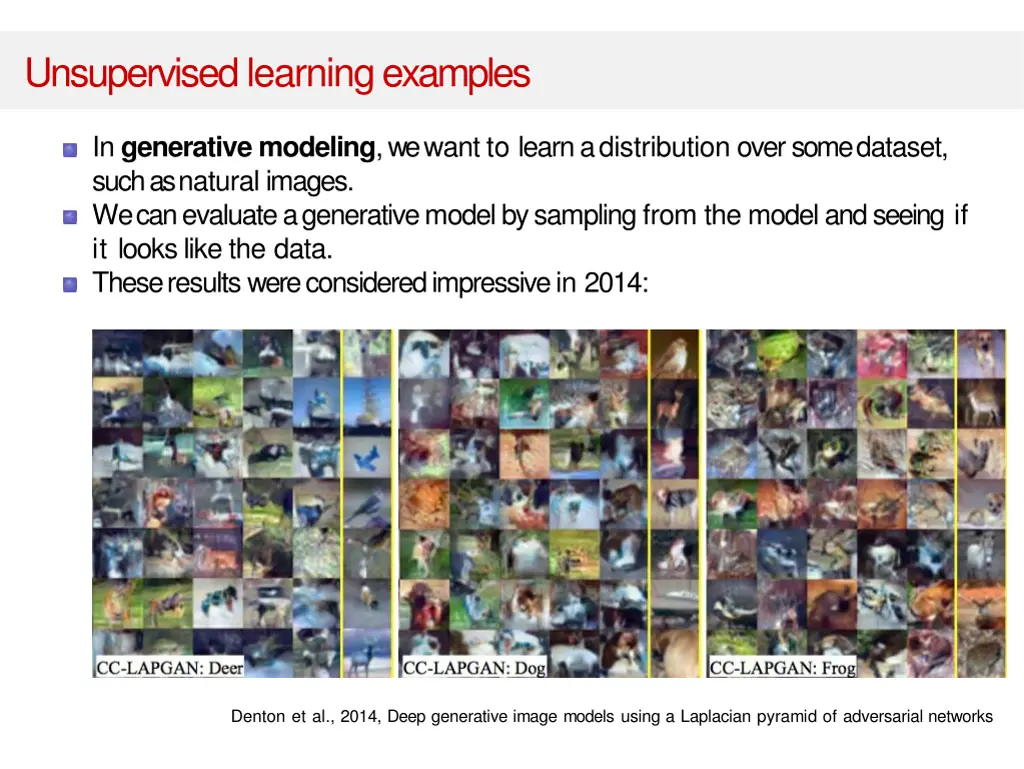
Unsupervised learningexamples In generative modeling, we want to learn a distribution over some dataset, such as natural images. We can evaluate a generative model by sampling from the model and seeing if it looks like the data. These results were considered impressive in 2014: Denton et al., 2014, Deep generative image models using a Laplacian pyramid of adversarial networks
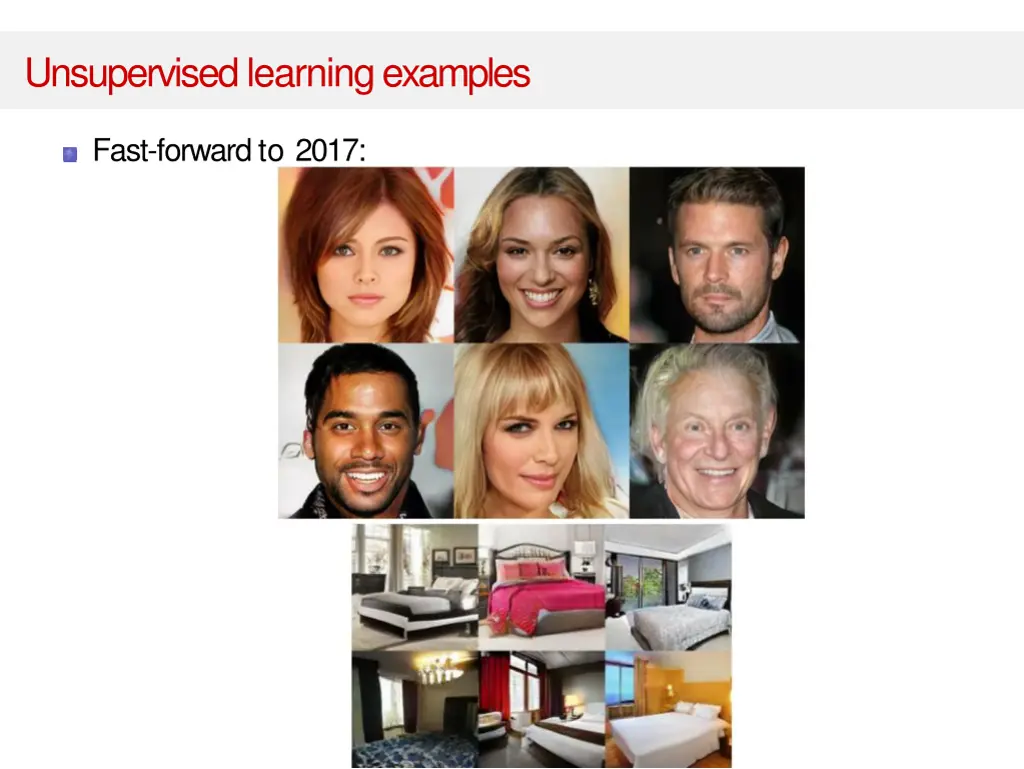
Unsupervised learningexamples Fast-forward to 2017:
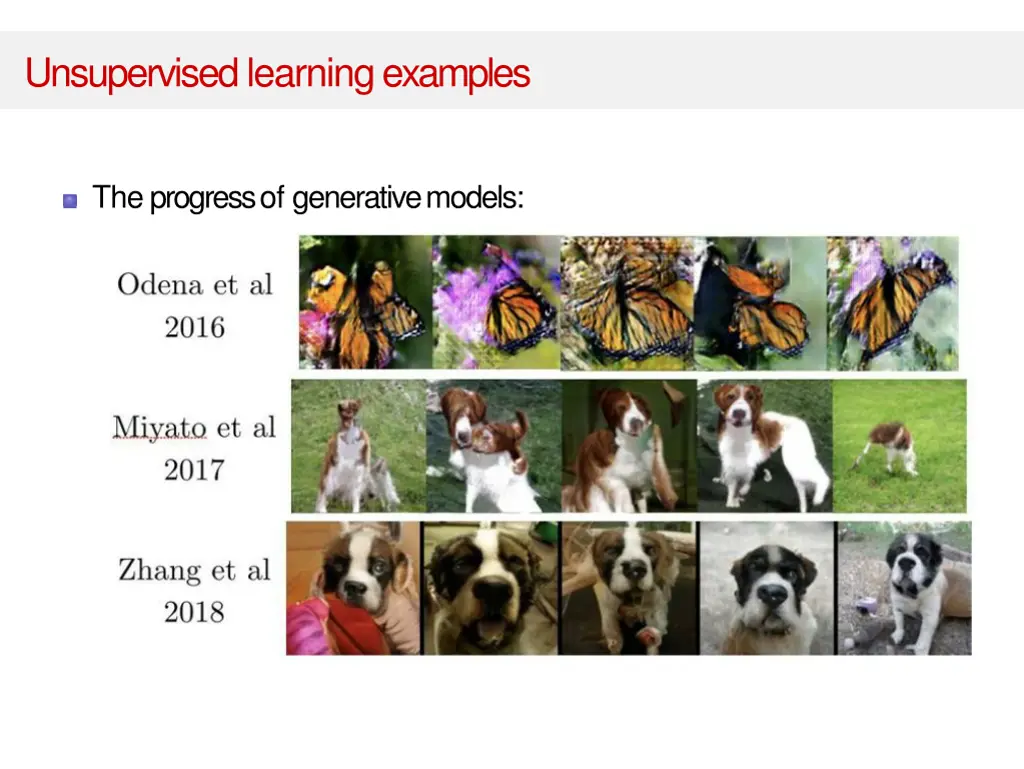
Unsupervised learningexamples The progress of generativemodels:
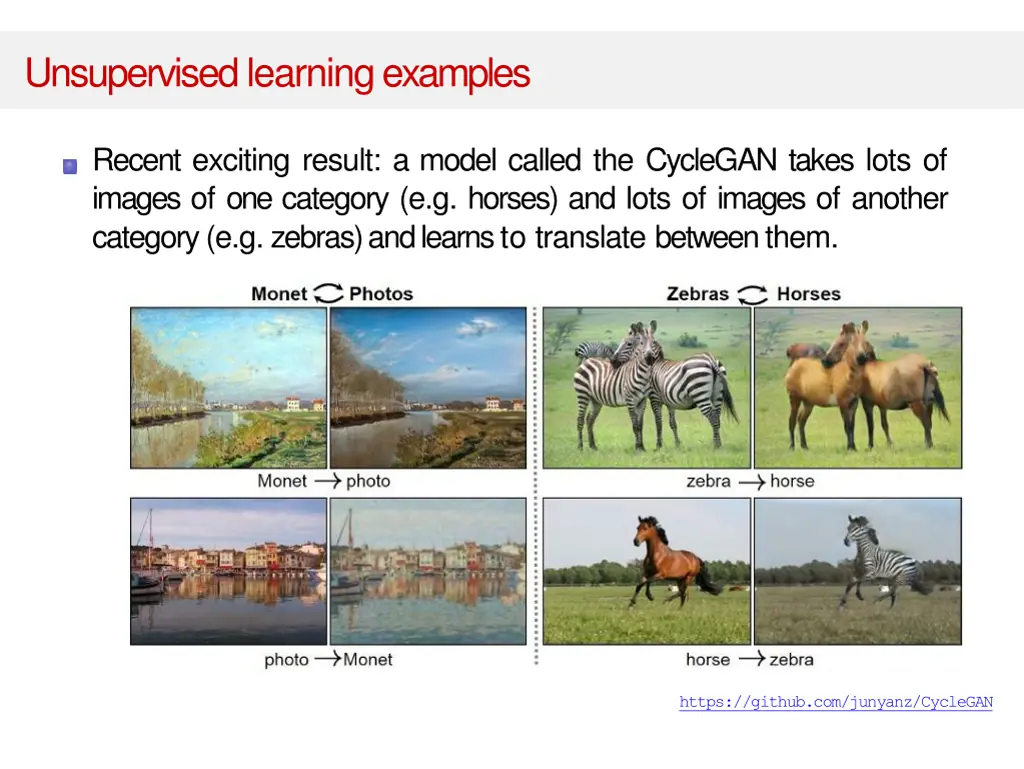
Unsupervised learningexamples Recent exciting result: a model called the CycleGAN takes lots of images of one category (e.g. horses) and lots of images of another category(e.g. zebras)andlearnsto translate betweenthem. https://github.com/junyanz/CycleGAN
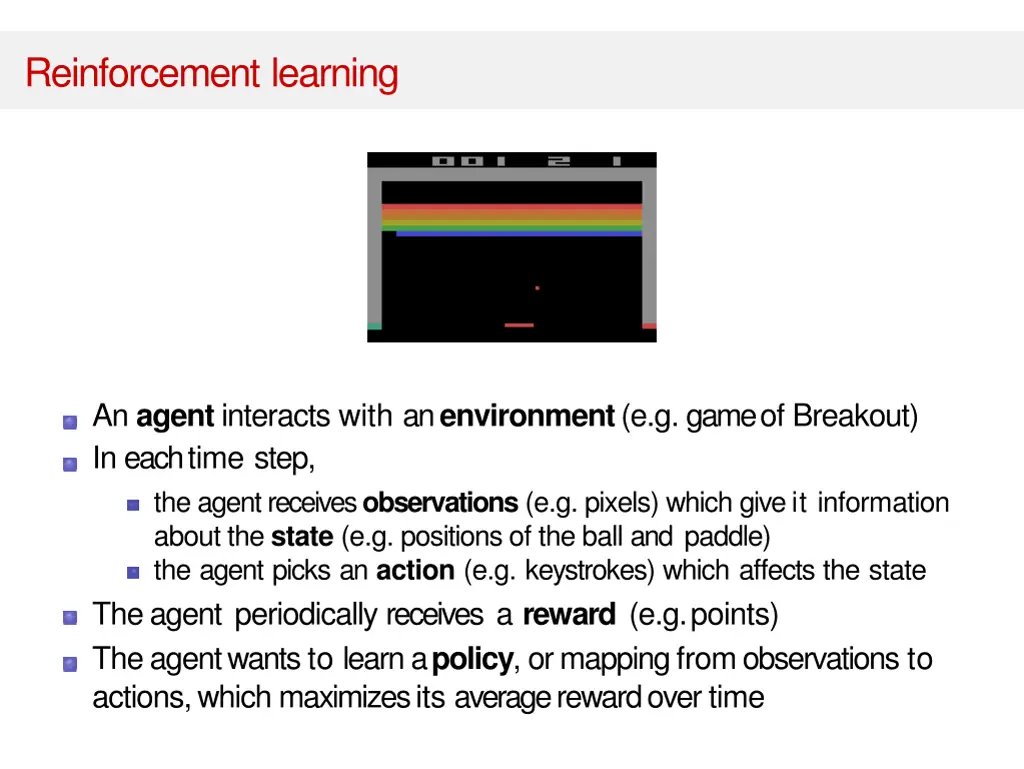
Reinforcement learning An agent interacts with an environment (e.g. game of Breakout) In each time step, the agent receives observations (e.g. pixels) which give it information about the state (e.g. positions of the ball and paddle) the agent picks an action (e.g. keystrokes) which affects the state The agent periodically receives a reward (e.g.points) The agent wants to learn a policy, or mapping from observations to actions, which maximizes its average reward overtime
Reinforcement learning DeepMind trained neural networks to play many different Atari games given the raw screen as input, plus the score as areward single network architecture shared between all the games in many cases, the networks learned to play better than humans (in terms of points in the first minute) https://www.youtube.com/watch?v=V1eYniJ0Rnk
Reinforcement learning for control Learning locomotion control from scratch The reward is to run as far as possible over all the obstacles single control policy that learns to adapt to different terrains https://www.youtube.com/watch?v=hx_bgoTF7bs
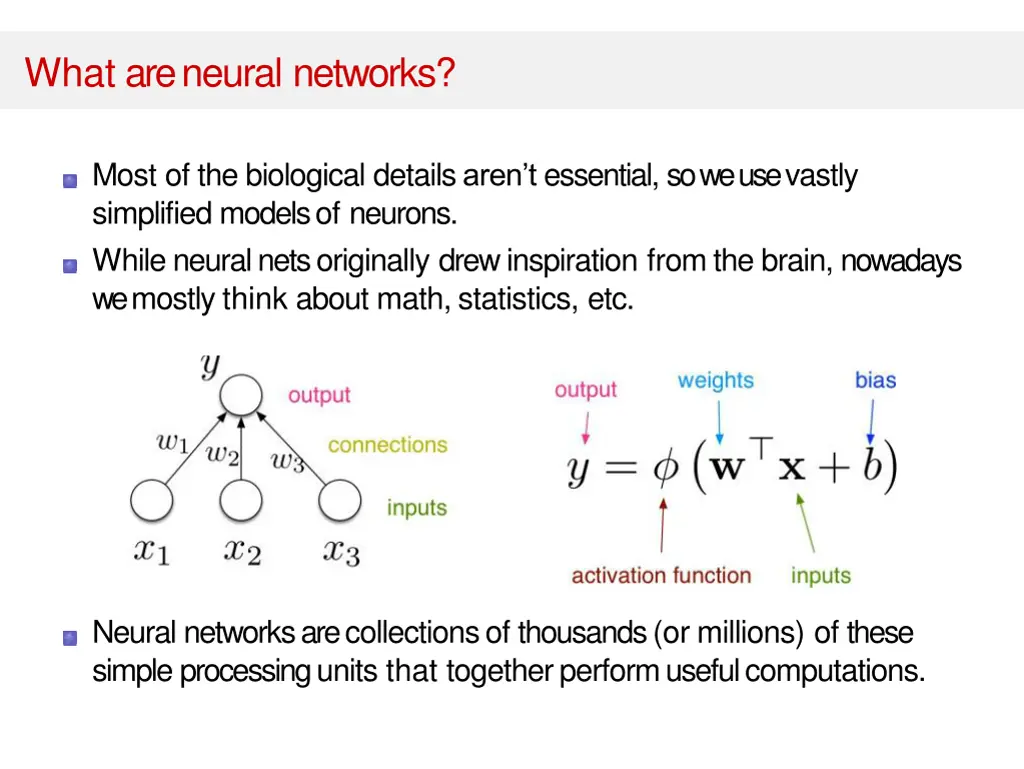
What are neural networks? Most of the biological details aren t essential, so we use vastly simplified models of neurons. While neural nets originally drew inspiration from the brain, nowadays we mostly think about math, statistics, etc. Neural networks are collections of thousands (or millions) of these simple processing units that together perform usefulcomputations.
What are neural networks? Why neuralnets? inspiration from thebrain proof of concept that a neural architecture can see andhear! very effective across a range of applications (vision, text, speech, medicine, robotics,etc.) widely used in both academia and the techindustry powerful software frameworks (PyTorch, TensorFlow, etc.) let us quickly implement sophisticated algorithms
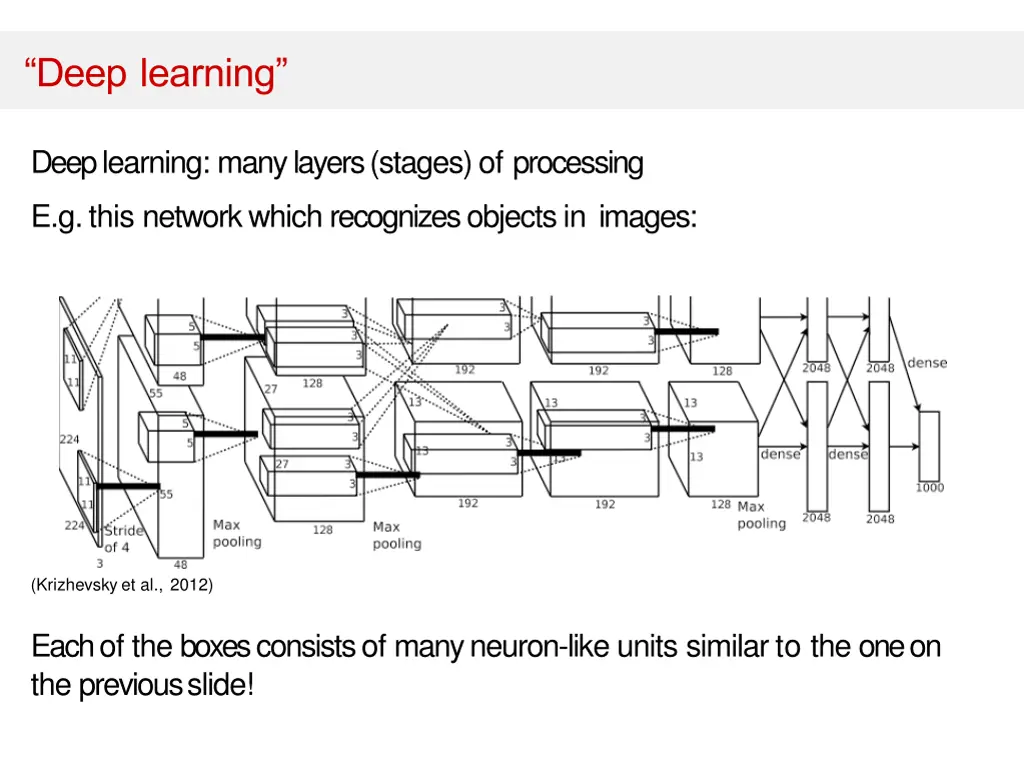
Deep learning Deep learning: many layers (stages) of processing E.g. this network which recognizes objects in images: (Krizhevsky et al., 2012) Each of the boxes consists of many neuron-like units similar to the one on the previousslide!
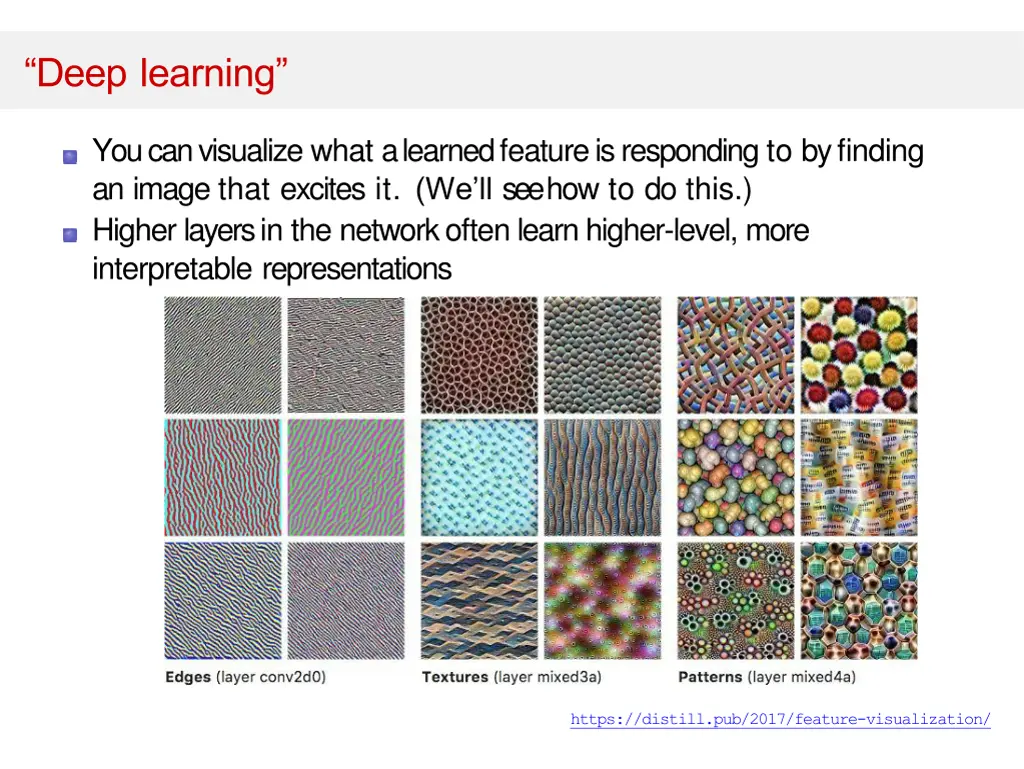
Deep learning You can visualize what a learned feature is responding to by finding an image that excites it. (We ll seehow to do this.) Higher layers in the network often learn higher-level, more interpretable representations https://distill.pub/2017/feature-visualization/
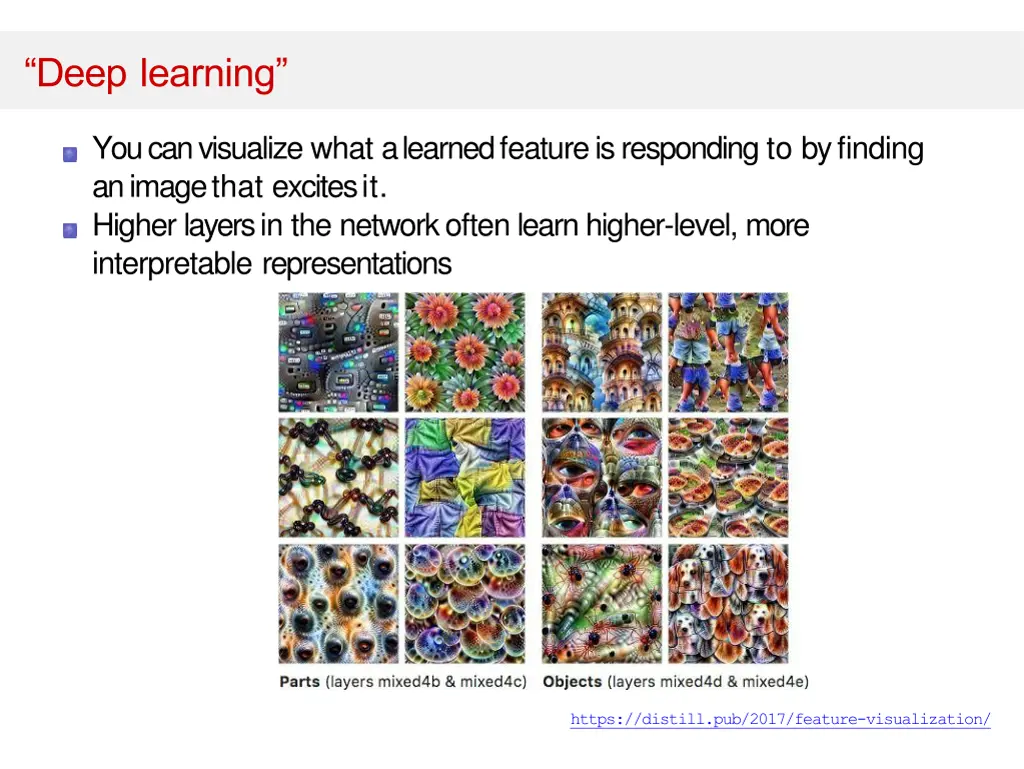
Deep learning You can visualize what a learned feature is responding to by finding an image that excitesit. Higher layers in the network often learn higher-level, more interpretable representations https://distill.pub/2017/feature-visualization/
Software frameworks Array processing(NumPy) vectorize computations (express them in terms of matrix/vector operations) to exploit hardware efficiency Neural net frameworks: PyTorch, TensorFlow,etc. automatic differentiation compiling computation graphs libraries of algorithms and network primitives support for graphics processing units (GPUs) For thiscourse: Python, NumPy Tensorflow, Google s deep learning toolbox PyTorch, a widely used neural netframework
Software frameworks Why take this class, if PyTorch does so much for you? So you know what do to if something goeswrong! Debugging learning algorithms requires sophisticated detective work, which requires understanding what goes on beneath thehood. That s why we derive things by hand in this class!