Explore the fundamentals of game theory and mechanism design in engineering applications. Learn about course mechanics, requirements, and essential texts. Dive into the K-Beauty Contest Game and understand the course structure, prerequisites, and evaluation criteria. Access course materials and delve into examples from engineered systems like routing games and resource allocation.
Please find below an Image/Link to download the presentation.
The content on the website is provided AS IS for your information and personal use only. It may not be sold, licensed, or shared on other websites without obtaining consent from the author. If you encounter any issues during the download, it is possible that the publisher has removed the file from their server.
You are allowed to download the files provided on this website for personal or commercial use, subject to the condition that they are used lawfully. All files are the property of their respective owners.
The content on the website is provided AS IS for your information and personal use only. It may not be sold, licensed, or shared on other websites without obtaining consent from the author.
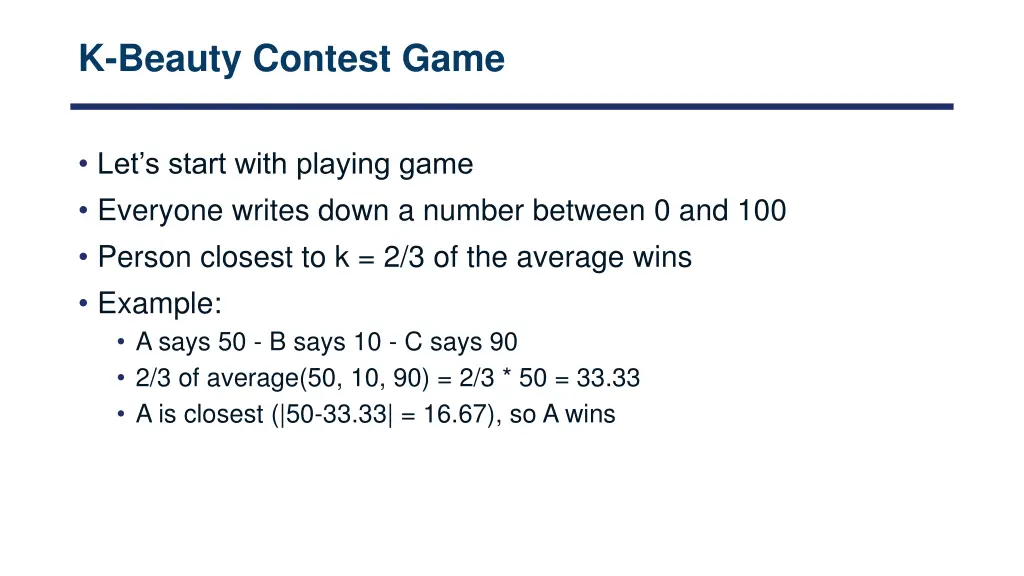
K-Beauty Contest Game Let s start with playing game Everyone writes down a number between 0 and 100 Person closest to k = 2/3 of the average wins Example: A says 50 - B says 10 - C says 90 2/3 of average(50, 10, 90) = 2/3 * 50 = 33.33 A is closest (|50-33.33| = 16.67), so A wins
Overview Course mechanics Outline and topics What is game theory? What is mechanism design? Examples
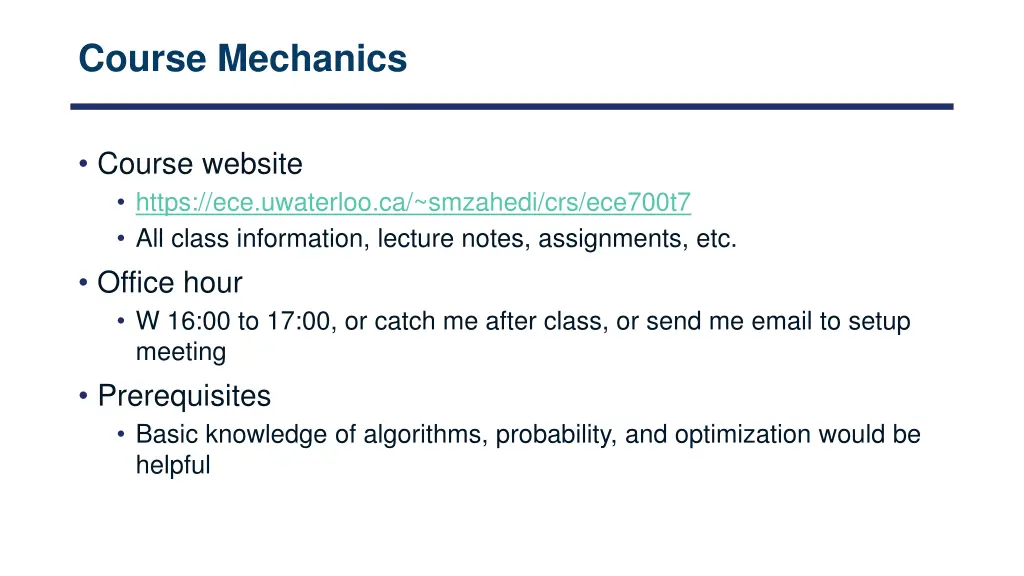
Course Mechanics Course website https://ece.uwaterloo.ca/~smzahedi/crs/ece700t7 All class information, lecture notes, assignments, etc. Office hour W 16:00 to 17:00, or catch me after class, or send me email to setup meeting Prerequisites Basic knowledge of algorithms, probability, and optimization would be helpful
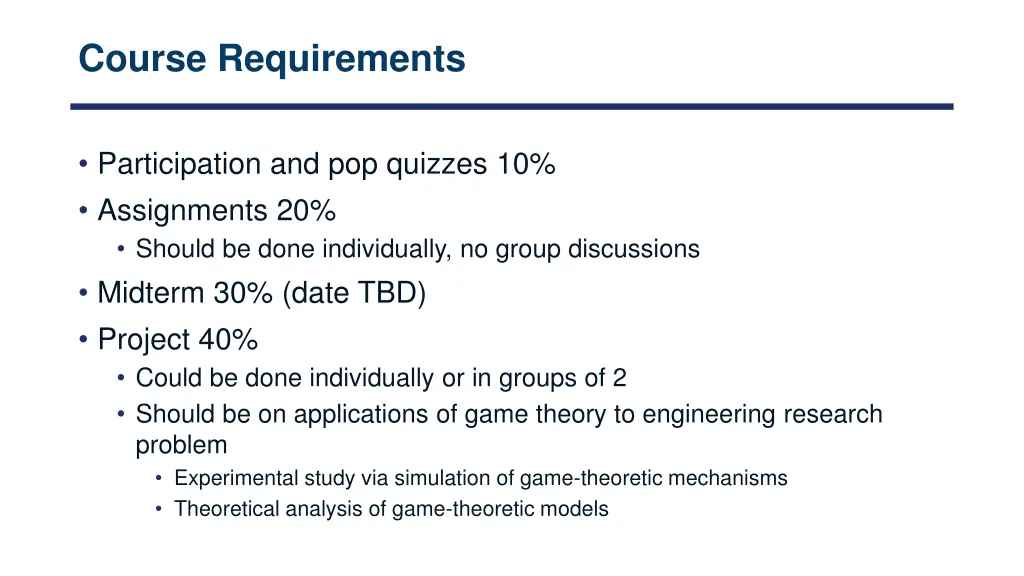
Course Requirements Participation and pop quizzes 10% Assignments 20% Should be done individually, no group discussions Midterm 30% (date TBD) Project 40% Could be done individually or in groups of 2 Should be on applications of game theory to engineering research problem Experimental study via simulation of game-theoretic mechanisms Theoretical analysis of game-theoretic models
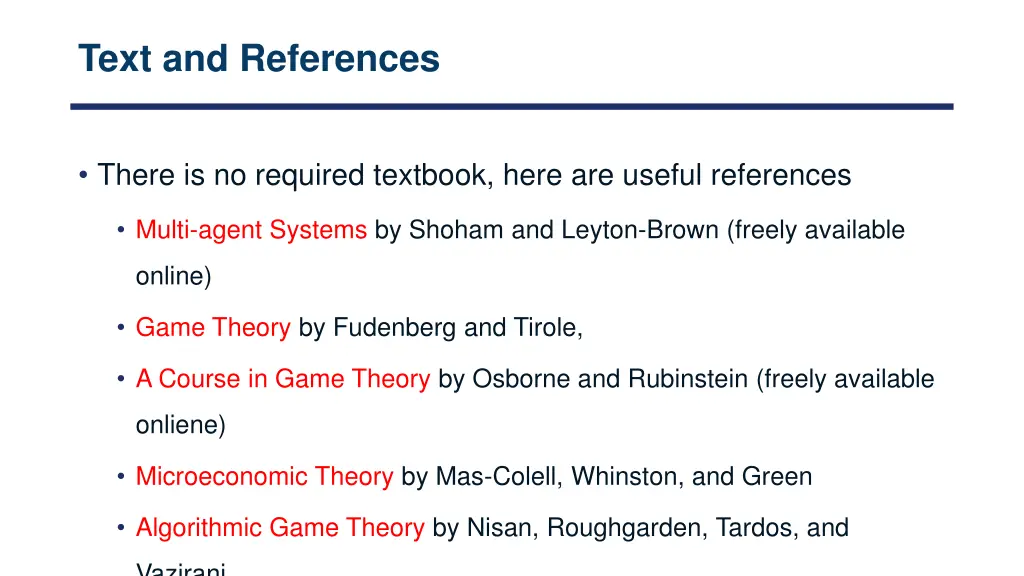
Text and References There is no required textbook, here are useful references Multi-agent Systems by Shoham and Leyton-Brown (freely available online) Game Theory by Fudenberg and Tirole, A Course in Game Theory by Osborne and Rubinstein (freely available onliene) Microeconomic Theory by Mas-Colell, Whinston, and Green Algorithmic Game Theory by Nisan, Roughgarden, Tardos, and Vazirani
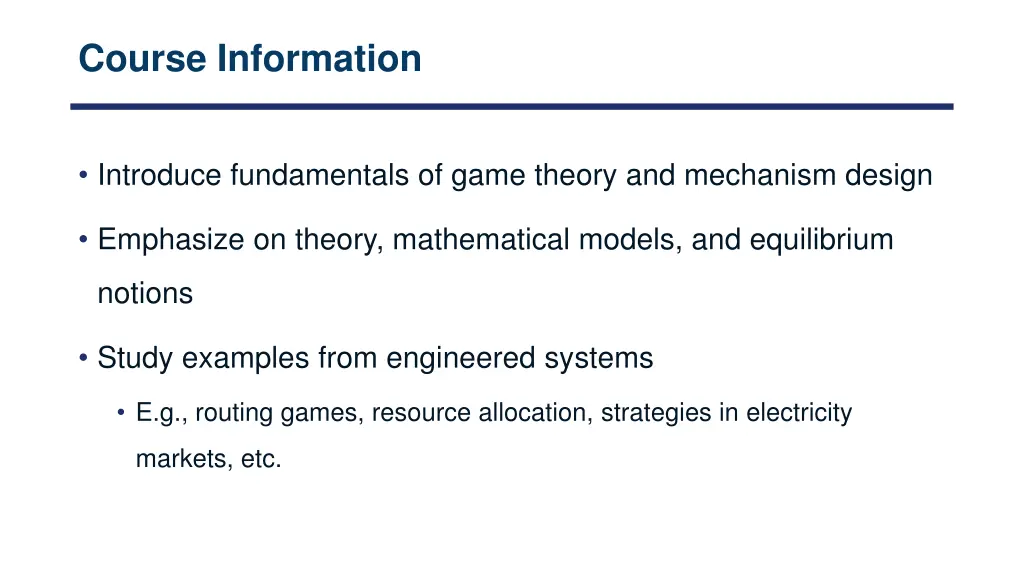
Course Information Introduce fundamentals of game theory and mechanism design Emphasize on theory, mathematical models, and equilibrium notions Study examples from engineered systems E.g., routing games, resource allocation, strategies in electricity markets, etc.
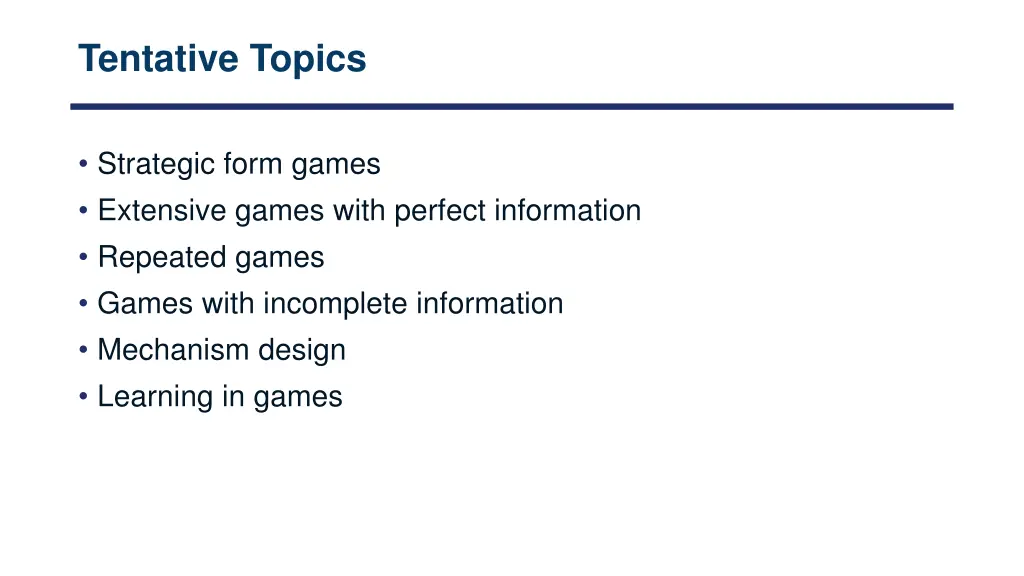
Tentative Topics Strategic form games Extensive games with perfect information Repeated games Games with incomplete information Mechanism design Learning in games
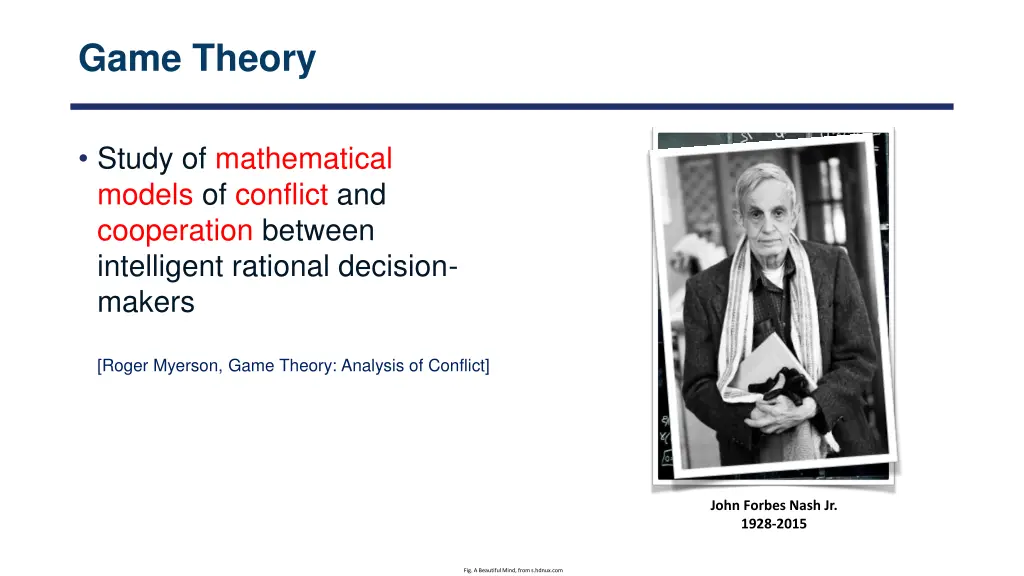
Game Theory Study of mathematical models of conflict and cooperation between intelligent rational decision- makers [Roger Myerson, Game Theory: Analysis of Conflict] John Forbes Nash Jr. 1928-2015 Fig. A Beautiful Mind, from s.hdnux.com
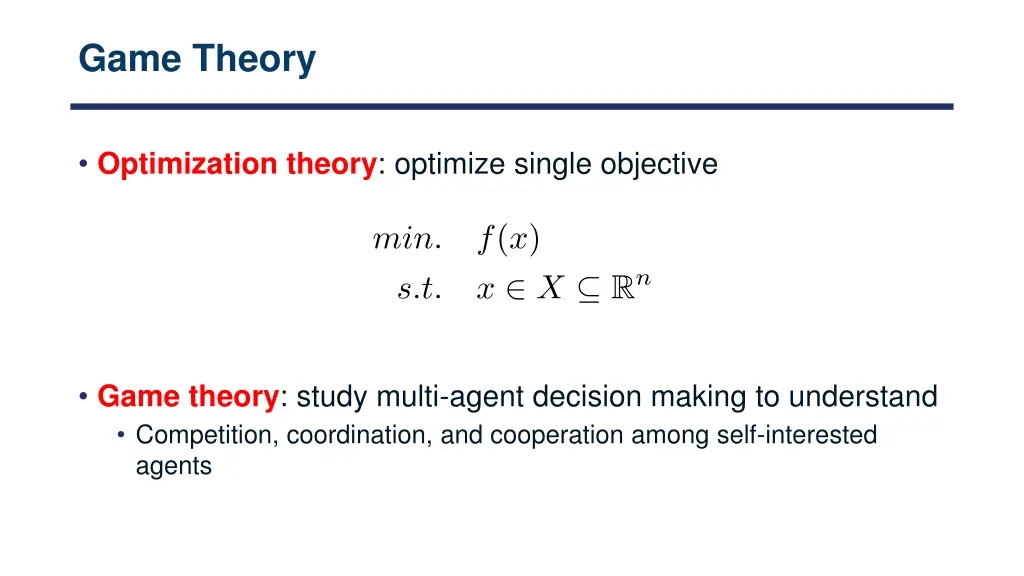
Game Theory Optimization theory: optimize single objective Game theory: study multi-agent decision making to understand Competition, coordination, and cooperation among self-interested agents
Mechanism Design Mechanism design is a field in economics and game theory that takes an engineering approach to designing economic mechanisms or incentives, toward desired objectives, in strategic settings, where players act rationally [Wikipedia Aug. 2018]
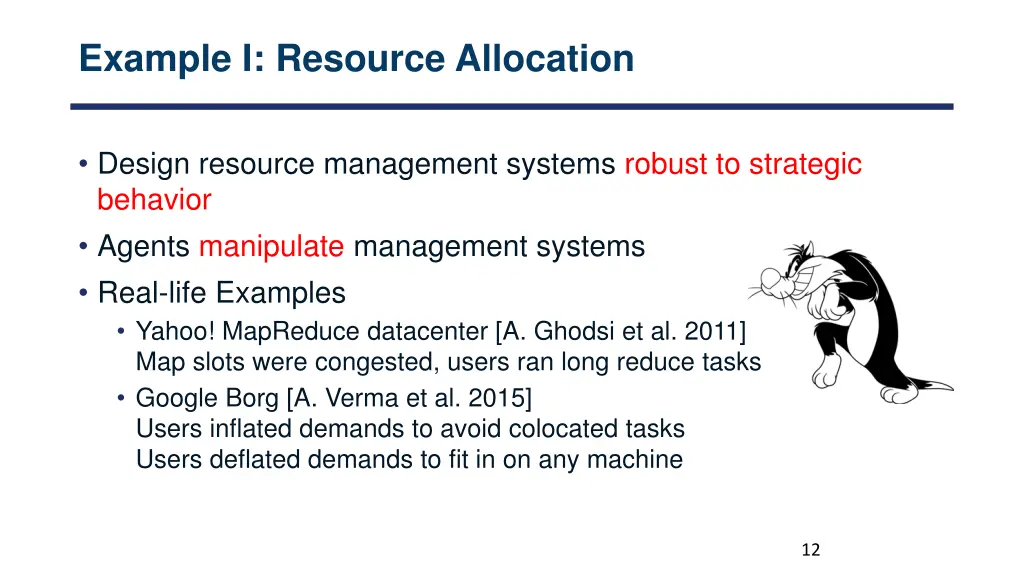
Example I: Resource Allocation Design resource management systems robust to strategic behavior Agents manipulate management systems Real-life Examples Yahoo! MapReduce datacenter [A. Ghodsi et al. 2011] Map slots were congested, users ran long reduce tasks Google Borg [A. Verma et al. 2015] Users inflated demands to avoid colocated tasks Users deflated demands to fit in on any machine 12
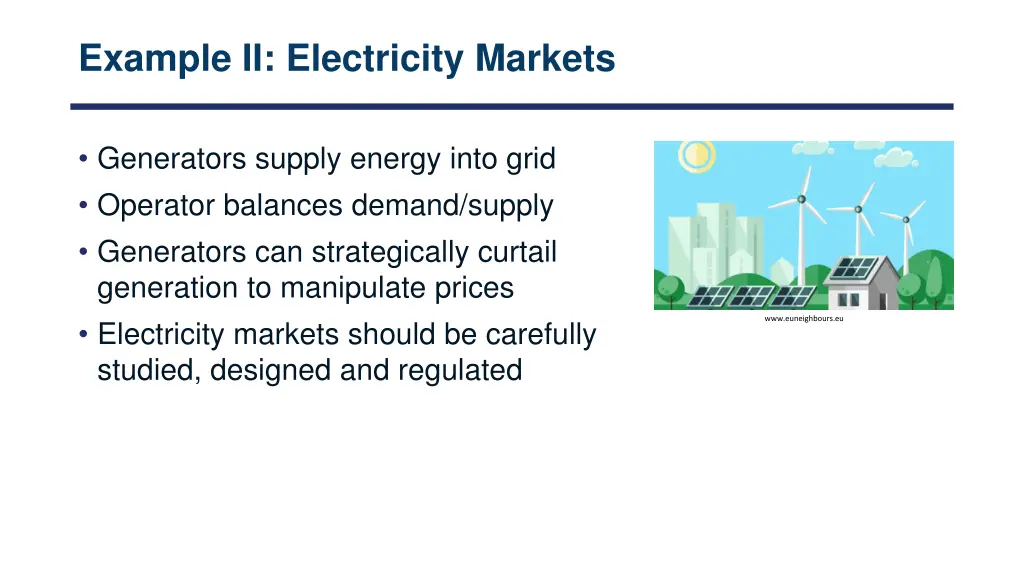
Example II: Electricity Markets Generators supply energy into grid Operator balances demand/supply Generators can strategically curtail generation to manipulate prices Electricity markets should be carefully studied, designed and regulated www.euneighbours.eu
Example III: Blockchains www.blockchains-expert.com Design protocols that guarantee No coalition has incentives to deviate If some coalition deviates, then no participating agent is worse of
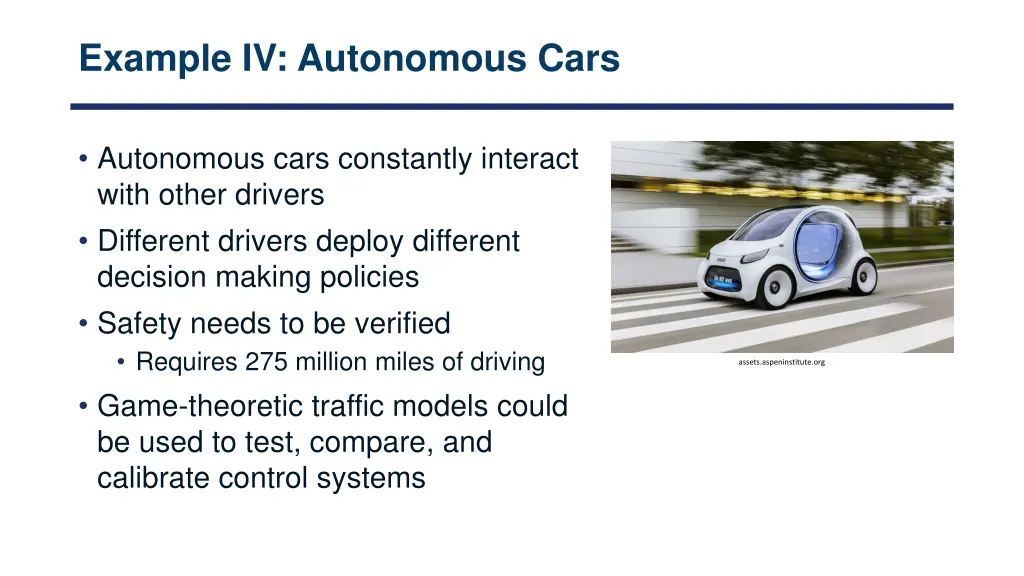
Example IV: Autonomous Cars Autonomous cars constantly interact with other drivers Different drivers deploy different decision making policies Safety needs to be verified Requires 275 million miles of driving Game-theoretic traffic models could be used to test, compare, and calibrate control systems assets.aspeninstitute.org
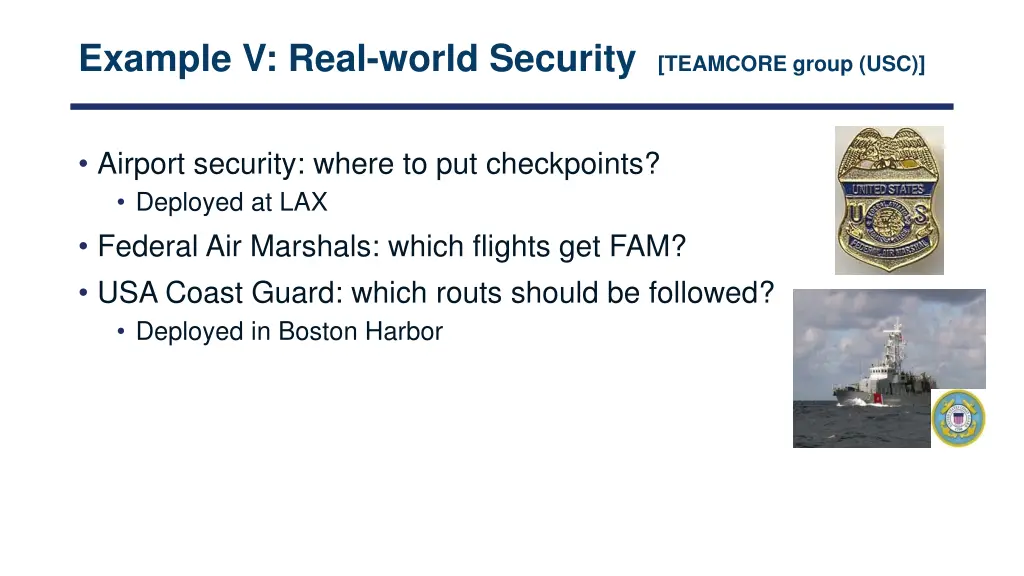
Example V: Real-world Security [TEAMCORE group (USC)] Airport security: where to put checkpoints? Deployed at LAX Federal Air Marshals: which flights get FAM? USA Coast Guard: which routs should be followed? Deployed in Boston Harbor