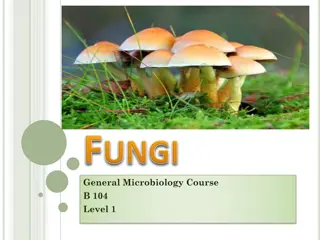
Introduction to Mycology: Understanding Fungi in Microbiology

Fungi, a diverse group of eukaryotic organisms, encompass yeasts, molds, and mushrooms. Division Eumycota describes true fungi, characterized by mycelium composed of hyphae and chitin cell walls. Fungi exhibit heterotrophic and aerobic behaviors, categorized into parasitic, saprophytic, and symbiotic types. Parasitic fungi can infect various hosts, including plants and insects. Understanding the classification of Eumycota sheds light on the fascinating world of fungi.

Download Presentation

Please find below an Image/Link to download the presentation.
The content on the website is provided AS IS for your information and personal use only. It may not be sold, licensed, or shared on other websites without obtaining consent from the author.If you encounter any issues during the download, it is possible that the publisher has removed the file from their server.
You are allowed to download the files provided on this website for personal or commercial use, subject to the condition that they are used lawfully. All files are the property of their respective owners.
The content on the website is provided AS IS for your information and personal use only. It may not be sold, licensed, or shared on other websites without obtaining consent from the author.
E N D
Presentation Transcript
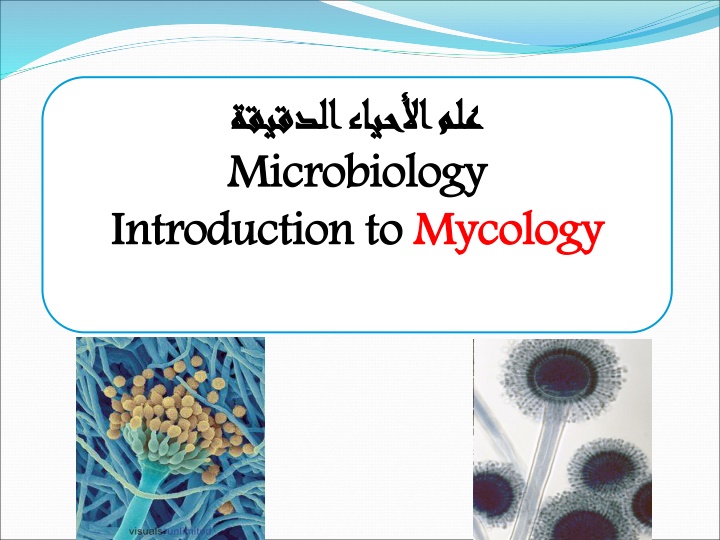
Microbiology Introduction to Microbiology Introduction to Mycology Mycology
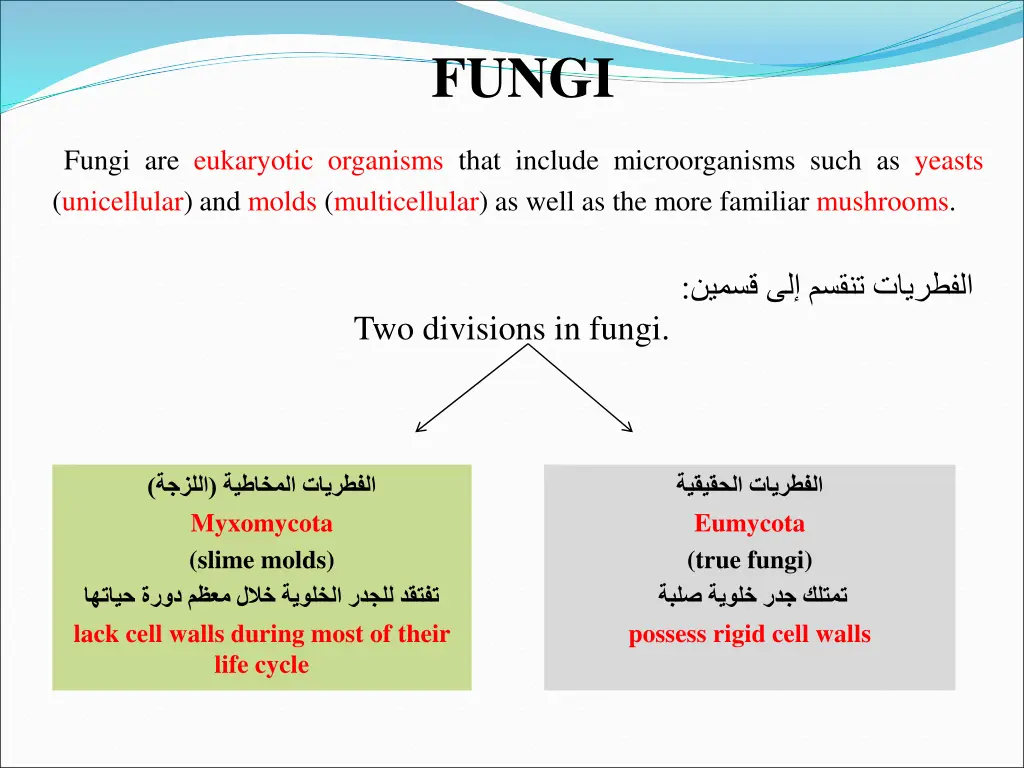
FUNGI Fungi are eukaryotic organisms that include microorganisms such as yeasts (unicellular) and molds (multicellular) as well as the more familiar mushrooms. : Two divisions in fungi. ) Myxomycota (slime molds) ( Eumycota (true fungi) possess rigid cell walls lack cell walls during most of their life cycle
Division Eumycota-True Fungi This group of organisms is characterized by the following characters : The fungal body or thallus is known as mycelium, which is composed threads known as hyphae (seperated or non-seperated). Cell wall in the majority of fungi is chitin. Cellulose is usually absent from walls of most fungi. Fungi are heterotrophic and aerobes. The reserve food material is usually glycogen but never starch. With regard to the mode of nutrition, fungi can be divided into the three following types : a) Parasitic fungi. b) Saprophytic fungi. c) Symbiotic fungi.
Division Eumycota-True Fungi A) Parasitic fungi. They are two types : Obligate parasites, which live and grow only on their living host, e.g. Puccinia graminis on wheat (rusty infection). Facultative parasites, which live usually as saprophytes on dead organic matter in the soil, but they can parasitize their hosts if found nearby them, e.g. Fusarium sp. which causes diseases to many plants. The parasitic fungi can infect not only higher plants, but also insects such as house flies, which can be killed by such infection. Some skin diseases of humans are due to fungal infections.
Division Eumycota-True Fungi B) Saprophytic fungi can be also divided into : Obligate saprophytes, which live only saprophyically on dead organic matter, i.e. they do not infect living plants or animals, e.g. Rhizopus. Facultative saprophytes, which usually live parasitically, but they can behave a saprophytes under certain conditions, e.g. Smut fungi. - - C) Symbiotic fungi, which live in association with other organisms and there is a mutual benefit between them. Lichens Mycorrhizas (Fungus and an Algae ). (Fungi and roots of higher plants)
Division Eumycota-True Fungi Mycorrhizas (Fungi and roots of higher plants) A) Ectophytic mycorrhiza, The fungus forms an external investment of the root in the form of a crown of hyphae without penetrating into the cells other those of the epidermis. B) Endophytic mycorrhiza, The fungal penetrate the inner parts of the roots and have little connection mycelium in the soil. hyphae with the
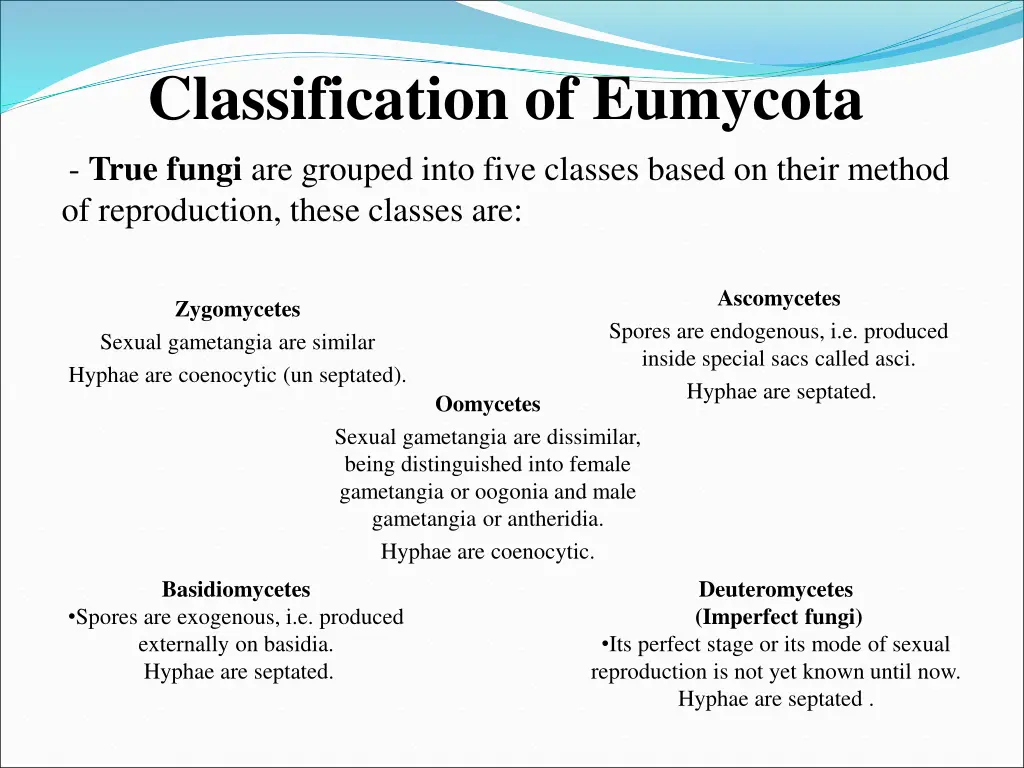
Classification of Eumycota - True fungi are grouped into five classes based on their method of reproduction, these classes are: Ascomycetes Zygomycetes Spores are endogenous, i.e. produced inside special sacs called asci. Hyphae are septated. Sexual gametangia are similar Hyphae are coenocytic (un septated). Oomycetes Sexual gametangia are dissimilar, being distinguished into female gametangia or oogonia and male gametangia or antheridia. Hyphae are coenocytic. Basidiomycetes Deuteromycetes (Imperfect fungi) Spores are exogenous, i.e. produced externally on basidia. Hyphae are septated. Its perfect stage or its mode of sexual reproduction is not yet known until now. Hyphae are septated .
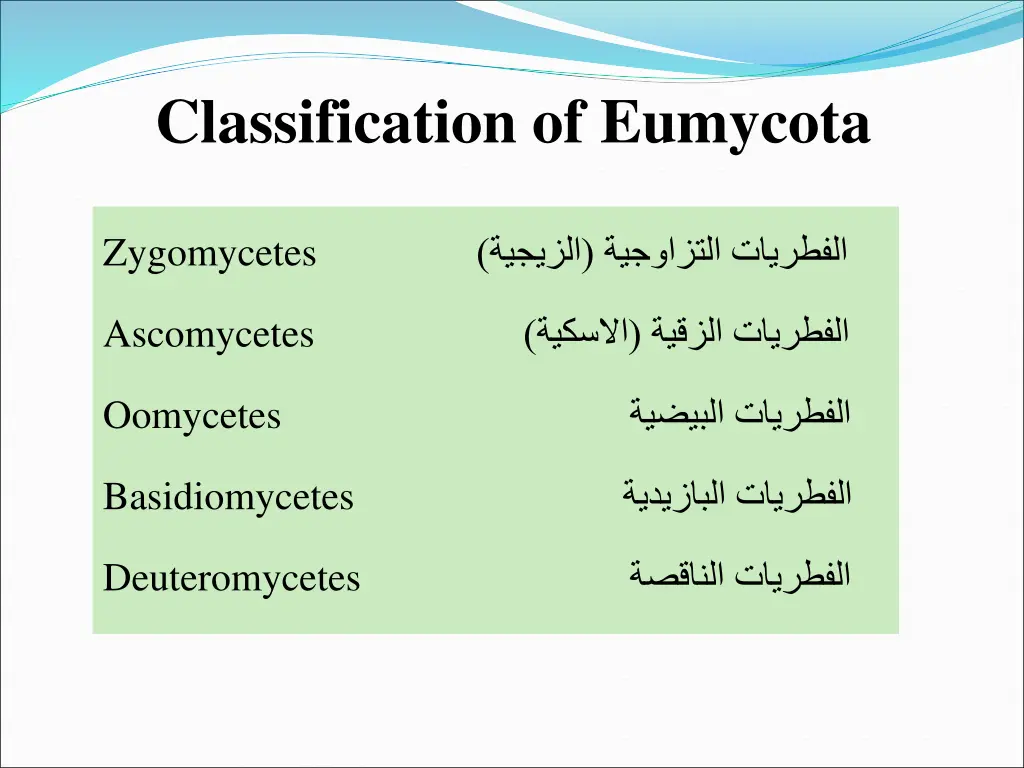
Classification of Eumycota Zygomycetes ) ( Ascomycetes ) ( Oomycetes Basidiomycetes Deuteromycetes