Introduction to the Economy of Ghana: The External Sector
Ghana's external sector plays a critical role in its economy, with trade being essential for prosperity. Pre-1983, the economy faced strict government controls on trade and capital movements; however, post-1983 marked a significant shift towards liberalization. The current landscape features minimal trade restrictions, with Ghana actively attracting foreign investments and expanding international trade. This evolution underscores the importance of globalization, as Ghana's economic fortunes are increasingly linked with those of other nations.

Download Presentation

Please find below an Image/Link to download the presentation.
The content on the website is provided AS IS for your information and personal use only. It may not be sold, licensed, or shared on other websites without obtaining consent from the author.If you encounter any issues during the download, it is possible that the publisher has removed the file from their server.
You are allowed to download the files provided on this website for personal or commercial use, subject to the condition that they are used lawfully. All files are the property of their respective owners.
The content on the website is provided AS IS for your information and personal use only. It may not be sold, licensed, or shared on other websites without obtaining consent from the author.
E N D
Presentation Transcript
Econ 215: Introduction to the Economy of Ghana 1 The External Sector Instructor: Dr. Emmanuel Codjoe
The External Sector Ghana s external sector is a very important part of the economy. Ghana would be much poorer if it had no trade with the rest of the world.
Background to External Sector We can distinguish between two broad periods; pre-1983 and post-1983. Pre-1983 was marked by greater controls and interventions by government.
Background to External Sector Pre-1983 was characterized by several restrictions on trade and capital movements. These included, restrictions on international capital flows, quantitative restrictions on trade and high import tariffs.
Background to External Sector However, post-1983 marked the commencement of a marked and significant shift in economic paradigm away from a more interventionist regime.
Background to External Sector Currently there are few restrictions on trade and capital flows. Ghana is actively engaged in attracting foreign investments as well as seeking to expand trade with other regions of the world.
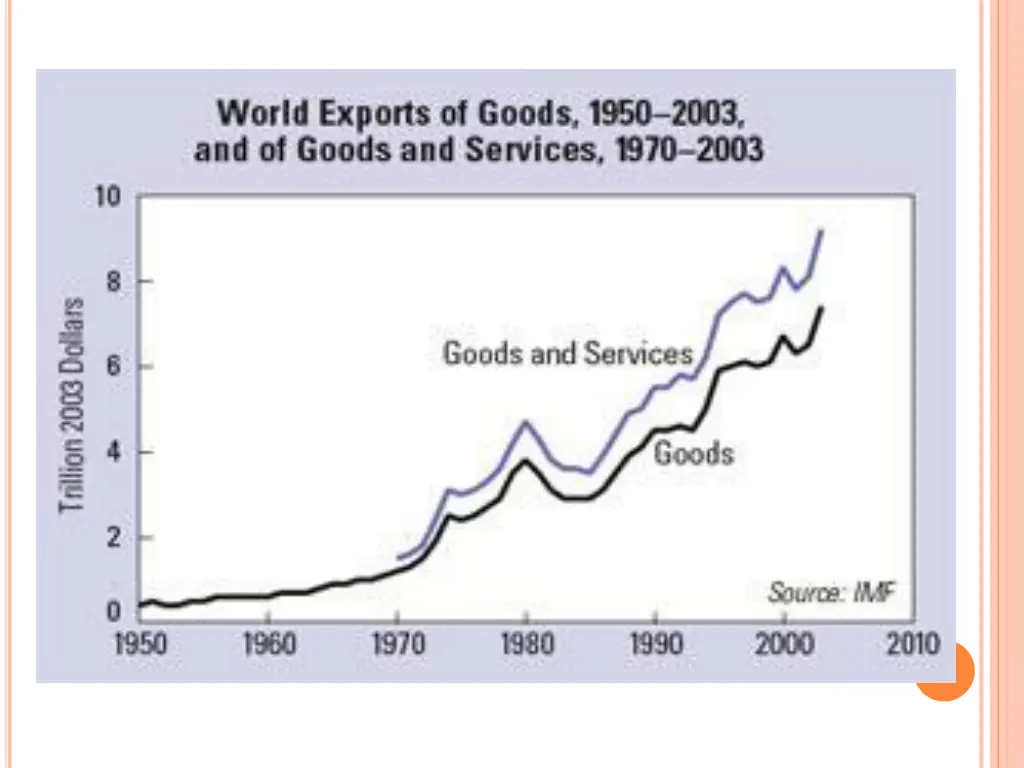
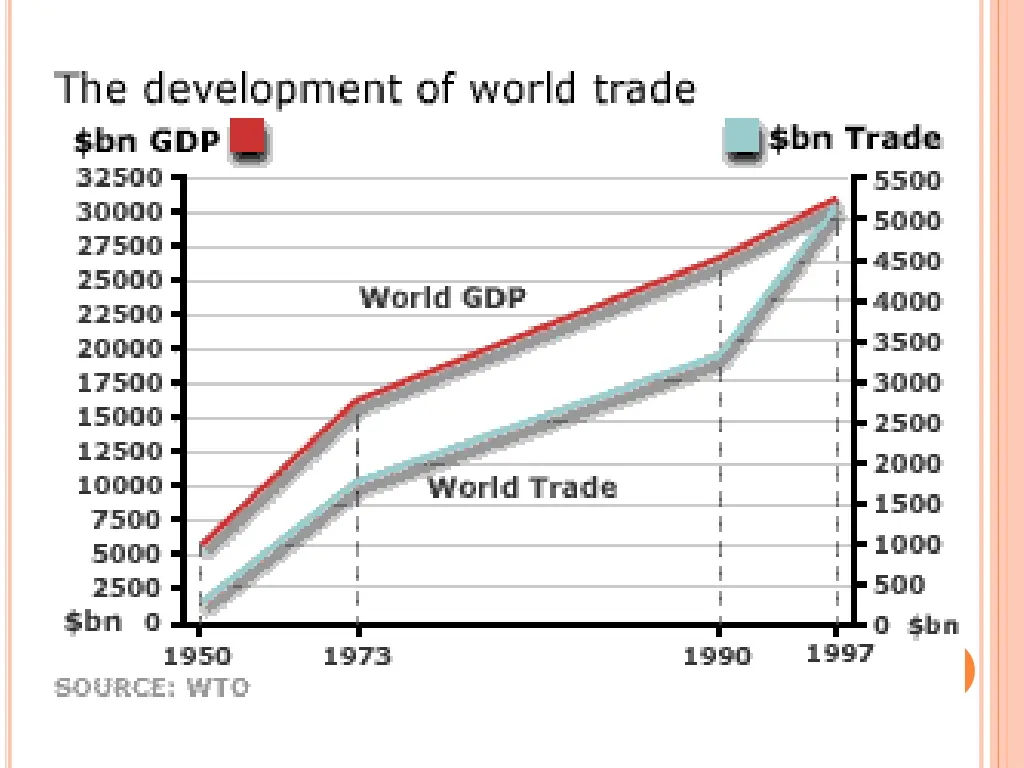
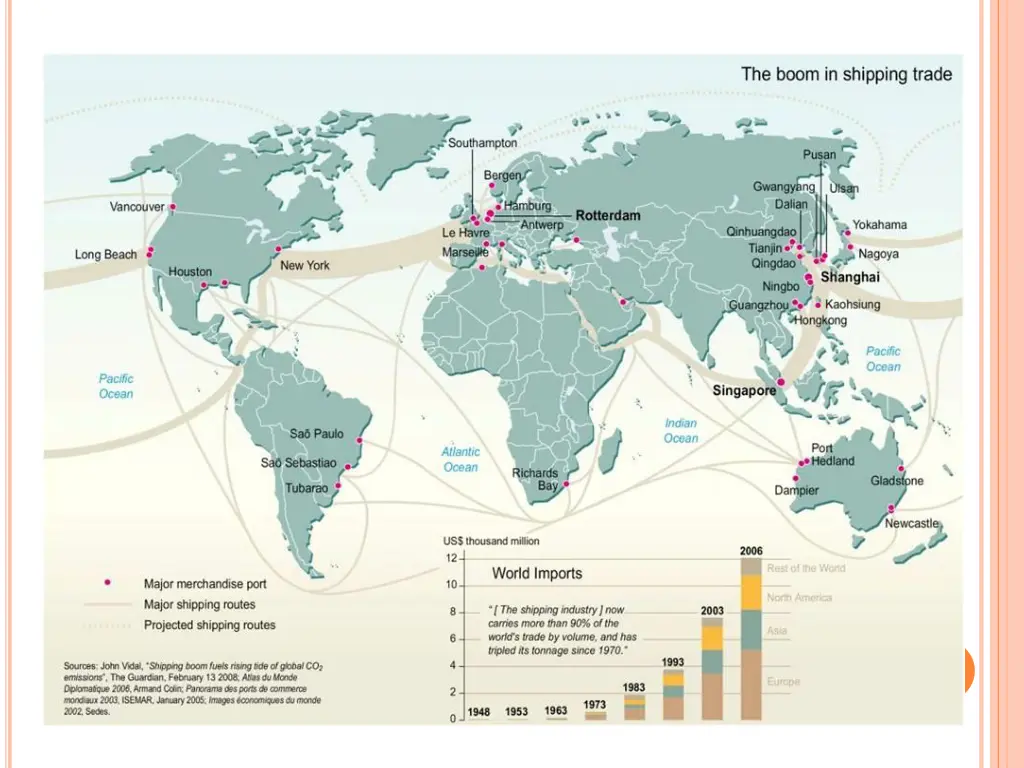
External Sector Developments In recent decades, the importance of the external sector has become apparent because of the important role in economic development. This is especially so given the expansion of global trade in goods and services and that fact that many economies of the world have become increasing linked.
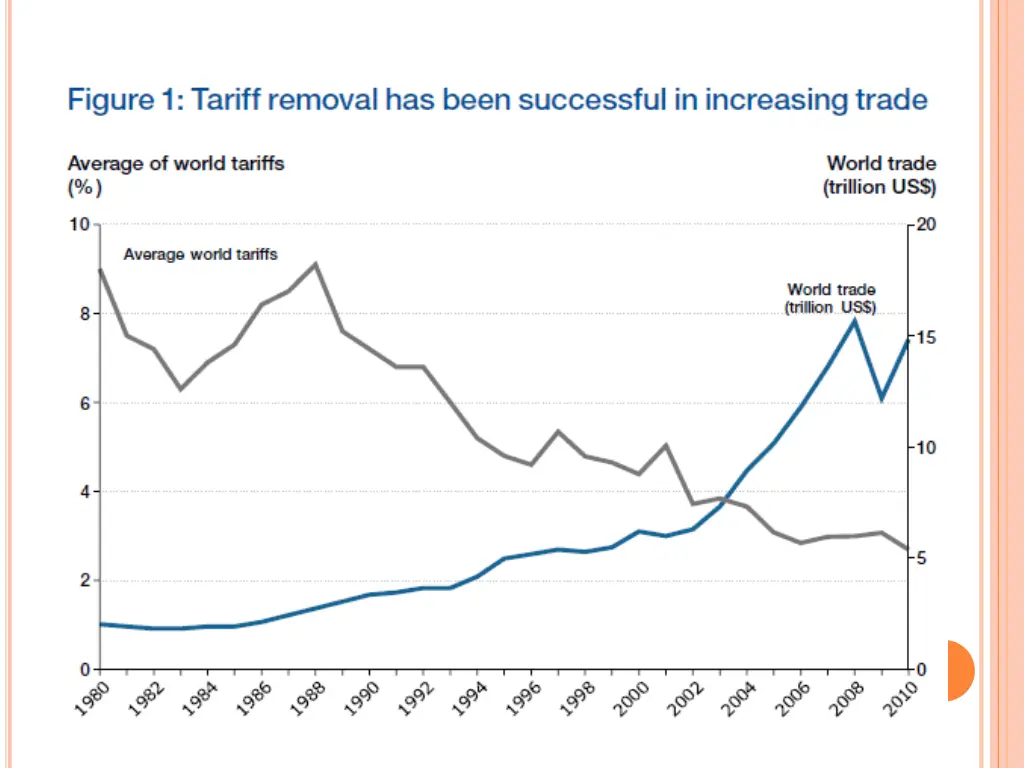
External Sector Developments The growth in world trade and the associated interconnectedness of the economies of many countries has been described by the term GLOBALISATION. Thus, we are now in a globalised world, where the fortunes of individual economies are affected, either directly or indirectly, by the performance of other economies, especially the major economies of the world.
External Sector Developments But in its core economic meaning, globalisation refers to the increased openness of economies to international trade, financial flows and direct foreign investment. Thus, by choosing to engage economically with the rest of the world a country obtains the following benefits:
Importance of the External Sector Access to foreign goods and services, especially those that are not/cannot be produced locally. Access to foreign markets for domestically produced goods and services Access to foreign expertise and know-how as well as to technology and capital that is needed for development
Importance of the External Sector Because of the economic relations with the rest of the world, there is increased diversity and variety in respect of the goods and services available to Ghanaians. Moreover, there is increased competition which forces domestic firms to increase their level of efficiency, productivity, and competitiveness.
Concerns About External Sector It is worth noting, however, that increased integration with the world economy also raises several concerns for many economic agents. These concerns include: increased inequality within countries and between countries, degradation of the environment, increased dominance of world economy by the richest countries
Concerns About External Sector In Ghana, many domestic firms have expressed several concerns about the effect on domestic firms competitiveness as well as their operational viability in the face of relatively cheap imports.
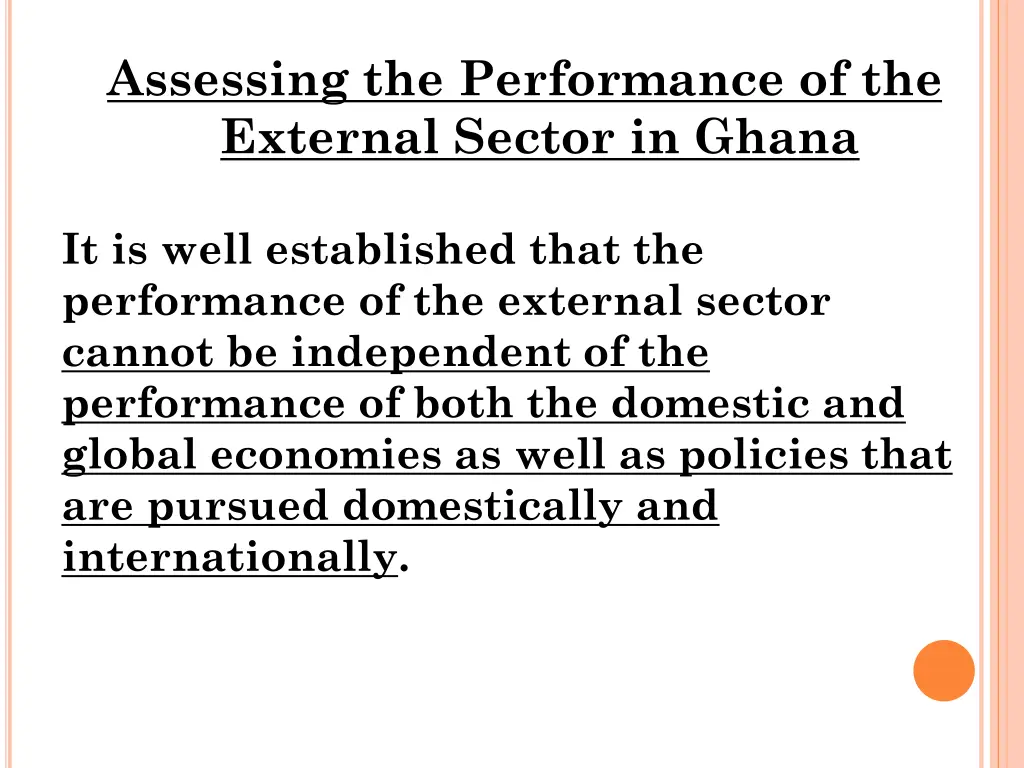
Assessing the Performance of the External Sector in Ghana It is well established that the performance of the external sector cannot be independent of the performance of both the domestic and global economies as well as policies that are pursued domestically and internationally.
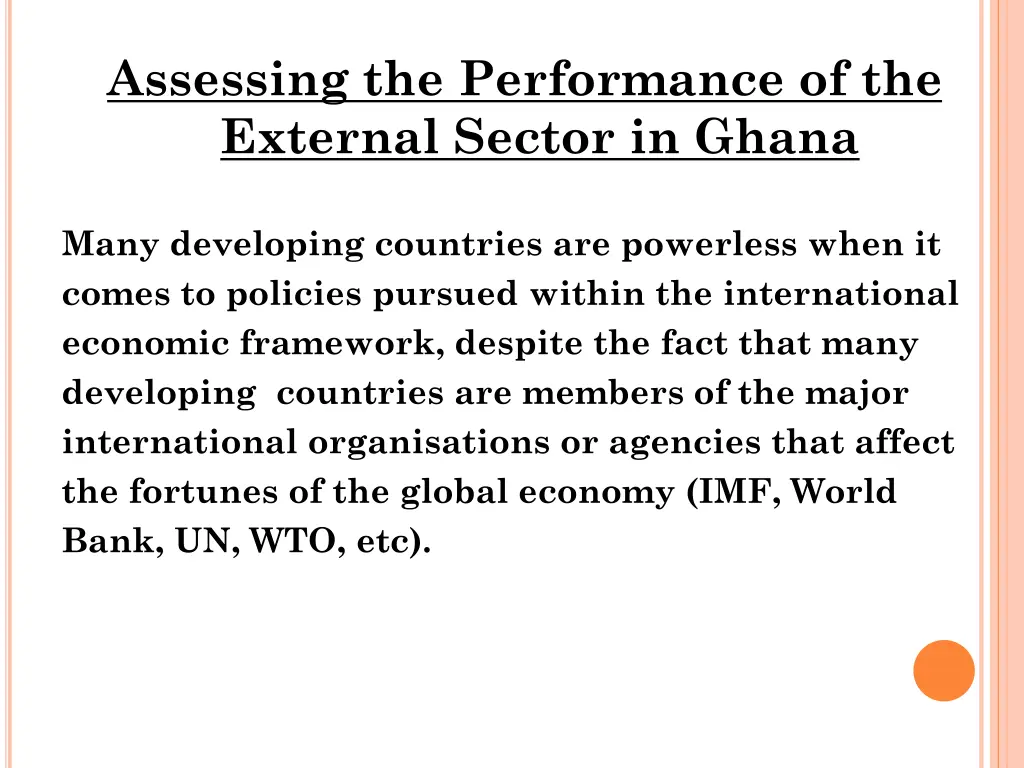
Assessing the Performance of the External Sector in Ghana Many developing countries are powerless when it comes to policies pursued within the international economic framework, despite the fact that many developing countries are members of the major international organisations or agencies that affect the fortunes of the global economy (IMF, World Bank, UN, WTO, etc).
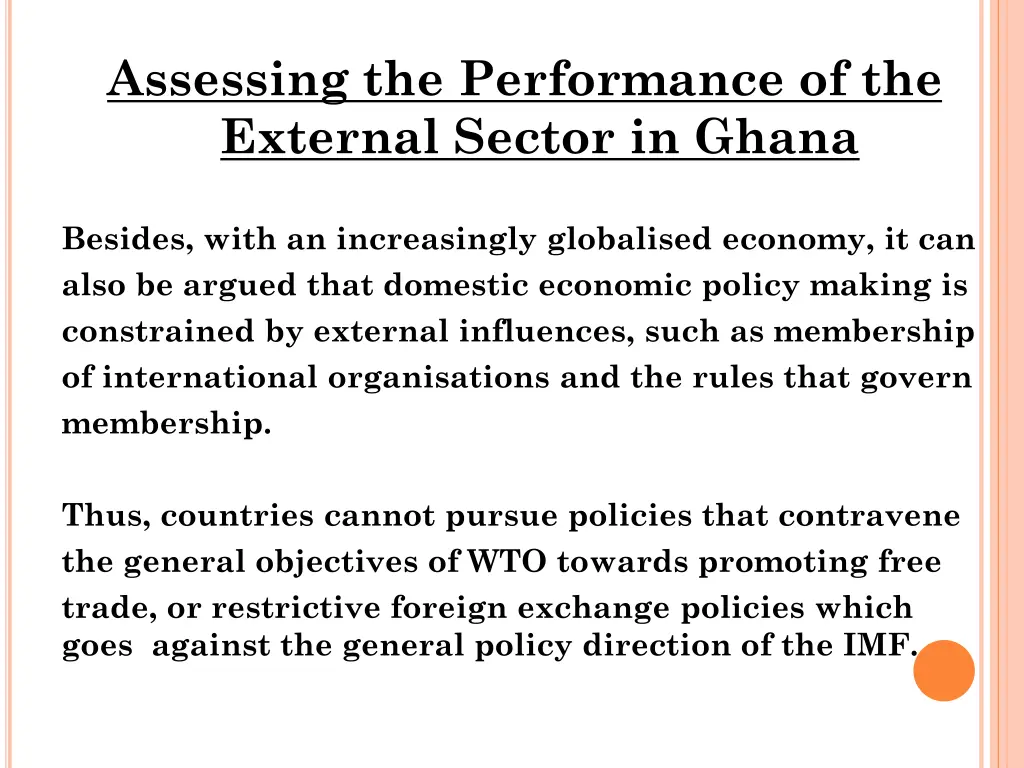
Assessing the Performance of the External Sector in Ghana Besides, with an increasingly globalised economy, it can also be argued that domestic economic policy making is constrained by external influences, such as membership of international organisations and the rules that govern membership. Thus, countries cannot pursue policies that contravene the general objectives of WTO towards promoting free trade, or restrictive foreign exchange policies which goes against the general policy direction of the IMF.
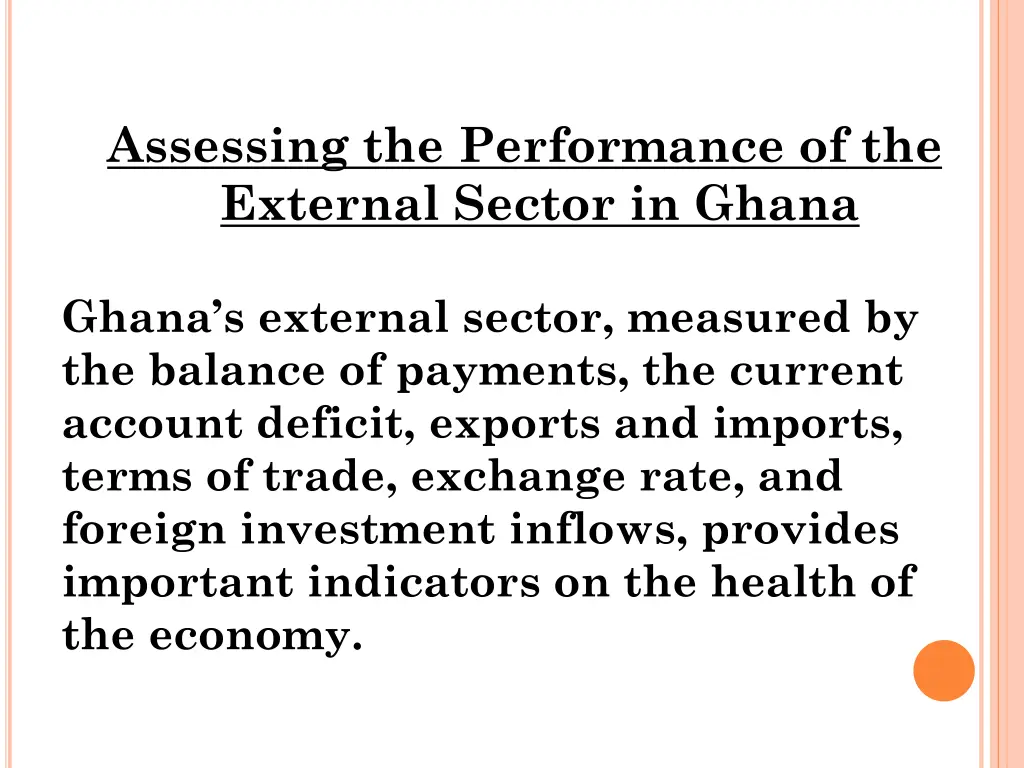
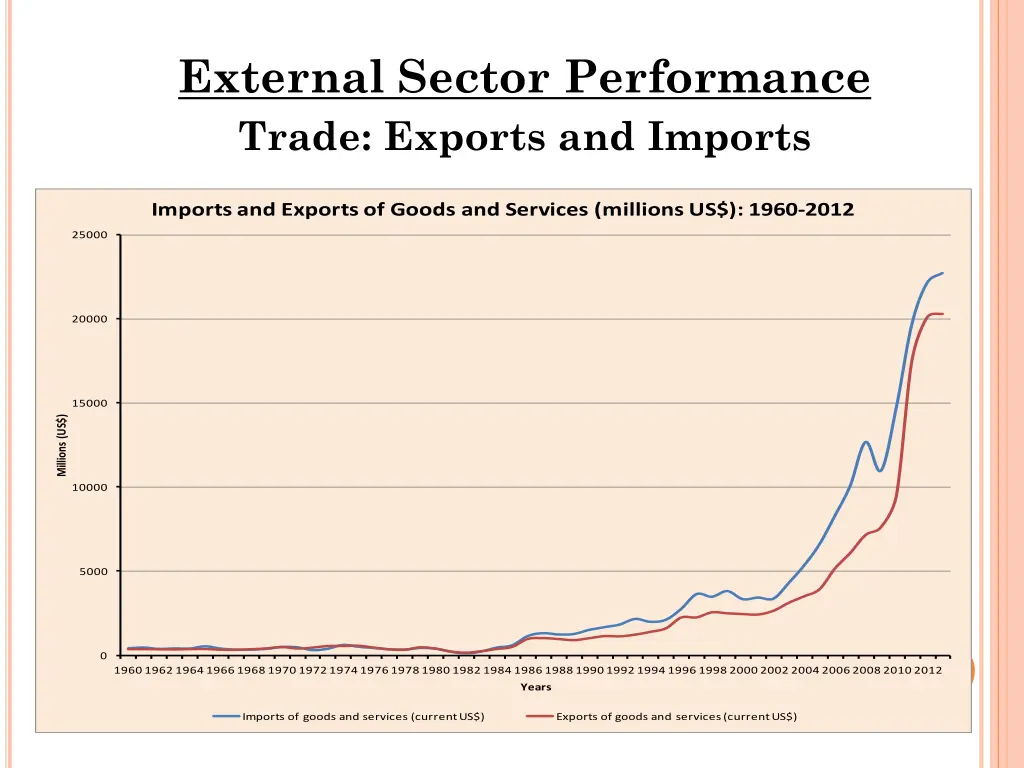
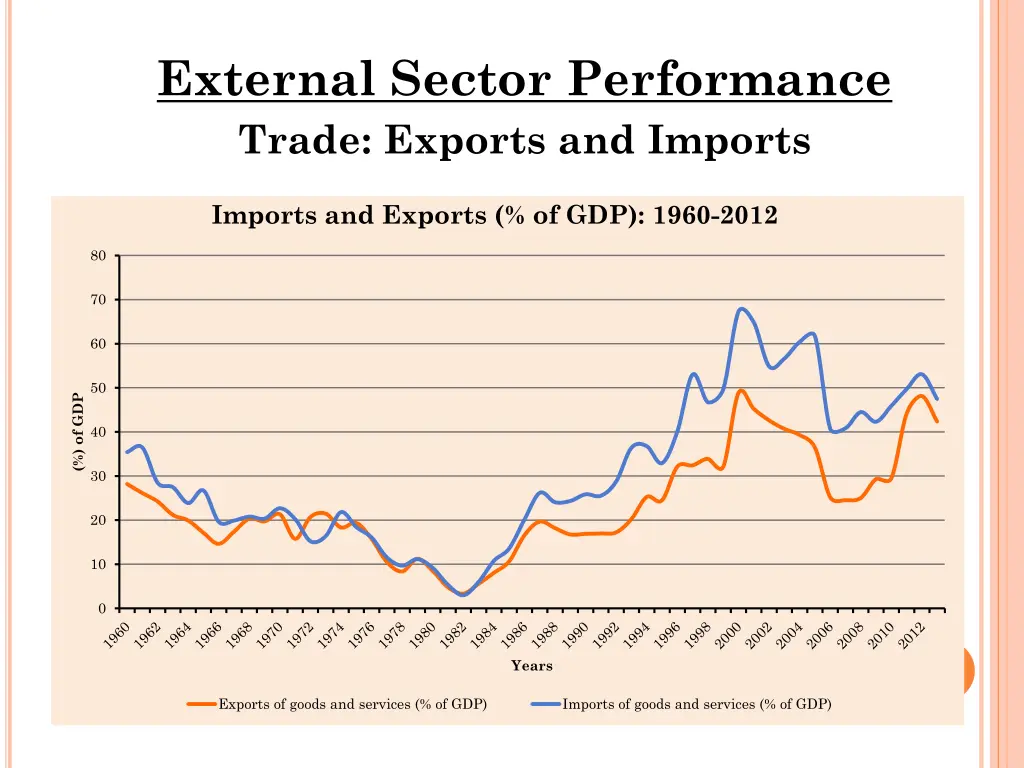
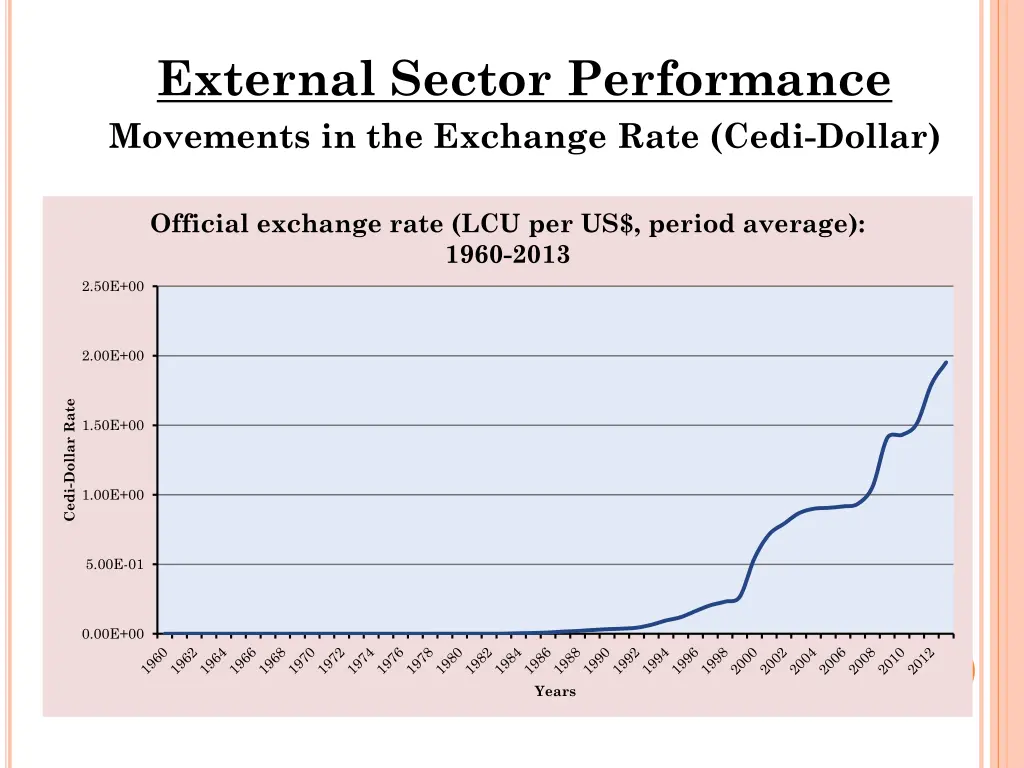
Assessing the Performance of the External Sector in Ghana Ghana s external sector, measured by the balance of payments, the current account deficit, exports and imports, terms of trade, exchange rate, and foreign investment inflows, provides important indicators on the health of the economy.
External Sector Performance Trade: Exports and Imports Imports and Exports of Goods and Services (millions US$): 1960-2012 25000 20000 15000 Millions (US$) 10000 5000 0 1960 1962 1964 1966 1968 1970 19721974197619781980 1982 1984 1986 1988 1990 1992 1994 1996 1998 2000 2002 2004 2006 2008 2010 2012 Years Imports of goods and services (current US$) Exports of goods and services (current US$)
External Sector Performance Trade: Exports and Imports Imports and Exports (% of GDP): 1960-2012 80 70 60 50 (%) of GDP 40 30 20 10 0 Years Exports of goods and services (% of GDP) Imports of goods and services (% of GDP)
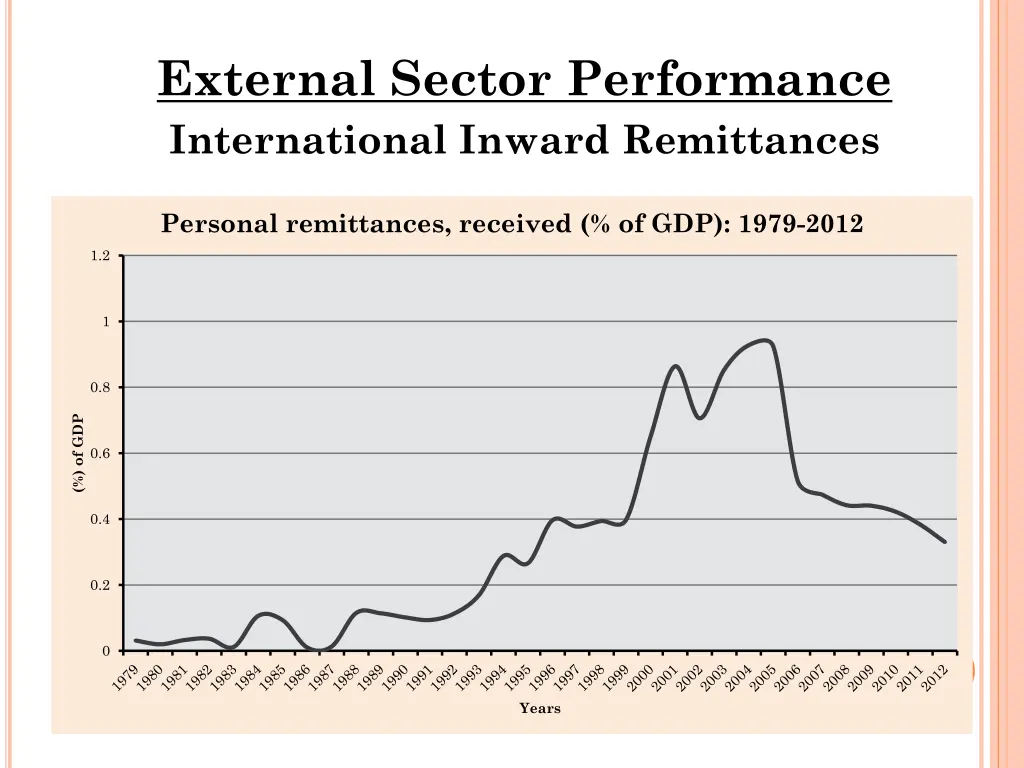
External Sector Performance International Inward Remittances Personal remittances, received (% of GDP): 1979-2012 1.2 1 0.8 (%) of GDP 0.6 0.4 0.2 0 Years
External Sector Performance Movements in the Exchange Rate (Cedi-Dollar) Official exchange rate (LCU per US$, period average): 1960-2013 2.50E+00 2.00E+00 Cedi-Dollar Rate 1.50E+00 1.00E+00 5.00E-01 0.00E+00 Years
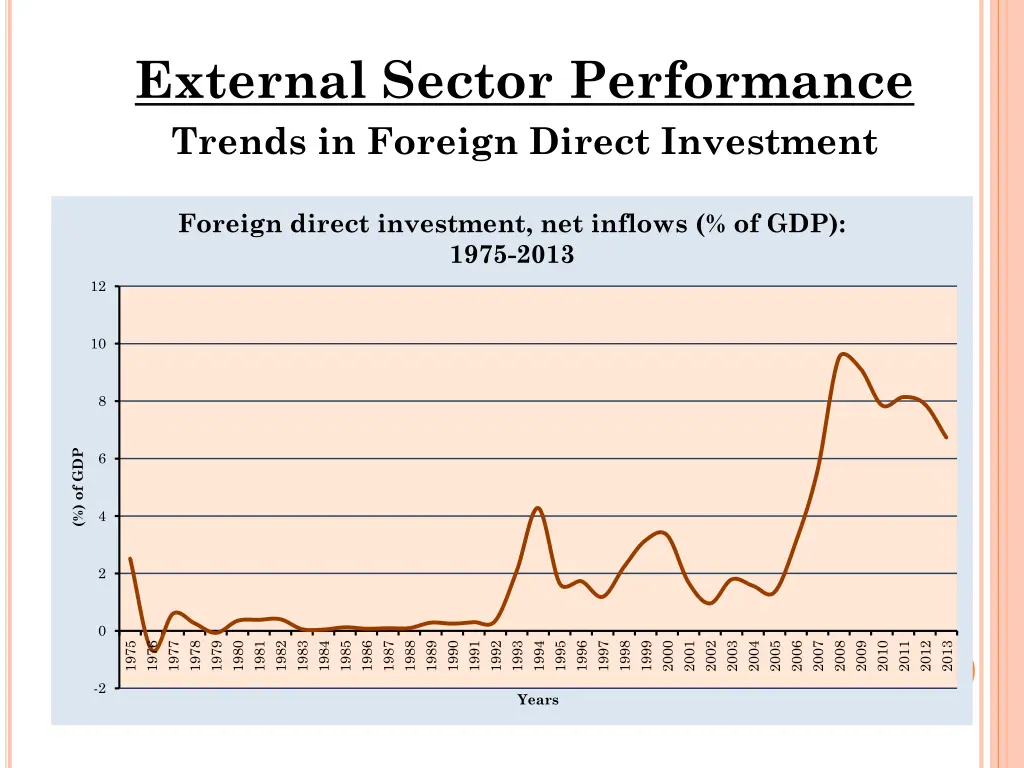
External Sector Performance Trends in Foreign Direct Investment Foreign direct investment, net inflows (% of GDP): 1975-2013 12 10 8 (%) of GDP 6 4 2 0 1975 1976 1977 1978 1979 1980 1981 1982 1983 1984 1985 1986 1987 1988 1989 1990 1991 1992 1993 1994 1995 1996 1997 1998 1999 2000 2001 2002 2003 2004 2005 2006 2007 2008 2009 2010 2011 2012 2013 -2 Years
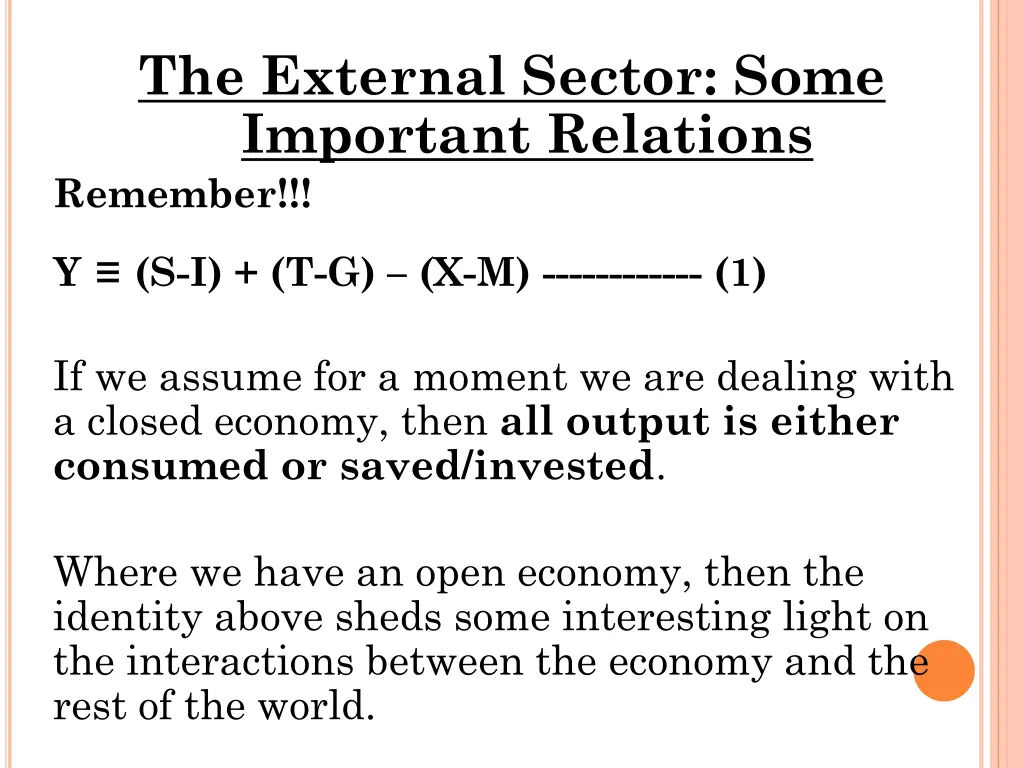
The External Sector: Some Important Relations Remember!!! Y (S-I) + (T-G) (X-M) ------------ (1) If we assume for a moment we are dealing with a closed economy, then all output is either consumed or saved/invested. Where we have an open economy, then the identity above sheds some interesting light on the interactions between the economy and the rest of the world.
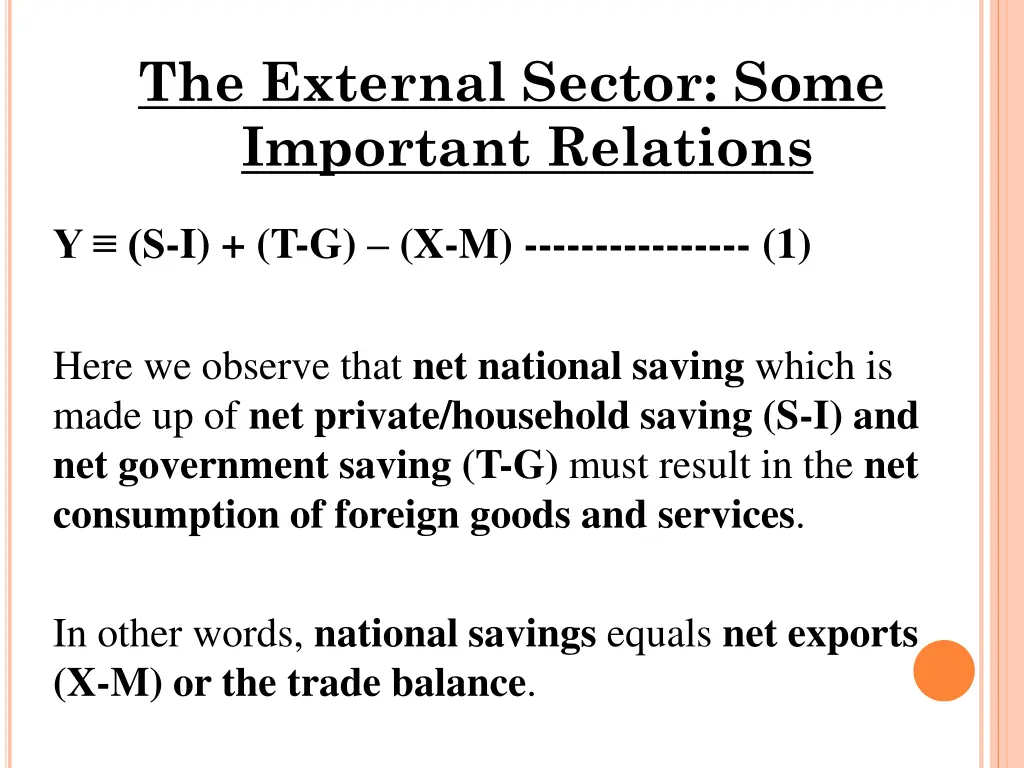
The External Sector: Some Important Relations Y (S-I) + (T-G) (X-M) ---------------- (1) Here we observe that net national saving which is made up of net private/household saving (S-I) and net government saving (T-G) must result in the net consumption of foreign goods and services. In other words, national savings equals net exports (X-M) or the trade balance.
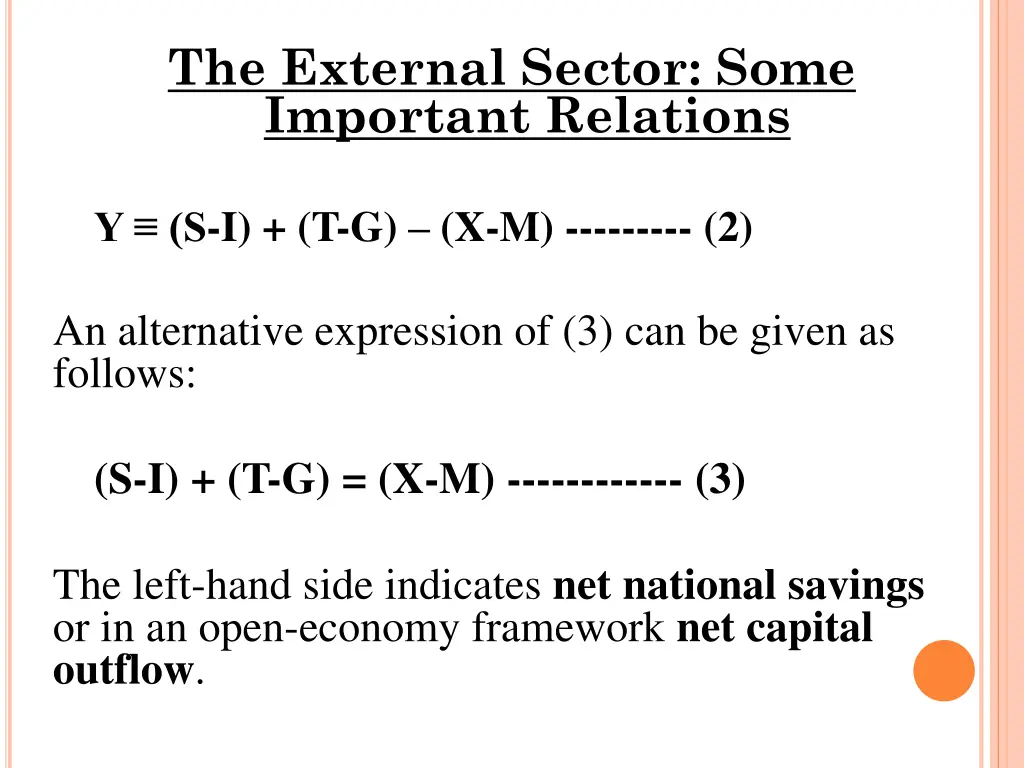
The External Sector: Some Important Relations Y (S-I) + (T-G) (X-M) --------- (2) An alternative expression of (3) can be given as follows: (S-I) + (T-G) = (X-M) ------------ (3) The left-hand side indicates net national savings or in an open-economy framework net capital outflow.
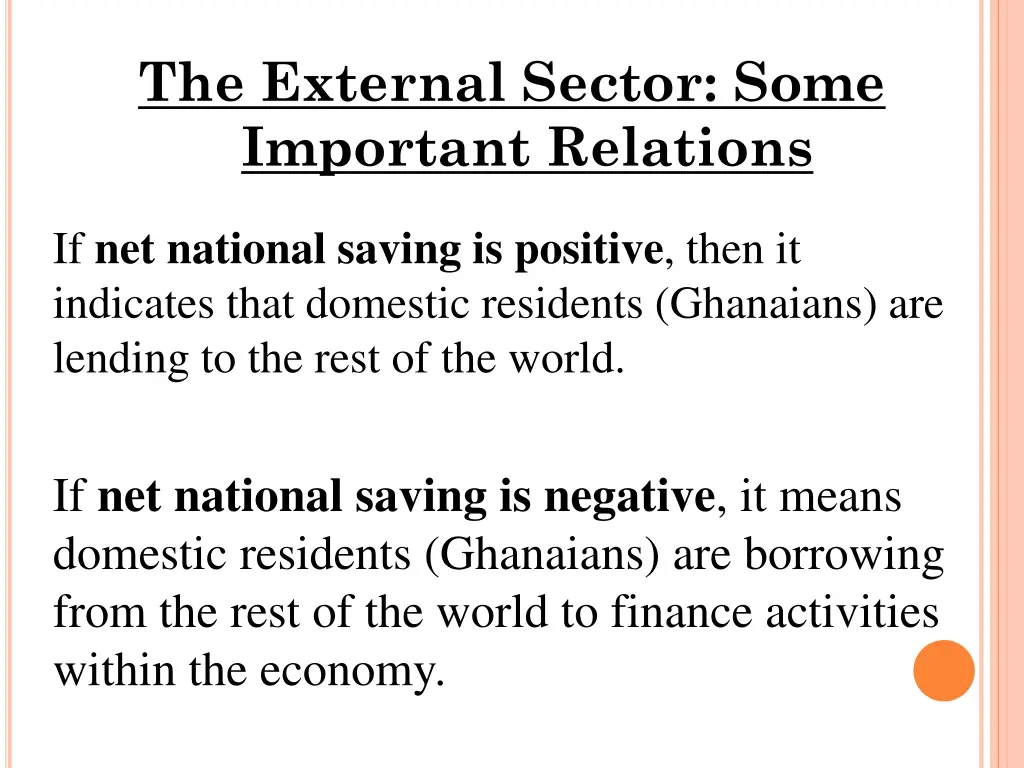
The External Sector: Some Important Relations If net national saving is positive, then it indicates that domestic residents (Ghanaians) are lending to the rest of the world. If net national saving is negative, it means domestic residents (Ghanaians) are borrowing from the rest of the world to finance activities within the economy.
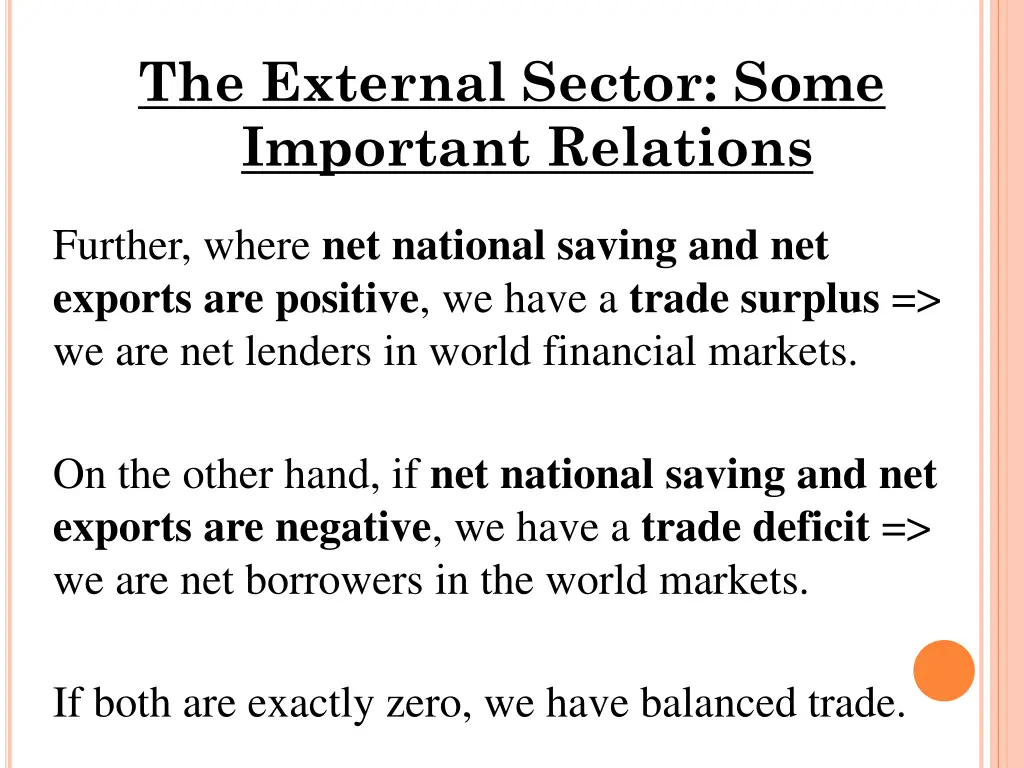
The External Sector: Some Important Relations Further, where net national saving and net exports are positive, we have a trade surplus => we are net lenders in world financial markets. On the other hand, if net national saving and net exports are negative, we have a trade deficit => we are net borrowers in the world markets. If both are exactly zero, we have balanced trade.
The External Sector Questions and Comments