Irrigation in Organic Farming

Irrigation is vital in organic farming, enhancing crop yield and quality while minimizing water wastage. Utilizing techniques like drip irrigation and mulching can significantly optimize water use. These methods not only conserve water but also promote healthy plant growth and reduce risks associated with pest infestations. Addressing challenges such as water scarcity and salinization through innovative solutions ensures sustainable agricultural practices and the preservation of essential water resources.

Download Presentation

Please find below an Image/Link to download the presentation.
The content on the website is provided AS IS for your information and personal use only. It may not be sold, licensed, or shared on other websites without obtaining consent from the author.If you encounter any issues during the download, it is possible that the publisher has removed the file from their server.
You are allowed to download the files provided on this website for personal or commercial use, subject to the condition that they are used lawfully. All files are the property of their respective owners.
The content on the website is provided AS IS for your information and personal use only. It may not be sold, licensed, or shared on other websites without obtaining consent from the author.
E N D
Presentation Transcript
Irrigation in Organic Farming Exploring sustainable water management techniques
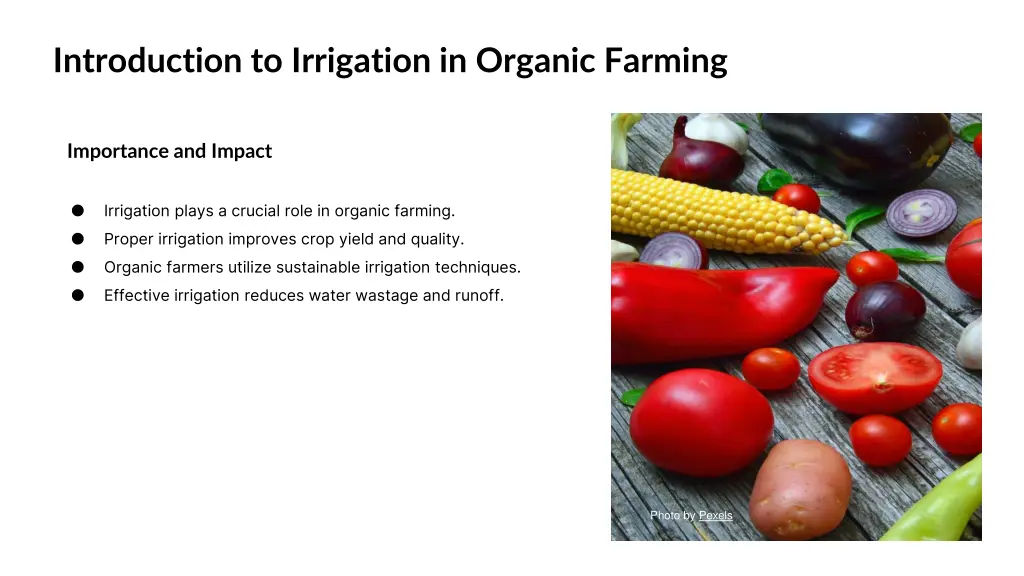
Introduction to Irrigation in Organic Farming Importance and Impact Irrigation plays a crucial role in organic farming. Proper irrigation improves crop yield and quality. Organic farmers utilize sustainable irrigation techniques. Effective irrigation reduces water wastage and runoff. Photo by Pexels
Benefits of Proper Irrigation in Organic Farming Advantages Disadvantages Proper irrigation promotes healthy plant growth Improper irrigation can lead to overwatering, by providing the right amount of water at the causing root rot and oxygen deprivation in right time. plants. It increases nutrient uptake as water helps Water scarcity or drought can also be a dissolve minerals in the soil, making them more challenge for organic farming relying on accessible to plants. irrigation. By maintaining optimal moisture levels, proper If not managed properly, high water usage in irrigation reduces the risk of pest and disease irrigation may negatively impact the infestations. environment.
Water-Conserving Techniques in Organic Farming Organic farmers employ various water-conserving techniques. Drip irrigation is a method that delivers water directly to the root zone, minimizing waste. Mulching involves covering the soil with organic materials, reducing evaporation and conserving moisture. 1 Rainwater harvesting is another effective technique. It involves collecting rainwater from roofs and diverting it to storage tanks or underground reservoirs. This water can then be used for irrigation purposes, reducing the reliance on freshwater sources. 2 By implementing these techniques, organic farmers can reduce water usage and improve the efficiency of water utilization. This contributes to sustainable agriculture practices and helps conserve precious water resources. 3
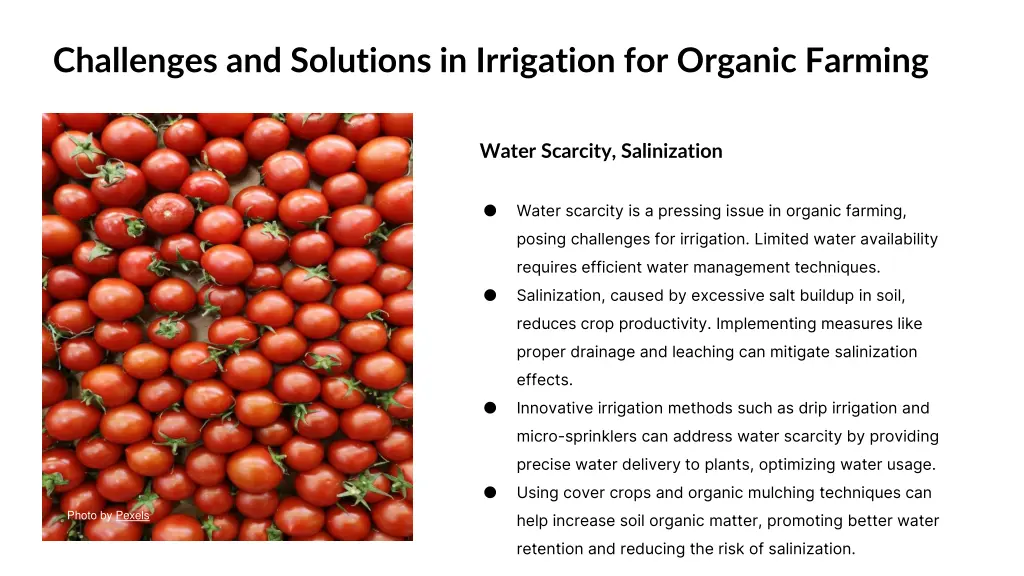
Challenges and Solutions in Irrigation for Organic Farming Water Scarcity, Salinization Water scarcity is a pressing issue in organic farming, posing challenges for irrigation. Limited water availability requires efficient water management techniques. Salinization, caused by excessive salt buildup in soil, reduces crop productivity. Implementing measures like proper drainage and leaching can mitigate salinization effects. Innovative irrigation methods such as drip irrigation and micro-sprinklers can address water scarcity by providing precise water delivery to plants, optimizing water usage. Using cover crops and organic mulching techniques can Photo by Pexels help increase soil organic matter, promoting better water retention and reducing the risk of salinization.