Journey of Recovery: Steps, Structure, and Beliefs
Explore the developmental model of recovery based on abstinence and the 12 Steps philosophy. Learn about the importance of step work, structure, and the beliefs underlying recovery according to Gorski's model. Gain insights from AA/NA perspectives on the journey of recovery, emphasizing personal responsibility and spiritual maintenance.

Download Presentation

Please find below an Image/Link to download the presentation.
The content on the website is provided AS IS for your information and personal use only. It may not be sold, licensed, or shared on other websites without obtaining consent from the author. If you encounter any issues during the download, it is possible that the publisher has removed the file from their server.
You are allowed to download the files provided on this website for personal or commercial use, subject to the condition that they are used lawfully. All files are the property of their respective owners.
The content on the website is provided AS IS for your information and personal use only. It may not be sold, licensed, or shared on other websites without obtaining consent from the author.
E N D
Presentation Transcript
The Journey of Recovery: Staying On the Right Road Chip Abernathy
The 12 Steps of AA and NA and the Developmental Model of Recovery The model of recovery presented here is an abstinence-based, developmental model of recovery that is based in 12 Step philosophy, application and practice.
Step Work Many AA and NA members would agree that all 12 Steps should be worked with the help of a sponsor, in order, and to best of one s ability, during early recovery. During each stage of recovery, along with other tasks that need to be accomplished, there is step work that needs to be done. Not doing that work prevents progress from one recovery stage to the next.
Structure People recovering from addictive disease do well with structure. Although it seems somewhat paradoxical, there is freedom with structure.
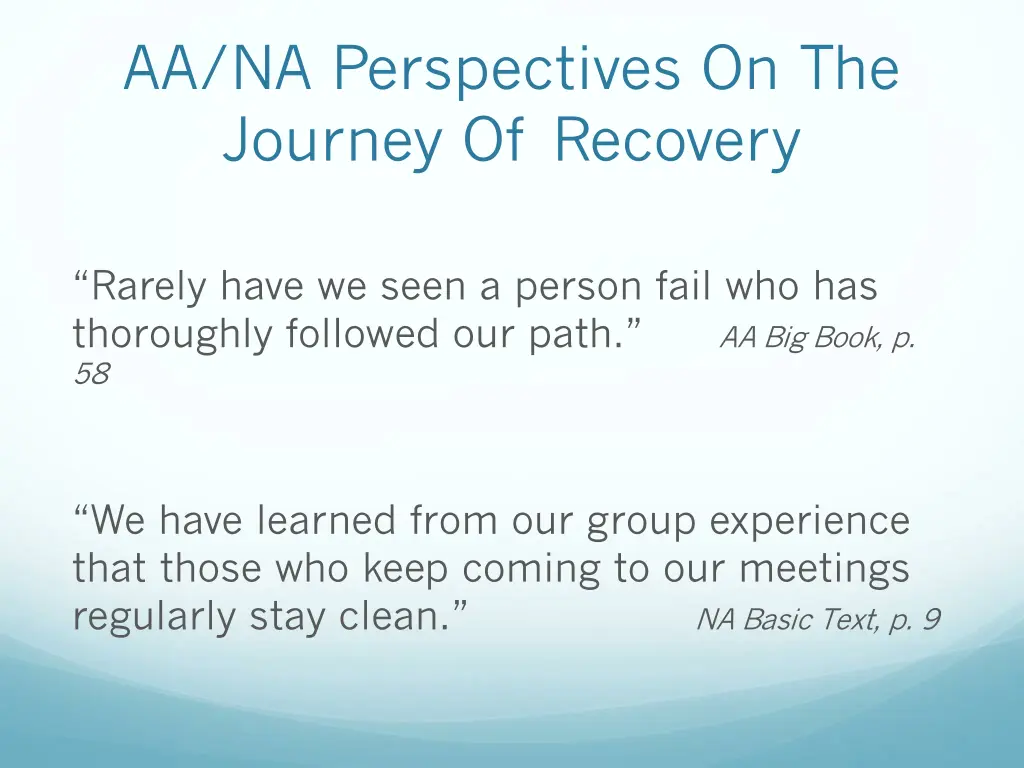
AA/NA Perspectives On The Journey Of Recovery Rarely have we seen a person fail who has thoroughly followed our path. AA Big Book, p. 58 We have learned from our group experience that those who keep coming to our meetings regularly stay clean. NA Basic Text, p. 9
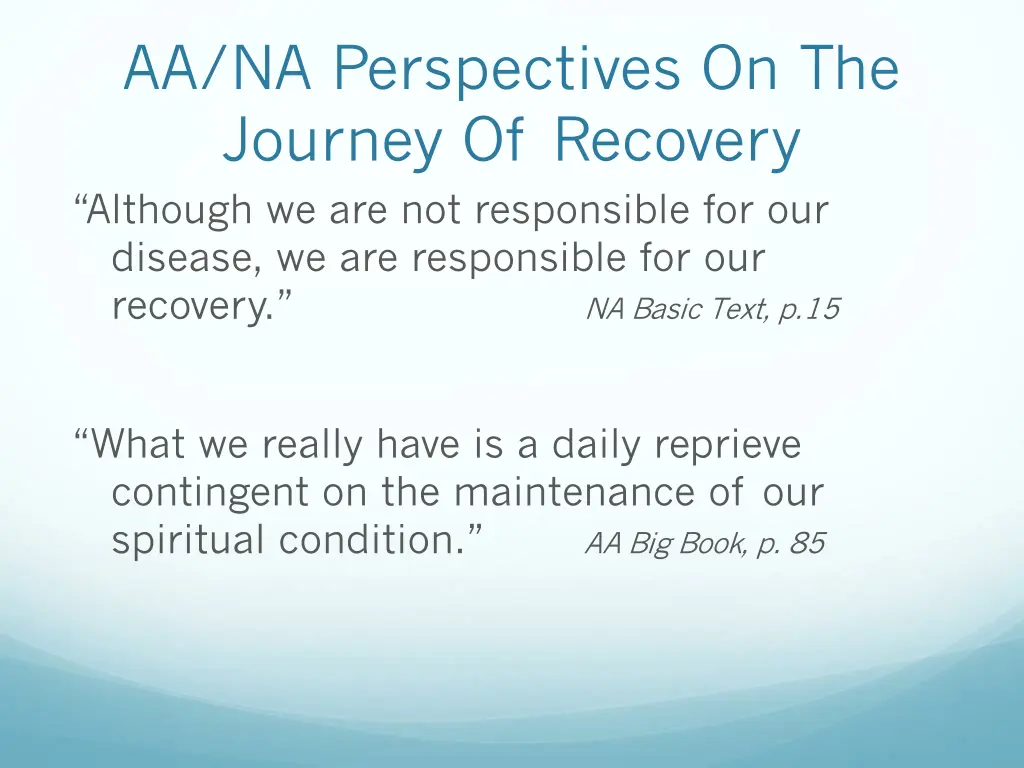
AA/NA Perspectives On The Journey Of Recovery Although we are not responsible for our disease, we are responsible for our recovery. NA Basic Text, p.15 What we really have is a daily reprieve contingent on the maintenance of our spiritual condition. AA Big Book, p. 85
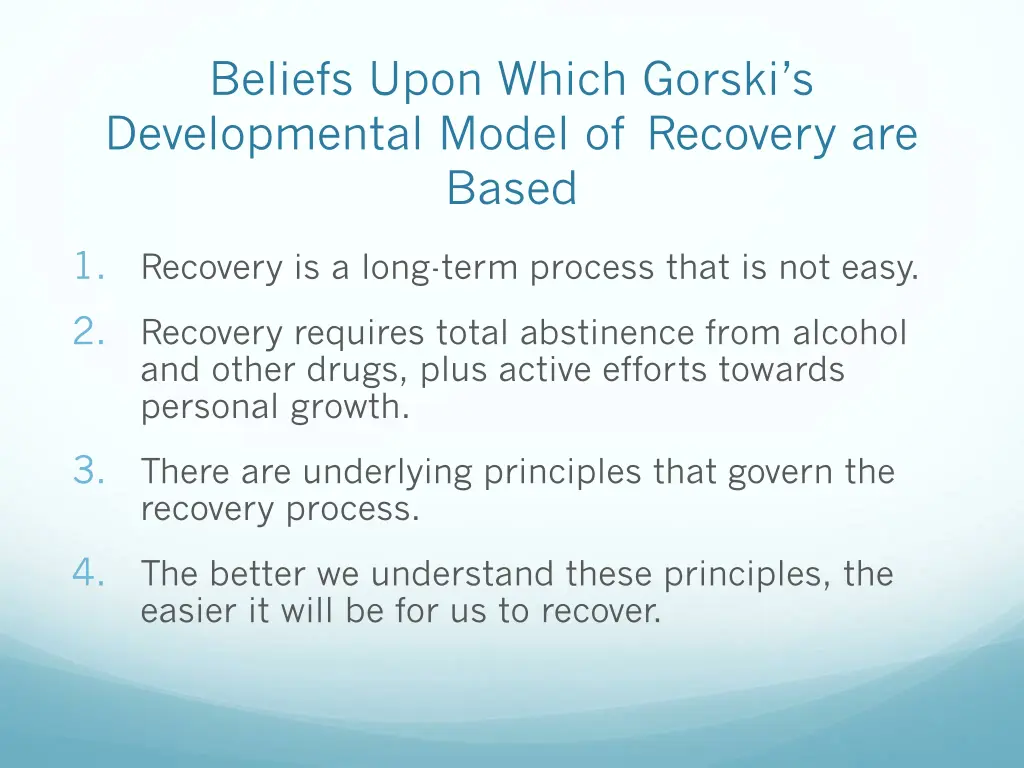
Beliefs Upon Which Gorskis Developmental Model of Recovery are Based 1. Recovery is a long-term process that is not easy. 2. Recovery requires total abstinence from alcohol and other drugs, plus active efforts towards personal growth. 3. There are underlying principles that govern the recovery process. 4. The better we understand these principles, the easier it will be for us to recover.
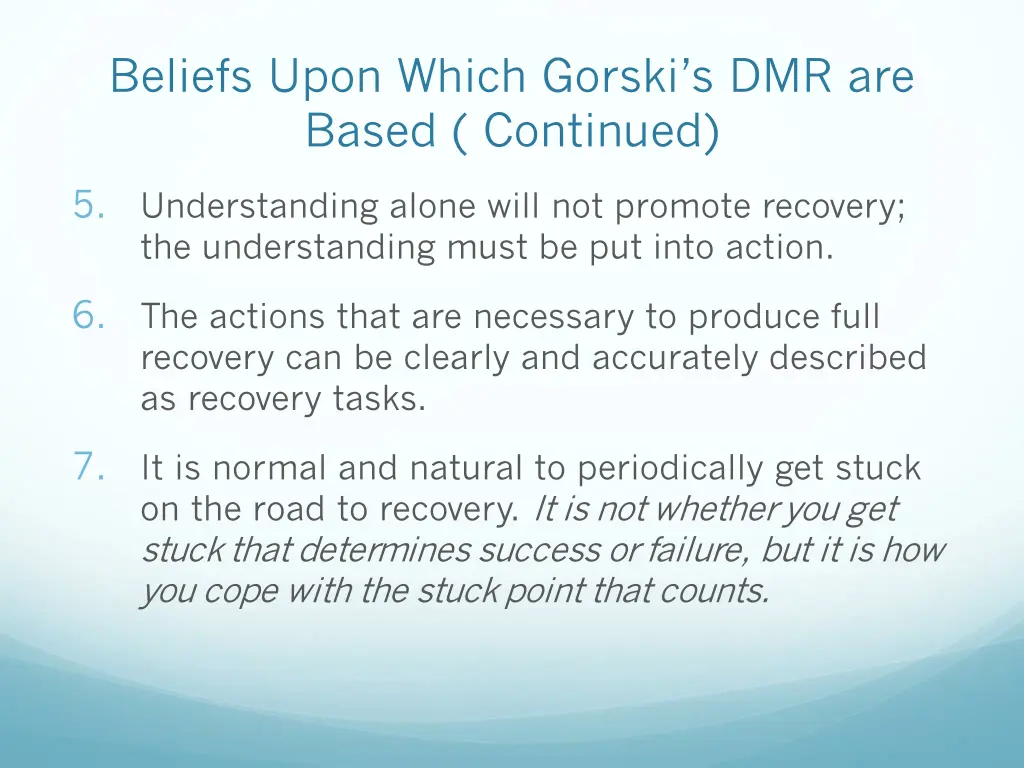
Beliefs Upon Which Gorskis DMR are Based ( Continued) 5. Understanding alone will not promote recovery; the understanding must be put into action. 6. The actions that are necessary to produce full recovery can be clearly and accurately described as recovery tasks. 7. It is normal and natural to periodically get stuck on the road to recovery. It is not whether you get stuck that determines success or failure, but it is how you cope with the stuck point that counts.
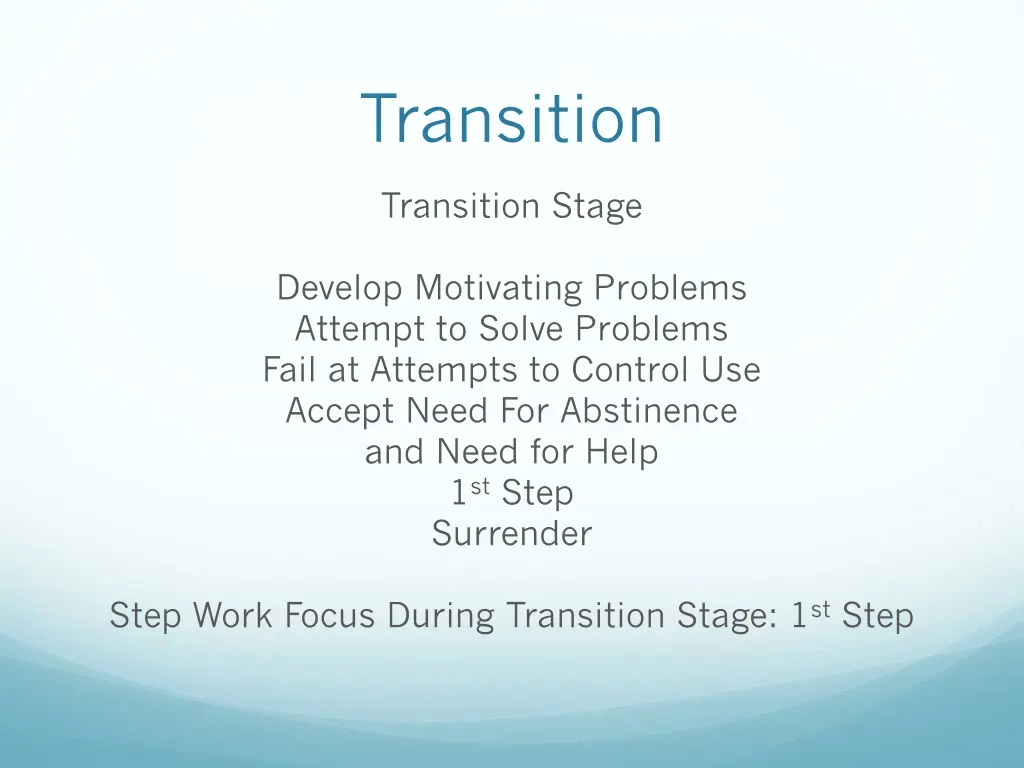
Transition Transition Stage Develop Motivating Problems Attempt to Solve Problems Fail at Attempts to Control Use Accept Need For Abstinence and Need for Help 1stStep Surrender Step Work Focus During Transition Stage: 1stStep
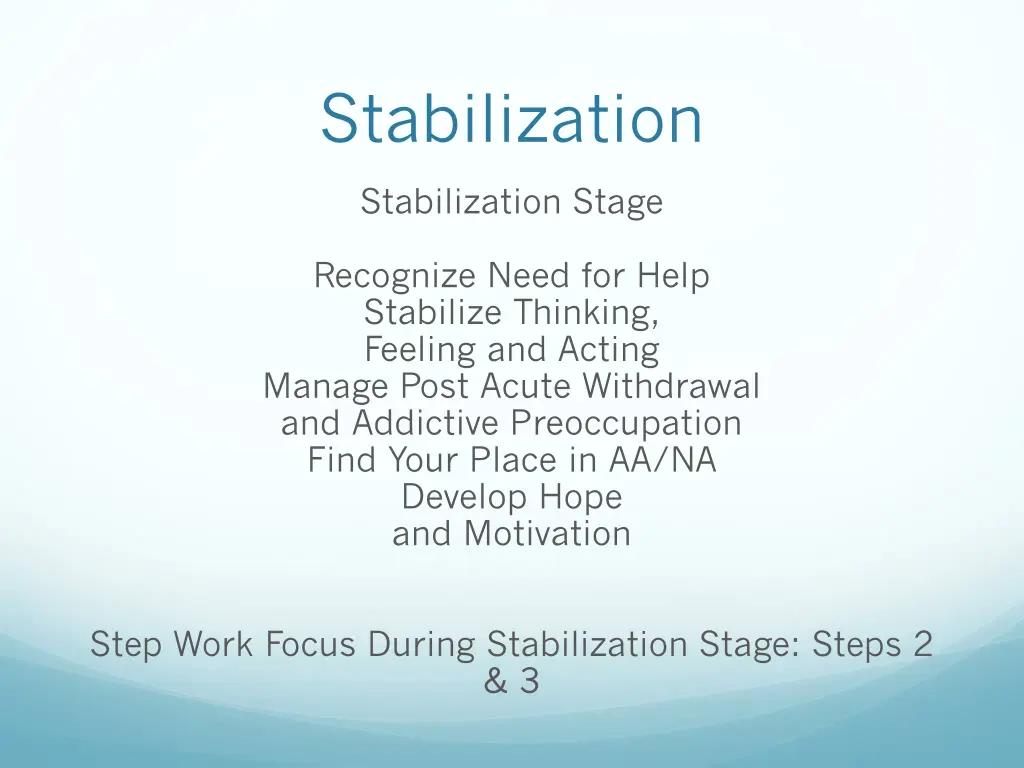
Stabilization Stabilization Stage Recognize Need for Help Stabilize Thinking, Feeling and Acting Manage Post Acute Withdrawal and Addictive Preoccupation Find Your Place in AA/NA Develop Hope and Motivation Step Work Focus During Stabilization Stage: Steps 2 & 3
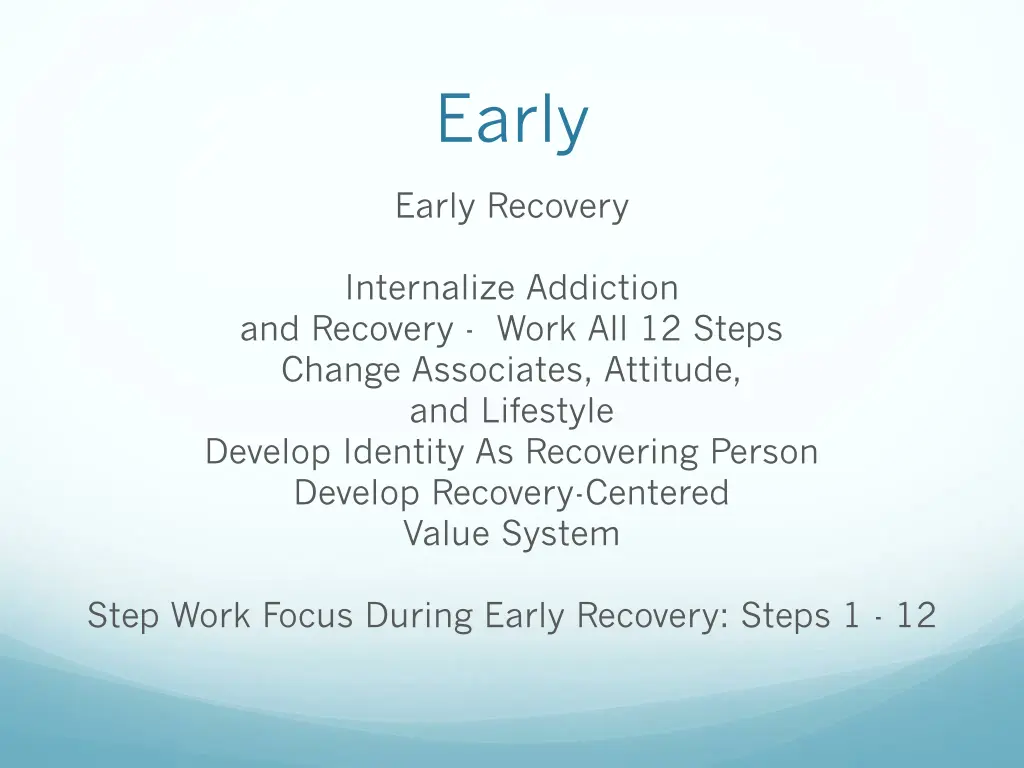
Early Early Recovery Internalize Addiction and Recovery - Work All 12 Steps Change Associates, Attitude, and Lifestyle Develop Identity As Recovering Person Develop Recovery-Centered Value System Step Work Focus During Early Recovery: Steps 1 - 12
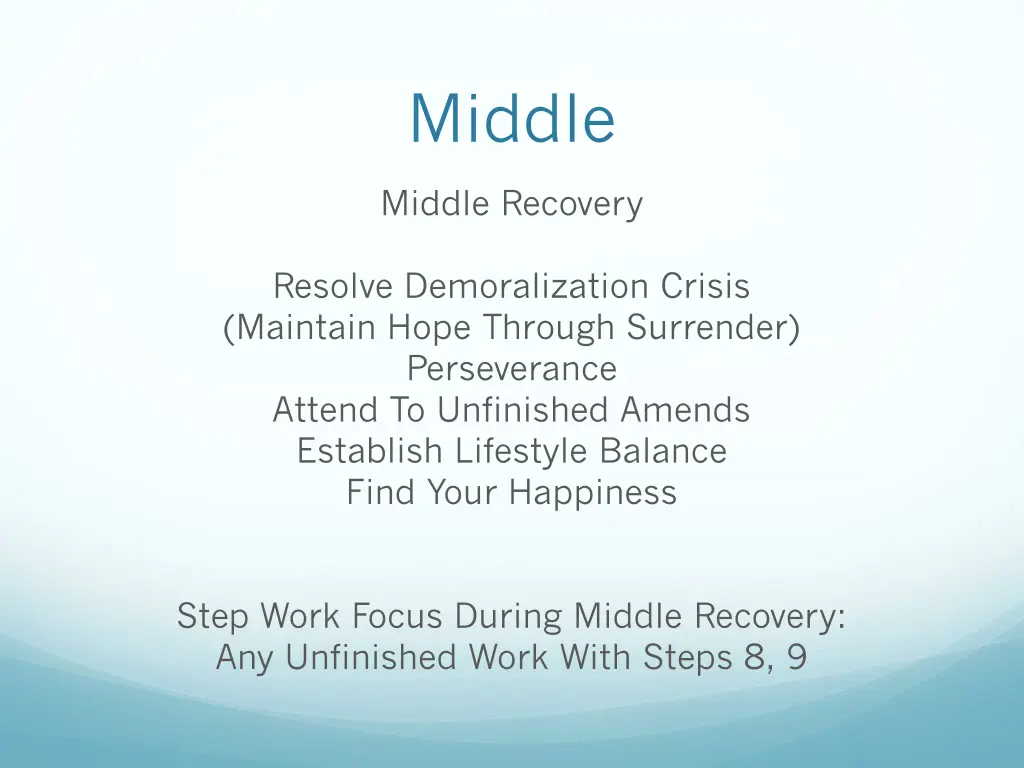
Middle Middle Recovery Resolve Demoralization Crisis (Maintain Hope Through Surrender) Perseverance Attend To Unfinished Amends Establish Lifestyle Balance Find Your Happiness Step Work Focus During Middle Recovery: Any Unfinished Work With Steps 8, 9
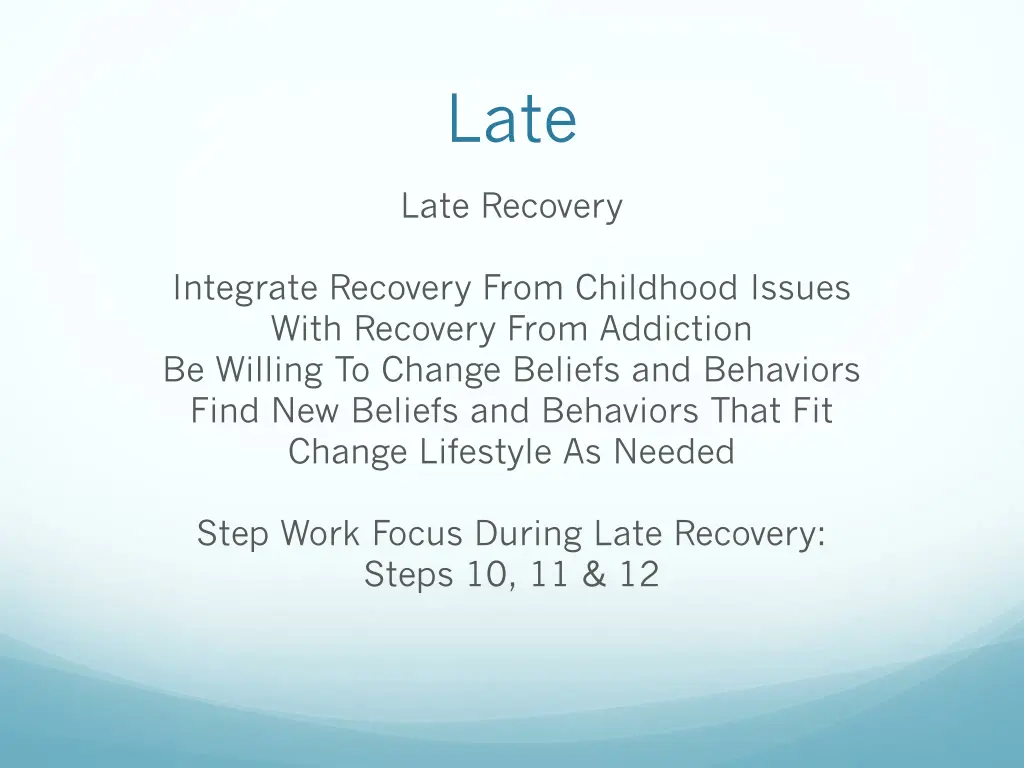
Late Late Recovery Integrate Recovery From Childhood Issues With Recovery From Addiction Be Willing To Change Beliefs and Behaviors Find New Beliefs and Behaviors That Fit Change Lifestyle As Needed Step Work Focus During Late Recovery: Steps 10, 11 & 12
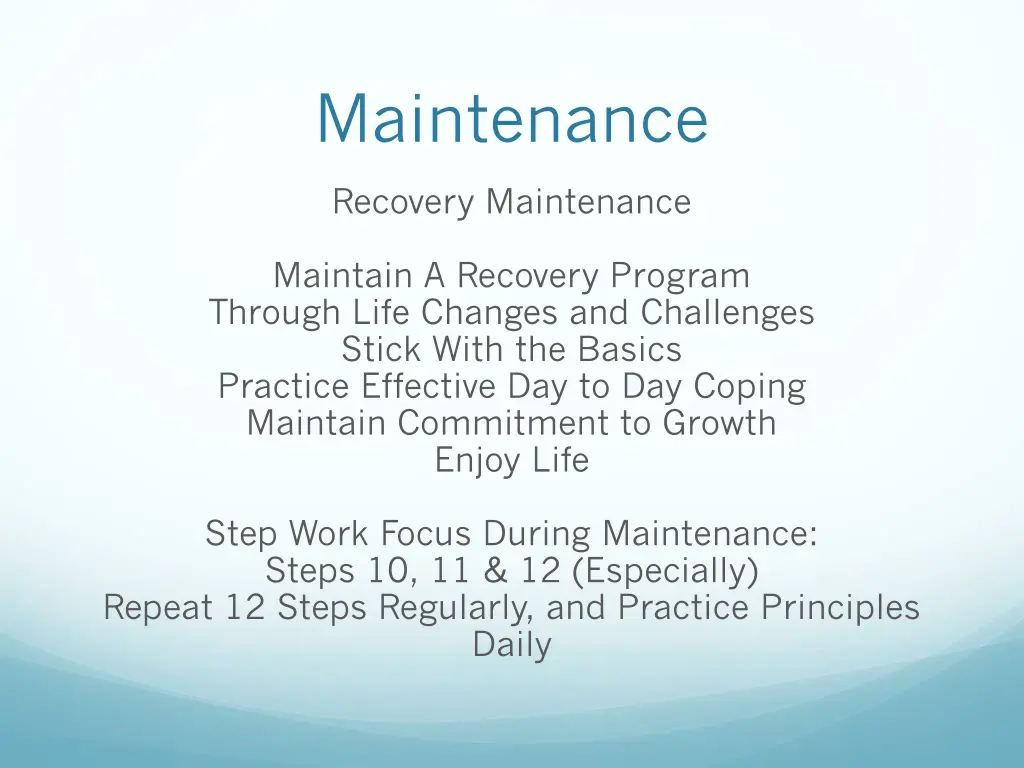
Maintenance Recovery Maintenance Maintain A Recovery Program Through Life Changes and Challenges Stick With the Basics Practice Effective Day to Day Coping Maintain Commitment to Growth Enjoy Life Step Work Focus During Maintenance: Steps 10, 11 & 12 (Especially) Repeat 12 Steps Regularly, and Practice Principles Daily
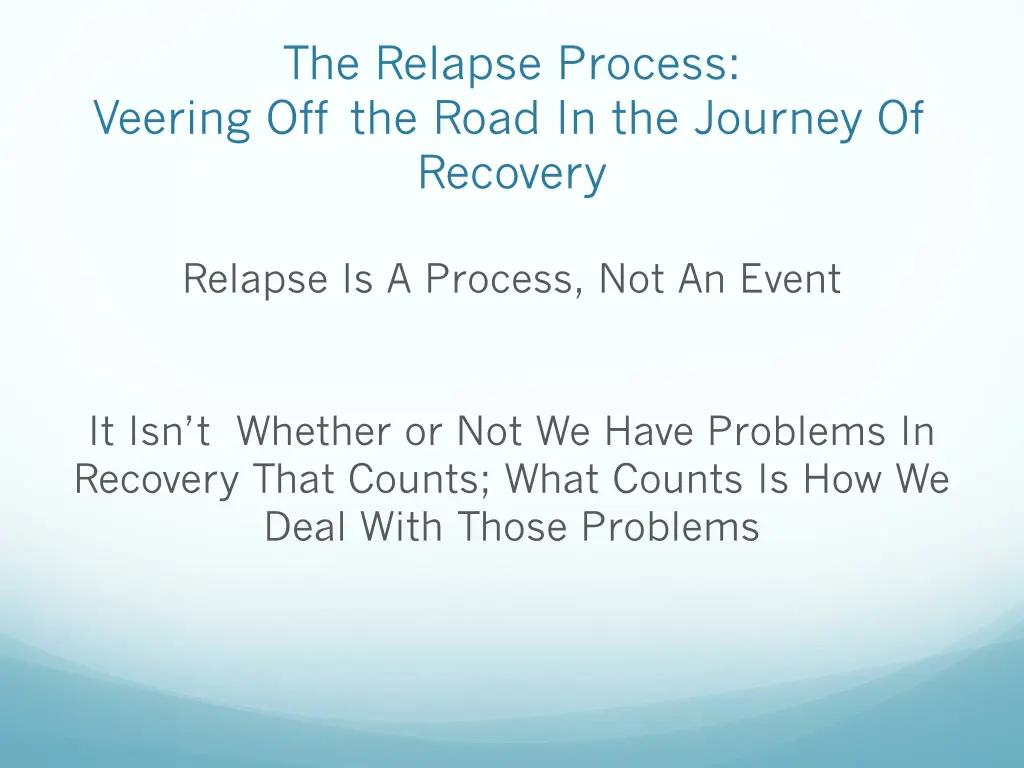
The Relapse Process: Veering Off the Road In the Journey Of Recovery Relapse Is A Process, Not An Event It Isn t Whether or Not We Have Problems In Recovery That Counts; What Counts Is How We Deal With Those Problems
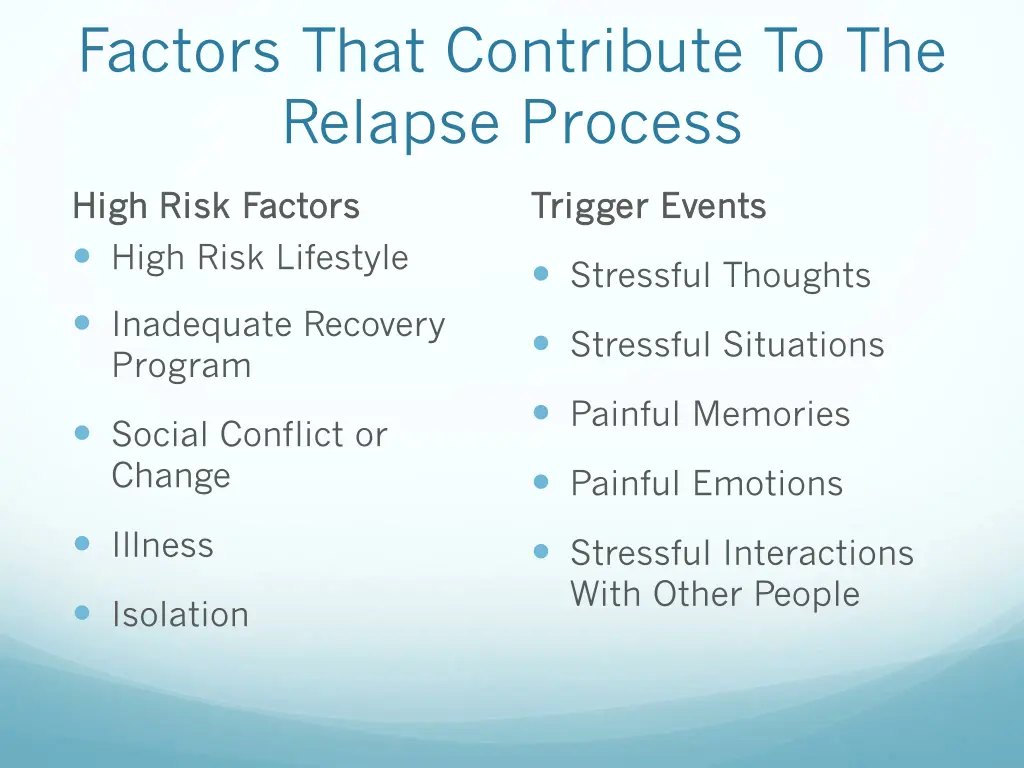
Factors That Contribute To The Relapse Process High Risk Factors High Risk Factors High Risk Lifestyle Trigger Events Trigger Events Stressful Thoughts Inadequate Recovery Program Stressful Situations Painful Memories Social Conflict or Change Painful Emotions Illness Stressful Interactions With Other People Isolation
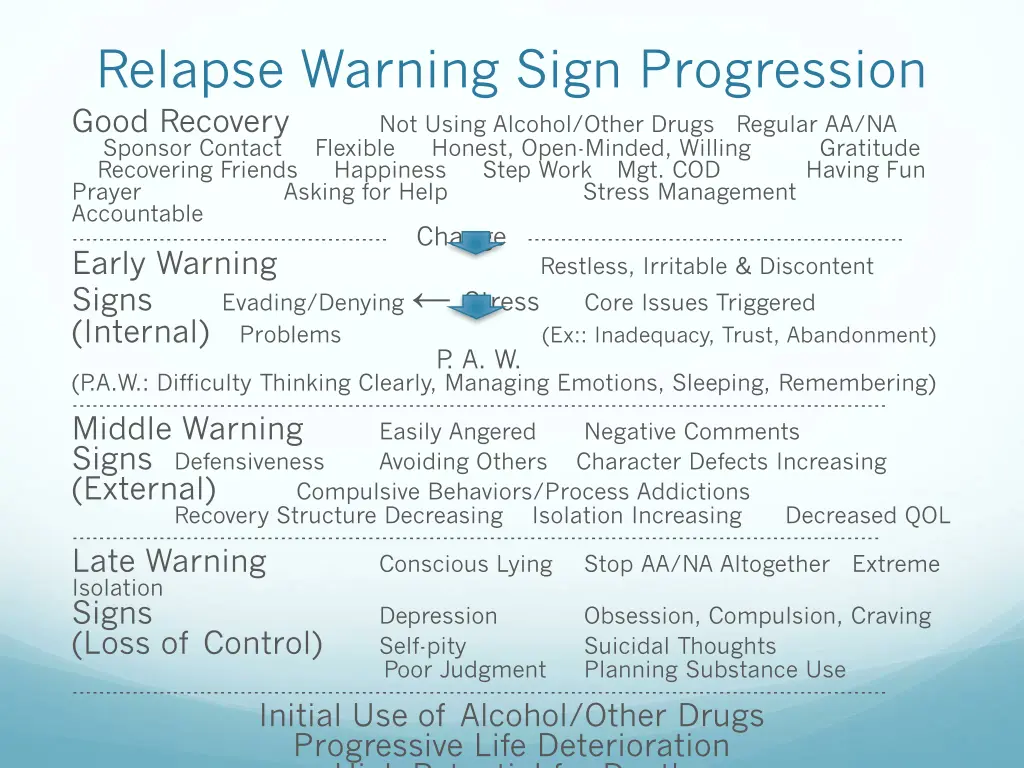
Relapse Warning Sign Progression Good Recovery Not Using Alcohol/Other Drugs Regular AA/NA Sponsor Contact Flexible Honest, Open-Minded, Willing Recovering Friends Happiness Step Work Prayer Asking for Help Stress Management Accountable ----------------------------------------------- Change Early Warning Signs Evading/Denying Stress (Internal) Problems P . A. W. (P .A.W.: Difficulty Thinking Clearly, Managing Emotions, Sleeping, Remembering) ------------------------------------------------------------------------------------------------------------------------- Middle Warning Easily Angered Signs Defensiveness Avoiding Others Character Defects Increasing (External) Compulsive Behaviors/Process Addictions Recovery Structure Decreasing Isolation Increasing Decreased QOL ------------------------------------------------------------------------------------------------------------------------ Late Warning Conscious Lying Isolation Signs Depression (Loss of Control) Self-pity Poor Judgment ------------------------------------------------------------------------------------------------------------------------- Initial Use of Alcohol/Other Drugs Progressive Life Deterioration High Potential for Death Gratitude Mgt. COD Having Fun -------------------------------------------------------- Restless, Irritable & Discontent Core Issues Triggered (Ex:: Inadequacy, Trust, Abandonment) Negative Comments Stop AA/NA Altogether Extreme Obsession, Compulsion, Craving Suicidal Thoughts Planning Substance Use
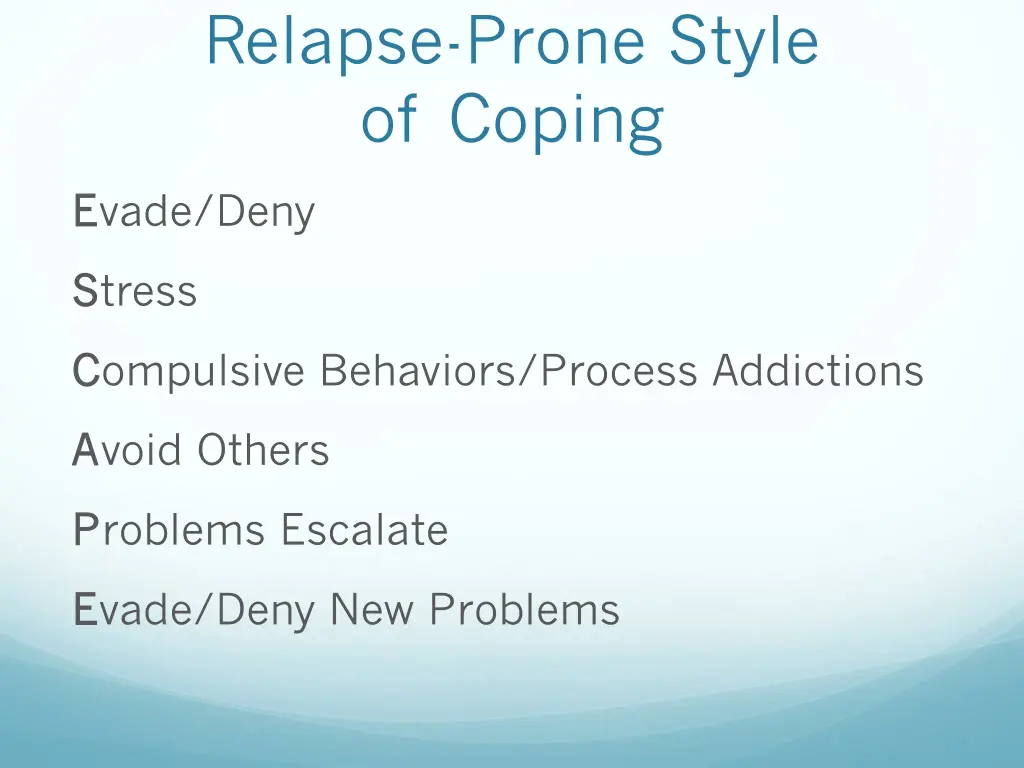
Relapse-Prone Style of Coping E Evade/Deny S Stress C Compulsive Behaviors/Process Addictions A Avoid Others P Problems Escalate E Evade/Deny New Problems
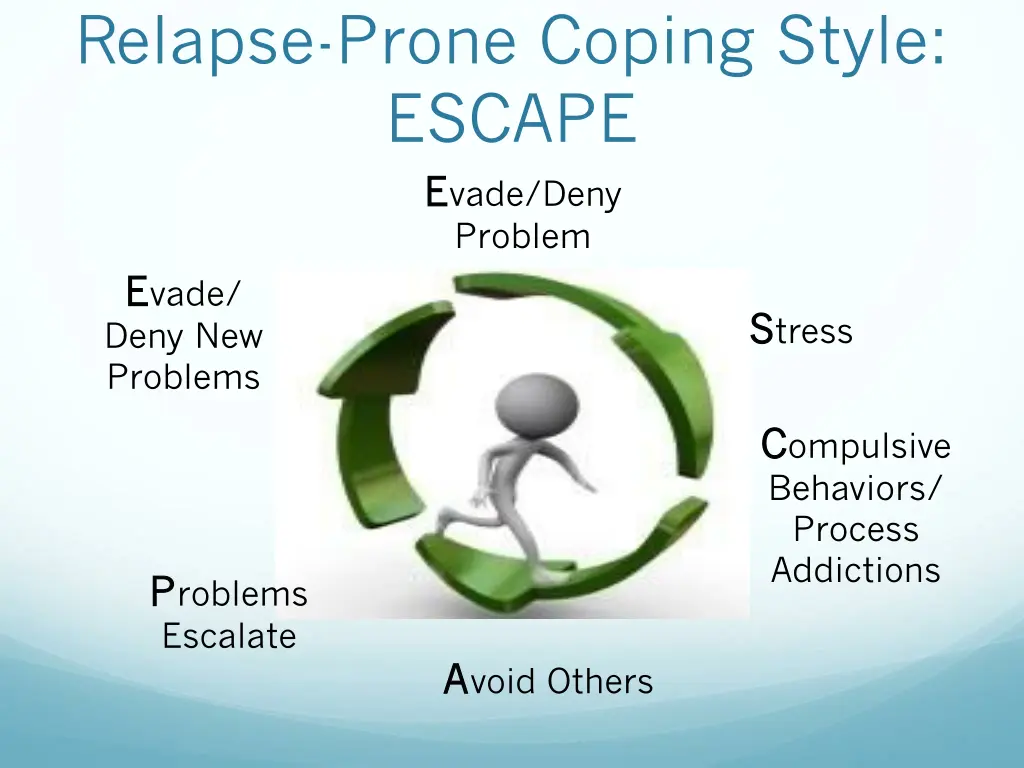
Relapse-Prone Coping Style: ESCAPE E Evade/Deny Problem E Evade/ Deny New Problems S Stress C Compulsive Behaviors/ Process Addictions P Problems Escalate A Avoid Others
Stopping the Relapse Process We Get Out Of The Relapse Process By Getting Into the Recovery Process
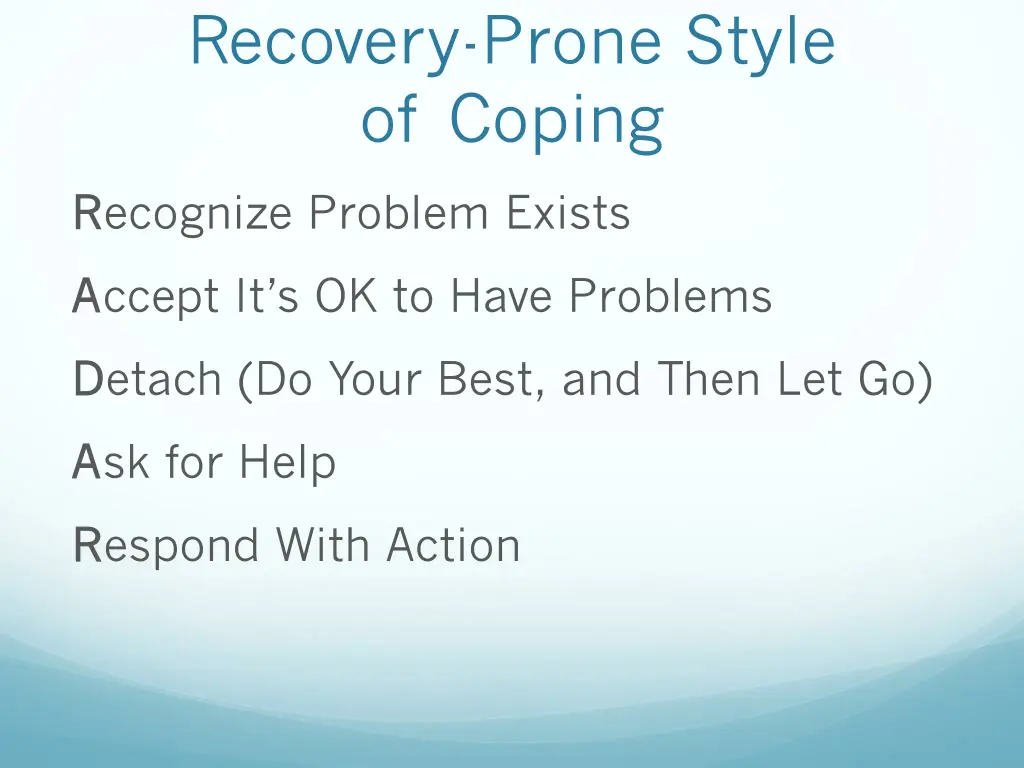
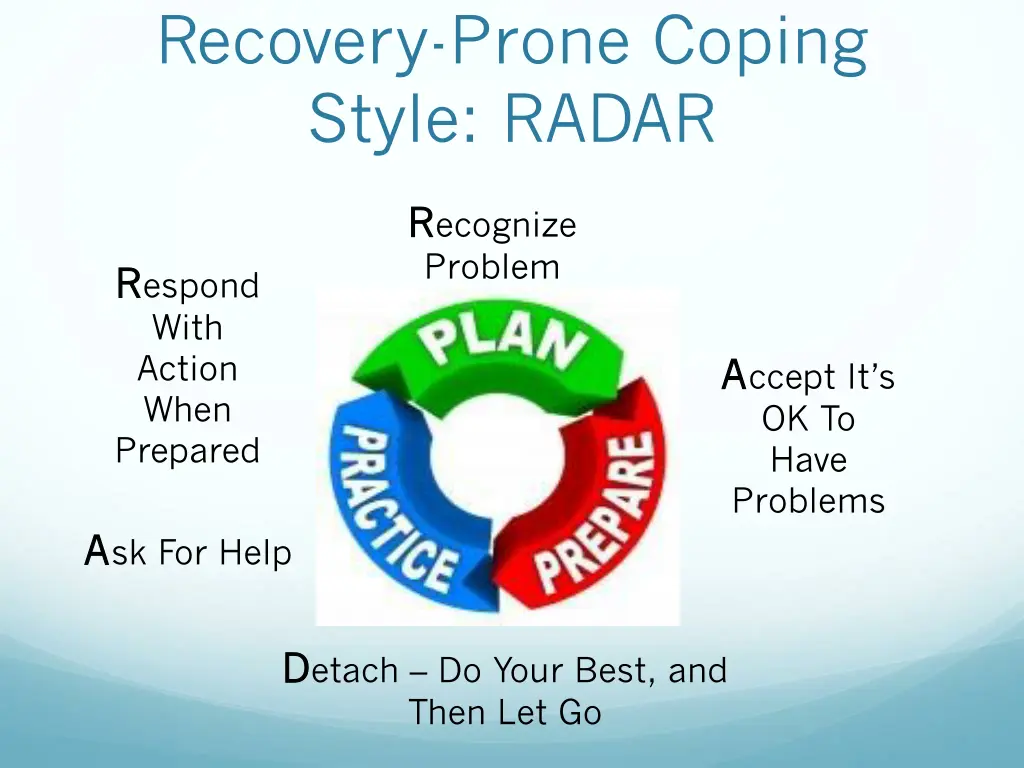
Recovery-Prone Style of Coping R Recognize Problem Exists A Accept It s OK to Have Problems D Detach (Do Your Best, and Then Let Go) A Ask for Help R Respond With Action
Recovery-Prone Coping Style: RADAR R Recognize Problem R Respond With Action When Prepared A Accept It s OK To Have Problems A Ask For Help D Detach Do Your Best, and Then Let Go
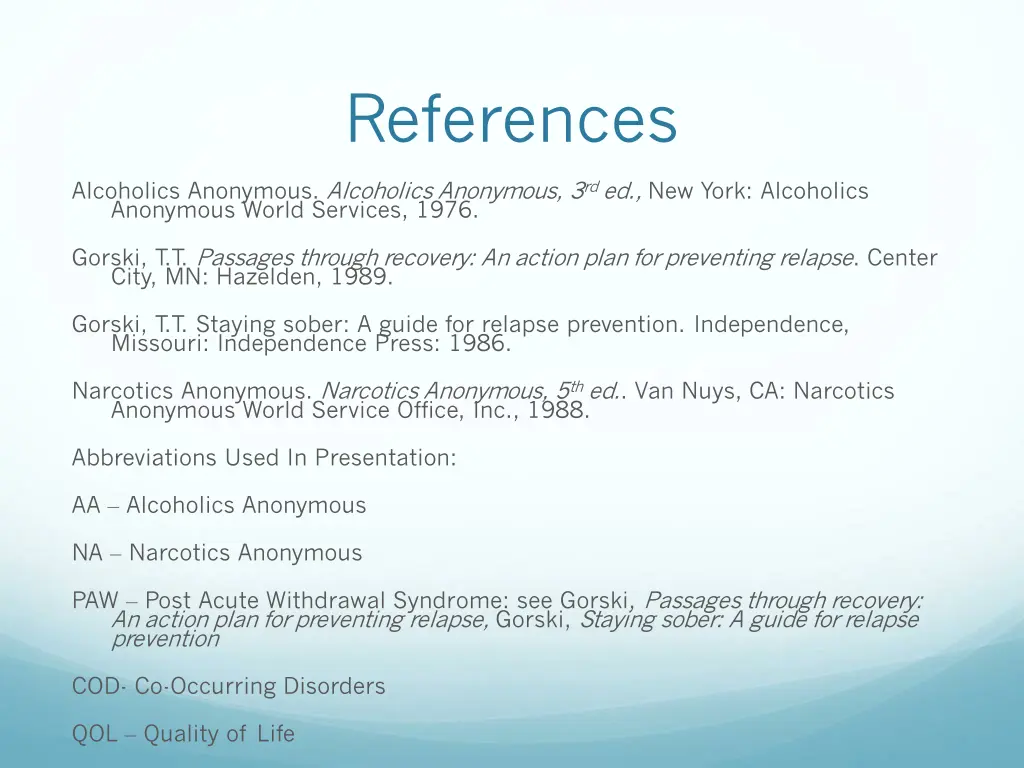
References Alcoholics Anonymous. Alcoholics Anonymous, 3rd ed., New York: Alcoholics Anonymous World Services, 1976. Gorski, T.T. Passages through recovery: An action plan for preventing relapse. Center City, MN: Hazelden, 1989. Gorski, T.T. Staying sober: A guide for relapse prevention. Independence, Missouri: Independence Press: 1986. Narcotics Anonymous. Narcotics Anonymous, 5th ed.. Van Nuys, CA: Narcotics Anonymous World Service Office, Inc., 1988. Abbreviations Used In Presentation: AA Alcoholics Anonymous NA Narcotics Anonymous PAW Post Acute Withdrawal Syndrome: see Gorski, Passages through recovery: An action plan for preventing relapse, Gorski, Staying sober: A guide for relapse prevention COD- Co-Occurring Disorders QOL Quality of Life