Konstantin Stanislavski: Naturalistic Performance Technique Innovator
Konstantin Stanislavski, a Russian stage actor and director, revolutionized naturalistic performance with his Stanislavsky method. Explore his life, early days, techniques, and impact on theater.

Download Presentation

Please find below an Image/Link to download the presentation.
The content on the website is provided AS IS for your information and personal use only. It may not be sold, licensed, or shared on other websites without obtaining consent from the author.If you encounter any issues during the download, it is possible that the publisher has removed the file from their server.
You are allowed to download the files provided on this website for personal or commercial use, subject to the condition that they are used lawfully. All files are the property of their respective owners.
The content on the website is provided AS IS for your information and personal use only. It may not be sold, licensed, or shared on other websites without obtaining consent from the author.
E N D
Presentation Transcript
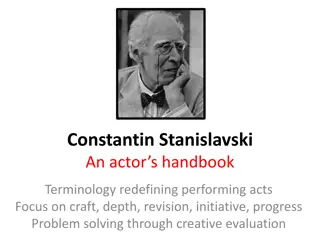
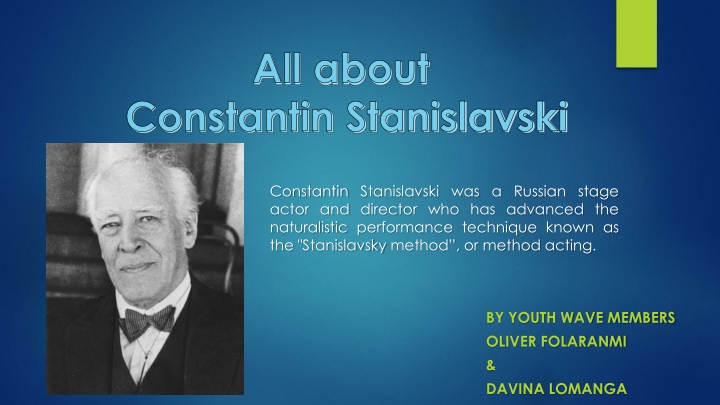
All about Constantin Stanislavski Constantin Stanislavski was a Russian stage actor and director who has advanced the naturalistic performance technique known as the "Stanislavsky method , or method acting. BY YOUTH WAVE MEMBERS OLIVER FOLARANMI & DAVINA LOMANGA
In This Presentation we will be exploring Konstantin Stanislavski: Brief History: Early days in his life and how he got into performing. The some of the techniques he has constructed in his different performances. Now just sit and enjoy the presentation
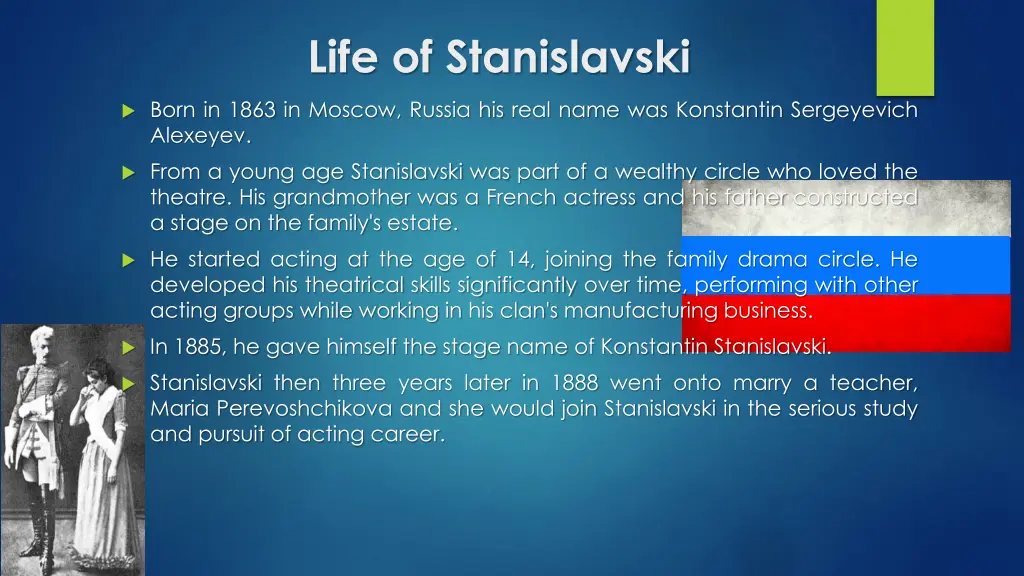
Life of Stanislavski Born in 1863 in Moscow, Russia his real name was Konstantin Sergeyevich Alexeyev. From a young age Stanislavski was part of a wealthy circle who loved the theatre. His grandmother was a French actress and his father constructed a stage on the family's estate. He started acting at the age of 14, joining the family drama circle. He developed his theatrical skills significantly over time, performing with other acting groups while working in his clan's manufacturing business. In 1885, he gave himself the stage name of Konstantin Stanislavski. Stanislavski then three years later in 1888 went onto marry a teacher, Maria Perevoshchikova and she would join Stanislavski in the serious study and pursuit of acting career.
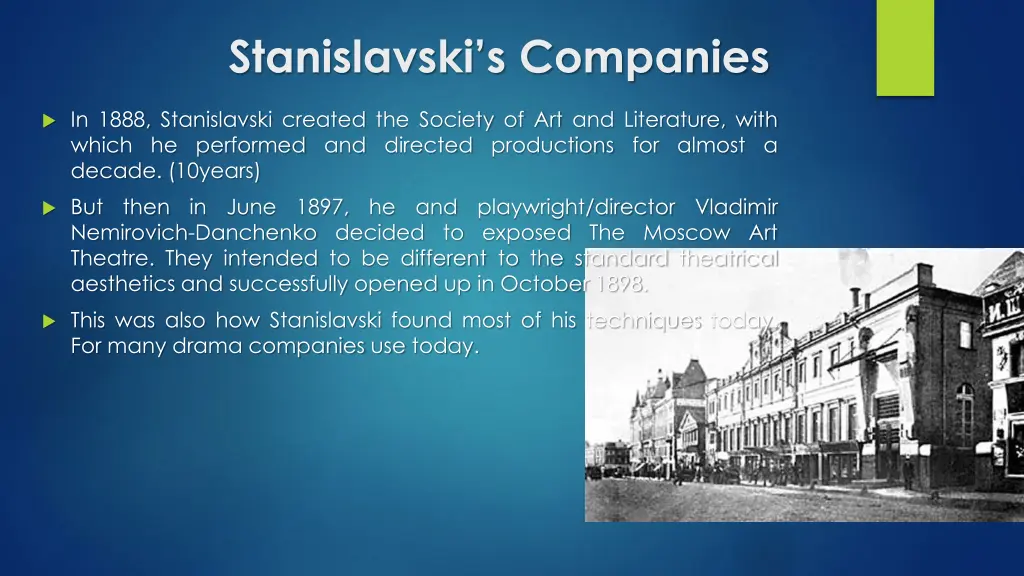
Stanislavskis Companies In 1888, Stanislavski created the Society of Art and Literature, with which he performed and directed productions for almost a decade. (10years) But then in June 1897, he and playwright/director Vladimir Nemirovich-Danchenko decided to exposed The Moscow Art Theatre. They intended to be different to the standard theatrical aesthetics and successfully opened up in October 1898. This was also how Stanislavski found most of his techniques today. For many drama companies use today.
Techniques Stanislavskis used in his performances The techniques Stanislavski uses in his performances: Stanislavski naturalistic performance technique known as the Stanislavskimethod which was based on the idea of memory. Which an actor focuses internally to portray a characters emotions onstage. has developed the Given Circumstances Before Time Super Objectives Magic If Subtext Social Fa ade And so much more
Techniques Stanislavskis used in his performances Given Circumstances Before Time Magic If Given circumstances is a important technique Stanislavski the environmental situational conditions influence a performance. Given circumstances what Stanislavski believed we should do as soon as given a script. This technique help you answer the six fundamental about your character. This is where actors were required to questions characters using what if. Stanislavski believed that the truth that occurred onstage was different from that of real life, but that a 'scenic truth' could be achieved onstage. Before time is before the due or expected time. In the contrast of in a play we could do a before time before the story began. Example of this could be: When our class was doing Abigail s Party we showed our characters what they did before the party started on stage. of ask of many their where and will are questions
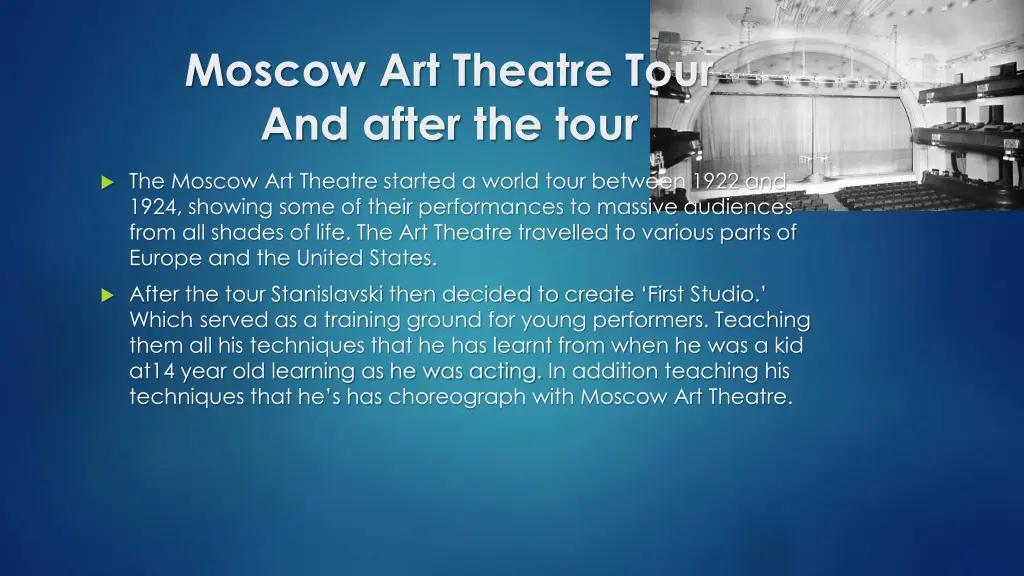
Moscow Art Theatre Tour And after the tour The Moscow Art Theatre started a world tour between 1922 and 1924, showing some of their performances to massive audiences from all shades of life. The Art Theatre travelled to various parts of Europe and the United States. After the tour Stanislavski then decided to create First Studio. Which served as a training ground for young performers. Teaching them all his techniques that he has learnt from when he was a kid at14 year old learning as he was acting. In addition teaching his techniques that he s has choreograph with Moscow Art Theatre.
Stanislavskis last moments Stanislavski spent the last bit of his years focusing on his writing, directing and teaching. Doing what he does best But then Stanislavski tragically died of Heart failure on August 7th 1938, in his home city. Thank you for listening to our presentation