Leader Election Using NewSQL Database Systems
Explore the complexities of leader election in NewSQL database systems, including synchronous and asynchronous systems, problems, solutions, and out-of-the-box options like Zookeeper and Chubby for maintaining service consistency and reliability.

Download Presentation

Please find below an Image/Link to download the presentation.
The content on the website is provided AS IS for your information and personal use only. It may not be sold, licensed, or shared on other websites without obtaining consent from the author. If you encounter any issues during the download, it is possible that the publisher has removed the file from their server.
You are allowed to download the files provided on this website for personal or commercial use, subject to the condition that they are used lawfully. All files are the property of their respective owners.
The content on the website is provided AS IS for your information and personal use only. It may not be sold, licensed, or shared on other websites without obtaining consent from the author.
E N D
Presentation Transcript
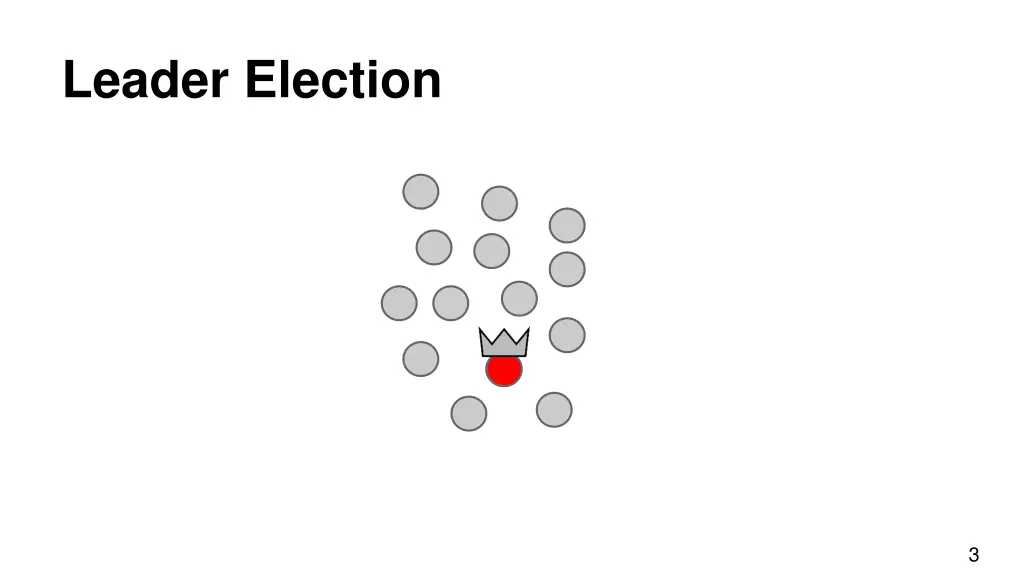
Leader Election Using NewSQL Database Systems Salman Niazi, Mahmoud Ismail, Gautier Berthou and Jim Dowling 1
Content Problem Solution Evaluation 2
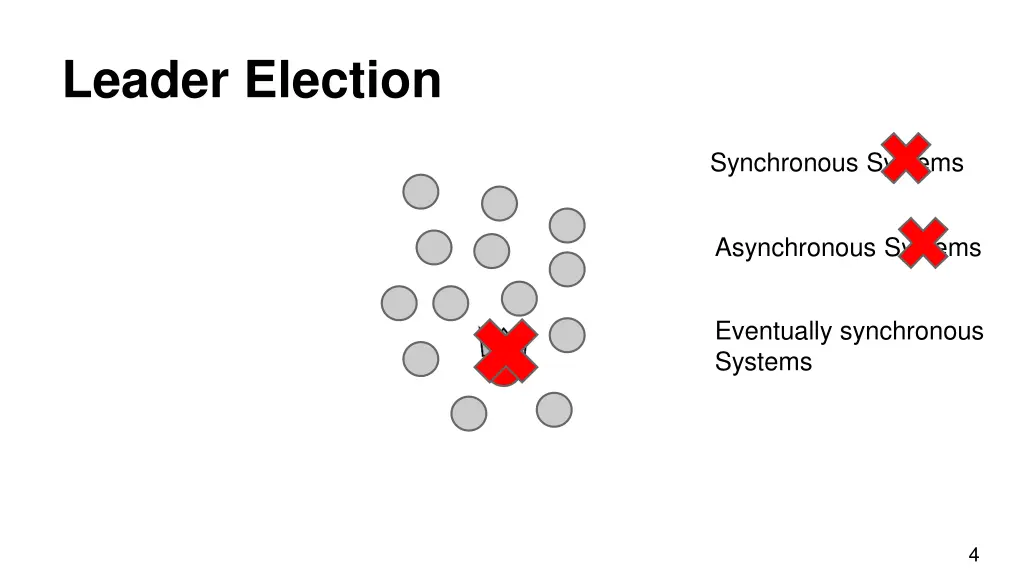
Leader Election Synchronous Systems Asynchronous Systems Eventually synchronous Systems 4
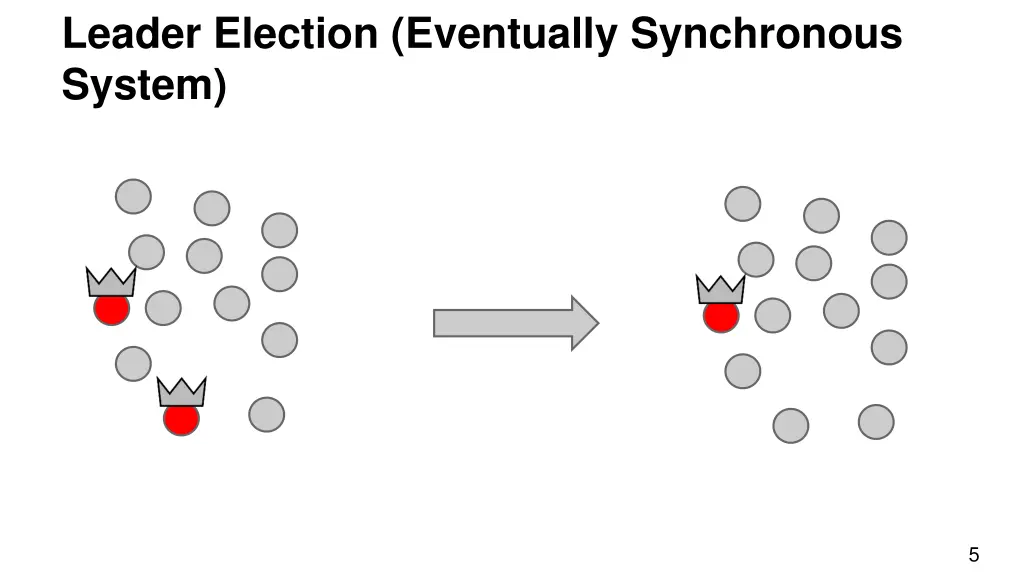
Leader Election (Eventually Synchronous System) 5
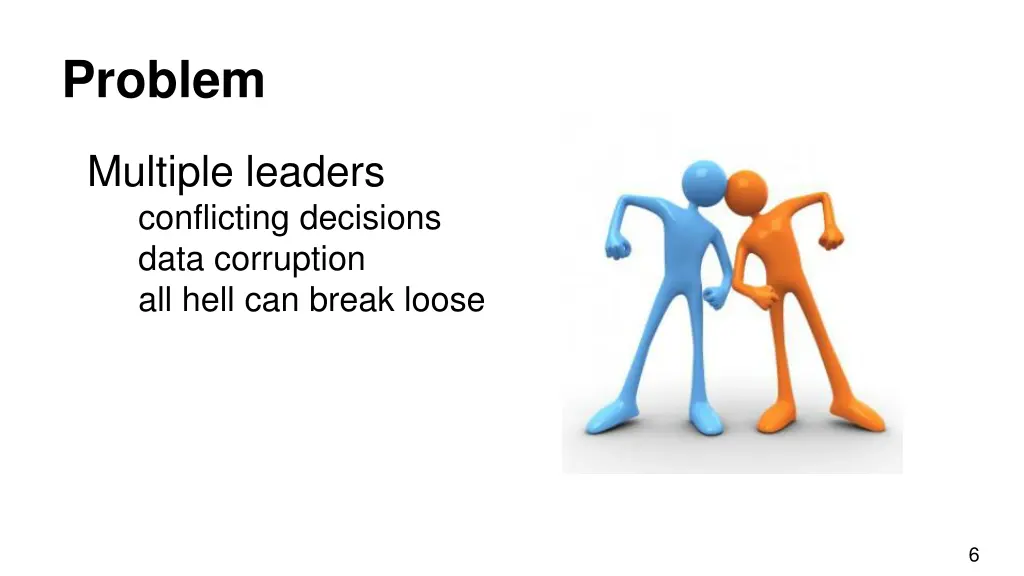
Problem Multiple leaders conflicting decisions data corruption all hell can break loose 6
Unique Leader Election Essentially an agreement problem Paxos Hard to understand Does not perform well for hundreds of servers Total order atomic broadcast Implementation ? 7
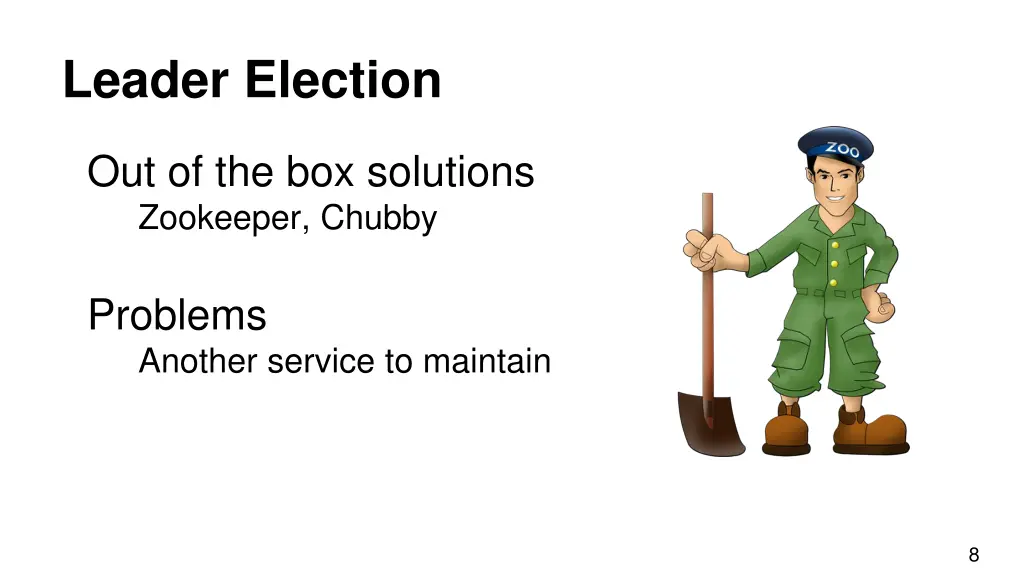
Leader Election Out of the box solutions Zookeeper, Chubby Problems Another service to maintain 8
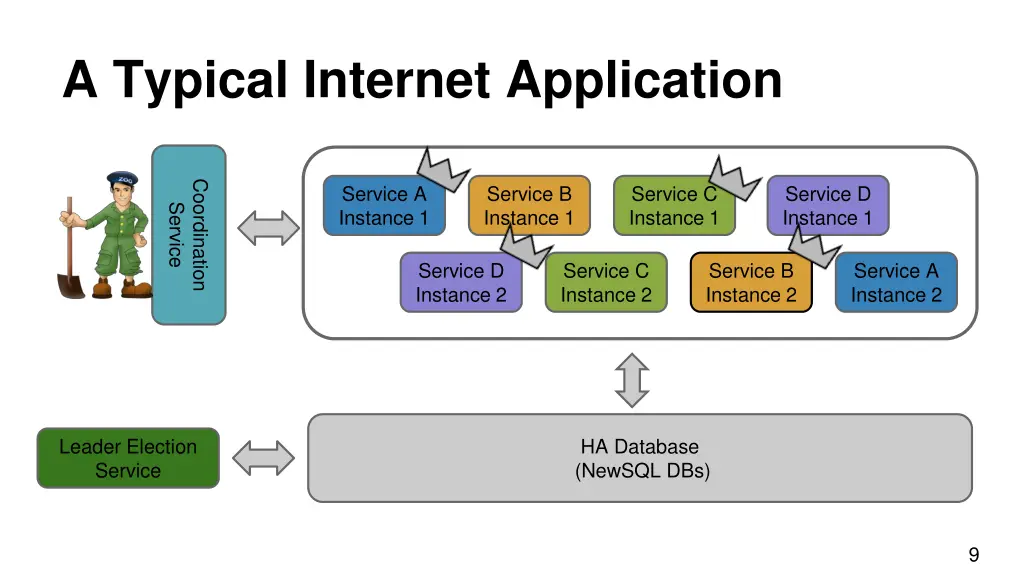
A Typical Internet Application Coordination Service A Instance 1 Service B Instance 1 Service C Instance 1 Service D Instance 1 Service Service D Instance 2 Service C Instance 2 Service B Instance 2 Service A Instance 2 Leader Election Service HA Database (NewSQL DBs) 9
Thats not new? Shared memory based LE Guerraoui, R., Raynal, M.: A Leader Election Protocol for Eventually Synchronous Shared Memory Systems, pp. 75 80. IEEE Computer Society, Alamitos (2006) Fernandez, A., Jimenez, E., Raynal, M.: Electing an eventual leader in an asynchronous shared memory system. In: Dependable Systems and Networks, DSN 2007, pp. 399 408 (June 2007) Using 2PC Transaction No existing work using 2PC Transaction Some work using compare & swap primitives Afek, Y., Stupp, G.: Optima Time-Space Tradeoff for Shared Memory Leader Election. Journal Algorithms 25(1): 95-117 (1997) Serializable Transaction Isolation 10
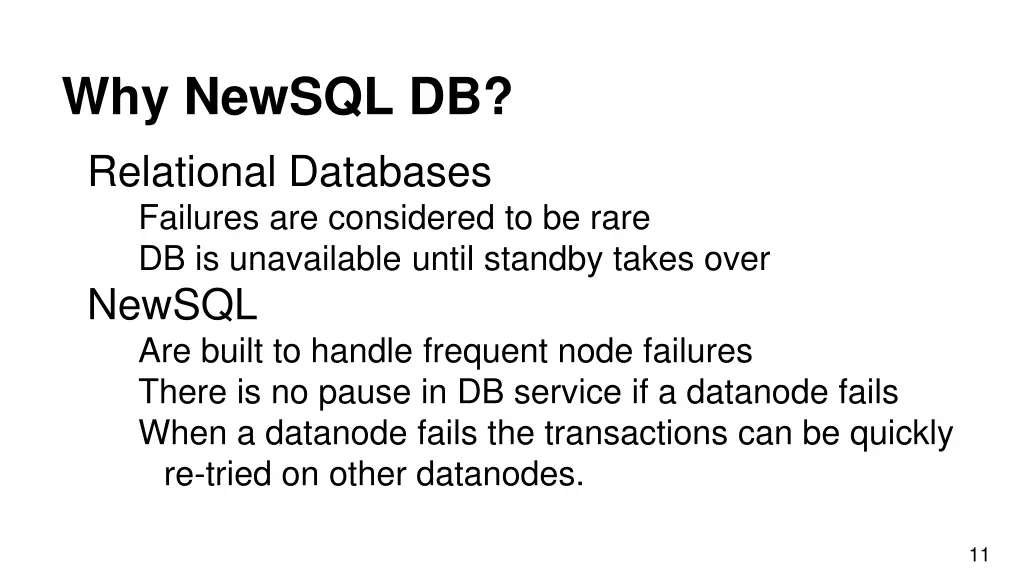
Why NewSQL DB? Relational Databases Failures are considered to be rare DB is unavailable until standby takes over NewSQL Are built to handle frequent node failures There is no pause in DB service if a datanode fails When a datanode fails the transactions can be quickly re-tried on other datanodes. 11
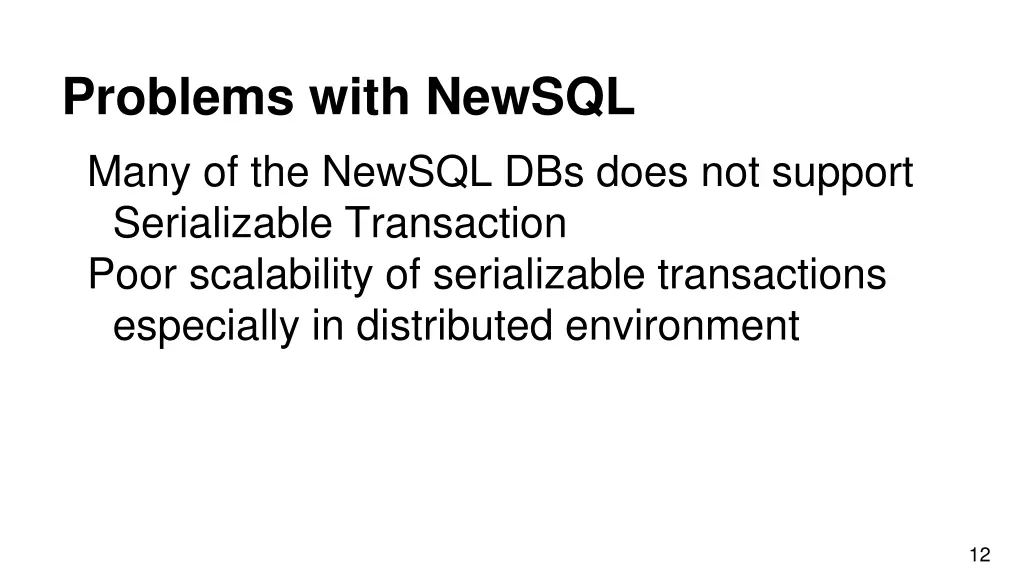
Problems with NewSQL Many of the NewSQL DBs does not support Serializable Transaction Poor scalability of serializable transactions especially in distributed environment 12
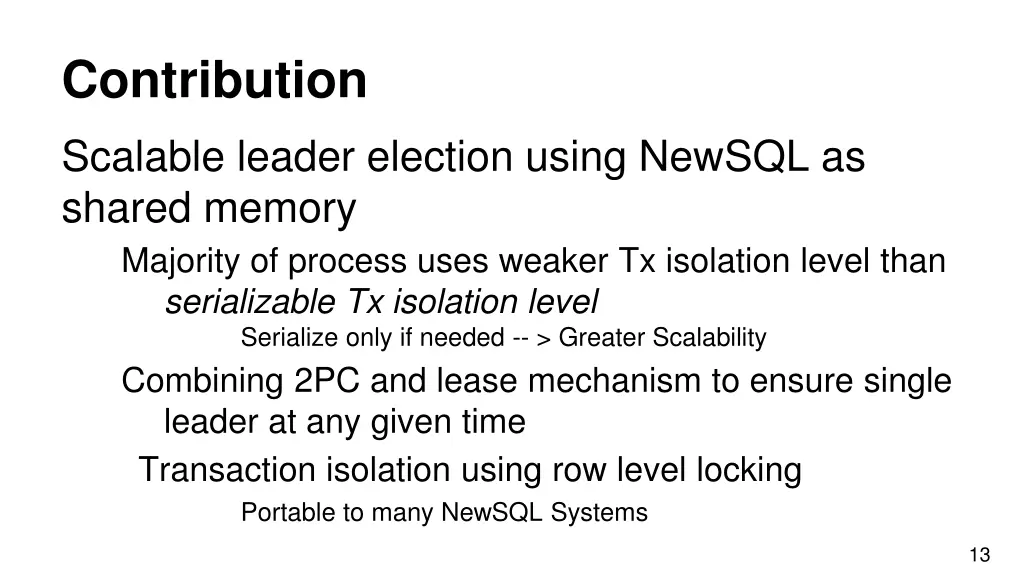
Contribution Scalable leader election using NewSQL as shared memory Majority of process uses weaker Tx isolation level than serializable Tx isolation level Serialize only if needed -- > Greater Scalability Combining 2PC and lease mechanism to ensure single leader at any given time Transaction isolation using row level locking Portable to many NewSQL Systems 13
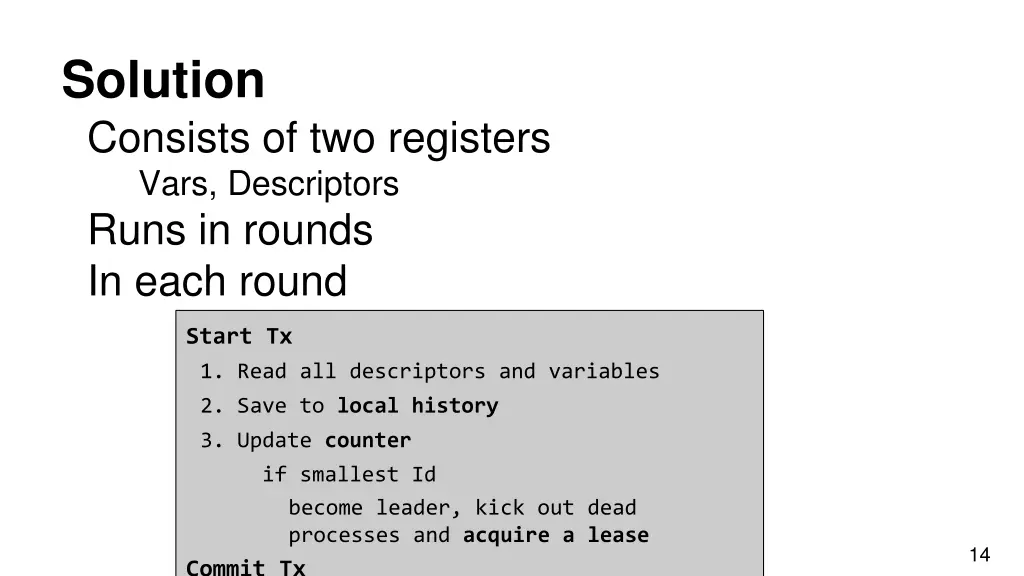
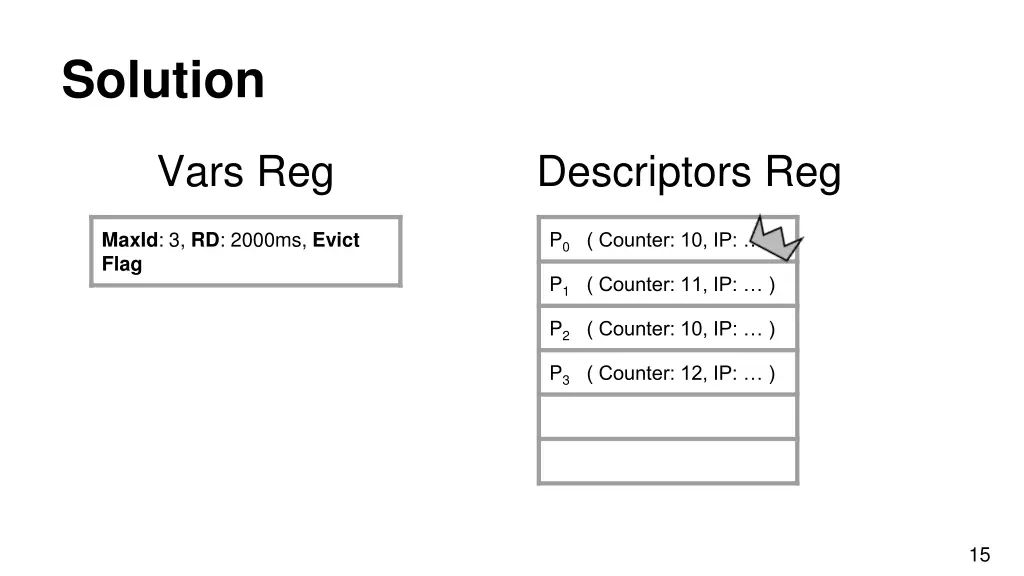
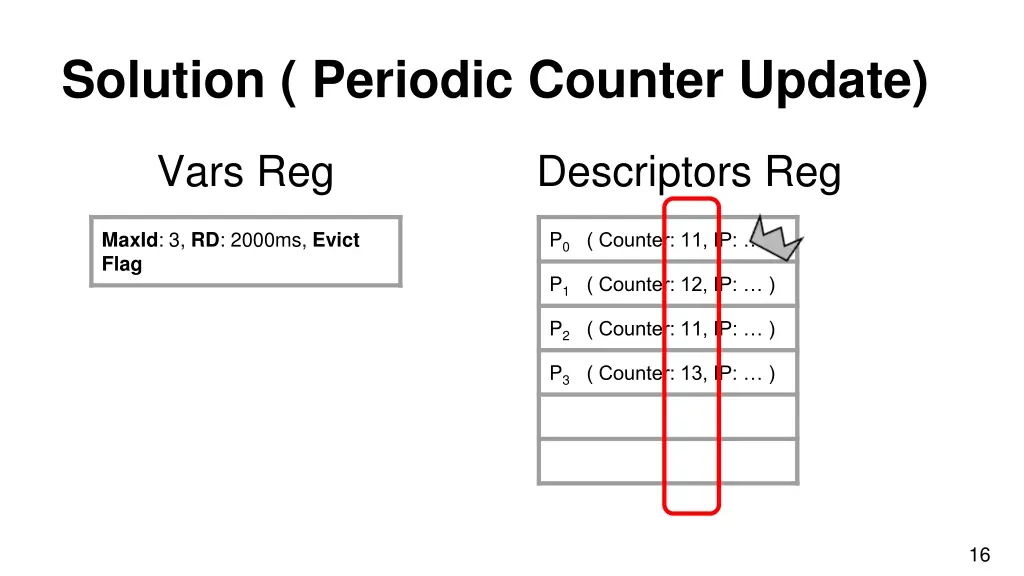
Solution Consists of two registers Vars, Descriptors Runs in rounds In each round Start Tx 1. Read all descriptors and variables 2. Save to local history 3. Update counter if smallest Id become leader, kick out dead processes and acquire a lease Commit Tx 14
Solution Vars Reg Descriptors Reg MaxId: 3, RD: 2000ms, Evict Flag P0 ( Counter: 10, IP: ) P1 ( Counter: 11, IP: ) P2 ( Counter: 10, IP: ) P3 ( Counter: 12, IP: ) 15
Solution ( Periodic Counter Update) Vars Reg Descriptors Reg MaxId: 3, RD: 2000ms, Evict Flag P0 ( Counter: 11, IP: ) P1 ( Counter: 12, IP: ) P2 ( Counter: 11, IP: ) P3 ( Counter: 13, IP: ) 16
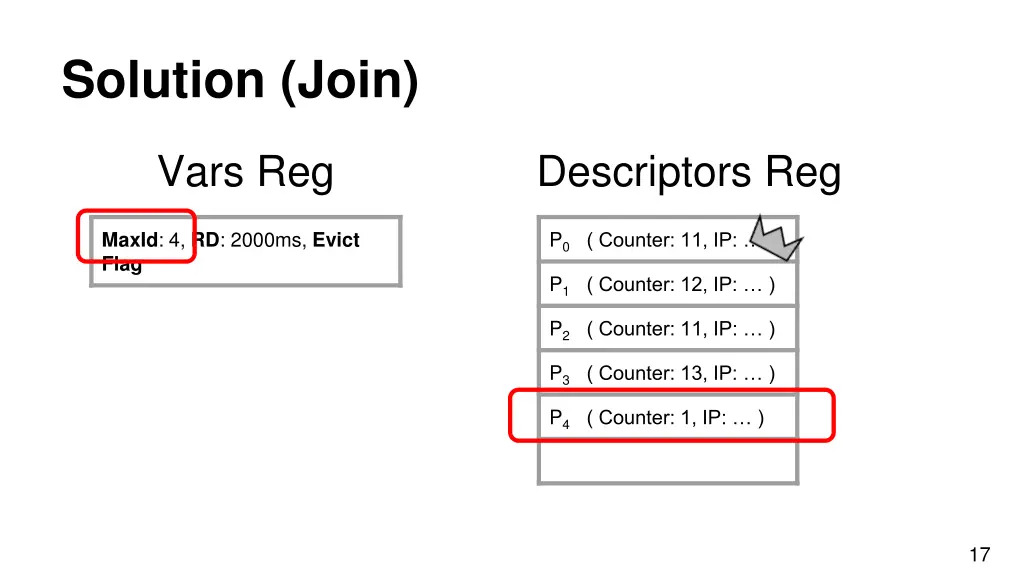
Solution (Join) Vars Reg Descriptors Reg MaxId: 4, RD: 2000ms, Evict Flag P0 ( Counter: 11, IP: ) P1 ( Counter: 12, IP: ) P2 ( Counter: 11, IP: ) P3 ( Counter: 13, IP: ) P4 ( Counter: 1, IP: ) 17
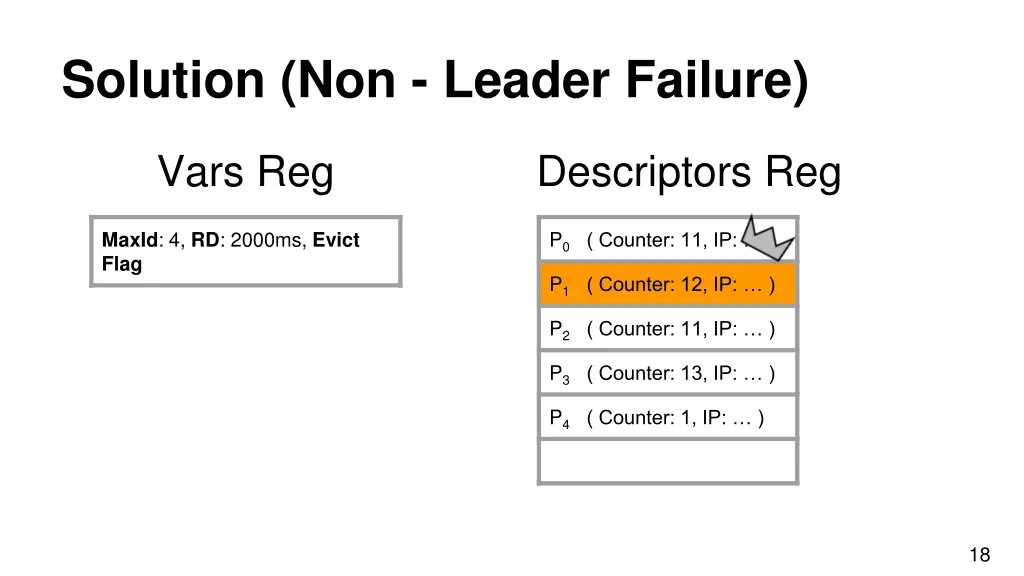
Solution (Non - Leader Failure) Vars Reg Descriptors Reg MaxId: 4, RD: 2000ms, Evict Flag P0 ( Counter: 11, IP: ) P1 ( Counter: 12, IP: ) P2 ( Counter: 11, IP: ) P3 ( Counter: 13, IP: ) P4 ( Counter: 1, IP: ) 18
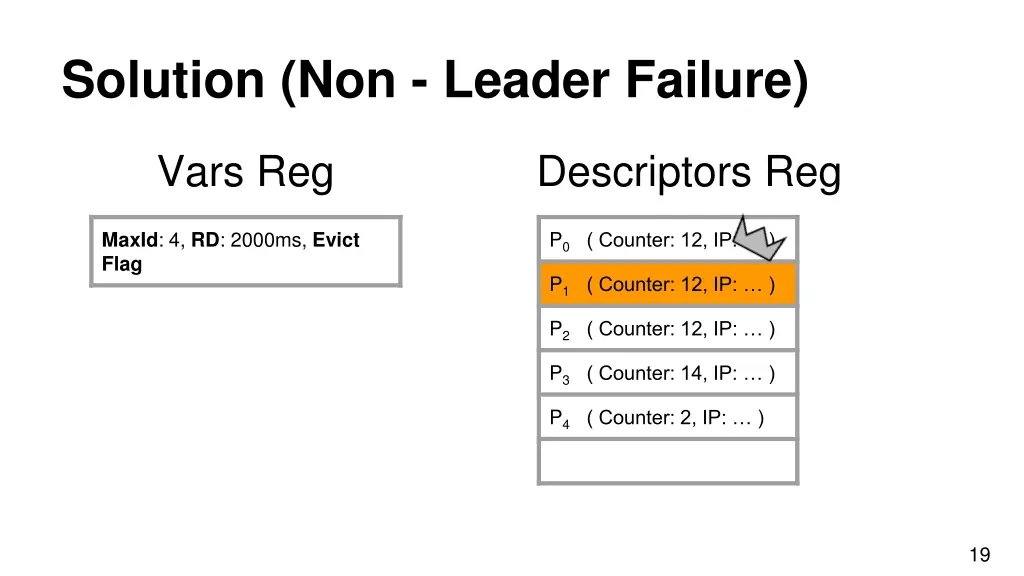
Solution (Non - Leader Failure) Vars Reg Descriptors Reg MaxId: 4, RD: 2000ms, Evict Flag P0 ( Counter: 12, IP: ) P1 ( Counter: 12, IP: ) P2 ( Counter: 12, IP: ) P3 ( Counter: 14, IP: ) P4 ( Counter: 2, IP: ) 19
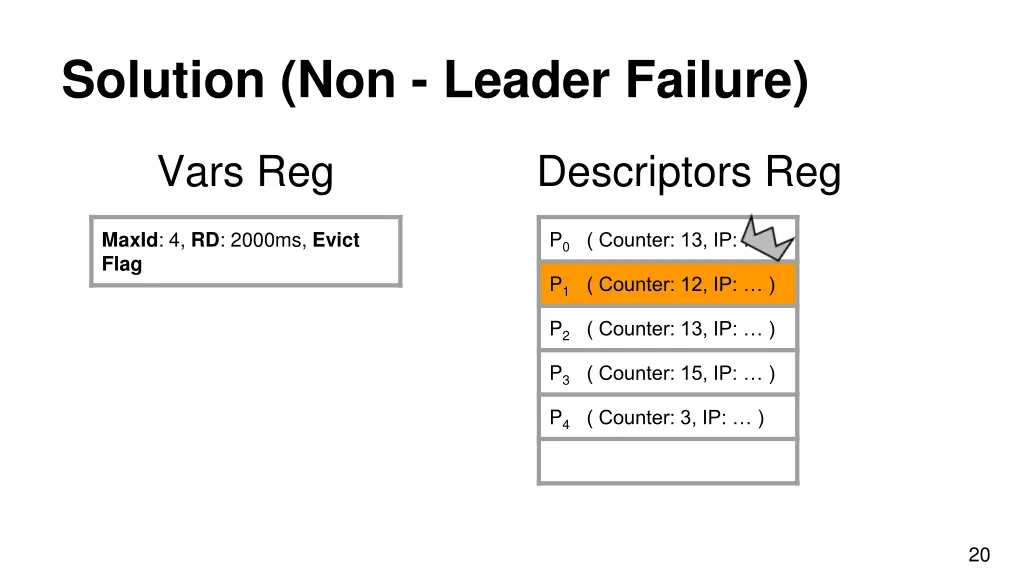
Solution (Non - Leader Failure) Vars Reg Descriptors Reg MaxId: 4, RD: 2000ms, Evict Flag P0 ( Counter: 13, IP: ) P1 ( Counter: 12, IP: ) P2 ( Counter: 13, IP: ) P3 ( Counter: 15, IP: ) P4 ( Counter: 3, IP: ) 20
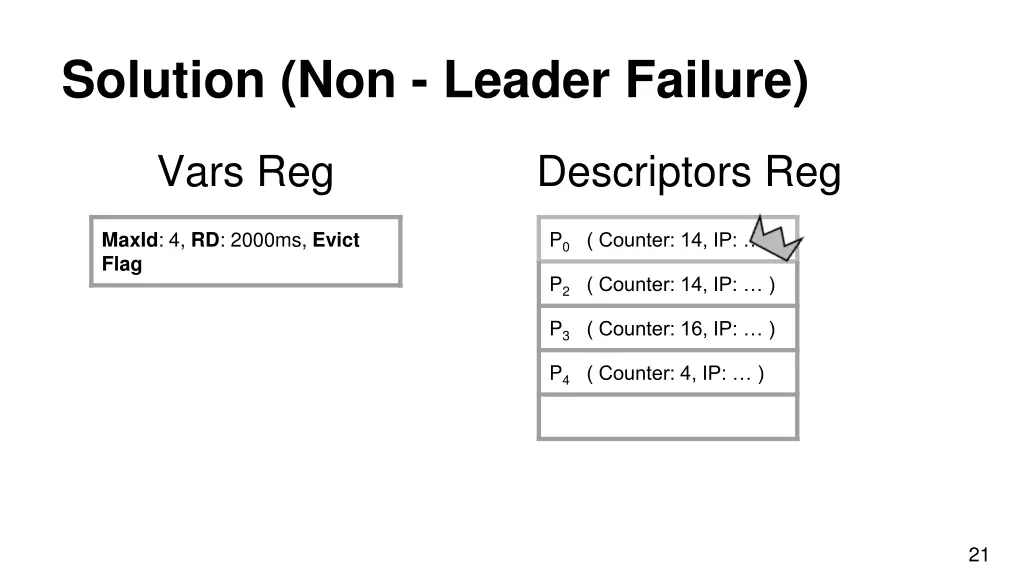
Solution (Non - Leader Failure) Vars Reg Descriptors Reg MaxId: 4, RD: 2000ms, Evict Flag P0 ( Counter: 14, IP: ) P2 ( Counter: 14, IP: ) P3 ( Counter: 16, IP: ) P4 ( Counter: 4, IP: ) 21
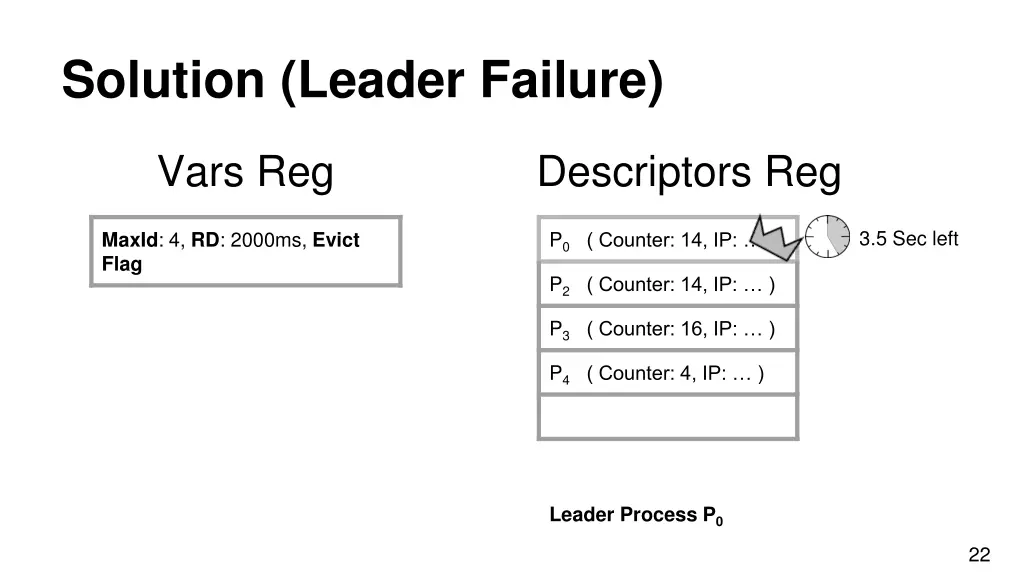
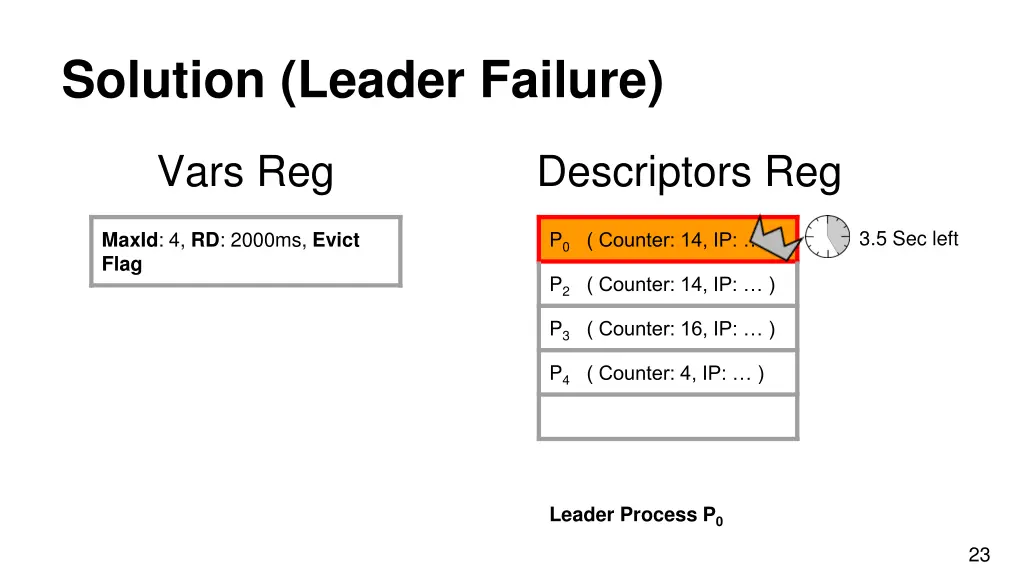
Solution (Leader Failure) Vars Reg Descriptors Reg 3.5 Sec left MaxId: 4, RD: 2000ms, Evict Flag P0 ( Counter: 14, IP: ) P2 ( Counter: 14, IP: ) P3 ( Counter: 16, IP: ) P4 ( Counter: 4, IP: ) Leader Process P0 22
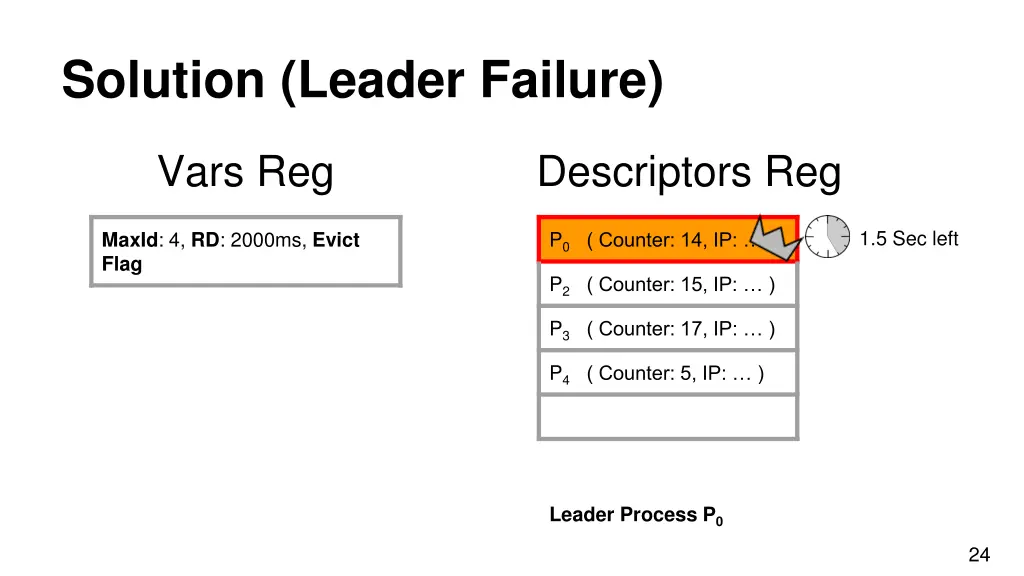
Solution (Leader Failure) Vars Reg Descriptors Reg 3.5 Sec left MaxId: 4, RD: 2000ms, Evict Flag P0 ( Counter: 14, IP: ) P2 ( Counter: 14, IP: ) P3 ( Counter: 16, IP: ) P4 ( Counter: 4, IP: ) Leader Process P0 23
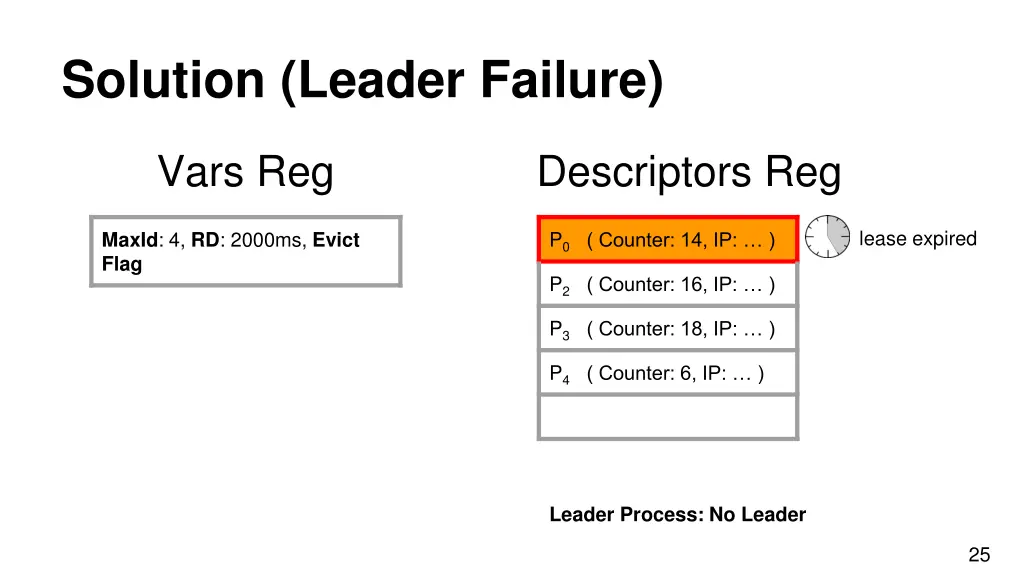
Solution (Leader Failure) Vars Reg Descriptors Reg 1.5 Sec left MaxId: 4, RD: 2000ms, Evict Flag P0 ( Counter: 14, IP: ) P2 ( Counter: 15, IP: ) P3 ( Counter: 17, IP: ) P4 ( Counter: 5, IP: ) Leader Process P0 24
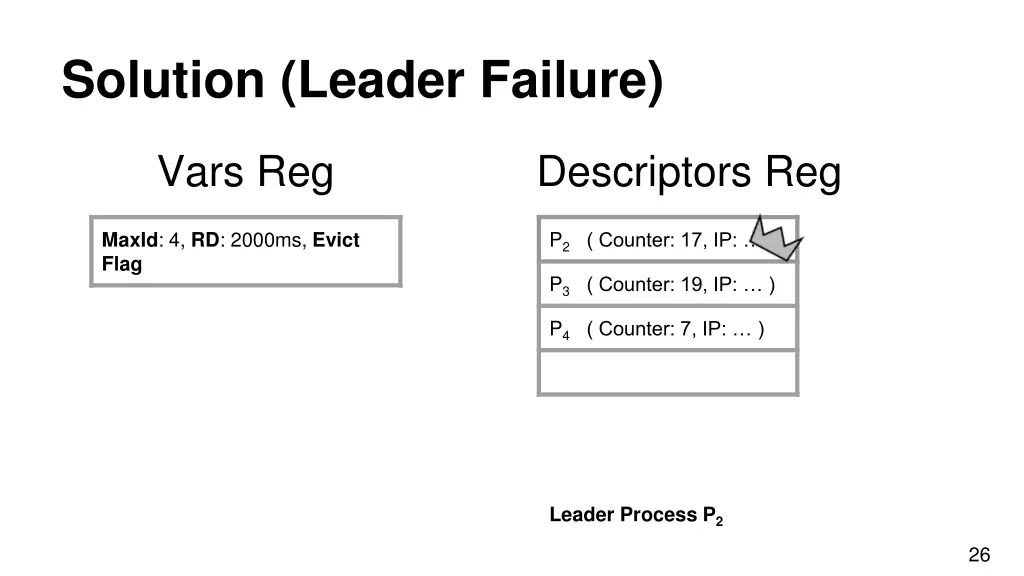
Solution (Leader Failure) Vars Reg Descriptors Reg lease expired MaxId: 4, RD: 2000ms, Evict Flag P0 ( Counter: 14, IP: ) P2 ( Counter: 16, IP: ) P3 ( Counter: 18, IP: ) P4 ( Counter: 6, IP: ) Leader Process: No Leader 25
Solution (Leader Failure) Vars Reg Descriptors Reg MaxId: 4, RD: 2000ms, Evict Flag P2 ( Counter: 17, IP: ) P3 ( Counter: 19, IP: ) P4 ( Counter: 7, IP: ) Leader Process P2 26
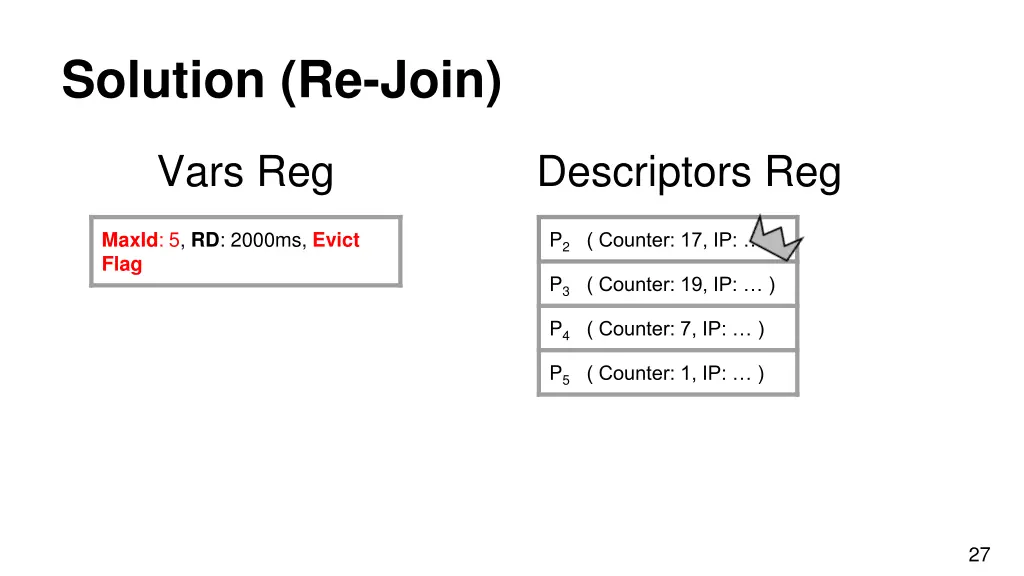
Solution (Re-Join) Vars Reg Descriptors Reg MaxId: 5, RD: 2000ms, Evict Flag P2 ( Counter: 17, IP: ) P3 ( Counter: 19, IP: ) P4 ( Counter: 7, IP: ) P5 ( Counter: 1, IP: ) 27
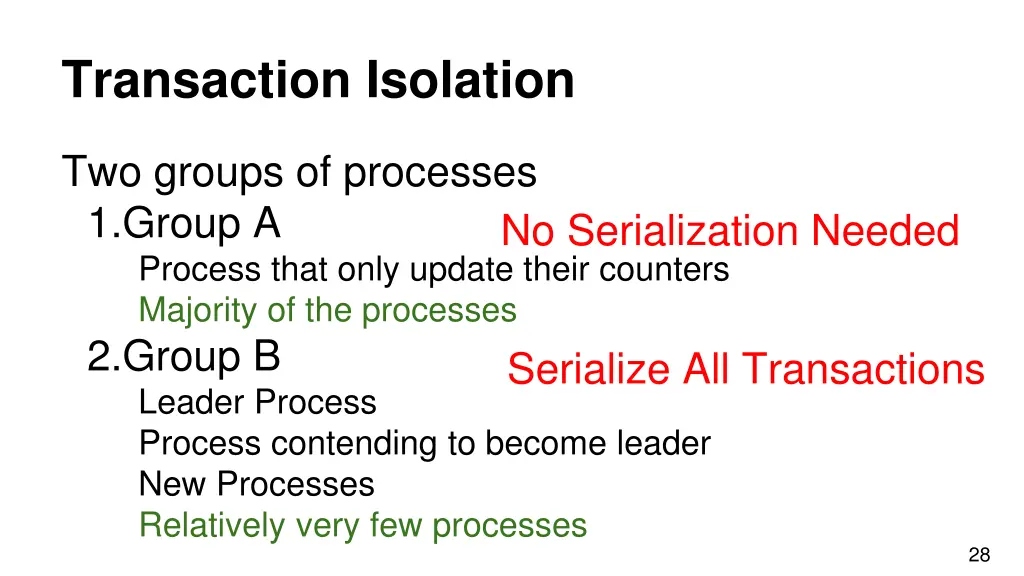
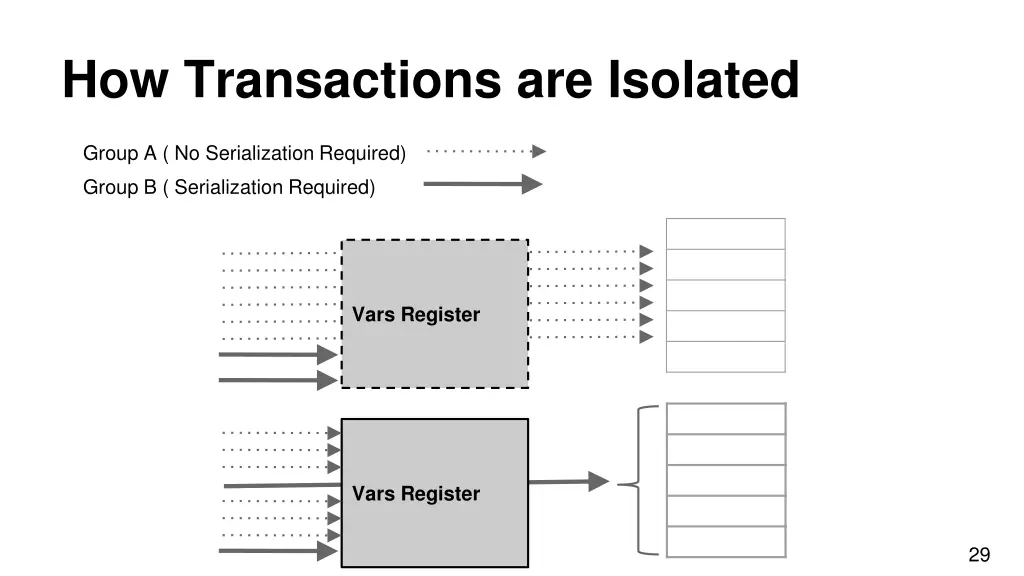
Transaction Isolation Two groups of processes 1.Group A Process that only update their counters Majority of the processes 2.Group B Leader Process Process contending to become leader New Processes Relatively very few processes No Serialization Needed Serialize All Transactions 28
How Transactions are Isolated Group A ( No Serialization Required) Group B ( Serialization Required) Vars Register Vars Register 29
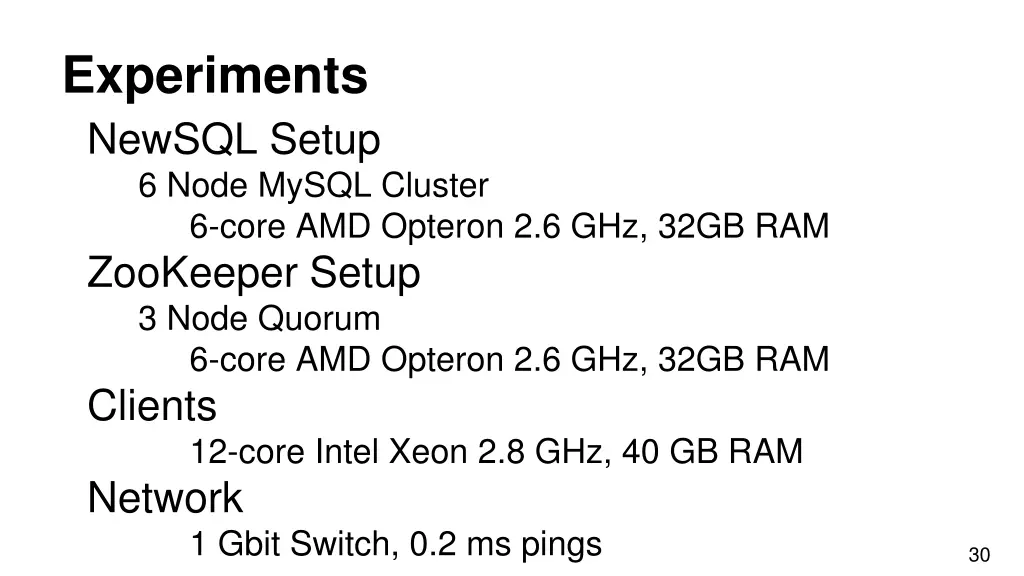
Experiments NewSQL Setup 6 Node MySQL Cluster 6-core AMD Opteron 2.6 GHz, 32GB RAM ZooKeeper Setup 3 Node Quorum 6-core AMD Opteron 2.6 GHz, 32GB RAM Clients 12-core Intel Xeon 2.8 GHz, 40 GB RAM Network 1 Gbit Switch, 0.2 ms pings 30
Experiments 1.Start N processes 2.Kill Leader, and start a new process 3.Measure time taken to elect new leader 4.Go to 2. 31
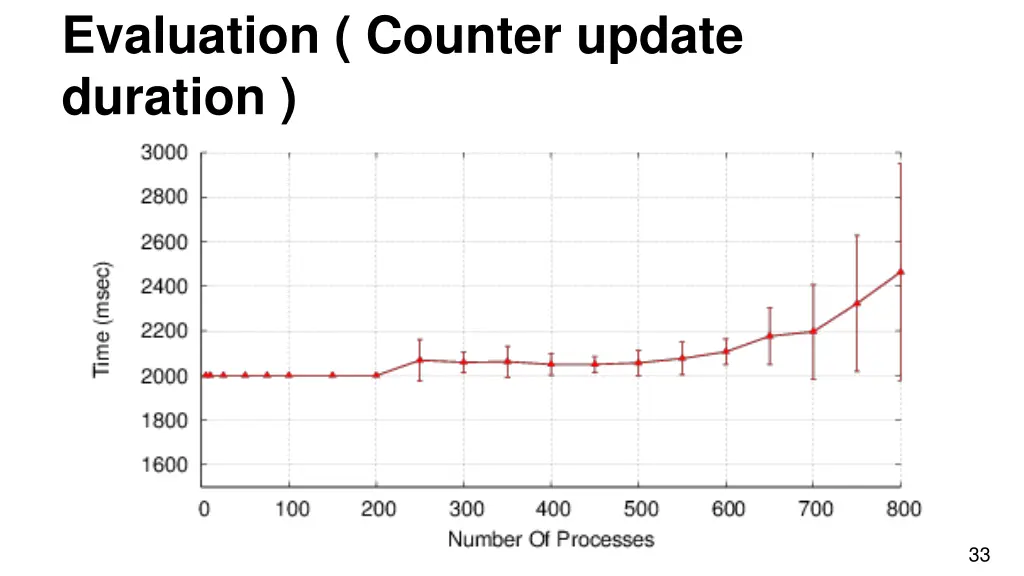
Evaluation ( Counter update duration ) 33
Recent Related Work Microsoft s Project Orleans: Distributed Virtual Actors for Programmability and Scalability. Uses Azure Table service for Membership Mgm http://research.microsoft.com/en- US/people/philbe/disckeyotephilbefinal.pdf Beast Master: Coordination Server built on top of FoundationDB Status: Under Development https://news.ycombinator.com/item?id=6366665 34
Questions 35
LE Properties Integrity: there should never be more than one leader in the system. Termination: a correct process eventually becomes a leader. Termination: all invocations of the primitive getLeader() invoked by a correct process should return the leader s id 36
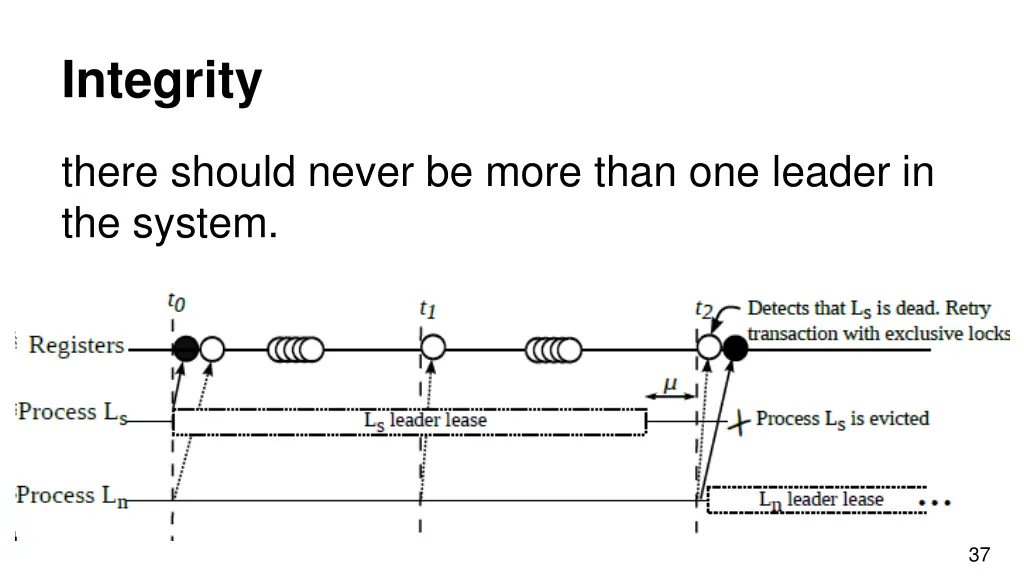
Integrity there should never be more than one leader in the system. 37