Learning outcomes
This chapter covers the differences between good and poor conductors of electricity, the chemical effects of electric current, and the intricacies of electroplating. It highlights how to identify electrolytes and lists common electroplated materials encountered in daily life. Students will learn essential terms related to electrolysis and the practical applications of electroplating in everyday situations, enhancing their understanding of electrical conductivity in liquids and electrochemical processes.

Download Presentation

Please find below an Image/Link to download the presentation.
The content on the website is provided AS IS for your information and personal use only. It may not be sold, licensed, or shared on other websites without obtaining consent from the author.If you encounter any issues during the download, it is possible that the publisher has removed the file from their server.
You are allowed to download the files provided on this website for personal or commercial use, subject to the condition that they are used lawfully. All files are the property of their respective owners.
The content on the website is provided AS IS for your information and personal use only. It may not be sold, licensed, or shared on other websites without obtaining consent from the author.
E N D
Presentation Transcript
Learning outcomes AFTER COMPLETION OF THIS CHAPTER, CHILDREN WILL BE ABLE TO: Differentiate between good and poor conductors of electricity; Understand the chemical effect of electric current; Understand and appreciate the chemistry behind the process of electroplating; Able to list out the electroplated material used in our day today life; Able to define and understand the terms like electrolysis, electrodes, electrolyte, electroplating etc.; Will be able to apply knowledge of electroplating in daily life.
INTRODUCTION Good and poor conductor of electricity. Do liquids conduct electricity? Detection of week current flowing through a liquid. Chemical effects of electric current.(Electrolysis) Electroplating. Uses of electroplating.
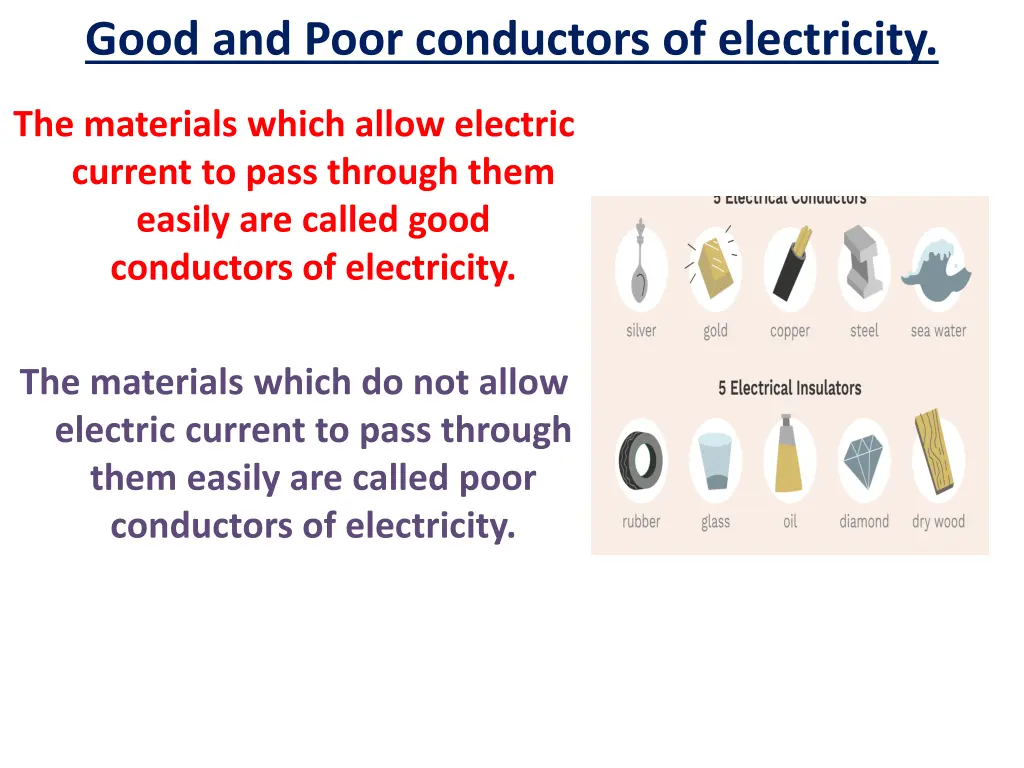
Good and Poor conductors of electricity. The materials which allow electric current to pass through them easily are called good conductors of electricity. The materials which do not allow electric current to pass through them easily are called poor conductors of electricity.
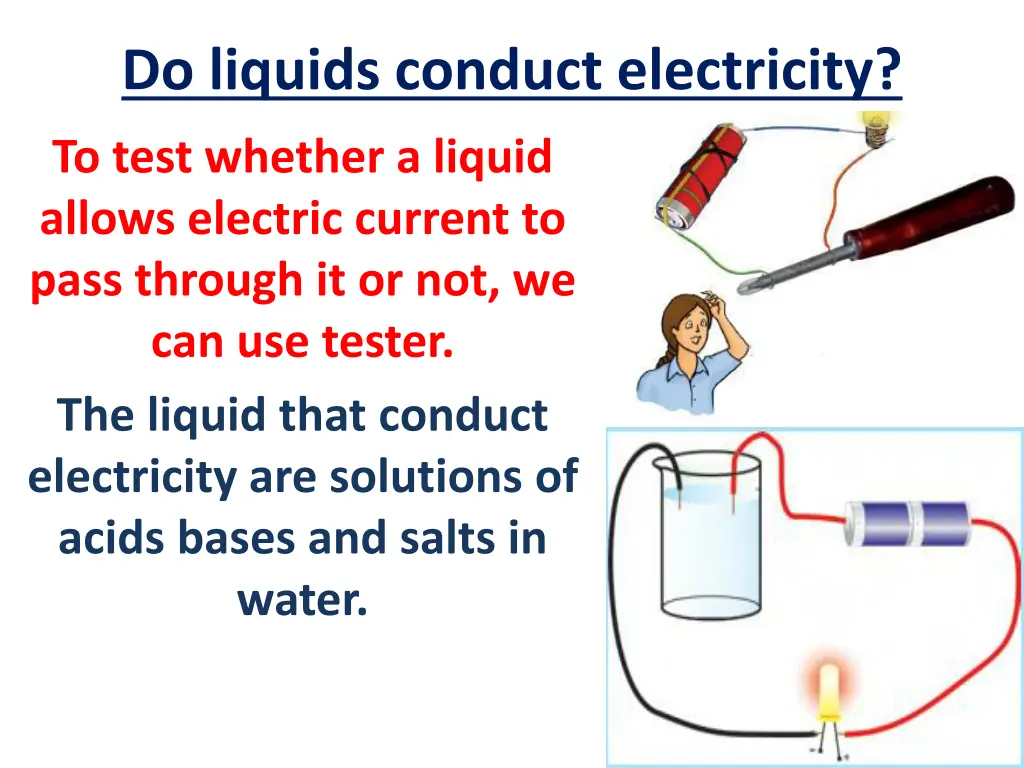
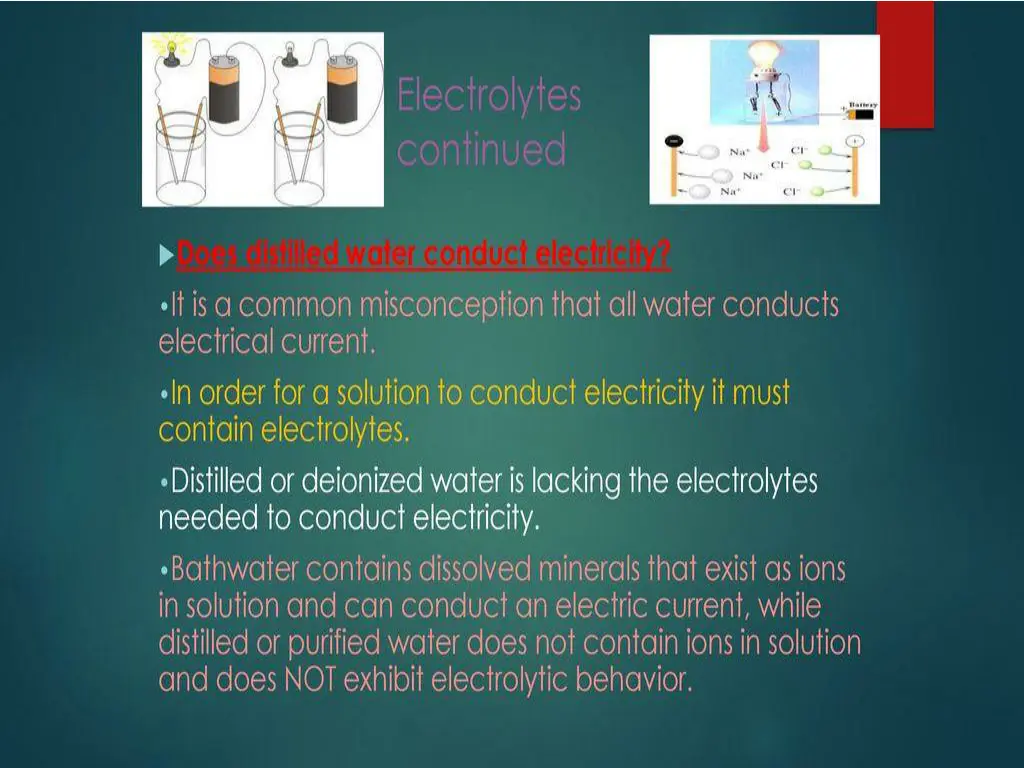
Do liquids conduct electricity? To test whether a liquid allows electric current to pass through it or not, we can use tester. The liquid that conduct electricity are solutions of acids bases and salts in water.
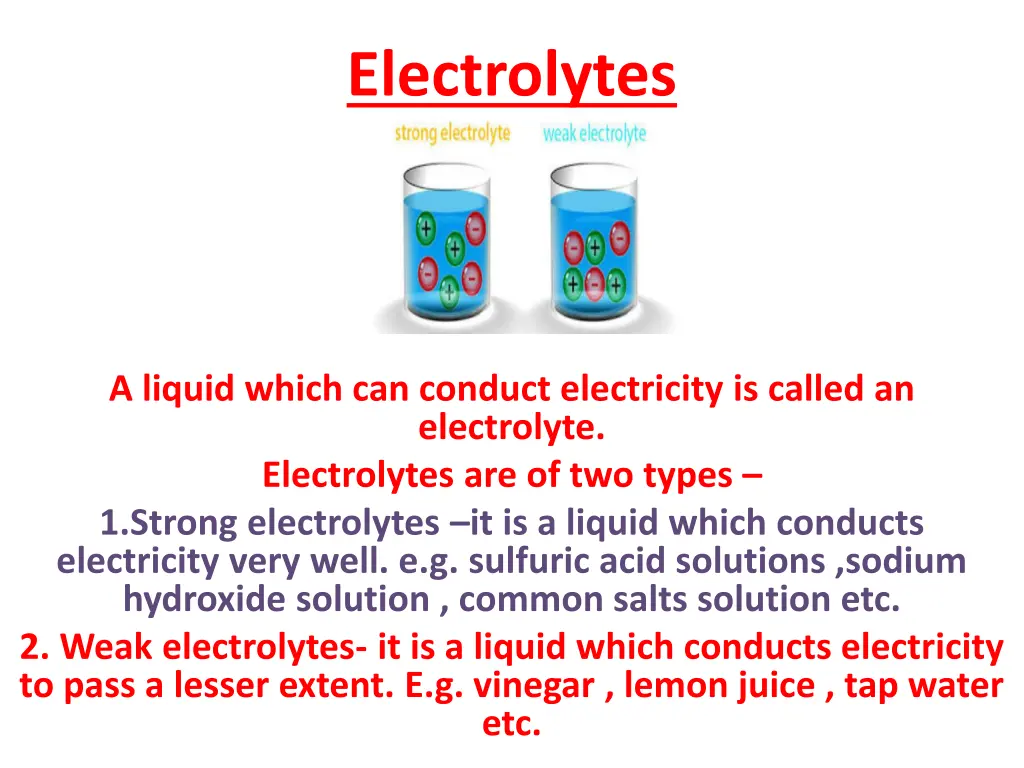
Electrolytes A liquid which can conduct electricity is called an electrolyte. Electrolytes are of two types 1.Strong electrolytes it is a liquid which conducts electricity very well. e.g. sulfuric acid solutions ,sodium hydroxide solution , common salts solution etc. 2. Weak electrolytes- it is a liquid which conducts electricity to pass a lesser extent. E.g. vinegar , lemon juice , tap water etc.
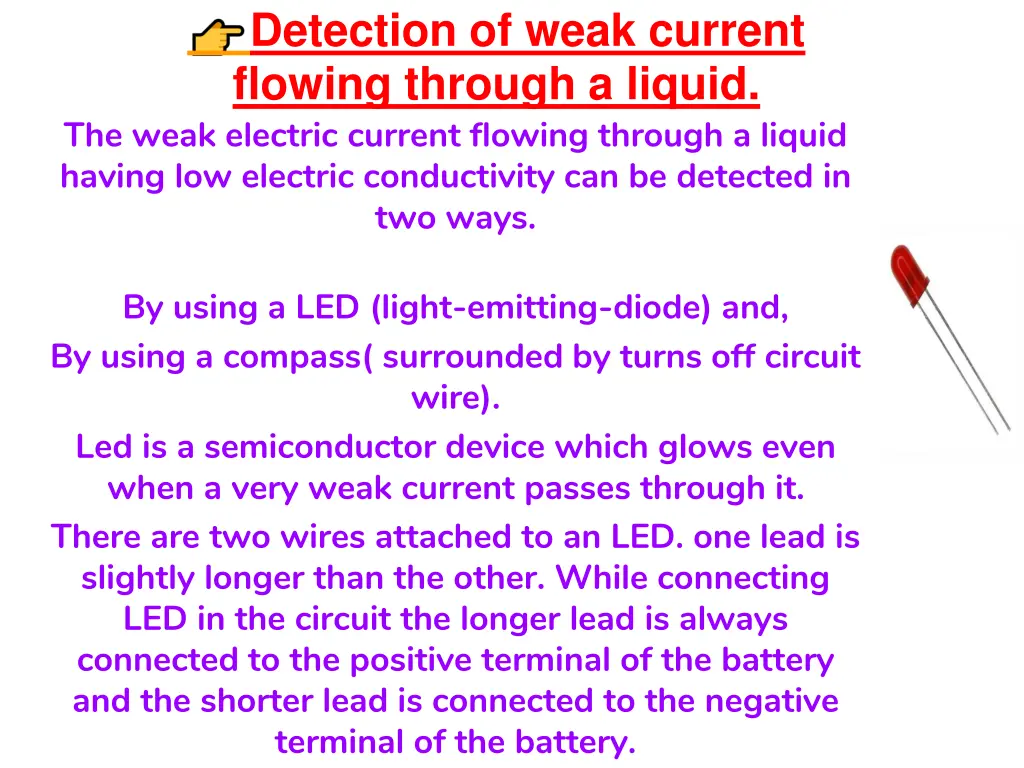
Detection of weak current flowing through a liquid. The weak electric current flowing through a liquid having low electric conductivity can be detected in two ways. By using a LED (light-emitting-diode) and, By using a compass( surrounded by turns off circuit wire). Led is a semiconductor device which glows even when a very weak current passes through it. There are two wires attached to an LED. one lead is slightly longer than the other. While connecting LED in the circuit the longer lead is always connected to the positive terminal of the battery and the shorter lead is connected to the negative terminal of the battery.
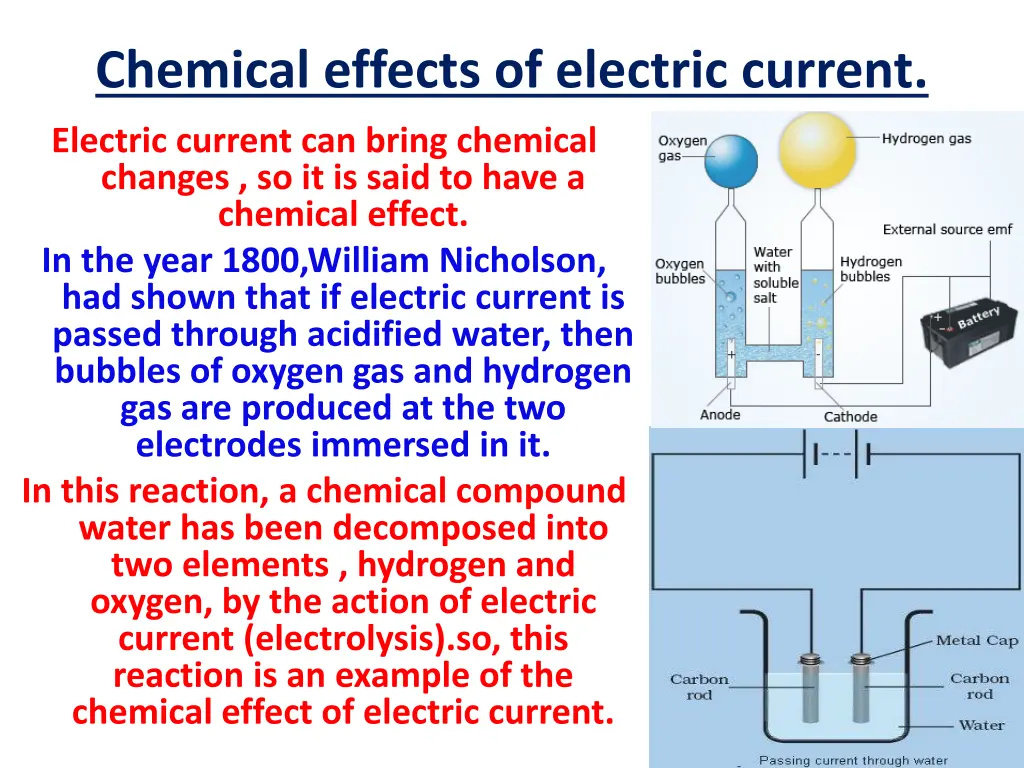
Chemical effects of electric current. Electric current can bring chemical changes , so it is said to have a chemical effect. In the year 1800,William Nicholson, had shown that if electric current is passed through acidified water, then bubbles of oxygen gas and hydrogen gas are produced at the two electrodes immersed in it. In this reaction, a chemical compound water has been decomposed into two elements , hydrogen and oxygen, by the action of electric current (electrolysis).so, this reaction is an example of the chemical effect of electric current.
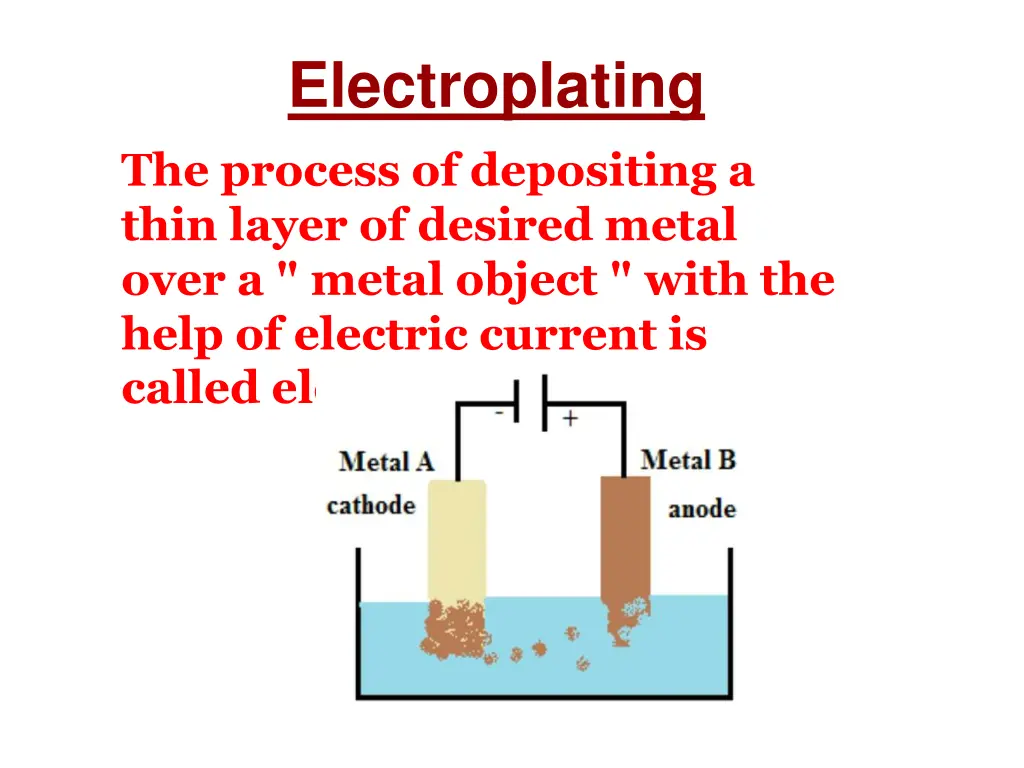
Electroplating The process of depositing a thin layer of desired metal over a " metal object " with the help of electric current is called electroplating.
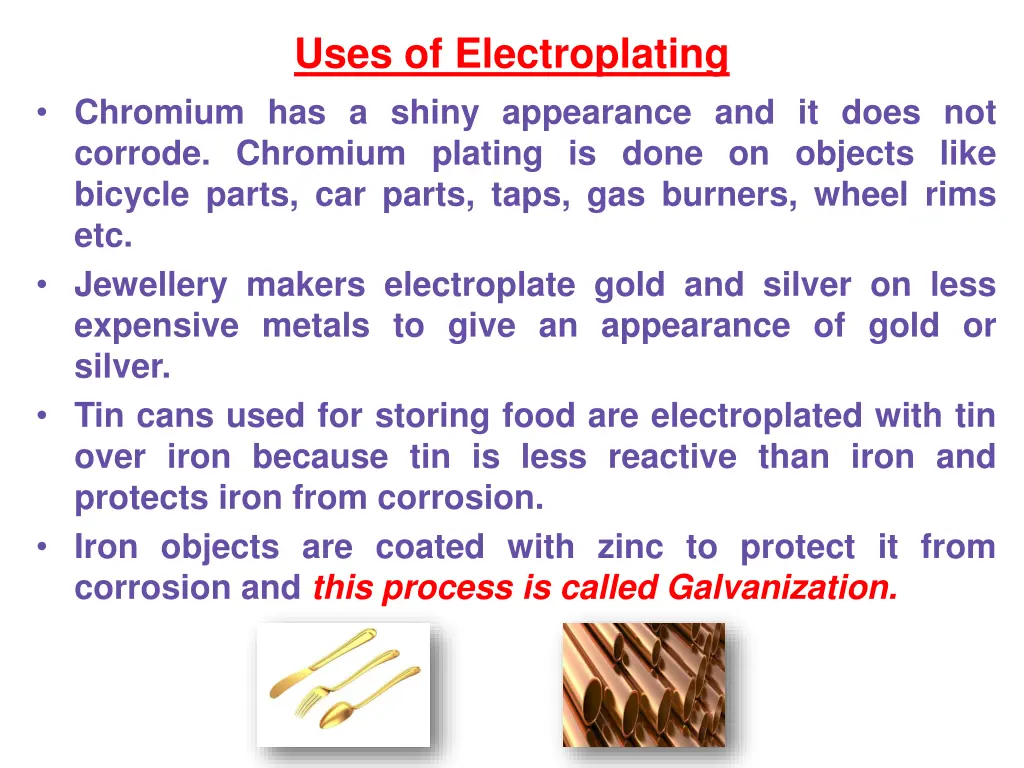
Uses of Electroplating Chromium has a shiny appearance and it does not corrode. Chromium plating is done on objects like bicycle parts, car parts, taps, gas burners, wheel rims etc. Jewellery makers electroplate gold and silver on less expensive metals to give an appearance of gold or silver. Tin cans used for storing food are electroplated with tin over iron because tin is less reactive than iron and protects iron from corrosion. Iron objects are coated with zinc to protect it from corrosion and this process is called Galvanization.