Lie Algebras in Physics: Geometric Applications and Non-Compact Groups
Explore the fascinating world of Lie algebras in physics, delving into geometric and non-compact groups, Conservation Laws, Noether's theorem, and the symmetries they reveal. Discover the classification of Lie algebras with Dynkin diagrams, Infinite families, and Exceptional cases. Dive into the complexities of Poincare groups, non-compact transformations, and the significance of automorphism groups for octonions. Uncover the nuances of non-compact groups and their generators, along with the role of quadratic forms in these structures.

Download Presentation

Please find below an Image/Link to download the presentation.
The content on the website is provided AS IS for your information and personal use only. It may not be sold, licensed, or shared on other websites without obtaining consent from the author. If you encounter any issues during the download, it is possible that the publisher has removed the file from their server.
You are allowed to download the files provided on this website for personal or commercial use, subject to the condition that they are used lawfully. All files are the property of their respective owners.
The content on the website is provided AS IS for your information and personal use only. It may not be sold, licensed, or shared on other websites without obtaining consent from the author.
E N D
Presentation Transcript
Ivane Javakhishvili Tbilisi State University Faculty of Exact and Natural Sciences compact ?? group Geometric application of non Geometric application of non- -compact group Presenter: Master's supervisor: Alexandre Gurchumelia Merab Gogberashvili
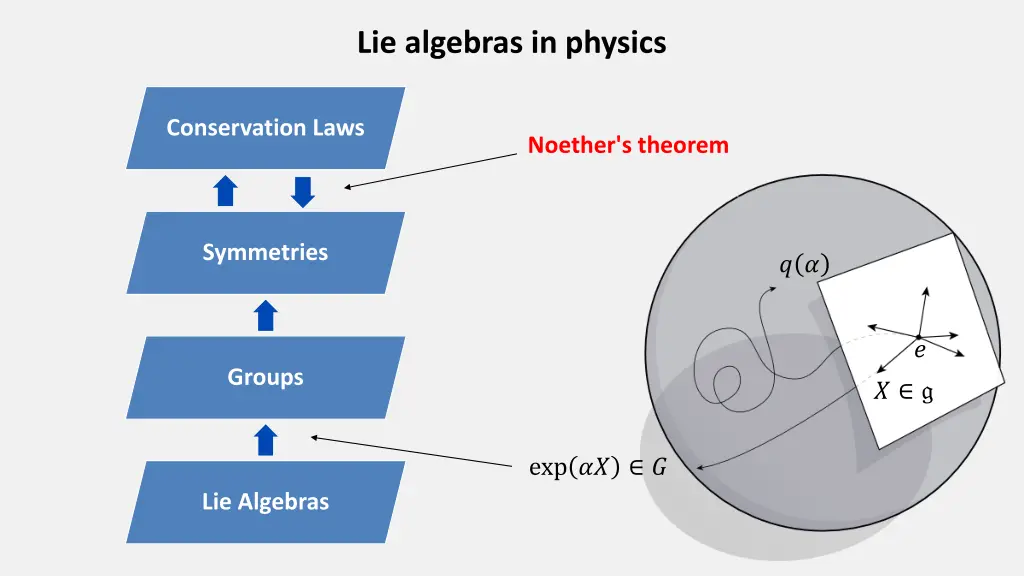
Lie algebras in physics Conservation Laws Noether's theorem Symmetries ? ? ? Groups ? ? exp ?? ? Lie Algebras
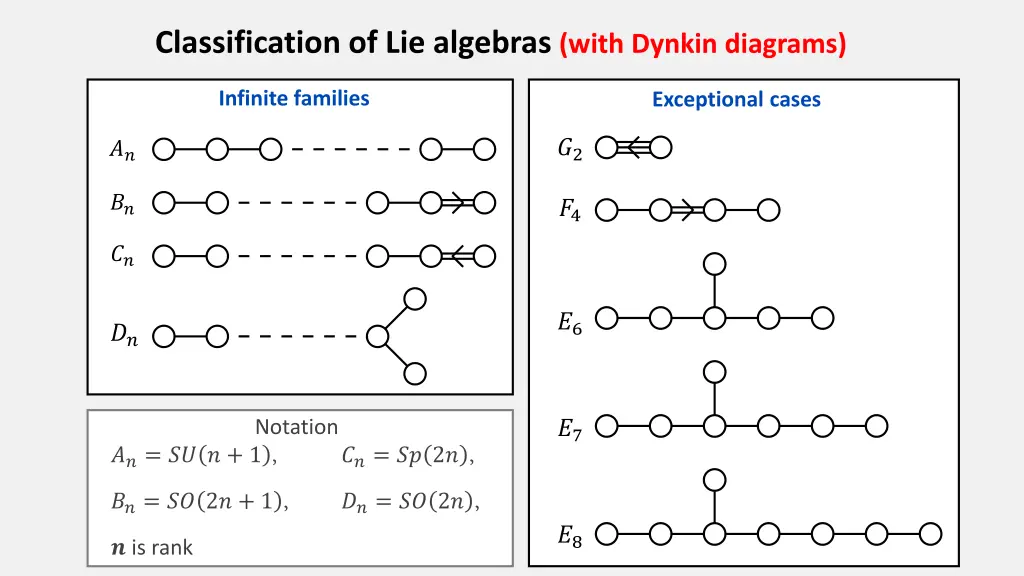
Classification of Lie algebras (with Dynkin diagrams) Infinite families Exceptional cases ?2 ?? ?? ?4 ?? ?6 ?? ?7 Notation ??= ?? ? + 1 , ??= ?? 2? , ??= ?? 2? + 1 , ??= ?? 2? , ?8 ?is rank
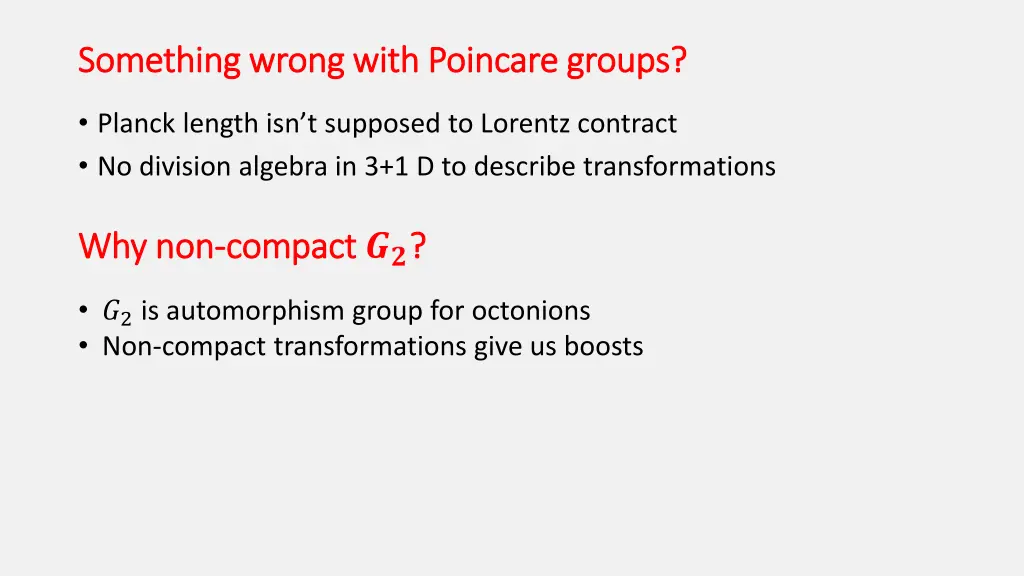
Something wrong with Poincare groups? Something wrong with Poincare groups? Planck length isn t supposed to Lorentz contract No division algebra in 3+1 D to describe transformations compact ??? ? Why non Why non- -compact ?2 is automorphism group for octonions Non-compact transformations give us boosts
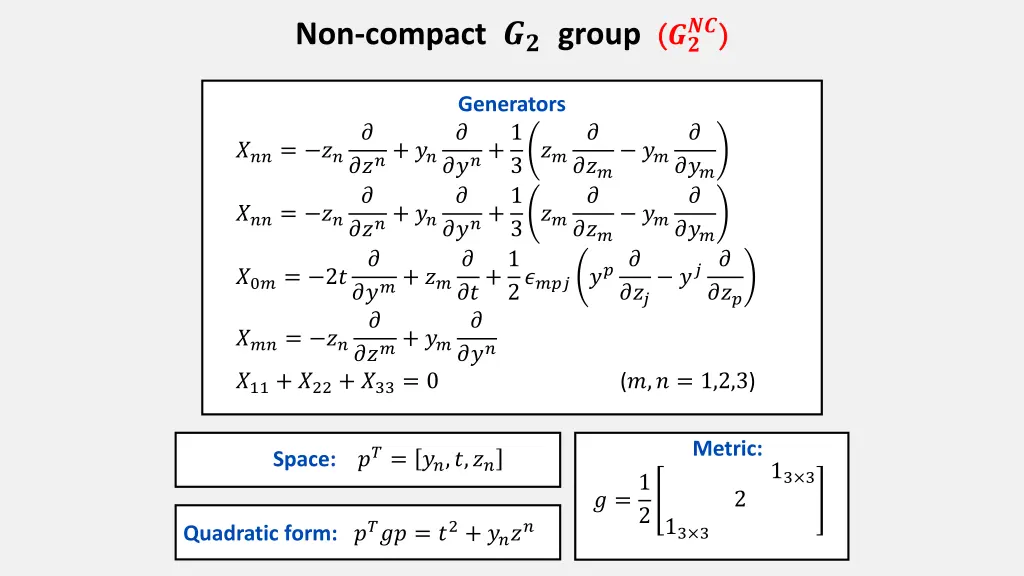
??) ) Non-compact ?? group ( (?? Generators ? ???+1 ? ???+1 ? ??+1 ? ??? ? ? ? ???= ?? ???+ ?? ? ???+ ?? ? ???+ ?? ? ???+ ?? ?? ?? 3 ??? ? ??? ??? ? ??? ??? ???= ?? ?? ?? 3 2???? ??? ?0?= 2? ??? ??? ???= ?? ?11+ ?22+ ?33= 0 (?,? = 1,2,3) Metric: Space: ??= ??,?,?? 13 3 ? =1 2 2 13 3 Quadratic form: ???? = ?2+ ????
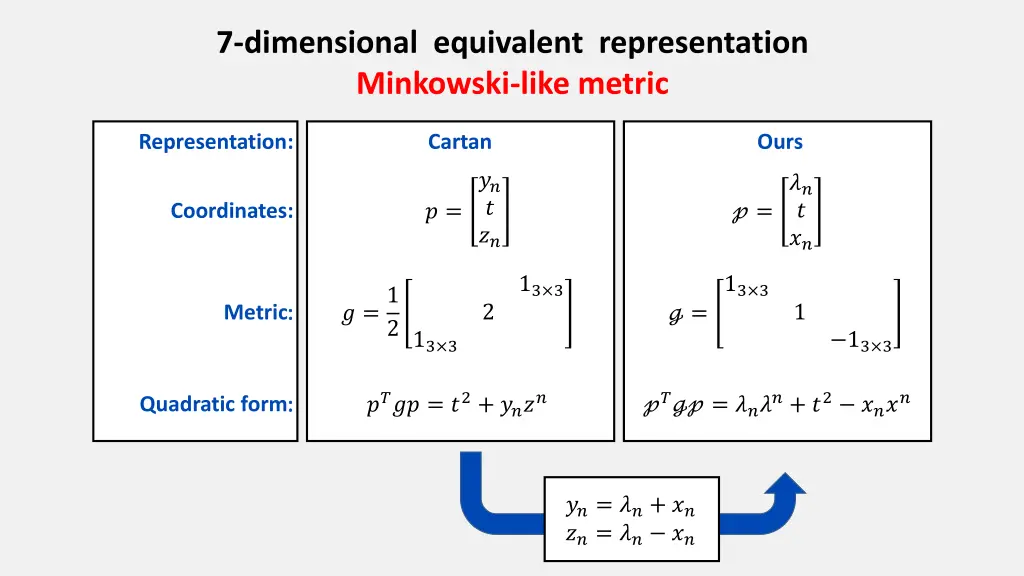
7-dimensional equivalent representation Minkowski-like metric Representation: Cartan Ours ?? ? ?? ?? ? ?? ? = ? = Coordinates: 13 3 13 3 ? =1 2 1 Metric: : = 2 13 3 13 3 ???? = ?2+ ???? ?? ? = ????+ ?2 ???? Quadratic form: : ??= ??+ ?? ??= ?? ??
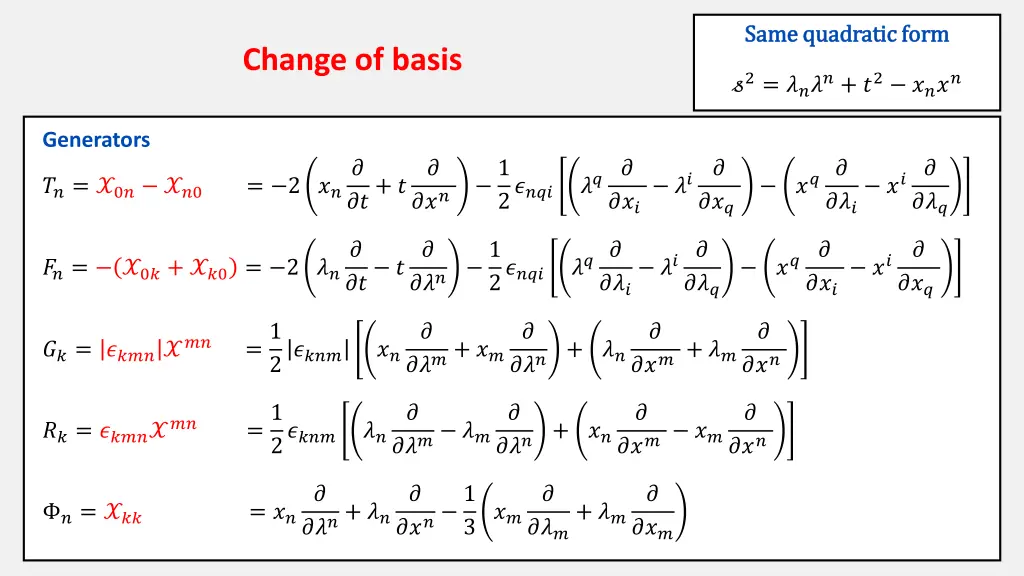
Same quadratic form Same quadratic form Change of basis ?2= ????+ ?2 ???? Generators ? ??+ ? ? 1 ??? ? ??? ??? ??? ?? ??= ?0? ??0 = 2 ?? 2???? ??? ??? ??? ??? ? ?? ? ? 1 ??? ??? ??? ? ??? ?? ??= ?0?+ ??0 = 2 ?? 2???? ??? ??? ??? ??? =1 ? ? ? ? ??= ??????? 2???? ?? ???+ ?? + ?? ???+ ?? ??? ??? =1 ? ? ? ? ??= ??????? 2???? ?? ??? ?? + ?? ??? ?? ??? ??? ? ??? 1 ? ? ? ?= ??? = ?? ???+ ?? ?? + ?? 3 ??? ???
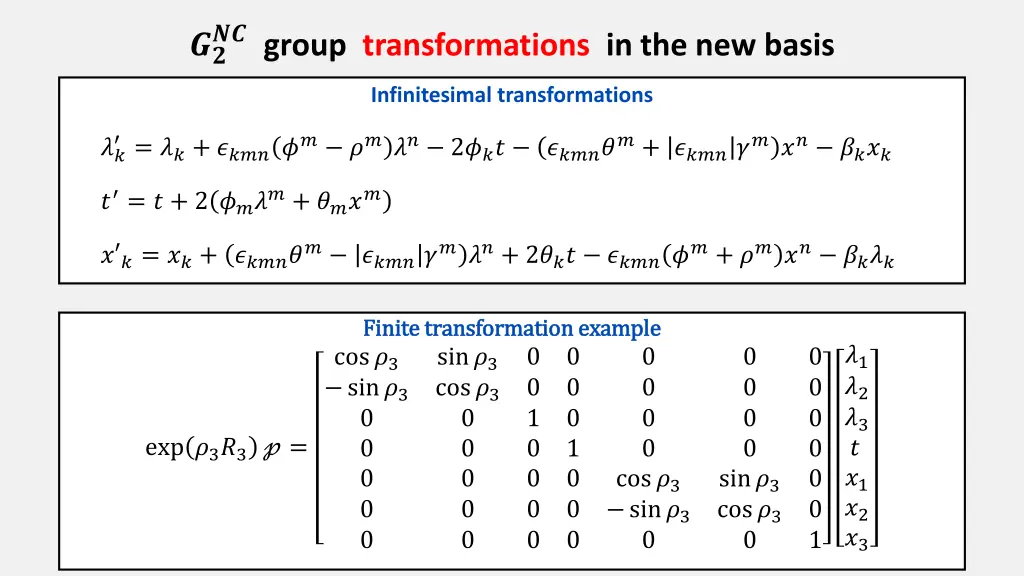
?? group transformations in the new basis ?? Infinitesimal transformations = ??+ ?????? ???? 2??? ??????+ ???????? ???? ?? ? = ? + 2 ????+ ???? ? ?= ??+ ?????? ????????+ 2??? ??????+ ???? ???? Finite transformation example Finite transformation example cos?3 sin?3 sin?3 cos?3 0 0 0 0 0 0 0 0 0 0 ?1 ?2 ?3 ? ?1 ?2 ?3 0 0 1 0 0 0 0 0 0 0 1 0 0 0 0 0 0 0 0 0 0 0 0 0 0 0 0 0 1 exp ?3?3? = cos?3 sin?3 0 sin?3 cos?3 0
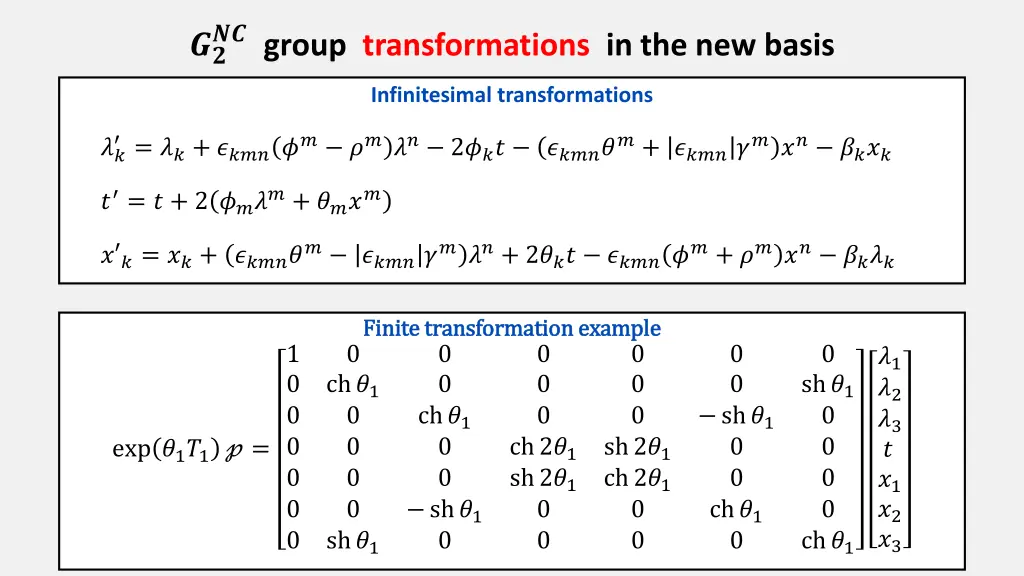
?? group transformations in the new basis ?? Infinitesimal transformations = ??+ ?????? ???? 2??? ??????+ ???????? ???? ?? ? = ? + 2 ????+ ???? ? ?= ??+ ?????? ????????+ 2??? ??????+ ???? ???? Finite transformation example Finite transformation example 0 ch?1 0 0 ch?1 0 0 0 0 0 sh?1 sh?1 0 1 0 0 0 0 0 0 0 0 0 0 0 0 0 0 0 0 ?1 ?2 ?3 ? ?1 ?2 ?3 sh?1 0 0 0 0 ch?1 sh?1 0 0 ch?1 0 ch2?1 sh2?1 0 0 sh2?1 ch2?1 0 0 exp ?1?1? =
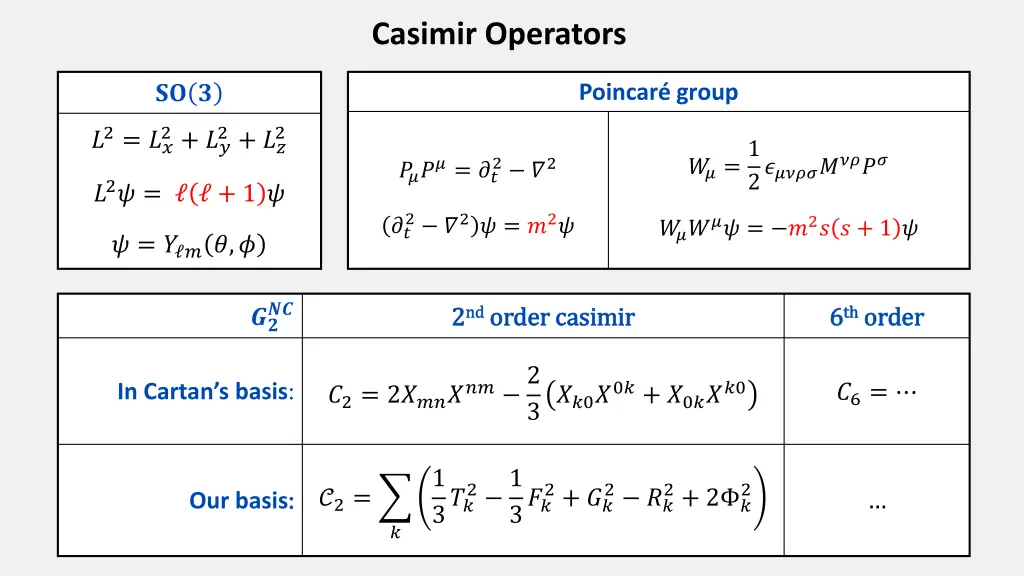
Casimir Operators Poincar group ?? ? ?2= ?? 2+ ?? 2+ ?? 2 ??=1 2?????????? ????= ??2 ?2 ?2? = + 1 ? ??2 ?2? = ?2? ????? = ?2? ? + 1 ? ? = ? ??,? ?? 2 2nd nd order casimir order casimir 6 6th th order order ?? ?2= 2?????? 2 ??0?0?+ ?0???0 ?6= In Cartan s basis: 3 1 3?? 2 1 2+ ?? 2 ?? 2+ 2 ? 2 ?2= 3?? Our basis: : ?
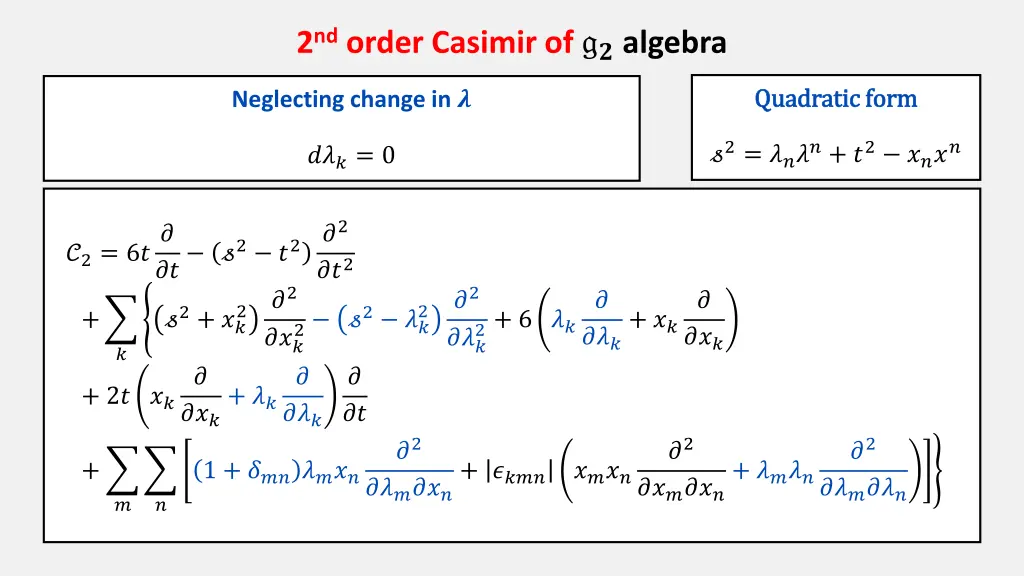
2nd order Casimir of ?? algebra Quadratic form Quadratic form Neglecting change in ? ?2= ????+ ?2 ???? ???= 0 ?2 ??2 ?2= 6?? ?? ?2 ?2 ?2 ??? ?2 ??? ? ? 2 2 ?2+ ?? 2 ?2 ?? + 2+ 6 ?? + ?? ??? ??? ? ? ? ? ?? + 2? ?? + ?? ??? ??? ?2 ?2 ?2 + 1 + ??????? + ???? ???? + ???? ?????? ?????? ?????? ? ?
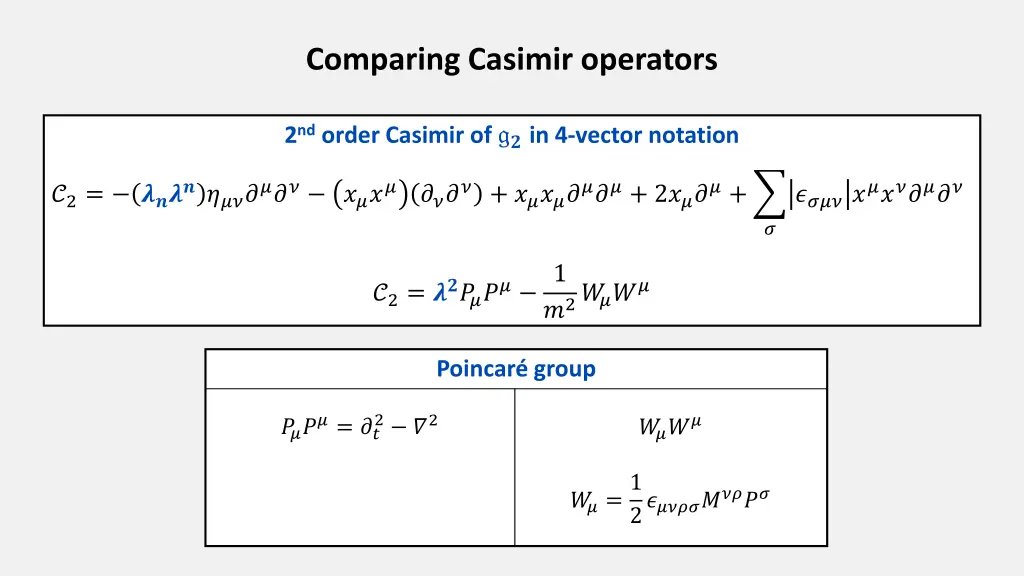
Comparing Casimir operators 2nd order Casimir of ??in 4-vector notation ?2= ??????????? ???? ????+ ????????+ 2????+ ???????????? ? 1 ?2= ?????? ?2???? Poincar group ????= ??2 ?2 ???? ??=1 2??????????
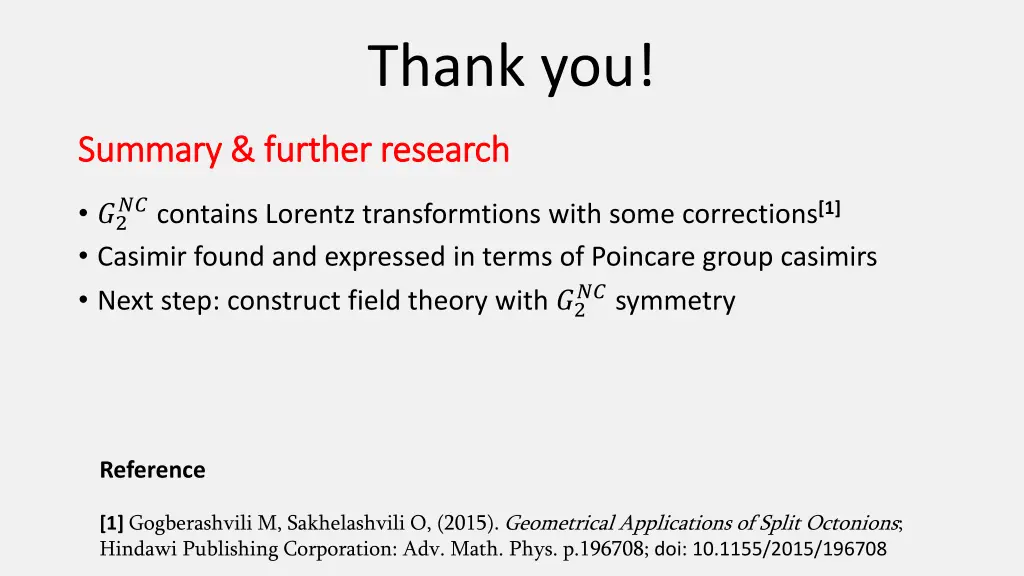
Thank you! Summary & further research Summary & further research ?? contains Lorentz transformtions with some corrections[1] ?2 Casimir found and expressed in terms of Poincare group casimirs Next step: construct field theory with ?2 ?? symmetry Reference [1] Gogberashvili M, Sakhelashvili O, (2015). Geometrical Applications of Split Octonions; Hindawi Publishing Corporation: Adv. Math. Phys. p.196708; doi: 10.1155/2015/196708

![[PDF] DOWNLOAD Spell of the Highlander: The Highlander Series, Book 7](/thumb/42282/pdf-download-spell-of-the-highlander-the-highlander-series-book-7.jpg)