Linear Programming and Optimization in Various Fields

Linear programming is an optimization technique used in manufacturing, supply chain, logistics, and marketing. Explore the application of linear programming in maximizing cost functions, such as finding the most cost-effective solution, like in the hotdog example discussed.

Download Presentation

Please find below an Image/Link to download the presentation.
The content on the website is provided AS IS for your information and personal use only. It may not be sold, licensed, or shared on other websites without obtaining consent from the author.If you encounter any issues during the download, it is possible that the publisher has removed the file from their server.
You are allowed to download the files provided on this website for personal or commercial use, subject to the condition that they are used lawfully. All files are the property of their respective owners.
The content on the website is provided AS IS for your information and personal use only. It may not be sold, licensed, or shared on other websites without obtaining consent from the author.
E N D
Presentation Transcript
Using Technology in Nursing Practice: Part 2: Optimizing Practice 1
Agenda Nursing care with ICTs: Patient safety Using clinical judgement Advocacy Research 2
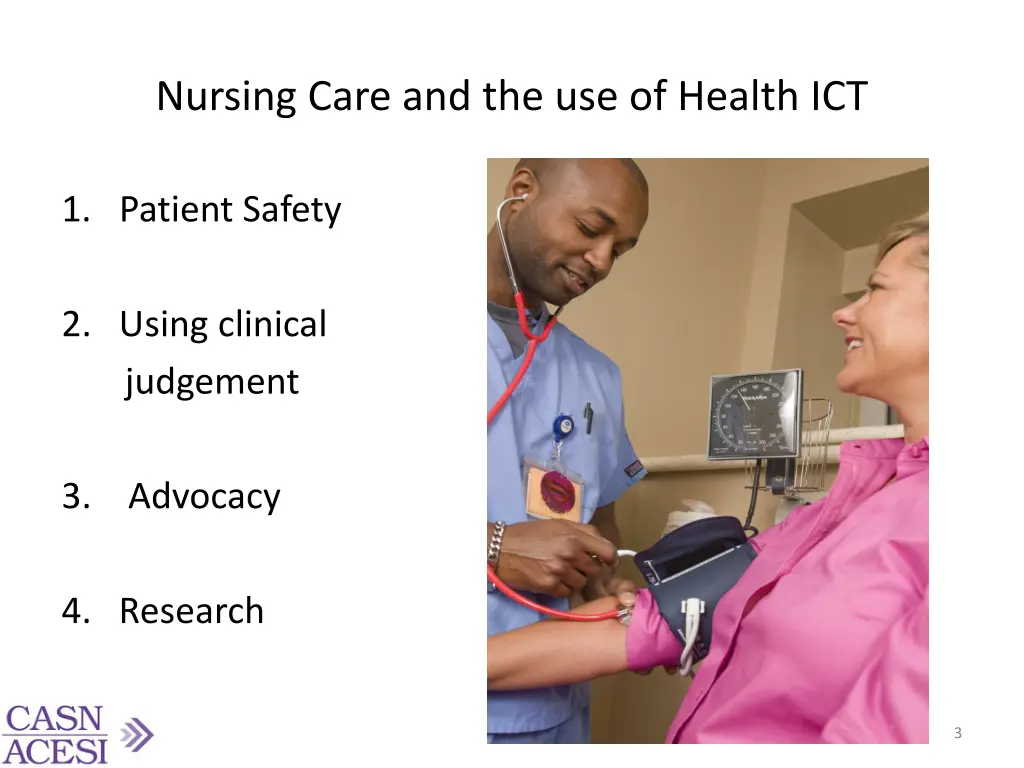
Nursing Care and the use of Health ICT 1. Patient Safety 2. Using clinical judgement 3. Advocacy 4. Research 3
It is a professional and ethical imperative for nurses to prevent or minimize harm . - Canadian Nurses Association, 2012 4
Technology-induced errors11 Technology-induced errors and malfunctions may arise during the piloting and/or use of a new or existing health technology. However, patients/clients can be protected through prompt identification and reporting of such issues by nurses. 5
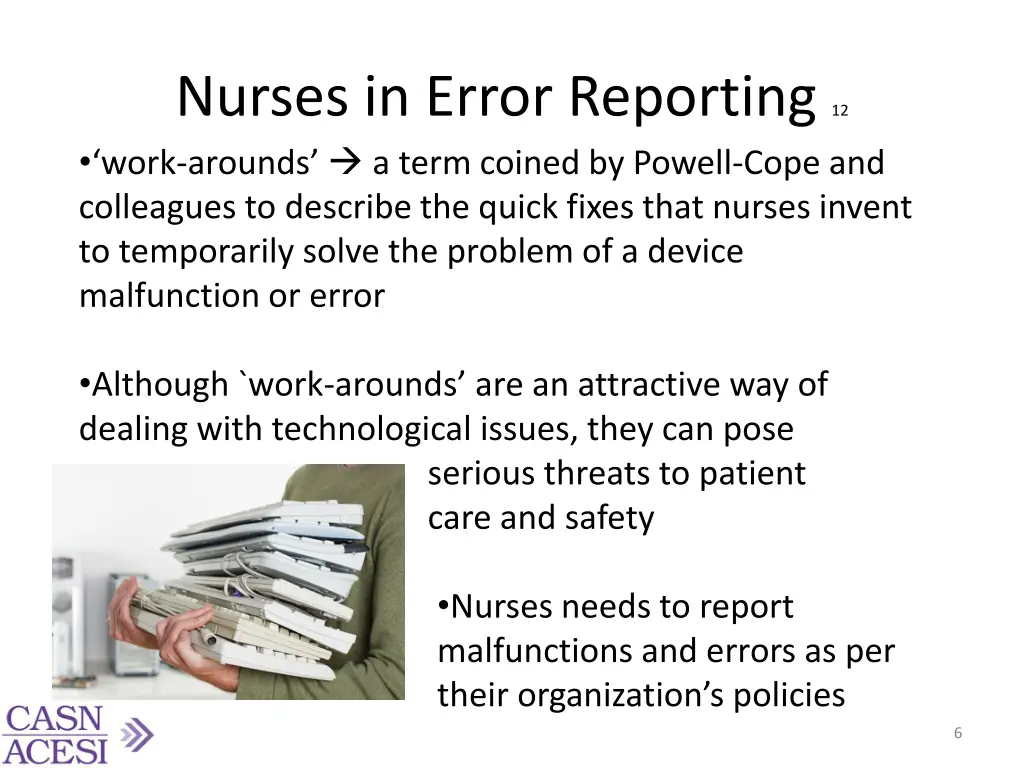
Nurses in Error Reporting 12 work-arounds a term coined by Powell-Cope and colleagues to describe the quick fixes that nurses invent to temporarily solve the problem of a device malfunction or error Although `work-arounds are an attractive way of dealing with technological issues, they can pose serious threats to patient care and safety Nurses needs to report malfunctions and errors as per their organization s policies 6
Creating Safer ICTs 13 New technologies require an on-going process of design, piloting, evaluation and re-design to meet changing needs On-going maintenance is a critical part of reducing errors at the individual-technology level 7
Will technology replace nurses? 8
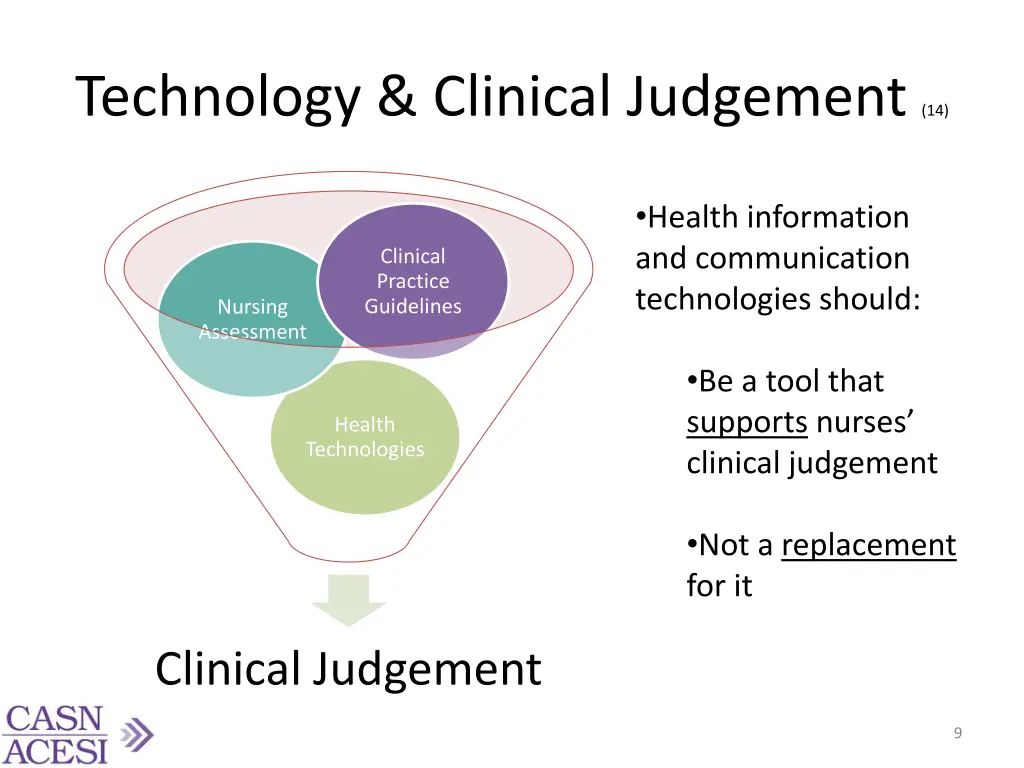
Technology & Clinical Judgement (14) Health information and communication technologies should: Clinical Practice Guidelines Nursing Assessment Be a tool that supports nurses clinical judgement Health Technologies Not a replacement for it Clinical Judgement 9
Nurses as Advocates 9-10 Nurses act as advocates for their patients/ clients in working for their best possible health outcomes as defined by the individual Health information and communication technologies present two ways for nurses to act as advocates: 1. Supporting individualized care 2. Facilitating integration of these technologies 10
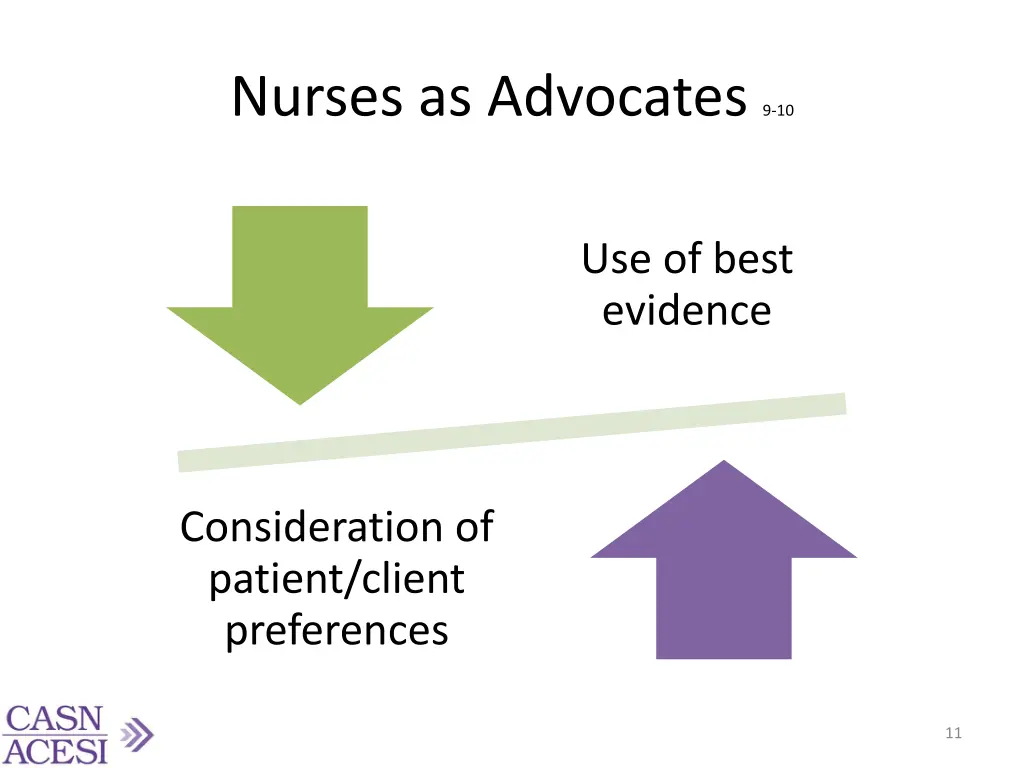
Nurses as Advocates 9-10 Use of best evidence Consideration of patient/client preferences 11
Nurses as Advocates (9-10) In light of the evidence that health information and communication technologies can improve patient safety, nurses need to be advocating for their use What could you do as a nurse in your current or most recent clinical setting to advocate for the use of health technologies? 12
Nurses as Researchers 9-10 Nurses can act as researchers on personal, organizational, and broader levels . Acting as a researcher includes participation in research (e.g. collecting data, participating in focus groups, etc.) as well as designing and conducting studies. 13
Nurses as Researchers 9 In order to be able to act as researchers, nurses need information literacy skills: Identifying an information need Accessing information relevant to the need Evaluating the information for quality and applicability Applying the information to the need Evaluating the outcomes 15
Nurses as Researchers 9-10 On an organizational level, nurses can: Participate in quality-control studies involving health information and communication technologies Participate in piloting and evaluating the potential use of technologies in their workplace Recommend best practice guidelines for integration into clinical health systems that reflect the patients/ clients care for at the facility 16
Nurses as Researchers (9-11) On a broader level, priority areas for nursing research include: The effect of nursing interventions on patient/ client outcomes as documented in EHRs The effect of using health information and communication technologies on the patient-/client-nurse relationship, use of clinical practice guidelines, etc. Identifying recommendations for the integration and use of health information and communication technologies based on literature reviews Identifying the cost-benefit ratio of specific technologies to support advocacy actions 17
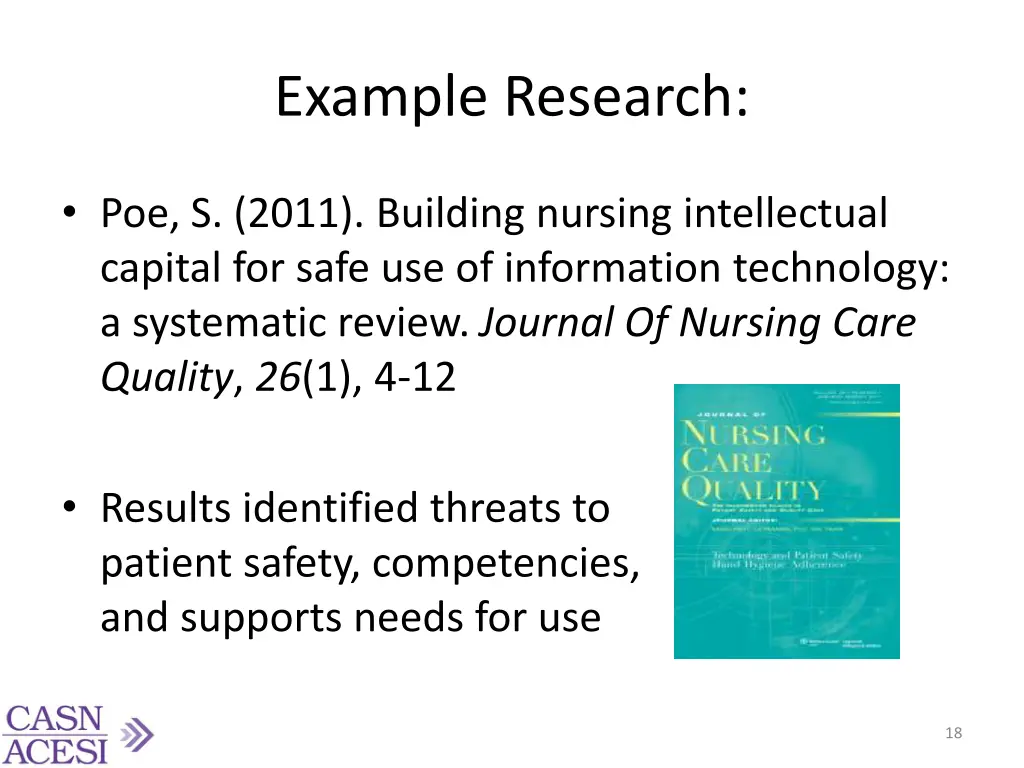
Example Research: Poe, S. (2011). Building nursing intellectual capital for safe use of information technology: a systematic review. Journal Of Nursing Care Quality, 26(1), 4-12 Results identified threats to patient safety, competencies, and supports needs for use 18
Review of Main Points New technologies present/legal and ethical issues that need to be addressed by policy Legislation and policies relevant to privacy and health information have been created by the federal and provincial governments, nursing regulators and employers Technologies present opportunities to increase patient safety and nurses have a large role to play in ensuring this occurs 19
References 1. Salzberg, C. A., Jang, Y., Rozenblum, R., Zimlichman, E., Tamblyn, R., & Bates, D. W. (2012). Policy initiatives for health information technology: A qualitative study of U.S. expectations and Canada's experience. International Journal of Medical Informatics, 81(10), 713-722. Scott, R.E. (2007). e-Records in health preserving our future. International Journal of Medical Informatics, 76(5-6), 427-431. Office of the Privacy Commissioner of Canada. (2012). Legal information related to PIPEDA: Substantially similar provincial legislation. Retrieved from: http://www.priv.gc.ca/leg_c/ legislation/ss_index_e.asp Office of the Privacy Commissioner of Canada. (2004). Findings under the Personal Information Protection and Electronic Documents Act (PIPEDA). Retrieved from: http://www.priv.gc.ca/cf-dc/2003/cf-dc_030217_2_e.asp Information and Privacy Commissioner of Ontario. (2004, December). A guide to the Personal Health Information Protection Act. Retrieved from http://www.ipc.on.ca/images/ resources/hguide-e.pdf Saskatchewan Registered Nurses Association. (2007). Standards and Foundation Competencies for the Practice of the Registered Nurse. Retrieved from: http:// www.srna.org/images/ stories/pdfs/nurse_resources/standards_competencies.pdf Canadian Nurses Association. (2008). Code of ethics for Registered Nurses. Retrieved from http://www.cna- aiic.ca/cna/documents/pdf/publications/Code_of_Ethics_2008_e.pdf Benson, T. (2012-0425). Principles of health interoperability HL7 and SNOMED (2nd ed. ed.). New York: Springer. Ball MJ, Douglas JV, & Walker, PH. (2011). Nursing informatics, Where technology and caring meet (4th ed). London: Springer. Saba VK, & McCormick, KA. (2006). Essentials of nursing informatics (4th ed). United States of America: McGraw-Hill Companies, Inc. Borycki, E. M., Kushniruk, A. W., Keay, L., Kuo, A. (2009). A framework for diagnosing and identifying where technology-induced errors come from. Studies in Health Technology and Informatics, 148, 95-101. Powell-Cope, G., Nelson, A.L., & Patterson, E.S. (2008). Patient care safety and technology. In Agency for Healthcare Research Quality (AHRQ Publication No. 08-0043). Rockville: MD. Zhang, J.Patel, V.L., Johnson, T.R., & Shortliffe, E.H. (2004). A taxonomy of medical errors. Journal of Biomedical Informatics, 37 (3), 193-204. Dumpel, H. (2005). Technology and patient advocacy: RNs must exercise independent judgement at all times. California Nurse, 101 (4), 18-19. 2. 3. 4. 5. 6. 7. 8. 9. 10. 11. 12. 13. 14. 20