Macbeth: Act 3 Scene 4 Analysis
Delve into the dramatic irony, character dynamics, and deep emotions of Macbeth in Act 3 Scene 4. Explore Lady Macbeth's influence, Macbeth's guilt, and the impactful dialogue within the scene. Uncover the themes of ambition, betrayal, and the consequences of one's actions in this pivotal moment of the play.

Download Presentation

Please find below an Image/Link to download the presentation.
The content on the website is provided AS IS for your information and personal use only. It may not be sold, licensed, or shared on other websites without obtaining consent from the author.If you encounter any issues during the download, it is possible that the publisher has removed the file from their server.
You are allowed to download the files provided on this website for personal or commercial use, subject to the condition that they are used lawfully. All files are the property of their respective owners.
The content on the website is provided AS IS for your information and personal use only. It may not be sold, licensed, or shared on other websites without obtaining consent from the author.
E N D
Presentation Transcript
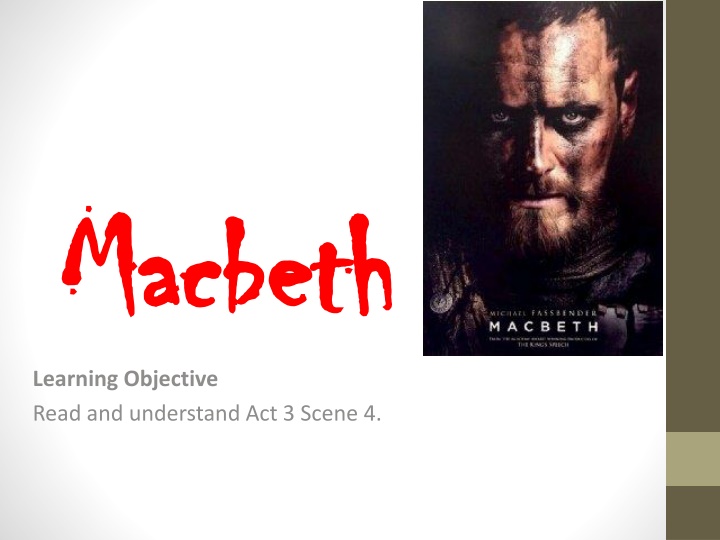
Macbeth Macbeth Learning Objective Read and understand Act 3 Scene 4.
Dedicated Improvement and Reflection Time In order to continue to improve this type of writing I should
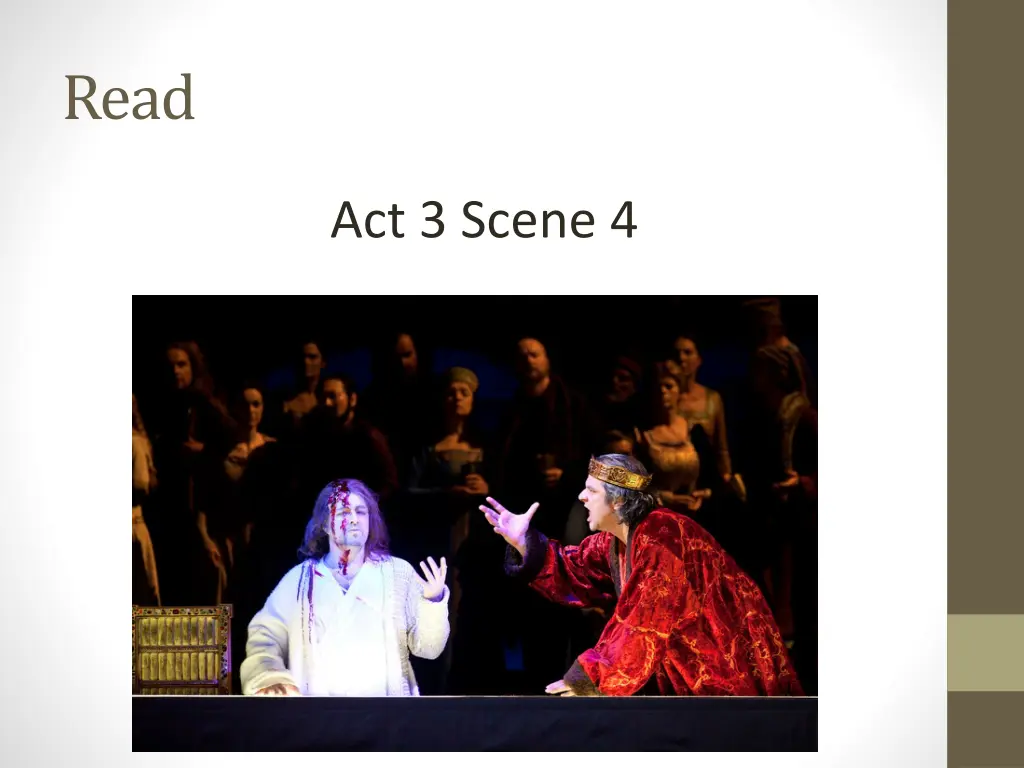
Read Act 3 Scene 4 http://operaandme.files.wordpress.com/2011/08/macbeth-salzburg-dmitry-belosselskiy-zeljko-lucic.jpg
Dramatic irony The appearance of Banquo s Ghost on stage gives much opportunity for dramatic irony, and there are several points where the audience is more aware of what is happening than the characters are. Look at the following quotations from the script and give at least two versions of what the statement might mean: Macbeth: Sweet remembrancer! (line 37) Macbeth: Here had we now our country s honour roofed / Were the graced person of our Banquo present (lines 43-4) Ross: His absence, sir, / Lays blame upon his promise (lines 43-4) Macbeth: Which of you have done this? (line 49). Remember, Macbeth is not aware that no one else can see the Ghost. His question assumes that this is a practical joke.
O full of scorpions From the first act, Lady Macbeth has influenced her husband by challenging him and manipulating him to murder Duncan and take the throne. During Act 3, we see the impact of the shame that takes hold of Macbeth after he has committed the murder. He tells his wife of his guilt and the strange dreams that haunt him. In pairs practise reading one of the following lines aggressively, scornfully, insultingly and with force. A few of the class will stand in a circle and listen whilst the lines are being performed Think about this - how does it feel to be Macbeth at this point in the play?
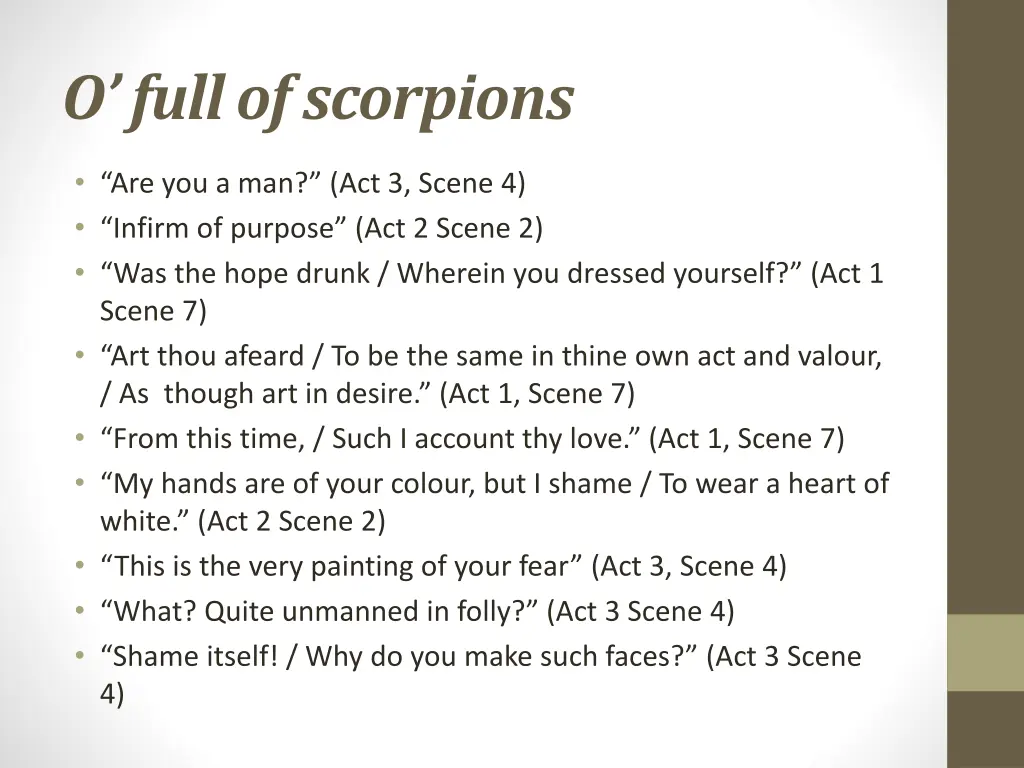
O full of scorpions Are you a man? (Act 3, Scene 4) Infirm of purpose (Act 2 Scene 2) Was the hope drunk / Wherein you dressed yourself? (Act 1 Scene 7) Art thou afeard / To be the same in thine own act and valour, / As though art in desire. (Act 1, Scene 7) From this time, / Such I account thy love. (Act 1, Scene 7) My hands are of your colour, but I shame / To wear a heart of white. (Act 2 Scene 2) This is the very painting of your fear (Act 3, Scene 4) What? Quite unmanned in folly? (Act 3 Scene 4) Shame itself! / Why do you make such faces? (Act 3 Scene 4)
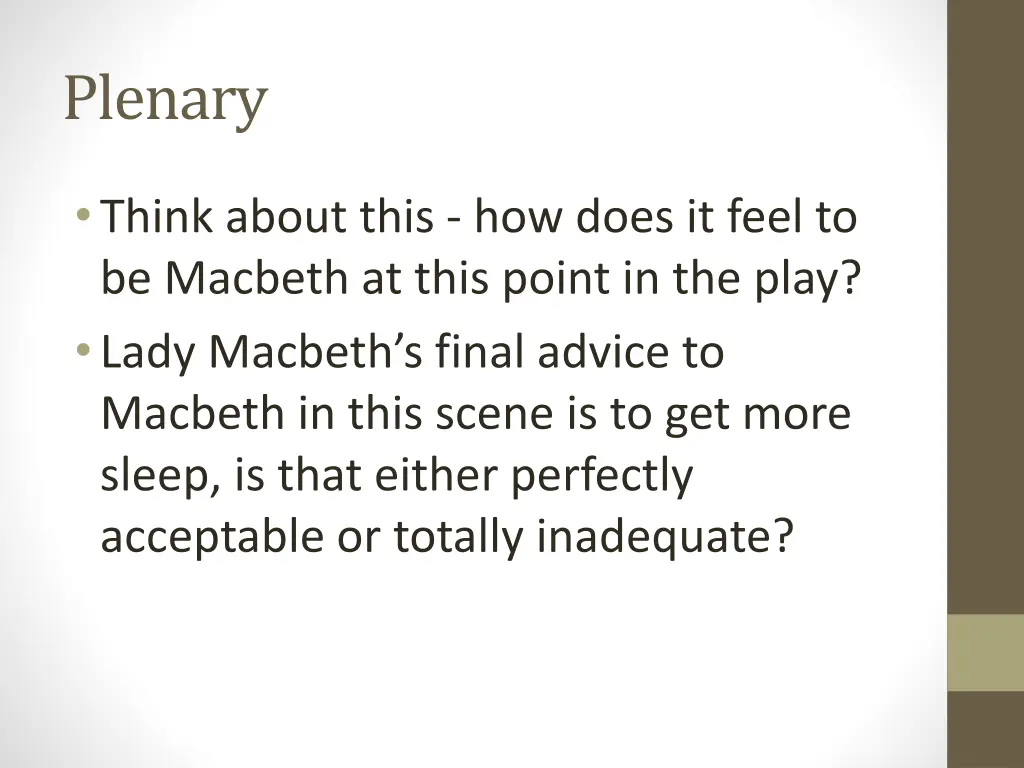
Plenary Think about this - how does it feel to be Macbeth at this point in the play? Lady Macbeth s final advice to Macbeth in this scene is to get more sleep, is that either perfectly acceptable or totally inadequate?
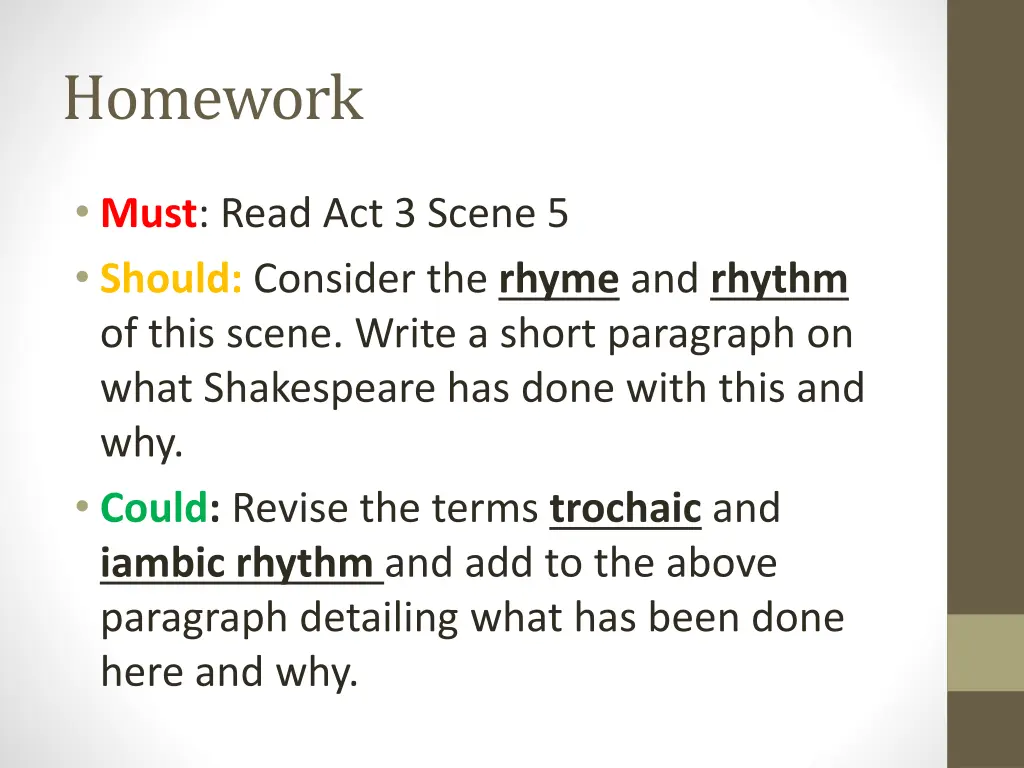
Homework Must: Read Act 3 Scene 5 Should: Consider the rhyme and rhythm of this scene. Write a short paragraph on what Shakespeare has done with this and why. Could: Revise the terms trochaic and iambic rhythm and add to the above paragraph detailing what has been done here and why.