Marketing Management - Prof. B. N. F. Warnakulasooriya, Dr. (Mrs.) Amila Jayarathne
This course covers key concepts in marketing, including defining marketing, customer-driven strategies, sustainable practices, and more. Evaluation methods, required texts, and session outlines are also provided.

Download Presentation

Please find below an Image/Link to download the presentation.
The content on the website is provided AS IS for your information and personal use only. It may not be sold, licensed, or shared on other websites without obtaining consent from the author.If you encounter any issues during the download, it is possible that the publisher has removed the file from their server.
You are allowed to download the files provided on this website for personal or commercial use, subject to the condition that they are used lawfully. All files are the property of their respective owners.
The content on the website is provided AS IS for your information and personal use only. It may not be sold, licensed, or shared on other websites without obtaining consent from the author.
E N D
Presentation Transcript
Marketing Management Prof. B. N. F. Warnakulasooriya Dr.(Mrs.) Amila Jayarathne
Student Discipline Be punctual to the lecture Excuse the lecturer in case want to be late or leave the class early Maintain required level of attendance to sit for the final exam Keep your mobile phones switched off
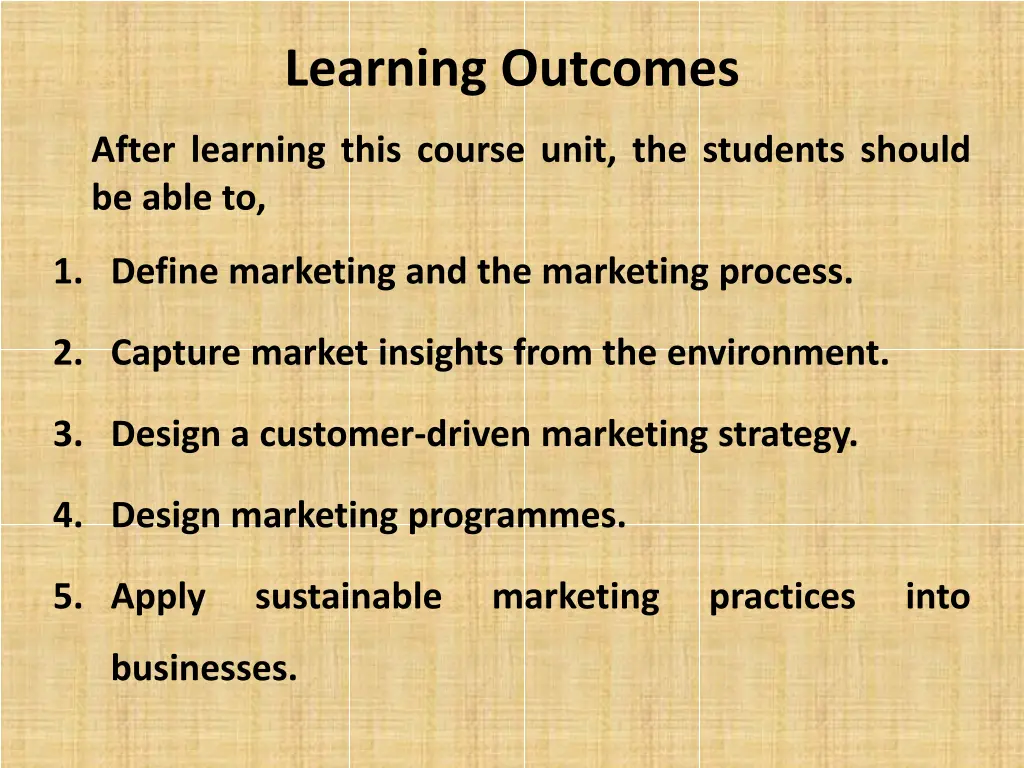
Learning Outcomes After learning this course unit, the students should be able to, 1. Define marketing and the marketing process. 2. Capture market insights from the environment. 3. Design a customer-driven marketing strategy. 4. Design marketing programmes. 5. Apply sustainable marketing practices into businesses.
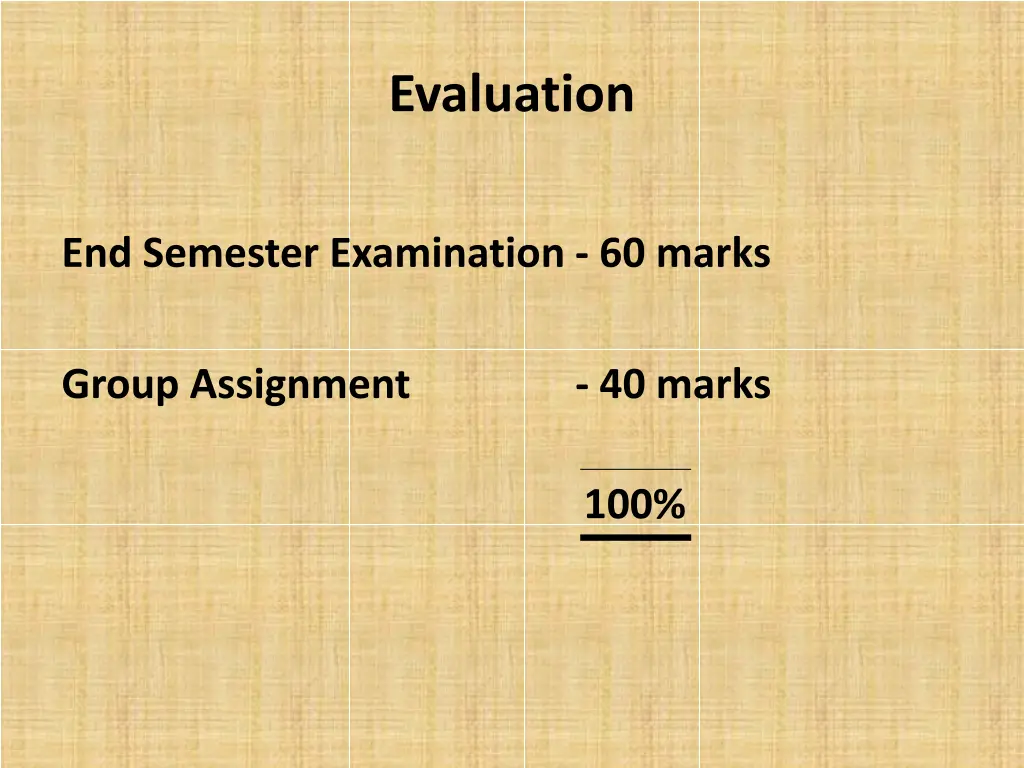
Evaluation End Semester Examination - 60 marks Group Assignment - 40 marks 100%
Required Texts and References Principles of Marketing Kotler, Armstrong, Agnihotri, Haque, 13thedition, A South Asian Perspective
Defining Marketing and the Marketing Process Session 1, 2 and 3
Session Outline What is Marketing? The Role of Marketing The Marketing Management Process The Changing Marketing Landscape
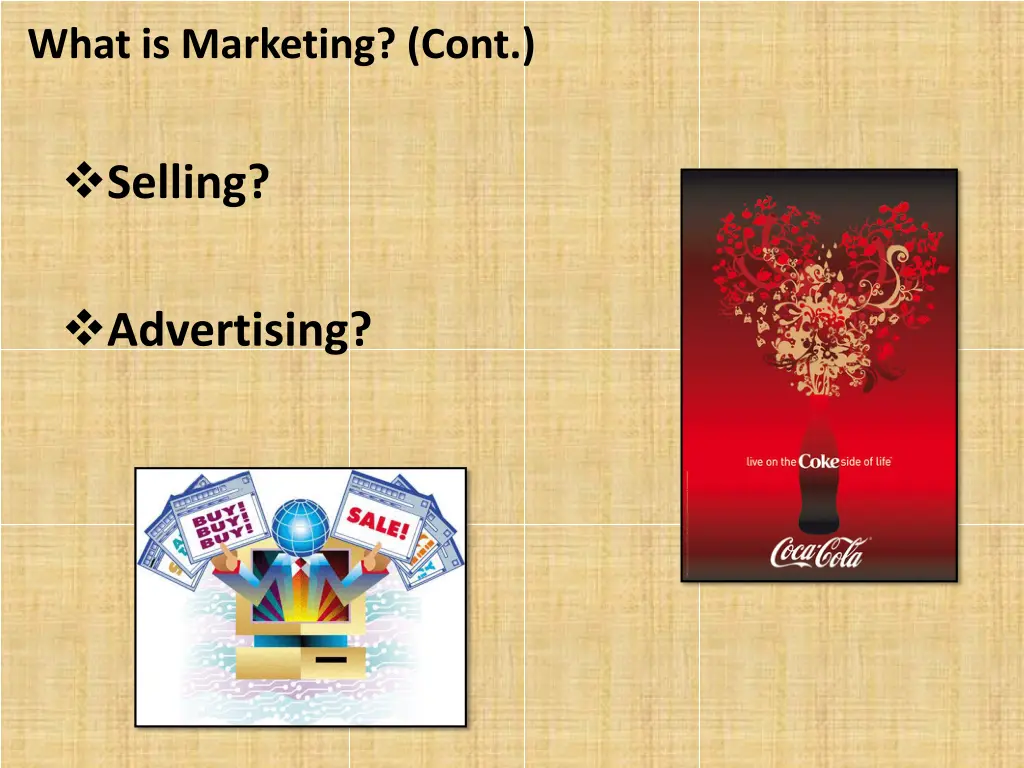
What is Marketing? (Cont.) Selling? Advertising?
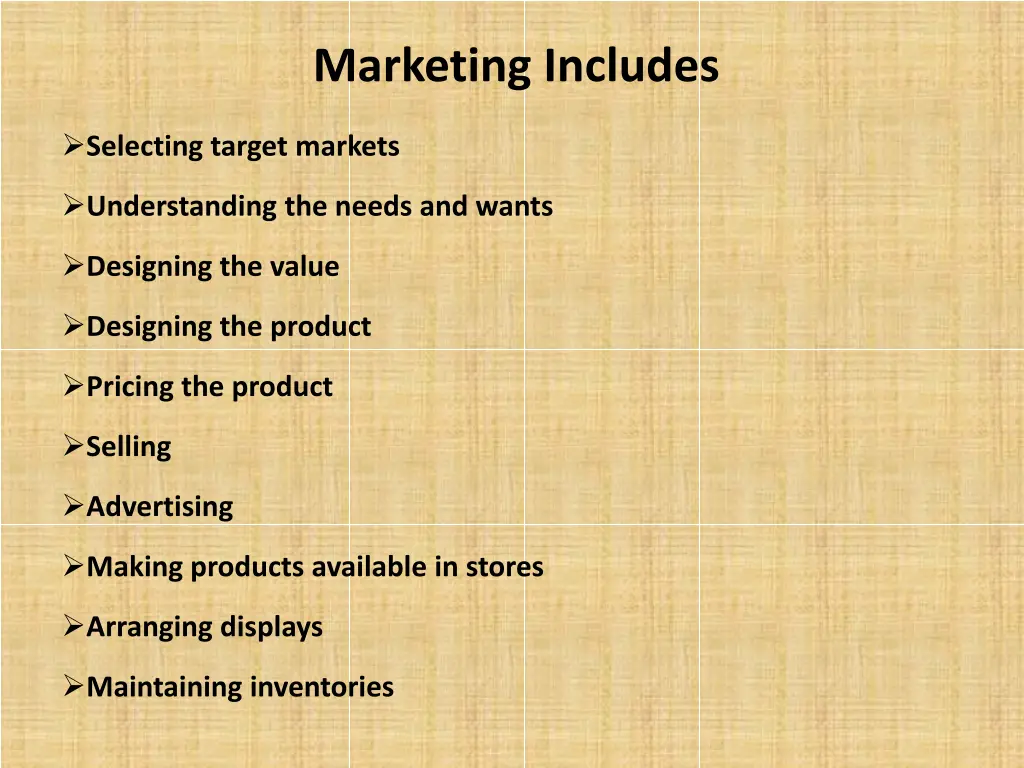
Marketing Includes Selecting target markets Understanding the needs and wants Designing the value Designing the product Pricing the product Selling Advertising Making products available in stores Arranging displays Maintaining inventories
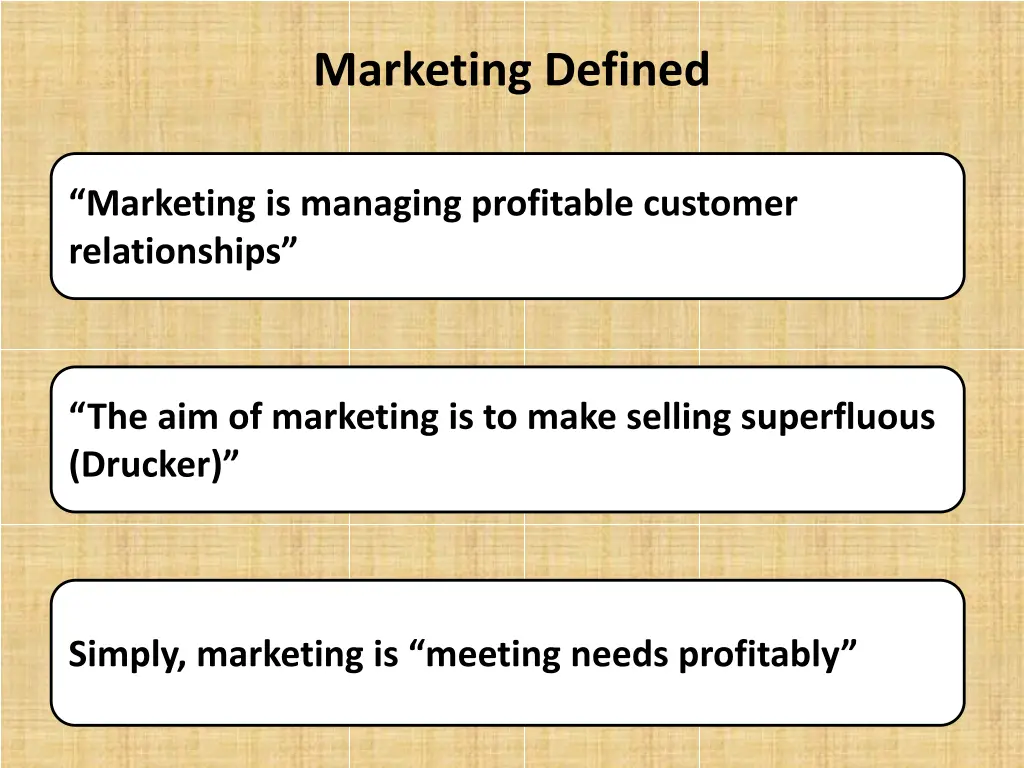
Marketing Defined Marketing is managing profitable customer relationships The aim of marketing is to make selling superfluous (Drucker) Simply, marketing is meeting needs profitably
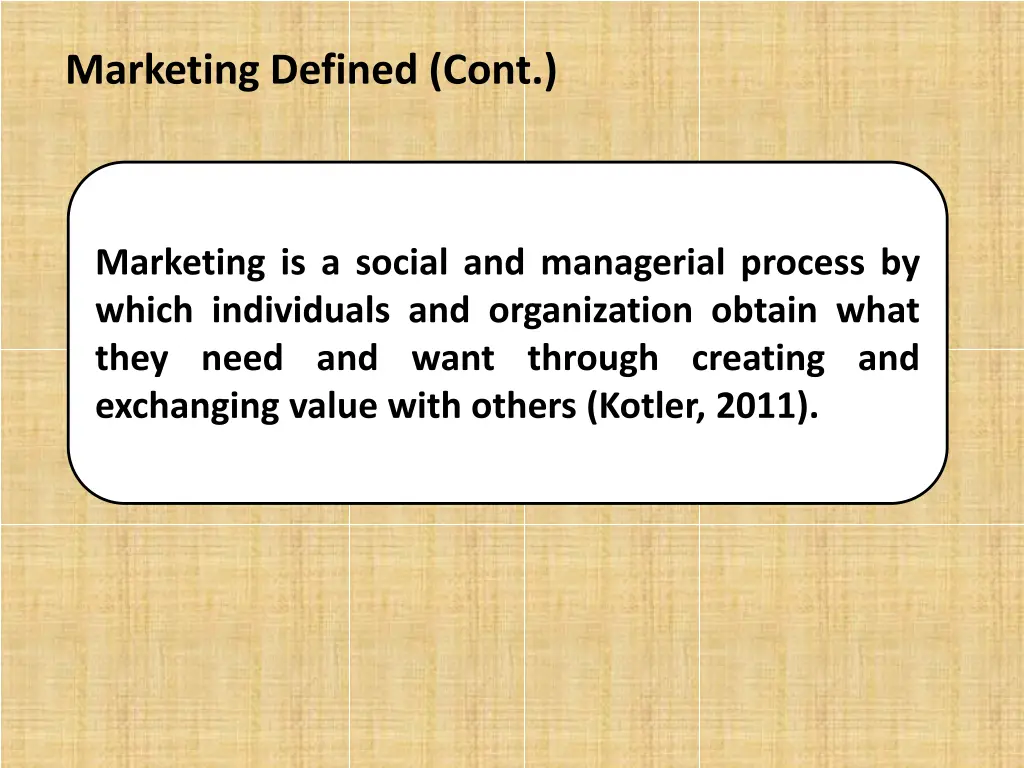
Marketing Defined (Cont.) Marketing is a social and managerial process by which individuals and organization obtain what they need and want through creating and exchanging value with others (Kotler, 2011).
The Role of Marketing to the Business As a Business Philosophy As a Functional Area of Management As a Skill
Marketing as an Overall Business Philosophy Marketing is not only much broader than selling, it is not a specialized activity at all. It encompasses the entire business. It cannot be considered a separate function. It is the whole business seen from the point of view of its final result, that is, from the customer s point of view. Concern and responsibility for marketing must therefore permeate all areas of the enterprise (Peter Drucker). It concerns the achievement of effectiveness.
Marketing as a Function Among the other functions of HR , Finance or Operational Management, Department of Marketing Management Marketing function is dedicated to efficiency.
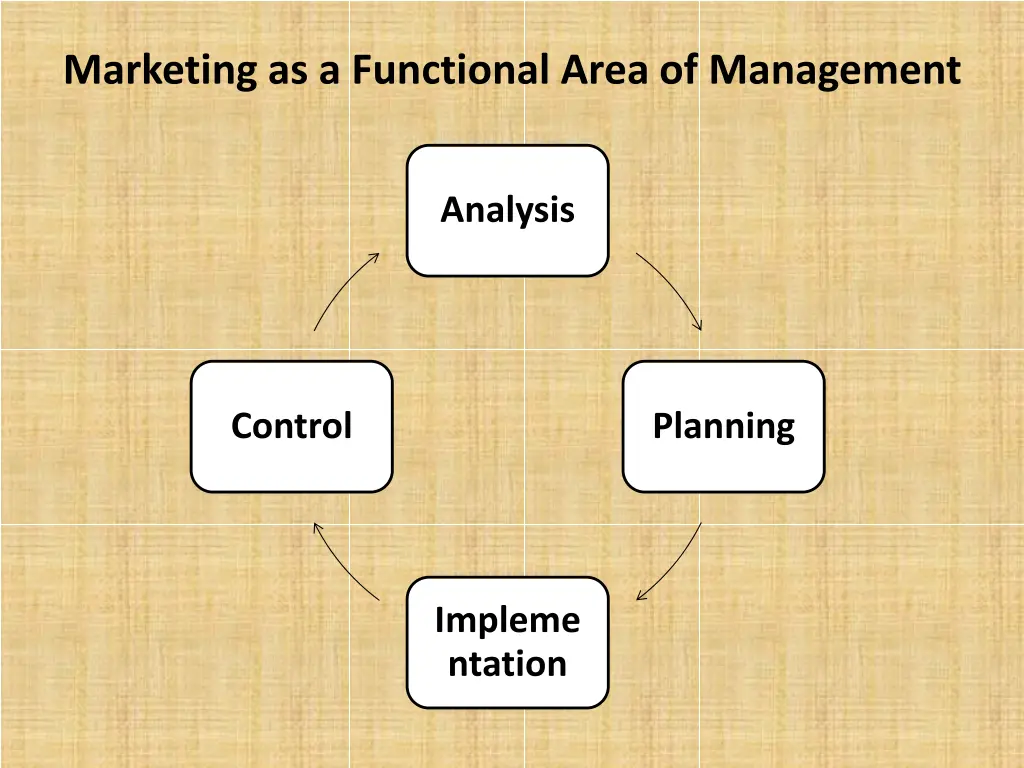
Marketing as a Functional Area of Management Analysis Control Planning Impleme ntation
Marketing as a Skill Market Sensing Ability Market Relating Ability
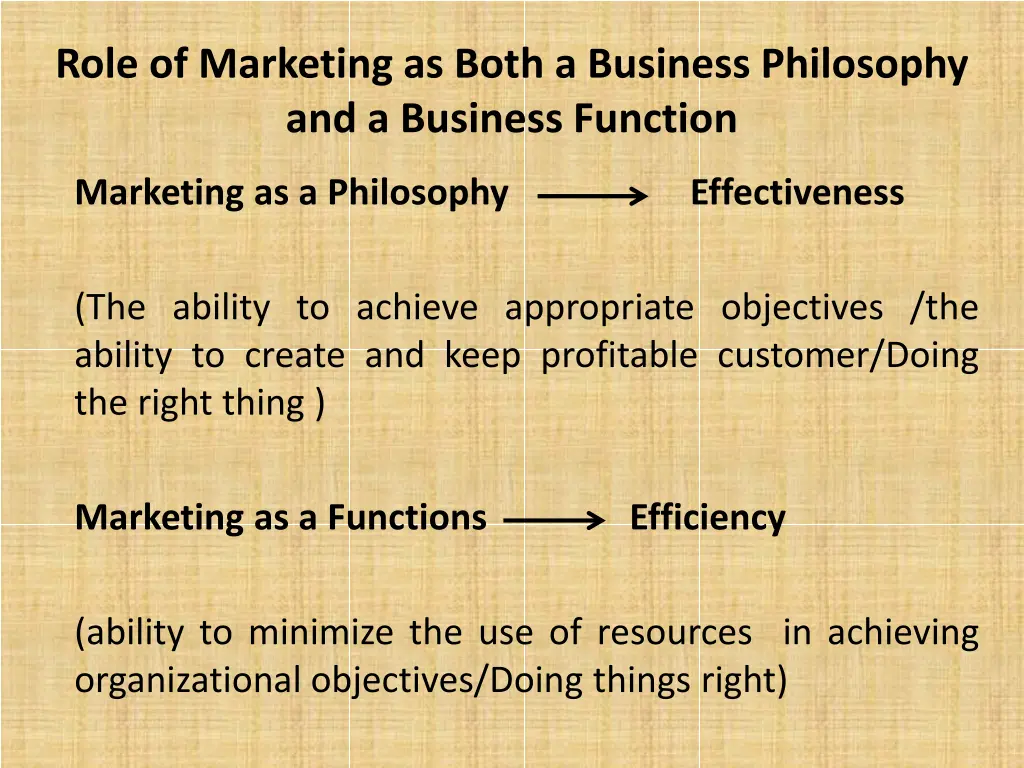
Role of Marketing as Both a Business Philosophy and a Business Function Marketing as a Philosophy Effectiveness (The ability to achieve appropriate objectives /the ability to create and keep profitable customer/Doing the right thing ) Marketing as a Functions Efficiency (ability to minimize the use of resources in achieving organizational objectives/Doing things right)
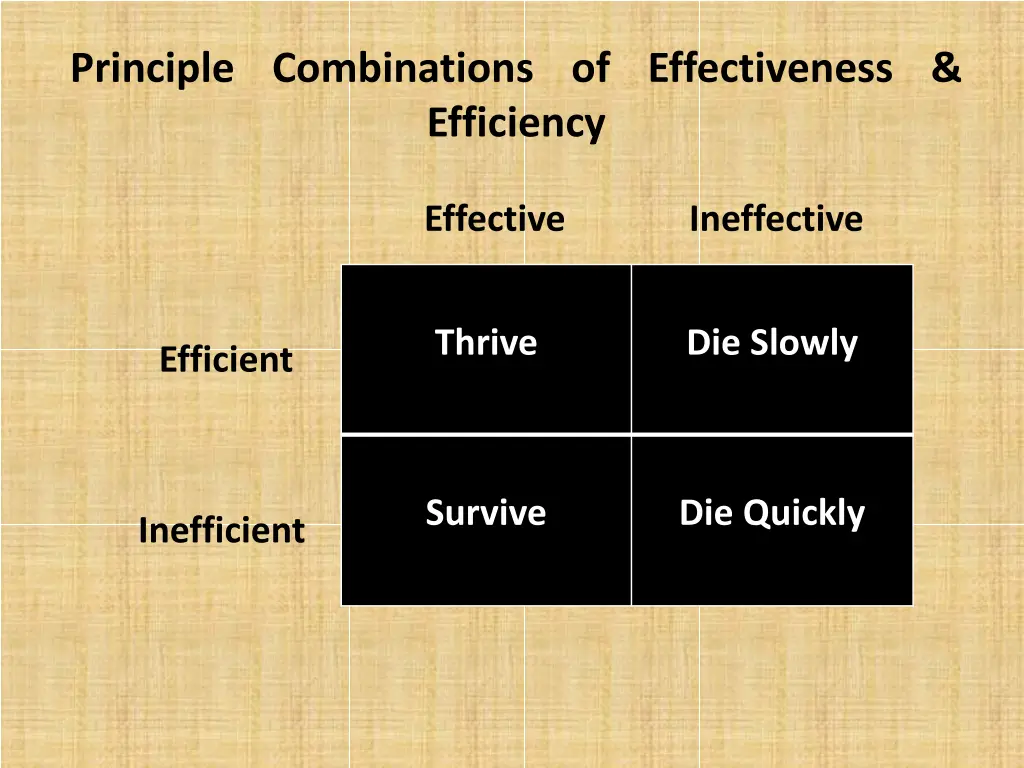
Principle Combinations of Effectiveness & Efficiency Effective Ineffective Thrive Die Slowly Efficient Survive Die Quickly Inefficient
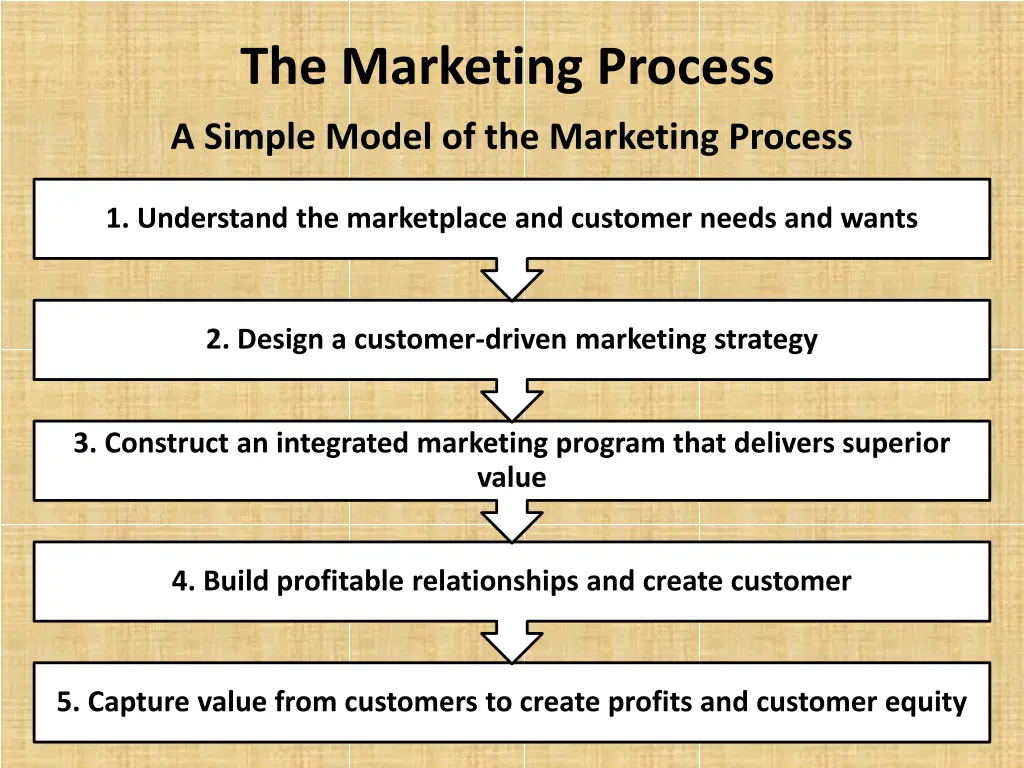
The Marketing Process A Simple Model of the Marketing Process 1. Understand the marketplace and customer needs and wants 2. Design a customer-driven marketing strategy 3. Construct an integrated marketing program that delivers superior value 4. Build profitable relationships and create customer 5. Capture value from customers to create profits and customer equity
1. Understanding the Marketplace and Customer Needs As a first step, marketers need to understand customer needs and wants and the marketplace within which they operate. Core Customer and Marketplace Concepts 1. Customer Needs, Wants and Demands 2. Market Offerings - Products, Services and Experiences 3. Customer Value and Satisfaction 4. Exchange and Relationships 5. Markets
Customer Needs, Wants and Demands Needs State of felt deprivation
Wants The form human needs take as shaped by culture and individual personality
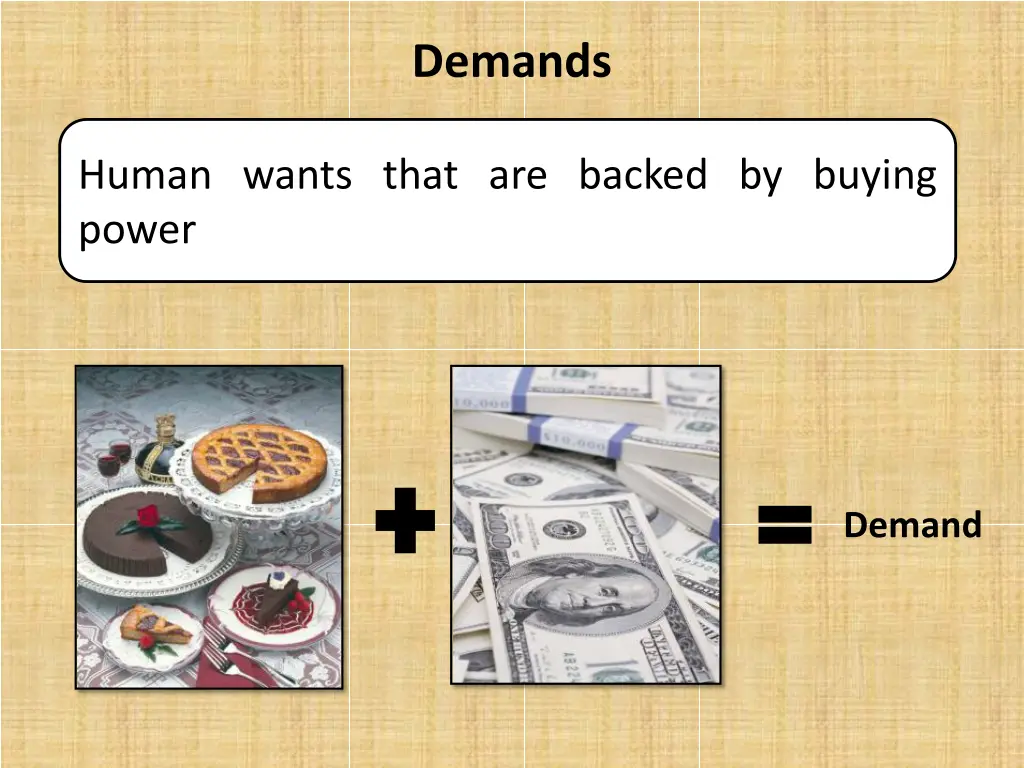
Demands Human wants that are backed by buying power Demand
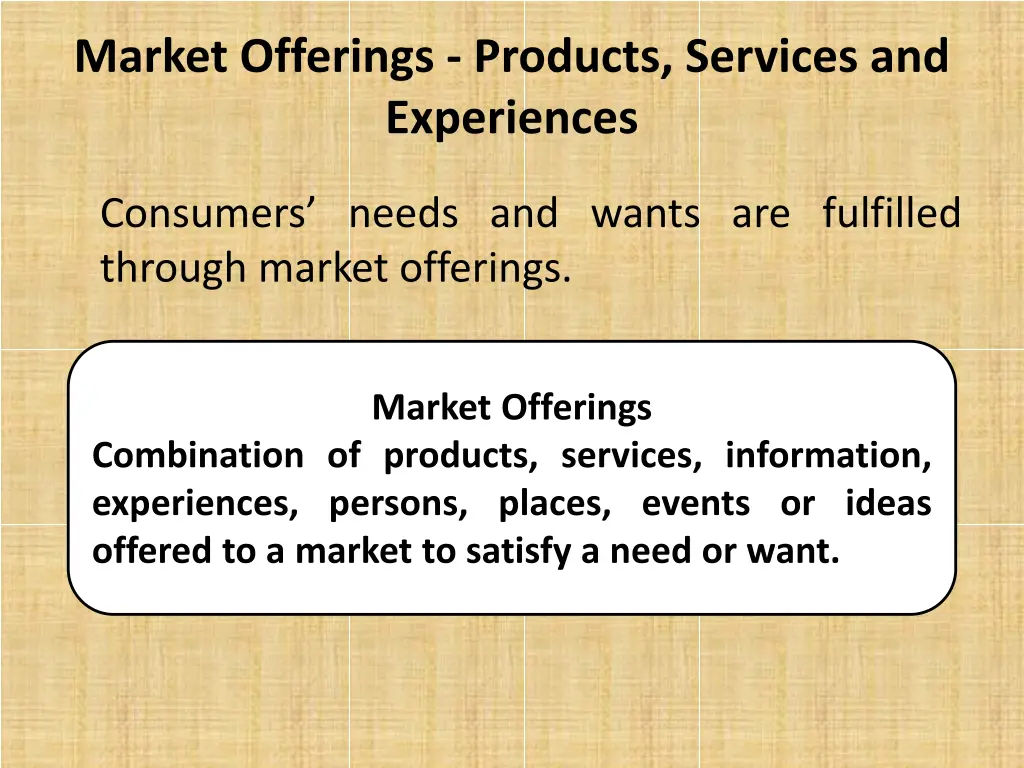
Market Offerings - Products, Services and Experiences Consumers needs and wants are fulfilled through market offerings. Market Offerings Combination of products, services, information, experiences, persons, places, events or ideas offered to a market to satisfy a need or want.
Customer Value and Satisfaction Customers form expectations about the value and satisfaction that various market offerings will deliver and buy accordingly. Satisfied customers buy again and tell others about their good experiences. Dissatisfied customers often switch to competitors and disparage the product to others.
Exchanges and Relationships Exchange is the act of obtaining a desired object from someone by offering something in return. Marketing consists of actions taken to build and maintain desirable exchange relationships with target audiences involving a product, service, idea, or other object.
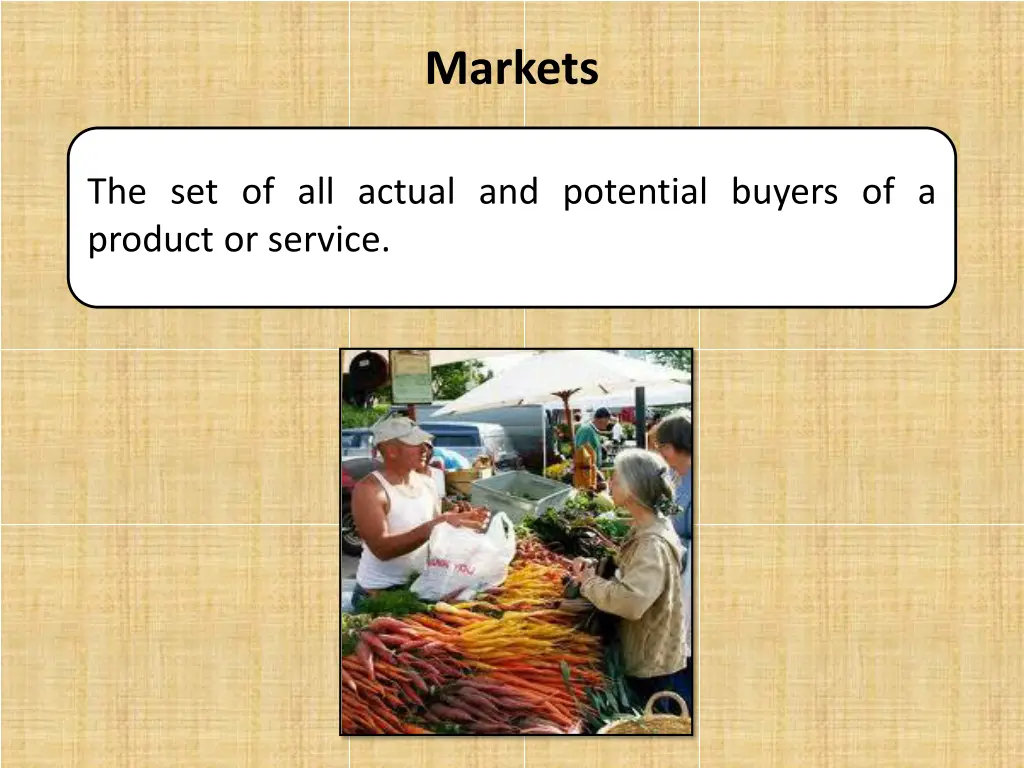
Markets The set of all actual and potential buyers of a product or service. http://t2.gstatic.com/images?q=tbn:ANd9GcQKFj6v6s8-VeimopVXA3_8amMyww9ng1aeLKcvThhmNKo8C6Steg
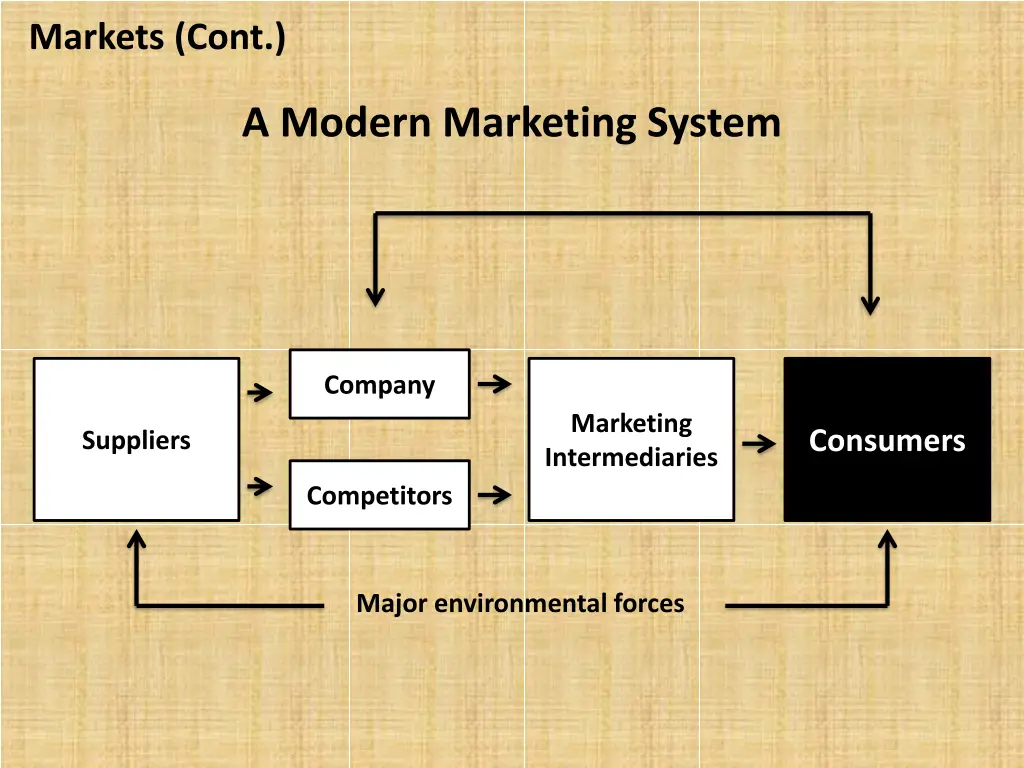
Markets (Cont.) A Modern Marketing System Company Marketing Intermediaries Consumers Suppliers Competitors Major environmental forces
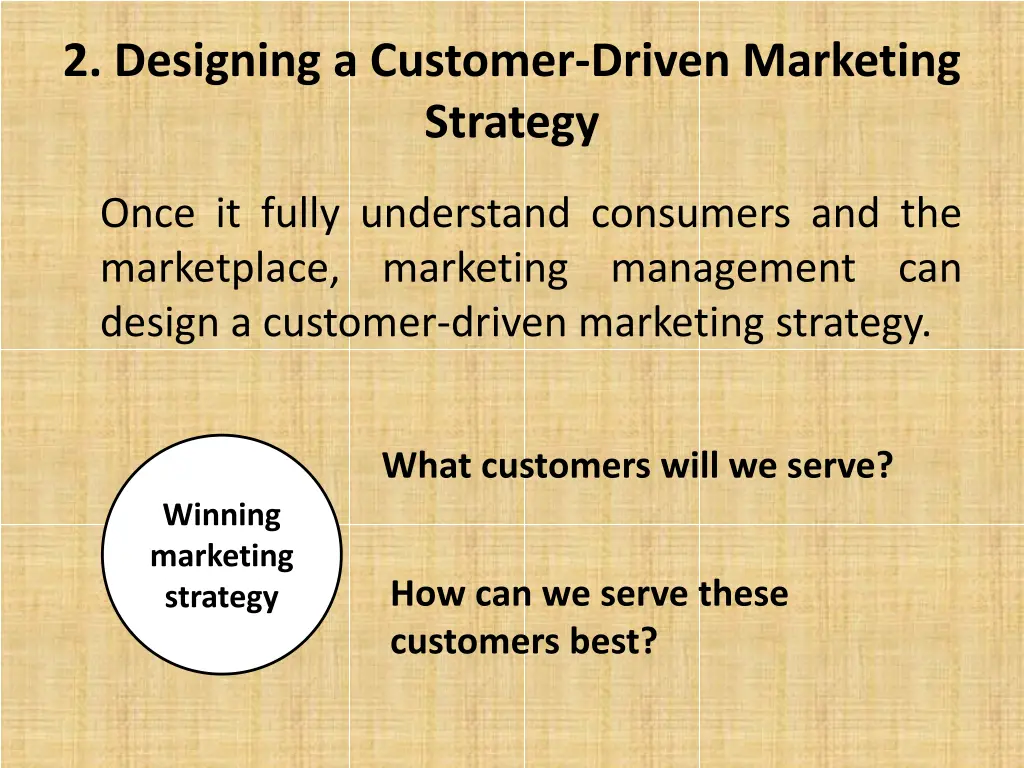
2. Designing a Customer-Driven Marketing Strategy Once it fully understand consumers and the marketplace, marketing management can design a customer-driven marketing strategy. What customers will we serve? Winning marketing strategy How can we serve these customers best?
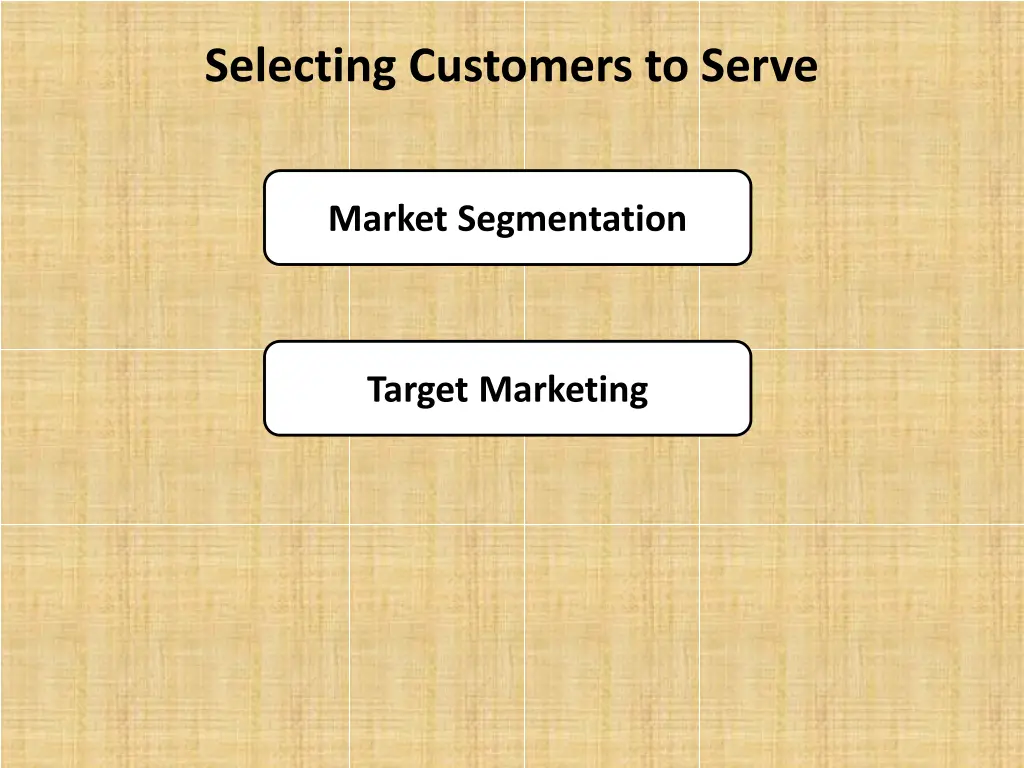
Selecting Customers to Serve Market Segmentation Target Marketing
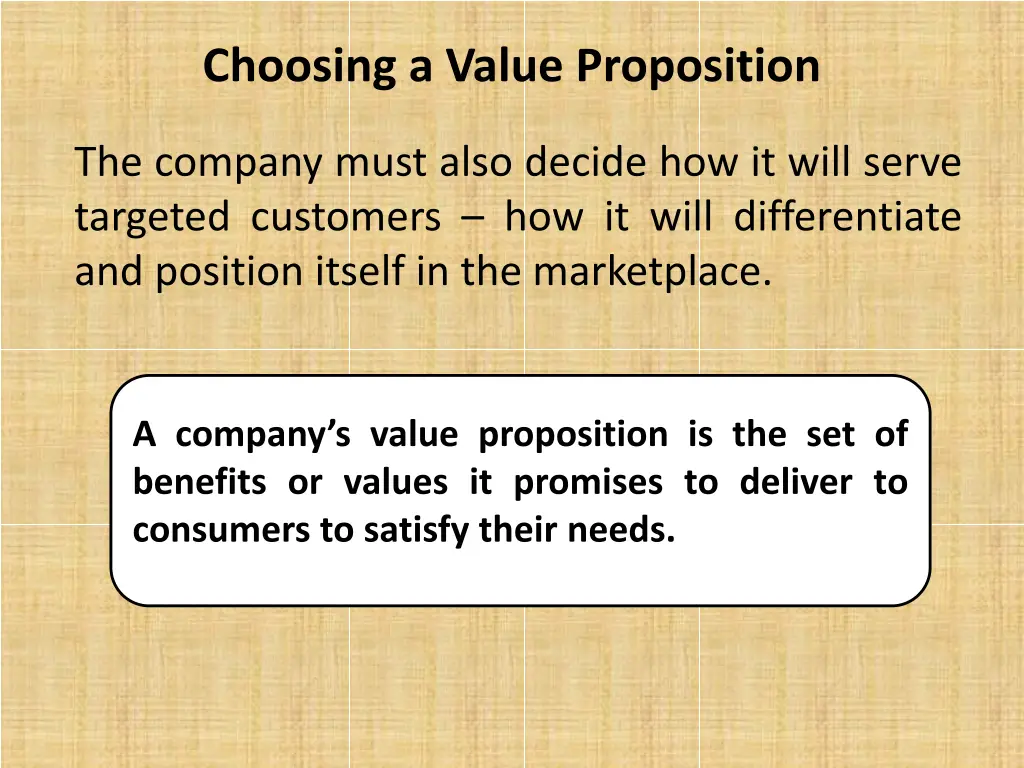
Choosing a Value Proposition The company must also decide how it will serve targeted customers how it will differentiate and position itself in the marketplace. A company s value proposition is the set of benefits or values it promises to deliver to consumers to satisfy their needs.
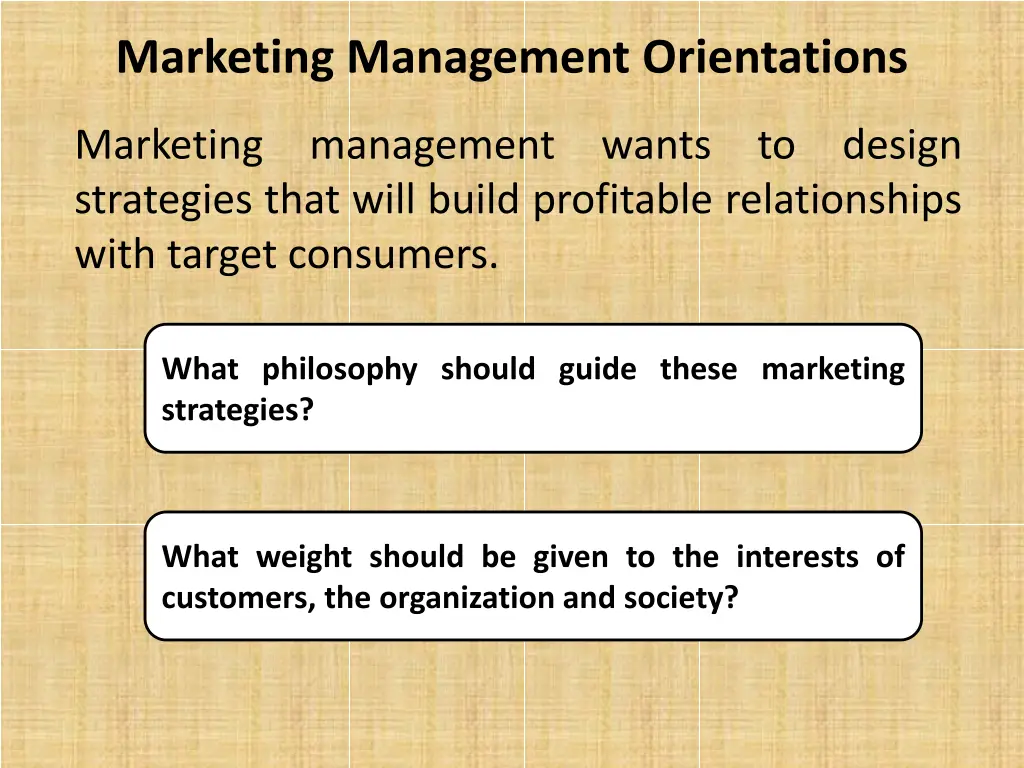
Marketing Management Orientations Marketing management wants to design strategies that will build profitable relationships with target consumers. What philosophy should guide these marketing strategies? What weight should be given to the interests of customers, the organization and society?
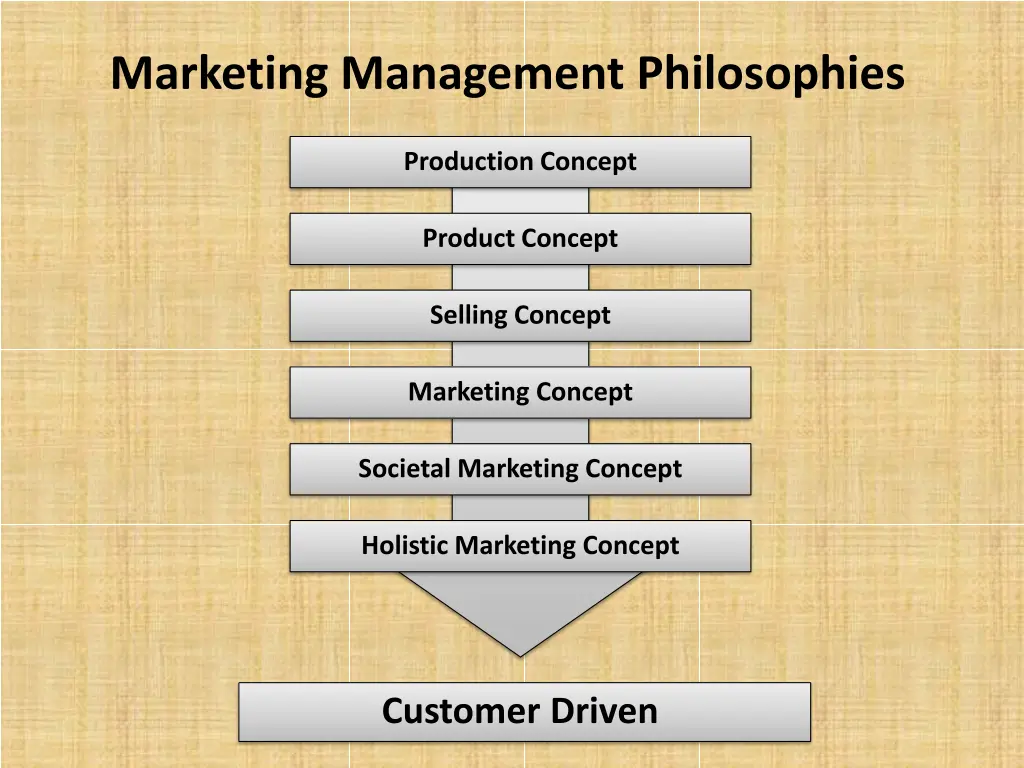
Marketing Management Philosophies Production Concept Product Concept Selling Concept Marketing Concept Societal Marketing Concept Holistic Marketing Concept Customer Driven
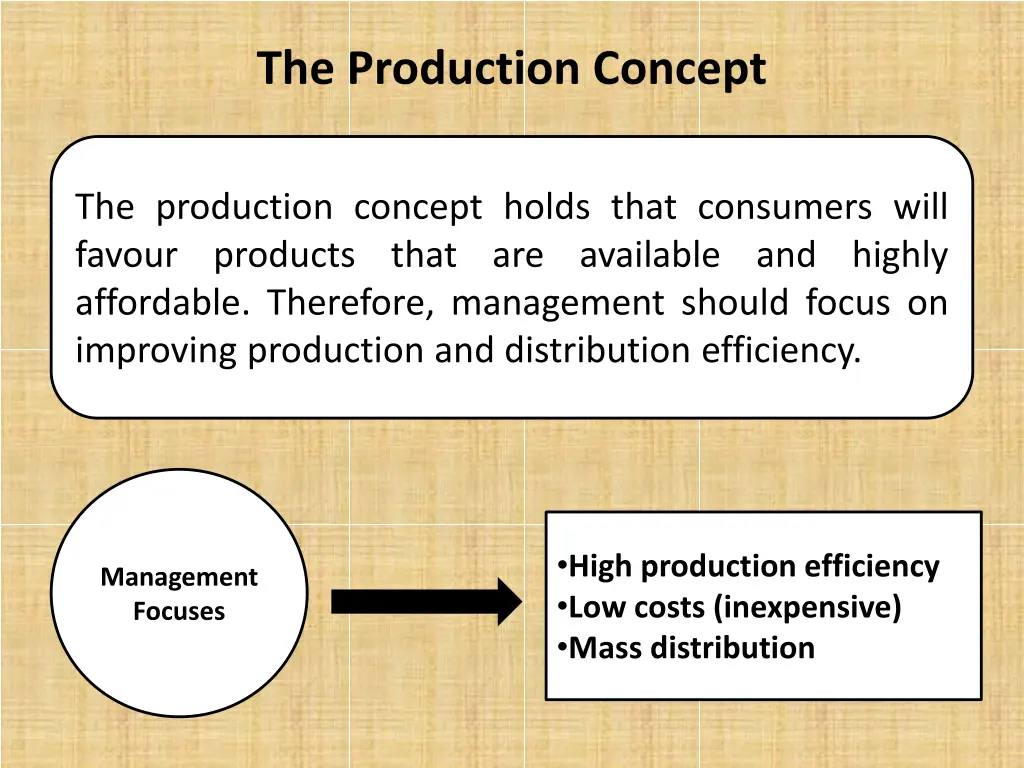
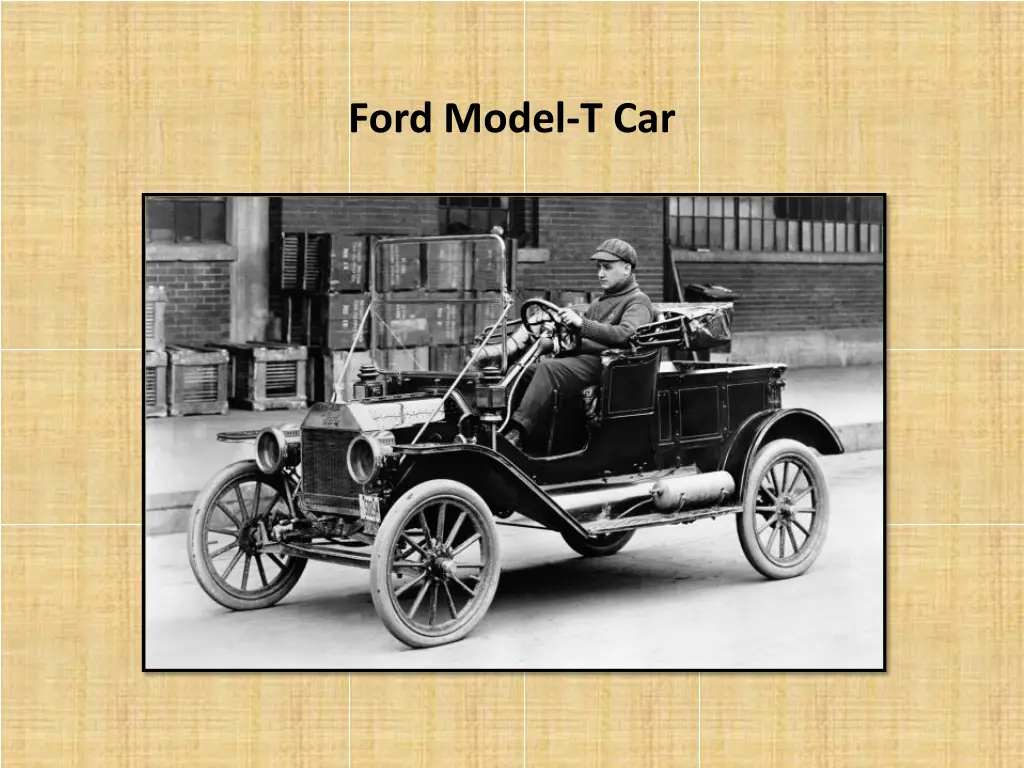
The Production Concept The production concept holds that consumers will favour products that are available and highly affordable. Therefore, management should focus on improving production and distribution efficiency. High production efficiency Low costs (inexpensive) Mass distribution Management Focuses
Major Risk of Production Concept Focusing too narrowly on their own operations and loosing sight of the real objective Satisfying customer needs and relationships . building customer
The Product Concept The product concept holds that consumers will favour products that offer the most in quality, performance and innovative features. Management Focuses Making continuous product improvements
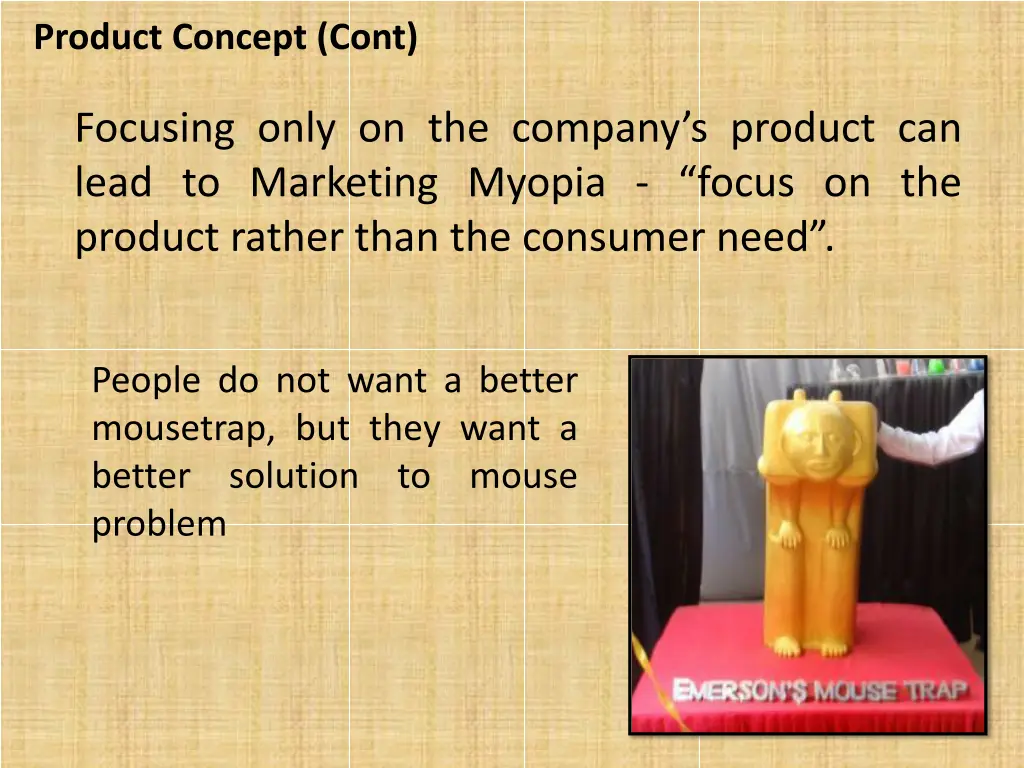
Product Concept (Cont) Focusing only on the company s product can lead to Marketing Myopia - focus on the product rather than the consumer need . People do not want a better mousetrap, but they want a better solution to mouse problem
Marketing Myopia The mistake of paying more attention to the specific products a company offers than to the benefits and experiences produced by these products.
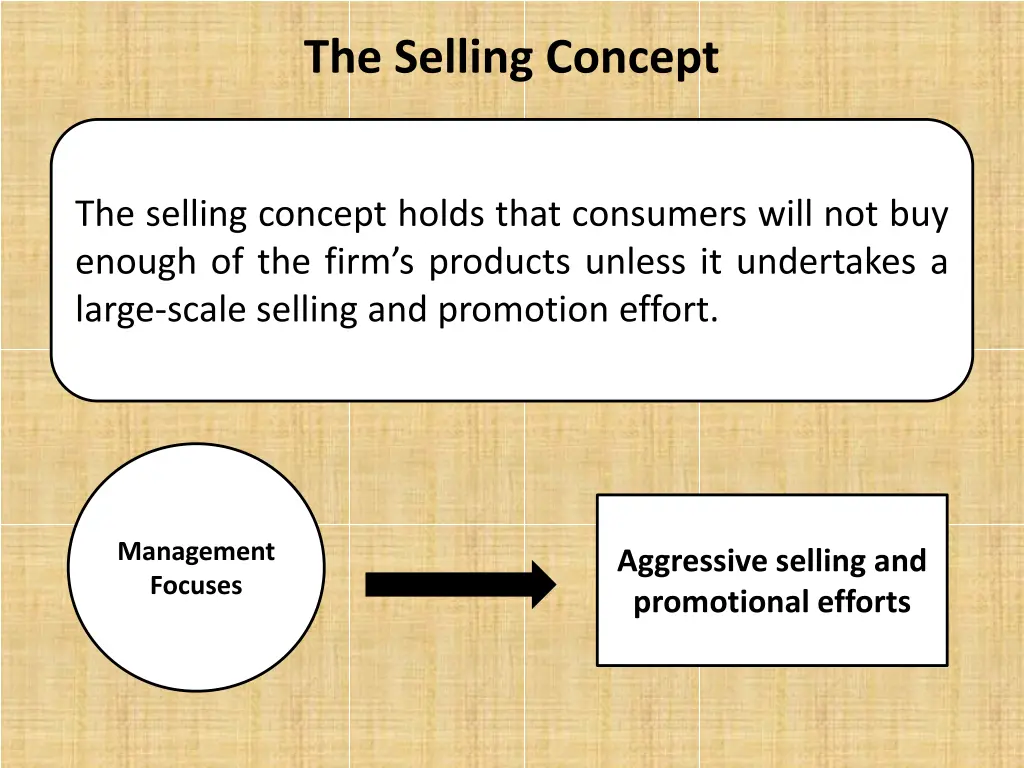
The Selling Concept The selling concept holds that consumers will not buy enough of the firm s products unless it undertakes a large-scale selling and promotion effort. Management Focuses Aggressive selling and promotional efforts
Selling (Cont.) The aim often is to sell what the company makes rather than making customer wants. what the
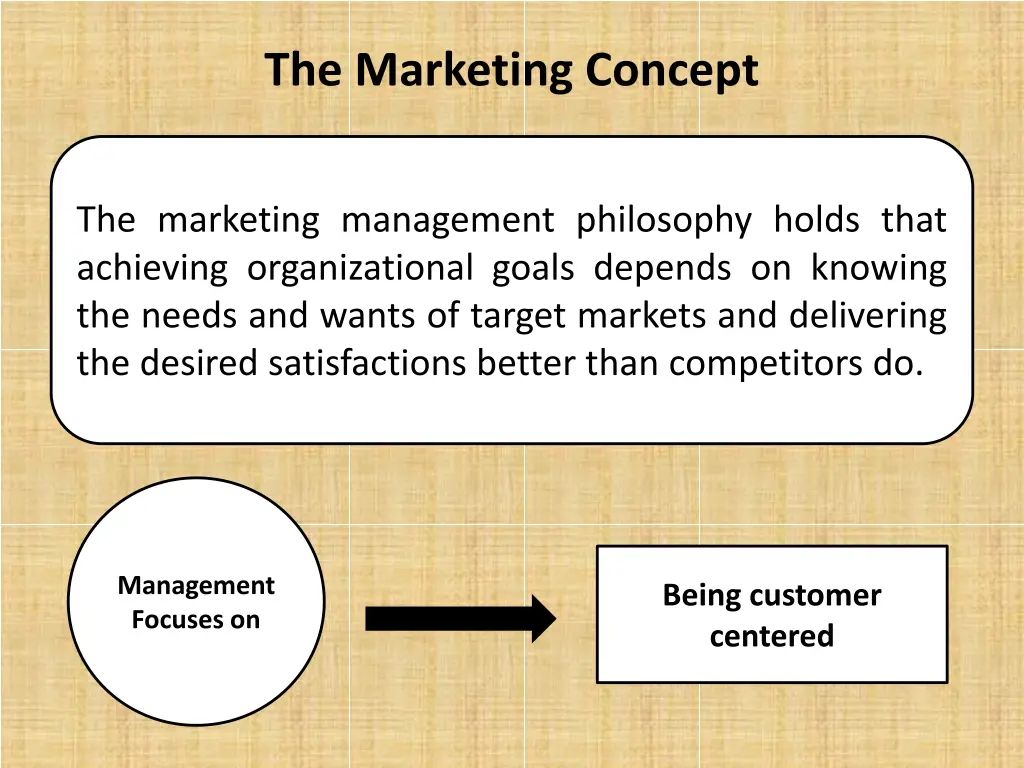
The Marketing Concept The marketing management philosophy holds that achieving organizational goals depends on knowing the needs and wants of target markets and delivering the desired satisfactions better than competitors do. Management Focuses on Being customer centered
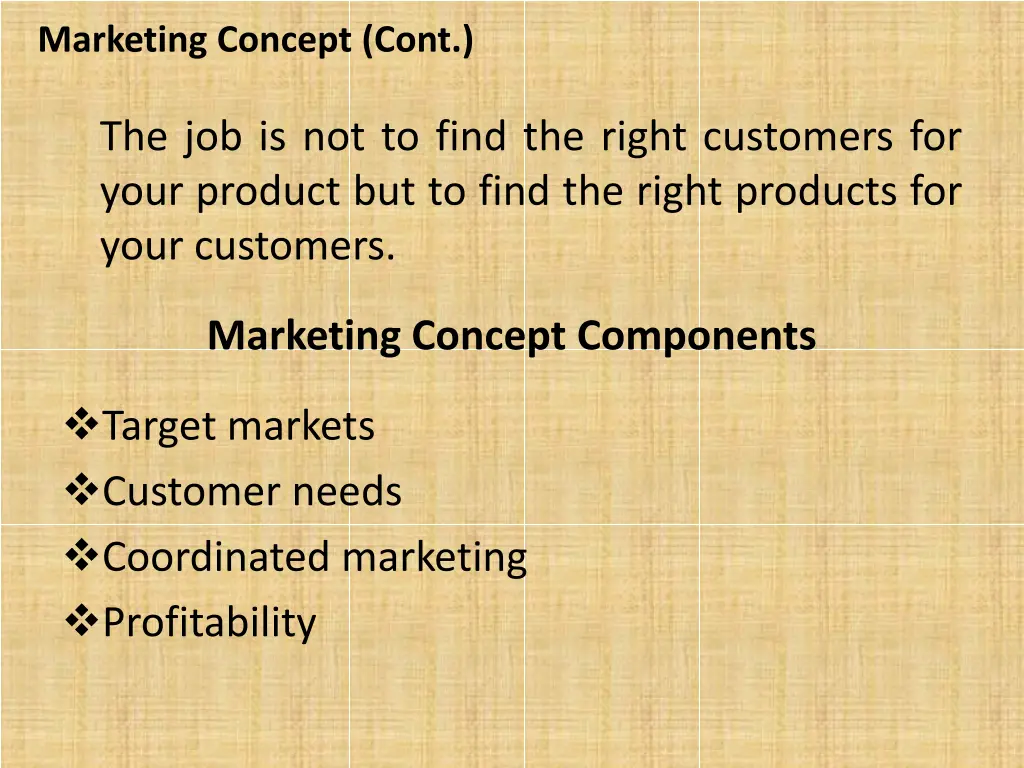
Marketing Concept (Cont.) The job is not to find the right customers for your product but to find the right products for your customers. Marketing Concept Components Target markets Customer needs Coordinated marketing Profitability
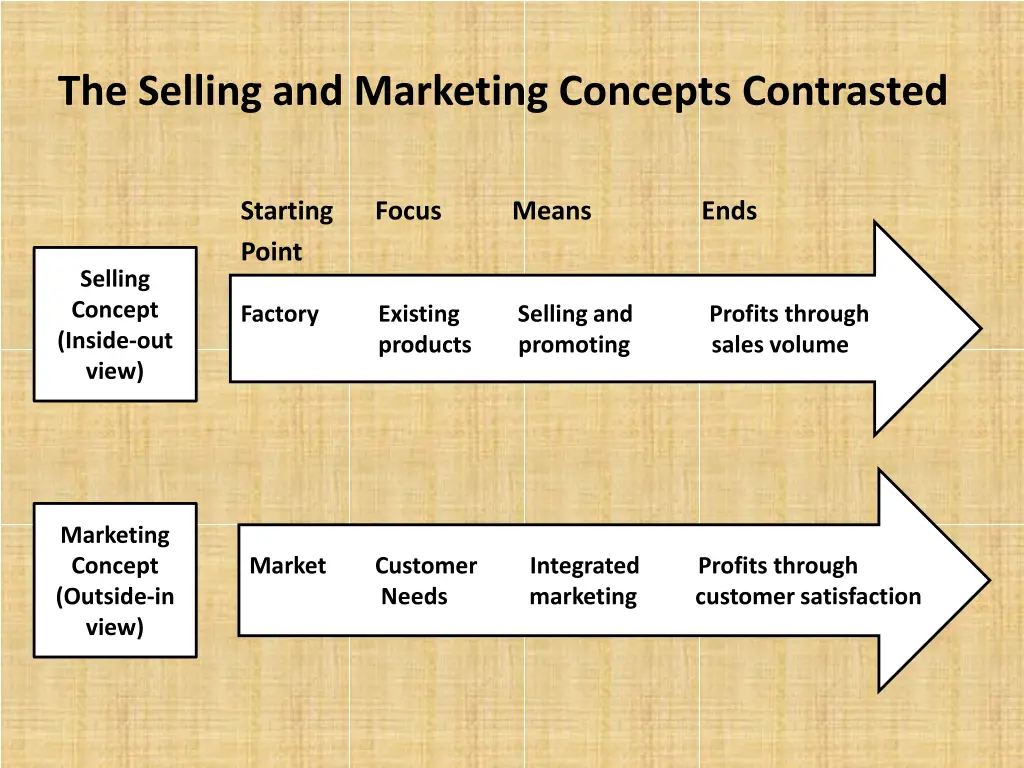
The Selling and Marketing Concepts Contrasted Starting Focus Means Point Ends Selling Concept (Inside-out view) Factory Existing Selling and Profits through products promoting sales volume Marketing Concept (Outside-in view) Market Customer Integrated Profits through Needs marketing customer satisfaction
??? Does the marketing concept overlook possible conflicts between consumer short-run wants and consumer long-run welfare?
??? Is a firm that satisfies the immediate needs and wants of target markets always doing what is best for consumers in the long run?
The Societal Marketing Concept The societal marketing concept holds that a company s marketing decisions should consider consumers wants, the company s requirements, consumers long-run interests and society s long-run interests.